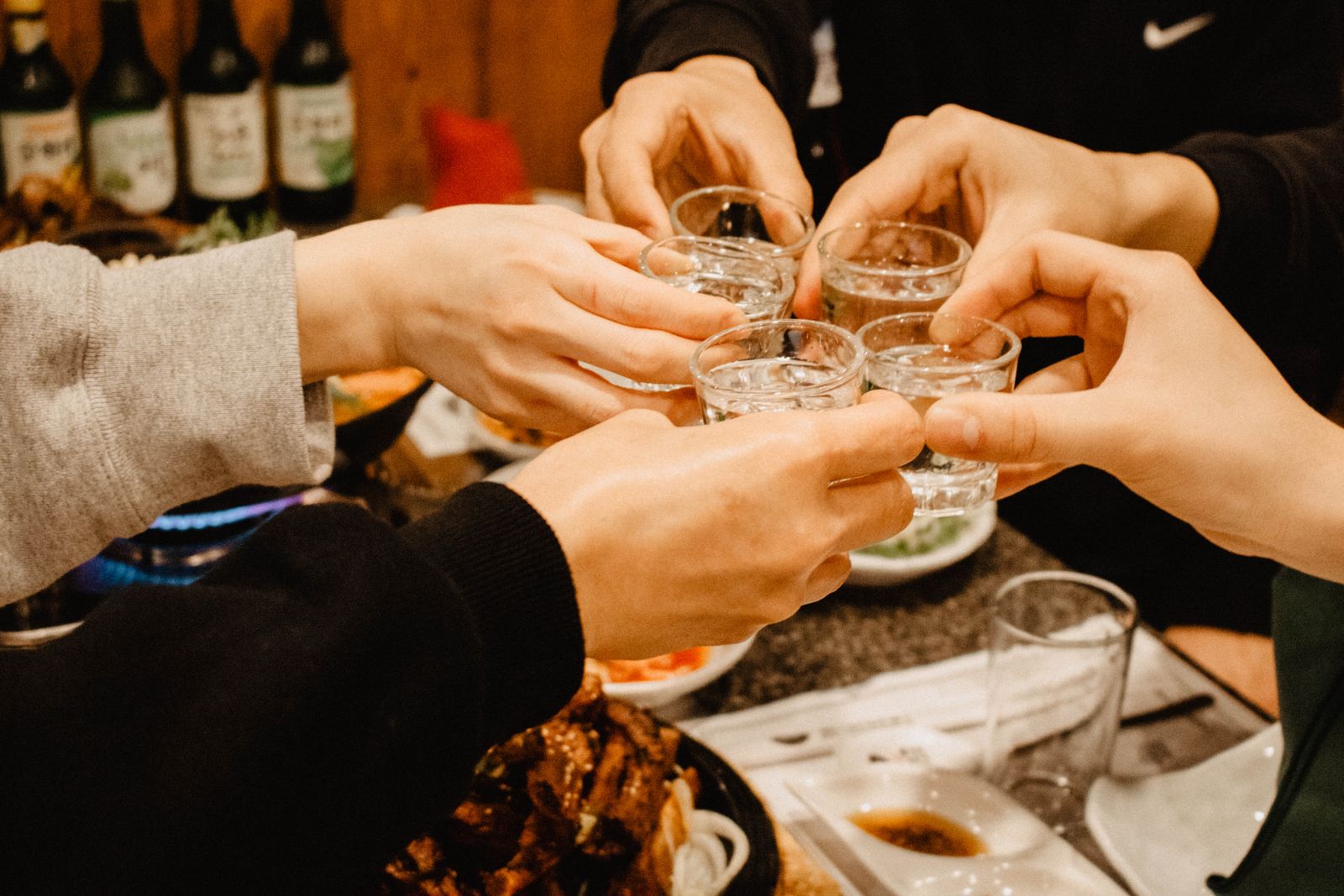
The first time I reached over and topped up my own soju glass at a work dinner in Yeongdeungpo, the guy next to me — a mild-mannered accountant who’d said maybe ten words all night over the sizzle of a tabletop grill — physically took the bottle out of my hand. Not aggressively. More like he was rescuing a toddler from a hot stove. The table was crowded with side dishes, someone two seats down was mid-toast, and in the middle of all that noise he still noticed my glass and reached across three plates of grilled pork belly to fix it before I could. “No, no,” he said, already pouring for me himself. I remember sitting there holding an empty shot glass, slightly stunned, thinking: I just wanted more soju. What did I do wrong?
That was probably eight years ago now, and I still think about it, weirdly enough, because it was such a small gesture that told me so much about how differently Korea thinks about a dinner table. In most of the English-speaking world, reaching for your own bottle is just efficiency. Nobody’s going to stop the conversation to police your glass. But in Korea, that one motion — self-pouring — sits at the intersection of hierarchy, care, and a set of unwritten rules that took me years, honestly, to fully absorb.
So, Is It Actually Rude?
The simple answer is yes. The real answer is: it depends entirely on who’s sitting across from you. As a baseline social rule, pouring your own drink in a group setting reads as self-centered, even a little lonely-looking, like you couldn’t be bothered to include anyone else in the moment. But the intensity of that judgment shifts a lot depending on the room — a formal company dinner versus a late-night bottle of makgeolli with your college roommate are two completely different worlds, even though the same bottle is on the table.
You’d think this would just be a minor quirk of table manners, the kind of thing you nod at and forget. But it’s not, really. It’s tied to a much bigger idea in Korean social life, and once you understand why it feels so counterintuitive to Westerners, the whole thing clicks into place: drinking together here is fundamentally a shared act, not a series of individual acts happening at the same table. Pouring for someone is a small transfer of attention. You noticed their glass was low. You cared enough to fix it, mid-conversation, without being asked. Which, honestly, is a nicer way to think about it than I gave it credit for when I first ran into the rule.
Where the Rule Comes From
A lot of Korean table etiquette — this included — traces back to Confucian ideas about hierarchy and mutual obligation that shaped Korean social life for centuries, and that history is exactly why the custom feels less like “manners” and more like a small ritual once you know the backstory. The core logic is pretty simple: younger people pour for older people first, juniors pour for seniors, and the person being poured for reciprocates once their own glass runs low. It’s a loop. Everyone is, in theory, taking care of everyone else, and the oldest or most senior person at the table is typically served first as a mark of respect before anyone else touches their glass.
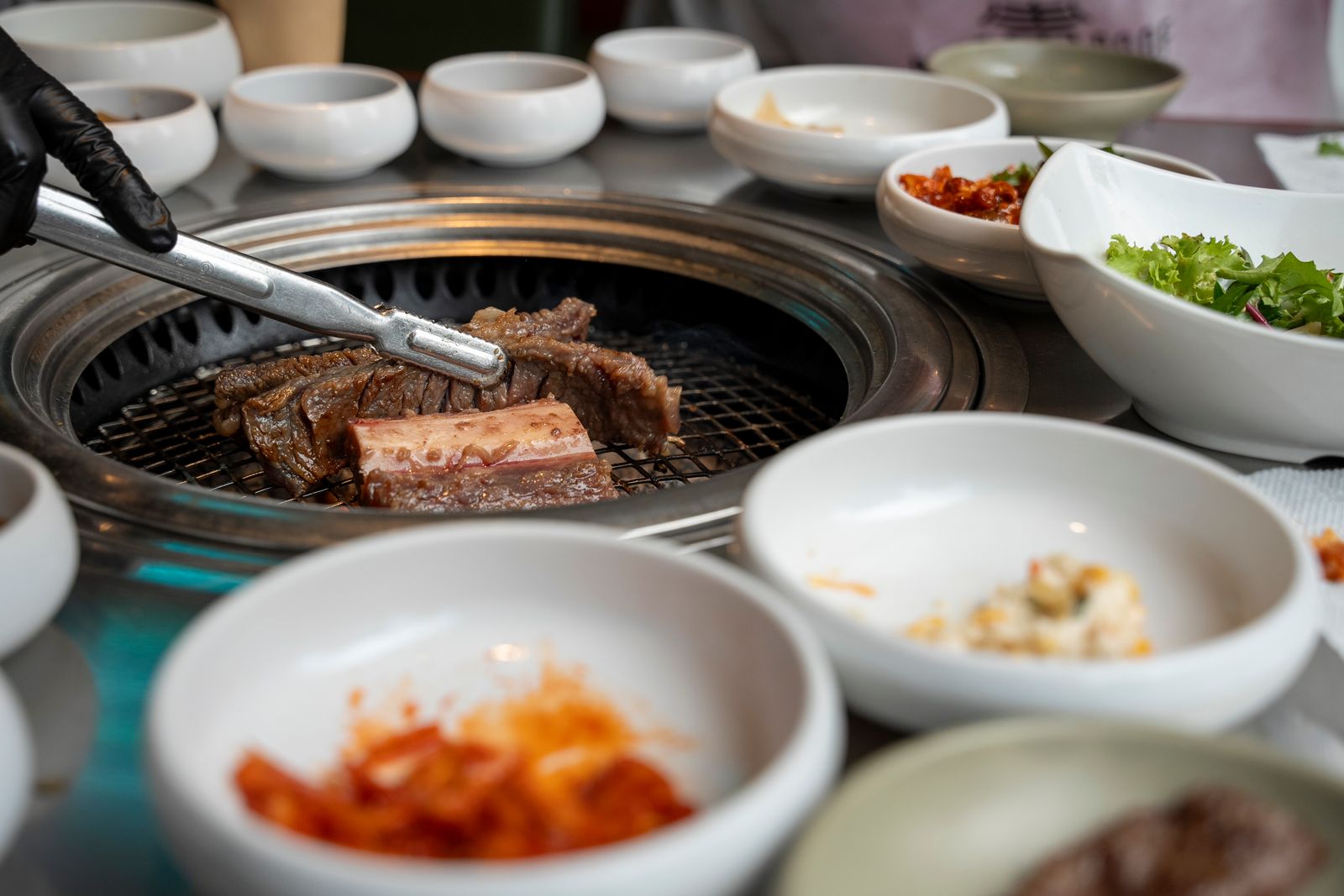
There’s also the physical choreography that goes with it, which caught me off guard the first several times I saw it. When you pour for someone older or more senior than you, you’re expected to use two hands — or at least steady your pouring arm at the wrist or elbow with your free hand. In practice this is genuinely awkward the first dozen times you try it: you’re reaching across a table crammed with banchan — the little side dishes of kimchi, seasoned spinach, bean sprouts — trying not to knock over the bean-paste soup while keeping your forearm braced just so. It looks almost ceremonial if you’re not used to it, like you’re handling something fragile. Receiving works the same way: you take the glass with both hands, or one hand supported at the elbow, rather than just sticking your cup out like you’re at a backyard barbecue. Between people roughly the same age, one-handed pouring is totally normal and nobody thinks twice about it. The two-handed thing is specifically a hierarchy signal, not a universal soju rule, which is a distinction that took me embarrassingly long to figure out.
And then there’s the turning-away part, which still catches me off guard even now. If someone senior — your boss, your father-in-law, an older relative — pours you a shot, the polite move when you actually drink it is to turn your body slightly away from them and cover your mouth and glass with your free hand. It looks almost like you’re hiding the drink, which is sort of the point: you’re not flaunting the act of drinking in front of someone you owe deference to. The first few times I did this I felt ridiculous, like I was playacting in a historical drama, glass angled away, shoulder half-turned, hoping I looked respectful and not just constipated. Now it’s just muscle memory — I do it before I even consciously register who poured for me.
The Exceptions Nobody Tells You About
Here’s the part most etiquette articles skip, and it’s the part that actually matters if you live here rather than just visit for a week. The “never pour your own drink” rule loosens up fast once the context shifts. If you’re alone at a pojangmacha — one of those orange tent bars that pop up along the sidewalks in neighborhoods like Jongno or near Konkuk University — nobody expects you to flag down a stranger to top off your glass. You pour your own. Nobody blinks.
Same with close friends in a genuinely casual setting. If I’m at my friend’s apartment in Ilsan splitting a couple of cans of Cass and a bag of dried squid, we’re not performing formal etiquette at each other. Somebody pours, somebody doesn’t, glasses get topped off in whatever order makes sense, and it would honestly feel a little stiff and try-hard to insist on strict pouring order between two people who’ve known each other for a decade. The rule is really at its strongest in situations with a status gap — work dinners, meeting your partner’s parents for the first time, a reunion with a much older mentor — where getting it wrong reads as either not knowing better or, worse, not caring to.
There’s also a generational shift happening that’s worth spelling out, because Korea’s drinking culture in 2026 is not identical to what it was even ten years ago. Younger Koreans, especially in casual friend groups, have relaxed a lot of the stricter hoesik-era customs — the forced shots, the rigid seating by seniority, the endless second and third rounds that used to bleed into a 2 a.m. noraebang session whether you wanted to go or not. You’ll see it in small ways: so-maek (soju mixed with beer, at a lower effective ABV than a straight soju shot) has become the default order for a lot of twenty- and thirty-somethings instead of round after round of pure soju, and some companies have started swapping the marathon dinner-then-drinks hoesik format for lighter alternatives — an early dinner, a round of bowling, something that wraps up by nine. The core pouring etiquette still holds up reasonably well even in these lighter settings, but the surrounding pressure — being made to drink until someone decides you’re done — has softened considerably at a lot of workplaces, partly because younger employees have pushed back on it and companies have noticed.
What Happens If You Mess It Up
You’d think breaking a drinking etiquette rule would trigger some visible reaction — a raised eyebrow, a comment, something. Usually it doesn’t, at least not out loud. Koreans are generally very forgiving of foreigners who don’t know the rules yet; there’s a wide berth given for people who are clearly still learning. What you’ll notice instead, if you’re paying attention, is more subtle: someone quietly reaches over and pours for you before you can pour for yourself, the way that accountant did to me years ago. Or an older person at the table might gently correct you — “here, let me” — without making it a whole moment. It’s corrective, but it’s rarely punitive.
Even now, I slip. Just a few months back at a family gathering, I caught myself reaching for the bottle to refill my own glass mid-story, completely on autopilot, before my mother-in-law’s hand appeared and took it from me with a small laugh — no words needed, just a look that said she’d clocked the habit years ago and expected nothing less from me by now. That said, in more formal or hierarchical settings — a first dinner with a boss’s boss, a very traditional family gathering — repeatedly self-pouring or ignoring the pouring order can read as a bit tone-deaf, even if nobody says anything directly. Face and harmony matter a lot in these settings, and direct confrontation over a social misstep is rare. The silence itself is sometimes the feedback. I’ve actually written before about the flip side of this — how to politely refuse a drink you don’t want without causing offense, which comes up constantly once you understand how central pouring and reciprocity are to the whole ritual — and a lot of the same gauge-the-vibe, don’t-make-it-a-scene logic applies here too.
How I Handle It Now
These days my default move at any group table, Korean or otherwise, is to just keep an eye on the glasses around me — not in a performative, watch-me-be-culturally-fluent way, but because it’s genuinely become second nature after enough dinners. If someone’s glass is low, I fill it. If mine gets low, I wait a beat before someone else notices, and if nobody does within a reasonable window, I’ll pour my own without much drama, especially in a mixed group where not everyone follows the same customs anyway. There’s no secret ledger being kept. It’s less about rigid rule-following and more about paying attention to the people you’re sitting with, which — okay, this sounds a little precious when I write it out, but it’s true — is kind of the whole point of the custom in the first place.
What surprised me most, looking back, isn’t the rule itself. It’s how much a tiny physical habit — who lifts the bottle, who holds the glass, which hand goes where — can carry an entire philosophy of respect and interdependence without a single word being spoken. You don’t need to memorize a manual before your first Korean dinner. You just need to watch the table for five minutes, follow along, and let someone steal the bottle out of your hand at least once. Most people will meet you more than halfway, and honestly, that one awkward moment tends to stick with you a lot longer than any etiquette guide ever could.

FAQ
I’m at a company dinner (hoesik) and my glass is empty but the senior manager is deep in conversation with someone else. Can I just pour my own?
In that exact spot, most people would quietly pour for the person next to them first, which usually prompts a chain reaction where someone eventually notices your glass too. If a few minutes go by and truly nobody catches it, a quiet self-pour isn’t going to end your career — nobody’s watching that closely — but the more socially fluent move is to pour for someone else nearby first. It tends to solve the problem for you within a round or two.
My Korean boyfriend’s parents keep pouring for me even after I say I’ve had enough. Is it rude to refuse?
This one trips up a lot of foreigners dating into Korean families. You’re not obligated to drink everything poured for you, and leaving a glass mostly full is a perfectly normal way to signal you’re done, especially for health or driving reasons. What matters more is how you decline — a polite “I’m okay for now, thank you” with a small hand gesture over the glass reads much better than an abrupt “no.” Covering your glass lightly with your hand when someone reaches for the bottle is a widely understood, non-awkward way to say you’re done without making a scene.
Does this pouring rule apply to non-alcoholic drinks too, like at a family meal with soda or tea?
Less strictly, but the underlying courtesy carries over. At a formal meal, especially with elders present, it’s common and appreciated to pour tea or water for others before yourself, particularly for the oldest person at the table. Nobody’s going to correct you the way they might with soju, but doing it anyway tends to land as thoughtful rather than performative.
Leave a Reply