Stand on almost any street corner in my neighborhood in Korea and do a slow 360-degree turn. I’ve actually done this, more than once, half out of boredom and half out of genuine disbelief — and I routinely count four, five, sometimes six cafes without moving my feet. Not coffee carts. Full sit-down cafes, with baristas, oat milk options, and background jazz. One time near Hongdae I counted three coffee shops stacked in the same building, one on top of the other, like some kind of caffeine layer cake — a loud dessert cafe with pink neon on the ground floor, a quiet study cafe with individual desk lamps on the second, and a tiny plant-filled roastery up on the third that you’d never find unless someone told you it existed. By all economic logic, a setup like that should collapse under its own competition. It doesn’t. New ones open anyway.
I moved here assuming Korea would be a tea country, honestly — that was my mental image before I actually lived here, probably left over from vague ideas about “Asian tea ceremonies” that don’t even really apply to Korea specifically. Turns out Korea runs on coffee harder than most Western countries I’ve lived in, and once you dig into why, it stops looking like an accident and starts looking like the natural output of how densely people live here.
The numbers are genuinely absurd
There are somewhere north of 95,000 cafes in South Korea right now, in a country roughly the size of Indiana. Seoul alone is estimated to have more coffee shops per capita than New York, Tokyo, or even Seattle — which, if you’ve ever tried to walk down a street in downtown Seattle without tripping over a espresso stand, tells you something. Korea has around 1,384 specialty coffee shops per million people, more than double Japan’s number, and Japan is hardly a tea-only country either. The average Korean adult drinks something like 405 cups of coffee a year — more than double the global average, and enough that I stopped feeling self-conscious about my own three-a-day habit pretty quickly after arriving.
What surprised me more than the raw number, though, is how the market keeps absorbing new shops instead of collapsing under its own weight. In most places I’ve lived, an oversaturated market gets brutal fast — half the shops close within a year. Here, sure, plenty of small independent cafes do fold, often within twelve months, which locals will tell you matter-of-factly, almost like discussing the weather. But the space gets filled again almost immediately by someone else with a slightly different concept — a plant-themed cafe, a study cafe, a cafe that’s secretly also a bookstore. The churn is real, but so is the demand underneath it. If the business math doesn’t quite add up on paper, the social math underneath it makes a lot more sense — because it turns out this isn’t really about coffee at all.
Why, though — the apartment theory
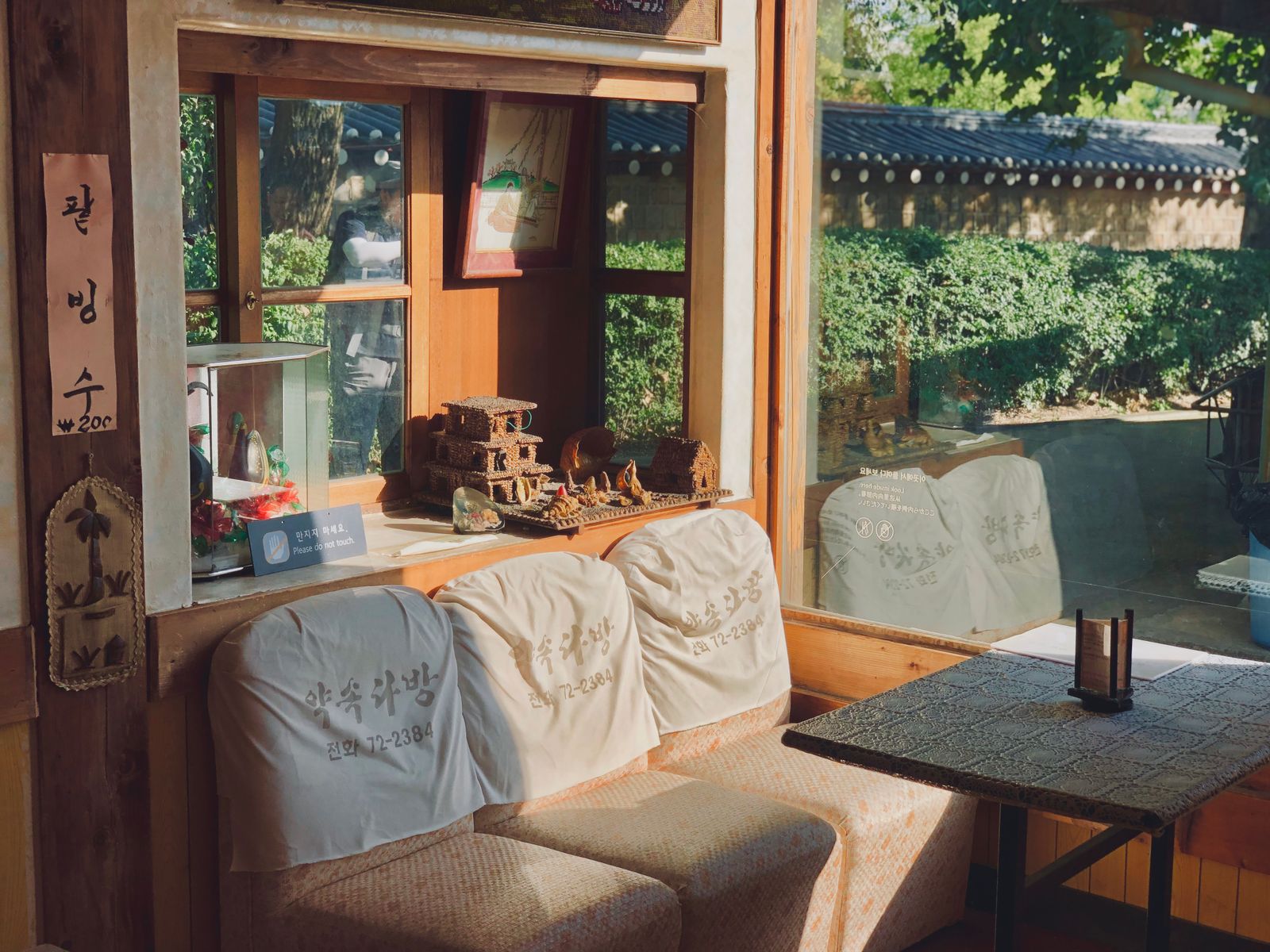
The explanation that actually clicked for me, after a couple years of just accepting it as background noise, has to do with housing. Korean apartments, especially in Seoul, tend to be small, and hosting people at home isn’t really a default social move the way it is in, say, the American Midwest where I’m from. Nobody’s throwing a dinner party in a 24-pyeong apartment with in-laws visiting for the weekend. So where do you meet a friend, have a work meeting, do a first date, or study for an exam without either paying for a full meal or awkwardly loitering in a park in the middle of winter? The cafe. It’s not a luxury indulgence here so much as a rented living room, and once you frame it that way, 95,000 of them stops sounding like overkill and starts sounding almost logical. Walk into any decent-sized cafe near a business district around 2 p.m. and you’ll see it in action — a couple of guys in suits doing what is obviously a client meeting over Americanos, three moms at the next table who just dropped their kids at hagwon and have ninety minutes to kill before pickup, and a table of teenagers splitting one enormous bowl of shaved-ice bingsu between four spoons because none of them can afford their own.
There’s actually a specific word for one very particular subset of cafe users: kagongjok, roughly “the cafe-study tribe” — students and remote workers who set up camp for four, five, six hours with a laptop, a textbook, and one drink they nurse the entire time. Some cafes have started pushing back with time limits or minimum order policies during exam season, which tells you the phenomenon got big enough to actually threaten table turnover. I’ve sat next to enough of these study marathoners to know it’s not a myth — I once watched a guy hold the same seat from 10 a.m. to closing at 10 p.m., living on one iced Americano and refills of water.
The vending machine parallel universe
Here’s a detail that catches almost every visitor off guard: alongside the artisanal, $6-latte cafe culture, there’s an entire parallel economy of coffee vending machines. They dispense a hot, pre-mixed, syrupy-sweet coffee in a tiny paper cup for around 300 to 500 won — less than fifty cents. You’ll find them tucked into the corner of nearly every convenience store, subway station, and old-school barber shop. Older generations especially still swear by them. There’s something almost touching about watching an ajusshi grab one on his way into work, the exact same ritual his father probably had decades ago, while twenty feet away a line of twenty-somethings waits for a hand-poured single-origin pour-over that costs ten times as much. Both exist side by side, on the same block sometimes. Neither one is going anywhere. Korea just runs two coffee economies at once, and nobody seems to find that strange except foreigners like me.
Mega-chains versus the independents
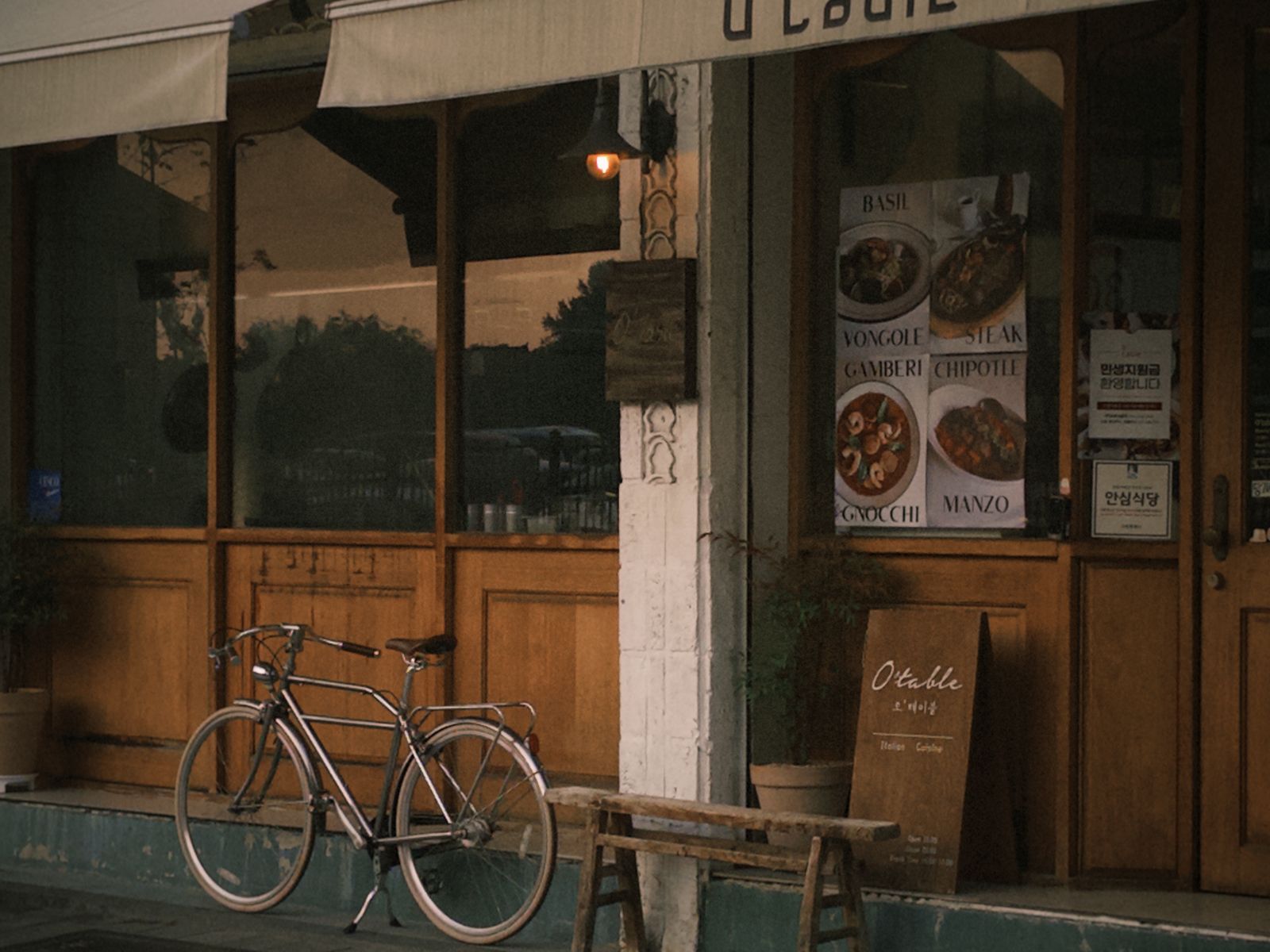
You’d expect a market this saturated to be dominated entirely by a couple of giant chains, and to some extent it is — Starbucks Korea operates nearly 2,000 stores nationwide, a density that outpaces the chain’s per-capita footprint in the U.S. by some counts, and homegrown challengers like Mega Coffee, Compose Coffee, and Ediya have exploded specifically by undercutting Starbucks on price, some selling a decent Americano for around 1,500 to 2,000 won. But wander two blocks off any main street and you’ll still find a wildly disproportionate number of independent cafes doing something specific and strange — a cafe that only serves drinks in ceramics the owner throws himself, a “book cafe” where you pay by the hour and get unlimited coffee plus a wall of secondhand novels. My favorite version of this is the hanok cafe, where you slip your shoes off at the entrance, sit cross-legged on a heated wooden floor inside a century-old courtyard house, and get handed an iced latte in a to-go cup that feels almost comically modern against the old tiled roof and paper doors around you. The chains handle volume and convenience; the independents seem to exist almost purely to be Instagrammable and specific, and Koreans clearly want both, because both keep multiplying.
Eoljukah: the iced coffee thing that breaks foreigners’ brains
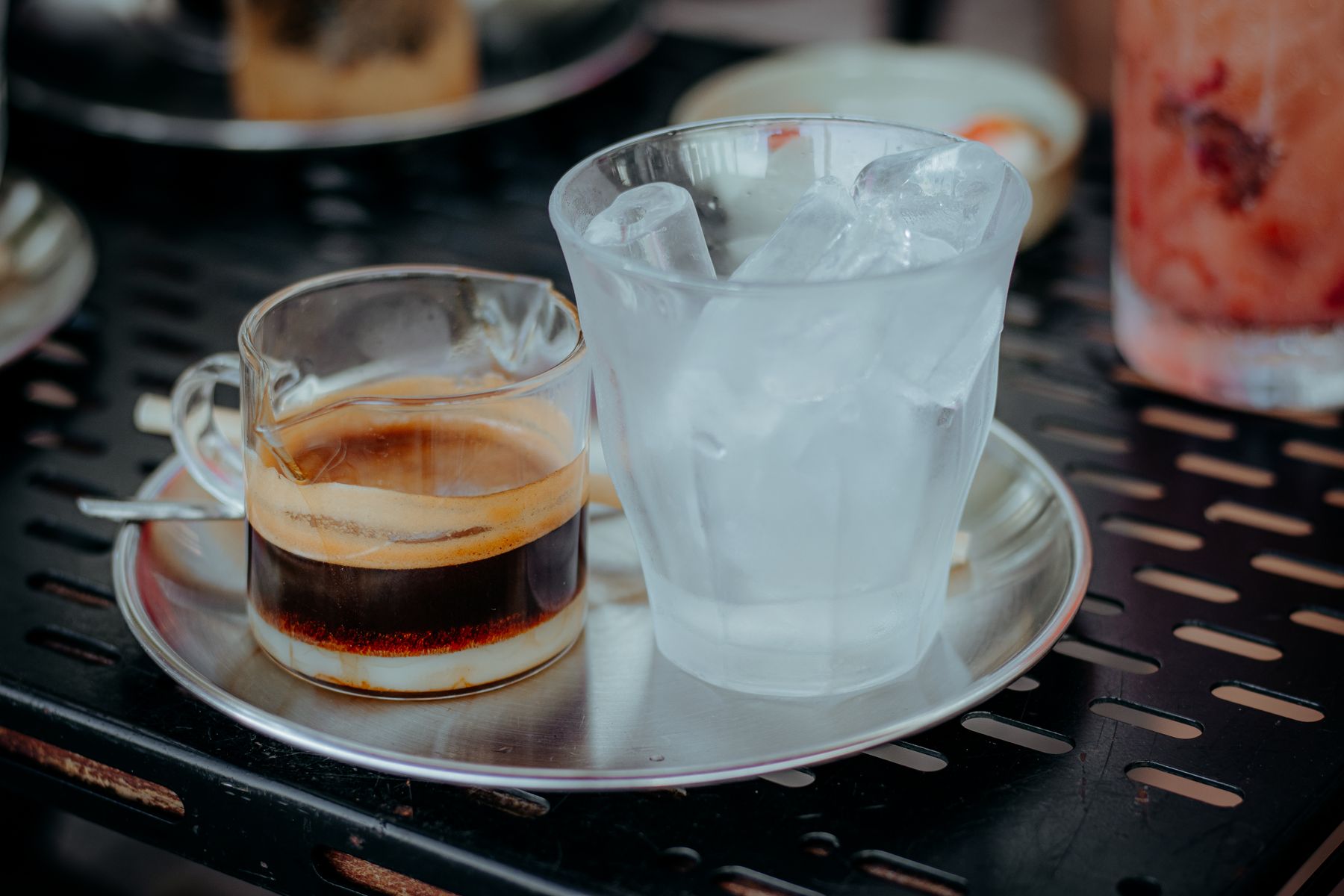
If there’s one Korean coffee habit that genuinely confused me at first, it’s this: Koreans drink iced Americanos in the dead of winter. Not occasionally — as a default. There’s even a slang term for it, eoljukah (얼죽아), short for “I’d rather freeze to death than drink hot coffee,” and it’s said half-jokingly but represents something real. I remember standing in line at a cafe near Gwanghwamun in January, snow actually falling outside, watching person after person order iced drinks while I stood there with numb fingers ordering a hot Americano like some kind of tourist. The cashier didn’t even blink. She’d clearly seen this exact scene play out a hundred times a week.
Ask a Korean friend why, and you’ll get a few different theories, and honestly they’re probably all a little bit true at once. Some say it’s about speed — you can gulp an iced drink in seconds flat, which fits neatly into the broader ppalli-ppalli, “hurry hurry,” pace of daily life here, whereas a hot drink demands you slow down and sip. Others point out that Korean buildings and subways run their heating so aggressively in winter that an iced drink actually feels more balanced once you’re indoors bundled in three layers. My own theory is that it’s partly become an identity marker at this point — ordering hot coffee in January can genuinely mark you as an outsider or an older-generation type, the same way ordering a well-done steak might raise an eyebrow at certain restaurants. I still remember walking down a side street near Gwanghwamun that same January, wind cutting straight through my coat, holding a plastic iced coffee cup that had gone lukewarm-to-cold in about four minutes flat, my fingers stiff around it, and thinking: this is objectively a strange way to survive a Korean winter, and yet I kept doing it, week after week, because somehow it started to feel normal too. Whatever the real mix of reasons behind eoljukah, it’s not fading. If anything, it seems to have gotten more entrenched, not less, since I first noticed it.
Frequently asked questions
Just how cheap — or expensive — is a Korean cup of coffee, really?
It depends entirely on where you go, and the range is wider than in most countries I’ve lived in. A vending machine coffee runs under 50 cents. A Mega Coffee or Compose Coffee Americano is usually somewhere around $1.10 to $1.50. But a specialty pour-over at an independent cafe in a trendy neighborhood like Seongsu can easily run $6 to $8, on par with Melbourne or Portland prices. Korea doesn’t really have one coffee price point — it has at least three running side by side.
Do Korean cafes actually let you sit for hours without buying more?
Traditionally, yes, and that’s exactly why the kagongjok phenomenon took off in the first place — there’s no strong cultural expectation to keep ordering the way there sometimes is in the US. That said, this has been shifting; a growing number of cafes, especially near university areas during midterms and finals, now post explicit time limits (two hours is common) or require a minimum spend per person, precisely because students were treating tables like personal offices for entire days.
Why do so many small independent cafes close if the industry is booming?
Rents are high, competition is fierce, and opening a beautifully designed cafe has become something of a popular small-business dream in Korea — which means a lot of first-time owners underestimate how thin the margins actually are once you account for rent and the cost of imported espresso machines. It’s not unusual for a stylish new cafe to close within its first year even in a busy area, only to be replaced within weeks by another one with a different aesthetic. The demand for cafes as a category stays strong even when any individual shop struggles.
Leave a Reply