Before I moved to Korea, I was the kind of person who thought “culture shock” mostly meant chopsticks and bowing. I’d traveled a bit, I’d watched enough Korean dramas to feel dangerously overconfident, and I figured the actual day-to-day would just be a slightly spicier version of life anywhere else. It wasn’t. Not because Korea is wildly stranger than I expected, but because the things that actually trip you up here are almost never the things travel blogs warn you about. Nobody mentions the paperwork. Nobody mentions the specific flavor of loneliness that shows up around month four. So here’s the version of this post I wish someone had handed me before I packed a single box.
The Paperwork Is Its Own Boss Fight
You’d think, in one of the most digitally advanced countries on earth, that registering as a resident would be quick. It is not, and the irony of that is not lost on anyone who’s lived through it. Getting your Alien Registration Card, the ARC, is the first domino, and almost nothing works without it: no phone plan in your own name, no bank account without serious workarounds, no apartment lease, sometimes not even a gym membership. Depending on your visa type and which immigration office you’re assigned to, the wait between application and card-in-hand can run anywhere from a couple of weeks to well over a month, and if you land during a peak season, right around when university semesters start in March or September, when immigration offices are swamped with new students and workers, that timeline can stretch closer to six or eight weeks before you even get an appointment slot. Plan your first month in Korea around the assumption that you will be a financial and administrative ghost for a while, borrowing a friend’s Wi-Fi hotspot, paying cash for everything, using someone else’s Korean phone number to sign up for delivery apps. It’s manageable, but only if you expect it going in.
And once the ARC finally lands, there’s a second wave: opening a bank account, which increasingly requires proof of a Korean phone number, which itself often requires the bank account, in a genuinely circular bit of bureaucracy that every expat community group has a thread about. The workaround, usually, is going to a bank branch in person with your ARC and passport and just being patient with the process, sometimes over multiple visits. It sounds tedious because it is. But once it’s done, it’s done, and Korean banking apps afterward are honestly some of the smoothest I’ve used anywhere.
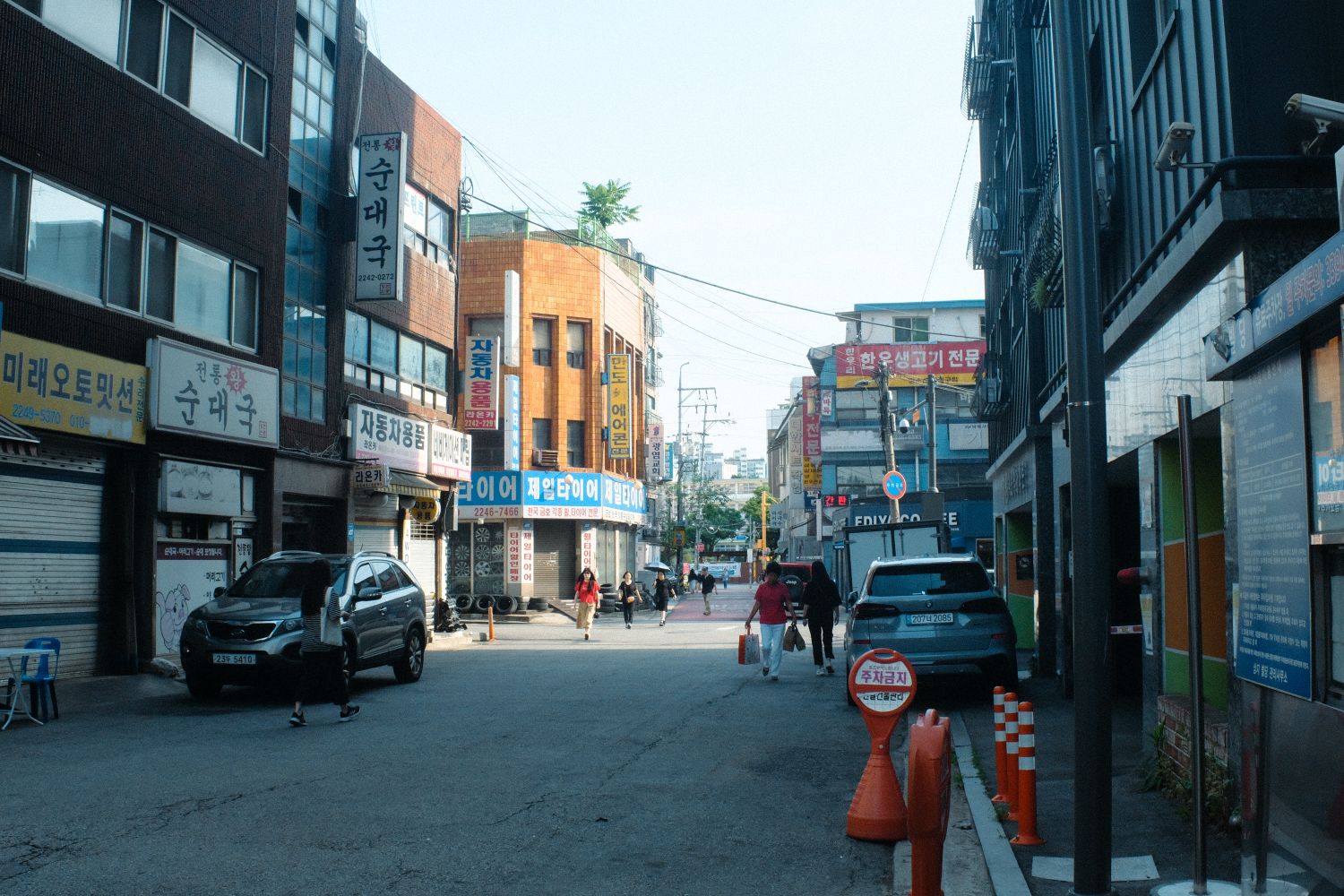
Grocery Shopping Will Humble You
This one sounds small until you’re standing in a Lotte Mart aisle at 9 p.m., hungry, holding a jar of something you cannot identify. Most packaging is in Korean, which, fair enough, it’s Korea, but it means your first few months of cooking involve a lot of guesswork, translation apps held up to labels, and the occasional dinner that turns out to be nothing like what you thought you bought. Produce is often sold in smaller, pricier units than a lot of Western shoppers are used to — a single perfect apple, individually wrapped in foam netting, sitting in the fruit aisle for the equivalent of three or four dollars, is a normal, if slightly startling, thing to see. Meanwhile some Korean staples, tofu, rice, most vegetables at the right season, are genuinely cheap. It balances out, but the balance takes getting used to.
After enough of these confused, overpriced trips to the mart, I basically gave up on in-person grocery shopping as my main strategy, and that’s where delivery and grocery apps like Coupang and Market Kurly are so good, so fast, that they quietly restructure how you shop entirely. Order before midnight, wake up to groceries at your door, no exaggeration. It sounds like a small convenience, but combined with a culture that already leans heavily on food delivery for everything from fried chicken to entire multi-course meals, it changes your whole relationship with cooking. I went from a semi-competent home cook to someone who orders in three nights a week, purely because the infrastructure makes it almost silly not to.
Small Apartments, Big Adjustments
You’d expect a housing adjustment moving anywhere new, but Korea has a few specifics that catch people off guard. Officetels and one-room apartments, the standard starter housing for a lot of foreigners, are compact in a way that reshapes how you live — no dryer is genuinely common, with drying racks doing the work instead, and floor heating, called ondol, replacing radiators entirely, which sounds charming until you realize you now sleep on the floor sometimes because that’s where the heat is. The deposit system, especially jeonse or its more common cousin wolse, a monthly-rent-plus-deposit hybrid, works nothing like Western leases. Even a modest one-room officetel on wolse can ask for a deposit in the range of five to ten million won upfront, refundable when you leave, but still a serious lump sum to have ready before you’ve even unpacked, and if nobody walks you through key money and deposit structures before you sign anything, you can end up agreeing to terms you don’t fully understand. Get a Korean-speaking friend, a real estate agent you trust, or at minimum a very thorough translation app involved before you sign a single lease document.

The Loneliness Curve Nobody Warns You About
This is the one I underestimated the most, and I think a lot of expats do. The first few weeks are novel and exciting, everything is new, every meal is an adventure. Then somewhere around the third or fourth month, the novelty wears off and what’s left is the actual work of building a life somewhere your language skills are still shaky and your social circle is still thin. It’s not dramatic, it’s just quiet, and it sneaks up on you between the exciting parts. Making Korean friends as an adult foreigner takes real, sustained effort, not because Koreans are unfriendly, they’re generally warm once a relationship actually forms, but because adult friendships in general take deliberate effort everywhere, and doing it across a language and culture gap multiplies the friction.
What helped me more than anything was finding a specific, recurring thing to show up for, a hobby class, a language exchange, a regular gym, a sport. Recurring contact beats one-off events every time, because friendship here, like most places, is built less on grand gestures and more on just being the familiar face who keeps showing up.
Your Korean Will Plateau, and That’s Normal
Nobody tells you that language learning here has a very specific plateau: you get functional fast, ordering food, taking taxis, basic small talk, and then progress slows to a crawl unless you deliberately push past comfortable daily-use Korean into actually studying grammar and vocabulary again. It’s genuinely frustrating to feel stuck at “good enough to survive” for a year or two. The people who break through tend to be the ones who structure real study time instead of assuming immersion alone will keep leveling them up, because past a certain point, it mostly doesn’t.
Work Culture Has Its Own Learning Curve
If you’re working for a Korean company rather than an international one, the hierarchy and communication style take real adjustment. Decisions often flow top-down, direct disagreement with a superior in front of a group is rare, and the workday can run longer than contracted hours as a matter of unspoken norm rather than explicit rule, though this has been genuinely shifting in recent years as younger workers push back on it. You’d think this would feel oppressive across the board, but in practice a lot of offices, especially ones used to hiring foreign staff, have adapted meaningfully. Still, walking in expecting Western-style flat hierarchy and open debate in every meeting is a fast way to feel confused about why your very reasonable suggestion just got quietly filed away instead of discussed.
The Reasons We All Stay Anyway
With all of that said, none of it explains why so many foreigners who land here for a year on a whim end up staying five, ten, sometimes indefinitely. Public transportation here is genuinely some of the best in the world, cheap, clean, and precise enough that you start planning your life around bus arrival times displayed to the minute. Safety is another one that’s hard to overstate until you’ve lived it: leaving a laptop at a café table to hold your seat while you order is a completely normal, low-risk thing to do, which felt almost reckless to me at first and now feels completely unremarkable. And the convenience infrastructure in general, twenty-four-hour everything, delivery to literally any address including random park benches, healthcare that’s both accessible and affordable, adds up to a quality of daily life that’s easy to take for granted once you’ve been here a while.
FAQ
How much savings should I have before moving to Korea without a job lined up?
There’s no single right number, but a common benchmark expats use is enough to cover three to six months of rent, food, and a housing deposit if you’re not going through a company-sponsored apartment. Given how deposit-heavy Korean leases can be, especially wolse setups requiring a lump sum upfront, budgeting for that deposit specifically, on top of ordinary living costs, prevents a nasty surprise in your first month.
Do I need to speak Korean before I arrive?
Not fluently, no, plenty of people get by initially on English, translation apps, and goodwill, especially in Seoul. But even basic survival Korean, numbers, directions, food terms, makes daily logistics dramatically smoother from day one, and starting to study before you land puts you ahead of the plateau problem mentioned above rather than starting from zero once you’re already juggling everything else about the move.
Is it hard to make Korean friends as a foreigner, or mostly other expats?
Both circles are realistic, but they form differently. Expat friendships often happen faster, through shared context and shared language. Korean friendships tend to build more slowly and through repeated, structured contact, a class, a team sport, a shared workplace, rather than casual bar meetups. Neither is better; most people end up with a mix of both once they’ve been here a year or two.
Leave a Reply