There’s a particular kind of quiet that settles over a Korean home when a jesa table is being set. Someone’s grandmother is arranging fruit into precise little pyramids. Someone’s uncle is folding paper in a specific way nobody younger than fifty seems to have fully learned. And somewhere in the middle of all this careful, wordless choreography, I remember standing there the first time genuinely unsure whether I was allowed to breathe too loudly. Nobody explained the rules to me in advance, because to everyone else in the room, there was nothing to explain. This is one of those corners of Korean culture that foreigners rarely get walked through properly, so let’s actually walk through it.
What Jesa Actually Is
Jesa, 제사, is a memorial ritual performed for deceased family members, most commonly ancestors going back a few generations. At its core, it’s built on a fairly simple Confucian idea: a person’s spirit doesn’t just vanish the moment they die. It’s believed to remain connected to the family, particularly for a handful of generations, and jesa is the family’s way of maintaining that connection, offering food, showing respect, and reaffirming that this person is still, in a real sense, part of the family. You’d think a ritual this old would feel purely religious, but it’s more accurately described as a Confucian social practice, which is exactly why Buddhists, Catholics, and plenty of non-religious Koreans all still observe some version of it, while a lot of Protestant households opt out entirely, a divide we’ll come back to later.
The most common version, gijesa, happens once a year on the anniversary of a specific ancestor’s death, usually the parents or grandparents of the person hosting it. There’s also charye, the shorter version performed on major holidays like Chuseok and Seollal, honoring ancestors more broadly rather than one specific person. And then there are less frequent ones, like seongmyo and myosa, tied to visiting or maintaining ancestral gravesites rather than a home ceremony. If you’ve ever wondered why Korean holiday traffic is legendarily brutal, this is a big part of the answer: a drive that normally takes four hours from Seoul to a hometown in the southern provinces can balloon to ten or more during Chuseok, with millions of people making that same trip specifically to perform charye together as an extended family.
The Table Is Not Random
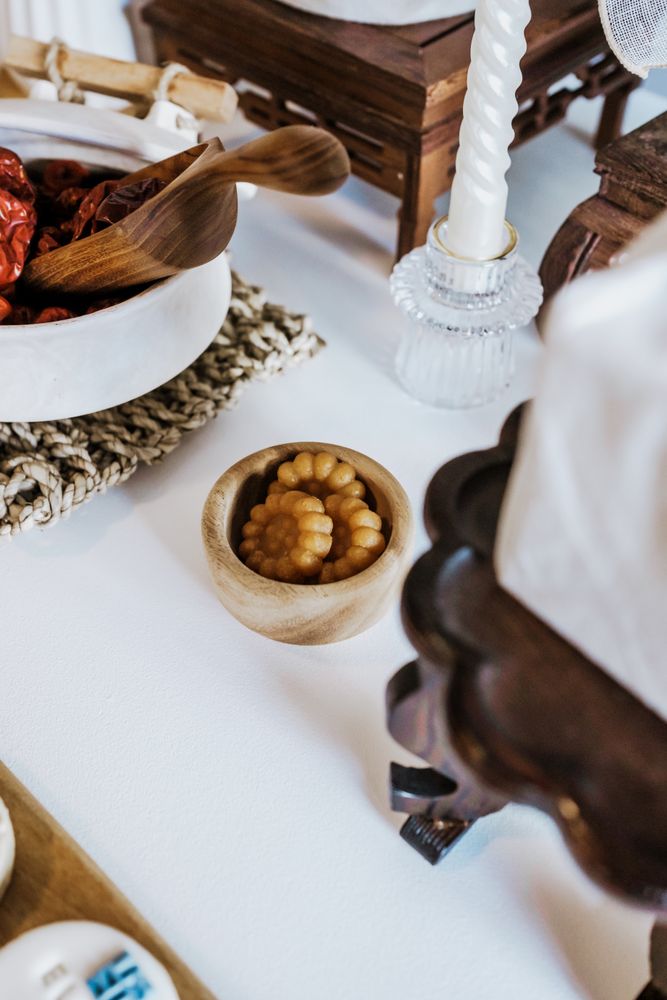
This is the part that surprised me most once someone finally explained it. The jesasang, the ritual table itself, follows placement rules that look, to an untrained eye, like just a very nicely arranged spread of food. They are not random at all. There’s a whole system, often summarized in short phrases passed down through families, like hongdongbaekseo, red to the east, white to the west, so a red persimmon or apple sits on the east side of the table while a pale rice cake sits on the west, or eumen-yangdong, roughly meaning fish faces west and meat faces east. Even the fruit gets specific: dates, chestnuts, and persimmons are practically standard, and some families explain the order with an old saying about how many seeds each one holds, symbolizing generations of descendants, though how seriously any given household takes that explanation varies a lot. Families vary these rules regionally and generationally, and honestly, a lot of younger relatives I’ve talked to admit they just follow whatever the household’s elder directs rather than knowing the underlying logic themselves. It’s less a rigid rulebook everyone has memorized and more an inherited choreography, passed down by watching, generation after generation.
The food itself matters too. Rice, soup, meat, fish, fruit, and rice cakes are standard, along with the ancestor’s favorite foods in some families, a small, warm detail that turns a formal ritual into something more personal. Notably, foods with strong smells like garlic aren’t traditionally included, and certain items are avoided depending on regional or family custom. Once the ceremony concludes, the family eats the food together, which reframes the whole thing: it’s not just a solemn ritual performed at the ancestors, it’s a shared meal performed with them, in spirit if not literally. A lot of that food, especially the jeon, the savory pan-fried fritters that take hours to prepare, doubles as genuine comfort food afterward, and it’s not unusual for the days after a jesa to turn into an informal leftovers feast, with family members reheating jeon for breakfast the next morning the way anyone else might reheat pizza.
That labor is worth naming honestly, too. Preparing a full jesasang can take an entire day of cooking, historically falling almost entirely on the women of the household, and that imbalance has become a genuinely common source of family tension and open conversation in Korea in recent years, which is part of why the ritual is changing as quickly as it is.
How the Ceremony Actually Unfolds
A jesa typically starts with inviting the ancestral spirits, sometimes through burning incense or, in some households, opening a door or window, symbolically welcoming them in. Family members then bow, usually a deep, formal bow performed twice for the dead, which differs from the single bow used for the living, a distinction that took me embarrassingly long to keep straight. Wine or alcohol is offered at the table, sometimes poured three separate times through the ceremony. There’s a period of quiet, almost like a moment of respectful silence, before the spirits are symbolically sent off and the family sits down to eat the meal together. The whole thing usually happens late at night or very early in the morning, historically tied to the belief that ancestral spirits move more freely in those hours, though modern scheduling has pushed a lot of families toward earlier evening times purely for practicality.
Korean Funerals: A Related but Separate Custom
All of this, the yearly ritual, the carefully arranged table, the shared meal afterward, is really about honoring someone who’s already been gone a while. But every one of those family traditions traces back to a single starting point: the funeral itself, which follows an entirely different, more immediate set of customs.
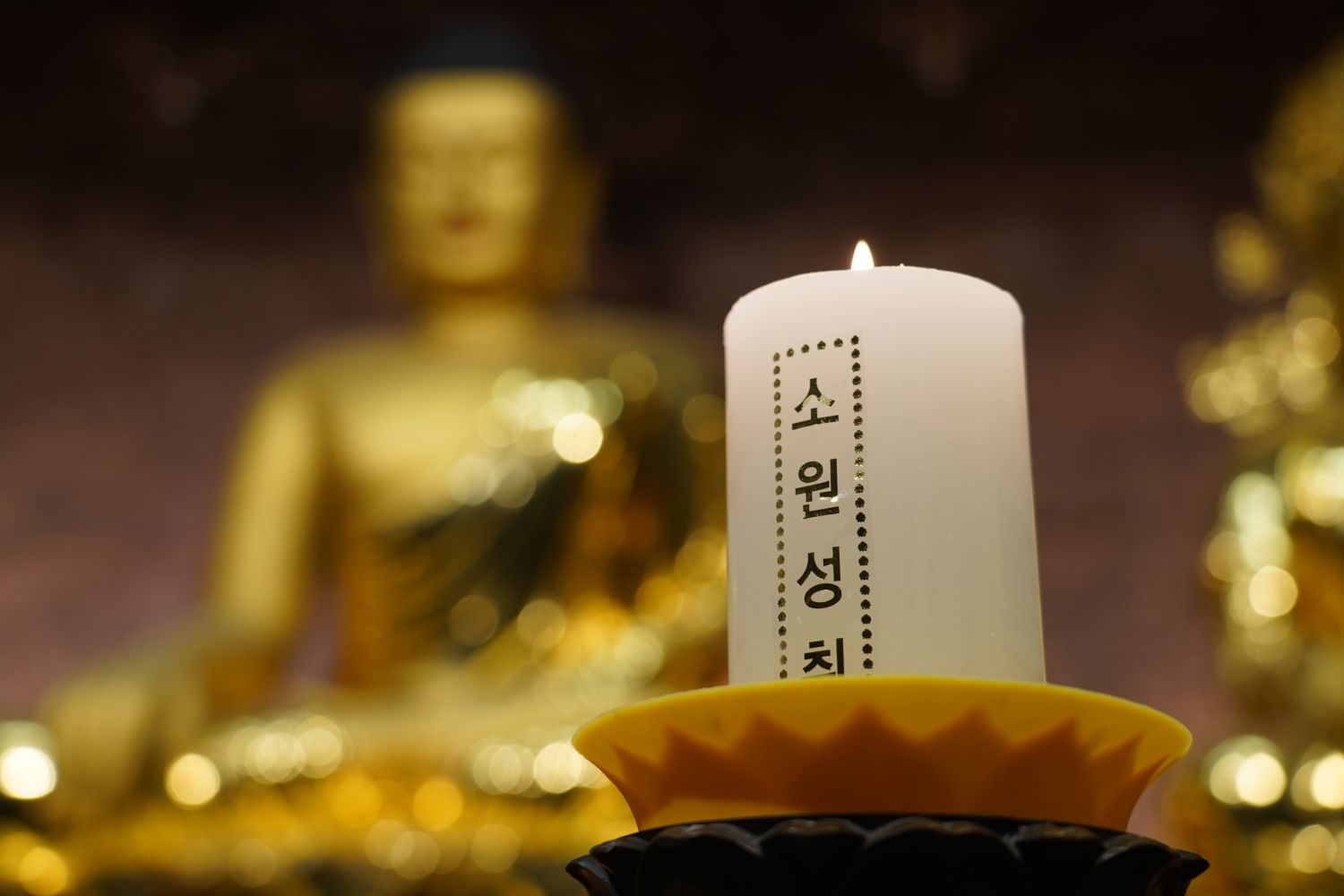
Jesa honors someone who’s already been gone a while. A Korean funeral, jangnye, is the immediate process right after death, and it runs on its own distinct customs. Modern Korean funerals typically last three days and are held at a jangnyesikjang, a funeral hall, very often physically connected to a hospital, which surprises a lot of visitors expecting something closer to a Western funeral home. Mourners traditionally wear black, and close family members sometimes wear hanbok-style mourning clothes or armbands, a visible marker of their relationship to the deceased. Guests offer condolence money in a white envelope, and there’s an actual etiquette to the amount too, it’s customary to give in odd numbers, thirty thousand, fifty thousand, or a hundred thousand won being common brackets depending on how close you were to the family, since odd numbers are traditionally associated with good fortune in a way even numbers aren’t. Bowing to the deceased’s photo, along with bowing to the family, is standard. Loud grieving and open emotional expression at the funeral hall is generally accepted and even expected, which contrasts with the more reserved, formal composure Korean culture often emphasizes in daily public life.
After the three days, cremation has become the overwhelmingly common choice in modern Korea, a genuinely significant shift from decades past when burial was the norm, driven largely by limited land availability. Cremated remains are often placed in a columbarium, a memorial hall built specifically to house urns, rather than a traditional grave, though family burial plots and mountainside grave mounds still exist, especially in rural areas and older family lines.
Why Religious Background Actually Changes the Practice
Here’s something that doesn’t get explained clearly in a lot of overview articles: whether a family practices jesa at all often comes down to religion, and the split is sharper than you’d expect. Catholics and Buddhists in Korea generally continue practicing ancestral rites, often reframing jesa as an act of remembrance and family respect rather than literal ancestor worship, a distinction the Catholic Church in Korea officially settled decades ago after some historical friction. Protestant Christian households, on the other hand, much more commonly do not perform jesa, viewing it as conflicting with their beliefs, and instead hold a memorial service structured more like a simple family prayer gathering on the anniversary. Neither approach is treated as more “authentically Korean” than the other at this point. It’s genuinely just a normal, unremarkable variation between different Korean families you might visit.
A Tradition That’s Quietly Changing
You’d think a ritual this deeply rooted would stay frozen in time, but it’s actually shifting fast, and mostly for practical reasons. Smaller apartments make hosting an elaborate jesa harder logistically. Working adults, especially women, who traditionally shouldered most of the cooking and preparation labor for these ceremonies, are increasingly pushing back on the workload, and that tension gets discussed pretty openly in Korean media these days. A growing number of families now simplify the ritual considerably, fewer dishes, shorter ceremonies, or combining multiple ancestors into a single simplified rite instead of separate ones for each. Some families have even shifted jesa entirely to a restaurant that specializes in hosting them, professional catering essentially, which would have been unthinkable a generation ago and is now just a normal option a lot of urban families quietly choose.
FAQ
If I’m invited to a jesa or a Korean funeral, what should I actually do?
For a jesa, dress modestly and follow the lead of the family, standing back and observing unless invited to bow or participate directly. For a funeral, wear black or at least dark, conservative clothing, bring a condolence envelope with cash inside in an odd-numbered amount if that’s customary among the people you’re visiting with, and offer a simple bow or a quiet expression of sympathy rather than a long conversation. In both cases, watching quietly and following the household’s cues will get you through respectfully even if you don’t know every specific rule.
Do all Korean families still practice jesa today?
No, and it varies quite a bit by religion, generation, and individual family preference. Many households, especially Protestant Christian families, have shifted to a simpler memorial service instead. Even among families that keep the tradition, a lot of younger generations are actively simplifying it, shorter ceremonies, fewer dishes, sometimes combining rites for multiple ancestors into one occasion rather than several separate ones throughout the year.
Is it disrespectful for a foreigner to ask questions about jesa or funeral customs?
Generally no, as long as the timing and tone are considerate. Asking a Korean friend to explain jesa outside of an actual ceremony, out of genuine curiosity, is usually welcomed, since a lot of people are happy their culture is being taken seriously rather than treated as a curiosity. During an actual funeral, though, it’s best to keep questions minimal and simply follow along respectfully, saving the curiosity for a quieter moment afterward.
Leave a Reply