I once tried counting the cafes on a single block near my apartment, just out of curiosity, and gave up somewhere around seven. Seven. On one block. Not a particularly trendy block either, just an ordinary residential street with a pharmacy, a convenience store, and apparently an entire ecosystem of coffee shops competing for the same three hundred meters of foot traffic. If you’re coming from a country where a town might proudly have one good local coffee shop, Korea’s cafe density can feel almost absurd. It isn’t random, though. There’s a real, layered explanation for why this country turned coffee into something closer to a way of life.
The Numbers Are Genuinely Wild
Seoul alone has somewhere north of 18,000 coffee shops, which works out to roughly one cafe for every 500 or so residents, a ratio that would sound made up if it weren’t so easy to verify just by walking outside. Koreans drink an average of well over 400 cups of coffee per person a year, more than double the global average, in a country that, worth remembering, doesn’t actually grow coffee itself. Every bean is imported, and the industry thrives anyway. You’d think a market this saturated would collapse under its own competition, and honestly, a decent number of cafes do close within their first year or two. But new ones open just as fast, which tells you the demand isn’t a fluke, it’s structural.
Small Apartments Create a Big Appetite for “Third Space”
Here’s the part that clicked for me once I’d actually lived in a Korean officetel for a while: a lot of housing here is compact, one-room or studio-style living being extremely common, especially for young professionals and students. When your home doesn’t have room for a proper desk, a living room for guests, or honestly much space to breathe at all, a cafe stops being a treat and starts being an extension of your living space. Add in offices that can run intense and late, and traditional bars that, while fun, close loud and formal in ways that don’t suit every mood or every hour of the day, and cafes end up filling a genuine gap: a quiet, respectable, endlessly available place to just exist outside your apartment for a few hours.
That need doesn’t stay casual for long, though. Once a cafe becomes somewhere people go specifically to get things done rather than just relax, a whole separate industry grows up around it.
Study Cafes: Coffee Shops as Productivity Infrastructure
This is where Korea’s cafe culture genuinely diverges from most other countries, and it’s tied directly to how seriously studying is taken here. Dedicated study cafes, sometimes called “study rooms” or booked by the hour, are built specifically for focus: individual desks with partitions, quiet enforced almost like a library, unlimited coffee or tea included in the price, and hours that stretch late into the night to match students cramming for university entrance exams or licensing tests. Ordinary cafes absorb a lot of this energy too. Walk into almost any coffee shop near a university at 9 p.m. and you’ll find rows of people with laptops and textbooks who have clearly been there for hours, and nobody bats an eye, because that’s simply what the space is understood to be for.
You’d think a business would want to turn tables over quickly to maximize revenue, and a Western cafe manager might. But the model here has adjusted around the reality that a customer nursing one Americano for four hours while studying is still a paying customer occupying a seat that keeps the lights on, and cafes have built pricing and seating around that expectation rather than fighting it.
Dessert Cafes and Korea’s Serious Sweet Tooth
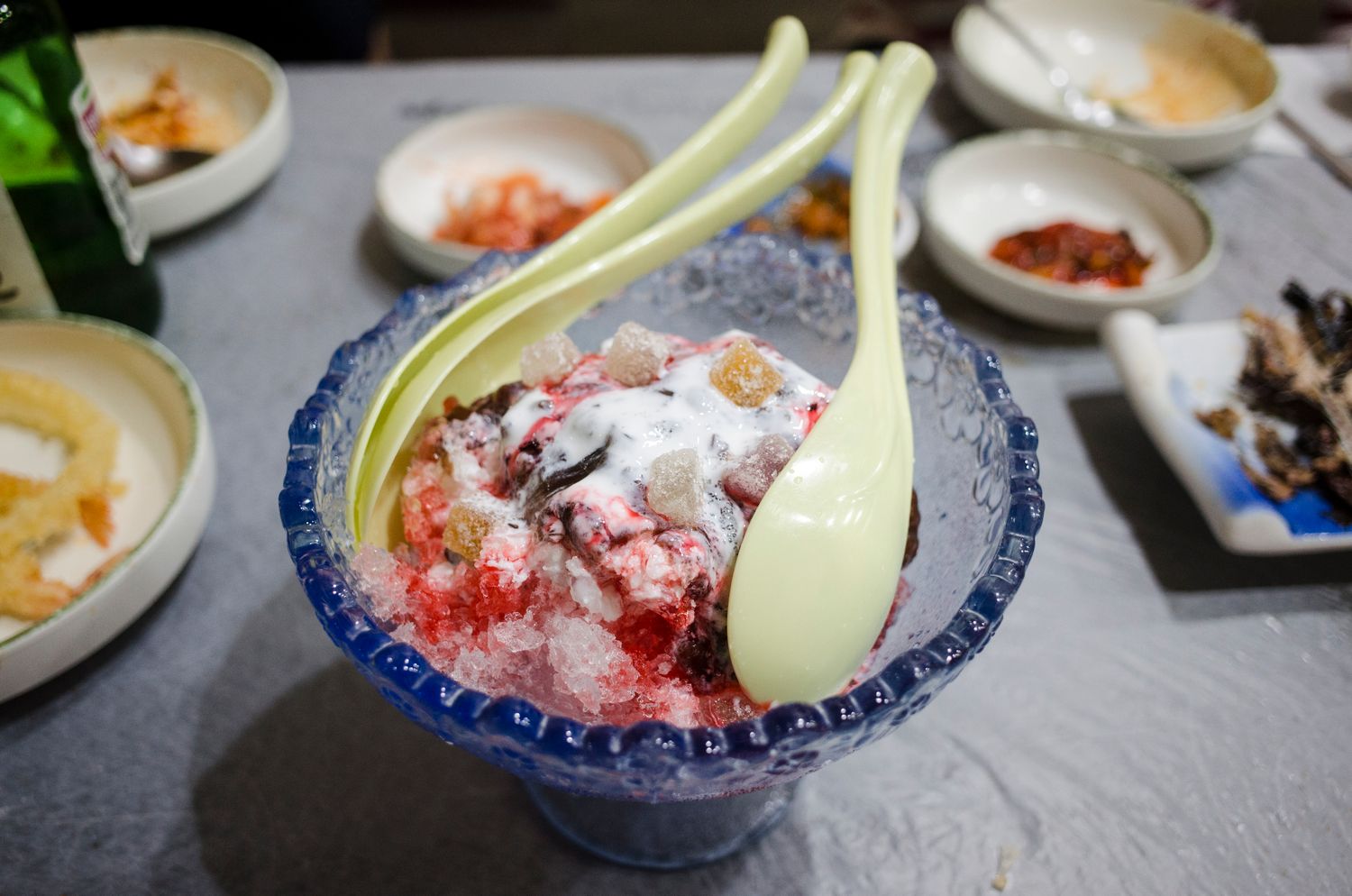
Coffee is really only half the story. Korea’s dessert cafe scene is its own universe, built around towering bowls of bingsu, shaved ice piled absurdly high and topped with everything from fresh mango to red bean to entire slices of cheesecake, alongside soufflé pancakes so jiggly they wobble when the plate hits the table, and delicate French-style macarons in colors that don’t occur in nature. A single bingsu can run the equivalent of fifteen to twenty dollars and is often built to be shared between two or three people, which turns dessert into a genuinely social event rather than a solo indulgence.
Themed cafes push this even further, and this is where things get delightfully specific. There are cafes built around cats, around dogs, around raccoons at one point, cafes shaped like entire miniature libraries, cafes with rooftop views engineered specifically for a good photo. Described flatly like that it can sound like a gimmick, and some of it honestly is, but the underlying instinct is telling: turning a simple coffee break into a small, photographable outing says a lot about how central cafes are to how people actually spend their leisure time here.
The Instagram Economy of Cafe Design
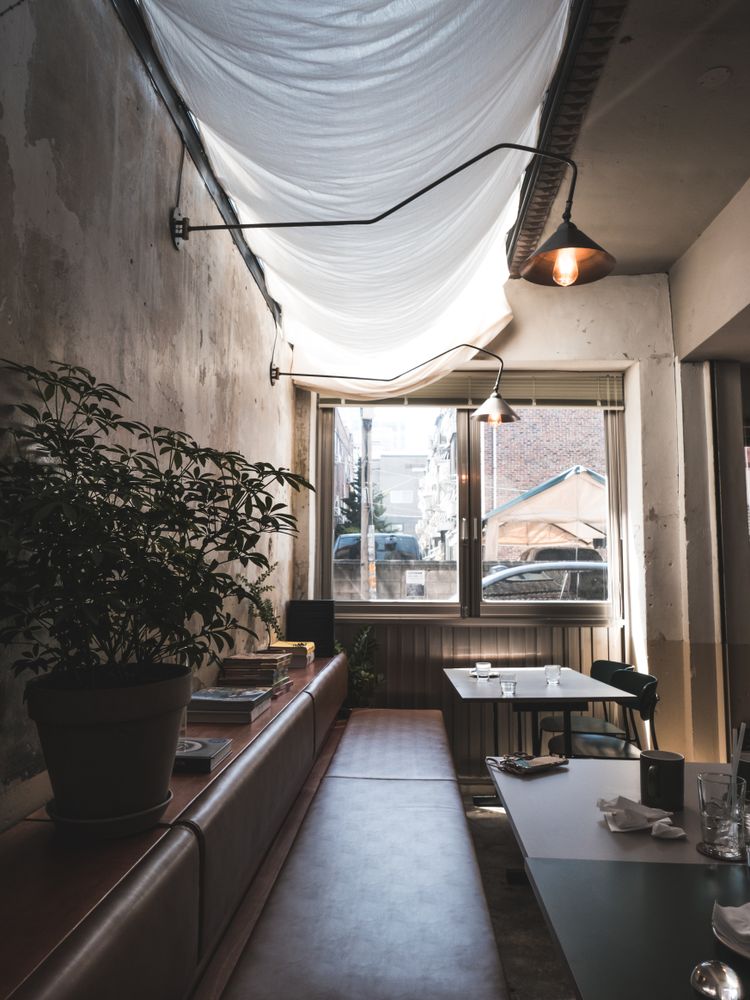
Interior design in Korean cafes is not an afterthought, it’s practically a marketing department. Owners invest heavily in aesthetics, minimalist concrete spaces, lush plant-filled greenhouses, entire rooms built around a single dramatic light fixture, because they know guests will photograph almost everything and post it, turning the cafe itself into free advertising every single day. Taking photos of your drink, your dessert, the space, even yourself, is treated as a completely normal part of the cafe experience here rather than something slightly self-indulgent, the way it might read in some other countries.
This creates an interesting cycle worth naming honestly: cafes chase photogenic design to attract visitors, visitors post those photos, which drives more visitors, which pushes competitors to design even more elaborate spaces to keep up. It’s part of why a genuinely stunning new cafe can go from unknown to packed within weeks, purely through social media, no traditional advertising required.
Cafe-Hopping as Its Own Social Ritual
Ask a group of friends here to hang out and there’s a decent chance the plan involves not one cafe but two or three in a single afternoon, an activity casually called cafe-hopping. One stop for coffee and conversation, another purely for dessert, maybe a third just because the space looked interesting from outside. It sounds excessive if you’re used to treating a cafe visit as a single errand, but here it functions more like a leisurely walking tour, with each stop offering a different mood, a different menu, a different photo opportunity. Neighborhoods like Seongsu-dong and Yeonnam-dong have built entire reputations around exactly this kind of cafe-hopping culture, with visitors planning entire day trips around which three or four spots to hit. It’s worth noting Seongsu-dong specifically used to be a low-key industrial district full of old shoe factories and machine shops, and a lot of its most striking cafes today are literally those old factory buildings gutted and redone with soaring ceilings and exposed pipes left intentionally visible, which gives the neighborhood a raw, warehouse-chic identity that newer purpose-built cafe strips can’t really fake.
Is It Actually Too Much? The Other Side of the Boom
It’s worth being honest that this saturation has a cost. Small independent cafe owners face brutal competition, rents in trendy neighborhoods climb fast once an area gets popular on social media, and the same viral cycle that makes a cafe famous overnight can just as easily move on to the next trendy spot within a year, leaving yesterday’s hotspot half-empty. Turnover in the industry is genuinely high, and opening a cafe here, despite how appealing the culture makes it look, is a famously risky small business to start, competitive and margin-thin even for owners who genuinely know what they’re doing. So the cafe boom isn’t some effortless cultural inevitability. It’s sustained by real economic pressure and real risk on the business side, even while it looks effortlessly charming from a customer’s seat with a latte in hand.
And yet, even knowing all that, it’s hard to stay cynical about it once you’re actually sitting in one of these places. Whatever the economics look like from behind the counter, from the customer’s side of the table a Korean cafe still functions as something closer to a communal living room than a simple retail transaction, the place where a study session happens, where a first date happens, where four friends catch up over dessert big enough that nobody has to eat alone. That’s ultimately the real reason there are so many of them. Coffee is just the excuse.
FAQ
Is it rude to sit in a Korean cafe for hours without ordering more than one drink?
Generally no, especially at cafes near universities or in residential neighborhoods that are used to long-staying customers studying or working. That said, at small, busy specialty cafes with limited seating, especially during peak weekend hours, it’s considerate to be a bit more mindful of how long you occupy a table if there’s a visible line forming.
What’s a reasonable price to expect for coffee and dessert in Korea?
A standard Americano typically runs around four to five dollars, similar to many Western cities, while specialty drinks and desserts, especially bingsu or elaborate themed items, can run noticeably higher, sometimes fifteen dollars or more for a dessert clearly built for sharing rather than solo eating.
Are study cafes only for students, or can anyone use them?
Anyone can use them, and plenty of freelancers, remote workers, and people studying for professional licenses do. Some study cafes require booking a seat in advance or paying by the hour rather than per drink, so it’s worth checking a specific location’s system before showing up expecting a standard walk-in coffee shop experience.
Leave a Reply