Last winter I watched a guy in his fifties — clearly a tourist, fresh off a red suitcase and a paper map he was holding upside down — step onto an escalator on the wrong side, plant himself in the middle of the lane, and then look genuinely wounded when a line of Seoul commuters started tutting and shuffling around him like water around a rock. He hadn’t done anything illegal. Nobody yelled. But you could feel forty people silently recalibrating their opinion of foreigners by about two degrees. That’s the thing about living here that took me the longest to absorb: Korea doesn’t really have a rulebook you can read in advance. It has a rhythm, and you either pick it up or you spend your whole trip a half-step behind everyone else, wondering why the room went quiet.
I’ve been Yijidaddy long enough now — raising a kid here, doing the school runs, standing in line at the pharmacy, getting yelled at by ajummas who are, in retrospect, always right — that I’ve made most of the classic mistakes myself. Some of them more than once. So this isn’t a superior “watch and learn” list. It’s closer to a field report from someone who has personally caused a subway car to go silent, and lived to write about it.
The small stuff that actually matters
Every country has unwritten rules, but Korea’s are unusually consistent — you’ll see the same expectation play out in a countryside guesthouse and a Gangnam office building. That consistency is exactly why it’s worth learning the patterns instead of memorizing a checklist. Here’s what trips people up most, and why it lands the way it does.
1. Walking in with your shoes still on
This one seems obvious until it isn’t. You know to take your shoes off at someone’s home. What surprises people is how far that expectation extends — to certain restaurants with raised floor seating, to some clinics, to guesthouses, to the entryway of a friend’s apartment where there’s a very deliberate little step down and a shoe rack that is not decorative. The logic isn’t really about cleanliness, or not only. Floors in Korea are lived on. People sit on them, sleep near them, let toddlers crawl across them. Bringing outside shoes onto that surface isn’t just unhygienic, it’s a small violation of a space that’s treated more like a extension of the body than a floor. Watch for the raised step and the shoe rack. If you see both, your shoes come off before you think twice about it.
2. Sticking your chopsticks upright in a bowl of rice
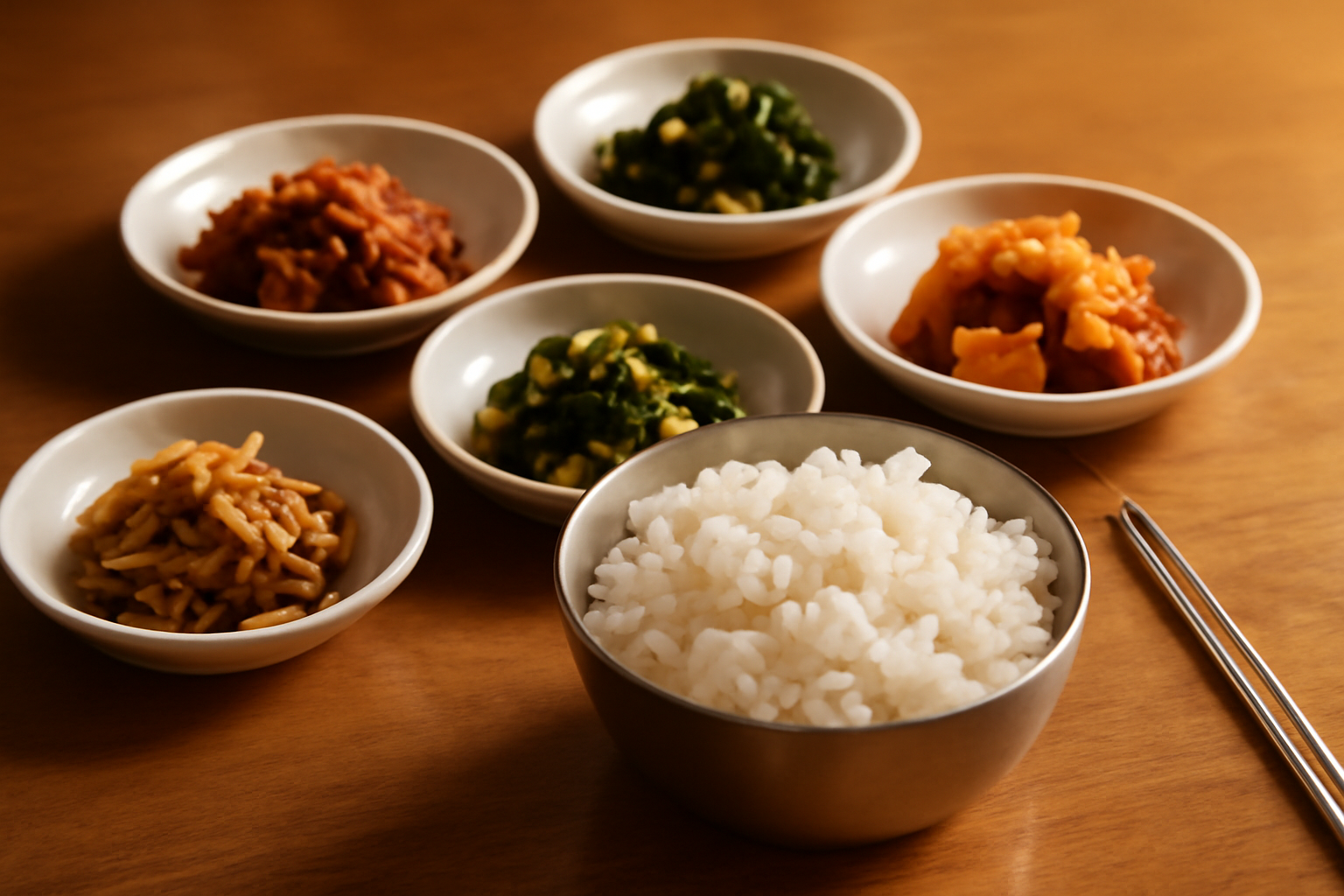
I did this once, absentmindedly, at a family gathering, and felt the temperature of the room drop about ten degrees before anyone said a word. Upright chopsticks in rice mimic the incense sticks placed at a memorial altar — it’s a funeral image, and setting your dinner up to look like an offering to the dead is not the vibe you want at a birthday lunch. Lay them flat, or rest them on the little ceramic chopstick holder if the restaurant gives you one. It’s a two-second habit to build and it saves you from a moment that’s genuinely uncomfortable for everyone at the table, not just you.
3. Pouring your own drink
At a Korean dinner table, especially one with soju involved, drinks are a relationship, not a beverage. You pour for others, they pour for you, and topping off your own glass mid-meal reads as either oblivious or a little standoffish — like you’d rather not deal with anyone. If someone older is pouring for you, receive the glass with both hands, or at least steady it with your off hand at the wrist. It sounds fussy written down. In practice it takes about one dinner to become automatic, and Koreans will visibly relax around you once you’ve shown you know the choreography.
4. Sitting in the priority seats on the subway
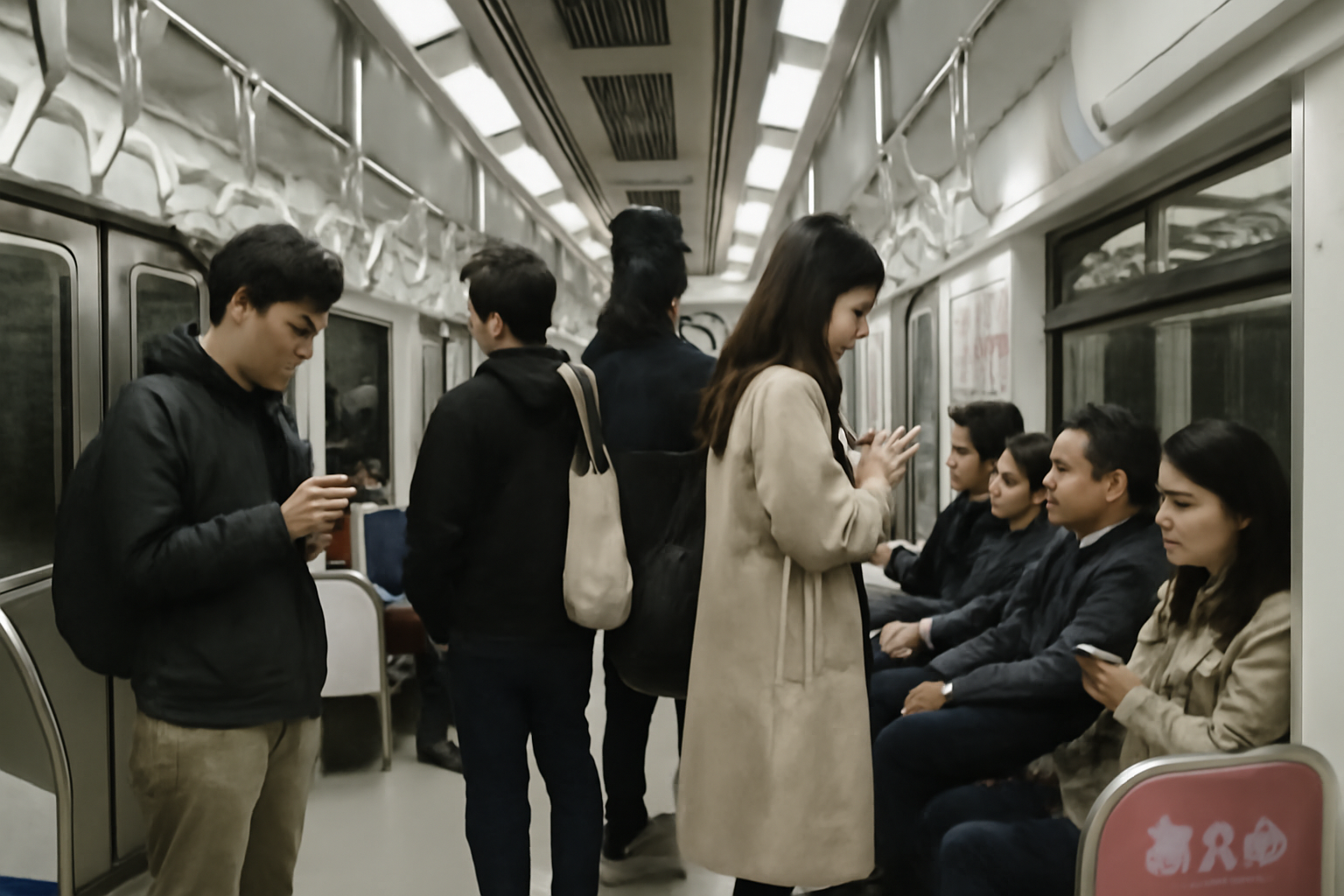
The pink and blue seats near the subway doors aren’t a polite suggestion — they’re reserved, in practice as much as in principle, for elderly passengers, pregnant women, and people with disabilities, even when the car is nearly empty. I’ve seen foreigners plop down there because the rest of the car is packed and the priority seats are open, not realizing they’ve just claimed a seat an elderly halmeoni is going to expect back the moment she boards. She will let you know. Politely, but unmistakably. Standing for one stop costs you nothing. Learning this the hard way costs you a very long, very pointed stare.
5. Taking loud phone calls on public transport
Korean subway cars run on a kind of collective hush — people read, scroll, nap, but they don’t hold conversations at normal volume, and they definitely don’t take calls without stepping toward the door or cupping the phone and half-whispering. A loud phone call, the kind that would barely register on a bus back home, turns heads here. Nobody will confront you about it. They’ll just get quiet in that specific way that means they’ve clocked you as someone who doesn’t know where they are.
6. Jaywalking like it doesn’t count
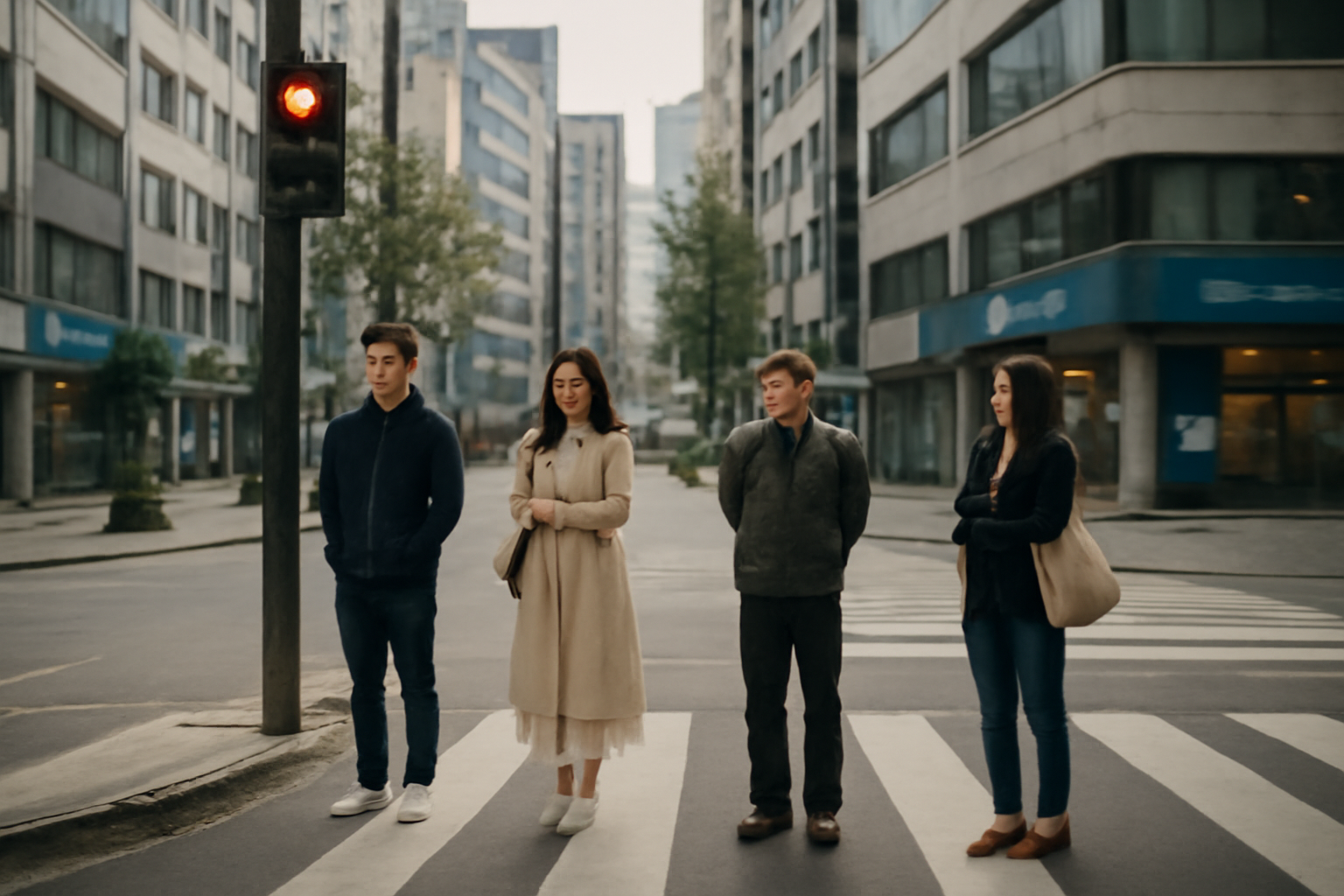
This surprises a lot of visitors, because Seoul otherwise feels like a city that moves fast and doesn’t wait around. But road crossings are one place where Koreans are strict with themselves, especially near schools and with kids around — and cameras plus real fines back that up on plenty of streets. Crossing mid-block against traffic, especially with a stroller or a group of kids nearby, gets you a specific kind of disapproving look, and near a school zone it can genuinely get you stopped. I get why it’s tempting when the street’s empty and the light seems to take forever. I still wait. Partly because I’ve got a kid watching what I do, and partly because I’ve seen what happens to the person who doesn’t.
7. The wrong hand gesture, at the wrong person
Waving someone over palm-up, fingers curling toward you — completely normal in a lot of countries — is how you’d call a dog here. To beckon a person, the polite version is palm down, fingers waving inward. Pointing directly at someone with one finger, especially someone older, reads as confrontational in a way it might not elsewhere. Neither of these will start a fight. But they land as small jolts of rudeness that undercut whatever friendly thing you were actually trying to communicate, and it’s an easy habit to retrain once you notice it.
8. Trying to leave a tip
Tipping isn’t part of the system here, and trying to leave one — pressing extra cash into a server’s hand, leaving coins on the table — usually creates more awkwardness than goodwill. Service is already priced in, and offering a tip can come across as implying the staff need the extra help to do their job properly, which is not the message you meant to send. If you want to show appreciation, a sincere “jal meogeosseoyo” (I ate well) on your way out does more work than cash ever could.
One more thing: names aren’t casual
It took me longer than I’d like to admit to stop calling people by their first name the way I would back home. In Korea, how you address someone maps directly onto the relationship — a title, a role, or an honorific usually stands in for a first name unless you’re genuinely close in age and status. Calling your father-in-law by his given name, or a coworker several years your senior by theirs, isn’t just informal, it can read as a small refusal to acknowledge the relationship at all. Titles like “teacher,” “president,” “older brother/sister,” or someone’s role at work aren’t stiff formalities — they’re the actual social glue. Default to the title until someone explicitly tells you to drop it.
Why this stuff actually matters more than it looks like it should
None of these are laws. Nobody’s getting arrested for pouring their own soju. But Korea runs on a dense, mostly unspoken web of consideration for the people around you — what some people shorthand as nunchi, the skill of reading a room without being told anything out loud. Every item on this list is really the same lesson wearing a different costume: notice the room before you act in it. That instinct is worth more here than memorizing any specific rule, because the specific rules will keep surfacing in situations no article can fully cover.
And to be clear — Koreans extend foreigners a real amount of grace. Nobody expects a tourist to master honorific speech levels or know the correct pouring angle for soju on day one. What people notice, and appreciate, is the effort. Take your shoes off without being asked twice. Lower your voice on the subway before someone has to raise theirs. Notice the ajumma standing near the priority seat before she has to say anything. That’s really the whole test, and it’s one you can pass by paying attention rather than by studying.
FAQ
Is it really that big a deal if I mess up chopstick etiquette?
Honestly, no — a single slip won’t ruin your trip or offend anyone permanently. Koreans generally understand that visitors don’t know every custom, and a quick correction (“oh, not like that”) is usually delivered kindly. The upright-chopsticks-in-rice one specifically tends to get a stronger reaction because of the funeral association, so that’s the one worth actually remembering. The rest — which hand you hold your spoon in, whether you use chopsticks for rice versus a spoon — nobody’s going to hold against you.
Will people actually get mad at me, or just judge silently?
Mostly the latter, and honestly that’s almost harder to read as a foreigner, because you won’t always know it happened. Direct confrontation over etiquette is rare, especially with visitors. What you’ll get instead is a look, a slightly cooler tone, a stranger quietly stepping in to fix the situation for you — like the halmeoni standing pointedly near her priority seat. Once you know to watch for those cues, they’re actually pretty easy to read.
What’s the one rule that surprises people the most?
For most visitors it’s the pouring-drinks etiquette — the idea that you don’t serve yourself and that receiving a drink involves both hands if someone senior is pouring. It feels like a lot of choreography for a casual dinner. But once you’ve done it a few times it stops feeling like a rule and starts feeling like what it actually is: a small, repeated way of paying attention to the people at your table.
None of this is about walking on eggshells. It’s closer to what happens when you move to a new house and start learning where the creaky floorboard is — you don’t think about it forever, you just eventually stop stepping there. Get the basics down, stay observant, and the rest sorts itself out with time. It certainly did for me, mostly.
Leave a Reply