The glass is already full before you’ve decided anything. That’s the part nobody warns you about. Your boss has picked up the soju bottle, poured it toward you with two hands, and is now just… waiting. Not glaring, not smiling, just waiting, glass tilted slightly in your direction, and the whole table has gone quiet enough that you can hear the ice machine humming in the back. You haven’t said a word yet, and somehow the moment already feels loaded.
I’m Yijidaddy, and I’ve sat at enough of these tables now that the panic has mostly worn off, but the question underneath it never really goes away: is it actually rude to say no here, or does it just feel that way because everyone’s watching?
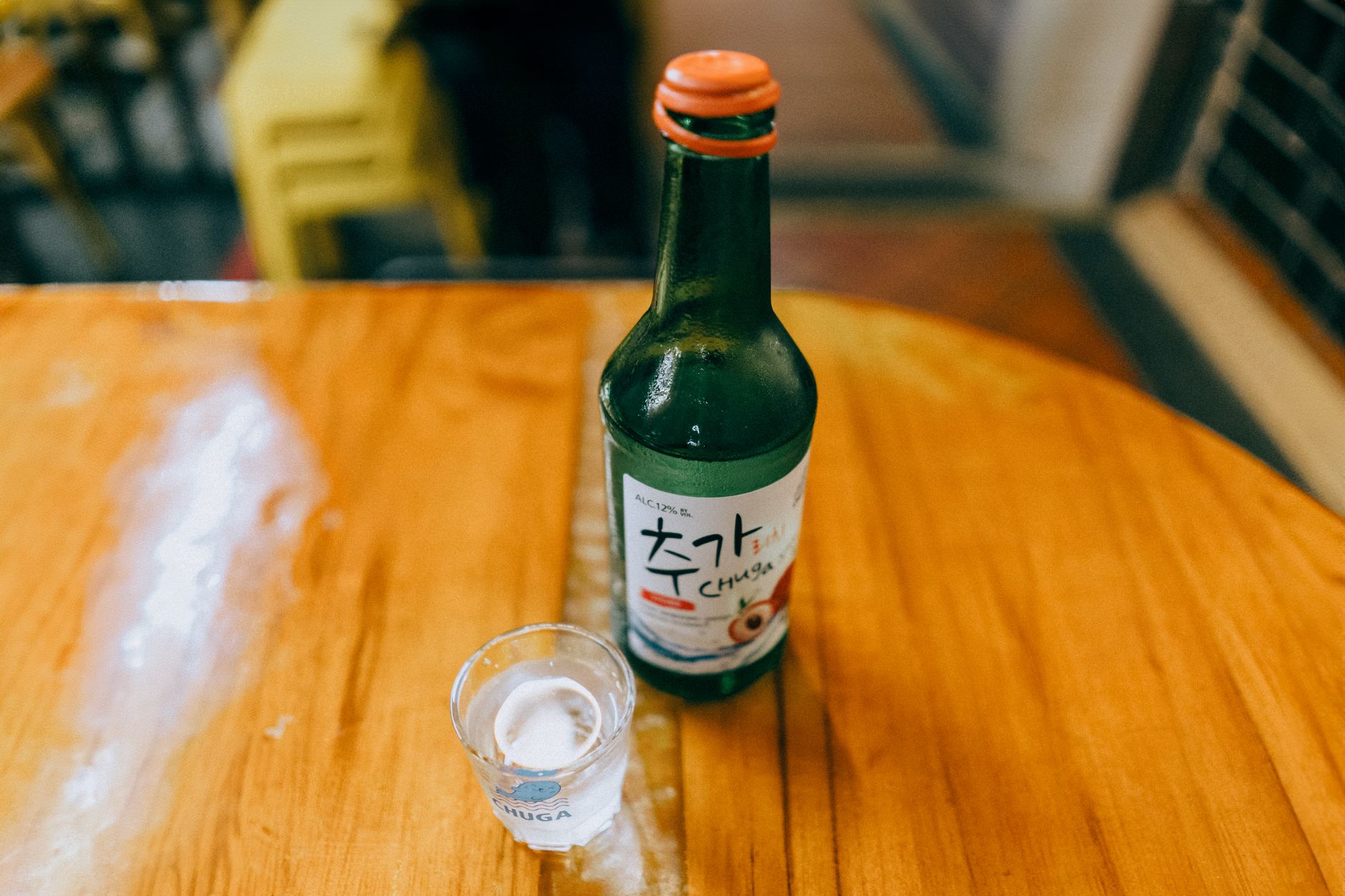
Why the Answer Isn’t a Simple Yes or No
Here’s the honest, slightly unsatisfying answer: it depends entirely on who’s pouring, where you are, and how you say no. Refuse a stranger’s drink at a casual dinner and nobody blinks. Refuse your department head’s drink at a hoesik — the Korean word for a company dinner, usually built around the idea that eating and drinking together builds team cohesion — and you’re navigating something with actual social weight. The discomfort you feel isn’t in your head. It’s a real signal that you’re standing at the edge of a hierarchy system that’s been reinforced through alcohol for decades.
You might assume this is just an older generation thing, fading out with each passing year, and to some extent that’s true. Younger Korean employees increasingly push back on being pressured to drink, and some companies have even set official limits on after-work drinking hours. But even so, the underlying etiquette hasn’t disappeared — it’s just gotten more negotiable. Knowing the old rules is still what lets you bend them gracefully instead of just ignoring them and hoping for the best.
What Refusing Actually Signals
In traditional Korean drinking culture, alcohol poured by a senior isn’t really about the alcohol. It’s an offering, almost a small ritual of inclusion — accepting it says “I respect you and I’m part of this group.” A flat, unexplained refusal can read less like “I don’t want to drink” and more like “I’m rejecting you,” which is a much bigger statement than most foreigners intend to make. That gap between what you meant and what got heard is where most of the awkwardness actually comes from.
Strange as it sounds, the fix usually isn’t refusing better — it’s accepting differently. A common and completely acceptable move is to take the glass with both hands, let it be filled, bring it to your lips, and take the smallest possible sip before setting it back down. Nobody is tracking your blood alcohol content at the table. What they’re tracking is whether you showed up, whether you received the gesture, and whether you’re being a good sport about the ritual. A token sip usually satisfies all three.
The Small Physical Rules That Do a Lot of Work
There are a handful of small physical habits that carry more social weight than they probably should, and once you know them, the whole system starts to make a lot more sense. Pouring and receiving with two hands — or at least one hand supported by the other touching your forearm — signals respect toward someone older or senior to you. If you’re already familiar with how self-pouring is viewed here, you’ll recognize the same logic at play in why pouring your own drink is considered a small faux pas in the first place: drinking in Korea is rarely a solo act, even when you’d rather it were.
The other habit, and the one that surprises people the most, is turning your head or body slightly away from a senior when you actually take a drink they poured for you. It looks almost shy from the outside, but it’s a gesture of deference, not discomfort — you’re not hiding the act of drinking, you’re just not doing it directly “at” the person who outranks you. To my surprise, once I started doing it automatically, it stopped feeling performative and just became muscle memory, the same way you’d instinctively lower your voice in a quiet room.
How to Say No Without Making It a Whole Thing
If you genuinely can’t or don’t want to drink, the trick is timing and framing, not force. Mentioning it early — before the first bottle is even opened — lands completely differently than refusing mid-round after everyone’s already three glasses in and mid-toast. “I’m not drinking tonight” said at the start is a simple fact. The same sentence said after a geonbae, the group toast that kicks off a round, can feel like you’re pulling out of something everyone just committed to together.
Reasons that work well and rarely get pushed back on: being on medication, driving later, or simply saying your stomach isn’t up for it that day. You don’t need a doctor’s note or a dramatic explanation — a short, matter-of-fact reason plus receiving the poured glass anyway (even if you don’t drink from it) usually closes the conversation. What doesn’t tend to work as smoothly is a bare “no thanks” with no context, especially from someone visibly younger or more junior at the table, because it can read as either shyness taken too far or, worse, a lack of respect — even though that’s almost never the intent.

It’s also worth saying that not every round of drinks demands the same level of care. Wonsaem — literally “one shot,” the custom of downing a glass in a single go, often shouted as a kind of group cheer — shows up more at looser gatherings among friends than at a formal hoesik with your director sitting across the table. Reading the room matters here almost more than knowing the rules themselves. A hoesik that moves to a second location, sometimes a noraebang for singing and a slightly more relaxed atmosphere, tends to loosen the formality a notch too, which is its own small mercy if the first round felt stiff.
The Part That Actually Matters
None of this is really about alcohol tolerance. It’s about being read as someone who understands the shape of the room. A senior colleague pouring your glass isn’t testing your liver, they’re extending a small, ritualized gesture of inclusion, and how you receive it — two hands, a slight turn, a token sip, a polite early heads-up if you’re opting out entirely — says far more about your social fluency than whether the glass ends up empty. Turns out you can decline the drink and still fully accept the gesture, and that distinction is really the whole trick.
Frequently Asked Questions
My boss just poured me a shot at a hoesik and I don’t drink at all — what do I do right now? Receive the glass with both hands, thank them, and either take the smallest possible sip or simply let it sit in front of you untouched for the rest of the meal. Nobody is going to force the glass to your lips. What matters is that you accepted the gesture instead of waving it off, and if anyone asks, a quiet “I’m not drinking these days” closes the topic without drama.
Is it rude to tell my coworkers ahead of time that I don’t drink alcohol at all? Not at all — in fact it’s the smoothest option available. Mentioning it before the first bottle opens, even in passing (“I don’t drink, but I’ll definitely be there”), sets the expectation early and almost always gets a completely understanding response, since it gives everyone time to adjust rather than putting anyone on the spot mid-toast.
What if an elder keeps refilling my glass even after I’ve said I’m done? This usually isn’t pressure so much as habit — topping off a neighbor’s glass is just what you do at a Korean table. Leaving the glass mostly full and simply not lifting it again is a clear enough signal on its own, and pairing it with a light “I’m good for tonight, thank you” almost always gets the refills to stop without any tension at all.
Leave a Reply