Last week my Korean mother-in-law called to ask, very casually, whether I’d be “free” on September 25th. I said sure, why. Long pause. Then: “Good. You’re peeling chestnuts.” That’s how I found out, four years into this, that Chuseok prep starts with a phone call disguised as a question. If you’re a foreigner in Korea and you’ve started noticing convenience store aisles filling up with gift boxes of Spam and cooking oil, or you’ve heard coworkers groaning about train tickets, congratulations — you’ve stumbled into Chuseok season, and here’s what’s actually going on.
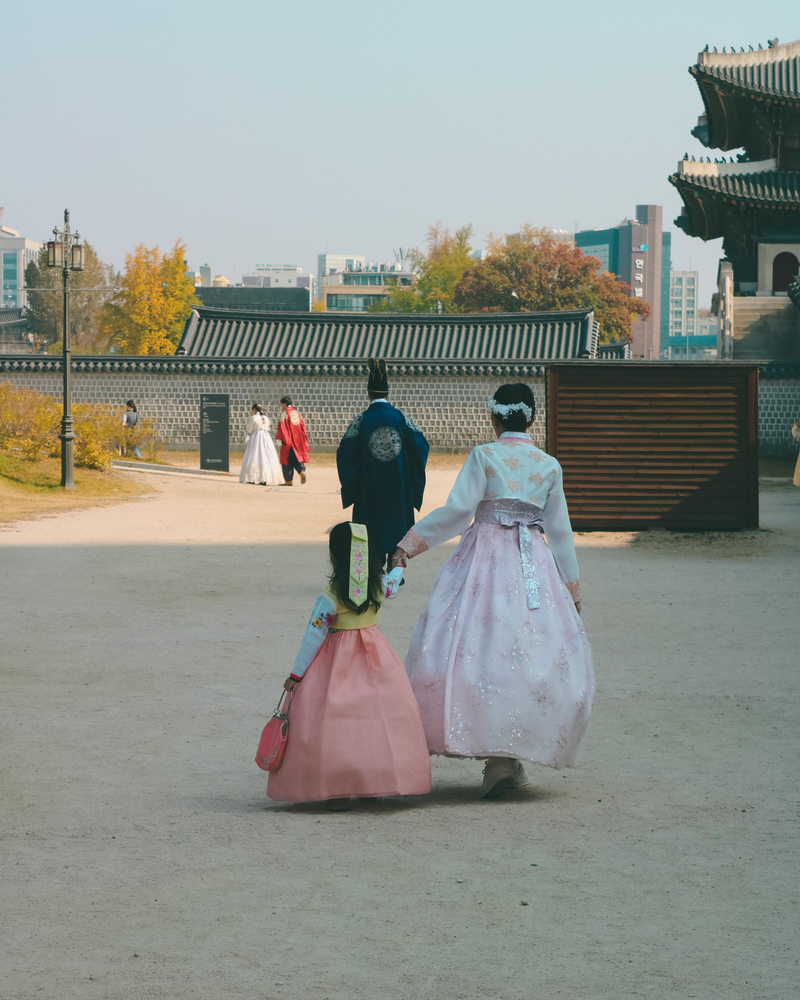
So what is Chuseok, exactly?
Chuseok (추석) falls on the 15th day of the 8th month of the lunar calendar, which lines it up with the full moon closest to the autumn harvest. In 2026 that’s September 25th, a Friday, with the official holiday running September 24-26. People often shorthand it as “Korean Thanksgiving,” and that’s close enough to be useful, but it’s not quite right. Chuseok is older and more specific: it’s a harvest festival first, thanking ancestors and the land for the year’s rice, fruit, and grain, and a family reunion second. There’s no turkey-and-football equivalent, no single origin myth everyone agrees on — some trace it back over a thousand years to Silla-dynasty weaving competitions — but the core idea has stayed remarkably intact: the harvest came in, the moon is full, go home.
What trips people up is assuming it’s the same holiday as Seollal, Korean New Year, just in a different season. It isn’t. I actually wrote about Seollal separately because the two get lumped together constantly, and while they share some DNA — both are lunar-calendar holidays, both involve ancestral rites, both mean a multi-day exodus out of Seoul — Seollal is about starting a new year, with sebae bows and money envelopes for kids. Chuseok is about the harvest that just happened. Different mood entirely. One feels like a fresh start; the other feels like exhaling.
Charye: the morning nobody skips
The ritual heart of Chuseok is charye, an ancestral memorial rite held on the morning of the holiday itself, usually at the home of the eldest son or the head of the extended family. The family sets a low table with an almost absurdly specific arrangement of food — rice, soup, songpyeon, fruit arranged by type (in the traditional layout, red fruits like persimmons and jujubes go on the east side, white fruits like pears and apples on the west), dried fish, jeon (savory pancakes) — and takes turns bowing to honor two, sometimes three, generations of ancestors. It’s quiet, a little formal, and over faster than you’d expect, usually thirty to forty minutes.
I’ll admit the first time I sat through one, I braced for something heavier — incense, solemn silence, everyone in hanbok. What I got instead was my father-in-law fussing about whether the persimmons were positioned correctly while my sister-in-law’s toddler tried to eat a chestnut off the table. It’s reverent, but it’s also just a family doing a family thing, bickering included. Some households have simplified charye down to a shortened version, or skip it in years when travel isn’t possible, and nobody treats that as scandalous — it’s less rigid than outsiders assume.
Songpyeon: why the shape and the filling actually matter
Songpyeon is the rice cake you’ll see everywhere in Chuseok marketing, and it’s worth understanding why it isn’t just “a snack.” It’s a small half-moon-shaped rice cake made from short-grain rice dough, stuffed with a filling, and steamed on a bed of pine needles — which is where the name comes from (song means pine) and where the rice cakes pick up a faint, genuinely pleasant piney fragrance. The crescent shape is deliberate: it represents the moon not yet full, symbolizing growth and good fortune still ahead, as opposed to a full moon that has nowhere left to go.
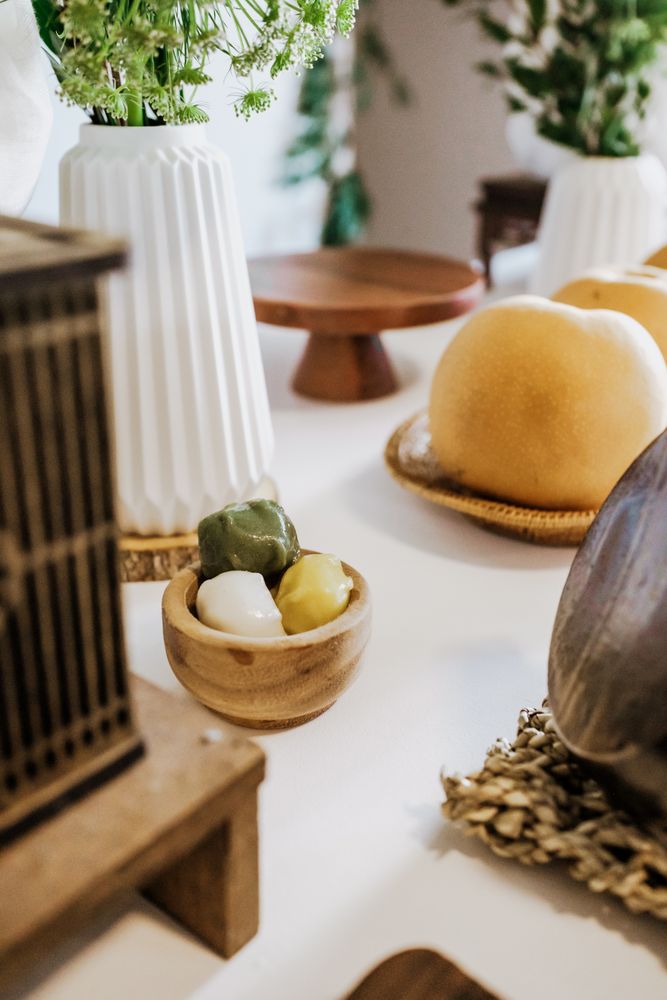
The filling is where family pride actually shows up, since most people learned their exact ratio of sugar to sesame from a specific grandmother and will defend it accordingly. Classic fillings include toasted sesame seeds mixed with sugar and a little salt, sweetened red bean paste, mashed chestnut, and honey — though some families swear by a mung bean version instead. In parts of Gangwon-do you’ll find songpyeon made with local specialties like pumpkin or even acorn flour worked into the dough. There’s an old belief, mostly said with a wink now, that whoever makes the prettiest songpyeon will have a beautiful daughter or a good marriage — which is exactly the kind of superstition every grandmother repeats while side-eyeing everyone else’s lopsided rice cakes. Families traditionally make songpyeon together the night before Chuseok, and even now, when most people just buy them from a bakery or a mart, the making-them-together version still happens in a lot of households, partly because it doubles as entertainment for kids who’d otherwise be bored out of their minds waiting for the adults to finish talking.
The exodus: why the highways look like a parking lot
If you assume Chuseok is a quiet holiday people spend at home, drive out of Seoul on the Tuesday before it and you’ll be corrected fast. It’s arguably the single largest domestic travel event in Korea, because nearly everyone leaves the capital region to go to their hometown, all within the same 72-hour window. The scale of it is hard to appreciate until you’re stuck in it — a Seoul-to-Busan drive that’s a breezy four hours on a normal Tuesday can stretch to eight, nine, sometimes over ten hours during peak Chuseok traffic, even with extra lanes opened and tolls waived on the holiday itself. That’s not a rounding error; that’s your afternoon drive turning into an overnight one.
Train tickets are their own event. For the 2026 holiday, KTX reservations opened across a staggered schedule in early September — different lines and departure stations got their own booking windows over several days specifically so the servers wouldn’t collapse under simultaneous demand. Popular routes can show tens of thousands of people in the virtual waiting room the moment reservations open. Being even a second late refreshing the page can mean the difference between a seat and a five-hour wait in a train station aisle. Locals treat this the way some people treat concert ticket drops — alarms set, multiple devices open, backup plans already in place. If you’re a foreigner thinking about traveling somewhere during Chuseok, book absurdly early or, honestly, just don’t try to fight the exodus — go the opposite direction instead.
What to actually expect if you’re staying in Seoul
If you’re not going anywhere, Seoul itself turns into a genuinely different city for a few days. A huge share of small, family-run restaurants, neighborhood barbecue joints, and local cafes close for one to three days, often with a handwritten sign taped to the door rather than any advance notice online. Bigger chains, convenience stores, and most department stores stay open, though some close for a day or two around the holiday itself, and palaces and major tourist sites often run free or discounted admission and special events, so it’s not a dead zone by any means.
What catches people off guard is less the closures and more the vibe. Seoul empties out enough that you can hear your own footsteps on sidewalks that are normally shoulder to shoulder, subway cars have actual open seats, and entire commercial blocks go quiet behind pulled-down metal shutters. I’ve come to genuinely like it. There’s a particular pleasure in walking through Myeongdong or Hongdae with room to breathe, even if it means scouting your dinner options a day ahead because your favorite spot has its shutters down. My advice: treat it less as an inconvenience and more as the one window each year when the city hands you back some personal space — and if you happen to be a non-Korean employee on a Korean contract, know that the September 24-26 stretch is your paid holiday too, not just something happening around you.
Gift sets: the other Chuseok tradition you’ll notice immediately
Weeks before the holiday, every mart, department store, and even convenience store starts stacking gift sets near the entrance, and this isn’t a minor sideshow — gift-giving is a core part of Chuseok, a way of showing respect to parents, in-laws, bosses, and anyone else you owe a debt of gratitude to. The range is enormous. On the accessible end, you’ll find fruit sets (apples and pears are the classic pairing) running under 100,000 won — roughly $75 — or cooking-oil-and-canned-goods sets in a similar range that are practically a genre unto themselves. Step up and you’ll see Korean beef (hanwoo) gift sets in the hundreds of thousands of won, and at the very top, department stores compete over increasingly theatrical luxury sets — premium hanwoo boxes, aged wine collections, even ginseng sets that can run into the millions of won, occasionally scraping past $2,000 for the most absurd versions, mostly bought by companies for VIP clients rather than regular households.
What’s odd, and kind of charming once you notice it, is how the exact same gift shelf holds a $10 can of Spam and a $2,000 ginseng box with zero irony about the gap. And yes, Spam genuinely belongs in that lineup — canned meat gift sets became a status symbol decades ago and never really stopped being one, something I went into more in a separate post because it deserves its own space. If you get invited to a Chuseok gathering, a modest fruit box or a nice set of toiletries is a completely normal, appreciated gift — you don’t need to show up with a ginseng box worth more than your monthly rent.
A few things people actually ask
Is it rude to just stay in and do nothing? Not remotely, especially if you don’t have Korean in-laws pulling you into a charye somewhere. Plenty of Koreans without hometown ties, or who’ve opted out of the family gathering for whatever reason, spend Chuseok exactly like a long weekend — resting, traveling somewhere quiet, or catching up on shows. Nobody’s going to side-eye a foreigner for not observing a ritual that isn’t theirs to begin with.
What if my Korean friend or partner invites me to their family’s Chuseok? Go, if you’re comfortable — it’s genuinely one of the more meaningful ways to see Korean family life up close, gossip and all. Bring a small gift (fruit or a nice snack box is safe), and don’t panic if you’re handed chestnuts to peel or sent home with a plastic bag of leftover jeon you didn’t ask for. That’s basically an initiation rite at this point.
Chuseok took me a few years to actually get, in the sense of feeling it rather than just knowing the Wikipedia version. It’s not a loud holiday. It’s traffic jams and quiet streets and a table set with more care than the occasion technically requires, and somewhere in there, a family deciding — again, like they do every year — that showing up for each other is worth the ten-hour drive.
Leave a Reply