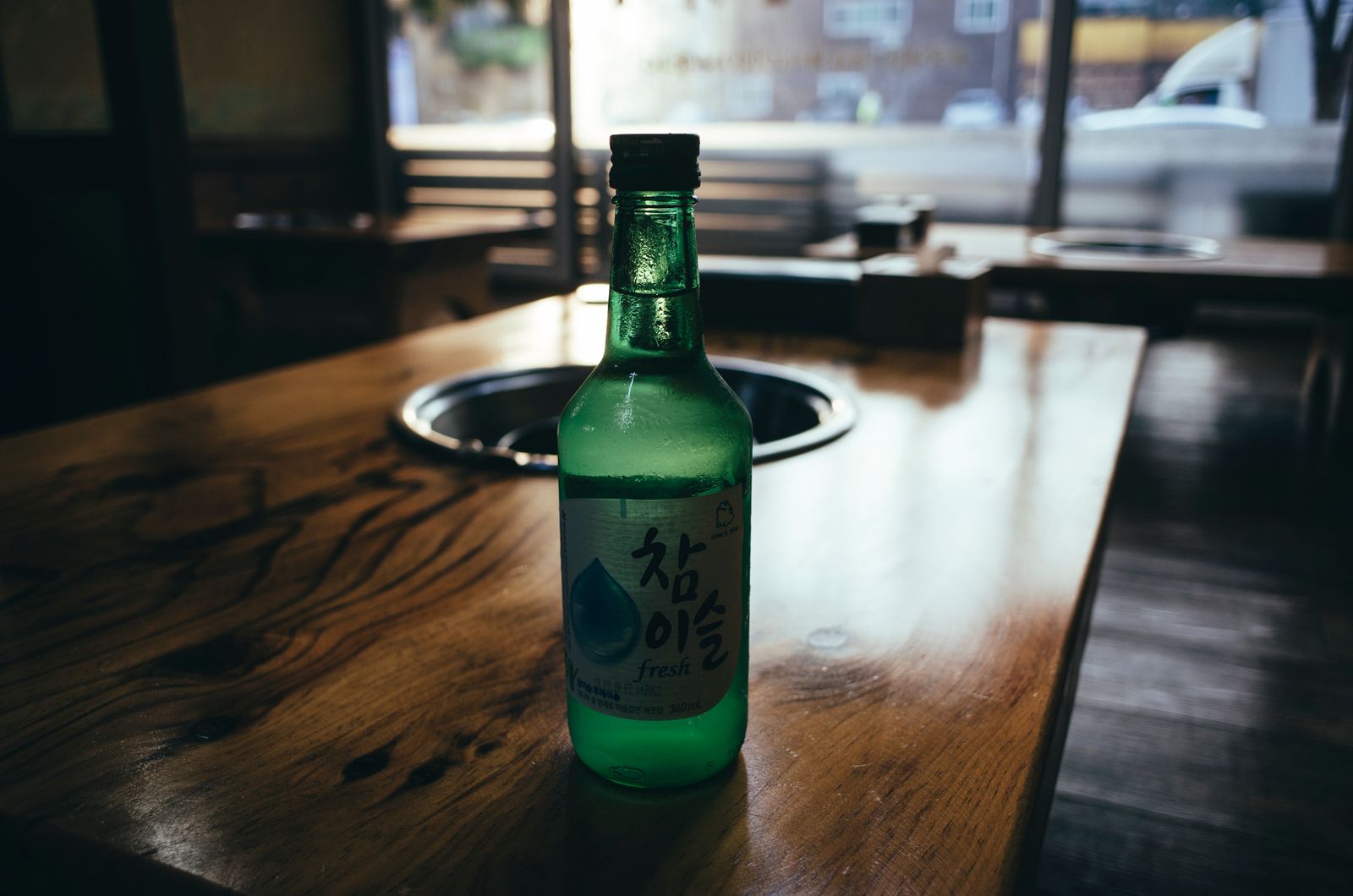
The first time I watched someone pour soju with two hands, I thought it was theater. A guy at my table — mid-thirties, junior enough to still be nervous around the department head — picked up the green bottle, cracked the cap with a twist that somehow looked practiced, and then, instead of just tipping it into his boss’s glass, he braced his pouring wrist with his other hand like he was steadying a rifle. I remember thinking: it’s a shot of soju, not a chalice. Nobody told me I was watching a whole grammar of respect play out in about four seconds, and that within the hour I’d be doing the same thing badly, twice, in front of people too polite to laugh at me out loud.
I already wrote about whether it’s actually rude to say no to a drink in Korea — that’s a separate question with its own answer, and you can read it on its own. This piece is narrower and, I think, more useful day to day: the physical choreography of drinking with other people in Korea. Who pours for whom, which hand goes where, why your head suddenly needs to turn, and what that whole bomb-shot ritual is actually doing at the table besides getting everyone drunk faster. None of it is about whether you should drink. It’s about what happens once the glass is already in your hand.
Seating order isn’t random — it’s a map of the hierarchy
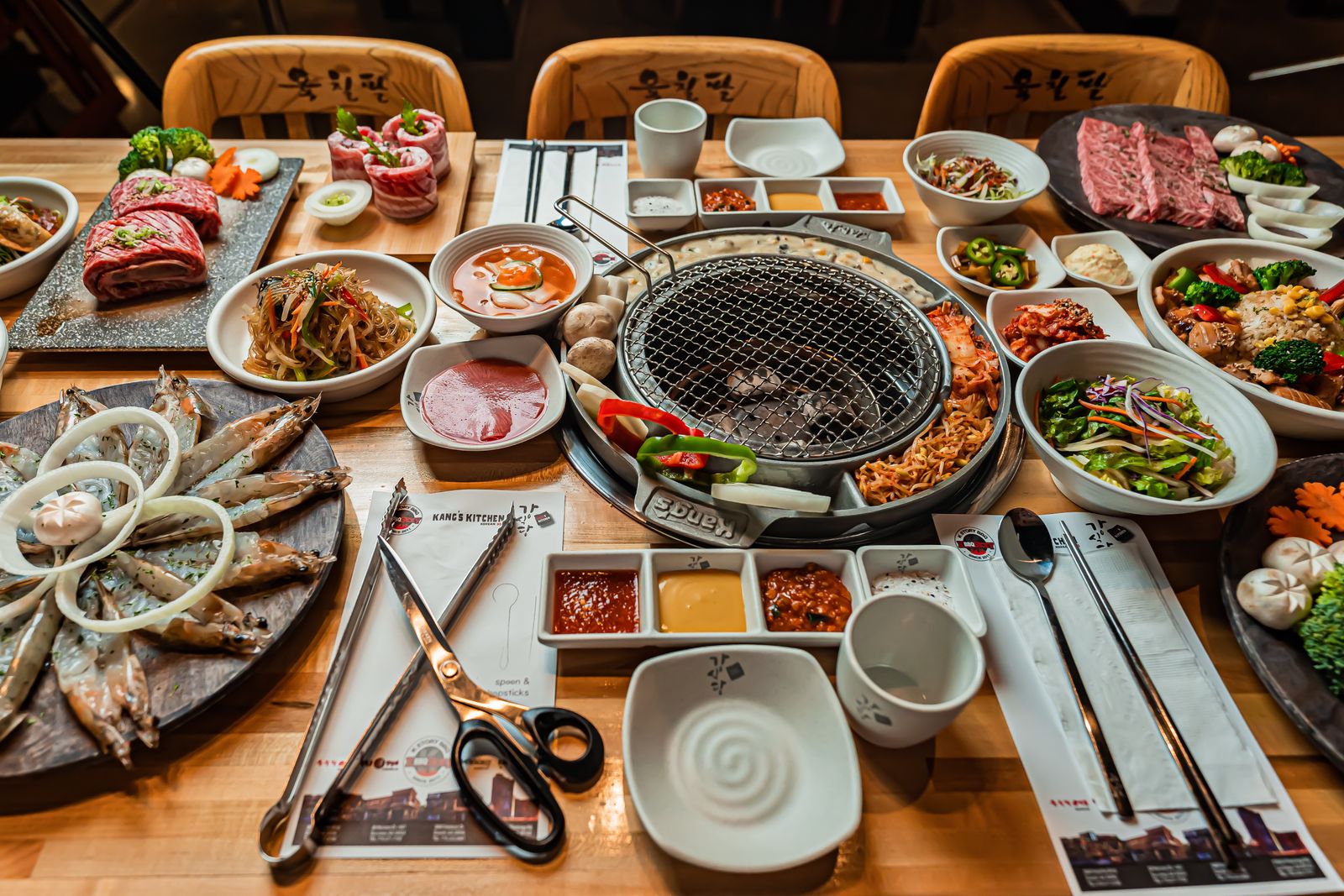
Walk into a private room at a Korean barbecue place for a company dinner and the seating looks casual, but it almost never is. The seat farthest from the door — usually the one flush against the back wall, facing the entrance, with a full view of the whole room — is the “head seat,” reserved for the most senior person present: your team lead, the department head, whoever’s paying, in some combination of those roles. People junior enough to matter sit closest to the door, partly so they’re positioned to flag down the server, refill the side dishes, and handle the general logistics of the table without disturbing anyone senior.
Nobody hands you a seating chart, which is exactly what makes this stressful the first time. I found that out by confidently sliding into the open chair at the far end of the table during my second week at a new job, only to watch my manager hover behind me for a beat too long before someone gently redirected me two seats over. Nothing was said. Nothing needed to be. My advice now: if you’re not sure where to sit, hang back near the door and let the senior people settle in first. Worst case, someone waves you toward a specific chair, which beats accidentally parking yourself in the boss’s seat and watching six people quietly recalibrate around your mistake.
Nobody pours their own drink — and it’s not just a rule, it’s a signal
Once you’re seated, the next thing you’ll notice is that you don’t fill your own glass in Korea. If it’s empty, you wait. Someone at the table — usually whoever’s paying attention, which at a Korean table is basically everyone — will notice and pour for you before you’ve had a chance to reach for the bottle yourself.
My instinct early on was to treat this as a nice-to-have, the kind of etiquette you observe when you remember and skip when you’re thirsty. That’s a mistake. Pouring your own drink at a Korean table doesn’t read as impatient or self-sufficient; it reads as a small refusal of the group, like you’ve decided you don’t need anyone else at the table tonight. If you do slip and pour your own, nothing dramatic happens — nobody stops the dinner — but don’t be surprised if someone gently takes the bottle from you a moment later and tops you off themselves, almost as a quiet correction. The whole point of the ritual is that everyone’s glass is someone else’s responsibility, which sounds almost sentimental written out like that, but at a hoesik (회식), that interdependence is basically the evening’s entire social contract.
The two-hand rule: pouring and receiving
This is the one people ask me about most, probably because it’s the most visible. When you’re pouring for someone older than you or more senior at work, you hold the bottle with your right hand and rest your left hand somewhere near your right wrist or forearm — not gripping it, just present, the way you’d steady one arm with the other while handing someone something heavier than it looks. Some of this traces back to older hanbok sleeves, which were loose enough that a free hand near the wrist kept the fabric out of the food and the pour under control; the gesture outlived the sleeves. The same logic runs in reverse: if an elder is pouring for you, you hold your glass with both hands, or cup your left hand under the base while your right hand steadies the rim.
You can skip this among close friends your own age — nobody’s tracking a checklist at a casual Friday night table. But the moment there’s a meaningful age or rank gap, especially at a company dinner, skip it and you’ll catch the tiny flicker of surprise on people’s faces before they let it go. It’s not a huge offense. It’s more like showing up to a nice restaurant in flip-flops: survivable, forgivable, but noticeably off.
Why you turn your head away when you drink with your seniors
The one that genuinely surprised me is the head-turn. When you’re about to actually drink in front of someone significantly older or higher-ranked than you, custom says you angle your upper body slightly away from them and, often, raise your free hand to shield the glass and your mouth as you drink. I used to think this looked almost bashful, like people were hiding a bad habit. It’s closer to the opposite: it’s a small act of deference. The idea is that the physical act of throwing back a drink — head tilted, throat exposed — is a little too casual, too exposed, to do straight in the face of someone you owe formal respect to.
If you grew up somewhere that drinking in front of your boss is just drinking in front of your boss, this will feel like a lot of choreography for one sip of soju. Fair enough. But once you notice it, you notice it everywhere — restaurants, work dinners, even K-dramas once you know to look for it — and it stops feeling performative and starts feeling like just how the room breathes.
원샷: the one-shot toast
At some point in the night, usually right after a toast, someone calls out “one shot” — 원샷 (wonshot), a borrowed English phrase Koreans folded into their own drinking vocabulary — and the whole table empties its glass at once. It’s less a dare than a synchronization move. The point isn’t really “get everyone drunk simultaneously,” even though that’s a side effect; it’s that the group starts the round together and finishes it together, which matters in a culture where drinking is treated as a collective act more than a personal indulgence.
Worth knowing if you’re pacing yourself: you’re not actually obligated to drain a full glass every single time someone shouts 원샷. Nobody’s measuring your throat. What people notice is whether you engage with the gesture at all — clinking, lifting the glass, taking a real swallow even if it’s not the whole thing. Sitting there motionless while everyone else one-shots is the actual faux pas, not the size of your sip.

폭탄주: the soju bomb, and why it exists
By the time the grilled meat is mostly gone and the second bottle of soju is open, the mood at the table has usually shifted from polite dinner to something looser and louder — which is exactly the moment poktanju (폭탄주), literally “bomb liquor,” tends to show up. It’s the practice of dropping a shot of soju into a glass of beer — somaek, if you want the more casual version without the ceremony. At its most theatrical, someone balances a shot glass on two chopsticks laid across the rim of a beer glass, then slams a fist on the table so the vibration knocks the shot in with a satisfying little splash, and the whole table drinks it down together, often as another round of 원샷.
It’s genuinely fun to watch, even once you know exactly what it’s doing socially: it’s a bonding ritual dressed up as a party trick, most common at company dinners and reunions where the goal is to collapse hierarchy fast and get everyone onto the same emotional register. It’s also, worth saying plainly, a way to drink faster and stronger than beer or soju alone — which is exactly why it’s worth treating as the occasional set piece it’s meant to be, not the default for the whole night. You don’t need to master the chopstick trick to survive a Korean dinner. You just need to know what’s happening when the table suddenly erupts and someone’s fist hits the wood.
Why your glass never seems to sit empty for long
Last mechanic, and it ties everything above together: at a Korean table, an empty glass functions almost like a raised hand. Someone will notice within a minute, sometimes seconds, and refill it for you — letting a companion’s glass sit dry is considered a small failure of attentiveness. This is also, conveniently, your best tool for pacing yourself. Since the custom is to refill empty glasses and leave full ones alone, you can quietly control your own intake by never actually finishing what’s in front of you. If someone reaches for the bottle anyway out of habit, a light hand resting near the rim of your glass — not covering it dramatically, just there — reads clearly enough without a word.
I didn’t figure this out for embarrassingly long. I spent my first year in Korea either finishing every pour out of some misplaced sense of politeness, or awkwardly waving off refills and feeling like I was making a scene. The actual local move is quieter than either: just don’t empty the glass, and nobody says a word.
FAQ
Do I really have to use two hands every single time I pour or receive a drink?
Not with close friends around your own age — that’s genuinely casual territory. The two-hand rule matters most with a real age or seniority gap: your in-laws, your boss, a client, anyone you’d bow to in a formal setting. When in doubt, use both hands. Overdoing respect rarely backfires; underdoing it is the version people remember.
What happens if I accidentally sit in the wrong seat or pour my own drink?
Nothing dramatic in either case. At worst you’ll get a quiet correction — someone redirecting you to a different chair, or topping off your glass right after you’ve filled it yourself. These are habits Koreans find genuinely strange to watch broken, not rules enforced with consequences, so a first-timer’s mistake reads as exactly that: a first-timer’s mistake.
Is it rude to skip the soju bomb if I don’t want a strong drink?
No, and this is worth separating from the pouring etiquette entirely — poktanju is optional in a way that receiving a poured drink politely isn’t. You can accept a beer-only glass, sip slowly, or simply keep your glass topped up rather than empty. The ritual is about the table’s mood, not a headcount of who drank the bomb.
If any of this has you wondering whether you’re allowed to opt out of drinking altogether, that’s really a separate question with its own answer — I go deep on it in Is It Rude to Refuse Alcohol in Korea?. This piece was about what happens once you’ve already got the glass in hand: where you sit, who pours it, how you hold it, and why, for one specific second, you might find yourself turning your head away from the table like there’s something fascinating happening on the wall behind you. There isn’t. That’s just the room, doing what it always does.
Leave a Reply