I used to think a skincare “routine” meant soap, maybe moisturizer if I was feeling fancy, and calling it a day. Then I moved to Korea. My first trip into an Olive Young, the beauty and drugstore chain that seems to have a branch on every other block, was genuinely disorienting: an entire wall organized by skin concern, another wall organized by ingredient, and a staff member who, completely unprompted, asked what my skin type was before ringing up a toner. I did not have an answer ready. I just sort of stared at her and said “normal, I guess,” which is apparently what everyone with no idea says. It took me a while to stop being intimidated by all of it and start actually understanding what the steps are for. So here’s the routine laid out properly, minus the overwhelming nine-syllable ingredient names, plus what’s actually worth your time versus what’s mostly marketing.
The “10 Steps” Thing Is a Little Misleading
You’d think, given how often the phrase “10-step Korean skincare routine” gets thrown around, that Koreans are out here doing a ten-stage ritual every single morning and night. They mostly aren’t. What’s actually true is that Korean skincare culture recognizes roughly ten distinct functions a routine can serve, cleansing, exfoliating, toning, hydrating at different depths, treating specific concerns, protecting from sun, and most people mix and match which of those ten they need on a given day rather than dutifully layering all ten every time. My own routine on a lazy Tuesday looks nothing like my routine before a big event, and that’s actually the point of the system, not a failure to follow it properly.
Step One and Two: The Double Cleanse
This is the step that surprised me most, because it sounds redundant until you actually try it. In the evening, you start with an oil-based cleanser, which sounds backwards if you’ve spent your life avoiding oil on your face, but oil dissolves oil, sunscreen, and makeup far more effectively than water-based soap alone. You massage it into dry skin for about a minute, then rinse, and you can genuinely see the difference in how much residue comes off compared to a single wash. Follow that immediately with a gentle water-based cleanser to remove any leftover oil residue and actually clean the skin itself. In the morning, most people skip the oil step entirely and just do the water-based cleanse, since there’s no makeup or heavy sunscreen from the day to remove yet.
Here’s the part that still surprises people who are new to this: double cleansing, done right, tends to leave skin feeling less stripped and tight than a single harsh wash, not more irritated. The logic is that a gentle two-step process is less abrasive overall than scrubbing hard with one product trying to do everything at once.
Exfoliation and Toner: The Prep Work
A couple of times a week, not daily, most routines include a gentle chemical exfoliant, which sloughs off dead skin cells so everything applied afterward actually absorbs instead of sitting on top of dry, flaky buildup. Daily physical scrubbing is generally discouraged here, which took some unlearning on my part since scrubbing beads used to feel like the whole point of exfoliating to me.
After cleansing, or exfoliating on the days you do that, comes toner, and this is where a lot of English-speaking newcomers get confused, because Western “toner” historically meant an astringent that stings a little and dries things out. Korean toner is almost the opposite: a lightweight, hydrating liquid meant to rebalance the skin’s pH after cleansing and prep it to actually absorb what comes next. Applied with hands or a cotton pad in gentle patting motions, it’s less about stripping and more about priming.
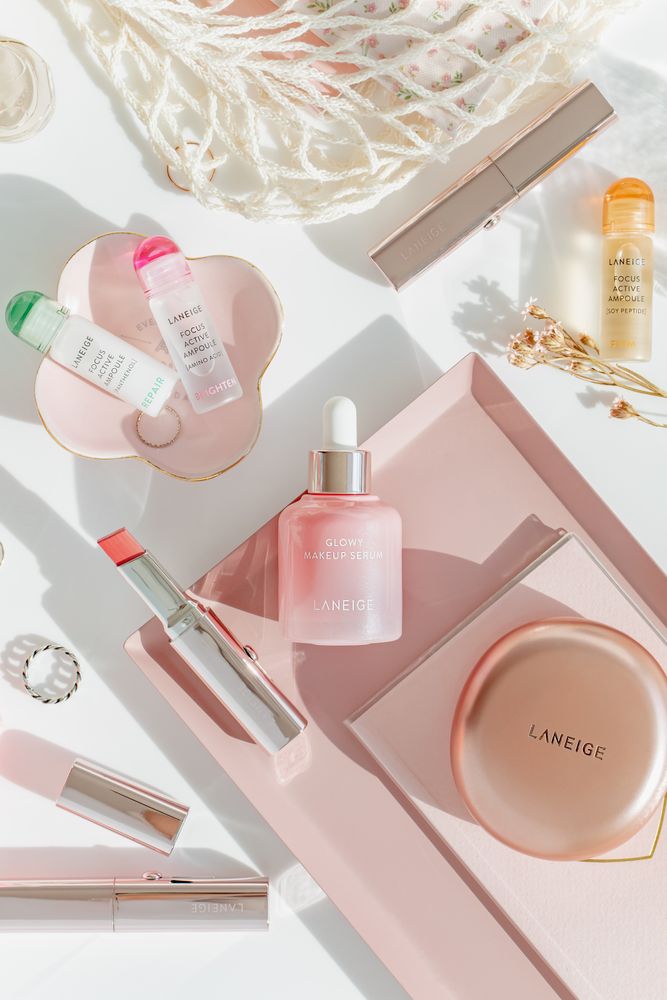
Essence, Serum, Ampoule: The Confusing Middle Layer
This trio trips up almost everyone at first, myself included, because the line between them can feel blurry even to people who’ve used all three for years. Think of it as a spectrum of concentration rather than three completely separate categories. Essence sits closest to toner, lightweight, mostly about hydration with some active ingredients mixed in, meant to be layered generously. Serum is thicker and more concentrated, usually targeting a specific concern, brightening, hydration at a deeper level, evening out texture. Ampoule is the most concentrated version of the same idea, often used for a short, intensive stretch rather than as a permanent daily staple. If it helps to picture it, toner is like water, essence is like a light broth, serum is closer to honey, and an ampoule is the shot glass of the group, small, potent, not something you’d want every single day. You don’t need all three every day. Most people I know pick one or two based on what their skin actually needs that week, rather than layering the full stack out of obligation.
Sheet Masks: The Treat, Not the Daily Habit
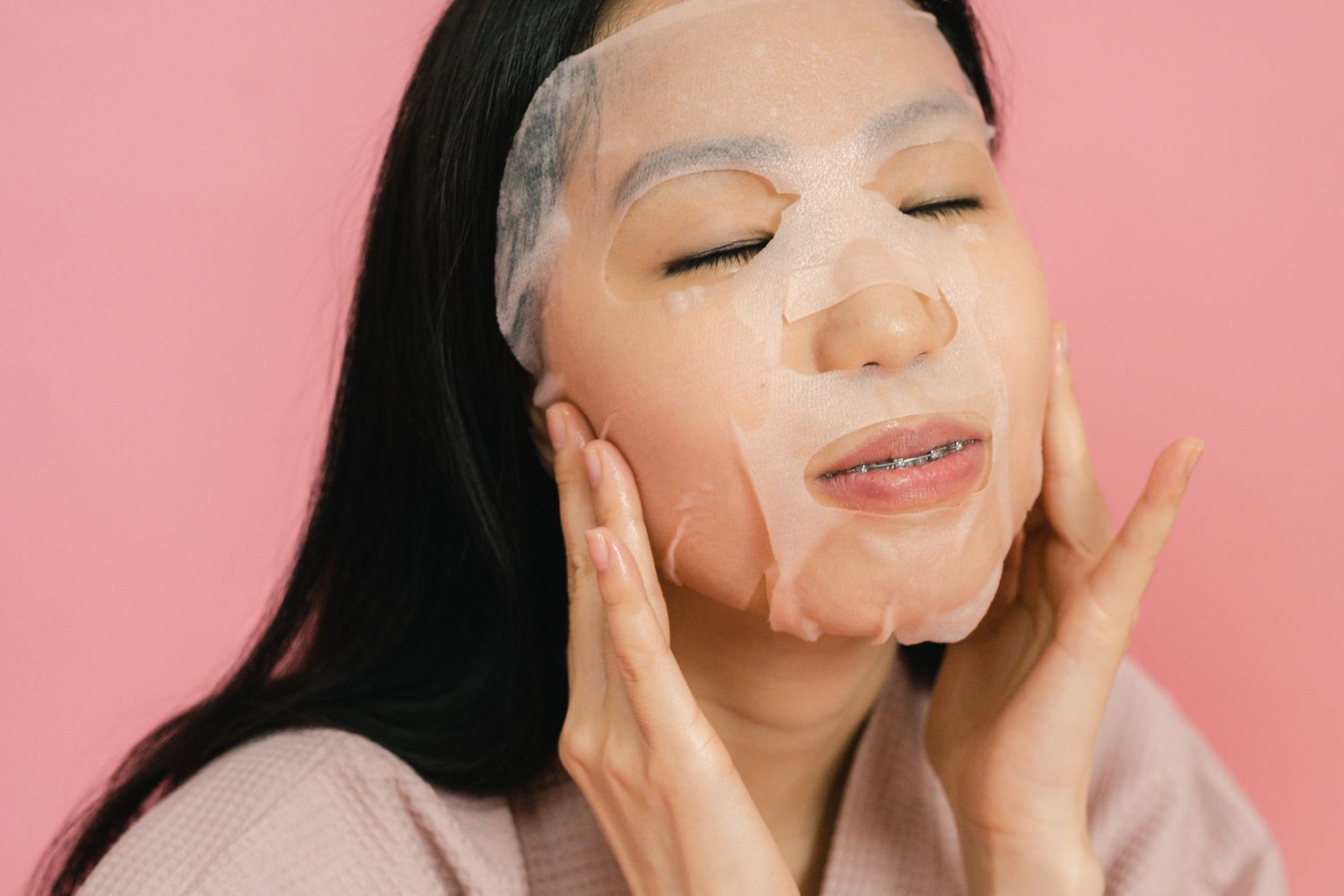
Sheet masks get an outsized amount of attention internationally, probably because they photograph well, but within Korea they’re generally treated as a once or twice a week addition, not a nightly requirement. Fifteen minutes or so with a mask soaked in essence, then patting the remaining product into your skin afterward rather than washing it off, that’s the whole ritual. It’s genuinely one of the more relaxing parts of the routine, and I’ll admit half the appeal for me is just the ten minutes of forced stillness it demands, phone down, sitting still, which is rarer in daily life than it should be.
The Non-Negotiables: Eye Cream, Moisturizer, SPF
If you strip everything else away, this is the part that actually matters most day to day. Eye cream targets the thinner, more delicate skin around the eyes, which behaves differently than the rest of the face and often shows signs of dryness or fatigue first. Moisturizer seals in everything applied before it, and Korean formulas tend to favor a lighter, more gel-like texture than the heavier creams common in colder Western markets, partly because a lot of Korean summers are genuinely humid and heavy cream just feels unbearable in July.
And then SPF, which is treated less like a suggestion and more like a small daily religion here, and living in Korea is honestly what converted me. Back home, sunscreen meant a thick, chalky layer that sat on top of my skin like a second face. Korean formulas, in my experience, tend to be noticeably lighter, more like a second skin than a mask, which might be the single biggest reason Koreans I know actually wear it every day without complaint, versus a lot of foreigners who skip it because they remember sunscreen as thick and unpleasant. Sun protection in general is widely treated here as one of the most important habits for keeping skin looking healthy over the years, which is a big part of why the culture takes it so seriously.
What I Actually Do on a Normal Day
In practice, my daily routine is nowhere near ten steps. Morning: water-based cleanse, toner, a light moisturizer, sunscreen, done in under five minutes. Evening: double cleanse, toner, one serum depending on what my skin’s asking for that week, moisturizer. The exfoliant and sheet mask come out two or three times a week, not daily. You’d think skipping most of the “ten steps” most days would defeat the purpose, but the honest truth is that consistency with a simpler routine beats sporadic perfection with an elaborate one every time. The elaborate version is there when you want it, not as a daily obligation you’re failing at if you skip it.
If you asked me to keep exactly one step and cut everything else, it wouldn’t be some fancy ampoule, it would be the toner. It sounds like the least exciting answer possible, but that one habit of patting a hydrating layer onto slightly damp skin right after cleansing changed how my face felt more than any serum I’ve bought since.
Mistakes Foreigners Commonly Make
The biggest one is trying to adopt the full ten-step routine on day one, overloading the skin with new products all at once, and then blaming “Korean skincare” when things get irritated rather than blaming the sheer volume of new ingredients introduced simultaneously. Introducing products gradually, one at a time, over a couple of weeks, makes it much easier to tell what’s actually working and what isn’t agreeing with your skin. The second common mistake is skipping sunscreen because it feels unnecessary on a cloudy day or during a Korean winter, when in fact UV exposure doesn’t take a break just because it’s cold or overcast.
FAQ
Do I really need all ten steps to see results?
No. Most Koreans don’t do all ten steps daily either. A consistent basic routine, cleanse, hydrate, protect, covers the fundamentals for most people, and the additional steps like essence, ampoule, or sheet masks function more as targeted extras layered in when your skin needs a specific boost rather than a mandatory daily checklist.
What if a product stings or my skin gets irritated after starting a new routine?
Stop using the newest product you introduced and give your skin a break for a few days. Because Korean routines involve layering several products, it’s easy to lose track of which one caused an issue if you add more than one at a time. If irritation persists or seems serious, it’s worth speaking with a dermatologist rather than guessing, since a blog post is never a substitute for a professional looking at your actual skin.
Is Korean skincare only for people with “good skin” already, or does it help with actual skin problems?
The routine itself is really just a framework, cleansing, hydrating, protecting, layered thoughtfully, and it’s used by people with all kinds of skin types and concerns here, not just people with naturally clear skin. That said, for any persistent or serious skin condition, a dermatologist visit will get you further than any routine built from a blog, Korean skincare culture included. Plenty of the dermatology clinics here are used to treating both locals and visiting foreigners, if that’s ever something worth looking into while you’re here.
Leave a Reply