Four seconds. That’s roughly how long it takes for the elevator doors in my building to start closing on their own, and it is also, apparently, longer than most of my neighbors are willing to wait. I know this because I have watched a woman in her sixties reach past my shoulder, jab the “close door” button twice, and step back with the satisfied look of someone who has just shaved a full second off her morning. Nobody said anything. Nobody needed to.
I used to think this was just an elevator quirk. It isn’t. It’s a small, everyday rehearsal of something Koreans call ppalli ppalli, 빨리빨리 — “hurry hurry” — and once you start noticing it, you can’t stop. It shows up in how food arrives at your door before you’ve finished setting the table, in how a subway platform empties out like a bathtub with the drain pulled, in how a bowl of noodles goes from boiling water to dinner in exactly three minutes. Ppalli ppalli isn’t a saying. It’s closer to a national operating speed.
The Delivery Culture That Ruined Me for Everywhere Else
Let’s start with the one that visitors notice first, because it’s the one that breaks their brain a little. Coupang, the e-commerce giant founded by Bom Kim in 2010, built its entire business around a promise called Rocket Delivery: order a rocket-marked item before midnight, and it’s on your doorstep before 7 a.m. Not “processing.” Not “out for delivery, arriving sometime this week.” Waiting for you, next to your shoes, before you’ve had coffee.
You’d think that kind of speed would require some kind of magic, and in a sense it does — just the logistical kind. Coupang runs more than 100 fulfillment centers packed into roughly 5.9 million square meters of warehouse space, which is a hard number to picture until you realize it works out to something like 800 football pitches laid side by side, positioned close enough to population centers that a truck never has far to go. I ordered cat litter at 11:47 p.m. once, mostly as a test, half-convinced I was calling their bluff. It was outside my door by 6 a.m., and the delivery app had even logged the exact minute the elevator in the courier’s building opened. I felt, briefly, like I’d discovered fire — and then immediately went back to sleep, because apparently that’s just Tuesday here.
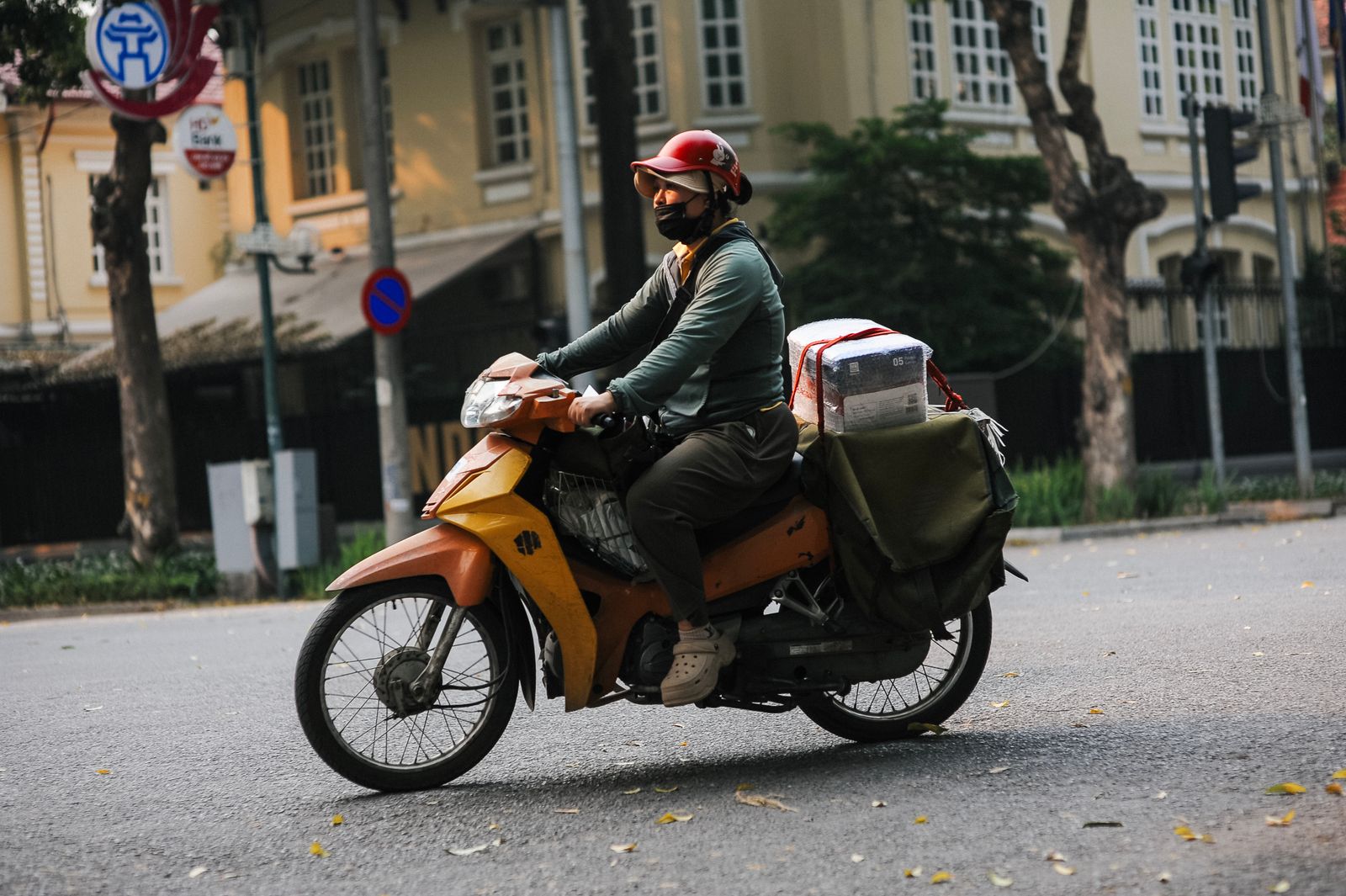
The strange part is how normal this has become. Friends who grew up here don’t find it remarkable at all — to them, next-day is basically the slow lane, since same-day and even one-hour delivery apps now handle anything from fried chicken to a forgotten phone charger. When I go back to visit family abroad and a package takes five business days, I catch myself getting genuinely offended, as if the postal service had personally wronged me. That reaction is embarrassing to admit, but it’s also, I think, exactly the point — ppalli ppalli doesn’t just change your environment, it recalibrates your patience.
Nobody Walks Slowly Here, Not Even the Elevators
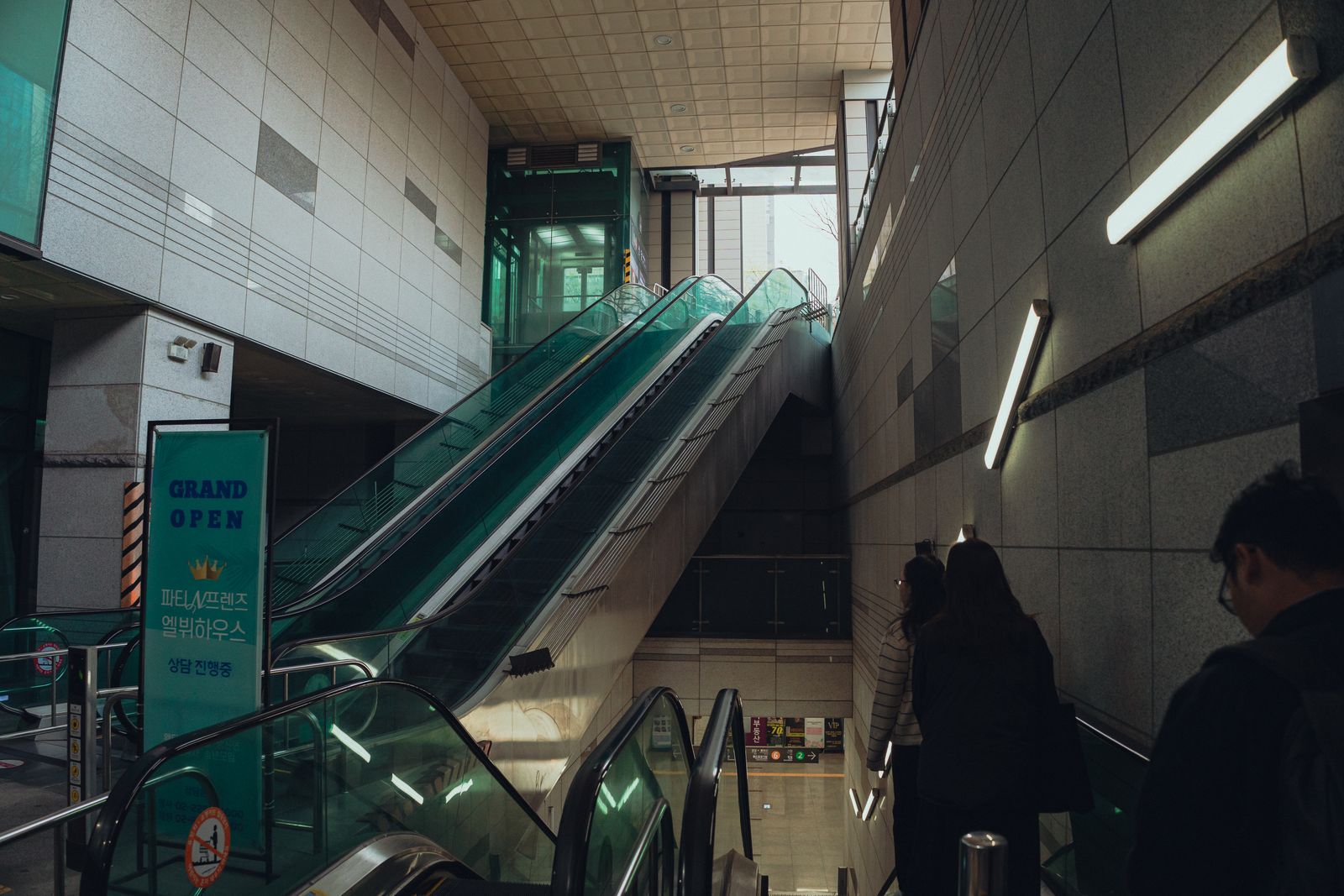
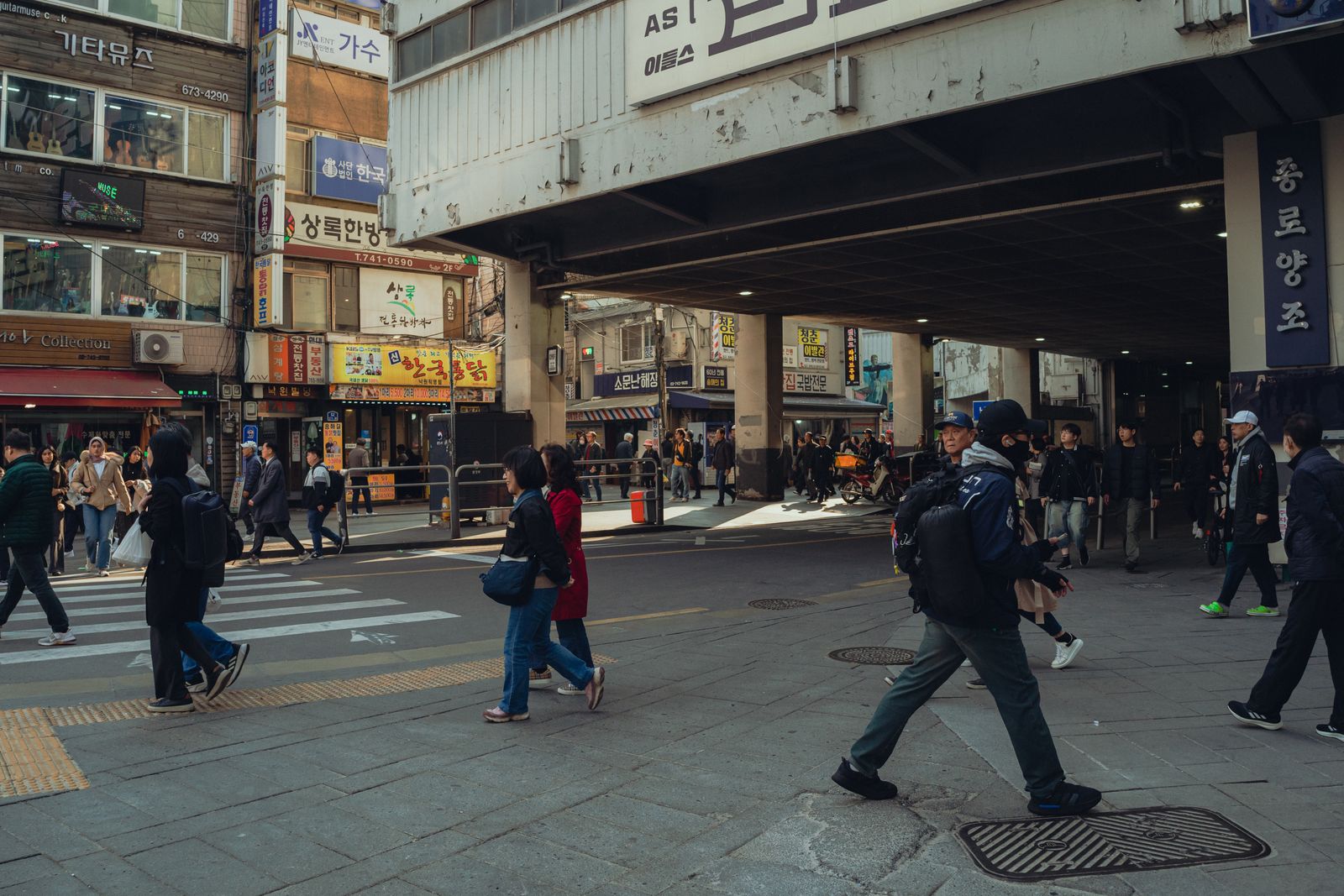
Take the Seoul subway, which moves something like 7 million rides a day across its network. Stand on any platform during rush hour and watch what happens when the doors open: it isn’t a crowd shuffling out politely, it’s more like someone popped a seam — everybody pours through the gap at once, coats brushing, nobody quite touching, and the platform is empty again in under a minute. People walk with purpose even when they have nowhere urgent to be. On escalators, the unspoken rule is that the left side is for standing and the right is for walking, and heaven help the tourist who blocks it while admiring the ceiling.
I’ll admit I found this stressful at first. Coming from a country where “the scenic route” is a compliment, I felt like I was constantly being swept along by a current I hadn’t agreed to join. Eventually, though, something clicked — the pace isn’t really about aggression, it’s about efficiency as a form of courtesy. Moving quickly means you’re not holding anyone up. Standing still in the wrong spot is the actual rude move. Once I reframed it that way, I stopped resenting the pace and started, a little unnervingly, matching it.
Which brings us back to that elevator button from the beginning. Korean elevators are almost unique in how literally they respond to it — press “close,” and the doors shut immediately, no theatrical pause, no fake deference to a button that secretly does nothing (a design trick famously used in a lot of older American elevators). There’s also a cancel button on nearly every panel: hit the wrong floor, tap it again, and the light goes off, no unwanted detour to the twelfth floor. It’s the same instinct as the subway platform, just compressed into a two-meter box — nobody wants to spend one extra second somewhere they didn’t choose to be.
It sounds like a minor engineering choice, but it says something bigger about the culture underneath it: convenience isn’t treated as a luxury add-on here, it’s closer to a baseline expectation. Systems get built assuming people want control and speed, and the workaround gets designed in before anyone has to complain about needing one. Foreigners who post about this online are usually equal parts delighted and slightly alarmed, and I get it — the first time your instinct to hurry is not just tolerated but engineered for, it’s a small culture shock in the opposite direction.
Three Minutes to Dinner

Then there’s ramyeon, which might be the most literal expression of ppalli ppalli on a per-meal basis. Samyang launched Korea’s first instant noodle product on September 15, 1963, as a direct response to postwar food shortages — a cheap, fast source of calories when rice was scarce and time, frankly, wasn’t the thing anyone was worried about saving. Nongshim’s Shin Ramyun followed in 1986 and now sells in more than 100 countries. Today, Koreans eat somewhere around 70 to 90 servings of instant noodles per person, per year — among the highest rates on the planet — and the entire cultural ritual around it, from the hot-water dispensers bolted to convenience store walls to the exact three-minute steep time everyone somehow just knows by feel, is built for a moment when you don’t have twenty minutes to spare, but you do have three.
You’d think a food built entirely around speed would feel like an afterthought, something you eat while doing something else. Turns out it’s the opposite — ramyeon nights are practically ceremonial, complete with the correct pot (always the same shallow yellow one, if you ask around), the correct amount of overcooking on purpose, and strong opinions about whether the egg goes in raw or scrambled. Somewhere along the way, three minutes stopped being a limitation and became its own little tradition.
The Internet Got Fast Before Anyone Else’s Did
None of this happened by accident, and the internet is maybe the clearest paper trail. In the mid-1990s, the Korean government launched the Korea Information Infrastructure project, essentially deciding as a matter of national policy that the country would have broadband before it had much obvious use for it yet. By 2000, South Korea had already become the first country where broadband users outnumbered dial-up users — a milestone most of the world wouldn’t hit for years. By 2016, Korea was topping global speed rankings at over 26 megabits per second average, at a time when plenty of countries were still watching the loading wheel spin.
You can feel the residue of that decision every time you’re forty meters underground on a moving subway car, streaming a variety show in full HD with zero buffering, which still strikes me as faintly absurd given that I’ve lost signal standing still in parking garages elsewhere. The rankings have shifted since, to be fair — by 2022, Korea had actually slipped to something like 34th in fixed broadband as other countries caught up and invested heavily, before climbing back with fixed speeds around 175 Mbps by early 2025. But the instinct that built the network in the first place hasn’t changed. When PC bang (internet café) culture, professional gaming leagues, and now cloud gaming all assume near-zero lag as a baseline, “good enough” was never going to be good enough.
Where This Actually Comes From
It’s tempting to treat all of this as quirky trivia, but ppalli ppalli has a fairly traceable origin, and it isn’t a personality trait — it’s a survival strategy that outlived the emergency that created it. In 1960, South Korea’s GDP per capita was around 79 dollars, putting it on par with some of the poorest countries in the world at the time, poorer, by some measures, than parts of sub-Saharan Africa. What followed, from the early 1960s through the 1990s, was roughly three decades of near-double-digit annual growth, government-driven industrialization pushing exports from about 55 million dollars in 1962 to more than 100 billion dollars a few decades later. That kind of compression — building in thirty years what took other countries a century — required speed to become the default setting, not a preference.
You can see why the habit stuck. When your parents’ or grandparents’ generation lived through rebuilding a country from rubble on a tight, unforgiving national deadline, “why rush” isn’t really a question anyone had the luxury of asking. Ppalli ppalli, in that light, isn’t really about impatience for its own sake. It’s inherited urgency, still running quietly in the background decades after the original crisis that demanded it has technically ended.
The Part Nobody Puts on the Postcard
Here’s where I have to be honest, though, because it would be dishonest to frame all of this as pure upside. The same instinct that gets you noodles in three minutes and packages before breakfast also shows up as construction sites that occasionally cut corners under deadline pressure, meals eaten standing up because sitting down feels like wasted time, and a baseline hum of impatience that can tip into real stress. Ppalli ppalli has a well-documented dark side — burnout, workplace pressure, and a cultural discomfort with simply waiting for anything, even the handful of things that genuinely benefit from not being rushed.
I’ve felt this myself in smaller ways — snapping at a slow-loading webpage, feeling irrationally behind schedule over a five-minute delay that wouldn’t register as a delay anywhere else. Even so, I don’t think the answer is to declare the whole culture unhealthy and move on, because that misses what actually makes it work. Ppalli ppalli is a tool, and like most tools, it’s neither good nor bad on its own — it depends entirely on whether the thing being rushed benefits from speed, or just quietly gets worse under pressure. Dinner benefits. A friendship, probably, doesn’t. Knowing the difference, I think, is the whole trick.
Frequently Asked Questions
Is it rude to press the elevator “close door” button in Korea? Not at all — it’s completely normal and expected, especially if you’re standing closest to the panel. If someone’s visibly hurrying toward the elevator, though, the polite move flips: you hold it open instead, which is the same instinct pointed the other direction.
Can Coupang Rocket Delivery really deliver everything overnight? Only items marked with the rocket icon qualify, and you generally need to order before midnight for guaranteed morning delivery. Non-rocket items from third-party sellers can still take several days, so it’s worth checking the icon before assuming everything ships at warp speed.
Why do Koreans walk so fast even when they’re not in a hurry? Partly habit, partly etiquette — moving efficiently through shared spaces like subway platforms is seen as considerate rather than aggressive, since standing still or walking slowly in a high-traffic lane holds everyone else up. It’s less about racing to a destination and more about refusing to become an obstacle.
Ppalli ppalli isn’t going anywhere, and honestly, I’ve stopped wanting it to. I still catch myself mashing that elevator button on mornings I’m not even late for anything. But I’ve also learned to notice when the speed stops serving me — when I’m eating too fast to actually taste the food, or refreshing a delivery tracker for a package that would’ve arrived either way, tracker or no tracker. The trick, I’ve decided, isn’t slowing Korea down. It’s knowing which four seconds are actually worth saving, and which ones you were only trying to save out of habit.
Leave a Reply