There’s a particular silence that falls over a Korean dinner table when someone puts a hand flat over their glass. It’s not dramatic — nobody gasps, nobody sets down their chopsticks — but you can feel the room recalibrate for half a second, the way a thermostat clicks when a draft slips through a window. That small gesture, palm over glass, a polite “gwaenchanayo” (괜찮아요, “I’m okay”), is basically the entire subject of this post. Saying no to a drink in Korea isn’t illegal, isn’t even rare anymore, but it still isn’t quite nothing. It carries a little more weight than saying no to a second slice of cake ever does back home.
I want to be upfront about something before I go further: this isn’t a rehash of who pours for whom, which hand to use, or why you never fill your own glass. I covered that pouring choreography in an earlier post, and it’s genuinely useful to know. This one is about a quieter, more specific problem — what actually happens in the seconds after you say “no thanks” to alcohol in Korea, and why that moment has shifted more than most outsiders realize.
The Hoesik Legacy: Why Refusing Used to Be a Bigger Deal
To understand why refusing a drink carries any charge at all, you have to understand hoesik (회식) — the company dinner, often rolling into a second and third round, that’s long functioned as an unofficial team-building ritual in Korean workplaces. For decades, hoesik ran on an unspoken contract: showing up wasn’t optional, and once you were there, drinking wasn’t really optional either. An elder or a boss pouring you a shot was less an offer than a small ceremony of inclusion, and turning it down could read as turning down the relationship itself.
You might assume this was just peer pressure, the way a college party might nudge someone into “just one more.” It’s not quite that. The dynamic runs on nunchi (눈치) — a sense of social awareness, of reading a room and knowing what’s expected without being told outright — layered on top of Confucian-inflected respect for age and hierarchy. Refusing a senior’s drink wasn’t framed as rebellion; it was framed as a small failure of attentiveness, as if you’d missed a cue everyone else caught. That’s a very different kind of pressure than “come on, live a little,” and, oddly enough, it’s part of why so many foreigners describe the moment as more awkward than confrontational. Nobody’s angry. Everyone’s just quietly watching to see what you’ll do.

Even so, I don’t want to overstate how rigid this ever was. Plenty of Koreans I’ve met have always had an aunt who never touched a drop, or a grandfather with a signature move: glass raised for the toast, then a slow, practiced tilt toward the potted plant by his elbow the second the group’s attention drifted elsewhere. Everyone at the table half-noticed, nobody said a word, and the plant, by all accounts, thrived. The rule was real, but so were the workarounds, and the gap between the two is exactly where this topic gets interesting. It’s also a decent clue to where things were heading: if the unspoken exception has always existed, the spoken one was only ever a matter of time.
The Excuses That Actually Work — and Why
That gap between rule and workaround is worth sitting with, because it hints at something a straightforward “just say no” doesn’t capture: in Korea, how you decline often matters as much as whether you decline at all. Ask around and you’ll hear that some excuses land smoothly while others just don’t, and the difference tells you a lot about what’s really being negotiated at the table.
“I’m driving” (오늘 운전해야 해서요, oneul unjeonhaeya haeseoyo) is close to bulletproof. Korea’s drunk-driving penalties are strict and well publicized, so nobody pushes back on this one — it’s not a personal preference up for debate, it’s an unbendable rule from outside the table entirely, and rules like that are easy for everyone to respect without taking them personally.
Medical reasons work almost as well, especially the phrase “체질에 안 맞아요” (chejil-e an majayo), which translates roughly to “it doesn’t agree with my constitution.” I’ll admit this one confused me at first — it sounds almost mystical in English, like something from traditional medicine rather than a modern excuse. But it’s shorthand for something concrete: a large share of Koreans, and East Asians more broadly, carry a variant of the ALDH2 gene that makes alcohol metabolism inefficient, producing the flushing, nausea, and racing heart sometimes called “Asian flush.” This isn’t folklore; it’s well-documented physiology.
Because it’s so widely known, almost everyone at the table either has this reaction themselves or has a friend or relative who does, which is exactly why the excuse works so smoothly. Framing your refusal as a bodily reality rather than a lifestyle choice sidesteps the social calculus entirely — you’re not judging their drinking, you’re just built differently, and that’s something most Koreans have heard about since childhood.
What surprised me more was how differently a flat “I don’t drink” can land depending on timing. Mentioning it early — ideally before the first pour, even in the group chat scheduling the dinner — tends to be absorbed without friction. Waiting until the third round to suddenly discover your abstinence, on the other hand, can come across as evasive, even if the reason itself is identical. It’s less about the content of the excuse and more about whether it looks like a plan or an escape hatch. I’ve come to think of it as similar to mentioning a food allergy to a host: perfectly fine anytime before the meal is cooked, a little awkward once it’s already on your plate.
Religious reasons — Buddhism’s precepts against intoxicants, or various Christian denominations’ teetotal traditions — tend to get respected too, though I’ve noticed they sometimes invite a follow-up question or two out of genuine curiosity rather than skepticism. Simple personal choice, the plain “I just don’t drink” with no external justification attached, is historically the one that got the most pushback, particularly from older colleagues who came up in a workplace culture where hoesik attendance and participation were basically inseparable.
What I Actually Do Now
These days, my own approach is almost boringly simple, and I think that’s the point. I mention it before the dinner starts, never mid-meal. I keep a non-alcoholic beer or cider in front of me so there’s never an empty glass drawing attention. I join every toast, glass raised to the same height as everyone else’s — a small pouring-etiquette detail that matters more than the liquid inside it. And if someone pours for me anyway out of habit, I let them, take a token sip, and let the glass sit for the rest of the night. Nobody’s ever made an issue of it. If anything, people seem far more interested in whether I’ll try the food than whether I’ll finish the bottle.
You might expect all this quiet negotiation to feel exhausting, like a performance you have to keep up all night. Surprisingly, it settles into muscle memory fast. After the first few dinners, mentioning it upfront becomes as automatic as saying thank you when someone pours your water, and the whole thing stops registering as a negotiation at all.
What Refusal Actually Signals
Here’s the part I didn’t expect going in: refusing a drink in Korea was never really about the alcohol. It’s a stand-in for a bigger question — are you willing to be present, to participate in the shared ritual, to let the group see you relax a little? You can answer that question without drinking a drop, and plenty of people do, by pouring for others, joining the toasts with a glass of cider or non-alcoholic beer in hand, and staying at the table through the food and conversation. I’ve watched non-drinking coworkers become some of the most well-liked people at a hoesik simply because they stayed engaged, cracked jokes, and made sure everyone else’s glass was full. Nobody cared what was in theirs.
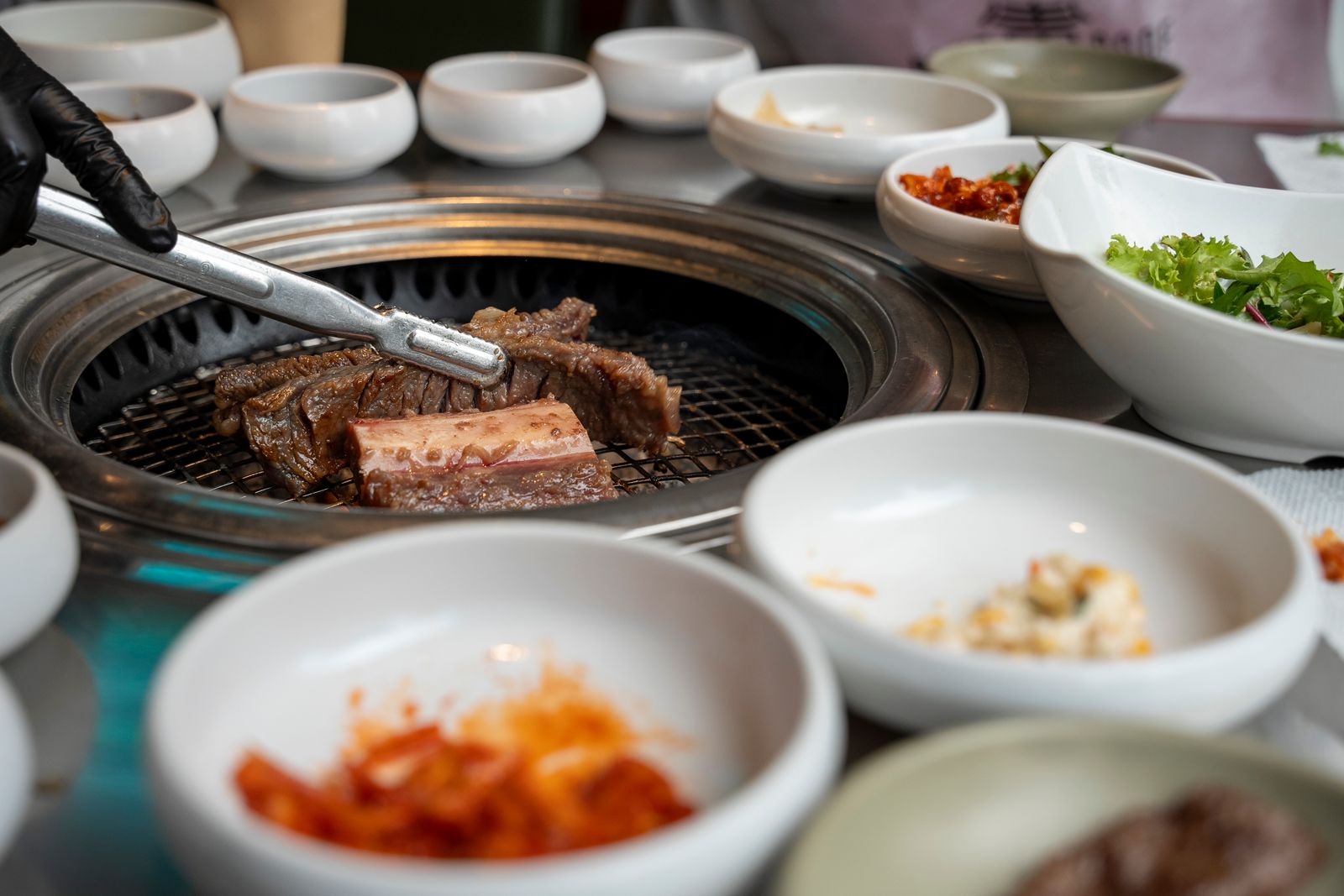
You might think that staying sober at a table full of increasingly loud, increasingly red-faced colleagues would feel isolating. To my relief, it usually doesn’t. Korean hoesik culture, whatever its flaws, is genuinely food-centered — samgyeopsal sizzling on a tabletop grill, endless banchan, a rhythm of conversation that doesn’t actually require alcohol to sustain it. The drinking is loud and visible, but it’s often a smaller part of the evening’s emotional core than it looks from the outside.
The Shift I’ve Watched Happen
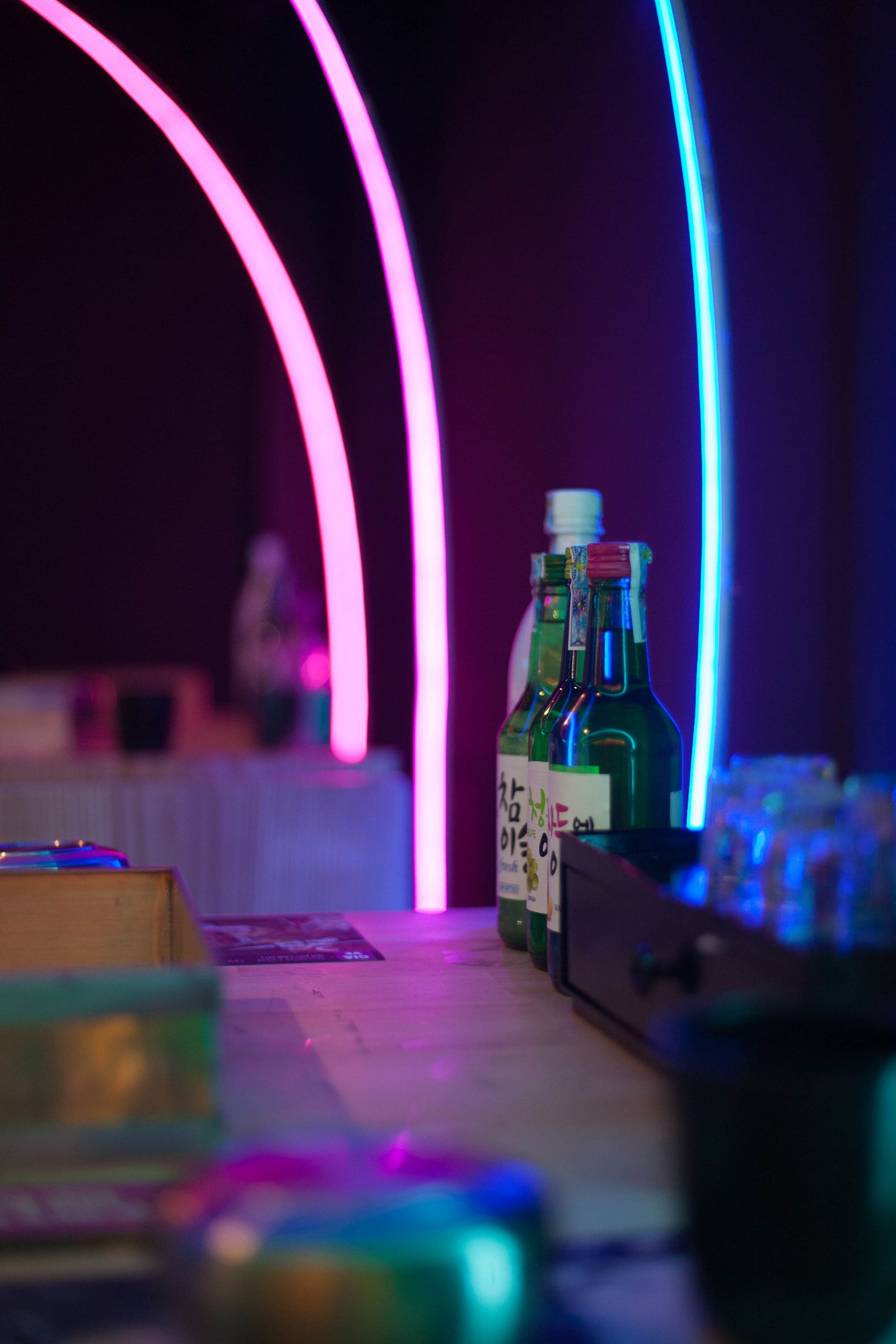
If you’d told me this much change could happen this visibly, I might not have believed it, but the drinking culture here has moved noticeably even in the years I’ve been paying attention. The most obvious sign is on the shelves: major brewers like Hite and OB, and even soju makers like Jinro, now sell 0.0% alcohol versions that show up in regular BBQ restaurants and convenience stores, not just health-food aisles. Walk into a CU or GS25 today and you’ll usually find a dedicated non-alcoholic fridge section that simply didn’t exist a decade ago, stocked deep enough that it’s clearly responding to real demand, not just testing the waters. A decade ago, ordering one at a hoesik might have earned you a raised eyebrow. Now it barely registers, and I’ve seen groups toast with a mix of soju, beer, and zero-proof drinks in the same round without anyone treating it as a statement.
Part of this is generational. Younger workers, often lumped together as the “MZ세대” (MZ generation) in Korean media shorthand, have been notably more willing to push back on mandatory after-work drinking altogether, and companies — especially larger, more internationally minded ones — have responded by loosening hoesik norms. Some have started experimenting with what’s sometimes called “culture hoesik” (문화 회식), swapping the usual soju rounds for a team movie screening, a museum visit, or even an escape room, with dinner and conversation still very much part of the evening. It would be an exaggeration to say the old pressure has vanished entirely; plenty of smaller companies and more traditional industries still run on the old script, and a first-time foreign employee shouldn’t assume every workplace has modernized at the same pace. But the momentum is unmistakably pointing one way.
I’ll admit there’s an irony in all this that took me a while to appreciate. The country most associated abroad with hard-drinking business culture is quietly becoming a place where refusing a drink is one of the least remarkable things you can do at a table — as long as you handle the moment itself with a little social fluency.
None of this means the topic is fully settled, or that every Korean workplace has caught up to the more relaxed vibe you’ll find in Seoul’s younger, trendier offices. But the direction is clear enough that I’d tell any newcomer worrying about this: prepare your excuse, sure, but don’t over-prepare for a confrontation that’s increasingly unlikely to happen.
Frequently Asked Questions
What if my boss personally pours me a drink after I’ve already said I don’t drink? Accept the glass with both hands — a basic pouring-etiquette gesture of respect — rather than waving it off, since it’s the refusal of the glass itself, not the refusal to finish it, that tends to sting. If you’re worried about it happening all night, a quiet trick some coworkers use is nursing a small piece of ice in the glass or keeping it slightly full from an earlier pour, so there’s visibly less room for the next round to land.
Is it okay to say I don’t drink for religious reasons even if that’s not really why? Plenty of foreigners do this because it’s a category Koreans are broadly familiar with and rarely question further. It works, but I’d lean toward a reason that’s actually true if you have one — driving, medication, or a genuine health reaction are just as effective and don’t require you to keep a story straight over multiple hoesik dinners with the same coworkers.
Will refusing to drink hurt my chances of fitting in at a Korean workplace long-term? Less than it would have ten or fifteen years ago. What matters far more than whether you drink is whether you show up, stay through the meal, and engage — pouring for others, joining conversation, being present. I’ve seen plenty of non-drinkers become genuinely well-liked at their companies precisely because they were reliably good company at the table, alcohol or not.
Leave a Reply