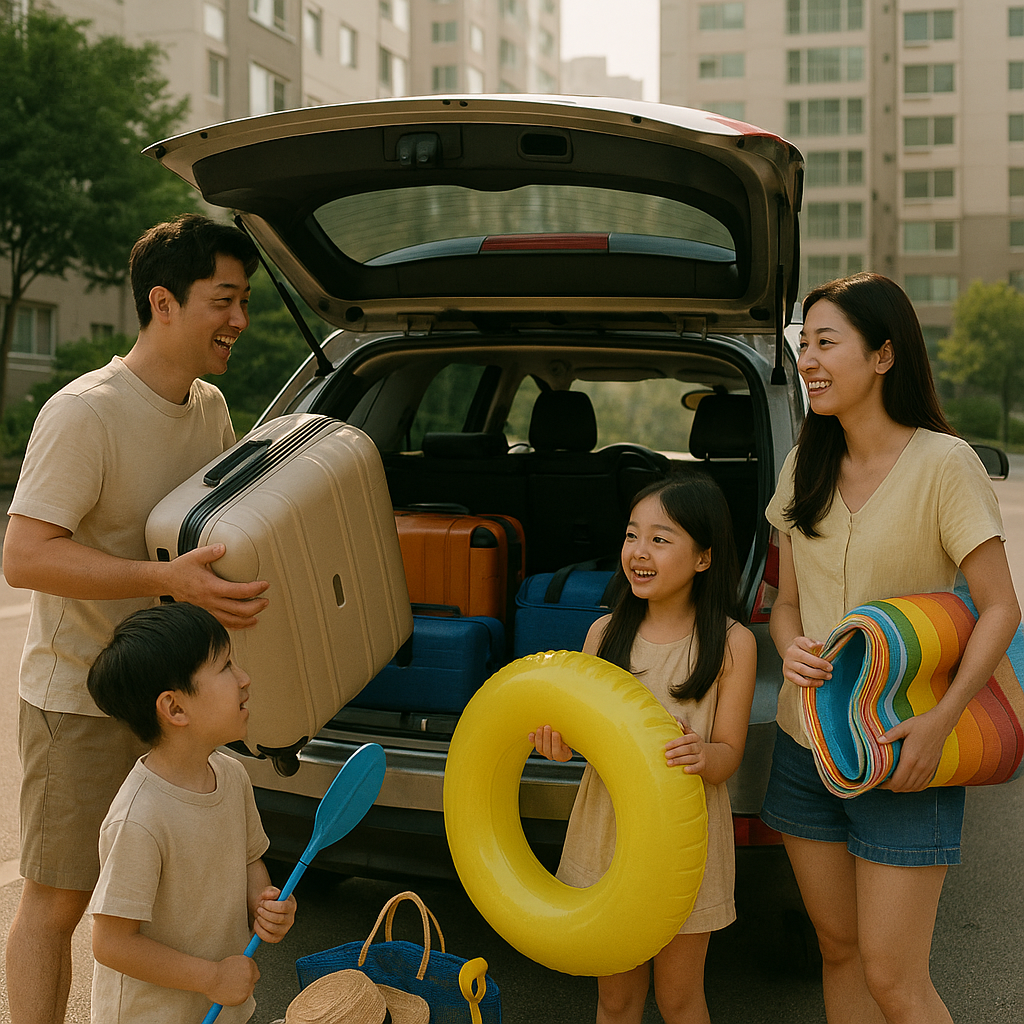
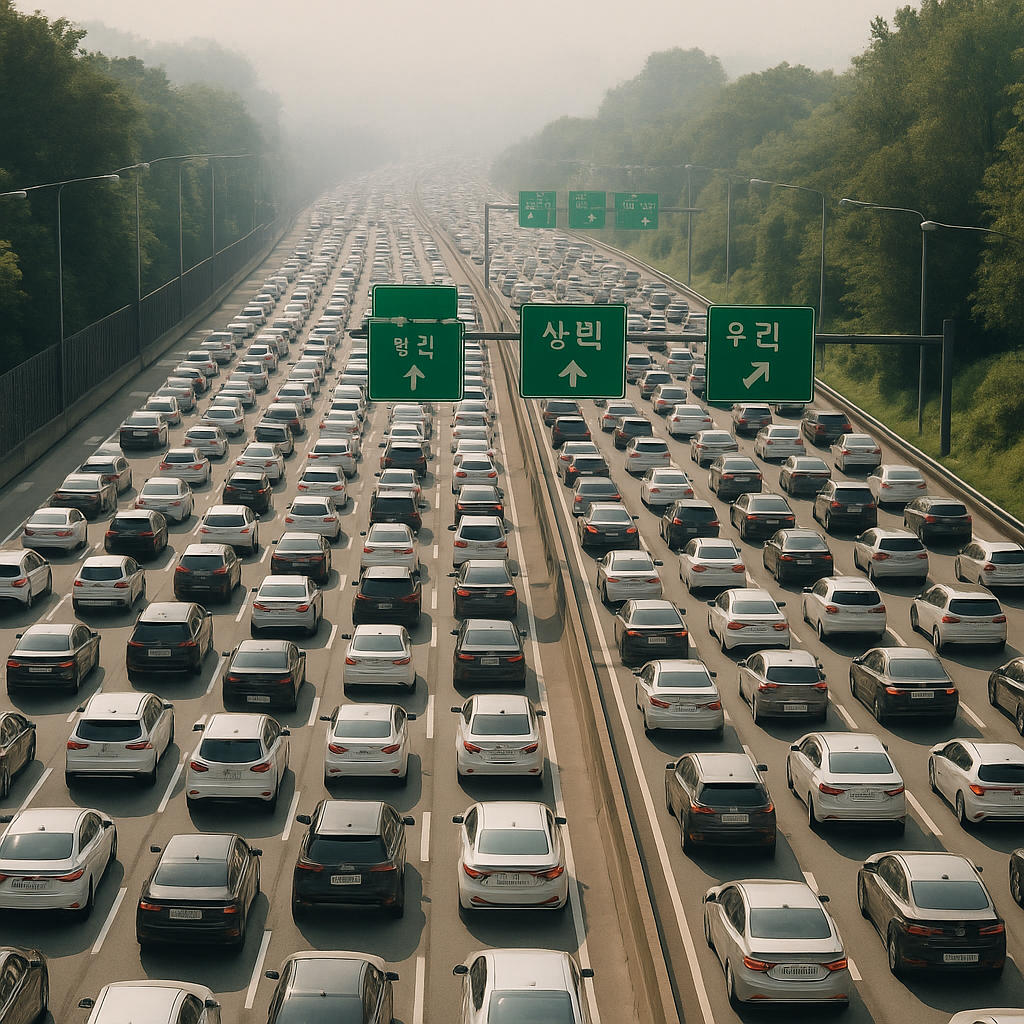
My father-in-law called me at 6:40 in the morning on the first Saturday of August, already sitting in traffic on the Gyeongbu Expressway, and the first thing he said wasn’t hello. It was “still not moving.” He’d left Seoul at 5 a.m. to beat the rush to Busan, a drive that takes four hours on a normal Tuesday. He arrived at 11:30. Somewhere behind him, I found out later, another 5.57 million vehicles were doing the exact same thing that day across the country’s highway network. He wasn’t unlucky. He was on schedule, by Korean summer standards.
This is the week I still haven’t gotten used to, even after years of living here, married into a Korean family, raising two kids who now correct my Korean pronunciation. Somewhere in the last week of July or the first two weeks of August, a huge share of the country simply stops at the same time. Factories go dark. Small restaurants near our apartment tape handwritten signs to their doors — 여름휴가 (summer vacation), back on such-and-such date. Hagwons close. My wife’s office empties out. It isn’t a national holiday in the way Chuseok or Lunar New Year is marked on the calendar with a red number. It’s something looser and, in its own way, stranger: an informal, deeply synchronized pause that almost everyone seems to take during the same seven-to-ten-day window, as if the whole country agreed on a schedule nobody actually wrote down.
Why everyone picks the same week
The mechanics of it aren’t mysterious once you look at how Korean vacation time actually works. Surveys of Korean companies this year found that about 67.5% scheduled their break for early August, with another 23.8% choosing late July — meaning roughly nine in ten businesses cluster into essentially the same fifteen-day band. The average paid summer vacation length companies offer is just 3.8 days, longer at bigger firms with 300+ employees, shorter at small ones. Compare that to the two-to-four-week August breaks common in parts of Europe, and you start to understand why Korea’s version feels less like a slow, staggered exhale and more like everyone holding their breath together and letting go at once.
There’s a cultural layer under the calendar one too. Vacation here still carries a whiff of guilt in a lot of workplaces. In one survey, close to a fifth of workers said they were flatly not planning to take a summer trip at all, worried about how a request for leave might read to a manager, or about the pile of work waiting when they got back — answering the odd Slack message from the beach is, unofficially, viewed as a plus in some year-end reviews, which tells you something about the pressure. So when the whole team, the whole factory floor, the whole department takes the same fixed week off together, nobody has to be the one employee who’s “always gone.” It spreads the guilt evenly, the way it spreads the traffic unevenly.
What that week actually looks like from a car seat
We tried to book a family pension near Gangneung two summers ago, the kind of small guesthouse with a shared barbecue pit and rooms named after flowers instead of numbers. I called in mid-June, feeling proud of myself for being so far ahead. Fully booked, the owner told me, cheerfully, for the entire first week of August — had been for a month. I ended up booking a spot forty minutes further inland, in a town I’d never heard of, and we still hit the kind of Yeongdong Expressway backup where my daughter finished an entire coloring book and asked, not unreasonably, if we were “just going to live in the car now.” Seoul to Gangneung, a two-hour-forty-five-minute drive most of the year, was running four and a half to five hours that weekend. Seoul to Busan, normally around four hours, was stretching past five and even six.
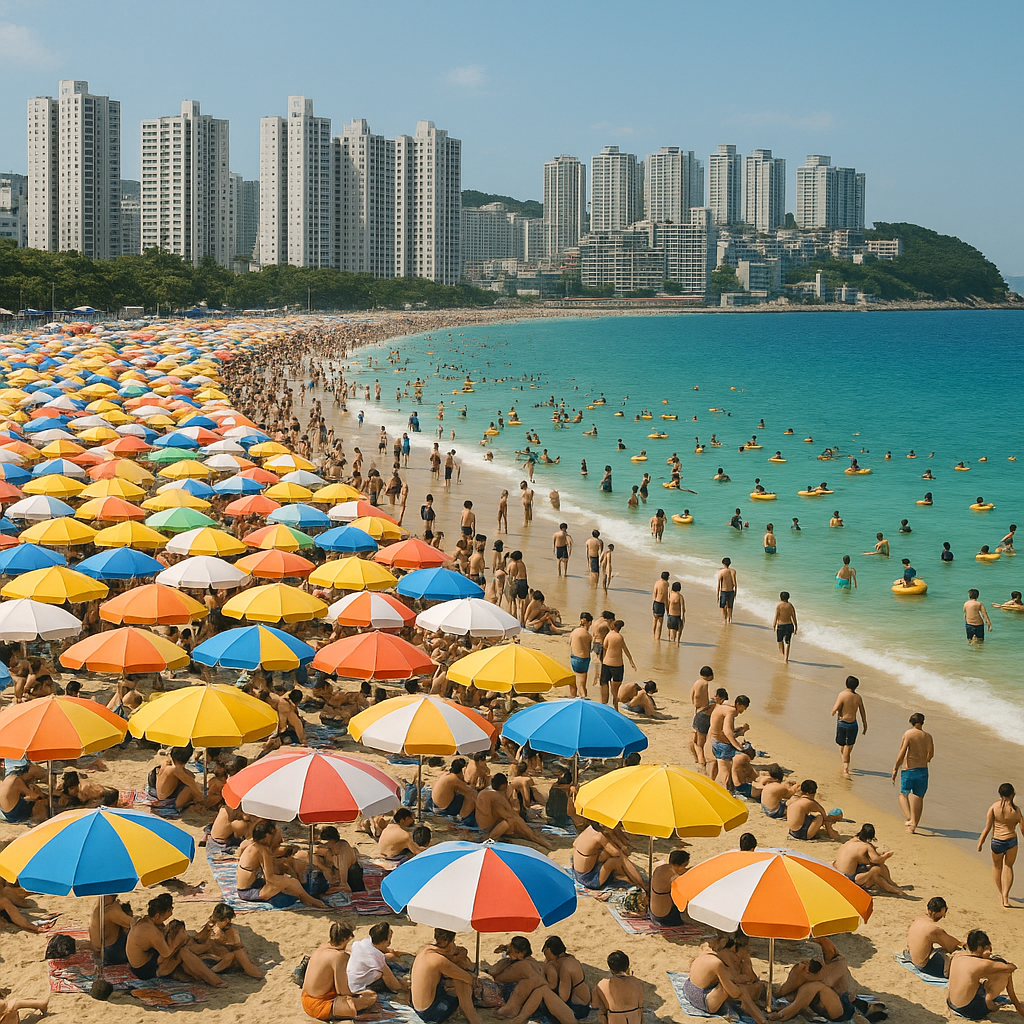
Then there’s the other end of it — the beaches once you finally arrive. Haeundae, on a big summer weekend, has drawn crowds estimated at up to 600,000 people in a single day, a wall of umbrellas and tubes and coolers that makes the sand nearly invisible by noon. Gwangalli, just down the coast, closes its beachside road to cars on Friday and Saturday evenings through July and August, a rule the city’s had in place since 2007 specifically because the foot traffic gets that dense. I remember standing at the edge of Gwangalli with my son on my shoulders, looking for a patch of sand the size of a picnic blanket, and thinking that “getting away from it all” is a strange phrase for a week where you’re never more than an arm’s length from a stranger’s cooler.
And yet — this is the part that took me longest to understand as an outsider — nobody seems to resent the crowding the way I expected them to. There’s a kind of collective shrug to it, an unspoken agreement that this is simply what the week costs, and that the alternative, going it alone on some other week, means feeling like you’re the one person out of step. My wife’s family doesn’t discuss whether to go somewhere during the peak week; the discussion is only ever where. The synchronization itself has become part of the ritual, not a flaw in it.
FAQ
When exactly is Korea’s peak vacation week?
It moves slightly year to year, but it clusters around the last week of July into the first two weeks of August. Roughly two-thirds of Korean companies set their official vacation dates in early August, with most of the rest choosing late July, so the heaviest overlap tends to land on the first weekend of August, when national highway traffic volume peaks.
Is it actually hard to get a flight, train, or hotel that week?
Yes, and earlier than most first-timers expect. Domestic flights to Jeju and KTX seats to Busan or Gangneung during that window can sell out weeks in advance, and popular pensions or guesthouses near beaches routinely fill a month or more ahead. If you’re planning a trip during that specific stretch, book accommodations by mid-June and expect to pay a premium.
Why don’t Korean companies just stagger vacation schedules to avoid the crush?
Some larger corporations do split staff into shifts across a few weeks, but for many small and mid-sized businesses, a single fixed week is simpler to manage and feels fairer — nobody has to negotiate for a “better” slot, and closing the whole office or factory for one set week avoids the awkwardness of asking who covers for whom. The tradeoff is that almost everyone ends up on the road, and at the beach, at exactly the same time.
Leave a Reply