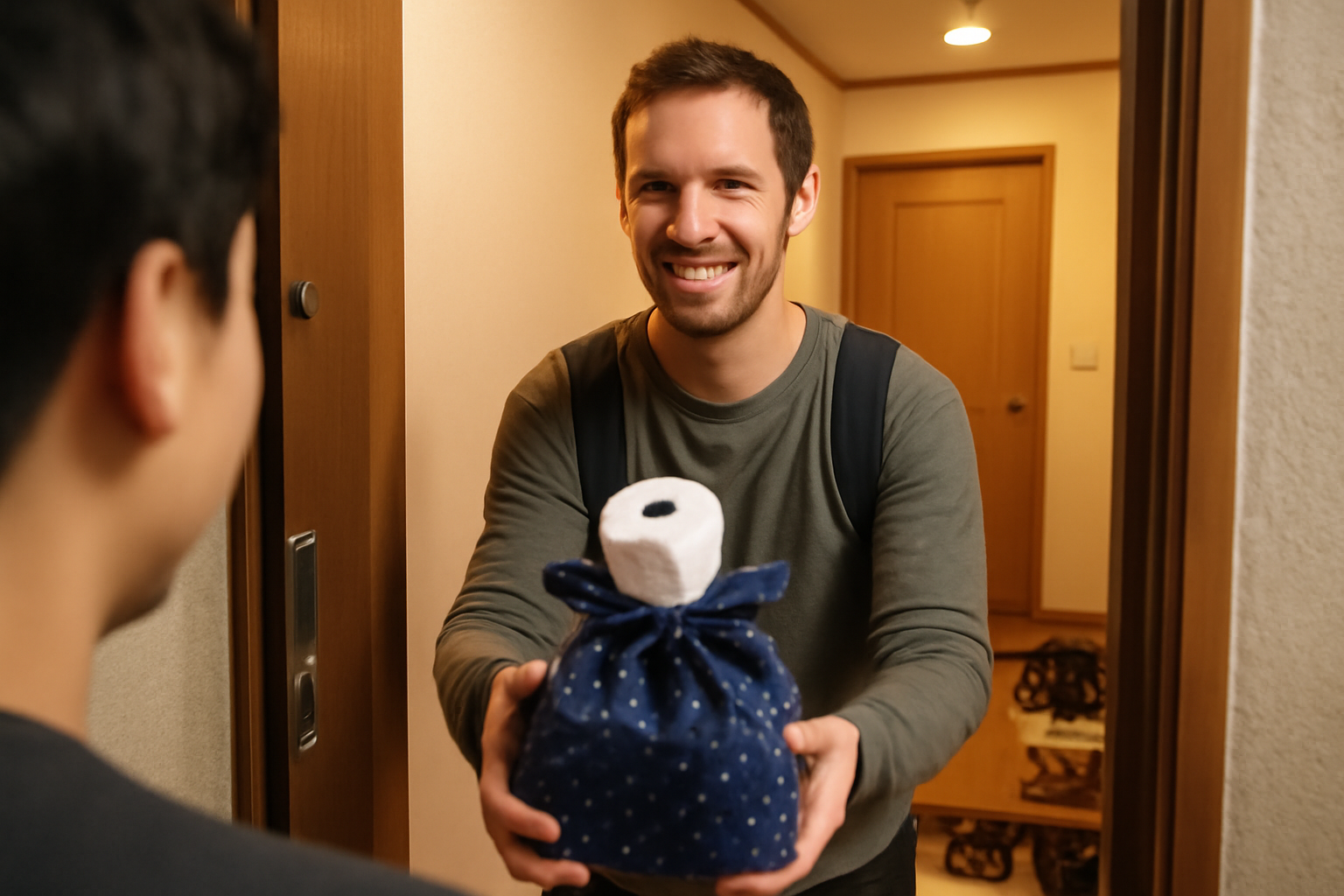
The first time someone handed me a roll of toilet paper wrapped in a red ribbon, I genuinely didn’t know what to do with my face. I was standing in the doorway of a friend’s brand-new officetel in Seoul, holding a bottle of wine I’d picked up on the way because that’s what you bring to a party where I’m from. Behind me, another guest walked in with a jumbo pack of laundry detergent balanced on one hip like it was the most normal thing in the world. Nobody blinked. Nobody laughed. The host actually looked delighted, took the toilet paper roll like it was a bouquet of flowers, and set it proudly near the entrance where everyone could see it.
That was my introduction to jibdeuli, and it took me a solid year of living in Korea, married into a Korean family, before I stopped feeling like I was missing an inside joke every time this happened. I wasn’t. I just hadn’t learned the logic yet. Once you do, it stops being weird and starts being kind of lovely — one of those small cultural habits that says a lot about how people here think about luck, effort, and taking care of each other.
What jibdeuli actually is
Jibdeuli (집들이) breaks down simply: jip means house, and deuli comes from a verb about entering or moving into something. Put together, it’s the housewarming gathering — the party a person throws not long after settling into a new home, whether that’s a first studio apartment, a bigger place after a promotion, or a house bought after years of saving. Friends, coworkers, extended family, sometimes neighbors, all get invited over within the first few weeks of the move.
It’s not a quiet, RSVP-three-weeks-in-advance kind of affair either. In my experience it tends to happen fast, almost impulsively, while the new place still smells like fresh paint and the boxes aren’t fully unpacked. There’s an energy to it — the new tenant wants to show off the space, and everyone else wants to see it before the “new apartment” feeling wears off.
Why toilet paper, of all things
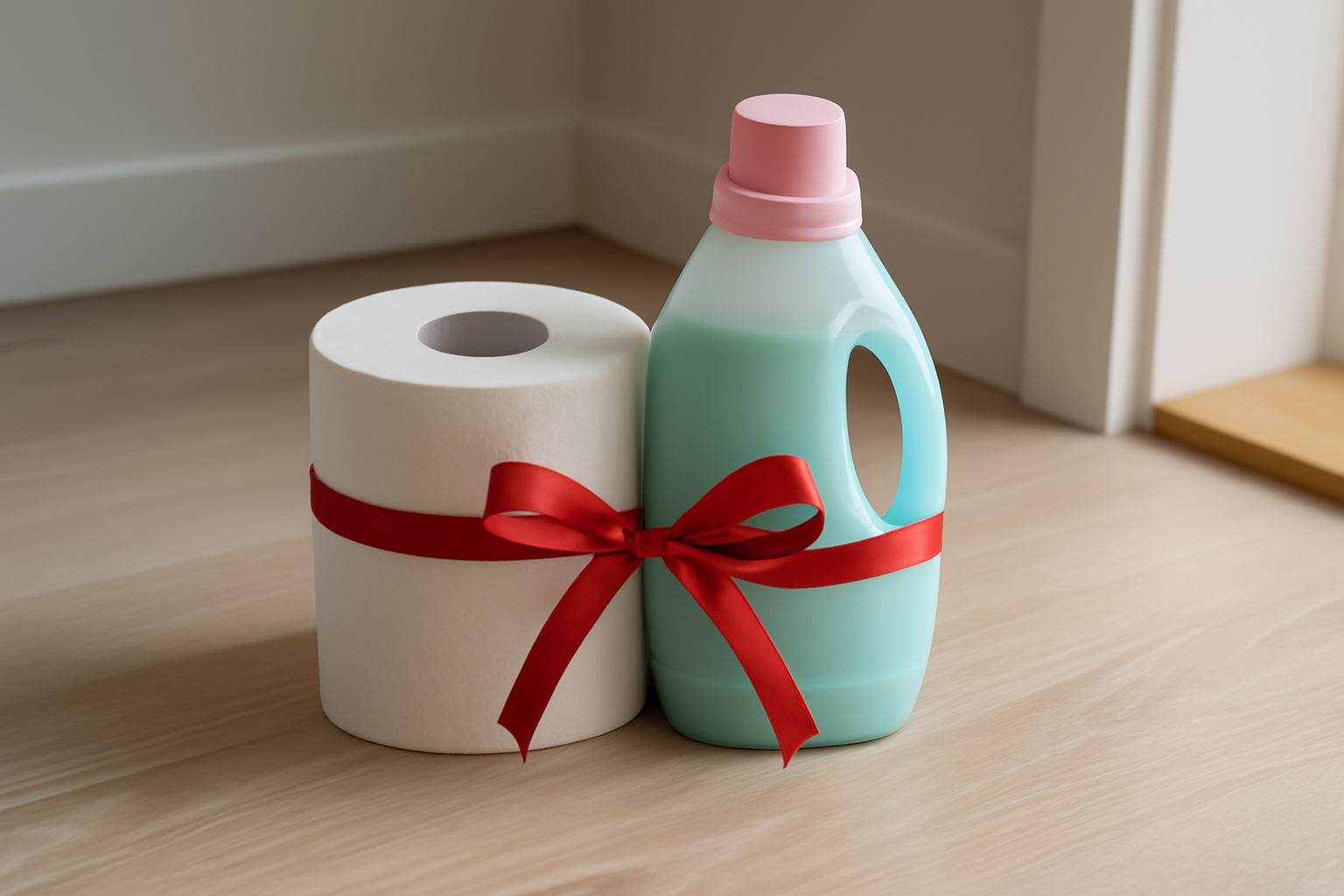
Here’s the part that trips up almost every foreigner I know, myself included: toilet paper is the single most common jibdeuli gift in Korea, and it’s given with total sincerity. The logic, once explained to me by my mother-in-law with the patience of someone repeating something obvious, is about the roll itself. Toilet paper unspools in one long, unbroken, smooth line. Give someone that image as they start a new chapter in a new home, and you’re wishing them a life that unrolls just as smoothly — free of snags, free of sudden stops, everything proceeding at an easy, continuous pace.
There’s also a more literal, less poetic layer to it. A single roll of toilet paper, if you were to unravel it, stretches out to a genuinely long length. That length gets tied to longevity — a long life, a long and stable stay in the new place, longevity of good fortune. It’s the kind of symbolism that sounds like a stretch until you’ve heard three different people independently explain it to you the exact same way, at which point you realize it’s not folklore dressed up after the fact. People actually mean it when they say it.
Practically speaking, it also happens to be one of those gifts nobody resents receiving. Everybody uses toilet paper. Nobody has too much of it. Compare that to a candle or a decorative plate that might not match anyone’s taste, and the appeal becomes obvious even before you get to the symbolism.
And laundry detergent, for the same basic reason
Detergent runs on a parallel logic, just swapping length for bubbles. When you use laundry detergent, it foams — and in the symbolism, those suds stand in for money and prosperity multiplying, rising, spreading the way foam spreads across a load of laundry. Bringing detergent to someone’s new home is a wish that their wealth will build the same way, generously and visibly, rather than trickling in drop by drop.
I’ve heard a slightly older version of the story too, one involving a time when both toilet paper and decent detergent were genuine luxuries in Korea rather than something you grab without thinking at the corner mart. A few decades back, before the economy took off the way it did, household basics like these weren’t things every family could take for granted. Giving them as a housewarming present wasn’t just symbolic then — it was a real, useful gift, on par with giving someone groceries. The economic reality changed, but the gesture stuck, and the symbolism eventually became the main reason people keep doing it rather than the practical need.
Dish soap sometimes stands in for laundry detergent, especially among younger couples setting up a first kitchen together, but the bubbling logic carries over identically either way.
What else people actually bring
Toilet paper and detergent get all the attention because they’re the gifts foreigners find funniest, but they’re far from the only options, and honestly not even always the primary gift — more like the reliable, expected baseline that gets paired with something else.
Cash is extremely common, particularly from close family or older relatives, tucked into a plain envelope rather than handed over loose. Houseplants show up a lot too, especially ones associated with clean air or easy care, since a new home supposedly benefits from a living thing settling in alongside its new owner. Practical household items are popular as well — a nice set of towels, kitchen tools, small appliances like a rice cooker if the recipient doesn’t already have one, or scented candles and diffusers for people who lean a little more toward the aesthetic side of things. Among younger, more design-conscious friend groups, I’ve also seen good bottles of wine or specialty coffee gear show up instead of the traditional items, especially when the host has already made it clear through the group chat that they’d rather not receive three overlapping bags of detergent from three different guests.
That last point actually matters. Because toilet paper and detergent are such default choices, hosts sometimes end up with a genuinely absurd surplus of both after a jibdeuli. It’s common enough now that some hosts will gently hint in advance — half joking, half not — that they’re already stocked up, so guests should feel free to bring something else instead.
What you generally avoid bringing
Sharp objects sit at the top of the avoid list, and this isn’t specific to housewarmings — it applies to Korean gift-giving broadly. Knives, scissors, letter openers, anything with a blade, carry an association with cutting, which in turn gets read as cutting a relationship or cutting off good luck. Even a beautifully designed kitchen knife set, something that would be a completely normal wedding registry item where I’m from, tends to raise eyebrows here if given as a personal gift rather than something explicitly requested.
Shoes come with their own baggage, more tied to romantic relationships than housewarmings specifically — there’s a superstition that gifting shoes to a partner gives them an easy means to walk away. It’s less of a hard rule for a jibdeuli crowd of mixed friends and coworkers, but I’ve still seen people avoid it just to be safe, opting for slippers instead if footwear is on their mind at all, since slippers don’t carry the same “walking away” connotation.
Beyond those two, there isn’t a long list of hard taboos specific to housewarmings. The bigger unspoken rule is just about matching the gift to your relationship with the host — close friends and family can go a bit more personal or generous, while more distant acquaintances tend to stick to the safe, expected middle ground of toilet paper, detergent, or a modest cash envelope.
How the visit itself tends to go
Jibdeuli etiquette isn’t rigid, but there’s a shape to it that becomes obvious once you’ve been to a handful. You generally don’t show up empty-handed — that part is close to a hard rule even among casual friend groups. You also don’t show up too early; if the invite says a certain time, showing up a little after is more normal than showing up right on the dot or early, since hosts are usually still finishing last-minute prep.
Once you’re actually there, the visit tends to include a full walkthrough. The host wants to show you the place — the view if there is one, the storage they’re proud of, whatever renovation or furniture choice they spent the most energy on. This isn’t small talk filler; it’s genuinely part of the occasion, and guests are expected to engage with it, ask questions, admire things, maybe gently tease the host about a design choice.
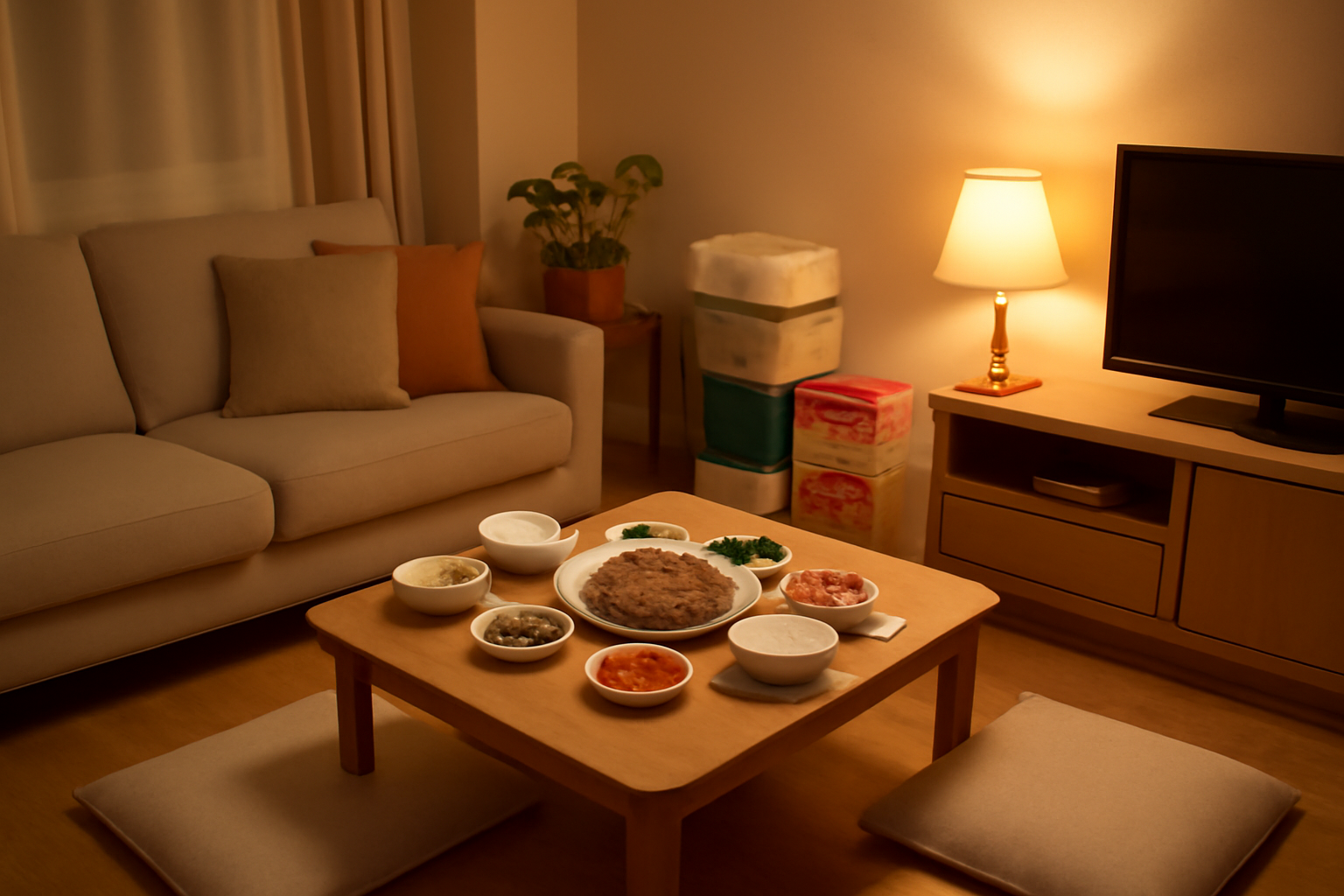
Food is the other half of the equation, and it’s substantial, not a casual spread of chips and drinks. Japchae, the stir-fried glass noodle dish, shows up constantly at these gatherings, along with bindaetteok, a savory mung bean pancake, and usually a handful of other home-cooked dishes depending on what the host is comfortable making. There’s a kind of reciprocity built into the whole event: guests bring something for the home, and the host feeds everyone properly in return. Showing up and expecting just drinks and snacks would actually be a little unusual — jibdeuli food culture leans toward “full meal,” not “light bites.”
Conversation tends to circle around the move itself — how the apartment hunt went, what the host is planning to do with the space over time, whether they’re renting or bought outright, how the neighborhood is turning out to be. It’s a genuinely warm occasion in my experience, low on formality despite the structured gift customs, more like a proper get-together than a stiff social obligation.
FAQ
Do I need to bring both toilet paper AND detergent, or is one enough?
One is enough. Bringing both at once isn’t wrong, but it’s not expected either, and given how often multiple guests independently choose the same default gift, hosts frequently end up with more of both than they know what to do with. Picking one — or better yet, checking with other guests beforehand so you’re not all bringing the same thing — is the more considerate move.
How much money is appropriate if I bring cash instead of a physical gift?
There’s no fixed number, and it scales heavily with how close you are to the host. Among younger friends and coworkers attending as part of a group, amounts in the range of 30,000 to 50,000 won per person are common and won’t raise eyebrows either way. Closer friends or family members giving individually tend to go higher, sometimes considerably so, especially if the housewarming coincides with a first home purchase rather than a rental move. When in doubt, matching what others in your friend group are planning to give is a safe way to calibrate, and cash should still go into an envelope rather than being handed over loose.
Is it rude to skip the toilet paper and detergent tradition entirely and just bring a bottle of wine or a houseplant?
Not rude at all. The symbolic gifts are a strong default, especially among older generations or more traditional social circles, but they’re not a strict requirement, and plenty of Koreans themselves opt for something else entirely, particularly in more design-forward or younger friend groups. What matters more than the specific item is that you bring something and that it’s presented thoughtfully rather than as an afterthought grabbed on the way out the door.
What if I’m invited to a jibdeuli on short notice and don’t have time to research or find a “proper” gift?
This is exactly the situation the toilet paper and detergent tradition is built for. Both are sold at literally every convenience store and supermarket in the country, they’re inexpensive, and nobody will think less of you for showing up with a wrapped roll of toilet paper grabbed from the CU on the corner ten minutes before arriving. In a way, it’s one of the more forgiving gift traditions I’ve encountered anywhere — practical, universally understood, and impossible to get embarrassingly wrong.
Leave a Reply