Every year around this time, the Seoul subway starts to look different. It’s not the usual rush-hour crush of briefcases and backpacks — it’s people hauling gift boxes wrapped in ribbon, carried with both arms because they’re heavier than they look. Spam gift sets. Boxes of Korean pears the size of softballs. Someone’s always balancing three sets of something on top of a rolling suitcase, trying not to knock into the doors. Strange as it sounds, that’s how I know Chuseok is close — not a calendar, just Line 2 the week before.
I’m Yijidaddy, and I still remember my first Chuseok as a foreign son-in-law — standing in my in-laws’ kitchen with genuinely no idea what I was supposed to be doing with my hands. Nobody handed me a manual. If you’re new to Korea, married into a Korean family, or just curious what the fuss is about every autumn, here’s the breakdown: what Chuseok actually is, when it happens in 2026, and what it’s like living through it, first as an outsider and then, slowly, as family.
So what exactly is Chuseok?
Chuseok (추석) is Korea’s harvest festival, often shorthanded as “Korean Thanksgiving” — a comparison that gets the spirit right even if the details don’t quite line up, and yet it’s the one explanation that actually lands with people back home. The name roughly means “autumn evening,” and the holiday centers on the full moon: it falls on the 15th day of the 8th month of the lunar calendar, every single year. That’s why the date shifts on the Western calendar instead of sitting on a fixed day the way Christmas does.
At its core, Chuseok is about gratitude and ancestry — families give thanks for the year’s harvest and honor the generations before them. It sounds like it should be one tidy event. Even so, it’s really a cluster of customs: a ritual at home, a trip to the family hometown, a table of specific foods, and a few days off that the entire country uses for exactly one purpose — going home.
When is Chuseok in 2026?
In 2026, Chuseok falls on Friday, September 25. Because it’s such a major holiday, the government tacks on extra days around it, so the official holiday period runs from Thursday, September 24 through Saturday, September 26. If you’re trying to plan travel, book anything, or just brace for how quiet — or chaotic — your neighborhood is about to get, that’s the window to circle.
A quick note for anyone new to this: you might assume you can just add 365 days to this year’s date and get next year’s — you can’t. Because Chuseok tracks the lunar calendar, it can land anywhere from early September to early October depending on the year. I learned that the hard way, once confidently telling a coworker the “usual date” and landing nearly three weeks off.
The rituals: charye and the ancestral table
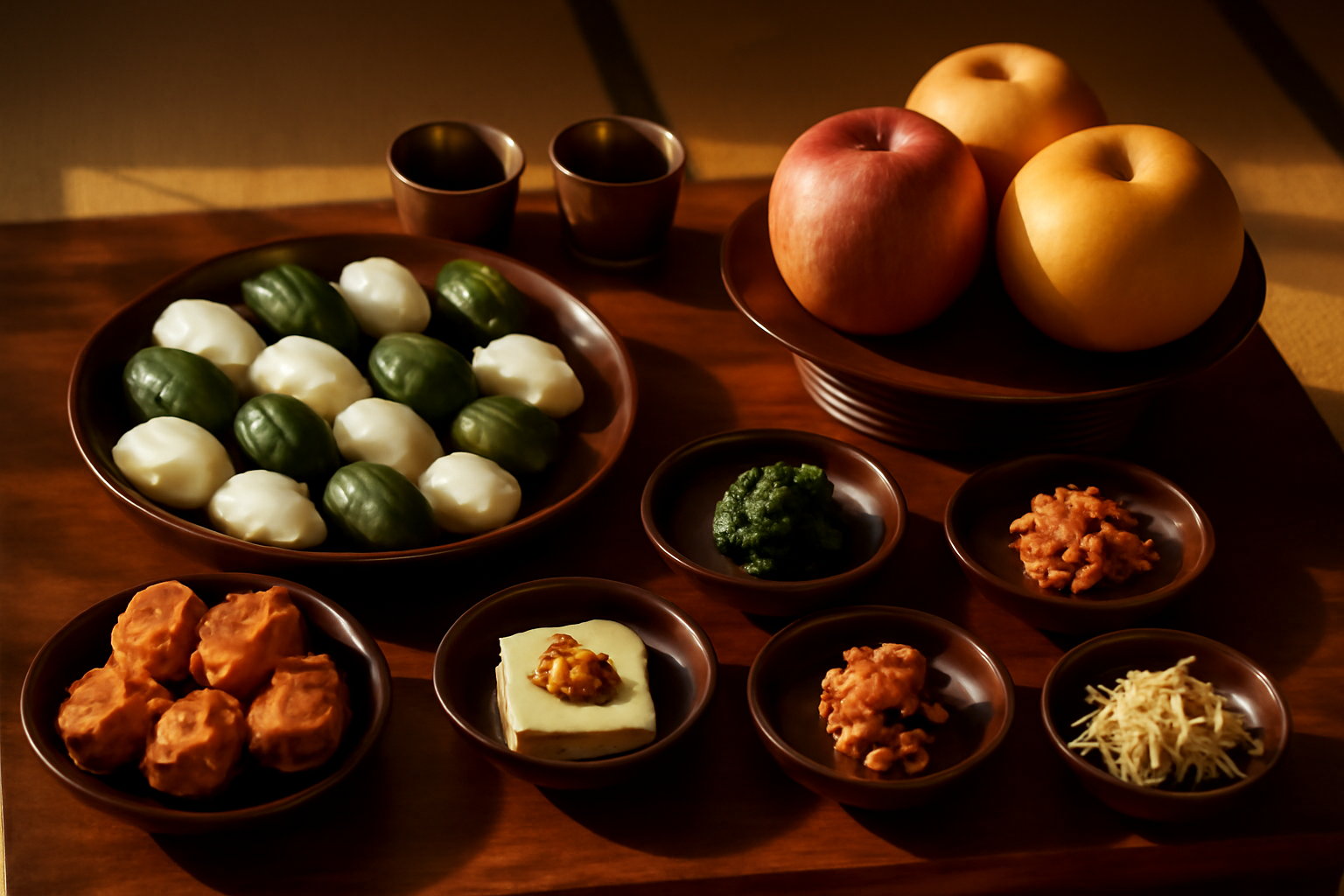
The heart of Chuseok morning, for families who observe it, is charye (차례) — an ancestral memorial rite performed at home. It sounds formal on paper, but it’s oddly quieter and more domestic than that. The family sets up a low table, arranges food in a specific order — fruit here, rice cakes there, fish and meat on designated rows — and the eldest members lead a series of bows toward photos of ancestors. Not somber exactly. Just serious.
The rules about placement vary by family and region, and even Koreans argue about the “correct” way to do it — still, everyone seems to have strong opinions about it anyway. My advice as an outsider: watch, follow whoever’s directing traffic, and don’t move a plate without asking. Some families also visit ancestral graves before or after, called seongmyo, to clear weeds and tidy the site: a small, physical act of respect.
Songpyeon: the rice cake that defines the holiday
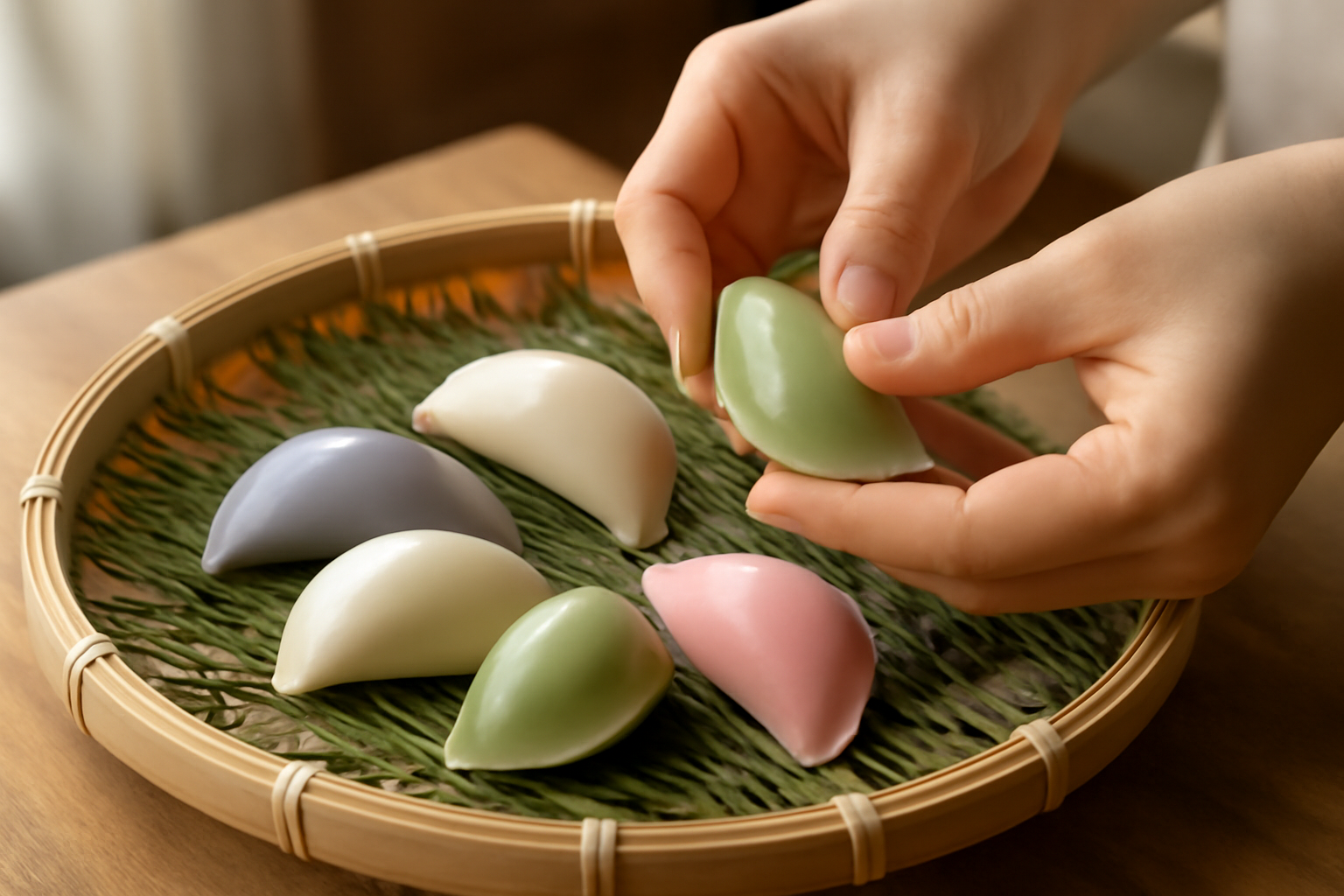
If there’s one food that says “Chuseok” more than any other, it’s songpyeon — small, half-moon-shaped rice cakes filled with sweetened sesame, red beans, or chestnut paste, steamed over a bed of pine needles that leave a faint, resinous scent behind. You might expect the shape to be arbitrary. It isn’t: a crescent moon, not a full one, symbolizes growth and potential — things still becoming, still on their way to fullness.
Making songpyeon together is still, in a lot of families, a genuinely communal activity — everyone gathered around a table pinching dough into shape. There’s a saying that whoever makes a beautifully formed songpyeon will have a beautiful daughter, or a handsome son, depending on who’s telling it. My own first attempts looked more like deflated dumplings than crescent moons, and my mother-in-law was diplomatic enough not to comment. Mostly.
Gift-giving season: Spam boxes and fruit sets
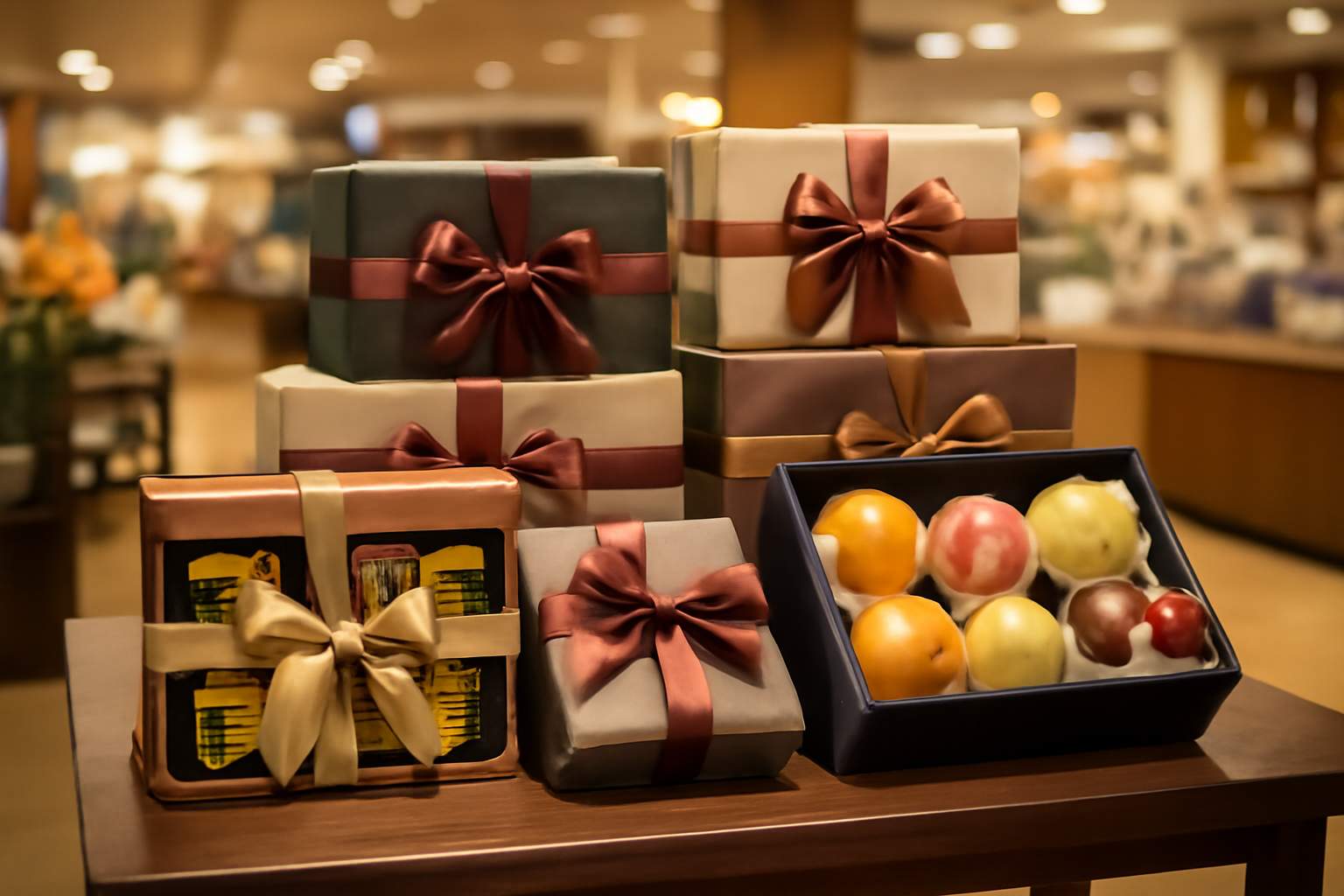
This is the part that catches foreigners off guard, and strange as it sounds, it genuinely delighted me the first time I understood it: canned meat is a normal, respectable, even prestigious holiday gift in Korea. Spam gift sets — tins boxed with a plastic window, sometimes paired with cooking oil — sell by the millions before Chuseok. Department stores build entire display sections around them, alongside fruit sets: curated boxes of Korean pears and apples chosen for size and unblemished skin, the way you’d pick out flowers.
These gifts move in every direction — employees to bosses, adult children to parents, between neighbors. The logic makes sense once you sit with it: everyone’s cooking a big holiday meal anyway, and everyone appreciates useful, non-perishable food. If you’re invited somewhere for Chuseok and unsure what to bring, a fruit set from a department store food hall is close to a foolproof choice.
Gwihyanggil: the journey nobody escapes
And then there’s the traffic. Koreans call the trip home for the holiday gwihyanggil (귀향길) — literally, the road home — and oddly, it might be the most universally shared experience of Chuseok, foreigners included, since anyone near a highway those days feels it whether they want to or not.
A trip that normally takes three hours can stretch to eight or nine. News broadcasts run live traffic maps the way other countries run election results. Rest stops along the expressway turn into their own small festivals, packed with people stretching their legs, buying hotteok, and comparing notes on which route is moving. The first year I drove my wife’s family to her hometown, a four-hour trip took nearly nine — an entire nation, at the same time, trying to reach the same kind of place: grandma’s house. There’s something oddly moving about that, even stuck in gear one on the highway.
Watching it from the outside, then slowly from the inside
My first couple of Chuseoks in Korea, I was mostly an observer — noticing the empty streets as everyone left town, wondering what was happening behind closed doors in houses I’d never been invited into. It can feel isolating without a Korean family or close friends pulling you in, and still, there’s no real shortcut around that. You just wait it out.
That changed once I married into a Korean family. Suddenly I was hauling gift boxes onto the train, standing awkwardly during charye trying to remember which direction to bow, getting handed a mound of songpyeon dough and told to make it look nicer. It’s still not effortless — there are customs I get wrong, honorifics I fumble — but there’s a real warmth to being folded into something this old and specific, even imperfectly.
Frequently asked questions
Do foreigners get invited to Chuseok?
It depends on your personal connections. Chuseok is a family holiday observed at home, not a public festival, so an invitation usually comes through a Korean partner, spouse, close friend, or host family. If you don’t have that yet, it’s not a dead end — cities like Seoul run public Chuseok programs at folk villages and palaces, with hanbok rentals, traditional games, and sometimes open demonstrations for visitors.
What should I bring as a gift if I’m invited to someone’s home for Chuseok?
A boxed fruit set or a nicely packaged food gift from a department store is close to universally appropriate. Avoid anything too casual, like a single item without wrapping — presentation matters here more than you’d expect. If you want to lean into the culture, a Spam gift set is a well-received, slightly playful choice once you know the household well enough.
One last thing
If you’re spending your first Chuseok in Korea this September, my honest advice is to lean into what feels strange rather than waiting for it to make sense first. Eat the songpyeon even if your shape came out lopsided. Sit through the charye even if you don’t understand every step. Get stuck in gwihyanggil traffic at least once — that shared frustration is, oddly, its own kind of belonging. Nobody expects a foreigner to get it perfect. They just seem to appreciate that you showed up.
Leave a Reply