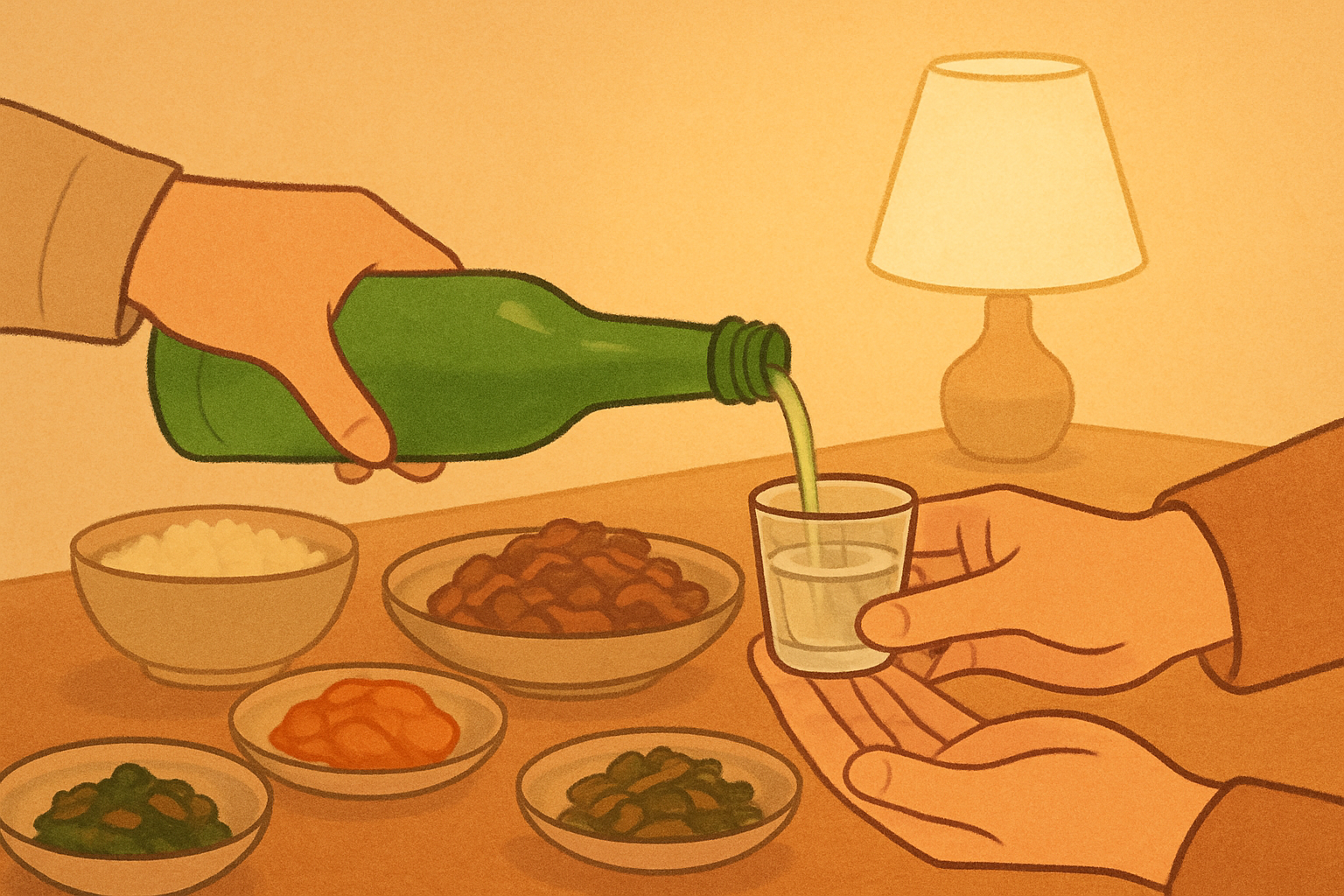
My father-in-law poured me a glass of soju with one hand at a family dinner in Ilsan, and for a second I just stood there frozen, not sure if I’d done something wrong. I hadn’t — he was testing whether I’d catch it. I did, barely, by reaching out with both hands a half-second too late. That half-second is the whole story of how I learned Korean drinking etiquette: not from a book, but from almost getting it wrong in front of the one person I most wanted to impress.
The rule nobody explains until you break it
Here’s what I wish someone had told me before that dinner: when you pour for someone older than you, or someone in a position above you, you use two hands. One hand holds the bottle, the other rests lightly on your forearm or the base of the bottle. When you receive a drink from an elder, same thing — both hands on the glass, and you turn your head slightly away before you sip. It sounds like a small gesture. It isn’t. My wife told me later that her father mentioned it to her mother that same night — not that I’d done it right, but that I’d corrected myself without being told.
Where I actually got it right (eventually)
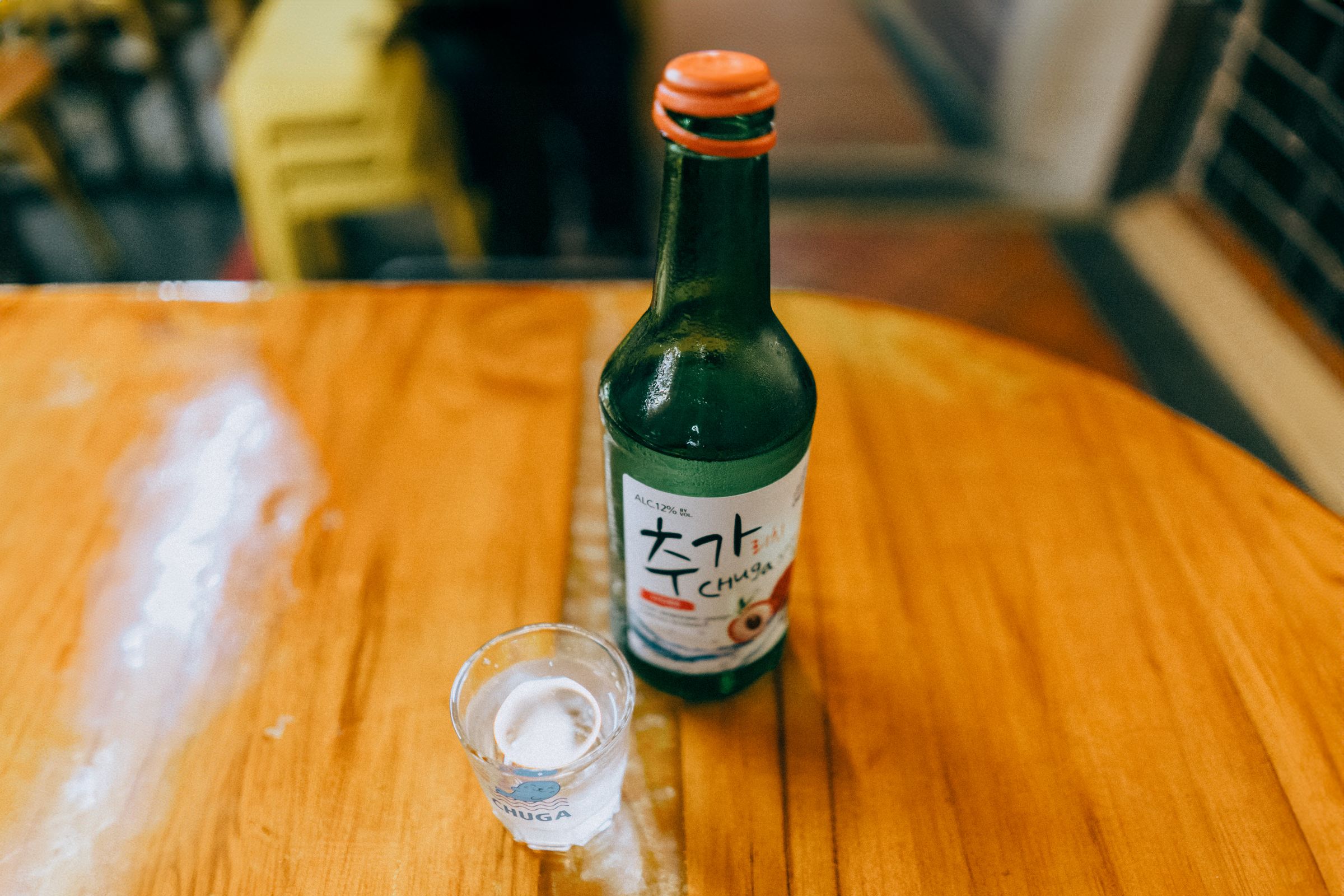
Two years into living in Goyang, I stopped thinking about it as a rule and started doing it without noticing — until my brother-in-law visited from Chicago last spring and I watched him make the exact mistake I’d made. One-handed pour, straight across the table, no hesitation. Nobody said anything. My father-in-law just quietly refilled his own glass and let it go, because a first-timer gets grace that a son-in-law of six years doesn’t. That’s the part that took me the longest to understand — the rule bends depending on who you are to the room.
It’s not just soju
The two-hand rule shows up everywhere once you notice it. Handing someone a business card, passing money at a corner store to an older cashier, giving a gift to a grandparent at Chuseok — all of it gets the same treatment if the other person is meaningfully older or senior to you. I now do it reflexively when I hand my daughter’s daycare teacher anything, which probably looks a little formal for a five-year-old’s snack bag, but old habits from a good scare stick.
What I tell other expats now
When friends visiting from the States ask me for one piece of advice before a dinner with Korean in-laws or coworkers, this is it. You don’t need to master the whole etiquette system in a weekend. Get the two-hand pour right, get the head-turn right, and you’ve covered maybe 80% of what actually gets noticed at the table. The rest people will forgive.
FAQ
Do I need to use two hands with friends my own age too?
Not really. Among close friends and peers, one-handed pouring is completely normal and nobody’s counting. The two-hand rule matters specifically with elders, in-laws, bosses, or anyone clearly senior to you — the more formal or hierarchical the setting, the more it matters.
What if I’m left-handed — does the hand matter?
I asked my father-in-law this directly once. He laughed and said the point isn’t which hand does what, it’s that both hands are visibly engaged and you’re not casually one-handing it like you would with a buddy. Support the bottle or glass with your other hand or forearm, and you’re fine either way.
Is it rude to pour your own drink?
At a formal dinner, yes — it’s considered a little awkward, almost like admitting nobody’s looking out for you. At my father-in-law’s table, I learned to keep an eye on everyone’s glass, especially his, and top it off before he had to reach for the bottle himself.
Leave a Reply