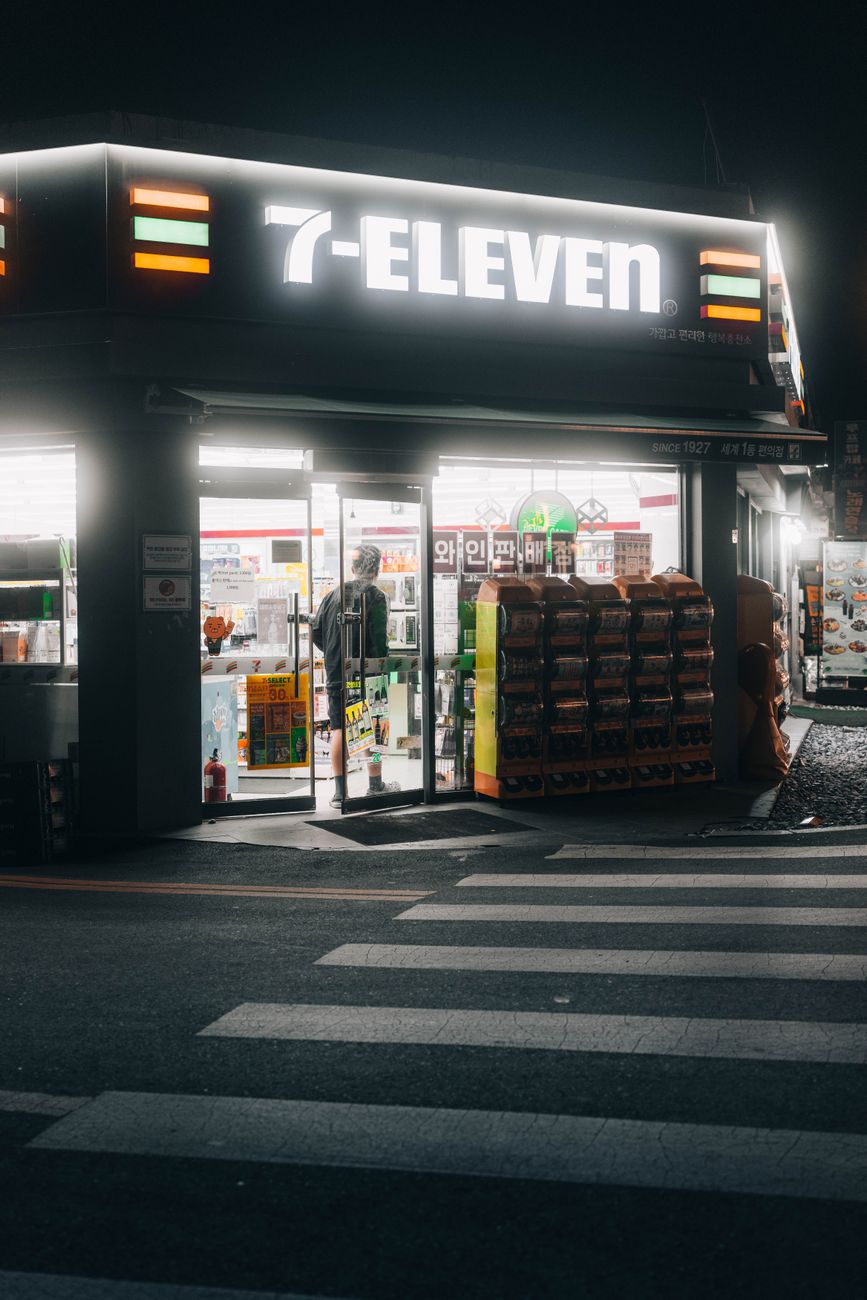
There’s a specific sound I’ve come to associate with being properly fed in this country: the electronic chime of a sliding glass door at three in the morning, followed by the hum of a slushie machine nobody’s using. Korea can put a 300 km/h KTX train between Seoul and Busan, sure, and that’s genuinely impressive. But the single achievement of modern Korean life I’d defend hardest is the convenience store — the fact that you can walk into a CU half-asleep and walk out ninety seconds later with a full meal, a dessert, and something spicy enough to wake the dead, all for under 10,000 won.
I’ve eaten my way through more GS25s, CUs, 7-Elevens, and Emart24s than I’d like to admit to my dentist. Not as research, exactly — more as a lifestyle that occasionally produces useful opinions. So here’s my ranking, and I already know some of you are going to fight me on the top three. Good. Fight me in the comments.
10. Hotbar (the fish-paste cylinder that started it all)
Let’s start controversial. Hotbar — the warm, slightly springy fish-cake roll sitting under the heat lamp near the register — is the item every foreigner tries once, makes a face at, and then quietly buys again a week later. It’s not glamorous. It’s basically a fried surimi log, sometimes stuffed with rice or cheese, and it costs somewhere around 1,500 to 2,000 won depending on the filling. I put it at the bottom not because it’s bad, but because it’s the item most likely to be someone’s first Korean convenience store food, and first loves rarely age into favorites. Still, on a freezing subway commute it’s basically a cheap, greasy blanket, and I say that with real affection.
9. Sotteok sotteok skewers
Alternating chunks of grilled sausage and rice cake on a stick, brushed with a sweet-spicy glaze — sotteok sotteok is the item that convinces tourists convenience stores here are basically street food stalls with air conditioning. It’s genuinely good. My complaint is consistency: get it fresh off the hot bar at a busy GS25 and it’s fantastic; get it from a store that’s been running the heat lamp since lunch and it’s rubbery in a way rice cake should never be. When it’s right, though, it’s a strong top-five contender. That gap between “right” and “wrong” is exactly why it’s parked at nine instead of higher.
8. Instant tteokbokki cups
I want to be honest about this one because I think a lot of “best snacks” lists oversell it. Cup tteokbokki — the microwaveable rice cake in gochujang sauce, usually running 2,000 to 3,000 won — is convenient, and on a rainy day it hits a very specific craving. But on its own it’s a slightly gummy compromise, texture-wise, next to the real thing from an actual street cart. Where it earns its spot is the “rapokki” move: dump a cup of instant ramyeon noodles into the tteokbokki sauce once it’s done microwaving, mix, and suddenly you’ve built something better than either product alone. That hack alone bumps it several spots up my personal list, and I’d argue it’s basically cheating to judge it without trying that combo first.
7. Melona and the ice cream freezer in general
The ice cream freezer at any Korean convenience store is a small miracle of design — dozens of bars for 800 to 2,000 won, and somehow half of them are genuinely excellent. Melona, the pastel melon-flavored bar with the almost creamy texture, is the one I default to, but honestly Binggrae’s whole ice cream lineup, plus Bravo Corn’s cone-with-peanuts combo, deserve a mention here too. I’ll admit ranking a whole freezer as one entry feels like cheating. But treating each bar separately would just mean five ice cream entries in a row, and even I have some editorial standards.
6. GS25 or CU cheese corn dog
Pivoting from the dessert freezer back to the greasy counter, we land on Korea’s corn dog obsession, which deserves its own documentary at this point. What used to be a simple hot dog on a stick coated in cornmeal batter has, over the last few years, mutated into something wilder — half-and-half sausage-and-mozzarella versions, ones rolled in crushed potato bits before frying, sugar-dusted ones that taste more like a churro than a hot dog. Convenience store versions, usually around 1,500 to 2,000 won and heated in-store, are a step down from the dedicated corn dog chains that exploded a few years back, sure. But they’re available at literally every corner, at 3am, without a line. That accessibility earns real points in my book, even if a food-truck cheese corn dog would beat it in a blind taste test every time.
5. Dosirak (lunch box meals)
If you’ve never had a convenience store dosirak, imagine a proper Korean home-style meal — rice, a protein like bulgogi or fried pork cutlet, two or three banchan sides — compressed into a plastic tray that microwaves in about two minutes. CU’s collaboration lunch boxes, including lines associated with celebrity chef Baek Jong-won, built a genuine cult following among office workers who need lunch that isn’t sad; his sausage-and-egg-roll style bento in particular is the one coworkers specifically ask each other to grab from the fridge case before it sells out. Prices typically land between 4,000 and 6,000 won, which sounds like a lot next to a triangle kimbap but is still absurdly cheap for a full meal with sides.
My one gripe is portion inconsistency — some dosirak feel like a real meal, others feel like a sample platter that forgot to grow up. When it’s a good one, though, it’s genuinely one of the best value meals in the country, and I mean that as someone who has eaten plenty of actual restaurant food here. I’ll still occasionally get a lunch box that’s 80 percent rice and a lonely piece of egg roll, and that inconsistency is the only thing keeping this out of my top three.
4. Buldak-flavored snacks, jjolbyeong included
Samyang’s fire noodle empire has spread well past the ramyeon aisle at this point, and I’m mostly fine with that. The Buldak jjolbyeong snack — a corn puff snack packaged in a tiny plastic bottle shaped like a soju bottle, which is exactly as chaotic as it sounds — carries real fire-noodle flavor in a crunchy, shareable format, and it’s become one of those items tourists specifically hunt down for the packaging alone. Buldak-branded popcorn and chips have followed the same trail, though the popcorn in particular hits differently than the sauce packet does — it’s a dry, smoky heat that creeps up on you slowly instead of the immediate liquid assault of the noodles themselves.
My only pushback here is that some of these spin-offs chase the heat and the mascot instead of the actual flavor complexity of the original noodles, and you can tell the difference between the ones a real R&D team labored over and the ones that just slapped a fire emoji on the bag. The jjolbyeong earns its spot on flavor alone, not just brand recognition, and that distinction matters to me more than it probably should.
3. Triangle kimbap, spicy tuna and jeyuk bokkeum specifically
Triangle kimbap (samgak gimbap) is the backbone of convenience store culture here — GS25 alone reportedly moves something like 50 million of these a year, which tells you everything about how central they are to daily life. Tuna mayo is the reliable, slightly boring default that sells the most. But my personal ranking goes to spicy tuna and jeyuk bokkeum (spicy stir-fried pork), both usually 1,200 to 1,600 won, because they actually deliver a kick instead of playing it safe. I know plain tuna mayo has an army of defenders who will say I’m overcomplicating a simple snack. Fair. But if you’ve had good spicy tuna kimbap fresh enough that the rice hasn’t gone stiff yet, you understand why I can’t go back to boring.
2. Banana milk
Yes, it’s technically a drink, not a snack in the crunchy or fried sense. But it functions here as a national dessert companion more than a beverage, which is exactly why it belongs this high. Binggrae banana milk, in that unmistakable barrel-shaped bottle, has been around since 1974, and it’s aged into something closer to a national symbol than a snack. At roughly 800 to 1,500 won depending on size, it’s cheap, it’s sweet without being cloying, and it pairs with literally everything else on this list — hot snacks, spicy kimbap, ice cream, all of it. I go back and forth on whether it should be number one purely on that category technicality. But functionally, it’s the single most iconic item any convenience store here sells, foreigners and locals alike, and I can’t in good conscience rank it lower than second.
1. Fresh, hot fried chicken from the hot bar
This is the one people don’t expect, and I’ll admit it took me longer than it should have to rank it here. GS25 and CU both run fried chicken pieces at their hot food counters, usually 1,500 to 2,500 won a piece, and when a store keeps that fryer genuinely fresh — not sitting under a heat lamp for two hours — it rivals dedicated fried chicken shops that charge triple the price for a whole bird. It doesn’t have the instant photogenic appeal of a jjolbyeong bottle or the nostalgia of banana milk, so I understand if this pick feels like a curveball. But taste-for-price, at any hour of the day or night, nothing else on this list touches it. That’s the whole ranking, really: not what’s most famous, but what I’d actually walk back into a store for at 1am.
FAQ
Are these snacks available at every chain, or does it matter which one I go to?
Most items — triangle kimbap, banana milk, Melona, cup tteokbokki — show up at CU, GS25, 7-Eleven, and Emart24 alike, since they’re supplied by the same big food manufacturers. Where it matters is the hot bar and private-label collaborations. GS25 tends to win on flashy limited-edition collabs, CU leans into bolder street-food-style hot snacks and its dosirak lineup, and fried chicken quality genuinely varies store to store depending on how busy that particular location is.
I have a low spice tolerance — what should I actually avoid on this list?
Skip the jeyuk bokkeum kimbap and go for tuna mayo or bulgogi instead, and be cautious with anything branded Buldak, since “mild” on that packaging is relative to noodles that are aggressively spicy by design. Sotteok sotteok, banana milk, and most dosirak options are safe, mellow choices if you’re easing into Korean convenience store food rather than diving in headfirst.
Is it actually cheaper to eat like this every day compared to restaurants?
Yes, noticeably. A dosirak plus banana milk runs somewhere around 5,000 to 7,000 won total, which is well under half of what a casual restaurant meal costs in most Korean cities. That said, I wouldn’t recommend it as a daily habit purely on nutrition grounds — it’s convenience food, and the sodium adds up fast even if the won amount stays low.
Leave a Reply