My first month in Korea, I stood in front of a self-checkout kiosk at a 7-Eleven near Sinchon holding a basket of five things I couldn’t read the labels on, sweating slightly, while a line formed behind me. I ended up just tapping my card and hoping for the best. One of those five items turned out to be fermented something-or-other that I still haven’t fully identified. That’s the honest starting point for this list — not some polished “top ten must-try snacks” roundup, but years of actual trial, error, and the occasional 11 p.m. regret purchase. I’m Yijidaddy, and at this point I could probably navigate a CU with my eyes closed. So let’s talk snacks, prices, and how not to freeze up at the register the way I did back then.
Quick disclosure before the ranking starts: this is personal taste, not a scientific survey, and it leans on the four chains you’ll actually run into on the street — CU, GS25, 7-Eleven, and Emart24. You might think ranking gas-station-adjacent snacks is a strange hill to plant a flag on. Fair. But convenience store food in Korea isn’t a backup plan the way it often is elsewhere — it’s genuinely part of how people eat here, at every income level, at every hour. That distinction matters more than it sounds like it should.
Why this category even deserves a ranking
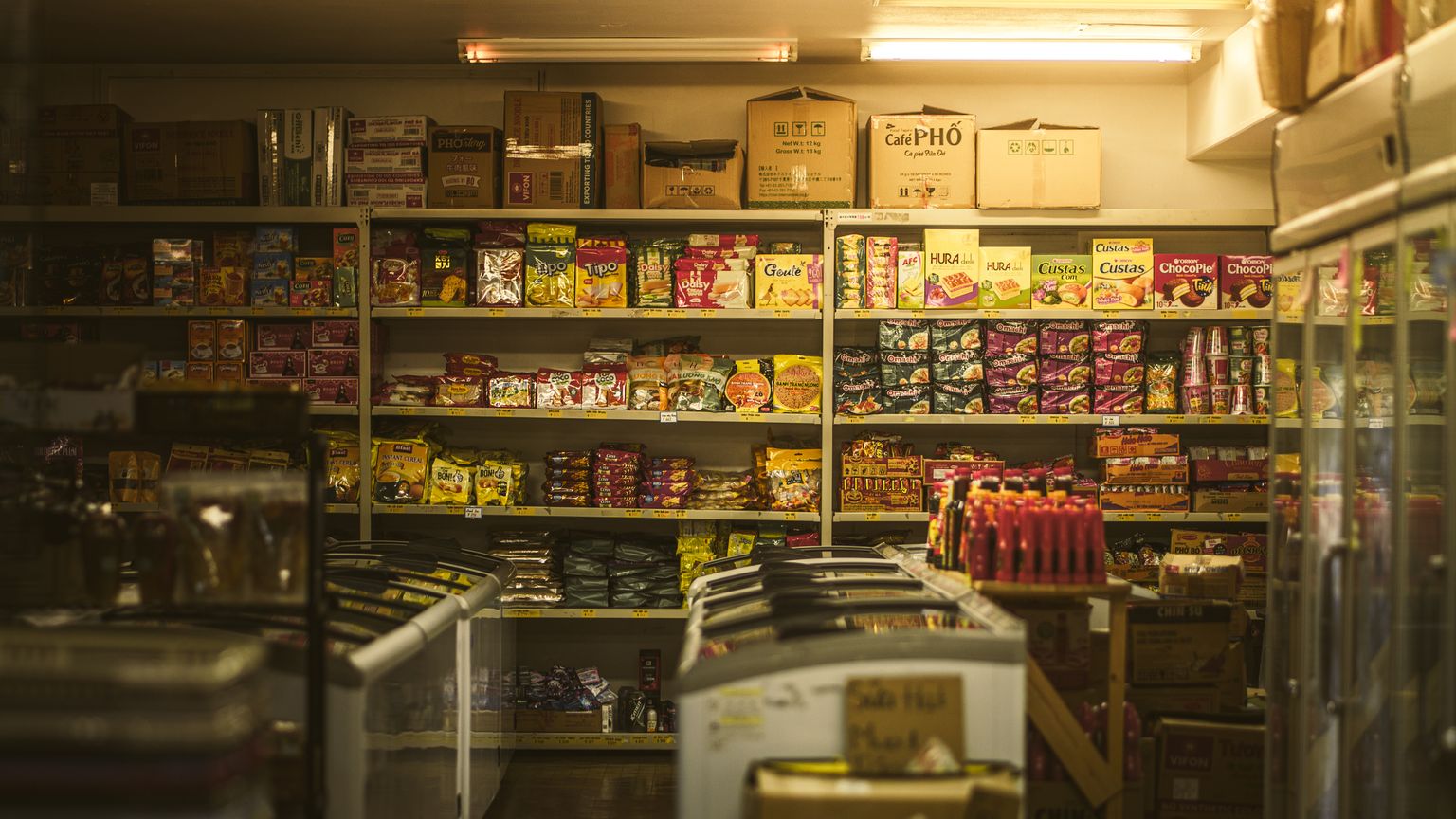
Here’s the thing that surprises most first-time visitors: Korean convenience stores are not the sad fluorescent-lit snack aisles you might be picturing. Nearly every location has a hot water dispenser and a microwave sitting right out in the open, free to use, no questions asked. Most have a standing table by the entrance, sometimes with actual stools bolted to the floor. It sounds like a minor detail. It isn’t. That little table is where office workers eat a full dinner between meetings, where students split a bag of chips at midnight, and where I’ve personally had more solo meals than I’d care to tally up.

There’s also the hot case — usually a glass box near the register holding corn dogs, fried chicken pieces, and fish cakes simmering in broth. Combine that with prices that rarely crack 3,000 won per item, and you’ve got something closer to a genuine fast-food ecosystem than a snack shelf. Skeptical that a convenience store meal could actually satisfy you? I was too, at first. Then I did the math on what I was spending versus what I was eating, and the skepticism didn’t survive contact with reality.
A few survival tips before you walk in
If this is your first trip to a Korean convenience store, a handful of things will save you the confused-kiosk moment I had. First: most locations now run at least one self-checkout kiosk alongside a staffed register, and the kiosk interface usually has an English toggle in the top corner — look for it before you start jabbing at buttons. Second: if you grab something from the hot case, point and say “이거요” (this one) rather than trying to name it, since the labels are almost always Korean-only. Nobody will judge you for pointing. I still do it sometimes.
Payment is rarely an issue — foreign Visa and Mastercard tap-to-pay work at essentially every CU, GS25, 7-Eleven, and Emart24 I’ve walked into, which honestly still catches some visitors off guard given how card-friendly Korea is compared to its reputation a decade ago. Cash works too, obviously, but you’ll be the only person in line still counting coins. One more thing: if you microwave something, there’s usually a small sticker or sign showing the wattage and suggested time. Ignore it at your own risk — I once turned a perfectly good sandwich into a rubber puck by guessing.
The ranking: nine snacks, worst-ish to best
A note on method, since I know someone will ask: I ranked these on taste first, value second, and how often I actually go back for more third. Some genuinely beloved items didn’t make the cut simply because I had to stop somewhere. Apologies in advance to Choco Pie loyalists.
9. Saewookkang (Shrimp Crackers) — around 1,700 won
Nongshim has been making these since 1971, which makes Saewookkang older than most of the buildings around it in a fast-changing city like Seoul. Light, crunchy, faintly sweet with real shrimp flavor rather than an artificial approximation of it. It’s not flashy, and I’ll admit it lands near the bottom mostly because it’s a snack I respect more than I crave. Still, there’s something reassuring about a product that hasn’t needed to reinvent itself in over fifty years.
8. Jjolmyeon (Cold Spicy Noodle Cup) — around 1,600 won
You drain the water after cooking, dump in the gochujang-based sauce packet, and toss — no broth involved, chewy noodles, sharp vinegar-and-chili bite. Sounds like an odd thing to eat cold out of a plastic cup, and I get why that’s a hard sell sight unseen. But on a humid August afternoon, this hits in a way hot ramyeon simply can’t. Just don’t wear white.
7. Bulgogi Triangle Kimbap (Samgak Gimbap) — around 1,400 won
Triangle kimbap in general is the backbone of convenience store eating in Korea, and the bulgogi version is my go-to when I want something savory-sweet rather than spicy. The rice-to-filling ratio is well balanced, the seaweed stays crisp thanks to that clever plastic-tab separator trick, and at under 1,500 won it’s hard to argue with as a snack. Ranking it mid-list feels almost controversial given how iconic it is, but I’m judging flavor peak here, not cultural importance — and the flavor peak, for me, is a few slots up.
6. Ham and Cheese Toastie Sandwich — around 2,800 won
Pressed white bread, a thin slice of ham, melted cheese, sometimes a smear of mustard-mayo that ties it together. It sounds too simple to be worth mentioning, and yet the texture — slightly crisp outside, soft and warm inside once microwaved — makes it my default when I want something that isn’t spicy and isn’t sweet. It won’t surprise you. It also won’t let you down.
5. Corn Dog from the Hot Case — around 2,000 to 2,200 won
Fished straight out of that warm glass case near the register, usually rolled in chopped potato bits or coated in sugar depending on the store. You might think a hot-case corn dog is a gamble, food-safety-wise, and I understand the instinct. In practice these turn over fast enough — especially at busy locations near stations — that I’ve never had a bad one. The potato-crusted version in particular has a satisfying crunch that a regular corn dog doesn’t.
4. Samyang Buldak Bokkeum Myeon Cup — around 1,850 won
The instant-ramen category in Korea is enormous, and honestly, ranking just one felt almost unfair to the rest of the aisle. But the cup version of Buldak Bokkeum Myeon earns its spot for pure convenience — no stove, no pot, just hot water from the dispenser and a two-minute wait. The heat builds slowly and then sits on your tongue for a solid ten minutes afterward, which is either a selling point or a warning label depending on your spice tolerance. I keep a banana milk nearby specifically for this one.
3. Honey Butter Chips — around 1,900 won
These caused actual store shortages and resale markups when they launched, which sounds like an exaggeration until you remember it genuinely happened. Ranking a snack with that kind of cultural moment behind it at only third place might read as harsh. Here’s my honest take, though: the sweet-savory potato chip concept is excellent, not flawless — the honey note gets slightly cloying by the bottom third of the bag, and I usually want a drink halfway through. Still essential. Still worth trying at least once.
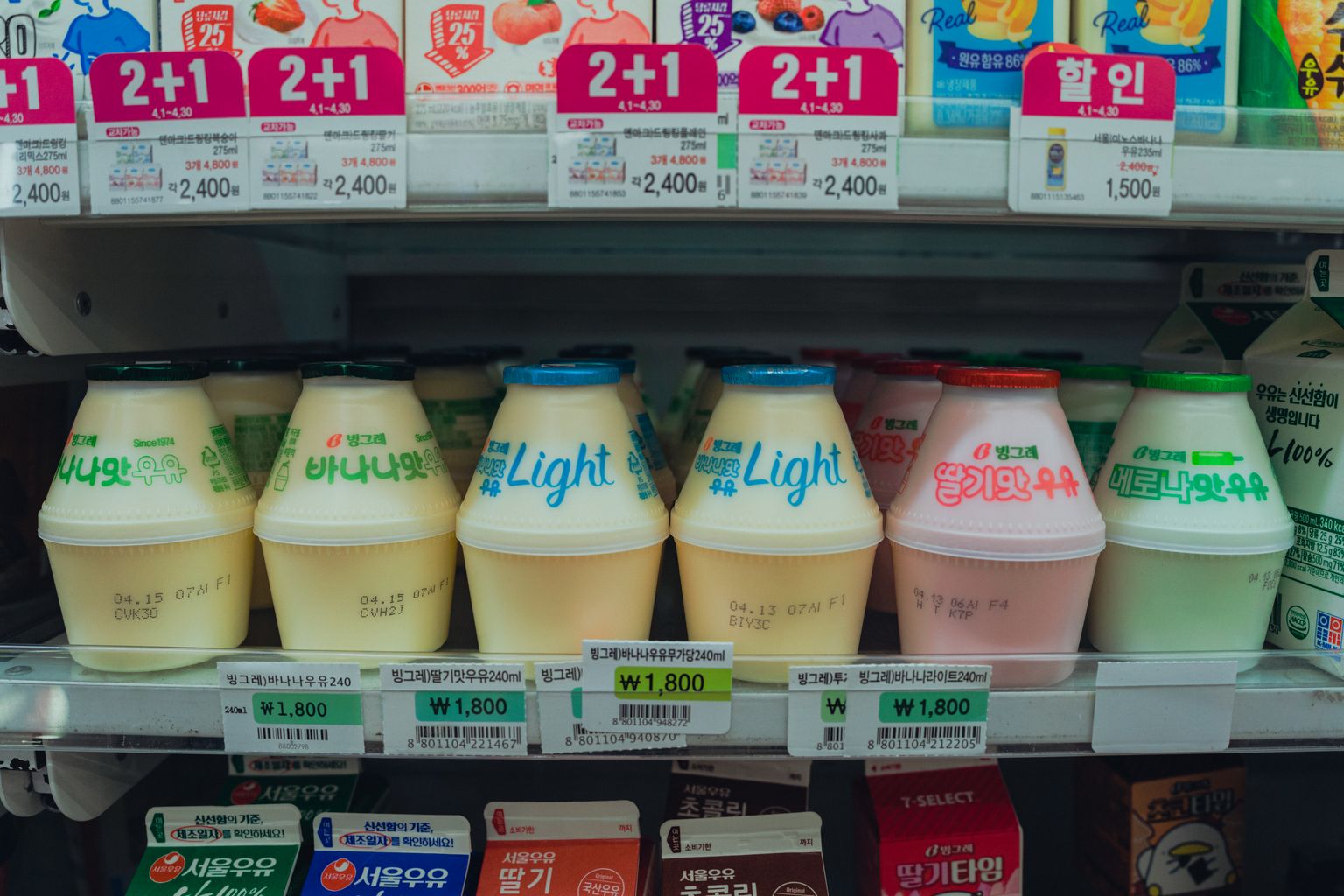
2. Banana Milk — around 1,600 won
Not an exciting pick to talk about, since everyone already knows it’s good, and that’s sort of the point. The pale-yellow bottle, the faintly grainy texture, a banana flavor that actually tastes like banana rather than a candy approximation of one — this snack has earned its reputation through decades of consistency instead of a viral moment. It pairs with almost everything else on this list, which is a big part of why it lands so close to the top.
1. Yonsei Milk Cream Bread — around 3,000 to 3,200 won
This is a CU-exclusive item, and if you’ve spent any time on Korean food social media in the past couple of years, you’ve probably seen it before you’ve tasted it. Soft milk bread split open and stuffed with a genuinely absurd amount of whipped cream — more than seems structurally reasonable for a piece of bread this size. I was skeptical going in, assuming the hype had outpaced the product the way it sometimes does. It hadn’t. The cream is light rather than sickly-sweet, the bread stays soft even refrigerated, and I’ve bought it enough times now that the woman at my local CU recognizes me for it, which is a small kind of embarrassment I’ve made peace with.
What I’d tell a first-timer to actually buy
If you only have room in your bag or your budget for one convenience store meal during a trip, here’s the combo I’d put together: a triangle kimbap, a cup of instant noodles from the hot water dispenser, and a small carton of milk or banana milk. All in, that’s roughly 3,500 to 4,500 won depending on the store and the noodle you pick — genuinely filling for less than the price of a coffee back home. Add a hot-case corn dog if you’re feeling indulgent. You won’t regret it, and you’ll understand the appeal of this whole category within about two minutes of your first bite.
Frequently asked questions
Is it rude to eat standing up at the convenience store table outside?
Not at all — it’s expected, honestly. Those standing tables exist specifically for eating convenience store food quickly before moving on with your day. The one thing to keep in mind is cleanup: throw away your own trash and rinse your cup noodle container if there’s a sink nearby, since that’s the unwritten rule locals tend to follow without ever mentioning it out loud.
Can I use the microwave and hot water dispenser even if I only bought one small item?
Yes. There’s no minimum purchase requirement to use the microwave or hot water station — they’re there for anything you bought in that store, whether that’s a 1,400 won triangle kimbap or a full shopping basket. Just don’t use them for food you brought from somewhere else; that one does raise eyebrows.
Which chain has the spiciest or most extreme snack options if I want a challenge?
GS25 and CU both tend to lean into limited-edition spicy collaborations more aggressively than 7-Eleven or Emart24, especially around buldak-branded products. If heat is your goal, check the seasonal end-cap displays near the register — that’s usually where the newest, spiciest releases get placed, and they rotate often enough that what’s there in one month might be gone the next.
Final thoughts
Ranking convenience store snacks is a slightly ridiculous exercise, and I say that as someone who just spent an evening doing exactly that with genuine seriousness. But there’s something honest about it too. These are the foods people actually eat, on real budgets, at odd hours, standing at a plastic table on a street corner with nowhere else to be. If you’re new to Korea and not sure where to start, walk into the nearest CU or GS25, grab a bulgogi triangle kimbap and a banana milk, and you’ll get it almost immediately — no reservation, no research required, just a door that’s always open.
Leave a Reply