The first time a Korean friend gave me directions to her place, she didn’t say a street name at all. She just said “104-dong, 501-ho.” No street, no house number, nothing that looked like an address to my foreign eyes. I stood at the entrance of what turned out to be a small city — fifteen identical towers, each one numbered like a parking garage — and genuinely wondered if I’d been handed a coordinate system instead of an address. That was my real introduction to Korean apartment life, and eight years in, I still find pieces of it quietly strange, even after they’ve become second nature.
The Dong-Ho System: Living Inside a Grid
Here’s the thing that trips up almost every newcomer: a Korean apartment address isn’t really an address, it’s coordinates inside a complex. “Dong” (동) refers to the building number, “ho” (호) refers to the unit number, so “104-dong 501-ho” means building 104, unit 501, usually on the fifth floor. It sounds cold when you first hear it, almost industrial, and it takes a while before those digits start to feel like “home” instead of a warehouse label. You also learn strange quirks fast — some towers skip unlucky numbers entirely, so a 28-floor building might jump straight from the 3rd line to the 4th with no 4-ho anywhere in the building, since the number four sounds like the word for death in Korean. Nobody explains that rule to you up front; you just notice the gap one day and have to ask around.
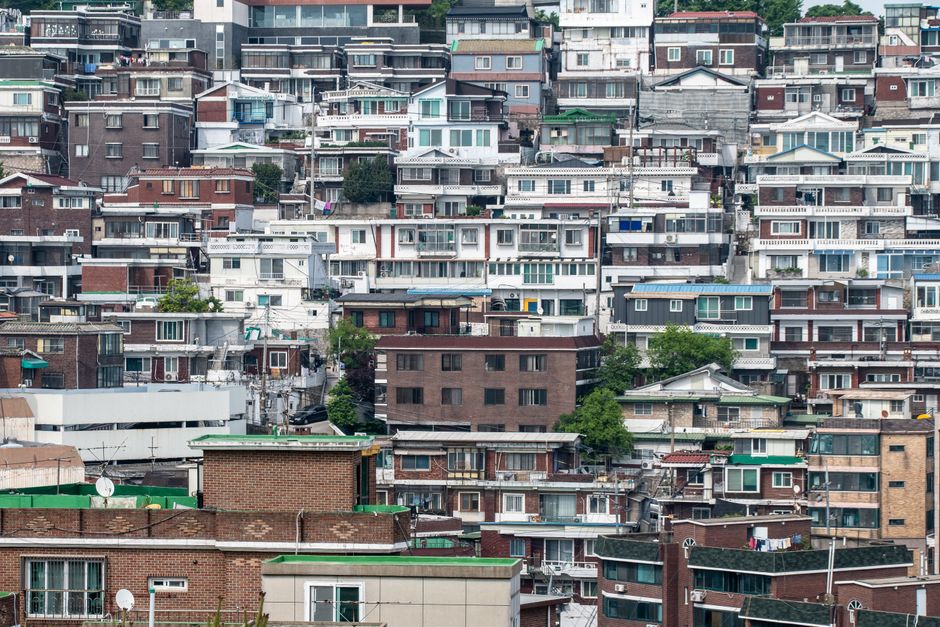
What surprised me more than the numbering itself was the scale of these complexes, and how much that scale ends up working in your favor. Complexes like Helio City in Songpa-gu house over 9,500 units across dozens of towers, with their own elementary school, playgrounds, and a management office handling everything from elevator repairs to visitor parking. Once you’re inside that system, the dong-ho address stops feeling clinical and starts feeling almost frictionless — a delivery rider or a food-delivery app doesn’t need a street name or a guessed doorbell, just two short numbers, and packages find their way to the right door with a consistency that still catches me off guard after years of less predictable addressing systems elsewhere.
No Keys, Just a Code You Never Write Down
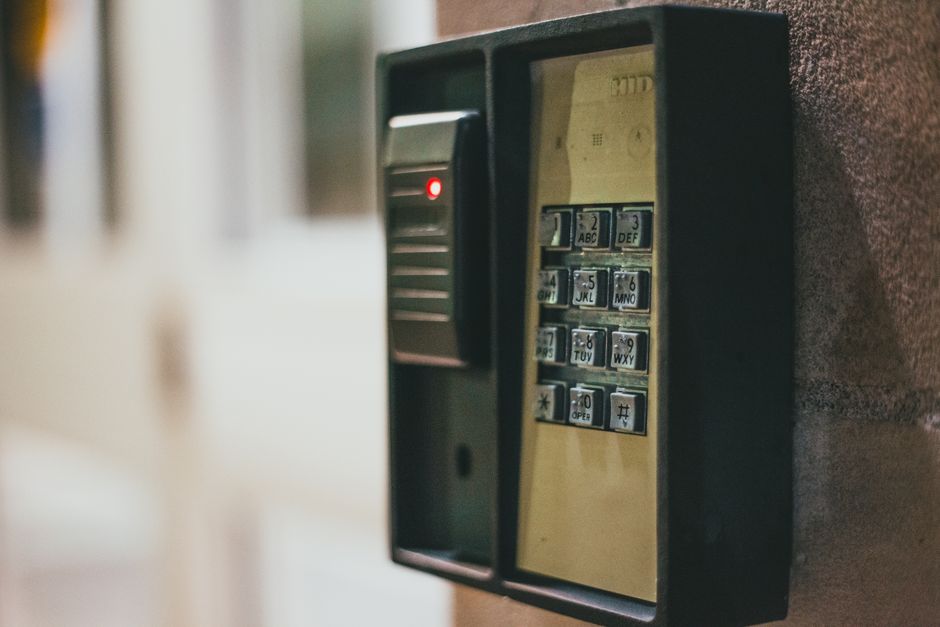
I haven’t carried a physical house key in years, and that still feels faintly illegal to me. Korean apartment doors almost universally use a digital keypad — a four-to-six digit code, sometimes paired with a fingerprint sensor or an RFID fob for the building’s main gate. You’d think losing a physical key would be the bigger worry, but the code system creates its own quiet anxieties: what happens when you forget it, when the battery dies at 11 p.m., or when you have to change it because a contractor or a visiting relative now knows it. Surprisingly, none of these disasters happen often — the systems are sturdier than I expected, and most units keep a backup physical key buried in a drawer somewhere just in case the electronics fail.
The upside nobody warns you about is how it quietly rewires your daily habits. You stop patting your pockets before leaving the house. You stop worrying about locking yourself out after one drink too many. But there’s a flip side worth naming honestly: because the code gets shared with family, cleaners, and sometimes a landlord doing an inspection, “who else knows my door code” becomes its own small category of household trust that never really existed for me before I moved here.
Ondol: The Floor That Heats You From Below
Ondol (온돌) heating still might be my favorite thing about Korean apartments, and also the thing I most badly explained to visiting friends before they experienced it firsthand. Instead of radiators or forced-air vents, hot water runs through pipes embedded directly under the floor, so the heat rises from the ground up rather than blowing down from somewhere near the ceiling. My first winter here, I genuinely couldn’t figure out why the room felt so different from any apartment I’d lived in back home — the air itself wasn’t particularly warm, but the floor was, and somehow that made the whole room feel cozy in a way central heating never quite managed.
It does take some adjusting, though. You learn fast that furniture legs can warp slightly if left directly on a floor that runs hot for months on end, and that sleeping on the ondol floor itself — which plenty of Koreans still do, on a thin mattress called a “yo” — is a completely different experience from a Western bed frame. Even now, I find it a little funny that the coziest thing in my apartment is the floor, not a fireplace or a heater tucked in the corner.
If You Want to Test a Foreigner’s Patience, Hand Them a Bag of Food Waste
Trash and recycling is the part of apartment life that genuinely intimidates most new arrivals, and honestly, it should — Korea’s system is stricter than almost anywhere else I’ve lived. Most complexes require food waste to go into a separate bin, often one with an RFID chip built into the lid that beeps and weighs your scraps, charging you by weight through a prepaid card. General waste needs a district-specific paid bag — usually a certain color depending on the ward, something that trips up newcomers who assume any garbage bag will do — and recyclables get sorted by category: paper, plastic, glass, cans, styrofoam, each into its own bin that only gets emptied on specific collection days posted on a notice board near the entrance.
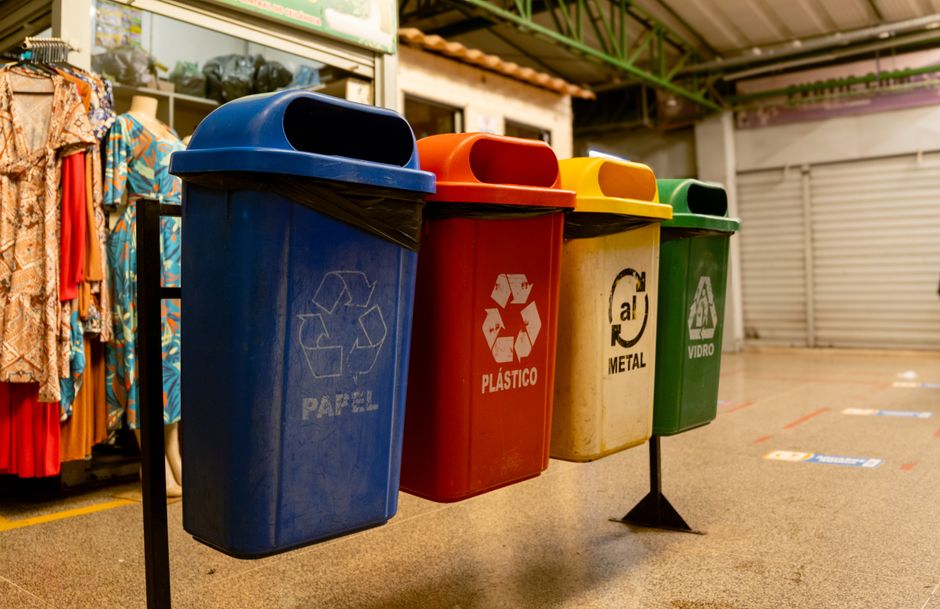
The part that still gets me, even now, is how socially enforced this all is. There’s no need for a city inspector to catch you doing it wrong — your neighbors will notice, and in a lot of complexes an unofficial norm develops where sorting mistakes get quietly, or not so quietly, called out. You’d expect this to feel oppressive, but it works. Korea recycles roughly 60 percent of its municipal waste, among the higher rates in the OECD, and living inside a system that makes sorting nearly unavoidable is probably a big part of why. The adjustment period is real, though — I spent my first month here standing over four different bins holding a single plastic bottle, genuinely unsure which one it belonged in, while the little beep of the food waste machine down the hall reminded me someone else had already figured it out.
Gyeongbiwon and the Resident Association: A Village Inside the Village
Every complex I’ve lived in has had a “gyeongbiwon” (경비원) — a security guard, though the role functions more like a building superintendent, doorman, and neighborhood watch rolled into one. They log deliveries, keep an eye on visitor parking, sometimes water the plants in the lobby, and generally know more about the daily rhythm of the building than anyone actually living there. It surprised me how personal these relationships can become over time — the small nod on the way to the recycling bins, the way a guard remembers roughly which unit gets the most packages, the little exchanges that build up over months into something that feels less like security and more like a quiet, low-stakes neighborliness I hadn’t expected from a concrete tower.
Layered on top of that is the “ipju daepyo hoeui,” the resident representative association, an elected body of unit owners that decides things like management fees, renovation schedules, and — this is the part that surprises newcomers most — rules about noise, parking, and even pet ownership within the complex. It’s easy to assume an apartment building is just a place you rent a box inside, but in Korea it functions more like a small self-governing town, complete with its own politics, complaint boards, and the occasional heated debate over unpaid management fees posted on the elevator wall for everyone to see.
Why an Apartment, Not a House, Is the Dream
Coming from a culture where a detached house with a yard is the default marker of success, it took me a while to understand why so many Koreans consider a big-brand apartment — think Raemian, Xi, or Hillstate — the real prize, more so than a standalone house. Part of it is straightforwardly practical: apartments come with parking, security, elevators, and centralized maintenance that a lot of older single houses simply don’t offer. But there’s also a real estate logic behind it that’s hard to ignore — large apartment complexes in desirable districts have historically appreciated faster and held value more predictably than detached houses, which makes them the default vehicle for both living and building long-term household wealth.
Even so, I don’t think it’s purely financial. There’s a status signal wrapped up in which brand of apartment you live in and which complex, almost like how car brands work elsewhere. I used to find this a little baffling — why would a builder’s logo on the outside of a building matter that much? — until I realized it functions as shorthand for build quality, neighborhood prestige, and school district, all compressed into a single recognizable name that Koreans can read at a glance the way I’d read a car badge.
Officetels Are Not Apartments, No Matter What Your Realtor Calls Them
One mix-up I made constantly in my first year was assuming “officetel” and “apartment” were interchangeable words for the same kind of building. They are not, legally or practically. An officetel is zoned as a commercial or quasi-residential building — a portmanteau of “office” and “hotel” — which means it can be used as a business or living space, often with looser occupancy rules and, notably, different maintenance fees and tax treatment than an apartment gets. Apartments, by Korean building law, generally refer to residential buildings of five or more floors within a dedicated housing complex, built around family living and resident associations rather than short-term flexibility.
In practice, officetels tend to run smaller, often studio-sized, and attract singles or short-term renters near business districts, while apartments — especially in big complexes — are built around families, schools, and long-term community life. Neither is objectively better. If what you want is a quiet, tree-lined street and a two-year lease with no strings attached, an officetel might suit you fine. But if you want a built-in community where the guard at the gate knows your face and the convenience store is an elevator ride away, that’s the apartment complex, and the two are worth asking about explicitly rather than assuming a listing means what you think it means.
Cheung-gan Sogeum: When Footsteps Become a Legal Matter
No conversation about Korean apartment life is complete without “cheung-gan sogeum” (층간소음), literally “noise between floors,” and it is treated with a seriousness that catches most foreigners off guard. This isn’t a minor annoyance here — Korea’s official interfloor noise dispute mediation center reportedly fields tens of thousands of complaints a year, and footstep noise specifically, nicknamed “foot hammers,” is consistently the single biggest category. Disputes have occasionally escalated into real violence, which is precisely why the topic gets handled so carefully by residents and management offices alike, with warning notices and mediation requests treated as genuinely serious business rather than passive-aggressive neighbor drama.
Why does it get so intense? Partly it’s architecture — most Korean apartments use concrete slab construction, which transmits impact noise, footsteps, dragging chairs, kids running, far more efficiently than the wood-frame buildings common in North America. Partly it’s density — when you’re stacked twenty floors high with thin buffers between units, sound travels in ways it simply doesn’t in a detached house with open air on every side. You’d think living in a crowded building would make people numb to it over time, but it seems to work the opposite way: the closer everyone is packed together, the more sensitive residents become to any noise at all, and slippers, thick rugs, and quiet-hours signs taped up in elevators are the practical result of that heightened awareness.
It’s part of a bigger pattern I’ve noticed the longer I’ve lived in apartment complexes here: density quietly reshapes daily habits in ways you don’t expect until you’re living inside them. As I’ve written before, even the bathroom floor has its own engineering logic built around shared plumbing and shared walls. Trash, noise, water, heat — the apartment complex is really one connected system, and once you start noticing that, a lot of the “strange” rules stop feeling arbitrary and start feeling like sensible answers to the basic question of how you house this many people this close together.
What I’d Tell Someone Moving In Tomorrow
If you’re about to move into a Korean apartment for the first time, my honest advice is to treat the first month as an onboarding period rather than expecting to understand everything on day one. Ask your gyeongbiwon which day is recycling day before you guess wrong in front of the whole building. Write your door code down somewhere private instead of trusting memory at midnight. And buy slippers, not for style, but because bare feet on concrete-slab floors carry sound further than you’d think, and your downstairs neighbors will notice long before you do.
Frequently Asked Questions
Do all Korean apartments have ondol heating, or is it optional?
Nearly all modern Korean apartments come with ondol-style underfloor heating built in as standard, run through a central or individual boiler system rather than something you install separately. Older officetels and some smaller studio units sometimes rely on electric panel heaters instead, so it’s worth asking specifically when you’re viewing a unit rather than assuming every “warm floor” story applies universally.
How much does apartment management fee usually run, and what does it actually cover?
Monthly management fees vary a lot by complex size and amenities, but for a mid-size unit they commonly land somewhere in the low hundreds of thousands of won, covering things like elevator maintenance, common-area cleaning, security staff wages, and a portion of heating costs depending on the billing structure. Newer complexes with gyms, libraries, or daycare facilities tend to run higher, so it’s worth asking for a breakdown before signing rather than assuming the number on the listing is the final cost.
What happens if I sort my recycling wrong in a Korean apartment?
In most complexes, nothing dramatic happens the first time. Maybe a neighbor gently points it out, or the bin simply gets left unsorted until someone fixes it. Repeated or obvious violations, especially general waste dumped without the required paid bag, can eventually result in fines from the district office, though in practice most apartment complexes handle it socially long before it ever reaches that level.
Leave a Reply