The first time a Korean grandmother grabbed my forearm, flipped it over like she was checking a piece of meat, and started scrubbing it with something that felt like 200-grit sandpaper, I made eye contact with my own kneecap and genuinely wondered if I’d wandered into an assault or paid for a spa treatment. Turns out it was both, sort of, and I’d pay for it again next week. That’s the jjimjilbang in one sentence: a place that strips away every ounce of your Western sense of personal space and hands you back something oddly close to peace.
I’ve lived in Korea long enough now that “want to hit the jjimjilbang tonight” doesn’t sound like a strange sentence anymore, but I remember when it did. If you’ve only heard the word secondhand, you probably picture some vague combination of a gym locker room and a Turkish steam bath. That’s not wrong, exactly, but it undersells how much is actually packed into one of these buildings. A proper jjimjilbang isn’t a room. It’s often four or five floors: a gender-separated bathing hall in the basement, a co-ed heated sauna floor above it, a snack counter, a TV room, sometimes an arcade, and a carpeted sleeping hall where entire families crash out under thin blankets at 1am. Entry runs anywhere from about 9,000 to 15,000 won depending on the city and how fancy the place is, and that single fee buys you as many hours as you want. Some people stay twenty minutes. Some people, notoriously, stay the whole weekend.
One small detail wrecked my brain on the first visit and, oddly, is what sold me on the whole system afterward: you don’t carry cash or a card once you’re inside. That wristband with the locker chip is also your tab. Buy the sikhye, rent a private sauna room, sit in the massage chair for a thousand won, all of it gets scanned to your wristband and you settle the total when you leave. No wallet, no pockets, because you’re not wearing anything with pockets anyway. It sounds like a small convenience. It’s actually the thing that makes a five-hour stay feel effortless instead of like a series of transactions.
Getting Naked Is the Easy Part (Eventually)
Might as well name the thing everyone actually wants to know before anything else: yes, the bathing area is fully nude, and yes, it’s strictly separated by gender. You hand over your shoes at the entrance, pay at a counter, get that wristband, and head into your side. Clothes come off completely before you so much as touch the shower stalls. No swimsuit option. No discreet wrap-yourself-in-a-towel workaround. You might assume this is the part that breaks people — the part where every foreign visitor stands frozen by the lockers, doing math about whether they can just leave. I did that math myself, once. But here’s the strange thing nobody tells you going in: within about ninety seconds, it stops registering. Nobody is looking at you. Everyone in that room grew up doing this with their own mother, grandmother, or army buddies, and the whole point of the space is that bodies here are just bodies, not a performance for anyone.
That’s a hard sell to a Western brain trained to treat nudity as either intimate or transgressive. Korean bathhouse culture treats it as neither — it’s closer to how you’d feel changing in front of a sibling. Older women scrub their backs for each other without a second thought. Little kids run between the hot tub and the cold plunge shrieking, trailed by grandmothers half-yelling at them to slow down before they slip. Nobody is checking anybody out, mostly because everyone is red-faced, dripping, and mid-conversation about dinner plans. Still, the etiquette rules matter more than the nudity itself: you shower and scrub down at the low stools before entering any of the shared tubs, never let your towel touch the water, and you don’t stare. Skip the pre-shower and you’ll get an actual scolding from a stranger, and honestly, they’d be right to give you one.

The Hot Rooms, the Ice Room, and Everyone Wearing the Same Pajamas
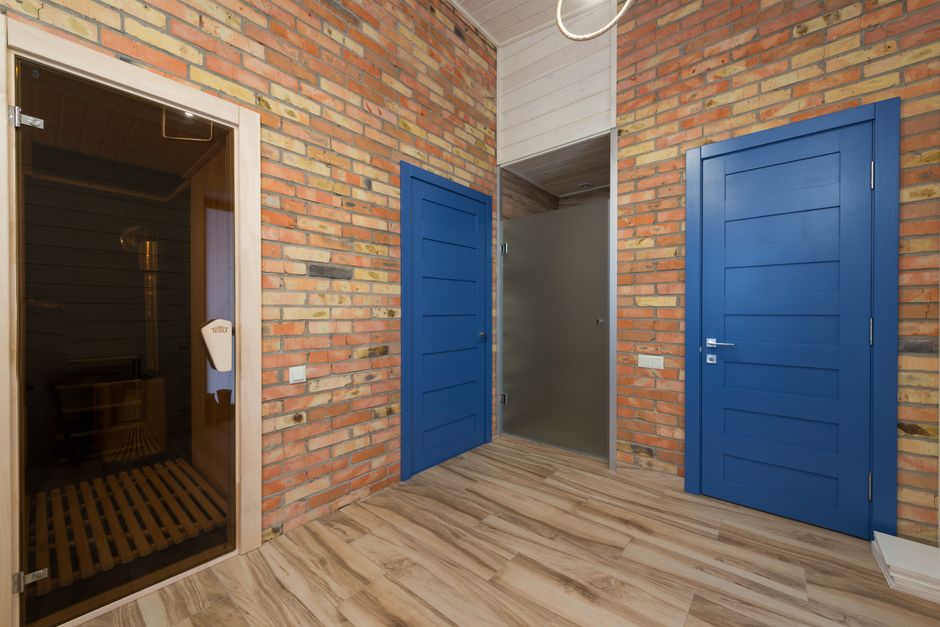
Once you’re done in the nude bathing hall, you dry off, put on the uniform the front desk gave you — usually a baggy t-shirt and shorts, often a slightly ridiculous shade of orange or grey depending on the chain — and head up to the mixed-gender floor. This is the part people picture when they hear “jjimjilbang” even if they don’t know the word, and it’s genuinely the most fun part of the whole experience. You’ll find a row of kiln-shaped rooms, each one built from a different material and held at a different temperature: a jade room, a salt room, a charcoal-lined hanjeungmak that can climb past 90°C, sometimes an ice room kept just below freezing so you can shock your system after roasting yourself in the hot ones. You go from a room hot enough to make your ears ring straight into one cold enough to see your breath, and you do it on purpose, repeatedly, for fun.
You’d think alternating between near-sauna heat and a walk-in freezer would feel miserable. For the first thirty seconds in each direction, it kind of does. But there’s a specific, almost drugged calm that sets in after the third or fourth round, and I’ve genuinely fallen asleep sitting upright against a warm salt wall more than once. Around you, families sprawl out on the heated floor using wooden or ceramic pillows, teenagers scroll their phones, and somewhere someone is always, always cracking a boiled egg against their own forehead. Nobody ever explains why the forehead specifically — it’s just how it’s done, passed down the way you’d learn to shuffle a deck of cards. There’s a small, dull thock, a half-second of suspense over whether the shell will cooperate or shatter into forty pieces stuck to the white, and then the small, private satisfaction of getting it clean in one try. The whole floor smells like pine, warm stone, and whatever’s cooking at the snack counter, and the lighting is dim enough that half the room looks like it’s dozing.
The Food Is Not an Afterthought
If you think of bathhouse food as a vending machine snack, you’re underestimating how central it is to the whole ritual. The two non-negotiables are sikhye and gyeran, the eggs. Sikhye is a sweet, chilled rice punch, pale amber and studded with a few grains of rice floating on top, usually served in a comically large plastic cup with ice. You come out of a 90-degree kiln room with your whole face flushed, throat dry, skin practically humming, and the first cold pull of sikhye through a straw hits your chest like a small electric shock — that exact whiplash between “too hot to think” and “ice-cold sugar water” is basically the entire appeal in one sip. I’m not sure anything has ever tasted better to me than a 3,000 won cup of it at 11pm, half-delirious from the heat. The eggs are steamed or baked right there in the kiln ovens, and the accepted method — crack it on your own forehead, peel, eat two or three in a row — looks bizarre until you’ve done it yourself, at which point you understand it’s basically a Korean campfire ritual with modern packaging. Beyond that, most jjimjilbangs run a small restaurant counter selling naengmyeon, the cold buckwheat noodles that make perfect, illogical sense after you’ve overheated yourself on purpose, plus ramyeon, gimbap, and shaved ice for the hotter months. None of it is gourmet. All of it tastes better than it has any right to at 1am in your rented pajamas.

Yes, People Actually Sleep There
This is the detail that surprises visitors most: jjimjilbangs function as legitimate, if unconventional, overnight lodging. There’s usually a dedicated sleeping hall with the lights dimmed low, thin communal mats on a heated floor, and shelves of blankets and those infamous wooden pillow blocks that look torturous until you’re too exhausted to care. It’s not private — you’re sleeping a few feet from strangers, snoring included — but it’s also astonishingly cheap, often the same flat entry fee that got you in the door, sometimes with a small overnight surcharge. Students crash there after missing the last subway. Businessmen who’ve had one soju too many use it instead of going home. Backpackers use it instead of a hostel. I’ve done it myself more than once after a late flight into a city where I had nowhere booked, and it beats a plastic airport bench by an embarrassingly wide margin. You do have to keep your expectations calibrated — this is not a spa hotel with turndown service, it’s a warm floor and a room full of strangers — but there’s something almost communal and reassuring about an entire society that’s collectively decided sleeping in public, half-clothed, next to people you’ve never met, is completely normal and fine.
The Scrub That Ruins You (In a Good Way)
Now, back to that grandmother from the opening line — because the scrubbing service, seshin, deserves its own section, not just a cameo. Along the wall of the bathing hall you’ll usually see a row of tables staffed by an ajumma (or ajusshi on the men’s side) wearing only black underwear, working through a line of customers lying face-down. The tool is the “Italy towel,” a rough green exfoliating mitt that has, confusingly, nothing to do with Italy at all — the story goes a Korean manufacturer imported a similar Italian-made viscose fabric decades ago, the name stuck, and now an entire country is fiercely loyal to a mitt named after a place it has no connection to. It’s sold at every convenience store and pharmacy for 1,000 to 2,000 won, and Koreans genuinely debate brand loyalty over it the way some people argue over razors. The professional version, though, is a different animal. They’ll scrub you down limb by limb, with enough force to peel off visible grey rolls of dead skin you didn’t know you were carrying — and the first time you see those little rolls pile up on the plastic sheet beneath you, it’s somewhere between horrifying and deeply satisfying. A basic scrub runs roughly 15,000 to 25,000 won. Add an oil massage on top and you’re looking at 25,000 to 40,000 won. It sounds aggressive because it is aggressive — your skin will be lobster-red and slightly tender afterward — but it’s also the closest thing to a full reset button I’ve found for a body. You’d expect it to hurt in a bad way. It doesn’t, quite. It’s more like a sunburn crossed with the satisfaction of finally cleaning a window you didn’t realize was filthy.
Etiquette Mistakes Foreigners Almost Always Make
A few things trip people up every single time, and they’re worth flagging before your first visit. First, tattoos: Korea’s older association between tattoos and organized crime has softened a lot in big-city, modern spas, and plenty of visitors with sleeve tattoos report zero issues, especially in trendier Seoul locations. But it’s not a universal rule — a small, older neighborhood bathhouse in a quieter part of town may still ask you to cover up or, occasionally, turn you away, so don’t assume the rule that applied at one location holds everywhere. Second, phones: taking photos anywhere near the bathing floor is a hard no, for obvious reasons, even in the co-ed sauna area where everyone’s clothed — just keep it in your locker. Third, the shower-before-you-soak rule isn’t a suggestion; skipping it is the single fastest way to get side-eyed or directly corrected by a stranger, and they will correct you. Fourth, don’t wring out your towel over the floor or let it dip into the shared tubs — small thing, but locals notice immediately. And finally, on the mixed-gender kiln floor, keep the volume down; it’s shared communal space where half the room is trying to nap, and loud foreign tourist groups are, unfortunately, a known stereotype you don’t want to reinforce.
What still gets me, even after all this time, is how ordinary the whole thing feels to everyone except the newcomer. A jjimjilbang isn’t performing relaxation for tourists; it’s just how an enormous number of Korean families actually spend a Sunday. Once you stop treating the nudity, the heat, and the communal sleeping as the main event and start treating them the way locals do — as the backdrop to a slow, three-hour hangout with your body and your appetite finally left alone — it clicks. I still can’t explain why cracking an egg on my forehead feels like a small victory every single time, but it does, and I have a feeling it always will.
Frequently Asked Questions
Do I have to be fully naked the entire time? Only in the gender-separated bathing hall itself. The moment you head up to the shared kiln-sauna floor, you’re back in the provided t-shirt and shorts, and that area is mixed-gender and fully clothed. So no, you’re not walking around a communal space nude the whole visit — just during the bathing portion, and only among people of your own gender.
Can couples or families go together? Not into the bathing hall itself, since that’s strictly single-gender, but the sauna floor, sleeping hall, and food area are all shared common space. In practice, most couples and families split up for the bathing part, then reunite upstairs for the kiln rooms and dinner — it’s a normal, expected rhythm, not an inconvenience.
Is it awkward if I’m the only foreigner there? Less than you’d think. In big cities especially, plenty of jjimjilbangs see tourists regularly, and staff are used to walking newcomers through the process. You might get a curious glance or two, but nobody treats a foreign visitor as a spectacle — everyone’s there to relax, not to watch you figure out the locker system.
Leave a Reply