계단을 내려갈 때마다 무릎에서 “뚝, 뚝” 소리가 난다. 45세 김모 씨는 처음엔 그냥 무시했다. 아프지도 않고, 걷는 데 지장도 없으니까. 그런데 요즘은 소파에서 일어설 때도, 양반다리를 풀 때도 소리가 난다. 심지어 옆에 있던 배우자가 “너 무릎에서 소리 나는 거 알아?”라고 물어볼 정도가 됐다. 병원에 가야 하나 싶다가도, 아프지 않으니 애매하게 미루는 사람이 많다. 40대 중반을 넘기면서 이런 경험을 하는 이들이 부쩍 늘어난다.
무릎에서 소리가 나는 진짜 이유
소리만 나고 안 아프면 괜찮은 거 아니냐 싶은 생각, 사실 절반은 맞다. 무릎 관절 안에는 활액이라는 윤활액이 차 있는데, 관절을 움직일 때 이 활액 속 기체가 순간적으로 압력 변화를 일으키면서 기포가 터지는 소리가 난다. 손가락 마디를 꺾을 때 나는 소리와 원리가 비슷하다. 이런 소리는 통증이나 부기 없이 반복되는 경우가 대부분이고, 관절 자체에 큰 문제가 있다는 신호는 아니다.
그런데 나이가 들면서 조금 다른 이야기가 섞여 들어온다. 무릎뼈 주변을 지나는 힘줄이나 인대가 뼈의 튀어나온 부분을 넘어가면서 마찰음을 내기도 하고, 연골 표면이 예전만큼 매끄럽지 않아 뼈와 뼈 사이 간격이 좁아지면서 서로 스치는 소리가 나기도 한다. 활액 분비량 자체가 젊을 때보다 줄어드는 것도 한몫한다. 같은 “뚝뚝” 소리라도 20대의 소리와 40~50대의 소리는 배경이 다를 수 있다는 뜻이다.
의외로 많은 사람이 하는 오해
“소리가 자주 난다는 건 연골이 다 닳았다는 뜻 아닌가요?” 진료실에서 이런 질문을 하는 4050 환자가 많다고 한다. 막상 소리의 빈도와 연골 마모 정도는 정비례하지 않는다. 소리는 요란한데 검사해보면 관절 상태가 멀쩡한 경우도 있고, 반대로 소리는 거의 없는데 연골이 상당히 닳아 있는 경우도 있다. 소리 자체보다 훨씬 중요한 건 그 소리에 다른 증상이 딸려 오느냐다.
운동을 하면 관절 소리가 없어진다고 믿는 사람도 있다. 근력 운동이 무릎 주변 근육을 지지해주는 데 도움이 된다는 건 맞는 말이지만, 그렇다고 소리 자체가 완전히 사라진다고 장담하기는 어렵다. 오히려 평소 안 하던 운동을 갑자기 무리하게 시작하면 무릎에 부담이 늘어 증상이 더 도드라질 수도 있다. 그렇다면 무심코 넘겨도 되는 소리와 병원에서 확인이 필요한 소리, 그 경계는 어디쯤일까.
이런 신호가 같이 오면 눈여겨봐야 한다
단순한 마찰음과 주의가 필요한 신호를 가르는 기준은 생각보다 명확하다. 소리와 함께 통증이 느껴지는지, 무릎이 붓거나 열감이 있는지, 계단을 오르내릴 때 힘이 빠지는 느낌이 드는지, 무릎을 굽히고 펼 때 어느 순간 걸리는 느낌이나 ‘잠기는’ 느낌이 있는지를 살펴보면 된다. 이 중 하나라도 반복적으로 나타난다면 단순히 나이 들어서 그런 거라고 넘기기는 애매하다.
갑자기 방향을 틀거나 쪼그려 앉는 동작 이후 소리와 통증이 동시에 시작됐다면, 반월판이라 불리는 연골판 쪽에 부담이 갔을 가능성도 배제할 수 없다. 반대로 몇 년째 소리만 나고 통증이나 부기가 전혀 없다면, 당장 큰 걱정을 할 상황은 아닐 가능성이 높다. 다만 “몇 년째 괜찮았으니 앞으로도 괜찮겠지”라는 판단은 스스로 내리기보다 한 번쯤 전문가의 눈으로 확인받는 편이 안전하다.
40~50대 무릎, 왜 유독 신경 쓰이는 시기일까
체중이 20~30대보다 늘어나 있는 경우가 많고, 활동량은 오히려 줄어드는 시기라는 점이 겹친다. 무릎 관절은 걸을 때마다 체중의 몇 배에 달하는 하중을 견디는 부위라서, 체중이 조금만 늘어도 관절이 받는 부담은 그보다 훨씬 크게 늘어난다. 여기에 40대부터 근육량이 서서히 줄어드는 근감소증의 초기 단계가 겹치면서, 무릎을 잡아주던 허벅지 근육의 힘이 예전만 못해지는 것도 무시할 수 없는 변수다. 근육이 관절을 덜 받쳐주면 그만큼 뼈와 연골이 직접 부딪히는 빈도가 늘어난다.
여성이라면 폐경 전후의 호르몬 변화도 함께 살펴볼 부분이다. 에스트로겐이 연골과 결합조직을 유지하는 데 관여한다는 연구들이 있는데, 이 호르몬 수치가 급격히 떨어지는 시기와 무릎 불편감을 호소하는 시기가 겹친다는 보고가 적지 않다. 폐경 전후 여성에게서 무릎 관련 증상이 눈에 띄게 늘어나는 것도 이런 배경과 무관하지 않아 보인다. 물론 이건 어디까지나 여러 요인 중 하나일 뿐, 소리가 난다고 곧바로 호르몬 문제로 연결 지을 일은 아니다.
앉아서 일하는 시간이 길어진 것도 변수다. 오래 앉아 있다 일어설 때 무릎에서 소리가 유독 크게 나는 경험, 다들 한 번쯤 있을 것이다. 관절이 굳어 있던 상태에서 갑자기 움직이니 마찰이 커지는 것뿐이라 크게 걱정할 일은 아니지만, 이런 패턴이 매일 반복된다면 무릎 주변 근육이 점점 약해지고 있다는 신호로 볼 수도 있다.
평소에 살펴볼 수 있는 습관
무릎을 위해 당장 헬스장을 등록하거나 등산 장비를 갖출 필요는 없다. 허벅지 앞쪽 근육, 그러니까 대퇴사두근을 살짝 긴장시키는 동작만 꾸준히 해줘도 무릎을 지탱하는 힘이 달라진다는 이야기를 많이들 한다. 의자에 앉아 다리를 쭉 펴고 몇 초간 버티되, 이때 손을 허벅지 위에 얹어 앞쪽 근육이 단단하게 힘주어지는 감각을 함께 느껴보면 자세가 제대로 됐는지 스스로 확인할 수 있다. 계단을 오를 땐 무릎보다 엉덩이 근육을 쓴다는 느낌으로 걷는 것도 도움이 된다고 알려져 있다.
체중 관리 이야기를 꺼내면 뻔한 소리라며 흘려듣기 쉬운데, 무릎 입장에서는 체중 1kg 감량이 계단을 오를 때 몇 kg의 부담을 덜어주는 것과 비슷한 효과를 낸다는 점을 생각하면 이야기가 조금 달라진다. 걷기나 수영처럼 무릎에 충격이 적은 운동부터 시작해서 서서히 강도를 높여가는 방식이 무리 없이 오래 지속하기에 좋다. 오늘 내 무릎이 보내는 미세한 신호에 귀 기울여보는 것부터가 시작이다.
자주 묻는 질문
Q. 소리가 한쪽 무릎에서만 나는데 괜찮을까요?
결론부터 말하면, 한쪽에서만 소리가 난다고 무조건 이상이 있는 건 아니다. 평소 짝다리를 짚는 습관이나 특정 방향으로만 계단을 오르내리는 동작 때문에 한쪽 무릎에 부담이 더 쌓였을 가능성은 있다. 통증이나 붓기 없이 소리만 난다면 자세 습관을 먼저 점검해보고, 그래도 신경이 쓰인다면 병원에서 확인받는 게 마음 편하다.
Q. 스트레칭할 때만 유난히 소리가 크게 나는데 이유가 뭘까요?
대부분은 관절을 크게 움직이는 동작에서 자연스럽게 도드라지는 소리다. 활액 속 기포나 힘줄의 마찰이 평소보다 더 잘 드러나기 마련이라, 스트레칭 중 소리가 커지는 건 흔한 일이다. 스트레칭 후 통증이 남거나 다음 날까지 뻐근함이 이어진다면 강도를 조절할 필요가 있다는 신호로 받아들이면 된다.
Q. 나이가 들면 무릎 소리는 어쩔 수 없이 심해지는 건가요?
정도의 차이는 있지만, 소리 자체가 늘어나는 건 자연스러운 변화의 일부다. 활액 분비나 연골 상태가 서서히 변하는 건 노화 과정에서 흔히 겪는 일이라, 소리가 아예 안 나는 상태로 계속 유지되기는 쉽지 않다. 다만 소리가 심해지는 속도나 동반 증상의 유무는 사람마다 크게 다르기 때문에, 관리 습관에 따라 체감하는 불편함의 정도는 달라질 수 있다.
무릎에서 나는 소리 하나하나에 너무 예민해질 필요는 없다. 다만 통증이나 부기, 힘 빠짐 같은 신호가 함께 나타난다면 그건 몸이 보내는 나름의 경고일 수 있다. 정확한 진단은 스스로 판단하지 마시고, 반드시 정형외과 등 전문의 상담을 통해 받으세요.
1908년 6월 30일 오전 7시 14분, 시베리아 크라스노야르스크 지방 포드카멘나야 퉁구스카 강 유역 상공에서 태양보다 밝은 섬광이 터졌다. 그리고 이때 쓰러진 나무는 8천만 그루, 파괴된 숲의 면적은 서울시 면적의 3.5배가 넘는 2,150제곱킬로미터였다. 그런데도 100년 넘게 지난 지금까지, 그 자리에서 운석 조각 하나 제대로 발견된 적이 없다.
사건 자체는 단순해 보인다. 하늘에서 뭔가 떨어졌고, 그게 터졌고, 숲이 쓰러졌다. 그런데 막상 뜯어보면 이상한 점 투성이다. 폭발 규모는 히로시마 원폭의 1,000배에 달하는 TNT 10~15메가톤급으로 추정되는데, 정작 충돌구(크레이터)가 없다. 보통 이 정도 위력의 천체 충돌이라면 땅에 커다란 구멍이 남아야 정상이다. 그런데 러시아 광물학자 레오니트 쿨리크가 1927년 처음 현장에 도착했을 때, 그가 발견한 건 구멍이 아니라 부채꼴로 누운 나무들이었다.
목격자들이 본 것
폭발 지점에서 가장 가까이 있었던 목격자는 세묜 세묘노프라는 농부였다. 그는 폭심지에서 약 65킬로미터 떨어진 바나바라 교역소 근처 자기 집 현관에 앉아 아침을 먹던 중이었다. 갑자기 북서쪽 하늘이 둘로 갈라지는 듯한 느낌이 들었고, 그 직후 뜨거운 열기가 훅 밀려와 셔츠가 타는 줄 알았다고 훗날 진술했다. 눈을 뜨기 힘들 정도의 섬광이 지나간 뒤에는 몇 초간 이상하리만치 조용했다는데, 그 정적을 깨고 지축을 흔드는 폭발음이 뒤따랐다. 폭발음은 몇 분 뒤에야 도착했고, 그 충격파에 세묘노프는 의자째로 몇 미터를 날아갔다.
더 놀라운 건 순록을 치던 예벤키족 유목민들의 증언이다. 이들은 불덩이가 연기 꼬리를 끌며 하늘을 가로지르다가 갑자기 태양보다 밝은 섬광으로 변했고, 곧이어 천둥 같은 소리가 연달아 울렸다고 말했다. 폭심지 인근 텐트에 있던 유목민 가족은 그대로 공중으로 튕겨 나갔고, 그 자리에서 기르던 순록 약 1,500마리가 떼죽음을 당했다. 신기하게도 인명 피해는 공식적으로 기록되지 않았는데, 이는 그 일대가 워낙 사람이 살지 않는 오지였기 때문이라는 게 정설이다.
폭발의 여파는 시베리아를 훌쩍 넘어섰다. 유럽 곳곳의 지진계가 진동을 감지했고, 영국과 서유럽에서는 폭발 이후 며칠 동안 밤하늘이 대낮처럼 밝아서 자정에도 신문을 읽을 수 있었다는 기록이 남아 있다. 런던의 한 천문학자는 이를 대기 상층부에 퍼진 미세 먼지와 얼음 입자가 햇빛을 산란시킨 야광운 현상으로 설명했는데, 이 정도로 넓은 범위에 영향을 미쳤다는 사실 자체가 폭발 규모를 짐작하게 한다.
왜 아무도 조사하러 가지 않았나
이 정도 규모의 사건이면 당장 조사단이 꾸려질 법한데, 실제로는 그러지 못했다. 1908년의 러시아 제국은 이미 3년 전 러일전쟁 패전으로 국력을 크게 소진한 상태였고, 이어서 1914년 1차 세계대전, 1917년 혁명과 내전까지 연달아 터지면서 나라 전체가 뒤집히는 격동기를 지나고 있었다. 시베리아 오지에서 벌어진 알 수 없는 폭발 사건에 신경 쓸 여력이 없었던 셈이다. 그 결과 조사는 20년 가까이 미뤄졌다. 쿨리크가 소련 과학아카데미의 지원을 받아 첫 탐사대를 꾸린 건 1921년이었지만, 실제로 현장에 발을 디딘 건 1927년이 되어서였다.
쿨리크가 도착해서 본 광경은 상상을 초월했다. 폭심지에서 반경 수십 킬로미터에 걸쳐 나무들이 마치 거대한 손이 밀어젖힌 것처럼 한 방향으로 누워 있었다. 그런데 딱 폭심지 부근의 나무들만은 예외였다. 가지가 전부 부러져 나갔는데도 줄기는 꼿꼿이 서 있었던 것이다. 이건 폭발이 지표면이 아니라 상공, 그러니까 고도 5~10킬로미터 지점에서 일어난 ‘공중폭발’이었다는 걸 보여주는 결정적 증거로 훗날 해석된다. 폭발음보다 충격파가 나무를 쓰러뜨린 힘이 먼저였고, 바로 아래 있던 나무들은 수직으로 내리누르는 압력만 받아 가지만 부러진 것이다.
쿨리크는 1928년, 1929년, 1930년대까지 무려 네 차례나 재탐사를 벌였다. 크레이터로 추정되는 늪지대 웅덩이를 파헤치기도 했지만, 기대했던 운석 파편은 끝내 나오지 않았다. 이 실패는 이후 100년간 이어질 논쟁의 씨앗이 됐다.
운석이냐 혜성이냐, 아니면 다른 무엇이냐
운석이라면 왜 조각 하나 안 남았느냐고 물을 수 있는데, 여기서 갈리는 가설이 크게 세 갈래다. 첫 번째는 지름 60~190미터 규모의 돌 성분 소행성이 대기권에서 산산조각 나며 폭발했다는 설이다. 이 경우 파편 대부분이 미세한 먼지로 증발해 남지 않았을 가능성이 있다. 실제로 2013년 러시아 과학자들이 폭심지 인근 토양에서 니켈과 이리듐 성분이 포함된 미세 입자를 발견했다고 보고했는데, 이는 지구 밖 물질의 흔적일 수 있다는 해석이 나왔다.
두 번째는 미국 천문학자 프레드 휘플이 제기한 혜성설이다. 혜성은 얼음과 먼지가 뭉친 ‘더러운 눈덩이’ 구조라, 대기와 충돌하며 통째로 승화해 사라졌을 거란 논리다. 혜성설을 지지하는 쪽은 폭발 직후 유럽 하늘이 밝았던 현상을, 혜성 꼬리에서 나온 얼음 먼지가 대기 상층에 퍼진 결과로 설명한다. 그럴듯하게 들리지만, 반박도 만만치 않다. 혜성이 그렇게 조용히, 아무 예고 없이 대기권에 들어와 폭발할 수 있느냐는 의문이다. 게다가 혜성 핵은 통상 소행성보다 훨씬 약하게 뭉쳐 있어서, 지상에 도달하기 훨씬 전인 고도 20~30킬로미터 부근에서 이미 부서졌어야 한다는 계산도 있다. 그런데 목격 증언과 나무 도괴 패턴을 보면 폭발 고도는 그보다 낮은 5~10킬로미터로 추정된다. 이 간극을 어느 쪽도 완벽히 메우지 못한 채 100년 가까이 공방이 이어지고 있다.
세 번째는 훨씬 이색적이다. 1973년 미국 텍사스대 물리학자 앨버트 잭슨과 마이클 라이언은 초소형 블랙홀이 지구를 관통하며 낸 폭발이라는 논문을 발표했다. 이 가설이 흥미로운 이유는, 만약 사실이라면 블랙홀이 지구를 뚫고 대서양 어딘가로 빠져나갔을 텐데 그쪽에서 상응하는 흔적이 전혀 보고되지 않았다는 점 때문에 학계에서는 진작 폐기됐다. 진지한 과학계의 논쟁이 이 정도에서 멈춘 반면, 대중문화와 음모론 영역에서는 훨씬 자유분방한 상상이 뻗어 나갔다. 니콜라 테슬라가 원거리 무선 에너지 전송 실험을 하다가 실수로 시베리아를 타격했다는 설, 추락한 외계 우주선이 폭발했다는 설까지 떠돌았다. 흥미로운 이야깃거리이긴 하지만, 이런 주장들은 과학적 근거가 거의 없다는 게 중론이다.
100년 뒤에도 못 닫힌 퍼즐
2000년대 이후 이탈리아 볼로냐대 연구팀은 폭심지에서 8킬로미터 떨어진 체코 호수를 주목했다. 이 호수가 사실 운석 파편이 만든 충돌구이며, 나이테 분석 결과 호수 형성 시기가 1908년과 겹친다는 주장이었다. 그런데 2017년 러시아 지질학자들이 호수 퇴적층을 다시 조사한 결과 호수의 나이가 수백 년은 더 오래됐다는 반박 논문을 내놓으면서, 이 가설도 다시 원점으로 돌아갔다. 의외로 이런 식으로 유력해 보이던 가설이 몇 년 뒤 뒤집히는 일이 퉁구스카 연구사에서는 반복돼 왔다.
그렇다고 이 사건이 완전히 미궁 속에 있는 건 아니다. 현재 국제 천문학계의 대체적인 합의는 ‘돌 또는 얼음이 섞인 소행성급 천체가 대기권에서 폭발한 공중폭발(airburst)’이라는 쪽으로 기울어 있다. 2013년 러시아 첼랴빈스크 상공에서 있었던 운석 폭발, 당시 수많은 차량 블랙박스에 찍혀 전 세계에 생중계되듯 퍼졌던 그 사건이 규모는 작지만 퉁구스카와 유사한 공중폭발 패턴을 보이면서, 이 가설에 힘이 실리기도 했다. 다만 정확한 천체의 크기, 구성 성분, 궤도까지 완벽하게 재구성하기엔 남은 물증이 턱없이 부족하다는 게 냉정한 현실이다.
퉁구스카가 유독 오래 회자되는 이유는 단순히 규모가 커서가 아니다. 계산상 이 폭발이 지구 자전 방향을 따라 몇 시간만 늦게 일어났다면 어땠을까. 폭심지는 시베리아 오지가 아니라 상트페테르부르크였을 수도 있다. 도시 하나가 통째로 사라졌을 수도 있다는 얘기다. 그리고 그런 천체는 지금도 어딘가에서 지구 근처를 스쳐 지나가고 있을지 모른다. 하늘은 늘 그대로인 것 같지만, 사실은 언제든 다시 갈라질 수 있는 얇은 막에 가깝다.
자주 묻는 질문
Q1. 퉁구스카 폭발로 사망자가 정말 한 명도 없었나요? 공식 기록상 인명 피해는 보고되지 않았다. 다만 폭심지 인근에 살던 예벤키족 유목민 몇 명이 화상을 입거나 공중으로 튕겨 나갔다는 증언은 남아 있다. 워낙 인구 밀도가 낮은 지역이었기에 대규모 인명 피해로 이어지지 않았을 뿐, 도심 상공이었다면 결과는 크게 달랐을 것이다.
Q2. 왜 크레이터가 없는데도 운석 충돌이라고 보나요? 지표면에 직접 부딪히지 않고 상공 5~10킬로미터에서 폭발하는 ‘공중폭발’ 방식이었기 때문이라는 게 현재의 주된 설명이다. 이 경우 천체 자체가 대기 마찰과 압력으로 산산이 부서지면서 지면까지 도달하지 못하고 충격파와 열만 지상에 전달된다. 2013년 첼랴빈스크 사건이 소규모지만 비슷한 사례로 꼽힌다.
Q3. 지금도 폭심지에 가면 흔적이 남아 있나요? 2020년대 위성사진과 현지 조사에 따르면 당시 쓰러졌던 나무들 자리에는 이미 새로운 침엽수림이 빽빽하게 들어차 있다. 다만 나이테 분석이나 토양 성분 조사를 통해 1908년 당시의 흔적을 여전히 추적할 수 있어, 러시아 과학원 산하 연구팀이 지금도 주기적으로 현지 탐사를 이어가고 있다.
There’s a particular silence that falls over a Korean dinner table when someone puts a hand flat over their glass. It’s not dramatic — nobody gasps, nobody sets down their chopsticks — but you can feel the room recalibrate for half a second, the way a thermostat clicks when a draft slips through a window. That small gesture, palm over glass, a polite “gwaenchanayo” (괜찮아요, “I’m okay”), is basically the entire subject of this post. Saying no to a drink in Korea isn’t illegal, isn’t even rare anymore, but it still isn’t quite nothing. It carries a little more weight than saying no to a second slice of cake ever does back home.
I want to be upfront about something before I go further: this isn’t a rehash of who pours for whom, which hand to use, or why you never fill your own glass. I covered that pouring choreography in an earlier post, and it’s genuinely useful to know. This one is about a quieter, more specific problem — what actually happens in the seconds after you say “no thanks” to alcohol in Korea, and why that moment has shifted more than most outsiders realize.
The Hoesik Legacy: Why Refusing Used to Be a Bigger Deal
To understand why refusing a drink carries any charge at all, you have to understand hoesik (회식) — the company dinner, often rolling into a second and third round, that’s long functioned as an unofficial team-building ritual in Korean workplaces. For decades, hoesik ran on an unspoken contract: showing up wasn’t optional, and once you were there, drinking wasn’t really optional either. An elder or a boss pouring you a shot was less an offer than a small ceremony of inclusion, and turning it down could read as turning down the relationship itself.
You might assume this was just peer pressure, the way a college party might nudge someone into “just one more.” It’s not quite that. The dynamic runs on nunchi (눈치) — a sense of social awareness, of reading a room and knowing what’s expected without being told outright — layered on top of Confucian-inflected respect for age and hierarchy. Refusing a senior’s drink wasn’t framed as rebellion; it was framed as a small failure of attentiveness, as if you’d missed a cue everyone else caught. That’s a very different kind of pressure than “come on, live a little,” and, oddly enough, it’s part of why so many foreigners describe the moment as more awkward than confrontational. Nobody’s angry. Everyone’s just quietly watching to see what you’ll do.
Even so, I don’t want to overstate how rigid this ever was. Plenty of Koreans I’ve met have always had an aunt who never touched a drop, or a grandfather with a signature move: glass raised for the toast, then a slow, practiced tilt toward the potted plant by his elbow the second the group’s attention drifted elsewhere. Everyone at the table half-noticed, nobody said a word, and the plant, by all accounts, thrived. The rule was real, but so were the workarounds, and the gap between the two is exactly where this topic gets interesting. It’s also a decent clue to where things were heading: if the unspoken exception has always existed, the spoken one was only ever a matter of time.
The Excuses That Actually Work — and Why
That gap between rule and workaround is worth sitting with, because it hints at something a straightforward “just say no” doesn’t capture: in Korea, how you decline often matters as much as whether you decline at all. Ask around and you’ll hear that some excuses land smoothly while others just don’t, and the difference tells you a lot about what’s really being negotiated at the table.
“I’m driving” (오늘 운전해야 해서요, oneul unjeonhaeya haeseoyo) is close to bulletproof. Korea’s drunk-driving penalties are strict and well publicized, so nobody pushes back on this one — it’s not a personal preference up for debate, it’s an unbendable rule from outside the table entirely, and rules like that are easy for everyone to respect without taking them personally.
Medical reasons work almost as well, especially the phrase “체질에 안 맞아요” (chejil-e an majayo), which translates roughly to “it doesn’t agree with my constitution.” I’ll admit this one confused me at first — it sounds almost mystical in English, like something from traditional medicine rather than a modern excuse. But it’s shorthand for something concrete: a large share of Koreans, and East Asians more broadly, carry a variant of the ALDH2 gene that makes alcohol metabolism inefficient, producing the flushing, nausea, and racing heart sometimes called “Asian flush.” This isn’t folklore; it’s well-documented physiology.
Because it’s so widely known, almost everyone at the table either has this reaction themselves or has a friend or relative who does, which is exactly why the excuse works so smoothly. Framing your refusal as a bodily reality rather than a lifestyle choice sidesteps the social calculus entirely — you’re not judging their drinking, you’re just built differently, and that’s something most Koreans have heard about since childhood.
What surprised me more was how differently a flat “I don’t drink” can land depending on timing. Mentioning it early — ideally before the first pour, even in the group chat scheduling the dinner — tends to be absorbed without friction. Waiting until the third round to suddenly discover your abstinence, on the other hand, can come across as evasive, even if the reason itself is identical. It’s less about the content of the excuse and more about whether it looks like a plan or an escape hatch. I’ve come to think of it as similar to mentioning a food allergy to a host: perfectly fine anytime before the meal is cooked, a little awkward once it’s already on your plate.
Religious reasons — Buddhism’s precepts against intoxicants, or various Christian denominations’ teetotal traditions — tend to get respected too, though I’ve noticed they sometimes invite a follow-up question or two out of genuine curiosity rather than skepticism. Simple personal choice, the plain “I just don’t drink” with no external justification attached, is historically the one that got the most pushback, particularly from older colleagues who came up in a workplace culture where hoesik attendance and participation were basically inseparable.
What I Actually Do Now
These days, my own approach is almost boringly simple, and I think that’s the point. I mention it before the dinner starts, never mid-meal. I keep a non-alcoholic beer or cider in front of me so there’s never an empty glass drawing attention. I join every toast, glass raised to the same height as everyone else’s — a small pouring-etiquette detail that matters more than the liquid inside it. And if someone pours for me anyway out of habit, I let them, take a token sip, and let the glass sit for the rest of the night. Nobody’s ever made an issue of it. If anything, people seem far more interested in whether I’ll try the food than whether I’ll finish the bottle.
You might expect all this quiet negotiation to feel exhausting, like a performance you have to keep up all night. Surprisingly, it settles into muscle memory fast. After the first few dinners, mentioning it upfront becomes as automatic as saying thank you when someone pours your water, and the whole thing stops registering as a negotiation at all.
What Refusal Actually Signals
Here’s the part I didn’t expect going in: refusing a drink in Korea was never really about the alcohol. It’s a stand-in for a bigger question — are you willing to be present, to participate in the shared ritual, to let the group see you relax a little? You can answer that question without drinking a drop, and plenty of people do, by pouring for others, joining the toasts with a glass of cider or non-alcoholic beer in hand, and staying at the table through the food and conversation. I’ve watched non-drinking coworkers become some of the most well-liked people at a hoesik simply because they stayed engaged, cracked jokes, and made sure everyone else’s glass was full. Nobody cared what was in theirs.
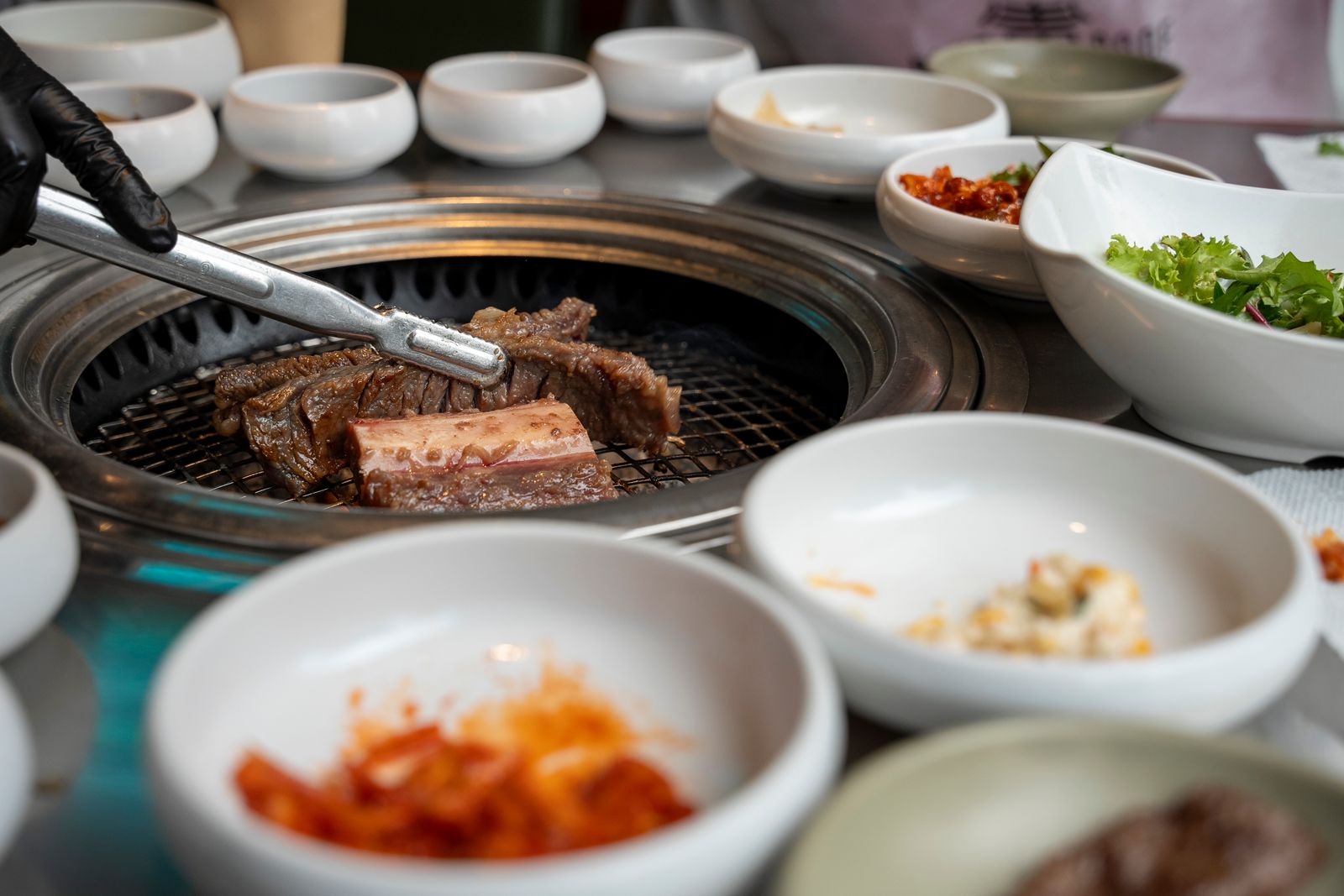
You might think that staying sober at a table full of increasingly loud, increasingly red-faced colleagues would feel isolating. To my relief, it usually doesn’t. Korean hoesik culture, whatever its flaws, is genuinely food-centered — samgyeopsal sizzling on a tabletop grill, endless banchan, a rhythm of conversation that doesn’t actually require alcohol to sustain it. The drinking is loud and visible, but it’s often a smaller part of the evening’s emotional core than it looks from the outside.
The Shift I’ve Watched Happen
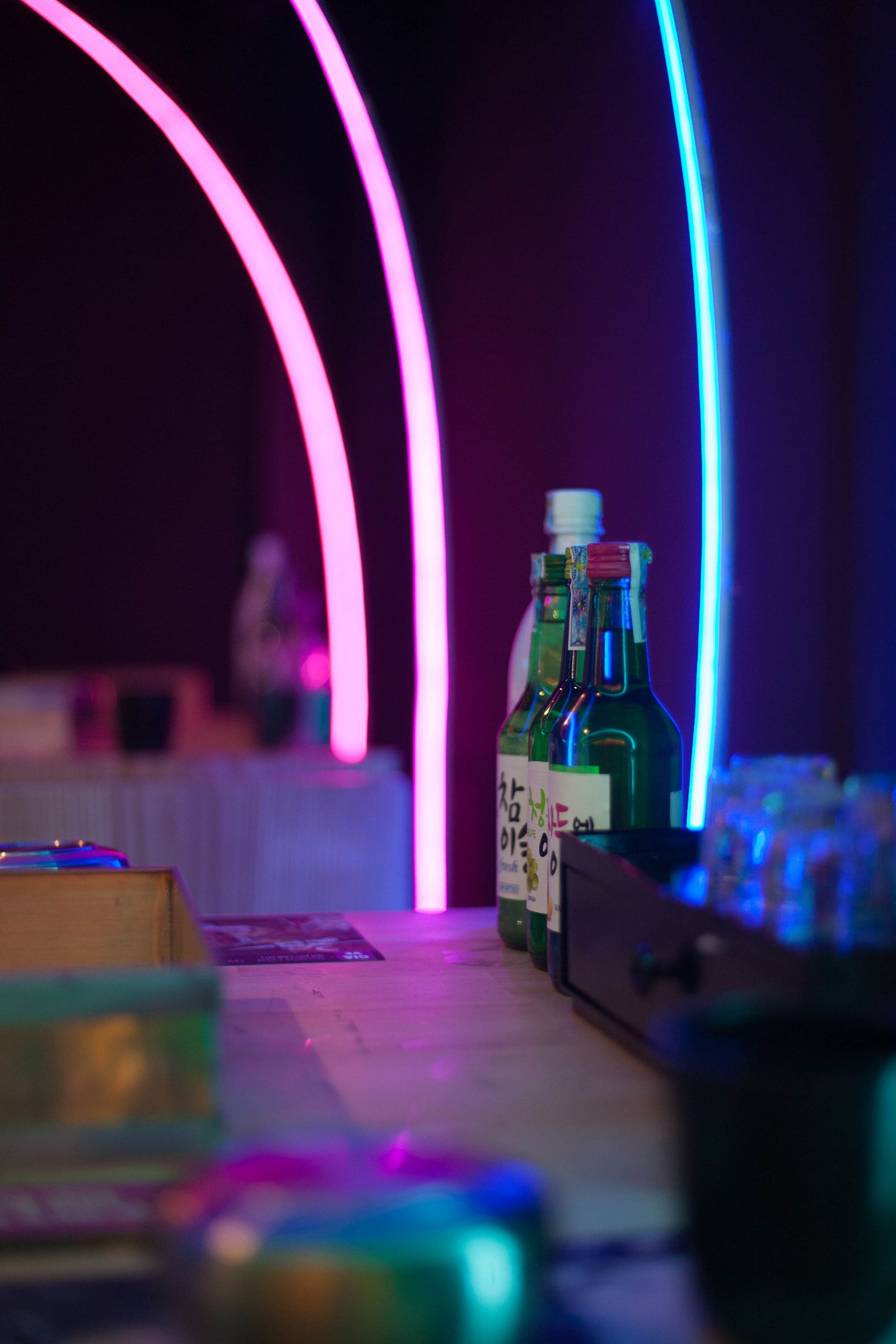
If you’d told me this much change could happen this visibly, I might not have believed it, but the drinking culture here has moved noticeably even in the years I’ve been paying attention. The most obvious sign is on the shelves: major brewers like Hite and OB, and even soju makers like Jinro, now sell 0.0% alcohol versions that show up in regular BBQ restaurants and convenience stores, not just health-food aisles. Walk into a CU or GS25 today and you’ll usually find a dedicated non-alcoholic fridge section that simply didn’t exist a decade ago, stocked deep enough that it’s clearly responding to real demand, not just testing the waters. A decade ago, ordering one at a hoesik might have earned you a raised eyebrow. Now it barely registers, and I’ve seen groups toast with a mix of soju, beer, and zero-proof drinks in the same round without anyone treating it as a statement.
Part of this is generational. Younger workers, often lumped together as the “MZ세대” (MZ generation) in Korean media shorthand, have been notably more willing to push back on mandatory after-work drinking altogether, and companies — especially larger, more internationally minded ones — have responded by loosening hoesik norms. Some have started experimenting with what’s sometimes called “culture hoesik” (문화 회식), swapping the usual soju rounds for a team movie screening, a museum visit, or even an escape room, with dinner and conversation still very much part of the evening. It would be an exaggeration to say the old pressure has vanished entirely; plenty of smaller companies and more traditional industries still run on the old script, and a first-time foreign employee shouldn’t assume every workplace has modernized at the same pace. But the momentum is unmistakably pointing one way.
I’ll admit there’s an irony in all this that took me a while to appreciate. The country most associated abroad with hard-drinking business culture is quietly becoming a place where refusing a drink is one of the least remarkable things you can do at a table — as long as you handle the moment itself with a little social fluency.
None of this means the topic is fully settled, or that every Korean workplace has caught up to the more relaxed vibe you’ll find in Seoul’s younger, trendier offices. But the direction is clear enough that I’d tell any newcomer worrying about this: prepare your excuse, sure, but don’t over-prepare for a confrontation that’s increasingly unlikely to happen.
Frequently Asked Questions
What if my boss personally pours me a drink after I’ve already said I don’t drink? Accept the glass with both hands — a basic pouring-etiquette gesture of respect — rather than waving it off, since it’s the refusal of the glass itself, not the refusal to finish it, that tends to sting. If you’re worried about it happening all night, a quiet trick some coworkers use is nursing a small piece of ice in the glass or keeping it slightly full from an earlier pour, so there’s visibly less room for the next round to land.
Is it okay to say I don’t drink for religious reasons even if that’s not really why? Plenty of foreigners do this because it’s a category Koreans are broadly familiar with and rarely question further. It works, but I’d lean toward a reason that’s actually true if you have one — driving, medication, or a genuine health reaction are just as effective and don’t require you to keep a story straight over multiple hoesik dinners with the same coworkers.
Will refusing to drink hurt my chances of fitting in at a Korean workplace long-term? Less than it would have ten or fifteen years ago. What matters far more than whether you drink is whether you show up, stay through the meal, and engage — pouring for others, joining conversation, being present. I’ve seen plenty of non-drinkers become genuinely well-liked at their companies precisely because they were reliably good company at the table, alcohol or not.
Around 1 a.m. on a Tuesday in Sillim, I watched a guy in a rumpled office shirt — tie still on, ID badge still clipped to his shirt pocket — walk into a PC bang, drop his laptop bag on an empty seat, and log into League of Legends before he’d even taken his coat off. The monitor threw a blue-white glow across his face that made him look about ten years younger than he probably was. He played for two hours, the keyboard clacking away in that specific mechanical-switch rhythm you only really notice at 1 a.m., ordered a bowl of ramyeon halfway through, and left looking more relaxed than anyone I’ve seen leave an actual bar. That’s the moment I stopped thinking of PC bangs as “just internet cafes” and started paying attention to what’s actually going on inside them. I’m Yijidaddy, and after several years living in Korea, I’ve spent enough late nights in these places — sometimes to write, sometimes to game, once memorably to escape a power outage in my building — that I feel qualified to explain why they refuse to die.
What a PC Bang Actually Is
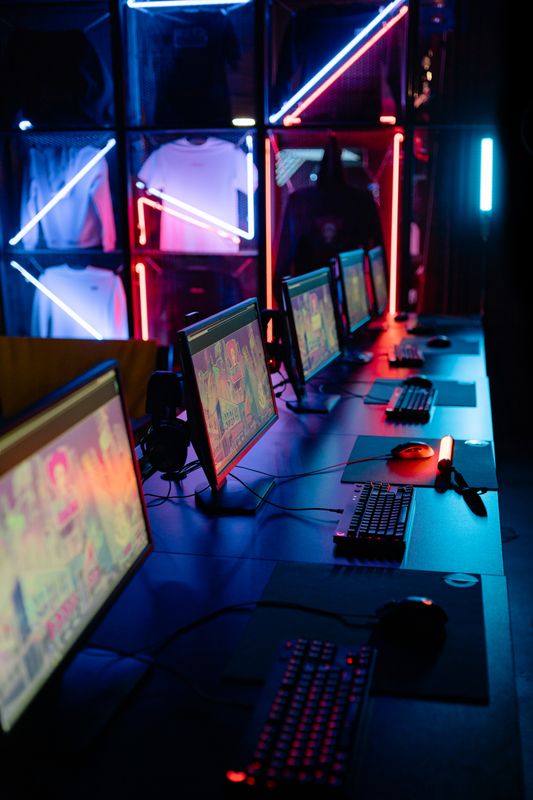
PC방 (PC bang, literally “PC room”) is a pay-by-the-hour gaming café, and the “room” part undersells it — it’s a dense grid of gaming rigs, each with a wide curved monitor, a mechanical keyboard, a decent headset, and a chair that’s usually nicer than anything in my apartment. You sit down, log in with a member card or your phone number, and the clock starts. Rates aren’t fixed nationally, and they swing hard by neighborhood. In student-heavy areas like Sillim or Sinchon, I’ve paid as little as ₩1,000–1,500 an hour on a mid-spec rig. Around Jongno it creeps up to ₩1,500–2,000. Walk into a newer place in Gangnam or Yeoksam and you’re paying ₩2,000–2,500 an hour, but that buys you a machine running a proper RTX-class GPU, a 165–240Hz monitor, and something closer to a DXRacer-style seat than the standard office chair you’ll find in an older Sillim location.
Buy in bulk and the math changes fast — most places sell 5 or 10-hour packages, and the per-hour rate can drop close to half. That’s the number that actually matters, because on paper this should be expensive, and it isn’t. Four hours of gaming, a meal, and a drink can land under ₩15,000 total — less than a single round at a Hongdae bar, and roughly what you’d pay for one movie ticket in Seoul. That price logic is the quiet engine behind why PC bangs are still standing when cheap home broadband and console ownership should, in theory, have wiped them out years ago.
Roots in a Financial Crisis, Not a Marketing Plan
None of this happened by accident, and the origin story explains a lot about why the culture runs so deep. After the 1997–98 Asian financial crisis, the Korean government pushed hard into broadband infrastructure as part of the economic recovery plan, and PC bangs sprang up everywhere as the cheapest way for ordinary people to access it. When StarCraft landed in Korea in 1998, it found a ready-made audience sitting in front of shared machines — Korea reportedly accounted for roughly a third of the game’s total global sales that year, mostly sold through PC bangs. Managers started running small tournaments among their own regulars just to keep machines occupied during slow afternoons, and by 1999 OnGameNet was already broadcasting StarCraft matches on cable television. That’s an almost absurdly fast jump from “guys killing time between shifts” to televised competitive gaming, and it’s the direct ancestor of the sponsor-backed LCK broadcasts filling LoL Park in Jongno today. When Faker plays on that stage, he’s playing in a lineage that traces straight back to PC bang regulars grinding StarCraft ladders for bragging rights and instant noodles.
That history still shapes the industry in a very literal way. League of Legends and other major titles track their real popularity in Korea through PC bang usage rate specifically, not just total player counts, because it’s treated as the most honest signal of what people are choosing to spend their own won on, hour by hour. A game climbing the PC bang chart is a game winning the room, and publishers watch that number closely.
The Menu Is Half the Point
The food ordering setup is one of my favorite pieces of everyday Korean design. Every seat has a small kiosk or a hotkey on the desktop — you order without leaving your chair, without pausing your ranked match, and a staff member brings it to your desk on a tray a few minutes later. The signature order is ramyeon with cheese and an egg cracked in, usually ₩3,500–4,500, and there’s an unspoken understanding that this is the correct way to eat it at 2 a.m. Beyond that, menus run through corn dogs, popcorn chicken, fried mandu, tteokbokki, cheese sticks, instant fried rice, and an iced Americano for roughly ₩1,800–2,500. Almost nothing breaks ₩10,000. If your reference point for internet café food is a stale muffin and flat soda from a rack near the register, recalibrate — this is a real kitchen turning out real food on a five-minute clock.
The reason it’s taken seriously has to do with the business model rather than pride: an hourly rate of ₩1,500 barely covers electricity for a rig running a decent GPU around the clock, so a ₩4,000 bowl of ramyeon and a ₩2,000 iced Americano is where a lot of these places actually turn a profit. Feed people well and they stay longer; that’s the whole equation.
The Honor System Nobody Explains to Foreigners
Walk into a completely packed PC bang and you’ll often see three or four seats sitting empty with a phone, a jacket, or an open drink next to the keyboard. Those seats are taken. Someone stepped out to smoke, use the bathroom, or grab something from a convenience store, and left a personal item behind as a placeholder. Nobody touches it, nobody asks staff to clear it, and nobody sits down assuming it’s free. I asked a PC bang manager in my neighborhood about this once, half expecting a story about people fighting over seats, and he just shrugged and said that’s simply how it’s done — the same tone he might’ve used explaining why people take their shoes off indoors. It’s a small detail, but it says something bigger about how much unspoken trust these spaces run on, and it surprised me more than almost anything else about the culture.
Why They Haven’t Died Out
Friends back home always ask why anyone bothers when most young Koreans have solid internet and often a decent PC at home already. I wondered the same thing before I actually lived here. Part of the answer is space: a lot of people, especially students and younger office workers, live in one-room officetels with no room for a dual-monitor battlestation, let alone a desk sturdy enough for one. Part of it is social — PC bangs are still where groups of friends or coworkers go together after class or after work, in a way solo gaming at home doesn’t replicate. And part of it, to my own surprise, is that a good PC bang can genuinely outperform what a lot of people own personally; upgrading a home rig every year or two is expensive, while a PC bang owner spreads that cost across hundreds of paying customers and refreshes the fleet regularly just to stay competitive with the place two blocks over.
There’s also a habit factor that’s easy to underrate. For a lot of Korean men in particular, the PC bang is tied to specific life stages — university downtime between classes, leave during mandatory military service, the after-work decompression before heading home. It’s woven into the calendar of ordinary life in a way that faster home internet alone was never going to displace.
Visiting as a Foreigner: What to Actually Expect
The process is easier than it looks and slightly more bureaucratic than you’d guess. Most places require ID for registration — your ARC or passport works, and staff do check, since PC bangs are age-restricted late at night for anyone under 18 unless accompanied by a guardian. You’ll get a member card or a login tied to your phone number, prepay a block of time or just start a tab, and that’s it; nobody hovers, and plenty of regulars sit for four or five hours without anyone batting an eye, because the whole business model depends on you staying, not leaving. Not every PC bang looks like the neon-lit, high-spec places in photos online, either — older neighborhood ones can be a little worn, chairs showing a decade of overnight shifts, and that’s fine; it’s part of the texture, not a warning sign.
If you don’t speak Korean, Google Translate’s camera feature handles the kiosk menu fine — I’ve walked into a Gangnam location with almost no Korean and managed by pointing at the screen and holding up fingers for hours. A headset is provided at every seat and generally wiped between users, though plenty of regulars bring their own earbuds for longer sessions. And if you’re worried about going alone, don’t be: PC bangs skew male late at night, but solo visitors of any gender are completely ordinary during the day and early evening, and staff treat a solo customer grinding ranked games in peace as the most normal thing in the world.
Frequently Asked Questions
What happens if I sit in a seat that already has someone’s phone on it? You’ll likely get a polite but firm correction from staff, or the returning customer will just quietly point at their item. It’s an easy, harmless mistake — just check the desk for a jacket, drink, or phone before settling in, especially during busy evening hours.
Is there a minimum time I have to pay for? Most PC bangs let you pay by the minute after an initial small block, often as low as 30 minutes to an hour, so you’re not locked into a long session just to check it out once.
Can I bring my own food or drinks instead of ordering from the kiosk? Technically most places would rather you order from their menu, since food is a real revenue stream for them, but I’ve never seen anyone hassled over a personal bottle of water or a convenience-store snack eaten quietly at the desk.
The moment I understood I was living inside a K-pop country and not just visiting one, I was standing in line behind a middle schooler at a Daiso near my apartment in Seoul. She had a stack of the exact same album, twelve copies, still shrink-wrapped, stuffed into two flimsy black plastic bags that were visibly cutting into her fingers. She counted out 340,000 won in cash without blinking, like she was paying for bus tickets. I was the one who looked confused, standing there doing the math in my head and getting it wrong twice. That was my real introduction to Korean fandom economics, and four years later I still find new corners of it that catch me off guard.
Most writing about this from outside Korea treats fandom like a curiosity cabinet — look at these superfans and their glow sticks. Live here long enough and you start to see it differently: less a curiosity, more an economy, with its own currency, its own etiquette, and its own real winners and losers. Lightsticks, fansigns, fanchants, and music show streaming aren’t four separate hobbies. They’re one connected system, and once you see how the parts link up, the whole thing gets a lot less baffling.
The Lightstick Isn’t Merch. It’s a Membership Card.
Every major K-pop group sells an official lightstick, and its fandom colors it, waves it, and treats it with something close to reverence. BTS fans carry the ARMY Bomb, which by now has gone through several hardware versions the way a phone gets a new model every year or two. Other fandoms have their own shapes, usually built around the group’s mascot or logo and released once the label decides the fan base is big enough to justify tooling up a custom mold. Expect to pay somewhere between 40,000 and 60,000 won for one, more for a limited anniversary edition, and yes, some fans buy a spare in case theirs dies mid-concert. I did not expect a plastic stick with a Bluetooth chip inside to cost more than a decent pair of sneakers. It does.
You might assume a lightstick is just for looking good in photos, and sure, that’s part of the appeal. But the real function is synchronization. Newer official lightsticks connect via Bluetooth to the venue’s lighting system, so during a chorus the entire stadium can flash the same color on cue, with no individual fan touching a button. The first time I watched sixty thousand lightsticks flip from pink to blue in the same half-second, I actually got chills — not a sentence I expected to write about a merchandise item, but there it is. It’s one of the more genuinely impressive pieces of live-event engineering I’ve seen anywhere, on any continent.
There’s a quieter social layer to it too, one that outsiders tend to miss. Carrying the official lightstick instead of a generic glow stick signals you’re a real fan, not someone dragged along by a friend for the night. Nobody will say anything if you show up with a knockoff — but you’ll notice the difference in how other fans treat you, especially online, where owning the official “bong” carries a small but real kind of credibility. It’s a minor thing. It still surprised me the first time I clocked how much it actually mattered to people around me.
Fanchants: The Concert’s Unwritten Script
Walk into any K-pop concert and you’ll notice something choreographed happening in the crowd that has nothing to do with the stage: fans shouting each member’s name, in a fixed order, at specific beats, in specific songs. This is the fanchant, and none of it is spontaneous. Fan communities pass around official fanchant guides online months before a tour starts, breaking down exactly which name gets called on which measure of which song, timed syllable by syllable to the music like sheet music for the audience.
I assumed, the first time it was explained to me, that this would feel stiff in person — a stadium full of people following stage directions. It doesn’t, not once it locks into rhythm. When the chant lands together with sixty thousand other voices, it turns an audience from spectators into something closer to a second choir, and it’s one of the more genuinely moving parts of a live show I’ve experienced anywhere. Newcomers who don’t know the chants yet aren’t shamed for it, at least not in my experience; the regulars around you tend to just chant a little louder to cover the gap, which is its own quiet way of pulling you in.
Fansigns: Where the Real Money Enters the Picture
If lightsticks and fanchants are the visible, in-the-room layer of fandom, fansign events are the machinery underneath it, and this is the part that genuinely surprised me when a Korean coworker first walked me through it over lunch. A fansign is a small meet-and-greet where a handful of winning fans get a few seconds face-to-face with the group to have an album signed. You cannot simply buy a ticket. Entry is decided by lottery, and the only way into that lottery is buying an album — one purchase equals one entry, and there’s no cap on how many entries a single person can hold. Your “bias,” by the way, is your favorite member of the group, and your “bias wrecker” is whichever member keeps threatening to unseat that favorite against your will; you’ll hear both terms constantly once you’re in fansign conversation with actual fans.
That “no cap” detail is where things get intense. If one album buys one shot at winning, fifty albums buy fifty shots, and dedicated fans absolutely run the math. It’s not unusual for someone chasing a fansign slot to spend three million to ten million won — roughly $2,200 to $7,300 — on bulk copies for a single event. I remember converting that number in my head the first time I heard it and assuming I’d misheard. I hadn’t. Functionally, it works a lot like buying a stack of scratch-off lottery tickets purely for the code printed under the foil: the fan wants the barcode, not the object attached to it, so plenty of those albums never get unwrapped. Buyers pull the photocard insert, maybe keep the lyric booklet, and the rest goes into a recycling pile or gets resold wholesale to a used-album shop near Coex or Hongdae.
You’d expect a system like this to draw serious public backlash for encouraging teenagers to overspend. To my surprise, the pushback inside Korea is fairly muted compared to how loudly the international fan community objects to the same practice online. Locally, it’s treated more like a rule everyone quietly agrees to work within, mostly because the alternative — a scalped ticket market for a handful of meet-and-greet slots — would probably be worse for everyone. Even so, the generational tension underneath it is real: every parent I’ve talked to about this looks noticeably uneasy watching a sixteen-year-old drop a semester’s worth of allowance on cardboard-wrapped CDs she’ll never open.
A couple more terms are worth knowing before you go further into this world. Fans who refuse to pick a single favorite, insisting they love every member equally, describe themselves with a group-size tag — “OT7,” “OT9,” whatever the member count happens to be, short for “one true” plus that number. And a “fansite” isn’t a website in the way the word suggests; it’s an account, usually on X or Instagram, run by an individual fan-photographer who shows up to every airport departure and every concert with a long lens to document one specific member, often selling prints afterward to fund the next comeback’s gear upgrade. It’s essentially unpaid photojournalism running entirely on devotion, and some of these accounts have sharper photos than the agency’s own official ones.
The Streaming Wars: Fandom as Spreadsheet
Music show wins matter more here than chart positions do almost anywhere else, and the scoring behind them is surprisingly transparent once you go looking for it — each show publishes its own weighting formula. Music Bank, for one, combines digital streaming, physical album sales, broadcast frequency, an in-app fan vote, and a small social media component into a single score, with streaming carrying the heaviest weight of any category. Other shows lean harder on fan voting or live audience reaction instead. None of the formulas match exactly, which is why a group can win on one program and lose on another with the identical song in the same week.
Once a formula is public, of course fans optimize against it, the same way anyone would optimize against a known algorithm. Fandoms organize streaming parties and share playlists timed to loop a title track across every platform at once, alongside detailed guides on which app’s votes actually count for which show. I once sat in on a fan group chat coordinating a three-hour streaming block with the seriousness of a small logistics team: “4:00–4:15 Melon, keep app open, don’t skip. 4:15–4:20 clear cache, switch accounts. 4:20 YouTube MV loop starts, mute is fine, just let it play.” Backup accounts were pre-assigned in case one got flagged. You might expect that level of coordination to feel exploitative or joyless from the inside. Oddly enough, most fans I’ve asked about it describe it as fun — a shared project with people they’ve never met face to face, closer to a team sport than a chore.
Most shows now enforce a “triple crown” rule, capping any single song at three wins in a row so newer releases get a real shot at the spotlight. That tells you the shows themselves recognize how lopsided the competition could get without a limit. It’s a small guardrail on an otherwise wide-open contest, and I have a certain respect for whoever in a producing office thought to build it in rather than just letting the biggest fandom win every week forever.
Frequently Asked Questions
Q: I bought one album online as a foreign fan. Do I have any real shot at a fansign? A: Technically yes — one album equals one entry, and the lottery doesn’t check nationality. Realistically, though, most fansigns draw from purchases made through specific Korean retailers or the label’s own preorder platform within a set window, and you’re competing against buyers purchasing in bulk. One album is a genuine ticket. It’s just a very thin one.
Q: Is it rude to bring a knockoff lightstick to a concert instead of the official one? A: Nobody will stop you at the door, and I’ve seen it happen plenty of times. It just won’t sync with the venue’s Bluetooth lighting cues, so you’ll be the one dot of the wrong color during a coordinated lightstick moment — more a missed photo opportunity than an actual social offense.
Q: Why do fans buy dozens of the exact same album instead of one copy each? A: Two incentives stack on top of each other: each copy is a fansign lottery entry, and each copy also counts toward first-week physical sales charts, which feed directly into music show scores. Buying in bulk is a terrible way to actually listen to music. It’s a very efficient way to move two different scoreboards at once.
I think about that middle schooler in the Daiso more often than I expected to when this whole thing started. She’s probably in high school by now, maybe past the fandom entirely, maybe still buying albums by the dozen for someone new. Either way, next time I’m at a concert and the house lights come up right as sixty thousand Bluetooth lightsticks flicker out at once, all at the same instant, I’ll think of her hauling those two straining plastic bags out into the Seoul night, already counting how many chances she’d just bought herself.
My father-in-law laughed at me for a solid minute the first time he saw me standing in my own living room wearing a winter coat, waiting for the boiler to “warm up,” the way I would have waited for a furnace back home. He walked over, pressed his palm flat against the floor near the wall, and said, “Just sit down.” I sat down. Within maybe ninety seconds the floor under me went from cool tile to something close to a heated car seat, and I understood, in a very physical way, that I had moved to a country that heats its houses completely differently than anywhere I’d lived before. That was roughly four years ago, and it turned out to be the first entry in a long, still-growing list of things that caught me off guard here — not the big, guidebook-famous stuff, but small, ordinary moments that quietly rearranged what I thought “normal” meant.
The floor is the radiator
Ondol, the underfloor heating system built into basically every apartment and house in Korea, isn’t a space heater or a set of vents — it’s hot water circulating through pipes embedded in the concrete slab beneath the floor itself. The whole floor becomes the heat source, which sounds like a minor technical detail until you’re lying on it in January with your back completely warm while the air a meter above you is still cool enough to see your breath near a window. That same slab, though, is exactly what turned one ordinary February trip into an expensive lesson about how this system actually works.
I went away for five days and, trying to be responsible, switched the boiler all the way off instead of down to the low “away” setting. Nobody had explained that the concrete underneath a Korean apartment holds a huge amount of thermal mass, so once it fully freezes through, the boiler has to run at full output for the better part of a day just to bring the floor back up to a livable temperature. My gas bill that month jumped from around 45,000 won to just over 160,000 won — for one apartment, in one month, because of one wrong setting. Now I leave it on the low setting every time I travel, and to my genuine relief, the fix was that simple once someone finally explained the mechanism instead of just telling me what to do.
You can leave your phone on a table and it will still be there
The moment that actually made me stop and stare happened in a crowded café near Hongik University. A woman put her phone, her AirPods case, and her half-finished iced americano down on a table, then walked off toward the restroom — no laptop lock, no friend watching the seat, nothing. She was gone for a good four or five minutes. I kept glancing at the table like I was watching a hidden-camera prank about to happen. Nothing happened. She came back, picked everything up, and kept working like it was the most unremarkable thing in the world, because for her, it was.
Korea doesn’t have zero crime, and pickpocketing does happen, especially in dense tourist areas like Myeongdong on a Saturday night. But the baseline level of casual trust in ordinary public space is genuinely different from what I grew up with, and it shows up everywhere once you start noticing it: café seats saved with a jacket instead of a body, students napping face-down on library desks with a wallet sitting in plain view beside their notebook, delivery boxes stacked outside apartment doors for hours without anyone touching them. The default assumption here leans toward “probably fine” instead of “guard it constantly,” and unlearning years of the opposite instinct took real, physical effort on my part.
Something can be at your door in fifteen minutes, from almost anywhere you are
I’d used food delivery apps before Korea, so I expected fast. I did not expect a scooter pulling up to a riverside picnic blanket because a friend of mine placed an order through a delivery app while we were sitting near the Han River, typing a nearby landmark and his phone number into the address field instead of a street address. Fifteen minutes later, a rider handed over fried chicken still warm enough to fog the inside of its box, and a two-liter bottle of cola with condensation just starting to bead on the outside — delivered to a patch of grass with no building number attached to it at all. My friend didn’t think this was noteworthy. I thought about it for a week.
The infrastructure behind this is less a marvel of technology and more a product of dense cities, an enormous scooter-delivery workforce, and apps like Coupang that pioneered “dawn delivery,” where an order placed before midnight is guaranteed on your doorstep before seven the next morning. What doesn’t get talked about enough is the cost underneath the convenience — delivery riders work under real time pressure, and traffic-safety groups in Korea have raised legitimate concerns about accident rates in the industry. So while the speed genuinely surprised me, I’ve tried to hold onto both things at once: it’s remarkable, and somebody is absorbing real risk to make it that fast.
An entire subway car can be almost silent
My first packed rush-hour ride on Seoul’s Line 2, I braced for the kind of noise I associated with crowded trains — conversations, music leaking out of headphones, general chaos. Instead I got a car with maybe two hundred people in it and the loudest sound was the train itself. Almost everyone had earphones in or their sound muted. When conversations happened, they were pitched low enough that they didn’t carry past the two people having them. It felt less like public transit and more like a moving library.
I assumed at first that this was some kind of enforced rule. I half-expected a dirty look the first time I answered a call on the platform a little too loudly. Nobody said anything. That was almost more unsettling than being told off, because it meant the quiet wasn’t a posted regulation at all — it was a habit absorbed rather than taught. Even now, four years in, I still catch myself lowering my voice the second the subway doors close. Oddly enough, I’ve started doing the same thing on trains back in my home country, where nobody else is doing it, and I just end up looking weirdly secretive for no reason.
Your bank account, your ID, and your entire financial life fit in one app
I once stood on a sidewalk outside a barbecue restaurant with five friends, all of us pulling out our phones at the same moment to settle a dinner that came to about 210,000 won. Within maybe thirty seconds, everyone had tapped their share into a KakaoPay transfer, my balance updated in real time, and we walked off to catch a taxi before the bill had even fully processed on the restaurant’s side. Nobody pulled out cash. Nobody did the awkward math of who owed what after someone “forgot” their card.
Setting up banking back home had always meant a branch visit, a stack of paperwork, and at least one follow-up trip. In Korea, once I had my Alien Registration Card, I opened a bank account and had a linked payment app running within the same afternoon. I should say this isn’t uniquely Korean — plenty of countries now have real-time transfer systems, and I don’t want to overstate it as some singular miracle. What did surprise me was how completely apps like KakaoPay and Toss replaced physical wallets for daily life here. I routinely leave my apartment with just my phone and go through an entire day of transit, coffee, lunch, and a convenience store stop without touching a physical form of payment once. The one time my phone battery died mid-commute, with no cash and no card in my bag, I felt a small flare of panic that carrying an actual wallet never used to give me.
Nobody expects a tip, and the service doesn’t suffer for it
A server at a barbecue restaurant literally chased me out the door once, holding out a few thousand won I’d left folded under a plate, refusing to let me leave without taking it back. That happened more than once in my first few weeks here. Tipping isn’t just uncommon in Korea — it can read as slightly insulting, like you’re implying the person needed extra motivation to do a job they were already doing properly.
I privately expected the service to feel a bit more indifferent without a tip dangling over it, which says more about the cynical math tipping culture trains into you than it does about Korea. That didn’t hold up. Servers still refill your water without being asked, restaurant staff still walk you to the door, and convenience store clerks still bag your items with more care than the transaction technically requires. The real explanation has more to do with how service wages and hospitality norms are structured here than any individual server’s personality, but the day-to-day effect was the same for me either way: consistently attentive service with none of the tip-math anxiety I used to carry around every restaurant bill back home.
Frequently Asked Questions
Is Korea actually as safe as people say, or is that exaggerated? It’s safer than most places I’ve lived, but not risk-free — I still lock my apartment door, and I still wouldn’t leave a phone unattended on an outdoor table in a busy tourist zone like Myeongdong at rush hour. The surprise for me wasn’t zero crime, it was how differently the average person here calibrates risk in ordinary public spaces like cafés, libraries, and residential streets.
Do the delivery apps work if you don’t speak Korean? Mostly yes, since apps like Coupang Eats and Baemin now offer English interfaces and photo menus, though a few small independent restaurants still take phone orders only, which is where having a Korean-speaking friend or a translation app on standby genuinely helps.
Can foreigners actually get KakaoPay or Toss set up easily? Once you have your Alien Registration Card and a Korean bank account, setup is usually straightforward, though a handful of features — certain investment products or some peer-to-peer transfer limits — can be restricted or require additional verification for non-citizens, so it’s worth checking the specific app’s foreigner policy rather than assuming full parity from day one.
None of this made it into the version of Korea I pictured before I arrived, and looking back, that’s really the point of writing it down. The big cultural differences get covered everywhere. What I didn’t expect was how permanently the small stuff would rewire my instincts — I still flinch a little at the thought of leaving my phone on a café table when I visit family abroad, and I still automatically lower my voice on trains that nobody else is being quiet on. Four years in, I’m not sure those habits are reversible anymore, and honestly, most of them I’d rather keep.
It was a Friday night in Gangnam, somewhere past one in the morning, and I had my hand half-raised to flag a cab before I even noticed the driver was already shaking his head at me through the windshield. He hadn’t stopped. He hadn’t rolled down the window. He’d just looked at me, looked at the group of four behind me, and kept driving.
Three more taxis did the same thing over the next twenty minutes. I remember standing there thinking: I have lived in this country for years, I know exactly where I’m going, and I still can’t get a cab to take me eight minutes down the road. That was my real introduction to seungcha-geobu (승차거부), and it’s one of those small daily frictions in Korea nobody warns you about until you’re on a curb at 1:40 a.m. wondering if you’re walking home instead.
Seungcha-geobu literally translates to “boarding refusal,” and it describes exactly what it sounds like: a taxi driver declining to pick you up, or pulling over, hearing your destination, and driving off without you. It happens most often late at night, in areas where short, low-fare trips are common, and it happens to Koreans just as much as it happens to foreigners — which surprised me the first time a Korean friend told me she’d had the exact same experience outside a bar in Hongdae. I’d assumed, wrongly, that this was some kind of foreigner tax. It isn’t. It’s a pattern baked into how late-night taxi driving pays in this country, and once you see the money behind it, the whole thing gets a lot less personal.
Why drivers do this in the first place
A taxi driver working a Friday or Saturday night shift is trying to squeeze as much money as possible out of a limited number of hours, and every fare is a bet on whether it’s worth the traffic and the wait for the next pickup. A three-minute ride to an apartment complex two blocks away, paid at the metered minimum — around 4,800 won as of the current base fare in Seoul — is a bad bet next to a rider heading out to Bundang or Ilsan who’ll run up thirty or forty thousand won on the meter over half an hour. So when a driver slows near a knot of people outside a club in Itaewon or a noraebang exit in Sinchon, he’s doing quick math in his head: distance, direction, time of night, likely traffic. If the math doesn’t work, he doesn’t stop, or he stops and asks where you’re going before deciding whether to actually unlock the doors. That’s the moment refusal really happens — not before you get in, but right at the window, when your destination gets vetoed like a loan application that didn’t clear.
Some of it is structural too, not just a driver being choosy. The hours between roughly midnight and 4 a.m. have long overlapped with driver shift changes and a general thinning of the available taxi pool, right as bar and club crowds are spilling onto the sidewalk. Fewer cars chasing more riders means drivers can afford to be picky, and picky is exactly what you get. Add in that a lot of drivers are older men working long, exhausting shifts, and a short, low-paying, occasionally rowdy late-night fare starts to look like more trouble than it’s worth. None of this makes it legal. It just makes it understandable, which, oddly enough, made me a lot less angry about it once I actually understood why it kept happening to me and not, say, at 4 p.m. on a Tuesday.
The fix that actually works: stop hailing, start booking
The single biggest change to my own late-night routine here has been almost entirely giving up on street hailing in favor of Kakao T, which by most estimates handles well over 90% of app-based taxi bookings in Korea at this point — it’s less “an app you could use” and more “the default way most people in this country get a cab now.” The reason it solves the refusal problem so cleanly is structural: you enter your destination before a driver ever lays eyes on you standing there. He accepts or declines the trip based on the address on his screen, not based on sizing up you and your friends on the curb and guessing whether you’re a good fare. Because the destination and estimated cost are locked in digitally, a driver backing out after accepting is a visible, penalizable act inside the platform itself — a genuinely different situation from someone just never stopping for you on the street in the first place. It’s not airtight; I’ve had a handful of Kakao T drivers cancel right after accepting once they clock that the ride is short. But it’s a dramatic improvement over standing there getting passed over car after car with no record of any of it.
A tip that took me embarrassingly long to figure out: switch the app’s display language to English in Settings if your Korean reading isn’t fluent, but still paste the destination in Korean script rather than typing the English name, since that’s what actually routes correctly and what the driver sees clearly on his end. I usually pull the Korean address straight off Naver Map or Kakao Map, copy it, and paste it into Kakao T instead of typing anything by hand. Add a payment card in advance too, so you’re not fumbling with cash or a card reader when you finally get where you’re going, which matters more than it sounds like at 2 a.m. when all you want is to be inside your apartment. If you don’t have a Korean phone number, you can still register using a foreign number through the country-code dropdown, and there’s a “pay to driver” option built in for anyone without a linked Korean bank account.
Yes, it’s illegal — the enforcement is just uneven
Boarding refusal has been illegal in South Korea for years. Under the Passenger Transport Service Act, refusing a passenger without a legitimate reason is a punishable offense, and drivers caught doing it face fines that have historically run around 200,000 won — roughly $150 — for a first offense under stricter local ordinances, with repeat violations risking suspension or even revocation of their license. Compare that fine to what a driver actually loses by taking a short 4,800-won fare instead of skipping it for a longer one, and you start to see why some drivers decide the math is still worth the risk, especially on a night when enforcement feels unlikely.
And enforcement really is the weak link here. Seoul has run periodic crackdowns, stationing plainclothes inspectors near nightlife hubs like Gangnam Station, Hongdae, and Itaewon specifically to catch drivers refusing short or “inconvenient” trips, and the city has also rolled out simplified QR-code reporting so tourists and residents can flag a refusal on the spot, plus coordinated checks around Gimpo and Incheon airports targeting drivers who prey on people who don’t know the going rate. Dozens of drivers get caught and fined in these sweeps every year. The catch is that this presence is concentrated in bursts — a crackdown week here, a holiday push there — rather than a constant, city-wide watch every night. A driver who waves you off on a quiet street far from any inspector, on a random Tuesday, isn’t likely to face any consequence at all, which is exactly why I stopped relying on the law to solve my Friday-night problem and started relying on an app instead.
Where and when it’s worst
If you want to know exactly when to brace for this, it’s less about the day of the week and more about a fairly narrow window: roughly 11:30 p.m. to around 3 a.m. on Friday and Saturday nights, in the neighborhoods where drinking crowds concentrate. Gangnam Station’s exits, the main strip through Hongdae, and Itaewon’s clubbing streets are the three I’d flag first from personal experience, closely followed by Sinchon and around Konkuk University on weekend nights when university crowds pour out. What ties these places together isn’t really the neighborhood itself — it’s the combination of lots of short local trips, lots of visibly drunk people, and a taxi pool thinning out right as demand spikes. I’ve genuinely never had a refusal issue hailing a cab from a quiet residential street at 4 p.m. on a Tuesday; the pattern is specific enough that once you notice it, you start planning around it almost without thinking.
You might reasonably wonder whether this is just a Seoul thing, since so much Korea content assumes the whole country runs on Seoul rules. It doesn’t, entirely. Busan’s nightlife districts around Seomyeon and Haeundae see a milder version of the same pattern, and smaller cities generally have it less because the taxi-to-demand ratio isn’t as lopsided late at night. But the underlying incentive — short fare, inconvenient direction, late hour, driver picks and chooses — holds pretty much everywhere taxis and nightlife overlap here, so it’s worth having a plan no matter which city you’re in.
Taxi etiquette that actually helps your odds
Beyond switching to an app, a few small habits have genuinely helped me. If I’m hailing on the street rather than booking, I state my destination clearly the moment the window comes down, rather than getting in first and explaining once we’re moving — drivers seem far more willing to accept once they’ve already committed to the stop, but they’ll also just wave you off before you climb in if the destination sounds like a bad trade, so moving fast when a cab does stop matters. There’s also a well-known workaround among long-term expats where you name a slightly further landmark than your actual stop — say you’re really going to a spot in the middle of Nonhyeon-dong, but you tell the driver you’re headed to the bigger intersection just past it, then correct him once you’re inside and moving. It works often enough that people keep doing it. I’ll admit I feel a little guilty every time, since it’s really just gaming the same broken incentive rather than fixing it, so I don’t love recommending it as a first resort. Keeping your voice down, not slamming the door, and not eating anything messy in the back seat is just good manners regardless — none of it prevents a refusal, but Korean drivers do remember an app rating, and a bad one from a driver you were rude to can make future Kakao T bookings slightly harder during peak hours.
To be fair to the drivers for a second, because I think foreigners rarely extend them this courtesy: this is a hard, tiring job, and a large share of drivers are unfailingly polite, run the meter honestly, and never refuse anyone. My worst seungcha-geobu experiences have clustered in a handful of specific weekend-night hours, and the rest of the time — daytime, weekdays, longer trips — I’ve had almost uniformly good rides with Korean taxis. It’s worth remembering that before writing off the whole system as hostile, because it isn’t; it’s a small number of drivers making a rational, if illegal, call during a narrow window of high-demand hours.
If you do get refused, here’s what actually helps
If you want to push back in the moment rather than just walking to the next corner, Seoul’s QR-code reporting system is the fastest route — most taxis now carry a sticker with a scannable code specifically for reporting refusals or overcharging, usually on the back of the front seat or the partition, and filing takes under a minute. Grab the taxi’s license plate number if you can, which is why I always try to note it the second a cab pulls away without me. Failing that, Seoul’s Dasan Call Center (dial 120) handles taxi complaints in multiple languages including English, and it’s a real channel rather than a dead end. In practice, though, my actual first move standing on that curb is almost always just opening Kakao T rather than trying to flag anyone down at all — filing the report matters for the system, but it doesn’t get you home five minutes faster.
Frequently asked questions
Do I need to tip a taxi driver in Korea, and does tipping more help avoid refusals? No — tipping isn’t part of taxi culture here at all, and offering extra cash on top of the meter won’t make a driver more likely to take you somewhere he’s already decided against. What actually moves the needle is booking through Kakao T so the destination is locked in before he ever assesses the trip, not a bigger tip once you’re already standing at the window.
I’m arriving late at Incheon Airport with heavy luggage and no Korean phone number yet — how do I avoid getting stuck? Register Kakao T ahead of time using your home country’s number through the country-code dropdown, since you don’t need a Korean SIM to sign up. For luggage, note that some drivers are reluctant to take large groups with bulky suitcases on short in-city hops for the same reason they refuse short fares generally, so if you’re going somewhere close after landing, it’s worth mentioning the luggage upfront in the app notes, or just budgeting for a slightly longer, more “worthwhile” route into the city rather than a quick hop.
I got refused twice in a row outside a bar in Hongdae with three friends. Did we do something wrong? Almost certainly not. A group of four heading somewhere close and easy to reach on foot from Hongdae, late on a weekend, is close to the textbook case a driver passes on in favor of a longer fare. It isn’t about you or how you look; it’s the trip itself. Switching to Kakao T and locking in the destination before a driver ever eyeballs you on the street is the most reliable fix I’ve found for exactly this situation.
None of this makes seungcha-geobu a non-issue — it’s still a genuinely illegal, genuinely annoying part of living here, and I don’t think foreigners should just shrug and accept it as “how Korea is.” But after a few years of getting waved off outside Gangnam Station often enough to stop taking it personally, my honest advice is the boring, unglamorous kind: open Kakao T before you even step outside, know the QR reporting system exists for when things go wrong, and save the old-fashioned street hail for daylight hours when none of this math applies anyway. It’s not a perfect system, but it’s a learnable one, and that’s more than I can say for a lot of Korea’s other everyday quirks.
The first time I got invited to a real hoesik — not the “let’s grab coffee” kind, the full one, with a grill table and a private room and a director who’d already loosened his tie before the meat arrived — nobody handed me a rulebook. What I got instead was a nudge from a coworker who steered me two seats down from where I’d been about to sit, and a low “not there” that told me everything I needed to know about how little I understood. I’d spent weeks reading about pouring with two hands and never once thought about where I was even allowed to put my body in the first place.
The pouring, the pretending-to-drink, the polite refusal — plenty has already been written about those mechanics, including elsewhere on this site. What almost nobody walks you through is the shape of the whole evening: who decided this was happening tonight, why the seats matter more than the food, and why a night that starts at a barbecue place can somehow end three buildings and two hours later with someone singing Kim Gun-mo badly in a noraebang.
Hoesik Is an Org Chart With Chopsticks
Hoesik (회식) literally just means “eating together,” which undersells the thing about as badly as calling a performance review “a quick chat.” In an ordinary meeting, hierarchy gets flattened by an agenda and job titles printed on a slide. At hoesik, there’s no slide. There’s just a room, a grill, bottles of soju and beer lined up like ammunition, and about a dozen unspoken signals running at once — who called this thing, who’s expected to show up even though attendance is technically “optional,” who orders for the table, and who gets to decide when it’s over.
I used to assume the point was the drinking. It isn’t, or at least not primarily. A senior manager I worked under for a year barely touched his glass most nights — he’d nurse the same beer for two hours while everyone around him refilled constantly. What he was actually doing was running the room: setting the pace, pulling people into side conversations one at a time, noticing whose glass sat empty a beat too long. The alcohol is the medium, not the message. Watch only who’s drinking and you’ll miss the entire show.
The Seating Chart Nobody Prints
Every hoesik room I’ve sat in has had an invisible seating chart, and it gets enforced faster than you’d expect. The seat farthest from the door, usually with the best view of the whole table, goes to whoever is most senior — a holdover, some say, from older customs about keeping the highest-ranking person shielded from anyone barging in unannounced. Junior staff cluster near the entrance, closest to the shoe rack and the server calling out orders, which not coincidentally is also the worst seat for actually following the conversation.
You’d think a few drinks in, this would loosen up — and to be fair, it does, a little. Conversation gets louder, the department head might crack a joke at his own boss’s expense, someone junior might finally speak first. But even loosened, the frame holds. I’ve watched a table get progressively messier over three hours without the actual pecking order ever really dissolving; it just gets padded with more jokes. The seating isn’t decoration, it’s the org chart laid out in chairs, and everyone at the table can read it instantly even if no one would ever say so out loud.
1차, 2차, 3차: The Marathon Structure Nobody Warns You About
Once you understand that the seating and the pace are set by rank, the next surprise is that hoesik isn’t one event — it’s a relay. Il-cha (1차) is the first stop, usually the barbecue or hot-pot dinner where the actual eating happens. Then, often with zero warning that this was ever the plan, somebody stands up and announces i-cha (2차): round two, typically a bar for beer or more soju, sometimes a spot that serves only anju (drinking snacks) instead of a real meal. If the night has momentum, or if one particular manager refuses to let it die, sam-cha (3차) follows — frequently a noraebang, because apparently nothing says team bonding like watching your stone-faced department head grab a tambourine and turn into a completely different person under karaoke-room disco lights for a 90s ballad at one in the morning.
I assumed, the first time this happened to me, that dinner was dinner and everyone would go home full and reasonably sober. Wrong on both counts. Part of this structure is genuine habit, but part of it, I’ve come to think, works as a soft test: who’s willing to stay, who can hold their composure at hour four, who slips out with an apologetic bow after 1차 without anyone holding it against them. That last part matters more than newcomers assume — plenty of teams have a quiet, unofficial understanding that leaving after the first round is completely fine, and the anxiety people feel about “escaping” is usually worse than the actual social cost of doing it.
Somaek: Less a Drink, More a Synchronization Ritual
It’s usually somewhere inside that 1차-2차 stretch that someone builds a somaek — a shot of soju dropped into a glass of beer, sometimes with a flourish, sometimes with a spoon balanced on the rim and smacked so the shot glass crashes down on its own. The ratio people cite most is three parts soju to seven parts beer, the so-called golden ratio, though in practice most tables eyeball it and then argue about whose pour was too heavy on the soju.
What struck me watching this happen for the first dozen times wasn’t the drink itself — it’s genuinely fine, somewhere between a lager and a fizzy tonic — but how the whole table synchronizes around it. Someone calls out geonbae, glasses go up together, and the group drinks in one motion, often in one go. It functions less like a beverage choice and more like a heartbeat for the room, resetting everyone to the same moment at the same time. That matters more than it sounds like it should when half the table is senior enough to intimidate the other half into silence; a shared, simultaneous shot cuts through that in a way quiet sipping never could.
A table that builds four or five rounds of somaek back to back is drinking harder than most Western happy hours would consider normal, and I won’t pretend otherwise. But plenty of Korean coworkers I know quietly nurse the same glass all night instead of keeping pace, holding it through every toast without ever draining it. The custom isn’t an instruction to drink until you can’t stand; it’s a ritual gesture, and increasingly an optional one — which, oddly, seems to bother almost nobody as long as you’re physically present for the toast.
The Quiet Rebellion: Why This Is Changing Faster Than It Looks
Five years ago I would have told you this whole structure was permanent. It isn’t, and the shift shows up in actual numbers, not just vibes. A national drinking-habits survey found that 56 percent of Koreans in their twenties now either abstain entirely or drink no more than once a month — the highest share recorded since the survey started tracking this in 2005, when the figure sat at 37.9 percent. That’s not a fringe preference. That’s more than half a generation quietly opting out of a ritual their parents’ generation treated as close to mandatory.
You can feel it at the actual tables, too. I’ve sat through hoesik at two very different companies in recent years, and the contrast is almost funny. At one, an older-guard trading firm, the 1차-2차-3차 marathon was still basically assumed; skipping it felt like a small act of defiance. At the other, a younger tech-adjacent company, “hoesik” meant lunch — actual, daytime, sober lunch — specifically so nobody’s evening got eaten and nobody had to choose between showing face and getting home to their kid. Some teams there now run an informal poll asking whether people even want a dinner that week. That would have been unthinkable at the first company.
It’s tempting to frame this as “young Koreans just don’t want to socialize with their bosses anymore,” and that’s part of it, sure — but I think it undersells what’s actually happening. Talk to almost anyone under thirty-five here and they’ll tell you they’re not against hoesik itself, just the version that treats a personal evening as company property. The pushback isn’t anti-social, it’s anti-obligation. Companies that have adjusted — ending after 1차 by default, offering non-alcoholic hoesik nights, actually asking instead of announcing — seem to get more genuine participation, not less, which is a fairly ironic outcome for a culture partly built around forced togetherness.
So Where Does a Foreigner Actually Fit Into This?
If you’re new to a Korean workplace, spend your first few hoesik just watching the architecture of the room rather than worrying about your own performance: where people sit without being told, who initiates the toast, who quietly checks their phone and slips out after 1차 with nobody batting an eye. That map tells you more about your real position in the company than any org chart HR ever emails you.
You don’t need to master the choreography to be fine at it, either. I’ve fumbled seating more than once, kept pace with somaek I clearly shouldn’t have, and left a 2차 early enough times that I assumed people noticed and quietly judged me. Mostly, they didn’t — everyone at that table is watching the seniors, not the foreigner in the corner. And the order of things I’ve just described, real as it still is, is one that today’s twenty-somethings are actively renegotiating in real time. Whatever hoesik looks like for the next generation of foreign hires here, there’s a decent chance it involves a lot less standing your ground at a fourth soju bottle and a lot more people simply going home after dinner — which, frankly, sounds like progress.
FAQ: Hoesik and Korean Drinking Culture
Do all Korean companies still run these multi-round nights?
No, and less each year. Older-guard manufacturing and finance companies are more likely to still run a full 1차-2차-3차 night on a regular schedule, sometimes monthly. Startups and many younger-skewing offices have shifted toward lunch hoesik, quarterly gatherings instead of monthly ones, or dinners that are explicitly one-and-done. It depends heavily on the industry and the age of whoever runs your team, so ask a coworker what’s actually normal there rather than assuming either extreme going in.
My coworker invited everyone to 2차 right as I was putting my coat on — is it rude to just leave?
At most workplaces today, no. Say a proper goodbye to the most senior person at the table, give a brief and polite reason if one comes naturally (an early morning, a family thing), and go. The moment that actually reads badly isn’t leaving after 1차, it’s vanishing without telling anyone — that’s the part people remember, not the fact that you didn’t stay for round two.
Why does nobody just tell new hires where to sit?
Because for most Korean employees, the seating logic is so second-nature it doesn’t occur to anyone that it needs explaining — the same way nobody at a Western office explains that you don’t take your boss’s assigned parking spot. If you’re ever unsure walking into a private room, the safest move is to hang back a beat and follow where a coworker gestures rather than picking a seat yourself.
화요일 밤 11시, 카톡 프로필 사진 옆 숫자 ‘1’이 사라진 지 벌써 여섯 시간째다. 낮에 보낸 “오늘 뭐 했어?”라는 평범한 메시지 하나에, 읽씹도 아니고 안읽씹도 아닌 애매한 침묵이 이어진다. 다음 날 오후가 되어서야 “아 미안 회의가 계속 있었어ㅠㅠ”라는 답이 온다. 이런 패턴이 사흘째 반복되면 머릿속에서 두 가지 생각이 동시에 싸우기 시작한다. 이거 밀당인가, 아니면 그냥 관심이 식은 건가.
솔직히 말하면 연락 텀이라는 자로 상대의 마음 크기를 재는 건 눈금이 너무 거칠다. 바쁘면 누구나 답장이 늦을 수 있는 거 아니냐 싶지만, 그런데도 유독 썸 상대의 연락 텀 앞에서만 마음이 요동치는 이유가 있다. 관심이 있을 때와 없을 때, 우리 뇌가 실제로 다르게 반응하기 때문이다.
연락 텀에 그렇게 예민해지는 이유, 근거가 있다
답장이 늦어질수록 오히려 자꾸 휴대폰을 들여다보게 되는 경험, 누구나 한 번쯤 있을 거다. 확실한 보상이 아니라 ‘올까 안 올까’ 모르는 상태일 때 사람은 더 자주, 더 강박적으로 확인하게 되는데, 이건 도박에서 슬롯머신을 당길 때와 비슷한 심리 구조다. 언제 답이 올지 예측이 안 되니까 뇌가 계속 기대감을 만들어내고, 그 기대가 채워지지 않으면 불안으로 바뀐다. 연애 초반일수록 이 반응이 더 크게 나타나는데, 상대에 대한 정보가 아직 부족한 만큼 작은 신호 하나하나에 더 많은 의미를 부여하게 되기 때문이다.
이런 심리 아래 실제 데이터도 있다. 국내 메신저 대화를 대규모로 분석한 조사에서, 매우 호감이 가는 상대에게는 평균 9분에서 10분 안에 답장을 보내고, 그냥 관심 있는 정도의 상대에게는 17분, 별 관심이 없는 상대에게는 22분에서 31분이 걸린다는 결과가 나온 적이 있다. 사람마다 원래 스마트폰을 들여다보는 습관 자체가 다르니 이 숫자를 절대적인 기준표처럼 들이대긴 어렵다. 통계적으로는 이렇게 차이가 뚜렷해 보이지만, 현실 연애는 이 숫자만으로 설명되지 않는다. 같은 사람이 누구에게는 5분, 누구에게는 반나절씩 걸린다면 그 차이 자체는 무시하기 힘든 신호라는 정도로만 받아들이는 게 맞다.
여기서 가장 많이 오해하는 지점이 하나 있다. 원래 답장이 느린 사람과, 이 사람에게만 유독 답장이 느려진 사람은 완전히 다른 얘기라는 것. 첫 만남부터 “저 원래 톡 잘 안 봐요”라고 말했던 사람이 사흘에 한 번 답하는 건 그냥 그 사람의 기본값이다. 반면 처음엔 30분 안에 꼬박꼬박 답하던 사람이 어느 순간부터 하루씩 걸리기 시작했다면, 그건 기본값이 아니라 변화다. 그리고 변화에는 대체로 이유가 있다.
진짜 밀당과 그냥 관심 없는 것, 구분하는 세 가지 지점
밀당을 심리학에서는 단순한 튕기기로 보지 않는다. 2011년 발표된 한 사회심리학 연구에서는 상대의 마음이 어느 정도인지 확신이 서지 않는 ‘불확실성’ 상태가 오히려 그 사람에 대한 몰입도를 높인다는 결과를 보여준 적이 있다. 답을 다 알면 시시해지고, 조금 모호하면 자꾸 생각나는 심리라는 뜻이다. 그런데 이 불확실성이 매력으로 작동하려면 전제 조건이 있다. 상대가 애초에 나에게 어느 정도 호감이 있어야 한다는 것. 호감 자체가 없는 상태에서의 침묵은 그냥 침묵이지 밀당이 아니다. 그래서 아래 세 가지를 함께 봐야 진짜와 가짜가 갈린다.
첫째, 텀이 길어져도 대화의 밀도는 유지되는가. 밀당형 침묵은 “미안 늦었지, 오늘 회의하다가 이 생각 났는데” 하는 식으로 시작해서 대화가 원래 궤도로 금방 돌아온다. 반면 관심이 식은 침묵은 답장이 와도 “ㅇㅇ”, “그렇구나”, “ㅎㅎ” 같은 한두 글자짜리 반응으로 끝나고, 그 뒤를 이어갈 질문이 붙지 않는다.
둘째, 먼저 연락하는 빈도가 유지되는가. 의외로 이 부분을 놓치는 사람이 많은데, 답장 속도보다 더 정직한 지표는 ‘누가 먼저 대화를 시작하는가’다. 텀이 길더라도 이 사람이 가끔이라도 먼저 “이거 너 생각나서 보내” 하며 밈이나 뉴스 링크를 보내거나, “오늘 춥던데 옷 따뜻하게 입었어?” 같은 사소한 안부를 물어온다면, 바쁜 와중에도 나를 떠올렸다는 뜻이다. 반대로 내가 먼저 보낼 때만 대화가 이어지고 상대가 먼저 시작하는 일이 몇 주째 한 번도 없다면, 그건 밀당이 아니라 그냥 우선순위에서 밀린 것이다.
셋째, 만나자는 제안에 대한 반응 속도다. 카톡 텀은 늘어져도 “이번 주말에 시간 되면 볼래?”라는 제안에는 의외로 빠르게 답하는 사람이 있다. 이런 경우는 메시지 자체보다 오프라인 만남에 더 가치를 두는 성향일 뿐, 관심이 없는 게 아니다. 반대로 만나자는 얘기까지 “그때 봐서”, “다음에”로 계속 흐지부지 넘어간다면 그건 진지하게 다시 생각해봐야 할 신호다.
연락 텀 3일, 실제 사례로 뜯어보기
30대 초반 직장인 지현 씨(가명)의 사례가 이 두 갈래를 잘 보여준다. 소개팅 앱에서 만난 상대와 처음 2주는 거의 실시간으로 대화가 오갔다. 그러다 어느 순간부터 답장이 하루, 이틀 걸리기 시작했다. 여기까지만 보면 전형적인 관심 하락 패턴처럼 보인다. 그런데 막상 답장이 오면 “미안, 이번 주에 프로젝트 마감이라 정신이 없었어. 그래도 너랑 얘기했던 영화 결국 봤어”처럼 지난 대화를 되짚는 문장이 붙어 있었다. 실제로는 야근이 몰린 시기였고, 텀이 길어진 대신 만나자는 제안에는 당일 답장을 보냈다. 이 경우는 밀당이라기보다 물리적 여유가 없었던 쪽에 가깝다.
반면 비슷한 시기 지현 씨 친구의 사례는 결이 달랐다. 상대는 매번 “바빠서 미안”이라고 했지만, SNS 스토리는 하루에도 몇 개씩 올라오고 있었다. 답장은 항상 늦었고, 정작 만나자는 얘기에는 “그때 봐서”라는 말로 계속 미뤄졌다. 바쁘다는 말과 실제 온라인 활동 사이의 간극이 클수록, 그 텀은 밀당이 아니라 우선순위에서 밀려난 정중한 거절에 가깝다. 두 사례를 가르는 건 텀의 길이가 아니라, 그 사람이 바쁘다는 걸 증명하는 다른 신호들이 함께 있느냐는 거였다.
연락 텀 앞에서 흔들리지 않으려면
가장 흔한 실수는 상대의 텀에 맞춰 나도 똑같이 텀을 늘리는 것이다.
이건 밀당이 아니라 눈치 게임의 악순환을 만들 뿐이다. 상대가 하루 늦게 답했다고 나도 이틀 늦게 답하는 식으로 대응하면, 서로 상대의 마음을 확인하려다 관계 자체가 식어버리는 경우가 많다. 오히려 자기 페이스를 유지하되, 매번 즉답하지 않는 정도의 여유만 가져가는 게 현실적이다.
또 하나, 연락 텀 하나만 붙잡고 상대의 마음 전체를 판단하려는 태도 자체를 내려놓는 게 낫다.
텀은 여러 신호 중 하나일 뿐이고, 대화의 밀도나 만남 제안에 대한 반응처럼 다른 신호와 함께 봐야 그림이 보인다. 어느 하나에 집착하면 상대의 사소한 행동 하나하나에 의미를 과잉 부여하게 되고, 그 불안이 티가 나면서 관계가 더 어색해지는 역설이 생긴다.
텀이 길어지는 이유를 스스로에게 물어봐도 된다. 상대가 원래 연락에 무심한 성향인지, 요즘 유독 바쁜 시기인지, 그것도 아니면 애초에 나에 대한 관심 자체가 크지 않았던 건지. 이 세 가지를 구분해줄 단서는 시간이 지나야 쌓인다. 2주 넘게 지켜봤는데도 대화 밀도가 계속 얕고, 먼저 연락하는 일이 없고, 만남 제안까지 계속 미뤄진다면 그때는 텀을 더 분석할 게 아니라 마음을 정리하는 편이 낫다. 때로는 내 마음의 평온을 위해 그 텀이라는 감옥에서 스스로 걸어 나오는 게 먼저다.
자주 묻는 질문
Q. 첫 만남 이후 3일 동안 연락이 아예 없었는데, 다시 연락이 오면 받아줘도 될까?
상황에 따라 다르다. 소개팅이나 첫 만남 직후는 원래 서로 조심스러운 시기라 3일 정도의 공백이 특별한 신호가 아닐 수 있다. 다만 다시 연락이 왔을 때 지난 만남에 대한 언급이나 구체적인 다음 약속 제안 없이 그냥 “뭐해?”로 시작한다면, 그건 관심보다는 심심할 때 찾는 연락일 가능성도 염두에 둘 필요가 있다.
Q. 나는 원래 연락을 자주 하는 편이 아닌데, 이것도 상대에게 밀당으로 오해받을 수 있나?
충분히 그럴 수 있다. 그래서 초반 몇 주 정도는 “나 원래 톡 답장이 좀 느린 편이야”라고 미리 말해두는 게 오해를 줄이는 가장 확실한 방법이다. 설명 없이 침묵만 반복되면 상대는 그 공백을 자기 나름의 방식으로 해석하게 되고, 대부분 실제보다 부정적인 쪽으로 기울기 마련이다.
Q. 일부러 답장을 늦게 해서 밀당을 시도하는 게 효과가 있을까?
계산된 침묵은 생각보다 티가 잘 난다. 답장 텀을 시계처럼 정확하게 맞추거나, 매번 비슷한 시간대에만 답하는 패턴은 상대도 금방 눈치챈다. 앞서 언급한 불확실성 효과는 자연스러운 상황에서 생기는 여백에서 나오는 것이지, 인위적으로 만든 침묵에서는 오히려 성의 없어 보이는 역효과가 나기 쉽다.
냉장고 야채칸에 고구마 세 알이 굴러다닌 지 벌써 나흘째다. 삶을까, 구울까 고민만 하다가 매번 그대로 덮어두는 이 패턴, 혹시 나만 그런 건 아닐 거다. 그런데 막상 마음먹고 하나를 조리해보면 다음 날 나머지 두 알까지 순식간에 사라진다. 고구마라는 게 원래 그렇다 — 손이 많이 갈 것 같아서 미루다가, 한 번 만들면 그 자리에서 접시가 빈다.
이번 글에서는 가을에 유독 달아지는 고구마로 만들 수 있는 요리 네 가지를 정리했다. 겉은 바삭하고 속은 촉촉한 맛탕, 집에서도 부드럽게 완성되는 고구마라떼, 속이 편안한 고구마죽, 그리고 에어프라이어 하나로 끝내는 고구마구이까지. 레시피마다 실패하기 쉬운 지점과 어울리는 품종을 함께 짚어뒀으니 순서대로 읽으면 시행착오를 꽤 줄일 수 있을 거다.
고구마 고르는 법부터 다르다
같은 요리라도 고구마 품종에 따라 결과가 확 갈린다. 밤고구마는 수분이 적고 포슬포슬해서 죽이나 라떼처럼 곱게 갈아 쓰는 요리에 어울리고, 호박고구마나 꿀고구마처럼 수분이 많고 당도가 높은 품종은 굽거나 맛탕을 만들 때 진가를 발휘한다. 표면에 검은 반점이 있거나 손으로 눌렀을 때 물컹한 것은 피하는 게 좋다. 저장할 때는 신문지에 하나씩 싸서 서늘하고 통풍이 되는 곳에 두면 2~3주는 무리 없이 버틴다. 냉장 보관은 오히려 심부 조직을 상하게 해서 맛이 떨어진다는 점, 의외로 많이들 모른다.
고구마 맛탕 — 튀김과 에어프라이어, 둘 다 성공하는 법
맛탕은 기름 온도 맞추는 게 관건이라고들 하는데, 사실 그보다 더 자주 실패하는 지점은 따로 있다. 바로 자른 고구마를 물에 담가 전분을 빼는 과정을 생략하는 것이다. 전분이 남아있으면 튀길 때 서로 들러붙고 시럽을 부었을 때 금방 눅눅해진다. 품종은 수분이 많은 호박고구마나 꿀고구마가 겉면이 더 매끈하게 코팅돼서 좋다.
재료 (2~3인분)
고구마 2개 (약 400g)
식용유 튀김용 300ml
설탕 2큰술, 올리고당 4큰술, 물엿 1큰술
소금 한 꼬집, 검은깨 약간
1단계. 고구마는 껍질을 벗기고 한입 크기로 큼직하게 썬 다음 찬물에 10분 정도 담가 전분기를 빼준다. 체에 밭쳐 키친타월로 물기를 완전히 제거하는 게 중요한데, 물기가 남아있으면 기름이 튄다.
2단계 (튀김 버전). 팬에 기름을 넉넉히 두르고 170도 정도로 달군 뒤 — 나무젓가락을 넣었을 때 잔거품이 보글보글 올라오면 그 온도다 — 고구마를 넣고 8~10분간 튀긴다. 젓가락으로 찔렀을 때 저항 없이 쑥 들어가면 다 익은 것이다.
2단계 (에어프라이어 버전). 기름 없이 만들고 싶다면 190도에서 12분 구워도 된다. 겉면의 바삭함은 튀김 쪽이 조금 더 선명하지만, 뒷정리 부담을 덜고 싶을 때는 에어프라이어가 확실히 편하다.
3단계. 시럽은 따로 팬에 설탕, 올리고당, 물엿, 소금을 넣고 약불에서 끓인다. 가장자리가 살짝 캐러멜색으로 변하기 시작할 때 익힌 고구마를 넣고 빠르게 버무리면 된다. 여기서 불을 끄지 않고 계속 뒤적이면 시럽이 타서 쓴맛이 나니 주의해야 한다. 검은깨를 뿌려 마무리하면 완성이다.
고구마라떼 — 재료 세 가지로 15분이면 충분하다
고구마라떼는 재료만 보면 단순하다. 그런데도 카페 메뉴판에서는 오천 원이 훌쩍 넘는다. 집에서 만들면 그 절반 비용으로, 오히려 당도와 농도를 취향껏 조절할 수 있다는 게 더 큰 장점이다. 밤고구마를 쓰면 고소한 맛이 진해지고, 호박고구마를 쓰면 색이 더 곱게 나온다.
재료 (1인분)
찐 고구마 120g (밤고구마 추천)
우유 180ml
꿀 또는 연유 1큰술
계핏가루 약간, 얼음 4~5개(아이스로 즐길 경우)
고구마는 전자레인지에 랩을 씌워 5~6분 돌리거나 찜기에 20분 쪄서 완전히 부드럽게 만든다. 껍질을 벗긴 뒤 우유, 꿀과 함께 믹서에 넣고 곱게 간다. 이때 우유를 한 번에 다 넣지 말고 절반만 먼저 갈아 농도를 확인한 다음 나머지를 더하면 원하는 되기로 맞추기가 쉽다. 너무 뻑뻑하게 갈렸다면 따뜻한 우유나 정수 두세 큰술을 추가로 섞으면 되고, 반대로 너무 묽다면 고구마 비율을 조금 늘리면 된다. 따뜻하게 먹으려면 갈아낸 뒤 냄비에 옮겨 약불로 데우면서 눌어붙지 않게 저어주고, 차갑게 먹으려면 얼음을 넣고 한 번 더 갈아준다. 마지막에 계핏가루를 살짝 뿌리면 향이 확 살아난다. 개인적으로는 연유를 쓰는 쪽이 꿀보다 목 넘김이 부드럽다고 느꼈는데, 이건 취향 차이니 둘 다 시도해볼 만하다.
고구마죽 — 속이 허할 때, 아침 대용으로도 좋다
죽이라고 하면 손이 많이 갈 것 같지만 고구마죽은 재료가 단출하다. 밤고구마처럼 포슬포슬한 품종을 쓰면 물에 잘 풀어져서 따로 으깨는 수고를 덜 수 있다. 호박고구마로 만들면 색이 진해지긴 하는데 수분이 많아 죽이 조금 더 묽게 나온다는 점은 감안해야 한다.
재료 (2인분)
고구마 2개 (약 350g, 밤고구마 추천)
불린 쌀 또는 밥 1공기
물 600ml
소금 약간, 설탕 1작은술 (선택)
고구마는 껍질을 벗기고 삶아 부드러워지면 절반은 으깨고 절반은 작게 깍둑썰어 남겨둔다. 이렇게 식감을 나눠주면 죽 전체가 밍밍해지지 않는다. 냄비에 물과 밥(또는 불린 쌀)을 넣고 끓이다가 쌀알이 퍼지기 시작하면 으깬 고구마를 넣어 저어가며 15분 정도 뭉근하게 끓인다. 마지막에 깍둑 썬 고구마를 넣고 5분만 더 끓여 씹는 맛을 살린다. 간은 소금으로만 해도 충분한데, 단맛을 더 원하면 설탕을 아주 조금 넣는 정도로 그친다. 너무 달게 만들면 죽 본연의 편안한 맛이 사라진다는 걸 몇 번 만들어보고 나서야 알았다.
고구마구이 — 에어프라이어로 노점 맛에 가장 가깝게
에어프라이어로 만드는 군고구마는 화력이 약해서 맛이 덜할 거라 생각하기 쉬운데, 두 번 나눠 굽는 방식을 쓰면 당도를 훨씬 더 끌어낼 수 있다. 이 요리만큼은 수분과 당도가 높은 호박고구마나 꿀고구마가 확실히 유리하다.
고구마를 깨끗이 씻어 물기를 남긴 채로(이 물기가 껍질을 촉촉하게 만들어준다) 에어프라이어 바스켓에 서로 겹치지 않게 배치한다. 먼저 150도에서 20분 구운 뒤 뒤집어서 다시 200도로 15분을 더 굽는다. 낮은 온도에서 먼저 익히면 고구마 안의 전분이 당으로 전환될 시간을 벌어주고, 이후 고온에서 마무리하면 껍질이 쫀득하게 마무리된다. 크기가 큰 고구마라면 시간을 5분씩 늘려가며 조절하면 된다. 다 구운 뒤 젓가락으로 찔러 스르륵 들어가면 완성이고, 아니면 5분씩 추가로 돌리면 된다.
보너스 — 자주 묻는 질문
Q. 맛탕 시럽이 자꾸 굳어서 딱딱해져요. 시럽을 너무 오래 끓이면 캐러멜화가 지나쳐서 식으면서 딱딱하게 굳는다. 가장자리가 갈색으로 변하기 시작하는 순간 바로 불을 끄고 고구마를 넣어야 촉촉한 상태로 마무리된다.
Q. 고구마에 싹이 텄는데 먹어도 되나요? 감자와 달리 고구마 싹에는 독성이 없어서 싹만 제거하면 먹는 데 문제는 없다. 다만 싹이 많이 자랄수록 속의 수분과 당분을 뺏기면서 맛이 퍽퍽해지니, 발견하는 즉시 조리하는 걸 권한다.
Q. 한꺼번에 많이 삶았는데 남으면 냉동해도 되나요? 삶거나 찐 고구마는 식힌 뒤 으깨거나 조각낸 상태로 밀폐용기에 담아 냉동하면 한 달 정도는 두고 먹을 수 있다. 라떼나 죽을 만들 때는 냉동한 채로 바로 넣고 끓여도 무방하다.