칠레 본토에서 3,700킬로미터, 가장 가까운 유인도까지도 2천 킬로미터가 넘게 떨어진 삼각형 화산섬. 비행기 창밖으로 그 외로운 점 하나가 보이기 시작하면, 여기까지 와서 대체 무엇을 두고 갔길래 이렇게 거대한 얼굴들을 깎았을까 하는 생각이 절로 듭니다. “이스터섬 사람들은 나무를 다 베어내고, 서로 전쟁을 벌이다가 스스로 문명을 무너뜨렸다.” 이 이야기, 어디선가 들어본 적 있으실 겁니다. 2005년에 나온 재레드 다이아몬드의 책 《붕괴(Collapse)》가 퍼뜨린 이 서사는 지난 20년 동안 거의 정설처럼 굳어졌습니다. 그런데 2024년, 네이처(Nature)와 사이언스 어드밴시스(Science Advances)에 잇달아 실린 논문 두 편이 이 이야기를 정면으로 반박했습니다. 섬 주민들이 스스로 망한 게 아니라는 겁니다. 그럼 누가, 왜 900개에 가까운 거대한 돌 얼굴을 만들었고, 그 문명은 정말 어떻게 됐을까요.
라노 라라쿠, 돌이 자라는 화산
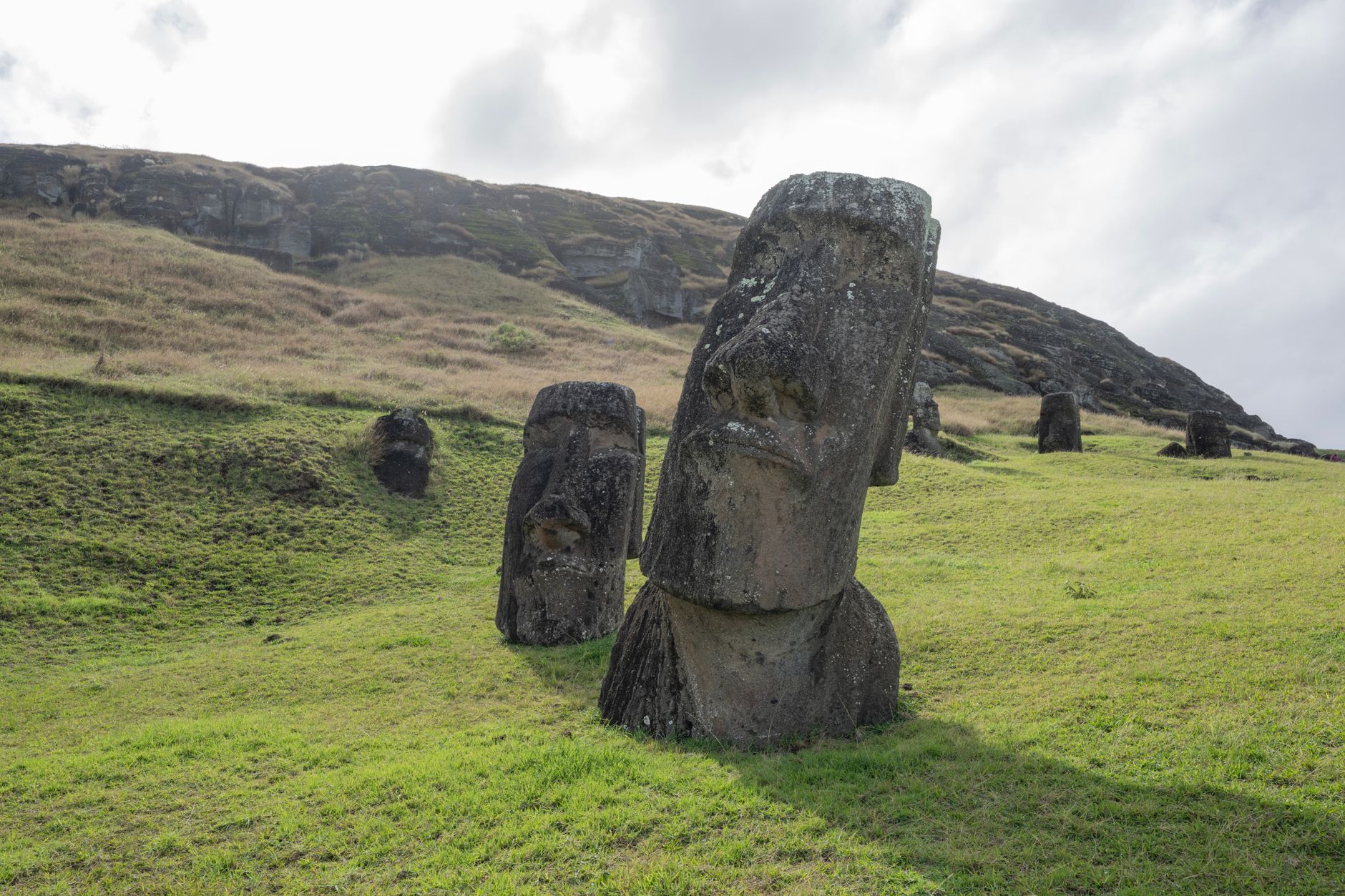
이 섬에는 지금까지 공식 집계로 887개의 모아이가 확인돼 있습니다. 그런데 이 중 절반에 가까운 약 397개가 아직도 라노 라라쿠(Rano Raraku)라는 분화구 안팎에 박혀 있다는 사실, 의외로 잘 알려지지 않았습니다. 이곳은 모아이의 재료가 되는 응회암이 나오는 유일한 채석장이었고, 조각가들은 이 화산 벽을 파고들며 통째로 석상을 깎아냈습니다. 완성되지 못한 채 버려진 것도 절반이나 됩니다.
라노 라라쿠 안에는 높이 21.6미터, 무게 추정 270톤짜리 미완성 석상도 누워 있습니다. 지금까지 세워진 어떤 모아이보다 두 배 가까이 큰 크기입니다. 왜 완성하지 못했을까요. 조각을 진행하다가 단단한 암석층에 부딪혀 포기한 흔적이 여럿 발견됩니다. 그런가 하면 애초에 바위에서 떼어낼 생각 없이, 화산벽 자체를 조각 대상으로 삼은 것으로 보이는 작품도 섞여 있습니다. 분화구 경사면에 반쯤 몸을 묻은 채 서 있는 모아이들의 모습이 마치 땅에서 솟아난 것처럼 보인다고 해서, 일부 연구자들은 이곳을 “돌이 자라는 곳”이라 부르기도 합니다.
조상의 눈을 뜨게 하는 의식
그렇다면 이 섬 사람들은 왜 이렇게까지 공을 들여 돌덩어리를 깎았을까요. 답은 종교, 정확히는 조상 숭배에 있습니다. 라파누이 사람들은 죽은 족장의 시신을 아후(ahu)라 불리는 제단 아래에 묻고, 그 위에 모아이를 세워 마을을 등지고 바다 쪽이 아니라 마을 쪽을 바라보게 했습니다. 조상이 후손을 지켜본다는 뜻이었습니다. 흥미로운 건 눈입니다. 완성된 모아이의 눈구멍에는 원래 흰 산호로 만든 흰자와 검은 흑요석 혹은 붉은 스코리아로 만든 눈동자를 끼워 넣었는데, 이 순간 전까지 석상은 그냥 커다란 돌덩어리에 불과했다고 합니다. 눈을 끼우는 순간에야 마나(mana), 다시 말해 조상의 영적인 힘이 그 안에 깃든다고 믿었으니까요. 상상해 보면 묘한 장면입니다. 장인이 마지막으로 흑요석 눈동자를 밀어 넣는 순간, 지켜보던 마을 사람들은 방금까지 돌이었던 것이 조상의 시선을 얻는다고 여겼을 겁니다. 제사장이 주문을 외우고, 사람들은 숨죽인 채 그 눈이 자기 마을 쪽으로 향하기를 기다렸겠지요.
그런데도 섬에는 서로 다른 씨족들이 여럿 있었고, 이들은 누가 더 크고 인상적인 모아이를 세우느냐를 두고 경쟁했습니다. 믿기 어렵겠지만 인구 몇천 명 수준이던 작은 섬에서 900개에 가까운 석상이 나온 배경에는 이런 씨족 간 자존심 싸움이 깔려 있었다는 게 최근 연구자들의 해석입니다. 옆 마을 아후에 더 큰 모아이가 서면, 우리 마을은 그보다 더 큰 걸 세워야 직성이 풀렸다고 합니다. 종교와 정치, 그리고 이웃에게 지기 싫은 마음이 뒤엉킨 결과물이 지금 우리가 보는 그 거대한 얼굴들입니다.
어떻게 옮겼을까 — 두 가설의 오랜 대결
평균 4톤에서 많게는 82톤까지 나가는 돌덩어리를 길게는 18킬로미터 떨어진 해안까지 옮긴 방법을 두고는 오랫동안 두 가설이 맞섰습니다. 1950년대 노르웨이 탐험가 토르 헤위에르달은 통나무를 길에 깔고 그 위로 석상을 굴리거나 썰매처럼 끌었을 거라 주장했습니다. 반면 빙엄턴대학교의 칼 리포와 애리조나대학교의 테리 헌트는 2012년 실험을 통해 18명이 밧줄 세 가닥으로 4.35톤짜리 모아이를 좌우로 흔들며 실제로 “걸어서” 이동시킬 수 있음을 보여줬습니다. 무게중심이 앞으로 쏠리도록 조각된 모아이의 볼록한 배 모양 자체가 이 걷기 이동을 염두에 둔 설계였다는 주장인데, 실제로 라파누이 구전에도 “모아이가 걸어서 아후까지 갔다”는 전승이 남아 있다고 하니 단순한 상상만은 아닌 셈입니다.
이 걷기 가설이 2025년 어떻게 더 구체적인 뒷받침을 얻었는지는 저희 블로그에서 모아이 석상이 스스로 걸어갔다고? 이스터섬 500년 미스터리 글에서 더 자세히 풀어놓았으니, 궁금하신 분은 함께 읽어보시길 권합니다. 여기서는 이동 방식보다 덜 알려진 다른 수수께끼로 넘어가 보겠습니다.
모아이 몸통을 다 옮겼다고 끝이 아니었습니다. 머리 위에는 원통형 돌모자, 푸카오(pukao)가 하나 더 얹혀야 했습니다. 이건 머리카락을 정수리에 틀어올린 상투 모양을 형상화한 건데, 재료부터 몸통과 다릅니다. 섬 반대편에 있는 푸나 파우(Puna Pau)라는 작은 화산에서 나오는 붉은 스코리아 암석으로 따로 깎아, 완성된 모아이가 이미 세워진 뒤에 그 위로 들어 올려 얹었습니다. 무게가 최대 12톤에 달하는 것도 있는데, 사람 키의 몇 배나 되는 석상 꼭대기까지 이걸 어떻게 들어 올렸는지는 지금도 확실한 답이 없습니다. 흙으로 경사로를 쌓아 굴려 올렸다는 설, 지렛대로 조금씩 들어 올렸다는 설이 맞서고 있을 뿐입니다. 몸통보다 오히려 이 돌모자 하나가 더 큰 수수께끼로 남아 있으니, 모아이를 볼 때 얼굴만큼이나 정수리도 한번 눈여겨보시면 좋겠습니다.
“섬이 스스로 망했다”는 이야기, 사실은 아니었다
여기서부터가 이 글의 핵심입니다. 재레드 다이아몬드의 붕괴론은 이랬습니다. 한때 15,000명까지 늘었던 인구가 나무를 남벌하고 서로 전쟁을 벌이다 3,000명 이하로 급감했다는 것이었습니다. 그런데 칼 리포와 테리 헌트가 2006년부터 제기한 반론이 있습니다. 야자수 숲을 없앤 진짜 주범은 사람이 아니라 폴리네시아쥐였을 가능성이 크다는 겁니다. 초기 정착민이 배에 태워 온 쥐 한 쌍이 천적 없는 섬에서 폭발적으로 불어나며 야자열매와 새싹을 갉아먹었고, 그 결과 나무가 스스로 번식하지 못했다는 설명입니다. 사람이 도끼로 숲을 밀어버린 게 아니라, 작은 쥐 떼가 조용히 나무의 대를 끊어놓았다는 이야기, 처음 들으면 다소 허무하게 느껴지기도 합니다.
2024년 사이언스 어드밴시스에 실린 위성사진 분석 연구는 한발 더 나아갑니다. 섬 전역의 돌 정원 농경지를 조사해보니 면적이 고작 0.76제곱킬로미터에 그쳤는데, 이건 예전에 추정하던 규모의 인구를 먹여 살리기엔 턱없이 부족합니다. 연구팀은 오히려 섬 주민들이 자원을 과도하게 쓰지 않고 지속 가능한 방식으로 오래 버텼다는 쪽에 무게를 실었습니다.
같은 해 네이처에 발표된 고대 DNA 연구는 이 그림을 한 번 더 뒤집습니다. 1670년부터 1950년 사이에 살았던 라파누이 주민 15명의 유전체를 분석했더니, 유럽인과 접촉하기 전 급격한 인구 붕괴를 보여주는 유전적 흔적이 전혀 나오지 않았습니다. 그런데 정작 놀라운 대목은 따로 있었습니다. 아메리카 원주민 계통의 유전자가 1280년에서 1495년 사이, 그러니까 콜럼버스가 아메리카에 도착하기도 전에 이미 섞여 들어온 흔적이 확인된 겁니다. 라파누이 조상들이 유럽인보다 먼저 아메리카 대륙과 접촉했을 가능성을 보여주는 발견입니다. 태평양 한가운데 고립된 섬이라고만 생각했는데, 알고 보니 이미 수백 년 전부터 대양을 건너 사람이 오가고 있었다는 뜻이니 조금 놀랍지 않으신가요.
진짜 문명을 무너뜨린 건 누구였을까
그럼 라파누이 문명은 정말 무너지지 않았을까요. 그렇지는 않습니다. 다만 시점이 완전히 다릅니다. 실제 인구 붕괴는 유럽인이 섬에 발을 들인 뒤에 벌어졌습니다. 1862년부터 1863년 사이 페루 노예 상인들이 섬을 습격해 주민 수천 명을 광산과 농장으로 끌고 갔고, 이 과정에서 살아 돌아온 이들이 섬에 천연두를 옮겼습니다. 한때 몇천 명이던 인구는 1877년 기록상 111명까지 줄어듭니다. 스스로 망한 게 아니라, 외부에서 온 폭력과 질병에 무너졌다는 뜻입니다. 오래도록 “미개한 원주민이 자멸했다”는 식으로 소비되던 이야기가, 실은 식민지 시대 폭력의 결과였다는 쪽으로 다시 쓰이고 있습니다.
최근 고고학 흐름을 보면 이런 재해석이 하나둘이 아닙니다. 라파누이 원주민 공동체와 서구 연구자들이 함께 발굴에 참여하는 사례도 늘었고, 예전처럼 외부인의 시선으로 “멸망사”를 쓰는 대신 주민들의 생존력과 적응 방식에 주목하는 논문이 계속 나오고 있습니다. 900개 가까운 돌 얼굴을 조각해낸 손재주만큼이나, 척박한 화산섬에서 몇 세기를 버텨낸 생활력도 이제야 제대로 조명받는 분위기입니다.
자주 묻는 질문
Q. 모아이 석상은 정확히 몇 개나 남아 있나요? 공식적으로 확인된 숫자는 887개입니다. 이 중 절반가량인 397개는 채석장인 라노 라라쿠 안팎에 미완성 상태 혹은 운반 대기 상태로 남아 있고, 나머지가 해안 제단이나 이동 경로 곳곳에 흩어져 있습니다. 눈이 제대로 끼워진, 다시 말해 의식을 거친 완성작은 이보다 훨씬 적습니다.
Q. 라파누이 원주민들은 지금도 섬에 살고 있나요? 네, 그렇습니다. 19세기 노예 습격과 천연두로 인구가 111명까지 줄었던 시기도 있었지만, 이후 서서히 회복해 지금은 수천 명의 라파누이 후손들이 섬에서 전통을 이어가며 살고 있습니다. 관광 가이드나 발굴 현장에서 직접 조상의 이야기를 들려주는 경우도 많습니다.
Q. 여행으로 직접 가서 볼 수 있나요? 가능합니다. 칠레 산티아고나 타히티에서 항공편으로 이스터섬(항가로아 공항)까지 갈 수 있고, 라노 라라쿠 채석장과 해안의 아후 통가리키 등 주요 유적지는 걸어서 또는 차량으로 둘러볼 수 있습니다. 다만 섬 자체가 외진 만큼 항공권과 숙박이 넉넉지 않으니 일정은 여유 있게 잡는 편이 안전합니다.
Somewhere in my first few months in Korea, I did the thing every foreigner eventually does. I walked into a barbecue place, saw a wooden platform a step up from the entrance, and sat straight down at the low table without noticing my shoes were still on. Nobody yelled. Nobody had to. A waitress glanced at my feet, then back at my face, and I understood the entire situation in about a second and a half. That’s usually how it goes: no sign on the door, no icon anywhere, and yet everyone else in the room already knows the rule, and the one person who doesn’t is you.
It’s not really a rule in the way “no smoking” is a rule, with a sign and a fine attached. It’s closer to a language written into the floor itself, and once you learn to read it, you start noticing it everywhere — at the dentist’s office, in a friend’s studio apartment, at that same kind of barbecue restaurant with a raised platform in the back. I’m Yijidaddy, and this is the thing I wish someone had mapped out clearly for me on day one, instead of leaving me to piece it together one awkward glance at a time.
The floor is doing more work than you think
Here’s the reframe that made everything click for me. In a lot of Western homes, the floor is just infrastructure — something you walk across to get to the furniture. In a traditional Korean home, the floor basically is the furniture. People historically sat on it, ate on it, and slept on it directly, without a bed frame lifting them off the ground. Once you accept that premise, the shoe rule stops feeling like an arbitrary formality and starts feeling like plain common sense. You wouldn’t walk across your own dinner table in hiking boots. Koreans, for a very long time, treated the entire floor the way you’d treat that table.
The reason the floor could hold that role at all is a heating system called ondol (온돌), and its backstory is more impressive than most people realize. The earliest known forms date back roughly 2,000 years, with archaeological evidence from the Bronze Age and the Goguryeo kingdom, one of Korea’s Three Kingdoms, which controlled the northern peninsula and parts of Manchuria starting around 37 BC. Early versions weren’t full-room systems — they were partial, running along a single wall, like a strip of warmth rather than a whole floor. The full-room version, where heat spread evenly under an entire living space, became widespread and refined by the Goryeo dynasty in the 13th century, and by the early Joseon period in the 1400s and 1500s, ondol had spread across the peninsula as a near-universal feature of Korean homes, from farmhouses to palace quarters.
Mechanically, it’s a strikingly elegant piece of engineering for something built centuries before central heating existed anywhere. A wood or straw fire in a kitchen hearth called an agungi sent hot smoke through a maze of stone-and-clay channels called gorae, running beneath the floor before venting out a chimney on the far side of the house. The floor itself became a massive, slow-release radiator, holding warmth for hours after the fire had died down. Modern apartments have swapped the wood fire for hot water pipes, but the underlying logic — heat the floor, not the air — hasn’t really changed. Which, if you think about it, is a little remarkable. A pre-industrial heating solution is still the backbone of how tens of millions of people warm their homes today.
The step you’re not supposed to walk past
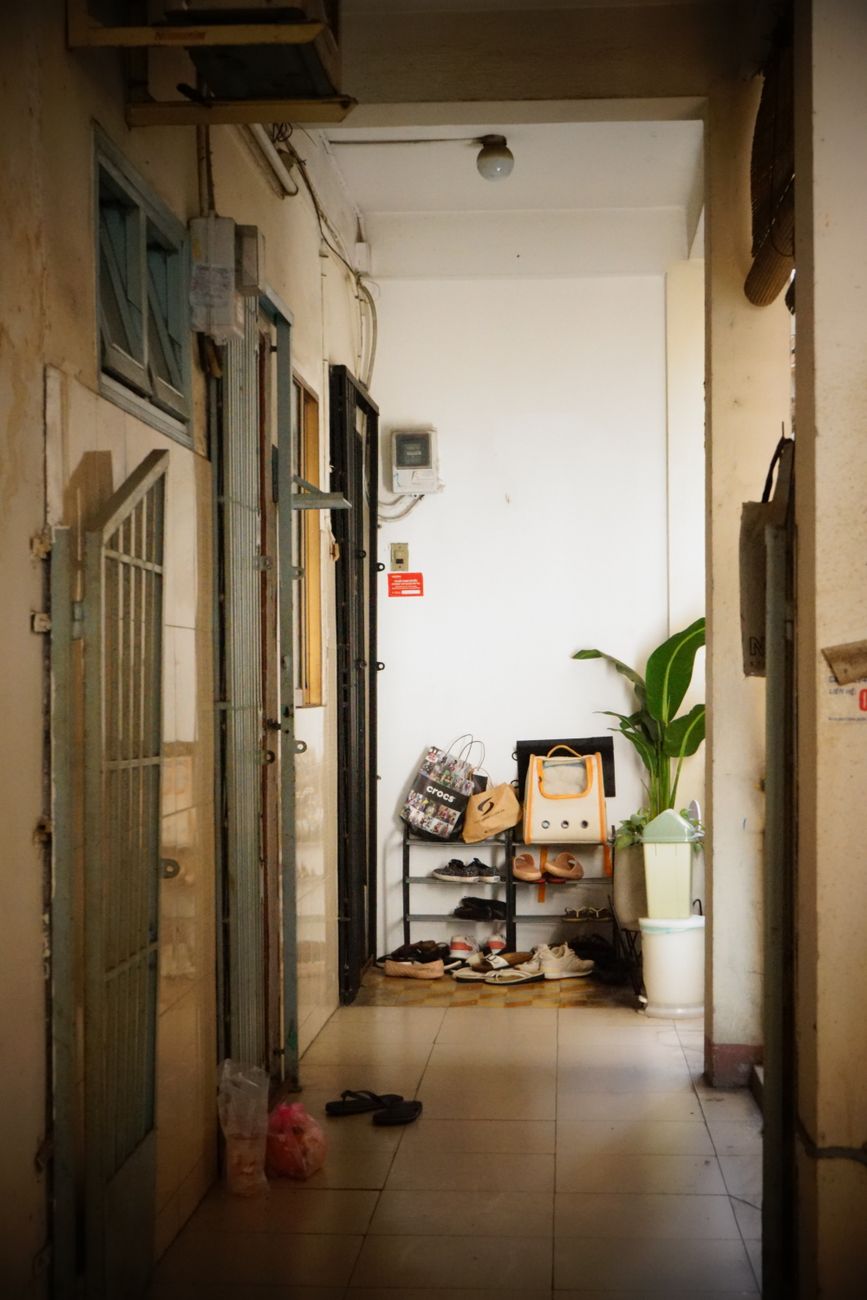
Because the floor was designed to be lived on, not just walked across, Korean architecture had to build in a clear boundary to protect it from the outside world — and that boundary is a physical step, not a suggestion. Every Korean home has this small architectural cue built specifically to stop you before you make a mistake, and it’s easy to miss if you don’t know to look for it. It’s called the hyeon-gwan (현관), and it’s usually a drop of somewhere between 15 and 20 centimeters between the entry area and the main living space, often tiled in a slightly different material or color from the floor beyond it — you can hear the difference almost as clearly as you can see it, the hard click of a heel on entryway tile giving way to the softer sound of socked feet on warm wood or vinyl. It functions almost exactly like the genkan in a Japanese home — a small transitional zone that’s technically “inside” the building but still counts as “outside” in terms of footwear rules.
You’d think a step that obvious would be impossible to miss, but somehow it isn’t. New visitors walk past it constantly, mostly because Western homes don’t train your eyes to look for that kind of boundary. After a few weeks in Korea, though, something clicks, and you start noticing the drop automatically — the same reflex as checking for a curb before stepping off a sidewalk. Give it long enough and you’ll find yourself doing it back home too, pausing for half a second at a doorway that doesn’t actually require it.
Reading the room in public spaces
Private homes are the easy case, with an obvious step and an obvious answer. It’s everywhere else that the rule gets genuinely messy, because Korea doesn’t apply one single standard across every kind of building — it applies a kind of situational logic you have to learn to read on the fly, building by building, floor level by floor level.
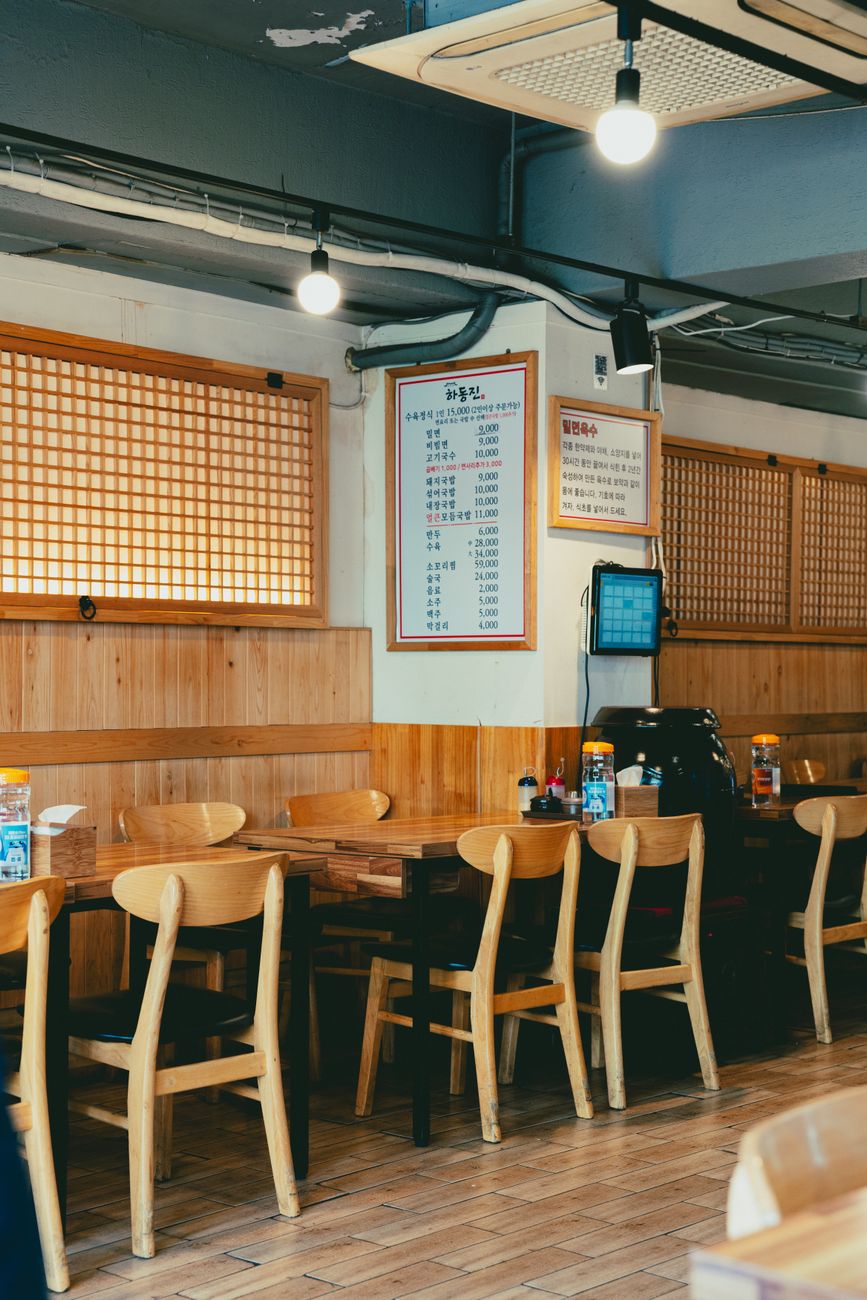
Traditional and mid-range Korean restaurants, especially ones specializing in Korean barbecue, grilled fish, or anything served on a low table, tend to use jwa-shik (좌식) floor seating, where the dining area is raised slightly and you sit on cushions with your shoes left at the edge. Walk past that edge in your sneakers and, yes, someone will notice — usually a staff member, occasionally another diner. On the other hand, a modern Western-style Korean restaurant with regular tables and chairs at floor level is functionally no different from a restaurant anywhere else; shoes stay on the whole time, and nobody bats an eye. The tell is almost always the seating height. If the floor you’d be sitting on is elevated even slightly above where you’re standing, that’s your cue.
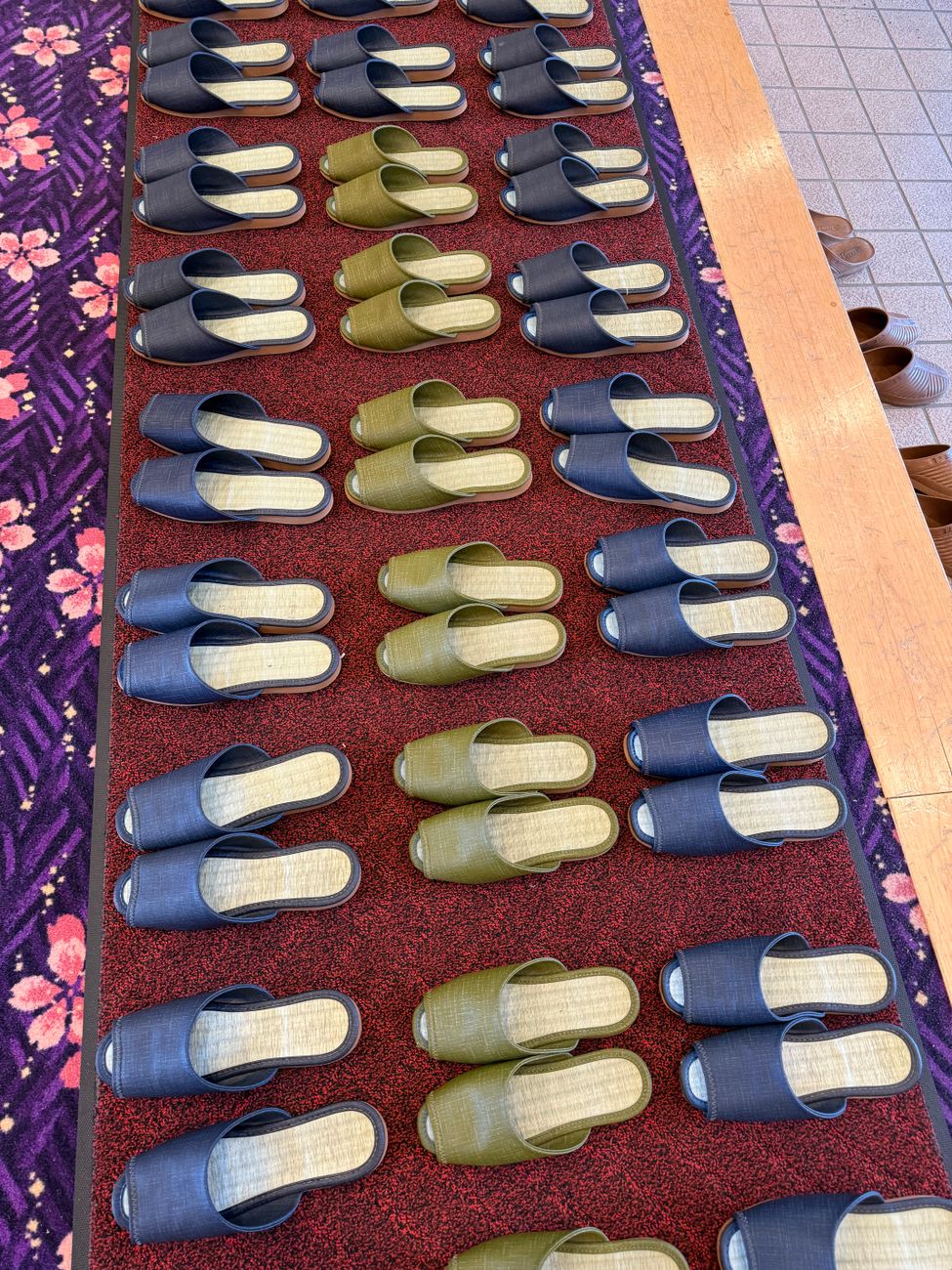
Offices and schools complicate things further, and this is the part guidebooks tend to skip entirely. Many Korean elementary and middle schools require students, and often visiting parents, to swap into indoor shoes at the entrance, a practice that overlaps with — but isn’t identical to — Japan’s well-known uwabaki system. Clinics, some hagwons (private academies), and traditional guesthouses called hanok stays frequently expect the same thing. If you see a wall of small lockers or open cubbies near an entrance stacked with slippers in various sizes, that’s your answer before anyone has to say a word.
So what happens the inevitable time you get it wrong?
Less than you’d fear, honestly, but more than nothing. Korean social correction tends to be quiet rather than confrontational, and nobody is likely to shout across a restaurant at you. What actually happens, in most cases, is a staff member walks over fairly quickly, points at your feet, and either mimes taking shoes off or says a short phrase like “sin-bal juseyo” (신발 주세요) — roughly, “your shoes, please.” If it’s a home rather than a restaurant, the correction is usually even gentler, though not necessarily quieter: a host might just glance at your feet and let the silence do the talking, or — and this is the version that actually gets you — a small child somewhere in the house spots the problem and announces it at full volume, with zero social tact and total confidence, pointing directly at your sneakers while three adults suddenly develop a very strong interest in their tea. It is, without fail, more effective than any adult correction could ever be.
What surprises a lot of foreigners is how little lasting judgment attaches to the mistake itself. It’s treated as an understandable foreigner error, not a character flaw — the kind of thing that gets fixed on the spot and then genuinely forgotten by everyone except you. There’s a specific flavor of awkwardness to being the person everyone briefly looks at, and it tends to stick in memory far longer than it deserves to; you’ll still be thinking about it on the subway ride home while the person who corrected you has already moved on to refilling water glasses. The fix itself is almost always immediate: take the shoes off, maybe apologize once, and the moment passes within seconds. It’s less a punishment and more a very fast, very visible correction — over before it really had time to become a scene.
It’s not only about dirt
It’s tempting to write this whole custom off as a simple matter of sweeping and mopping, and hygiene is genuinely part of it — outdoor shoes track in dust, bacteria, and whatever you stepped in on the subway platform, and nobody wants that ground into a floor where people sit and eat. But reducing it to a cleanliness rule alone misses something. Confucian ideas about respect for shared and domestic space run underneath a lot of Korean etiquette, and the shoes-off custom is one of the clearer physical expressions of that: keeping outside mess and outside status literally outside the boundary of the home. It’s less “shoes are gross” and more “the home is a different category of space than the street,” which is a subtler and, I’d argue, more interesting distinction than the hygiene explanation alone gives it credit for.
How this compares to Japan
Because the two customs look so similar from the outside, people visiting both countries often assume they’re the exact same rule wearing two different names. They’re related, but not identical, and the difference comes down to what the floor is actually for. In Japan, the genkan boundary is deeply tied to tatami preservation and a long-standing conceptual line between soto (outside) and uchi (inside) — the floor itself, especially tatami matting, is treated as something that degrades and must be protected. In Korea, the emphasis leans more toward the floor as a heated, multi-purpose living surface descended directly from ondol culture — something you sit, eat, and once slept on, rather than something fragile you’re protecting from wear. Both end with the same result at your feet. The reasoning underneath is genuinely different, and neither version is the “more strict” or “more correct” one — they just grew out of different domestic histories.
If you want the deeper backstory on the heating system itself, I’ve gone further into how ondol actually works and how it changed Korean architecture in a separate piece. And if bare feet indoors is a theme that interests you, the same shoes-off logic shows up in an even more intense form at Korean jjimjilbang culture, where footwear comes off before you’ve even reached the front desk.
A short, practical checklist
If you want the condensed version for your next trip: look for a step down at any entrance, treat any visibly raised or elevated floor area in a restaurant as shoes-off territory, check for a shoe rack or slipper cubby near the door of any office, clinic, or school, and when genuinely unsure, just glance at what everyone else already did with their shoes before you walked in. It sounds almost too simple to work. Somehow, it works nearly every time.
FAQ
What if I’m wearing socks with holes, or no socks at all?
Nobody is going to say anything about it directly, but it’s worth planning around anyway. There’s a very specific and very universal panic that hits the moment you realize, mid-shoe-removal at a barbecue place, that today happens to be the day your left sock has a hole exactly at the big toe — and there’s no fixing it once you’re already sitting cross-legged on the floor with your feet in full view of the table. Bare feet are completely fine in a private home, though it can feel a little exposed in a business setting like a clinic or a formal dinner. The safest habit, and one plenty of long-term expats fall into eventually, is just keeping a decent pair of socks on hand whenever you’re headed somewhere you suspect will involve floor seating — a barbecue spot, a hanok stay, a friend’s apartment. It’s a small thing, but it saves you one extra layer of self-consciousness you don’t need.
Is it rude to ask a Korean host directly whether I should take my shoes off?
Not at all — if anything, it tends to land well. Asking signals that you already know the custom exists and are being careful about it, which most hosts read as thoughtful rather than clueless. The only mildly awkward version is asking in a restaurant that obviously has regular chairs and no elevated seating anywhere in sight, where the answer is self-evident and the question mostly just tells the staff you’re new to the country, which, again, is not actually a problem.
What about gyms, hospitals, or other public buildings — do the same rules apply?
Gyms are usually a hard no on the shoes-off rule — you’ll wear indoor athletic shoes, not outdoor ones, but you keep footwear on throughout. Hospitals and larger clinics vary by department; some entryways provide disposable shoe covers instead of asking you to remove shoes entirely, particularly in areas that need to stay especially clean. The general pattern holds, though: if you see a rack, cubby, or a visible line of other people’s shoes sitting at an entrance, that’s your signal, regardless of what kind of building it is.
Around the second week of September, a question starts making the rounds at my office that I’ve never quite figured out how to answer casually: “So, what are you doing for Chuseok?” Korean coworkers ask it the way Americans ask about weekend plans, expecting a quick, obvious reply. Mine used to be a shrug. I didn’t have hometown rice paddies to return to, no grandmother’s table waiting three provinces away, and for my first couple of years here that question just sat there awkwardly until someone changed the subject. Eventually I realized the shrug wasn’t good enough — Chuseok isn’t a holiday you can wing, and depending on which category you fall into, “doing nothing” is either a great plan or a genuine mistake.
This year the dates are locked in: Chuseok Day falls on Friday, September 25, 2026, with the official holiday running Thursday, September 24 through Saturday, September 26. Because that stretch doesn’t happen to bump into a Sunday, Korea’s substitute-holiday rule doesn’t automatically hand out an extra Monday off, a detail that trips up a lot of newcomers every single year. So before you book anything, here’s what this piece actually covers: not another rundown of what Chuseok commemorates — I’ve already written that deep dive if you want the history — but the part nobody hands you on arrival, which is what a foreigner in Korea is actually supposed to do with these three days, depending on which version of Chuseok you’ve landed in.
Quick Refresher, For Context
Chuseok is a lunar harvest festival, built around ancestral memorial rites called charye, a mass migration back to family hometowns, and food — specifically songpyeon, the half-moon rice cakes steamed over pine needles that fill every grocery store aisle by mid-September. Calling it “Korean Thanksgiving” isn’t wrong, exactly, the same way calling a typhoon “a windy day” isn’t technically wrong. It’s just wildly understated. Thanksgiving is one dinner with extended relatives. Chuseok is closer to a three-day operation with a religious core, a logistics nightmare wrapped around it, and an entire retail season built on top — gift-set aisles start appearing in marts by early September, weeks before anyone touches a single rice cake. If you want the full deep dive into charye and where the holiday comes from, I covered that separately. Here, I want to skip straight to the decision tree: what do you actually do with yourself this week?
There are basically three positions a foreigner in Korea can find themselves in going into Chuseok, and each one calls for a completely different game plan. You might have an invitation — from a partner’s family, in-laws, or close Korean friends who’ve decided you’re basically adopted at this point. You might have nothing, no plans, an empty apartment and a city that’s about to go strangely quiet. Or you might be trying to travel somewhere, in which case you’re about to learn just how seriously this country takes a family reunion.
Scenario One: You’ve Been Invited
If a Korean family has invited you into their Chuseok — and this happens more than you’d expect once you’ve dated someone Korean, worked alongside Korean colleagues for a couple of years, or simply been adopted by a landlady who’s decided you look too thin — congratulations, you’ve been handed the real version of the holiday, not the tourist-facing one. Take it seriously. This is not the moment for a bottle of wine grabbed from the CU on your way there.
The gift matters more than you’d think, and it needs to land in a fairly specific range: not cheap enough to look like an afterthought, not so extravagant that it embarrasses the host. Skip the convenience store entirely — walking in with a CU snack box reads as genuinely unprepared. Head to a Lotte Mart, Homeplus, or Emart instead, where entire sections are staged with nothing but Chuseok sets weeks ahead of time. Fruit gift sets — boxed Asian pears or apples — are the safest default, usually somewhere around 30,000 to 50,000 won. Spam gift sets sound like a punchline if you’re not from here, but they’re a genuinely respected present, the kind of thing that shows up wrapped like jewelry in a presentation box you’d expect to hold something far fancier. Step up to a hanwoo beef set or a ginseng box and you’re easily looking at six figures in won, so know your family’s usual bracket before you splurge — showing up with the most expensive box in the store can read as showing off rather than generous. Cash in a clean envelope is acceptable in some families and slightly off in others, so if you’re unsure, ask whoever invited you rather than guessing.
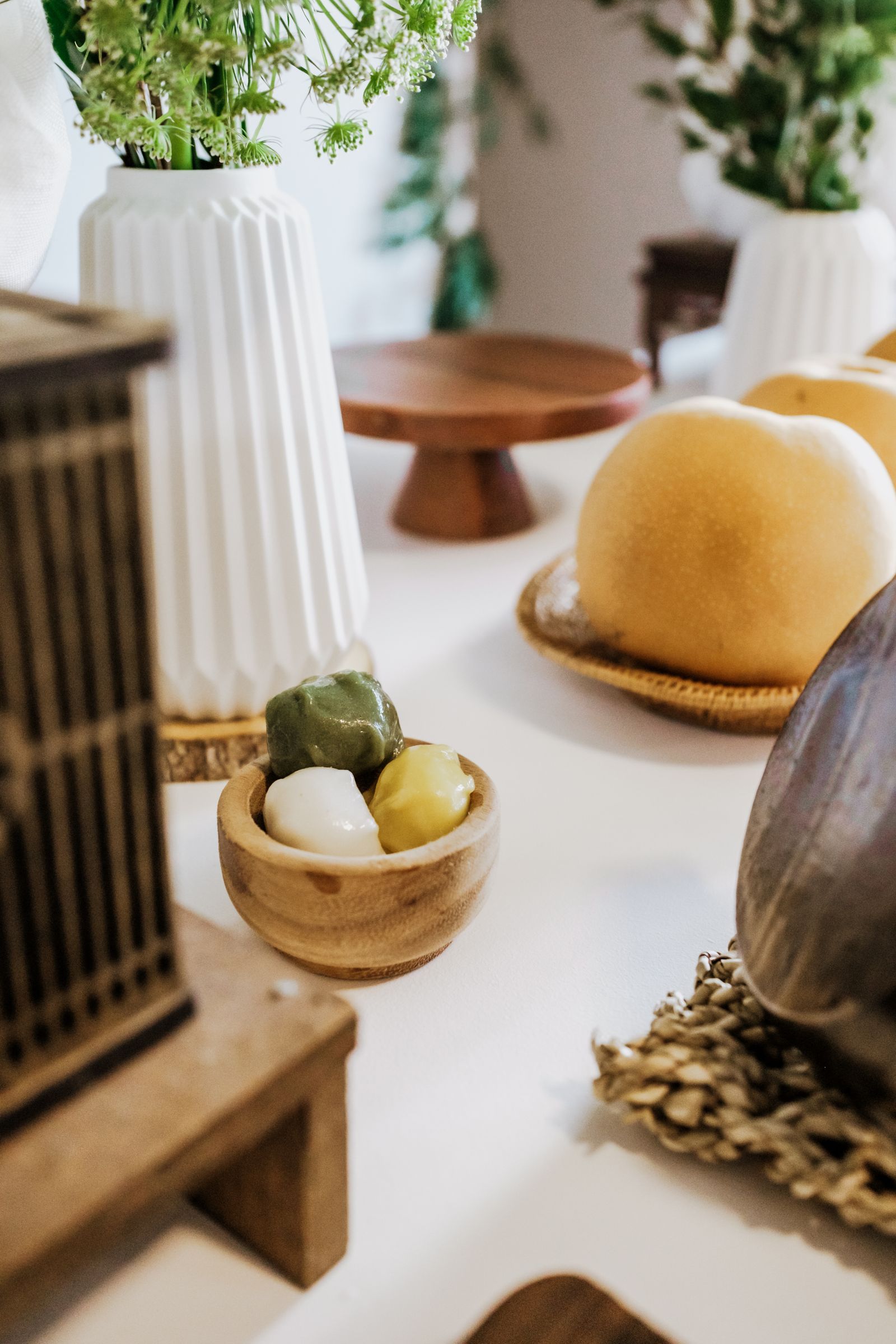
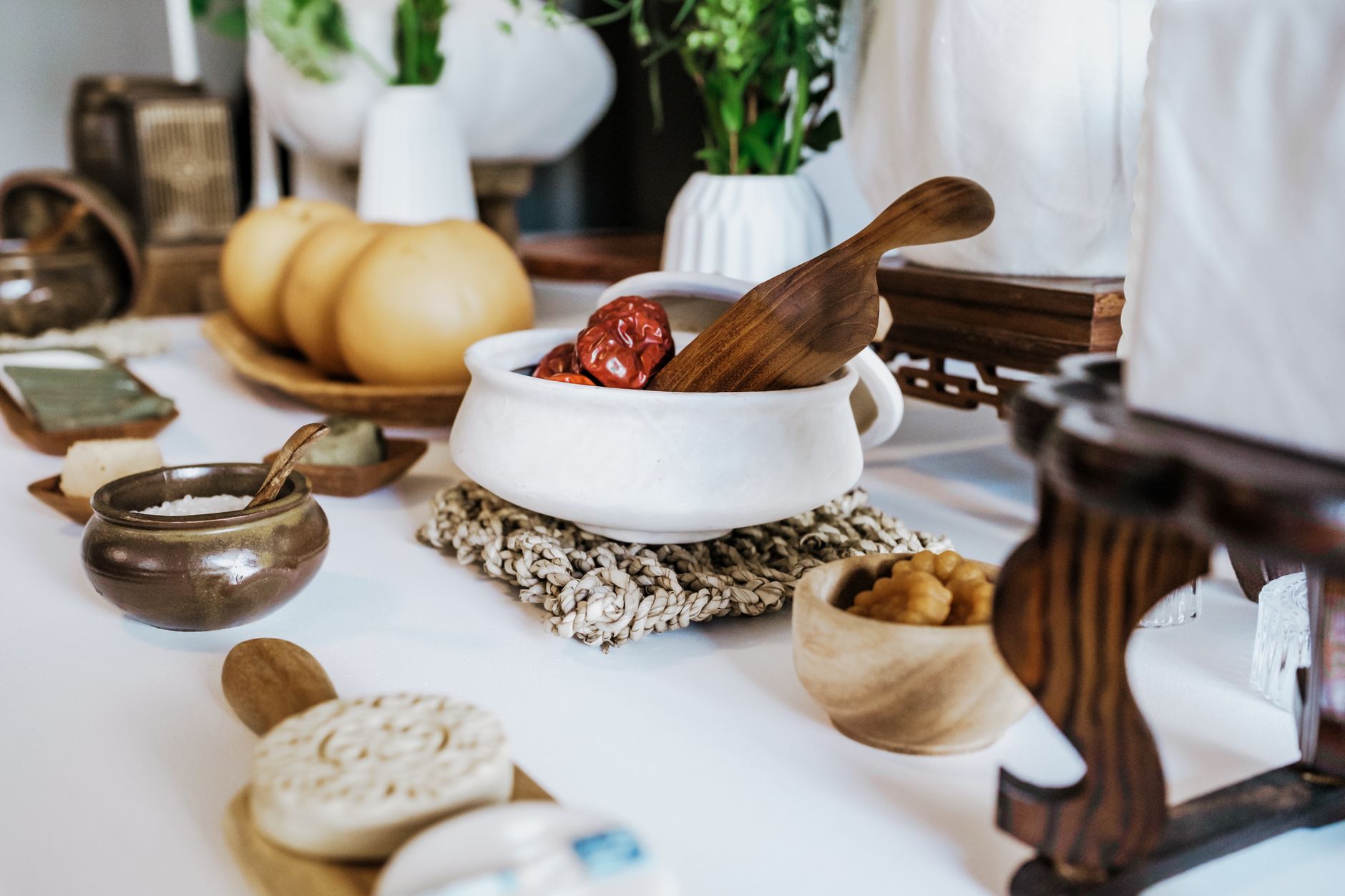
Then there’s the charye ceremony itself, and this is where a lot of foreigners freeze up, unsure whether they’re supposed to participate or just watch from the doorway. Picture the scene before you even get to the etiquette question: a low table crowded with dishes arranged in a specific order that took someone hours to get right, dried fish and fruit stacked in careful little towers, a bowl of rice with chopsticks set upright in it, the room quiet in a way Korean family gatherings almost never are otherwise. It’s genuinely disorienting the first time, standing in a doorway in socks not knowing where your hands are supposed to go. Here’s the honest answer on what happens next: it depends entirely on the family, and you genuinely won’t know until you’re standing there. Some households will hand you incense and walk you through the bow, treating your presence as a small honor to the ancestors being remembered. Others keep charye as an immediate-family-only ritual and will quietly steer you toward the kitchen, or just have you wait in another room until it’s done — and that’s not a snub, it’s just how that particular family runs things. Follow whoever’s next to you, keep your voice down, and don’t take a photo unless someone specifically tells you it’s fine. If bowing is involved, it’s the full standing bow — hands folded, bend from the waist, not a casual head nod — and nobody expects you to get the choreography perfect on your first try. They just don’t expect you to treat it like a joke.
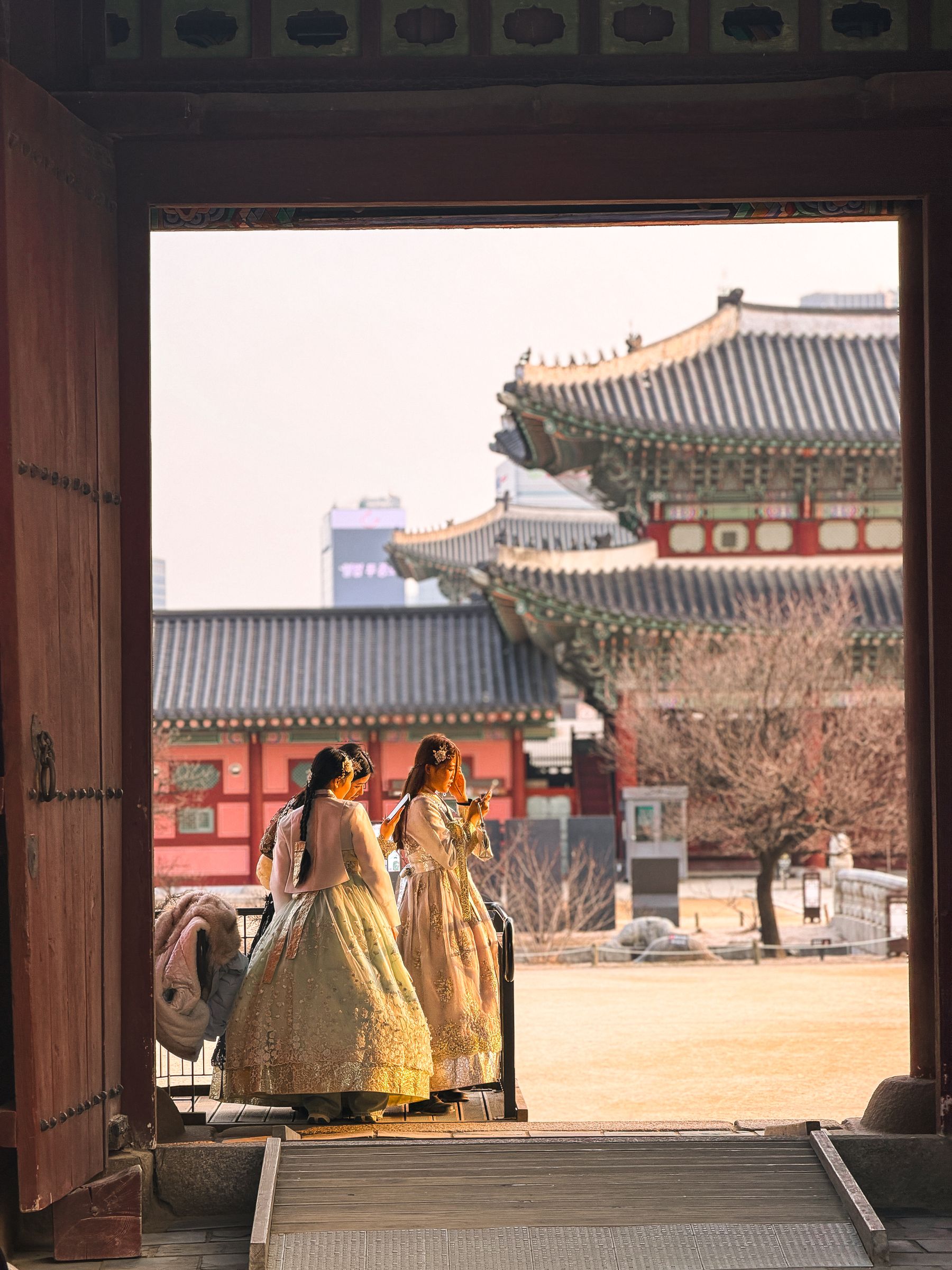
Clothing-wise, you don’t need a hanbok unless someone specifically tells you to wear one, which does happen in a handful of families that still dress up for the day. Smart-casual is the safe zone — think what you’d wear to a slightly formal dinner with your own extended family, nothing more costume-like than that. And budget real time for it. A Chuseok visit isn’t a two-hour drop-in; it typically stretches across a full afternoon of food, chores, and conversation, and leaving early without a good reason reads as strange in a way it might not back home.
You’ll probably be asked to help make songpyeon at some point, usually the evening before, with everyone gathered around a table shaping little half-moons of rice dough around sesame or sweet bean filling. There’s a saying that whoever makes a beautifully shaped songpyeon will have a beautiful daughter, which sounds like exactly the kind of thing an aunt says to tease a nervous foreign son-in-law, and — surprisingly — it usually is. Your first ones will look lopsided. Everyone’s first ones look lopsided. Nobody is grading you on it, though your father-in-law might grade you on it anyway, just for fun.
Scenario Two: You’re On Your Own in Seoul
If you don’t have an invitation, don’t treat that as a problem to solve — Chuseok in an emptied-out Seoul is genuinely one of the better weekends the city offers, and a lot of longtime expats will tell you the same thing once they’ve been through one. Roughly a fifth of the country’s population lives in the greater Seoul area on a normal day, and a huge share of them leave for their hometowns during Chuseok. The result is a capital city that suddenly runs at maybe sixty percent capacity: subway cars you can actually sit in during rush hour, restaurant lines that don’t exist, and a version of Gangnam or Hongdae that feels almost sleepy by comparison.
This is, somewhat counterintuitively, the best week of the year to see the palaces. Gyeongbokgung, Changdeokgung, Changgyeonggung, and Deoksugung all switch to free admission for the full three-day holiday, no hanbok rental required to skip the entry fee the way you normally would. Jongmyo Shrine drops its usual guided-tour-only rule and lets you wander freely, which it does maybe a handful of times a year. At Gyeongbokgung specifically, the royal guard-changing ceremony still runs at 10 a.m. and 2 p.m., with a guard patrol at 3 p.m., and none of it requires a reservation. If you’ve been putting off the “go see a palace” item on your Korea bucket list because the crowds looked exhausting in photos, this is the window.
You’d assume the whole city just shuts its doors, and parts of it genuinely do — most banks close completely from the 24th through the 27th, department stores follow suit, and small restaurants in traditional markets go dark for the full stretch, their metal shutters down with handwritten Chuseok notices taped to the front. Government offices turn into actual ghost towns; if you’re sitting on an alien registration card renewal or anything requiring a stamped form from an actual office, that errand needs to happen before the 24th or after the 27th, full stop, because nobody is answering that phone. Convenience stores, at least, are a reliable constant — CU, GS25, 7-Eleven, and Emart24 keep running 24 hours the way they always do — but don’t lean on that fact too hard. Large marts are hit or miss branch by branch, and a lot of neighborhood restaurants simply close, so the smart move is stocking your fridge on the 23rd rather than discovering on Chuseok Day itself that your only dinner option within walking distance is a triangle kimbap.
Scenario Three: You’re Trying to Travel
If your plan involves leaving Seoul during Chuseok, book everything now, not next week, because the panic starts online before it ever reaches the road. I once watched a friend try to grab a same-day KTX ticket from Seoul to Busan on a whim during Chuseok — sold out, every train, every class, for four straight days. That’s not an exaggeration for effect; it’s just what happens when a significant chunk of the country’s population tries to move across it at the same time. Train tickets for Chuseok routinely open for reservation weeks in advance and sell out within hours of going live, the app essentially seizing up under the load, so if Busan, Jeonju, or anywhere outside the capital is on your itinerary, that booking needs to happen the moment tickets are released, not the week before you travel.
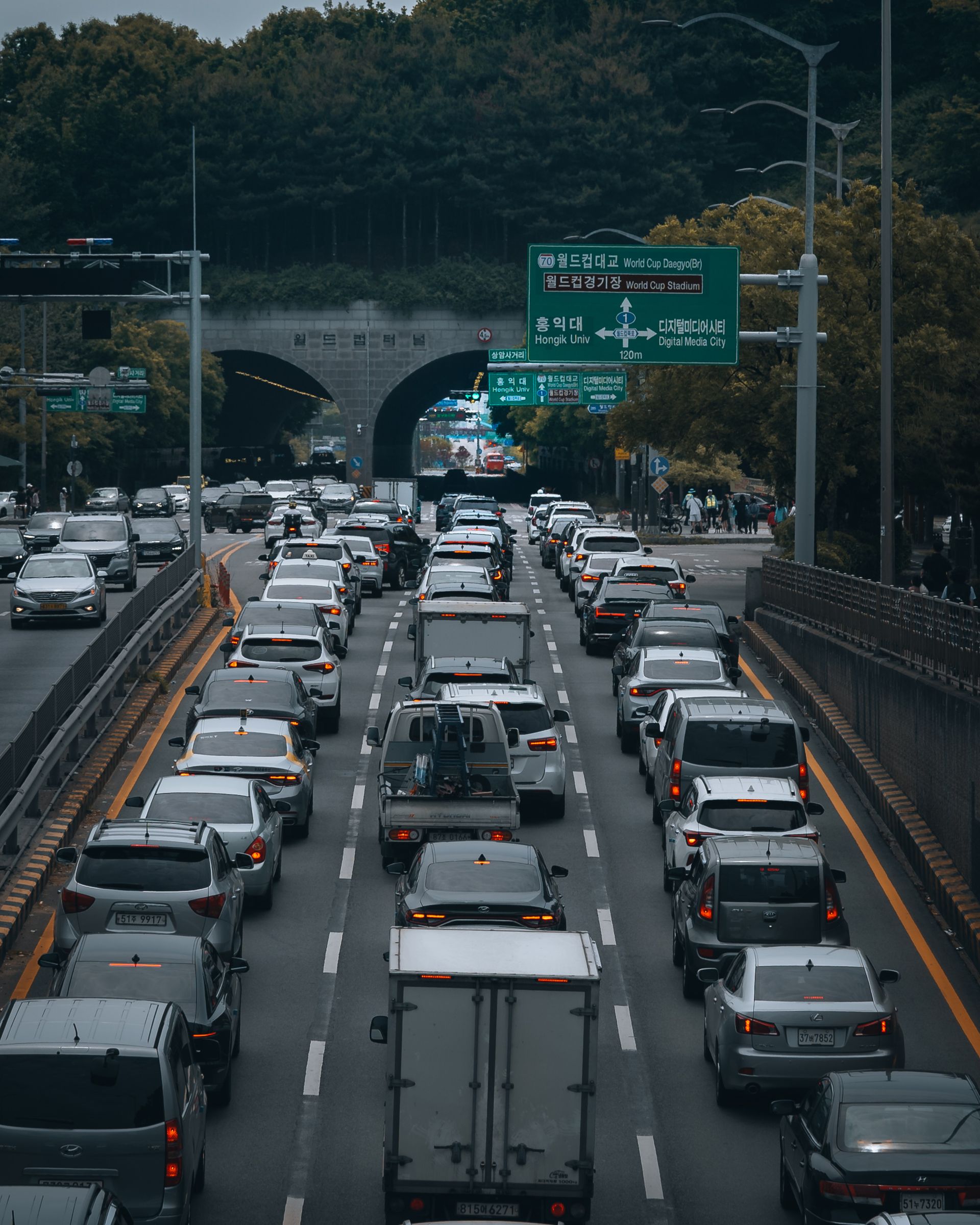
Miss that window, or decide to drive instead, and you graduate from digital panic to physical panic. The highways are, frankly, a spectacle. What’s normally a three-and-a-half-hour drive from Seoul to Busan can stretch to eight or nine hours during peak Chuseok travel windows, and Korean news broadcasts will actually show live traffic maps with color-coded expressways glowing solid red for hundreds of kilometers. It becomes a kind of national talking point every year — reporters standing on overpasses, drone shots of unmoving traffic stretching to the horizon. If you’re renting a car thinking you’ll beat the crowds by leaving early or late, you probably won’t; departure times get staggered across the entire holiday specifically because everyone else had the same idea. Intercity buses fill up just as fast as trains, so the honest advice is: pick your travel dates around the edges of the holiday rather than its center, or accept that you’re going to spend a chunk of your Chuseok sitting in a car, watching brake lights stretch toward the horizon.
How This Actually Differs From Western Thanksgiving
It’s tempting to file Chuseok under “basically Thanksgiving” and move on, and for a casual explanation to a friend back home, that’s fine shorthand. But live through one and the differences start to matter. Thanksgiving in the U.S. is fundamentally a single meal — a Thursday dinner, maybe a long weekend around it, built loosely around gratitude with no strict ritual attached. Chuseok is built around charye, an actual ancestral rite with specific steps, specific food placement on the table, and a religious-adjacent weight to it that a turkey dinner just doesn’t carry. Thanksgiving doesn’t shut down a country’s banking system for four days. It doesn’t turn the nation’s expressways into a televised traffic event. And it definitely doesn’t come with a retail season attached to it the way Chuseok does — the gift-set aisles, the Spam boxes, the fruit sets stacked into pyramids at Emart, all of it building for weeks beforehand in a way that has more in common with the run-up to Christmas than to a Thursday dinner in late November.
The other real difference is scale of movement. Thanksgiving travel is busy, sure, airports get crowded, but it doesn’t functionally halt a country. Chuseok does. When a fifth of your national population tries to return to the same handful of provincial hometowns inside a 72-hour window, you get exactly the kind of gridlock Korean news loves to broadcast every single year. It’s less “a big family dinner” and more “an entire nation performing the same ritual migration at once,” and once you’ve watched it happen from inside an empty Seoul apartment or a stalled highway, the Thanksgiving comparison starts to feel like it’s doing a lot of the real thing a disservice.
Frequently Asked Questions
I just moved to Korea and my Korean girlfriend’s family invited me to Chuseok next week. I don’t speak much Korean — is that going to be a problem?
Less than you’d think. Family gatherings like this run mostly on food, gesture, and whoever’s willing to translate the awkward gaps, usually a bilingual cousin or your girlfriend herself. Learn a handful of phrases beforehand — a polite greeting, “thank you for having me,” “it’s delicious” — and lean on effort over fluency. Families tend to notice and appreciate the attempt far more than they’d ever expect actual conversational Korean from someone who just arrived.
I’m an English teacher with no Korean family connections and three days off with nothing planned. Is it worth staying in Seoul or should I try to travel?
Unless you already booked transportation before this week, stay. Trying to book a train or grab a rental car this close to the holiday puts you in competition with the entire country, and you’ll likely lose. Staying in Seoul during Chuseok is a legitimately good trade: free palace entry, thin crowds, and a city that finally feels walkable. Save the travel plans for a normal weekend.
My company gave us Thursday through Saturday off for Chuseok 2026 — does that mean Monday is also a holiday?
Not automatically. Korea’s substitute-holiday rule only kicks in when the holiday overlaps a Sunday, and this year’s Chuseok stretch (September 24–26) doesn’t. So Monday, September 28 stays a normal working day unless your specific employer grants it separately or the government makes a one-off announcement, which does happen some years but shouldn’t be assumed. Check with HR directly before you book anything assuming a four-day weekend.
A Korean coworker once asked me, with real confusion in her voice, why the guidebook photo of Myeongdong on my desk looked nothing like the Myeongdong she remembered from college — hers had fewer suitcases and more actual Seoulites buying school supplies. Guidebook photos flatten a place into whatever sells; the actual neighborhood keeps living underneath it, mostly unbothered. I’m not going to tell you Myeongdong is bad. It’s fine. It’s cosmetics shops and street food carts and a cathedral, and if it’s your first day in Seoul, go, get your bearings, eat the tornado potato. But if you’ve already done that, or if you’re here long enough that you want to see where the city actually exhales, there’s a second Seoul sitting just outside the main tourist grid, and almost none of it requires you to walk more than fifteen minutes from a subway exit.
I want to be upfront about something before I get into specific neighborhoods: none of these places are secret in the sense that Koreans don’t know about them. That would be a strange claim to make about a city of nearly ten million people. What they mostly lack is a critical mass of foreign tourists, and that changes the atmosphere more than you’d expect — menus stay in Korean only, prices stay at local rates, and nobody’s rearranging a table for a photo before the food gets cold. That’s the bar I’m using for “hidden” here, and by that measure, these five hold up.
Buam-dong: the hill Gyeongbokgung guards but never advertises
Buam-dong sits just north of Gyeongbokgung Palace, on the other side of the Jahamun Tunnel, tucked against the base of Bukaksan mountain. There’s no subway station inside the neighborhood itself, which is probably the single biggest reason it stays quiet — you take Line 3 to Gyeongbokgung Station, go out exit 3, and catch green bus 1020 or 7022 up the hill. That extra step filters out a surprising number of people who’d otherwise show up. I find that a little funny, honestly, because the bus ride itself is only about ten minutes.
Once you’re up there, the neighborhood reveals itself slowly: small galleries the size of a one-car garage, a British-run bakery with flour dusted permanently into the window frames and a case of scones that sell out before two in the afternoon, ceramics studios where the person behind the counter is often also the person who made everything on the shelf. Sanmotoonge, the mountainside cafe with two outdoor decks looking toward Inwangsan and a stretch of the old fortress wall, became famous years ago as a filming location for a Korean drama, and it does get busy on weekends now — so don’t expect total solitude there. But it’s still worth the climb, if only for the view, and the surrounding blocks are where things get genuinely quiet again. The Whanki Museum, dedicated to the abstract painter Kim Whanki, sits nearby and rarely has a line. A lot of the smaller shops close on Mondays, so a Tuesday or Wednesday morning visit — arriving around eleven, before lunch crowds show up — tends to give you the neighborhood at its calmest.
Seongbuk-dong: where the wall is actually old and the crowds actually aren’t
Come back down off Buam-dong’s hill, loop around the other side of Bukaksan, and you land in a neighborhood with a similar altitude and a completely different texture. If Bukchon Hanok Village is what most visitors picture when they hear “traditional Seoul neighborhood,” Seongbuk-dong is what that picture looked like before it became a picture. It sits in the foothills below Bugaksan, reachable by Line 4 to Hansung University Station, exit 5 or 6, and then a walk or short local bus ride up into the hills. The neighborhood has long housed diplomats, artists, and old-money Seoul families, and that history shows up in the architecture — hanok sitting next to modernist houses next to actual embassy compounds, all sharing the same narrow, sloped streets.
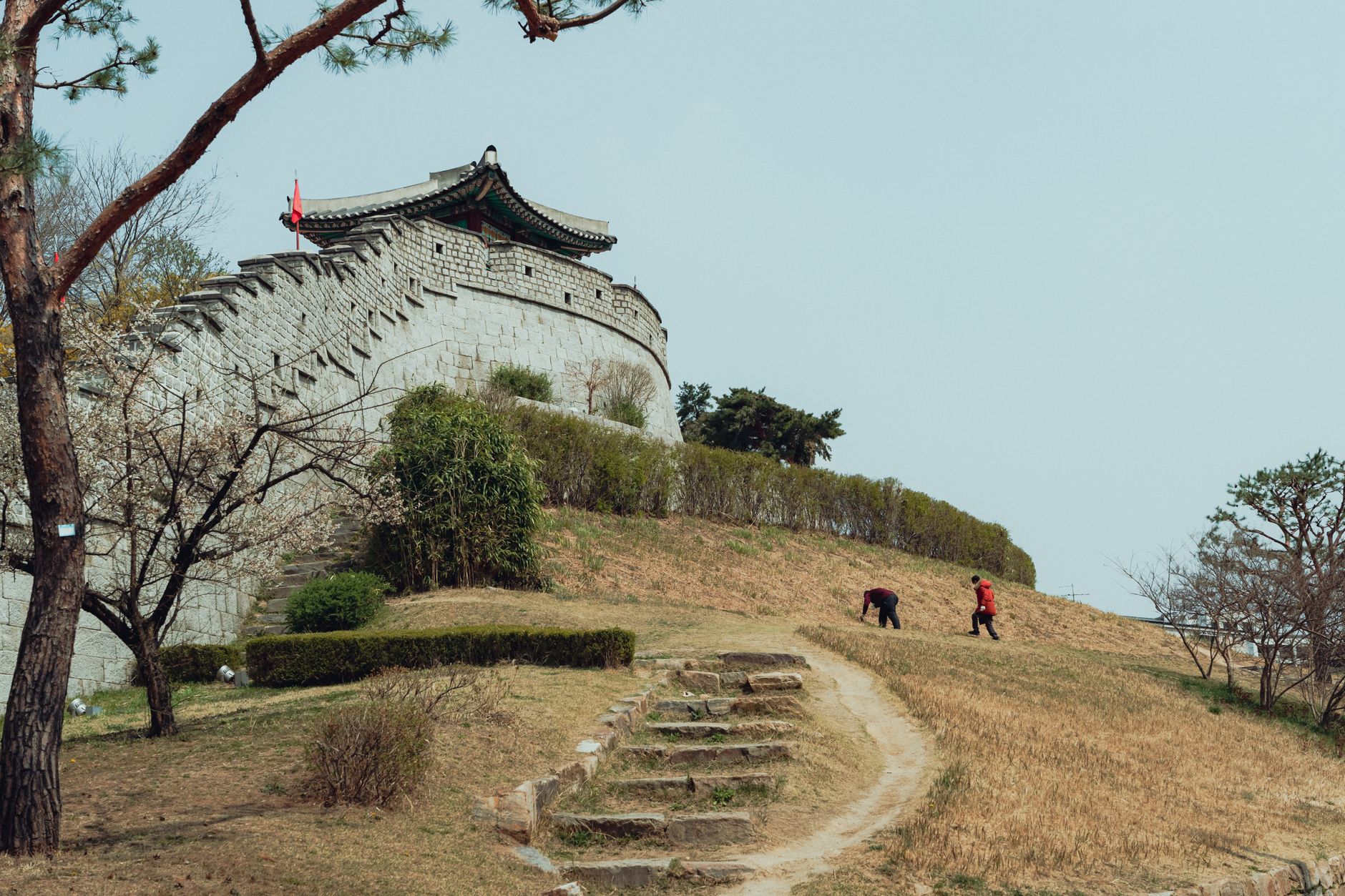
What makes Seongbuk-dong worth the trip, to me, is that the Seoul Fortress Wall running along its edge isn’t a reconstruction built for photos — it’s the genuine 600-year-old Hanyangdoseong wall, and you can walk a real stretch of it here without a ticket or a timed entry slot. The Gansong Art Museum, one of the country’s most important private collections of Korean art, is tucked into the neighborhood’s heart, along with Hyegok House, the former home of the art historian Choi Sunu, preserved almost exactly as he left it. Admittedly, this isn’t a neighborhood built for a quick one-hour stop. It rewards slow walking uphill past crooked utility poles tangled in decades of wiring, past a stray cat asleep on a sun-warmed tile roof, past a gate that someone’s grandmother is quietly sweeping in front of — and I’ve found that unhurried pace is exactly what makes the place stick in memory afterward, longer than a lot of the “must-see” stops do.
Haebangchon: Itaewon’s steeper, scrappier cousin
Haebangchon — HBC to basically everyone who lives there — clings to the slope of Namsan in Yongsan-gu, wedged between Itaewon and Noksapyeong Station on Line 6. The name translates to “Liberation Village,” and the history behind it is heavier than the current vibe suggests: it started as a settlement for refugees after the Korean War, both from the north and from other parts of the peninsula, and that layered, patched-together origin never fully went away. You can still feel it in the built environment — old market stalls sitting next to a Mexican taqueria, the smell of slow-roasted carnitas drifting straight over a folding table where an ajumma is selling dried anchovies and sesame leaves, a decades-old Korean grocer two doors down from a vintage clothing shop with hand-lettered English signage. Nobody seems bothered by the mismatch. If anything, it’s the mismatch that makes the walk interesting.
Getting there from Noksapyeong exit 2 means a genuine uphill walk of fifteen to twenty minutes along Sinheung-ro, and I won’t pretend that’s a small ask on a humid August afternoon — take a cab or a short bus hop if you’re not in the mood to sweat through your shirt before lunch. What you’re rewarded with, though, is a neighborhood that somehow avoids feeling like an extension of Itaewon’s nightlife strip even though it’s a ten-minute walk away. It’s quieter, more residential, full of small rooftop cafes that turn into some of the best sunset viewpoints in the city once N Seoul Tower starts lighting up over the ridge. HBC also still functions as one of the more genuinely international pockets of the city, in a way that predates the current wave of “global Seoul” branding — it was multicultural back when that wasn’t a marketing angle, and longtime residents will tell you that without much prompting.
Yeonhui-dong: the neighborhood so quiet even Seoul half-forgets it exists
You notice how quiet Yeonhui-dong is before you notice anything else about it — no delivery scooters idling at a red light, no line outside a dessert cafe, just the occasional creak of a gate and someone’s dog barking twice and then giving up. There’s no subway station inside the neighborhood itself, which tells you most of what you need to know about how it functions — you get there via Hongik University Station or Hongje Station on Line 3 and then walk or bus in the rest of the way, and most people simply don’t bother, because there’s no single landmark pulling them there. That’s arguably the whole appeal. It’s a residential neighborhood of villas and two-story houses rather than the high-rise apartment blocks that dominate most of the city, known locally for architect-designed homes tucked behind hedges and low walls, the kind of quiet wealth that doesn’t announce itself.
It’s also, somewhat unexpectedly for a neighborhood this residential, one of the country’s genuine literary strongholds. Seoul Art Space Yeonhui, the capital’s first writer-in-residence program, is based here, hosting novelists and poets in a converted compound that used to belong to a city history commission. I didn’t expect a program like that to sit in the middle of ordinary houses and quiet cafes rather than some cultural district downtown, but that’s exactly where it is, and the neighborhood’s whole personality — unhurried, a little literary, resistant to being a destination — makes more sense once you know it’s there. For green space, Yeonhui Forest Rest Area sits at the foot of Ansan mountain, nearest to Hongje Station. Go on a weekday morning and it’s quiet enough to hear wind moving through the pines instead of a thousand camera shutters, which is more than you can say for most of Seoul’s better-known cherry blossom spots in April.
Sindang-dong: where tteokbokki actually comes from
Sindang-dong is the one entry on this list that’s arguably famous in its own right, at least among people who take Korean food seriously — but it’s famous for the right reasons, not the Instagram-bait ones. It sits at Sindang Station, where Line 2 and Line 6 cross, and exit 8 leads you into what’s officially called Sindang-dong Tteokbokki Town, a dedicated alley of restaurants specializing in the spicy rice-cake dish. The story goes back to 1953, when a woman named Ma Bok-rim started frying rice cakes in chili sauce near here, and by the late 1970s and into the 80s the alley had grown into its own scene, complete with in-house DJs at some restaurants spinning trot and pop ballads while customers scribbled song requests on scraps of paper and passed them up to the booth between bites. Older Seoulites still bring it up unprompted, usually with a slightly embarrassed grin, the way you’d talk about a haircut you loved at seventeen — it wasn’t fine dining, it was a whole social ritual built around a bowl of spicy rice cakes, and for a certain generation that DJ booth was basically their version of a first date.
What surprised me the first time I actually explored past the main tteokbokki strip is that Sindang-dong has quietly grown a second identity. Take a left just outside exit 12 and you land on a stretch of cafes and bars built into old warehouses and former rice shops — the kind of adaptive reuse that Seongsu-dong gets all the credit for, happening here with almost none of the attention. It’s the sort of contrast that sums up a lot of these neighborhoods: a decades-old food alley that still runs on muscle memory and regulars, two exits away from a newly built cafe scene that most tourists have never heard of. Go for the tteokbokki, honestly, since it’s the reason the neighborhood exists at all — but don’t leave without wandering past exit 12 first.
A few honest notes on actually getting to these places
None of this is hard, exactly, but it does take a little more effort than hopping off at Myeongdong Station and following the crowd out the exit — and that small bit of friction is, ironically, most of why these places still feel like they belong to the people who live there. A couple of things I’ve learned the hard way, since none of this is obvious the first time you try it. First, Naver Map or Kakao Map will serve you far better than Google Maps here — Google’s Korea data is famously incomplete for anything smaller than a major landmark, and neither Buam-dong nor Yeonhui-dong will route cleanly without a Korean map app. Second, weekday visits genuinely change the experience; several of these neighborhoods flip from mostly-local to mostly-visitor depending on whether it’s a Tuesday or a Saturday, and the difference is bigger than you’d guess. Third, a lot of the smaller cafes and galleries in hillside neighborhoods like Buam-dong and Seongbuk-dong close on Mondays, so plan around that rather than around it.
Quick questions before you go
I only have one afternoon free — which of these should I actually pick? If you want walkable history without a bus transfer, go with Seongbuk-dong; Hansung University Station drops you close enough that you can be on the fortress wall within twenty minutes. If you’d rather eat your way through the afternoon, Sindang-dong is the more efficient choice, since the food alley and the newer cafe street sit almost back to back near the same station.
Do I need to speak Korean to get around these neighborhoods? Not really, though it helps more here than it does in Myeongdong. None of these five have much English signage, and smaller restaurants often don’t have posted English menus, so having a translation app ready — or just pointing at what the table next to you is eating — goes a long way. The subway and bus systems themselves are fully bilingual, so the transit part is easy regardless.
Is it worth visiting Buam-dong or Seongbuk-dong if it’s raining? Honestly, it can still be worth it — the hanok rooflines and stone walls in Seongbuk-dong look genuinely striking in overcast light, and Buam-dong’s cafes are cozier with rain against the window than under a hot summer sun. Just wear proper shoes, since both neighborhoods involve real uphill walking and Seoul’s older stone streets get slick fast.
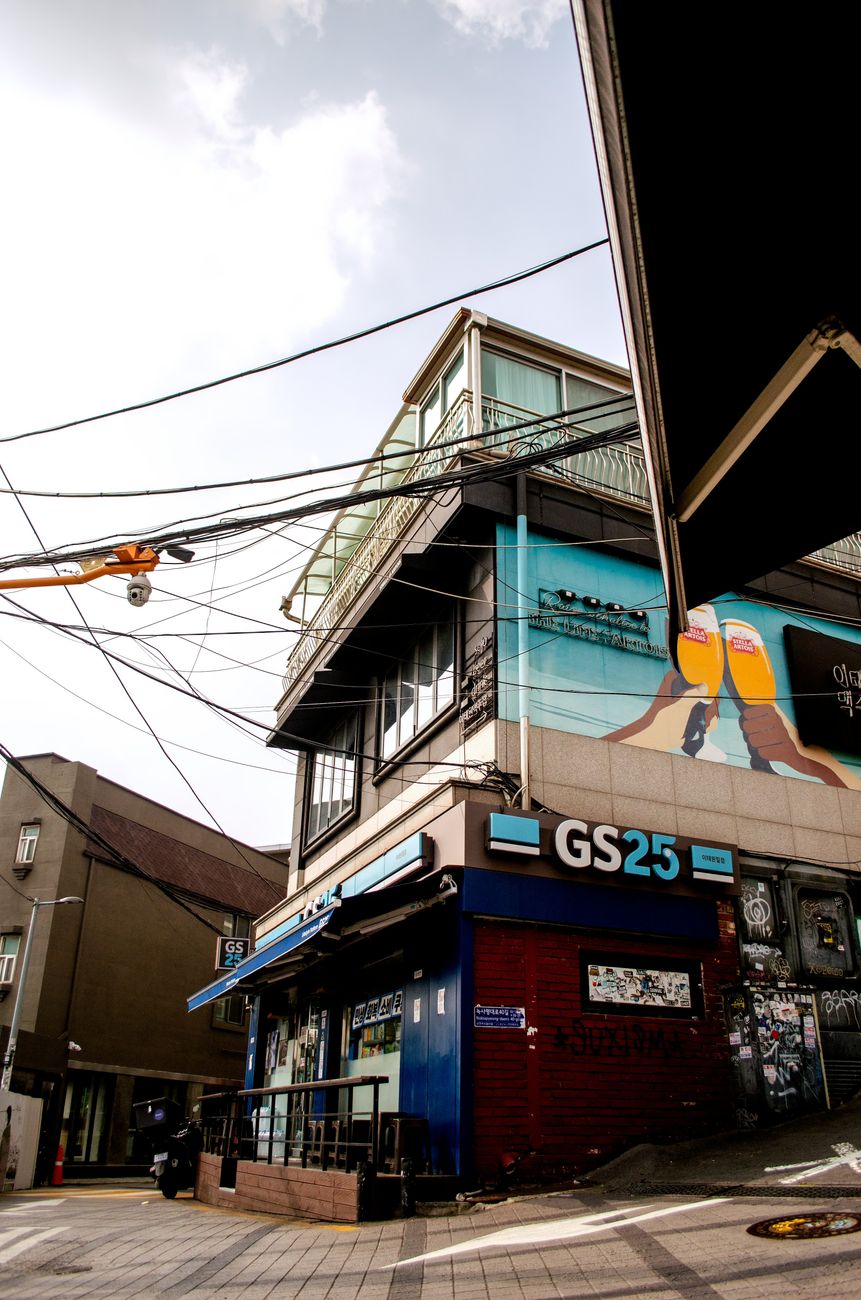
A friend of mine, a fellow foreigner who has lived in Korea about as long as I have, once told me flatly that he doesn’t trust anyone who buys their triangle kimbap at 7-Eleven. Not because it’s bad — he admitted it’s fine — but because, in his words, “if you had options and still picked 7-Eleven, what does that say about your decision-making generally?” I laughed, mostly because I understood exactly what he meant, and partly because I realized I had never once considered that my convenience store loyalty might be a personality trait. It is, apparently. Ask around and you’ll find Koreans and expats alike who will defend GS25 over CU the way people used to defend sports teams. Underneath that ridiculous sports-team loyalty lies a structural reality: these four chains — CU, GS25, 7-Eleven, and Emart24 — are not simply selling snacks. They’re running a permanent, overlapping product war, and the battlefield is a fridge case the size of a phone booth.
So instead of another flat top-ten countdown, which I think under-serves how this actually works, I’m doing a tier list by category. Some categories have a clear champion. A couple are genuinely too close to call, and I’ll say so. The rule I’m using throughout: does the snack survive being eaten standing at the plastic counter by the window, one-handed, possibly while your ramyeon timer counts down on your phone? A lot of excellent Korean food fails that test. Convenience store food has a completely different job description, and the products that win here aren’t always the “best” food in any objective sense — they’re the best convenience store food, which is its own category with its own rules.
Triangle Kimbap: The S-Tier Baseline
Samgak gimbap — the plastic-wrapped rice triangle you unwrap by pulling a tab in a very specific order, which I still occasionally get wrong and end up with seaweed stuck to my hand — is the closest thing convenience stores have to a house speciality, and it earns S-tier because there’s genuinely no bad version of it anywhere. At around 1,200 to 1,600 won depending on the filling, it’s arguably the best value-per-won item in the entire store. My actual ranking within the category: spicy chicken mayo edges out plain tuna mayo for me, mostly because the tuna mayo has gotten a little too popular for its own good and I’ve had versions that felt stretched thin on filling. CU’s version, in my experience, tends to have a slightly better rice-to-seaweed ratio than GS25’s — GS25’s seaweed can turn slightly leathery by the time you get to the last third if the rice has cooled even a little, where CU’s stays closer to crisp longer, though I’ll admit that’s the kind of claim that’s basically impossible to verify scientifically and mostly comes down to which branch near you restocks more often. Either way, if you’re new to this and skeptical that rice wrapped in plastic can be a real meal, I get it — it looked like a snack to me too, the first time. It isn’t. Eat two of these plus a canned coffee and you’ve had dinner for under 4,000 won, and somehow it doesn’t feel like you cut a corner.
The Ramyeon Station: A Tie, and I Hate Ties
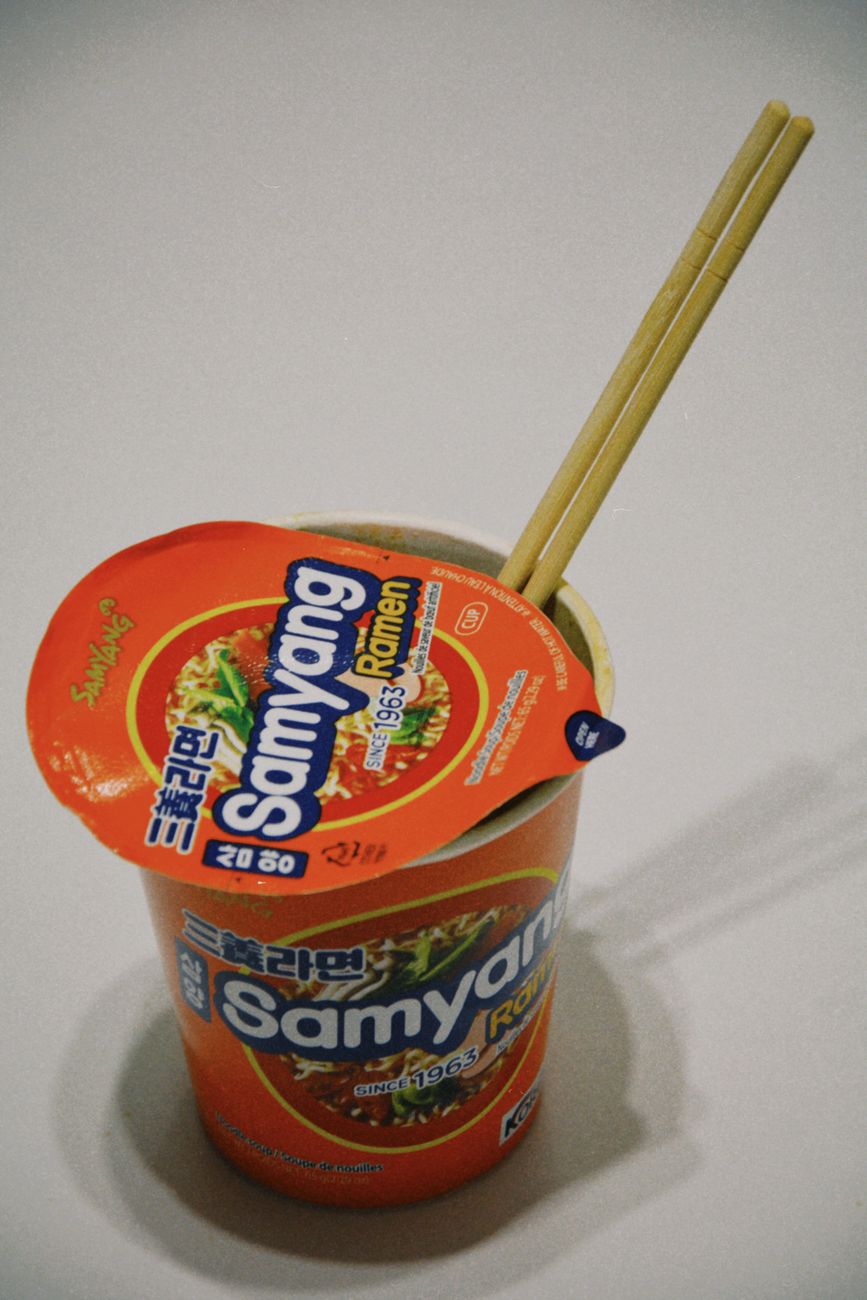
The hot water dispenser is the actual soul of the Korean convenience store, and if you’ve never used one, the ritual is simple: buy your cup ramyeon, peel back the lid partway, fill to the marked line, reseal, wait three minutes, and eat it standing at a narrow counter facing the street, watching people walk by who did not plan their evening around instant noodles. I want to put Buldak Bokkeummyeon cup versions at the top here, because culturally they basically are the modern Korean instant noodle, but I’m being honest: the cup format is drier and clumpier than the packet version stir-fried properly with a lid, and some of the theater — the shaking, the crying, the filming — just doesn’t translate to a convenience store table. So instead I’m giving joint S-tier to classic Jin Ramen (about 1,300 won) and Neoguri, the thick seafood noodle that somehow holds its chew even after sitting in a paper cup for three minutes, which shouldn’t be possible but is. If you want spice without going full Buldak, Buldak Carbonara cup is a legitimate compromise — creamy enough to blunt the heat, and I say that as someone who is not particularly heat-tolerant. I’ve written more on how Koreans actually calibrate spice levels in a separate piece, if the whole “how spicy is too spicy” question interests you, because convenience store ramyeon is honestly a decent entry point into that whole system.
Cold Noodles: The Summer Sleeper Hit
If you’re visiting anytime between May and September, though, forget the hot water station entirely for a minute and go straight to the bottom shelf of the refrigerated case — that’s where this category lives, and it’s the one most first-time visitors miss completely. Jjolmyeon and its chewier cousin jjolbyeongmyeon deserve A-tier, easily. These are cold, springy noodles in a spicy-sweet gochujang sauce, sold pre-portioned in a plastic tray with the sauce packet on the side, usually running 3,500 to 4,000 won. What hooked me the first summer wasn’t the sauce, honestly — it was the terrifyingly elastic, rubber-band resistance of the noodles themselves, more chew than any instant noodle I’d had, the kind of texture that sounds unpleasant described out loud and is somehow completely addictive in person. Both GS25 and CU run competing versions every summer, along with mul-naengmyeon, the cold broth version, and the two chains genuinely seem to treat this as a real seasonal battleground rather than an afterthought — new variants show up practically every June. Still, I’ll say the honest downside: it’s a one-season food. Order one in January and you’ll get a shrug from the cashier, if you can even find it on the shelf.
Corn Dogs: Good, But Overrated by Tourists
While first-timers swarm the hot-food case for this next one, I notice most regulars walk right past it, and I’ve come around to their side. I’m putting hot-case cheese corn dogs at B-tier, and I expect pushback on this one, because they’ve become something of a social media phenomenon — mozzarella-stuffed, coated in fried potato cubes, running 2,000 to 3,000 won depending on the size and the cheese pull. They’re genuinely fun the first time. My issue is durability: a corn dog needs to be eaten within about ninety seconds of being handed to you, or the cheese seizes up and the batter goes from crisp to soggy in a way that no amount of enthusiasm fixes. That’s a much narrower window than triangle kimbap or cup ramyeon give you, and on a system where I’m explicitly rewarding things that survive being eaten standing up at your own pace, a food that punishes hesitation loses points. Still worth trying once — just don’t take photos of it first.
Banana Milk: Technically a Drink, Permanently on This List Anyway
Yes, I know Binggrae Banana Milk is a beverage, not a snack, and yes, I’m including it anyway, because at this point it functions more like a dessert course than something you’d drink with a meal. The barrel-shaped bottle hasn’t meaningfully changed since 1974, which in a market that redesigns snack packaging seemingly every fiscal quarter is its own strange little monument to consistency. It runs about 1,700 won, and the flavor is less “real banana” and more the concentrated, almost candy-like sweetness of banana-flavored taffy — closer to a Runts candy than to actual fruit, and somehow that’s exactly the point rather than a flaw. S-tier for nostalgia and brand loyalty, A-tier if I’m being strict about flavor complexity, because there genuinely isn’t much complexity to it — it’s one note, played well, forever. Don’t pair it with something spicy expecting balance; one of them will lose, and it’s usually the banana milk.
Chips and PB Collabs: Where the Real Money Is
Here’s the category that actually explains why Koreans have brand loyalty to a store that sells gum and canned coffee. When I mention a chain’s “PB” line — GS25’s Youus, CU’s Heyroo, 7-Eleven’s Only@ — that stands for private brand, the store’s own in-house label. In most countries that phrase means cheap and forgettable. In Korea it’s closer to a flagship category, launched with the same fanfare as a limited sneaker drop. The clearest example right now: GS25 partnered with Haitai, the company behind the original Honey Butter Chip phenomenon from a decade ago, to release Hwang Cheese Butter Flavor Fresh Potato Chips — 2,000 won, thin and light like the classic Fresh Potato Chip base, but leaning into a sharper cheese-forward flavor instead of straight honey-sweetness. It’s a legitimate spiritual successor rather than a cash-grab reissue, and I say that as someone who was fairly skeptical going in. On the weirder end, 7-Eleven collaborated with SK hynix — yes, the semiconductor company — on something called HBM Chips, a pun on the memory chip technology “HBM” restyled as “Honey Banana Mat” (a play on the Korean word for flavor). It sounds like a joke SKU that would only exist for a week. It did surprisingly well. It’s a chaotic system, running on half genuine culinary craft and half corporate stunt, but somehow the stunts keep delivering.
Seasonal Ice Cream: The Category Nobody Ranks Fairly
I’m giving this A-tier with an asterisk, because seasonal ice cream in Korean convenience stores isn’t really one category — it’s a rotating cast, and your ranking depends entirely on what month you’re asking in. Melona stays a reliable constant year-round, no matter which chain you’re in, and I trust it the way I’d trust a familiar brand back home. Beyond that baseline, look specifically for the honeycomb-studded soft serve bars — sold under names like Ppopa or Screw Bar depending on the manufacturer that quarter — that show up every summer with a genuine crunch of honeycomb toffee buried in soft serve, worth seeking out even though half the appeal is that you genuinely don’t know if your local branch will have restocked them. That inconsistency should be a flaw. It somehow isn’t — it just makes finding one feel a little bit like a win.
So Which Chain Actually Wins?
If you’re asking me to just pick one chain and be done with it, I won’t, and not to dodge the question. Each of the four plays a different game well. GS25 tends to move first and loudest on collabs and viral moments — the Haitai partnership is a good example. CU, in my experience, has the most consistently solid triangle kimbap and PB snack basics, the stuff you buy without thinking hard about it. 7-Eleven leans into genuinely weird, high-concept collabs that either flop entirely or become the thing everyone’s talking about for a week. Emart24 gets underrated by a lot of foreigners simply because there are fewer locations in most neighborhoods, but its private label lineup punches above its footprint. My actual answer, after several years of this: I don’t pick a chain. I pick whichever one is physically closer at the moment I need it, which is, in the end, the entire premise of a convenience store working correctly.
FAQ
A few practical questions come up often enough, usually from people planning their first trip, that they’re worth answering directly rather than burying inside the tier list above.
Is convenience store food actually a full meal, or just a snack?
It genuinely can be a full meal, and for a lot of people here — students studying late, office workers between overtime, delivery drivers on a short break — it regularly is one. Two triangle kimbap, a cup of Neoguri, and a canned coffee comes to around 4,000 to 4,500 won and covers real calories, not just a sugar spike. It won’t replace a proper Korean home-cooked meal on nutrition, and I wouldn’t build a whole week around it, but as an occasional dinner it holds up better than most countries’ equivalent gas-station food. It also fits neatly into the broader culture of eating solo here, which I’ve written about separately in a piece on honbap culture, if standing alone at a convenience store counter at 11 p.m. sounds like something you’d want context on before trying it yourself.
Do I need to speak Korean to use the hot water station?
No. It’s entirely self-serve: buy your cup ramyeon at the register, peel the lid back to the printed line, walk it to the water dispenser near the seating area, fill it, press the lid back down, and set a timer for about three minutes. Staff generally won’t intervene unless you look genuinely stuck, and most locations have the instructions printed right on the lid in both Korean and English.
Which chain should I go to if I only have time for one convenience store during my trip?
If you’re only stopping once, GS25 or CU are the safest bets simply because they have the widest footprint, so you’re more likely to catch that week’s specific seasonal or collab item rather than a picked-over shelf. If you happen to be near an Emart24 and you’re curious about PB snacks specifically, it’s worth the detour — just don’t go in expecting to find one on every block the way you can with the two bigger chains.
지난 18일, 한국농수산식품유통공사(aT)가 전국 22개 지역의 전통시장과 대형유통업체를 돌며 조사한 결과가 하나 나왔다. 올해 추석 차례상을 차리는 데 드는 평균 비용, 19만 6,630원. 작년보다 1.5% 내렸다. 사과 5알, 배 5알, 밤과 대추 한 봉지씩, 조기 세 마리, 소고기 산적용 우둔살 300g 정도를 사면 딱 이 금액대가 나온다고 보면 된다. 숫자만 보면 별것 아닌 것 같은데, 진짜 흥미로운 건 따로 있다. 이 돈을 쓸 집이 10곳 중 3곳도 안 된다는 거다. 올해 차례를 지내겠다고 답한 가구는 27.3%. 작년(40.4%)보다 13.1%포인트 줄었고, 2016년(74.4%)과 비교하면 10년 새 3분의 1 수준으로 쪼그라들었다.
그런데 이 통계를 보고 “아, 이제 안 차려도 되는구나” 하고 안심할 수 있는 사람은 생각보다 적다. 나머지 27.3%, 그러니까 여전히 상을 차려야 하는 집에 속해 있다면 얘기가 다르다. 게다가 올해 처음 며느리로, 사위로, 혹은 장남으로 이 일을 떠맡게 됐다면 더더욱. 인터넷에 “차례상 차리는 법”을 검색해봐도 한자어로 뒤범벅된 설명만 잔뜩 나오고, 정작 우리 집은 어떻게 하는지는 아무도 안 알려준다. 그래서 이 글에서는 기본 원칙 6가지, 지역과 집안마다 다른 이유, 요즘 뜨는 반가차례상 트렌드, 성묘 준비물, 그리고 명절 스트레스를 줄이는 현실적인 방법까지 순서대로 정리했다.
차례 지내는 집, 왜 이렇게 줄었을까
단순히 “요즘 애들이 전통을 안 지켜서”라고 하면 억울한 사람이 많을 거다. 실제 조사에서 차례를 지내겠다고 답한 가구 중에서도 절반이 넘는 50.9%는 “전통 예법에 맞춰 간소화”한다고 답했다. 아예 안 지내는 게 아니라 하긴 하는데 힘을 빼는 쪽으로 바뀌고 있다는 뜻이다. 차례상에 수입 과일을 올리겠다는 응답도 10곳 중 4곳에 육박했다. 예전 같으면 “제사상에 외국 과일이 웬 말이냐”는 소리가 나왔을 텐데, 지금은 그냥 사과값이 비싸면 다른 과일로 대체하는 게 자연스러운 선택이 됐다.
여기에 하나 더, 명절 준비의 어느 부분이든 돈으로 대체할 의향이 있다고 답한 비율이 81.3%였다. 전을 부치느니 사서 올리겠다는 집이 그만큼 많다는 얘기다. 부모 세대는 이걸 서운해할 수도 있지만, 막상 물어보면 의외로 “그럼 편하게 사서 해라”라고 먼저 말하는 어른도 적지 않다. 시대가 바뀌었다는 걸 자식보다 부모가 먼저 체감하는 경우도 생각보다 흔하다.
그래도 차린다면, 기본 원칙 6가지
한자어 여섯 개를 한꺼번에 외우려면 머리부터 아파온다. 그래도 최소한 어른 앞에서 “왜 이렇게 놨냐”는 소리를 안 들으려면 이 정도는 알아두는 게 낫다. 딱 여섯 가지만 기억하면 된다. 홍동백서(紅東白西)는 붉은 과일은 동쪽, 흰 과일은 서쪽에 놓는다는 원칙이다. 사과나 감처럼 붉은 계열은 제사상을 마주 보고 왼쪽, 배처럼 흰 계열은 오른쪽에 두면 된다. 조율이시(棗栗梨枾)는 대추, 밤, 배, 감 순서로 서쪽에서 동쪽으로 놓으라는 건데, 집안에 따라 이 순서가 조금씩 바뀌기도 한다.
어동육서(魚東肉西)는 생선은 동쪽, 고기는 서쪽. 두동미서(頭東尾西)는 생선 머리를 동쪽으로 두라는 뜻인데, 이건 은근히 헷갈려서 매년 검색하는 사람이 많다. 반서갱동(飯西羹東)은 밥은 서쪽, 국은 동쪽에 놓는 것으로 우리가 평소 밥상을 차리는 것과 정반대라 처음 하는 사람은 꼭 한 번은 실수한다. 좌포우혜(左脯右醯)는 포는 왼쪽, 식혜는 오른쪽. 여기에 적전중앙(炙奠中央)이라고 해서 산적이나 전 종류는 상 한가운데 놓는다는 원칙까지 더하면 웬만한 상차림은 얼추 맞춰진다.
막상 해보면 생각보다 어렵지 않다. 그림 한 장 프린트해서 상 옆에 붙여놓고 하나씩 확인하면 초보자도 30분이면 끝낸다. 문제는 이 여섯 가지 원칙을 아무리 정확히 외워도, 옆집은 전혀 다르게 차린다는 거다.
지역도 다르고, 집안도 다르다
여기서 많은 사람이 억울해한다. 분명히 검색해서 배운 대로 차렸는데 시어머니가 “우리 집은 그렇게 안 한다”고 하는 경우다. 실제로 차례상 차리는 법은 정해진 정답이 없다. 지방과 가문에 따라 달라서 어느 쪽이 맞다고 단정 지을 수 없다는 게 전문가들의 공통된 설명이다. 경상도 쪽 일부 집안은 문어를 통째로 올리는 반면, 다른 지역에서는 조기나 굴비를 주로 쓴다. 적을 육적, 어적, 소적 세 가지로 나눠 세 켜로 쌓는 집이 있는가 하면, 그냥 한 접시에 담는 집도 있다.
불교나 기독교를 믿는 집안에서는 차례 자체를 아예 생략하거나 간단한 감사 예배 형식으로 바꾸기도 한다. 정답은 늘 “우리 집 방식”이다. 처음 차례상을 차리게 됐다면, 원칙을 외우는 것보다 먼저 할 일은 정보 수집이다. 작년 사진을 찾아보거나 손위 어른에게 직접 물어보는 게 훨씬 빠르다. 이렇게 물어보는 게 번거롭게 느껴질 수 있지만, 의외로 어른들은 이런 질문을 반가워한다. 관심을 갖는다는 뜻으로 받아들이기 때문이다.
요즘은 이렇게도 차린다 — 반가차례상과 완제품
최근 몇 년 사이 백화점과 대형마트마다 명절 전 완제품 코너가 눈에 띄게 커졌다. 전, 나물, 탕국까지 미리 조리된 상태로 사서 데우기만 하면 되는 상품들이다. 업계에서는 이런 흐름을 두고 격식은 갖추되 부담은 줄인 상차림이라는 뜻에서 반가차례상이라는 말을 쓰기 시작했다. 가격대는 4인 기준 전·나물·탕국 세트가 5만~8만 원 선으로 형성돼 있고, 백화점 식품관 제품일수록 기름을 덜 써서 느끼함이 덜하다는 후기가 많다. 이렇게까지 사 먹어도 되나 싶은 사람도 있겠지만, 막상 맛을 보면 손맛과 큰 차이가 안 나는 제품이 꽤 많다. 전은 튀김옷 배합이 관건인데, 공장에서 대량으로 뽑는 제품이 오히려 균일하고 기름 냄새도 덜한 경우가 많다.
밀키트도 마찬가지다. 재료를 손질해서 양념까지 맞춰 보내주는 상품을 사면, 조리만 집에서 하면 된다. 완전히 사는 것과 완전히 만드는 것 사이, 그 중간 지점을 원하는 사람에게 맞는 선택지다. 갈비찜이나 잡채처럼 시간이 오래 걸리는 명절 음식을 직접 만들고 싶다면 잡채 황금레시피 같은 글을 참고해서 미리 연습해두는 것도 방법이다. 과일도 마찬가지로, 국산 사과·배 값이 유독 비싼 해에는 차라리 수입 과일이나 다른 품종으로 바꾸는 집이 늘고 있다. 이제 시어머니도 “그냥 사서 해라”를 먼저 외치는 시대가 왔다.
차례를 지낸 뒤든, 생략하고 성묘만 가든 — 준비물
상을 다 차렸다고 끝이 아니다. 차례를 지내지 않고 성묘만 가는 집도 많아진 만큼, 어느 쪽이든 성묘 준비물은 따로 챙겨야 한다. 기본적으로 낫이나 전지가위, 간단한 음식과 술, 향과 초, 돗자리 정도는 있어야 한다. 벌레 기피제도 빼놓으면 안 되는데, 9월 말 산소 주변 풀숲은 벌보다 진드기가 더 골칫거리다. 피부에 바르는 로션형보다 옷과 신발 위에 뿌리는 스프레이형이 효과가 오래가고, 긴 소매와 긴 바지를 입어 피부 노출을 최소화하는 게 기본이다. 벌초와 성묘 안전에 대해서는 추석 성묘·벌초 안전수칙에서 더 자세히 다뤘으니, 산에 오르기 전이라면 한 번 훑어보는 걸 추천한다.
명절 스트레스, 줄일 수 있는 만큼 줄이자
차례상을 아무리 잘 차려도 명절 스트레스가 사라지지는 않는다. 오히려 상차림보다 사람 사이의 문제가 더 크다는 걸 다들 알고 있을 거다. 그나마 실질적으로 도움이 되는 방법은 역할을 미리 나눠놓는 거다. 누가 장을 보고, 누가 전을 부치고, 누가 설거지를 할지 명절 전날이 아니라 최소 일주일 전에 말로 정해두면 당일 아침의 신경전이 확실히 줄어든다. 시간도 정해두는 게 좋다. “차례는 오전 9시, 성묘는 11시까지 마치고 점심 먹은 뒤 각자 정리”처럼 구체적인 시간표가 있으면 애매하게 늘어지는 상황 자체가 생기지 않는다.
그리고 이건 꼭 하고 싶은 말인데, 굳이 안 해도 되는 일까지 억지로 끌고 갈 필요는 없다. 전 다섯 가지를 부치던 집이 세 가지로 줄이거나, 나물을 두 가지에서 한 가지로 줄이는 것만으로도 준비 시간이 절반 가까이 줄어든다. 27.3%라는 숫자가 말해주듯, 이제는 완벽한 상차림보다 지치지 않고 명절을 넘기는 쪽을 선택하는 집이 훨씬 많아졌다. 의외로 그렇게 줄여도 눈치채는 사람은 거의 없다.
자주 묻는 질문
Q. 차례상에 사과 대신 다른 과일을 올려도 될까요?
된다. 홍동백서 원칙에서 중요한 건 색깔의 위치지, 과일 이름이 아니다. 붉은 계열 과일이면 사과 대신 홍시나 자두를 써도 되고, 흰 계열이면 배 대신 바나나를 올리는 집도 실제로 있다. 다만 어른이 계신 집이라면 미리 “이번엔 배 대신 이걸로 해도 될까요” 하고 한마디 여쭤보는 게 사소한 마찰을 줄이는 방법이다.
Q. 처음 차례상을 차리게 됐는데, 뭐부터 준비해야 하나요?
가장 먼저 할 일은 원칙 암기가 아니라 정보 수집이다. 작년 상차림 사진이 있는지 찾아보고, 없다면 어머니나 큰집 어른에게 직접 전화해서 물어보는 게 제일 빠르다. 그다음에 홍동백서, 조율이시 같은 기본 배치 원칙을 참고하되, 우리 집 방식과 다르면 무조건 어른 방식을 우선하면 된다. 전통 원칙은 참고용이고, 실제로는 집집마다 다르다는 걸 처음부터 받아들이면 마음이 훨씬 편하다.
Q. 종교적인 이유로 차례를 지내지 않는데, 시댁에는 뭐라고 말해야 할까요?
요즘은 종교나 개인 사정으로 차례를 생략하거나 간단한 가족 모임으로 대체하는 집이 늘고 있어서, 예전만큼 낯선 이야기는 아니다. 다만 명절 당일에 불쑥 꺼내기보다는 최소 몇 주 전에 미리 말씀드리는 게 좋다. “차례 대신 다 같이 식사만 하면 어떨까요” 같은 대안을 함께 제안하면 거절이 아니라 조율로 받아들여지는 경우가 많다. 급하게 통보하듯 말하는 것과 미리 상의하는 것은 어른이 받는 느낌이 완전히 다르다.
회사 탕비실에서 커피 마시다가 옆자리 동료가 “나 이번 달부터 ETF 시작했어”라고 하면 괜히 뜨끔한 기분이 든다. 주식은 무서워서 못 하겠고, 그렇다고 적금만 붓자니 이자가 너무 짜다. 그 중간 어디쯤에 ETF가 있다는 건 어렴풋이 알겠는데, 막상 증권사 앱을 켜면 검색창에 뭘 쳐야 할지부터 막막해진다. 이 글은 종목을 골라주는 글이 아니다. ETF라는 상품 자체가 뭔지, 계좌는 어떻게 트는지, 그리고 초보자들이 가장 많이 밟는 지뢰가 뭔지를 순서대로 풀어놓은 기초 가이드다.
ETF, 정확히는 뭘 사는 걸까
ETF는 상장지수펀드(Exchange Traded Fund)의 줄임말인데, 이름 그대로 펀드인데 주식처럼 거래소에 상장돼서 실시간으로 사고팔 수 있는 상품이다. 예를 들어 코스피200 지수를 추종하는 ETF 한 주를 사면, 그 안에는 삼성전자부터 SK하이닉스까지 200개 종목이 각자 비중대로 잘게 쪼개져 들어 있다. 한 주만 사도 200개 회사에 동시에 투자한 셈이 되는 거다. 은행 예금처럼 원금이 보장되는 것도 아니고, 그렇다고 개별 주식처럼 한 회사의 운명에 몰빵하는 것도 아닌, 딱 그 중간 지점에 있는 상품이라고 보면 된다.
국내 ETF 시장이 최근 몇 년 사이 얼마나 커졌는지 보면 실감이 난다. 2002년에 첫 ETF가 상장된 뒤로 23년 동안 297조원 규모로 성장했는데, 2026년 상반기 단 6개월 만에 215조원이 새로 들어오면서 전체 순자산총액이 500조원을 넘어섰다. 상장된 종목 수도 2025년 말 1,058개에서 2026년 상반기 1,143개로 늘었다. 그만큼 짧은 기간에 돈과 상품이 한꺼번에 몰렸다는 뜻이고, 뒤집어 말하면 뭐가 뭔지 제대로 모른 채로 일단 계좌부터 트고 보는 사람도 그만큼 늘었다는 뜻이기도 하다. 상품 이름만 보고 덜컥 고르기엔 시장이 벌써 너무 복잡해졌다.
개별 주식이랑 뭐가 다르길래 다들 ETF, ETF 하는 걸까
“그냥 우량주 몇 개 골라서 사면 되는 거 아니냐”고 반문할 수 있는데, 문제는 그 우량주를 고르는 안목이다. 어떤 회사가 5년 뒤에도 잘 나갈지 정확히 맞히는 건 전문 펀드매니저도 쉽지 않은 일이다. ETF는 그 고민 자체를 덜어준다. 개별 회사 하나가 예상치 못한 악재로 휘청여도, 나머지 199개 회사가 버텨주면 전체 손실은 제한적이다. 반대로 개별 주식은 그 한 회사가 잘못되면 손실을 고스란히 떠안아야 한다.
거래 방식도 생각보다 익숙하다. 펀드라고 하면 은행 창구에 가서 가입서류 쓰고 며칠 기다려야 할 것 같은데, ETF는 증권사 앱에서 삼성전자 주식 사듯이 그냥 매수 버튼 누르면 끝이다. 장중에 가격이 실시간으로 움직이고, 원할 때 바로 팔 수도 있다. 일반 공모펀드가 하루에 한 번 정해진 기준가로만 거래되는 것과는 확실히 다른 지점이다.
눈에 잘 안 보이는 비용, 운용보수와 추적오차
여기서부터가 진짜 헷갈리는 구간이다. ETF마다 매년 떼어가는 운용보수라는 게 있는데, 보통 연 0.01%대부터 0.5% 넘는 상품까지 천차만별이다. 숫자만 보면 별거 아닌 것 같지만 10년, 20년 장기로 투자한다고 생각하면 이야기가 달라진다. 운용보수가 연 0.5%인 상품과 0.1%인 상품에 똑같이 1,000만원을 넣고 20년을 묵힌다고 치면, 복리 효과 때문에 수익률 차이가 눈덩이처럼 벌어진다. 보수는 수익이 나든 안 나든 무조건 빠져나가는 비용이라서 더 그렇다.
추적오차라는 개념도 의외로 중요하다. ETF는 특정 지수를 그대로 따라가도록 설계된 상품인데, 실제로는 완벽하게 똑같이 움직이지 않는다. 운용보수가 매일 조금씩 빠지고, 편입 종목을 조정하는 과정에서도 미세한 차이가 생기기 때문이다. 이 지수와 실제 ETF 가격 사이의 벌어진 정도를 추적오차라고 부르는데, 이게 작을수록 지수를 잘 따라가는 상품이라는 뜻이다. 증권사 앱이나 자산운용사 홈페이지에서 이 수치를 공개하니까, 이름만 보고 고르지 말고 비교해보는 습관을 들이는 게 좋다.
증권계좌, 트는 건 생각보다 간단하다
“계좌 트는 게 복잡하지 않느냐”는 걱정을 하는 사람이 많은데, 요즘은 은행 창구 갈 필요 없이 스마트폰 하나로 10분이면 끝난다. 증권사 앱을 다운받고 신분증 촬영, 본인 명의 계좌 인증 정도만 거치면 비대면으로 계좌가 개설된다. 여기까지는 별로 어려울 게 없다.
진짜 고민은 그다음이다. 일반 위탁계좌로 바로 시작할지, ISA나 연금저축 같은 절세계좌를 함께 트고 그 안에서 ETF를 담을지 정해야 한다. 세금 혜택 폭이 계좌 종류마다 다르게 적용되기 때문에, 서둘러 결정하기보다 자기 상황에 맞는 계좌부터 찬찬히 비교해보는 게 낫다. 이 부분이 궁금하다면 앞서 다룬 ISA 계좌 관련 글을 함께 참고하면 도움이 된다.
첫 주문, 지정가와 시장가 중에 뭘 눌러야 할까
계좌에 돈을 넣고 나면 앱에서 ETF 이름을 검색해서 주문 화면으로 들어가는데, 여기서 처음 보는 사람은 살짝 당황할 수 있다. ‘지정가’와 ‘시장가’ 중에 뭘 눌러야 하나 싶은데, 시장가는 지금 형성된 가격에 바로 체결되는 방식이고 지정가는 내가 원하는 가격을 미리 정해놓고 그 가격에 도달했을 때만 체결되는 방식이다.
처음이라면 지정가로 원하는 가격을 살짝 낮춰서 걸어두고, 체결되기까지 화면이 어떻게 바뀌는지 지켜보는 걸 추천한다. 시장가로 급하게 사면 순간적으로 가격이 튀는 타이밍에 걸려서 생각보다 비싸게 살 수도 있는데, 지정가는 적어도 그런 변수 하나는 미리 통제할 수 있다는 게 다르다. 한 주, 두 주 사보면서 체결 과정을 관찰하는 것 자체가 공부다.
초보자가 제일 많이 저지르는 실수 두 가지
첫 번째는 분산이라는 개념을 반쪽짜리로만 이해하는 거다. ETF 한 주에 이미 여러 종목이 담겨 있으니까 그것만 사면 분산투자를 다 한 거라고 착각하기 쉬운데, 특정 산업이나 테마에 쏠린 ETF 하나에 전 재산을 넣어버리면 그 산업이 흔들릴 때 고스란히 타격을 입는다. 반도체 관련 ETF 하나에 몰빵했다가 그 업종이 한번 꺾이면 계좌 전체가 출렁이는 식이다. 성격이 다른 자산군을 섞어서 담는 게 진짜 분산이고, ETF는 그 조합을 만들기 위한 도구 중 하나일 뿐이다.
두 번째는 단기 매매의 유혹이다. ETF가 주식처럼 실시간으로 거래된다는 편리함이 오히려 독이 되는 경우가 많다. 가격이 하루 이틀 오르내리는 걸 보고 있으면 자꾸 사고팔고 싶어지는데, 매매할 때마다 세금과 수수료가 조금씩 빠져나가고 감정에 휘둘려 손절과 추격매수를 반복하다 보면 정작 장기 성장의 과실은 놓치기 십상이다. 배당 성격의 ETF를 다루면서도 비슷한 함정을 짚었던 배당주 ETF 개념 정리 글에서도 핵심으로 짚은 건 매매 빈도를 줄이는 태도였다. 매일 계좌를 들여다보는 습관부터 조금씩 내려놓는 게 오히려 도움이 될 때가 많다.
자주 묻는 질문
Q. ETF도 원금 손실이 날 수 있나요?
그렇다. ETF는 예금자보호 대상이 아니고, 담고 있는 지수나 자산이 하락하면 그대로 손실로 이어진다. 다만 개별 종목 하나가 상장폐지되는 극단적 리스크와 비교하면, 여러 종목에 나뉘어 있는 만큼 특정 회사 하나 때문에 전체가 휴짓조각이 될 가능성은 상대적으로 낮은 편이다.
Q. 매달 얼마씩 넣어야 적당한가요?
정해진 정답은 없다. 다만 생활비와 비상금을 먼저 확보해두고, 당장 쓸 일 없는 여윳돈으로 시작하는 게 순서다. 처음부터 큰돈을 넣기보다 소액으로 몇 달 매수해보면서 가격이 오르내릴 때 내 마음이 어떻게 흔들리는지 관찰해보고 금액을 조정해가는 방식을 권한다.
오늘 당장 증권사 앱을 켜서 계좌부터 트라는 이야기가 아니다. 다만 탕비실에서 동료가 ETF 얘기를 꺼냈을 때 더는 주눅 들 필요가 없다는 것 하나는 확실히 챙겨가면 좋겠다. 이 글에서 다룬 개념들은 어디까지나 기초 체력이고, 구체적으로 어떤 상품을 고를지는 각자의 투자 목표와 위험 감내 수준에 따라 다르게 판단할 문제다. 모르는 용어가 나올 때마다 검색창에 하나씩 쳐보는 것만으로도 이미 절반은 시작한 거다.
지난달 셋째 주 화요일, 마포구에 사는 47세 김모 씨는 아파트 담보대출을 갈아타려고 은행 창구에 앉았다가 순간 말문이 막혔다. 6개월 전만 해도 890점대였던 신용점수가 780점대로 떨어져 있었던 것이다. 연체는 단 한 번도 없었다. 대출을 새로 받은 적도 없었다. 그가 한 일이라곤 “카드 정리 좀 해야겠다”며 15년 넘게 쓰던 카드 두 장을 해지한 것뿐이었다. 창구 직원 말로는 이 110점 차이 때문에 우대금리 구간에서 밀려나 대출 금리가 연 0.4%p 넘게 올라가고, 신청 한도도 2천만 원 가까이 줄어들 수 있다고 했다.
이 이야기를 꺼내면 “카드 해지한다고 점수가 그렇게 크게 떨어지냐”고 되묻는 사람이 많다. 의외로 많다. 그런데 이게 4050대에서 유독 자주 벌어지는 실수다. 20대나 30대 초반은 카드 발급 이력 자체가 짧아서 해지해도 타격이 크지 않은데, 40대 후반에서 50대는 다르다. 오래 써온 카드일수록, 그 카드 하나가 신용평가 점수에서 차지하는 비중이 생각보다 크다.
왜 오래된 카드를 해지하면 점수가 떨어질까
나이스지키미와 코리아크레딧뷰로, 이 두 곳이 국내 개인 신용점수를 산출하는 대표적인 신용평가사다. 두 회사 모두 평가 항목에 “신용거래기간”을 넣는데, 쉽게 말해 얼마나 오랫동안 꾸준히 금융거래를 해왔느냐를 본다는 뜻이다. 15년 된 카드를 해지하면 그 15년치 거래 이력이 통째로 사라지는 게 아니라, 평가 시점에서 “현재 살아있는 계좌의 평균 나이”가 뚝 떨어진다. 계좌 다섯 개의 평균 나이가 12년이었는데 그중 가장 오래된 하나를 빼는 순간 평균이 7~8년대로 주저앉는 식이다.
문제는 4050대가 인생의 중대사를 앞두고 이런 재정 다이어트를 감행할 때 터진다는 점이다. 실제로 금융감독원 상담 사례를 보면 결혼 자금이나 자녀 유학비 마련을 앞두고 “혹시 몰라서” 신용 상태를 깨끗이 하겠다며 카드를 몰아서 해지했다가, 정작 필요한 시점에 대출 한도가 줄어드는 경우가 적지 않다. 벌써 그런 상담이 늘고 있다는 게 은행권 관계자들의 공통된 얘기다. “그럼 카드는 무조건 오래 들고 있어야 하나” 싶겠지만, 꼭 그런 건 아니다. 진짜 문제는 여러 장을, 그것도 오래된 순서대로 한꺼번에 정리하는 습관이다.
4050대가 유독 더 저지르는 이유
이 연령대는 카드가 많다. 자녀 학자금 카드, 회사 법인카드에서 전환된 개인카드, 20년 전 첫 직장 들어가면서 만든 카드까지 서너 장씩은 기본으로 갖고 있다. 여기에 마이너스통장까지 하나 끼어 있으면 얘기가 더 복잡해진다. 자녀 결혼자금이 필요해서 마이너스통장 한도를 줄이거나 아예 해지하는 경우도 흔한데, 이것도 같은 원리로 점수에 영향을 준다. 예를 들어 한도 3천만 원짜리 마이너스통장을 실제로는 200만 원만 쓰고 있었다면, 이용률로 따지면 7%도 안 되는 아주 건전한 수치다. 그런데 한도 자체를 500만 원으로 줄여버리면 같은 200만 원을 써도 이용률이 40%로 확 뛰어버린다. 한도를 다 쓰지도 않으면서 “혹시 몰라 유지”하는 게 오히려 유리하다는 걸 모르고 스스로 이용률을 악화시키는 셈이다.
“카드 여러 장 있으면 오히려 관리가 안 돼서 안 좋은 거 아니냐”고 반문할 수도 있다. 틀린 말은 아니다. 다만 그건 연체나 과다 사용 얘기지, 계좌 수 자체와는 결이 다른 문제다. 정작 훨씬 치명적인 건 카드론이나 현금서비스를 반복해서 쓰는 습관이다. 단기 자금이 급하게 필요한 사람으로 분류되면서 위험 가중치가 붙는데, 40대 후반부터 사업자금이나 자녀 교육비 때문에 현금서비스를 서너 달 연속으로 끊어 쓰다가 신용점수가 100점 넘게 빠지는 사례도 실제로 있다. 카드사 입장에서는 “이 사람 현금이 급하게 마른다”는 신호로 읽히기 때문에, 금액이 크지 않아도 반복 자체가 감점 요인이 된다.
그럼 어떻게 관리해야 하나
일단 오래 쓴 카드는 웬만하면 살려두는 게 낫다. 다만 연회비가 아깝다면 해지 대신 최소 사용으로 돌리는 방법도 있다. 정리하면 이렇다.
1) 오래된 카드는 해지 대신 1년에 한두 번, 커피 한 잔이라도 결제해서 거래 이력을 살려둔다. 2) 카드 한도 대비 실제 사용 비율은 30% 안쪽으로 맞춘다. 한도가 1,000만 원이면 매달 실제로 긁는 금액은 300만 원을 넘기지 않는 식이다. 한도 200만 원짜리 카드를 180만 원씩 채워 쓰면 아무리 연체가 없어도 점수에는 마이너스로 작용한다. 3) 카드를 정리해야만 하는 상황이라면 오래된 카드가 아니라 최근에 만든 휴면 카드부터 없앤다.
자동이체도 생각보다 힘이 세다. 통신비, 공공요금, 국민연금 같은 항목까지 성실 납부 이력으로 반영되는 구조로 바뀐 지 꽤 됐는데, 이걸 모르고 그냥 종이 고지서로 내는 4050대가 여전히 많다. 어차피 매달 나가는 고정 지출이라면, 자동이체로 등록해서 성실 납부 이력을 차곡차곡 쌓는 게 가장 손이 덜 가는 재테크인 셈이다. 큰 노력 없이 점수를 지킬 수 있는 방법인데도, 바쁜 일상에 치이다 보면 이런 사소한 설정 하나를 놓치고 지나가기 쉽다.
신용점수를 자주 조회하면 점수가 떨어진다는 얘기도 여전히 돌아다니는데, 이건 오래된 오해다. 본인이 나이스지키미나 올크레딧 홈페이지에서 직접 조회하는 건 점수에 전혀 영향을 주지 않는다. 그런데도 “혹시 떨어질까 봐” 몇 년째 자기 점수를 한 번도 확인 안 해본 사람들이 의외로 많다. 조회를 안 하니 언제 점수가 떨어졌는지, 왜 떨어졌는지도 모르고 지나가게 된다. 4개월에 한 번씩, 연 3회까지는 무료로 조회할 수 있으니 최소한 반기에 한 번은 확인해두는 편이 안전하다.
대출 상담 앞두고 절대 하지 말아야 할 행동
대출이나 카드론 상담을 앞두고 있다면 상담 최소 서너 달 전부터는 카드 해지, 신규 카드 발급, 마이너스통장 한도 조정 같은 걸 건드리지 않는 게 낫다. 신용점수는 실시간으로 반영되는 게 아니라 일정한 주기를 두고 갱신되기 때문에, 급하게 정리한다고 당장 점수가 좋아지지도 않을뿐더러 오히려 단기간에 계좌 변동이 몰리면 평가 알고리즘 입장에서는 “이 사람 신용 상태에 뭔가 변화가 생겼다”는 신호로 읽힐 수 있다. 이사나 이직처럼 큰 이벤트를 앞두고 있을 때는 신용 관련 행동을 최대한 조용히 가져가는 게 맞다. 김모 씨 사례처럼, 정작 대출이 급한 시점에 “정리”가 발목을 잡는 경우가 생각보다 흔하다.
자주 묻는 질문
Q. 카드를 해지해야만 하는 상황이라면 어떤 카드부터 정리해야 하나요? 오래 쓴 카드보다는 최근에 발급받고 거의 안 쓰는 카드, 혹은 연회비만 나가는 휴면 카드부터 정리하는 게 낫다. 15년, 20년 된 카드는 웬만하면 마지막까지 남겨두는 편이 신용거래기간 유지에 도움이 된다.
Q. 마이너스통장을 아예 안 쓰는데 한도만 유지하고 있어도 괜찮나요? 쓰지 않고 한도만 유지하는 건 이용률 계산에서 오히려 유리하게 작용하는 경우가 많다. 다만 은행에 따라 미사용 한도가 오래 지속되면 자체적으로 한도를 축소하는 경우도 있으니, 1년에 한두 번은 소액이라도 사용해서 계좌가 살아있다는 걸 보여주는 것도 방법이다.
Q. 신용점수가 갑자기 떨어졌는데 원인을 도저히 못 찾겠어요. 나이스지키미나 올크레딧 홈페이지에서 신용점수 변동 이력과 사유를 함께 확인할 수 있다. 최근 3~6개월 사이 해지한 카드나 계좌, 신규 대출 여부, 연체 이력을 순서대로 짚어보면 대부분 원인이 나온다. 그래도 원인이 불분명하면 해당 신용평가사 고객센터에 이의제기를 접수해 직접 확인해보는 게 정확하다.
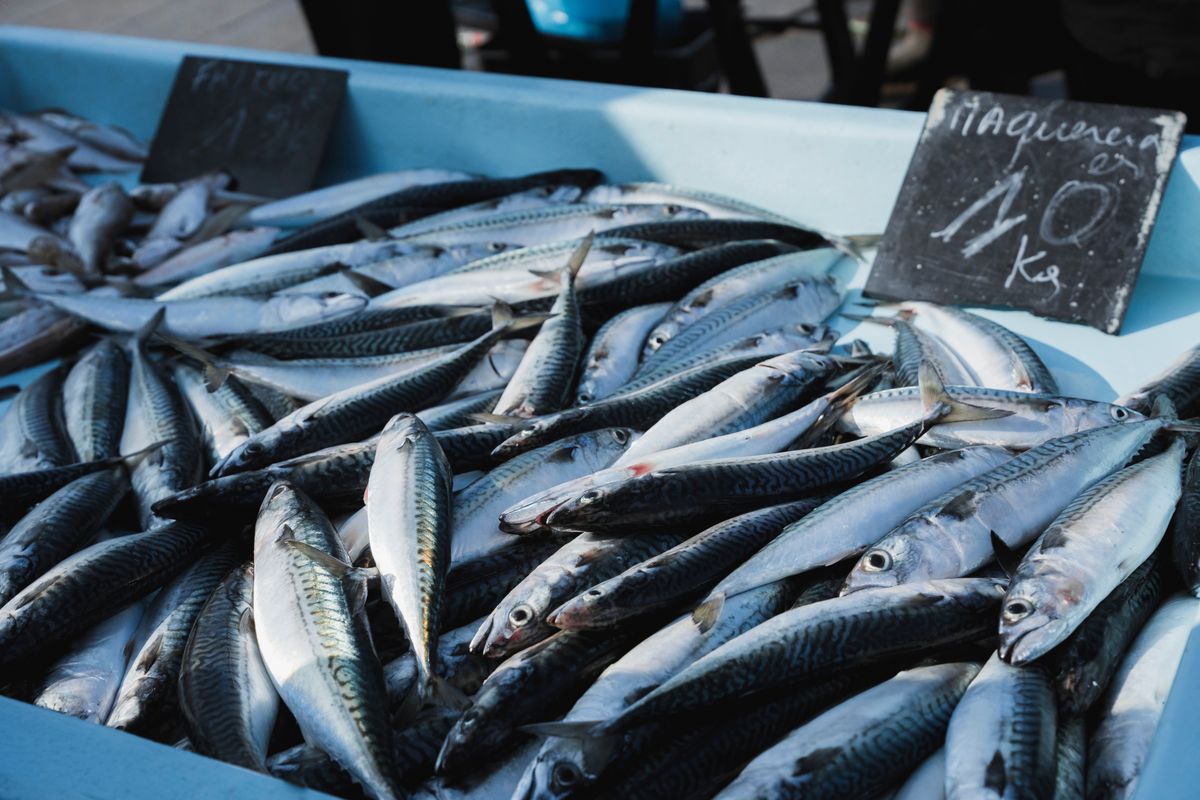
지난 주말, 동네 수산시장 앞을 지나는데 좌판 앞에 사람이 다섯 겹으로 둘러서 있었다. 뭔가 봤더니 한 마리에 2천 원도 안 하는 손바닥만 한 은빛 생선, 전어였다. 상인이 “3마리 5천 원, 지금 안 사면 다음 주엔 이 가격 못 봐요”라고 외치자 옆 아주머니가 검은 봉지 두 개를 더 집어 들었다. 9월 중순부터 10월 말까지, 딱 이 6주 남짓한 기간에만 전어는 살에 지방이 15% 가까이 차오른다. 여름 전어와 비교하면 거의 세 배다. 그 냄새 하나로 사람 발길을 멈춰 세운다니, 직접 맡아보기 전엔 좀처럼 믿기지 않는 이야기다.
가을 전어, 대체 뭐가 다른가
사실 전어는 사계절 잡히는 생선이다. 그런데 유독 가을에만 난리가 나는 이유를 물으면 다들 “맛있으니까”라고 뭉뚱그려 답한다. 조금 더 정확히 말하면 산란을 마친 전어가 겨울을 나기 위해 몸에 지방을 축적하는 시기가 딱 9~10월이라서다. 봄에 알을 낳느라 살이 홀쭉했던 놈들이 여름 내내 먹이활동을 하며 통통해지고, 가을이 되면 뱃살에 기름이 확 오른다. 그 지방이 불판 위에서 지글지글 녹으면서 고소한 냄새를 뿜어내고, 씹는 순간 기름진 육즙과 짭조름한 감칠맛이 동시에 터진다. 여름 전어를 먹어본 사람은 알겠지만, 그때는 살이 퍽퍽하고 비린내가 도드라진다. 같은 생선인데 이렇게 다를 일인가 싶겠지만, 실제로 먹어보면 계절 차이가 확연하다.
싱싱한 전어 고르는 법 — 눈과 비늘을 봐라
시장에서 전어를 고를 때 가장 많이 하는 실수가 크기만 보는 것이다. 크다고 다 좋은 게 아니다. 오히려 15cm 안팎의 중간 크기가 뼈도 적당히 억세지 않고 살도 알차다. 먼저 눈을 확인하자. 눈동자가 투명하고 튀어나와 있으면 신선한 것이고, 눈이 뿌옇게 흐려지거나 움푹 꺼져 있으면 하루 이상 지난 것으로 보면 된다. 비늘은 촘촘하게 붙어 있으면서 은빛 광택이 살아 있어야 한다. 만졌을 때 비늘이 후두둑 떨어지는 놈은 이미 유통 과정에서 상당히 스트레스를 받은 상태다. 배 쪽은 은백색, 등 쪽은 청록빛이 도는 게 정상이고, 배가 부풀어 터질 듯하거나 살이 물컹하게 눌리면 피하는 게 맞다. 아가미를 살짝 들춰봤을 때 선홍색이면 합격, 갈색이나 회색으로 변해 있으면 이미 시간이 꽤 지난 것이다. 의외로 크기가 작고 볼품없어 보이는 전어가 아가미 색은 훨씬 싱싱한 경우도 많으니 겉모습만 보고 판단하지 말자.
전어 손질법, 생각보다 어렵지 않다
비늘 벗기는 게 번거로울 것 같아 손질을 포기하는 사람이 많은데, 막상 해보면 5분도 안 걸린다. 순서는 이렇다. 먼저 칼등이나 숟가락 뒷면으로 꼬리에서 머리 방향으로 긁어 비늘을 제거한다. 방향을 거꾸로 하면 살이 뜯기니 주의해야 한다. 그다음 가위로 지느러미와 꼬리 끝을 잘라내고, 배 쪽에 칼집을 살짝 넣어 내장을 훑어낸다. 흐르는 물에 배 속까지 깨끗이 헹구면 끝이다. 구이용이라면 이 정도로 충분하다. 그런데 회나 무침으로 즐기고 싶다면 여기서 한 단계를 더 거쳐야 식감이 확 살아난다. 손질 전에 전어를 얼음물에 담가 기절시킨 뒤 굵은소금을 뿌려 15~20분 재워두는 것이다. 이렇게 하면 살이 단단해지고 비린내도 상당 부분 잡힌다. 손질이 끝나면 소금기를 씻어내고 뼈를 발라야 하는데, 초보자는 이 부분에서 살을 많이 뭉갠다. 등뼈를 따라 칼끝을 눕혀 살살 밀어내듯 발라내면 훨씬 수월하다.
전어구이 — 온도와 시간이 전부다
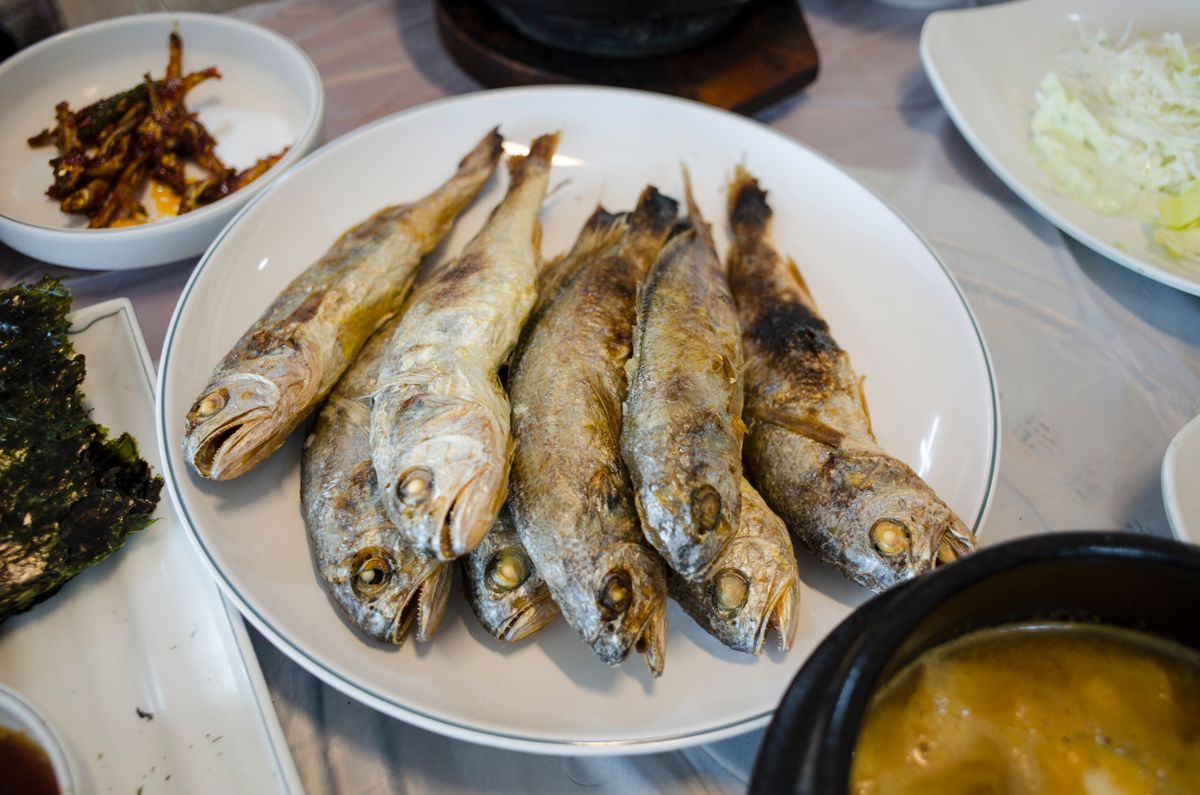
전어구이는 간단해 보이지만 의외로 실패하는 사람이 많다. 이유는 대개 하나, 온도를 너무 높이거나 너무 낮춰서다. 손질한 전어 표면에 굵은소금을 골고루 뿌려 10분 정도 두면 겉면의 수분이 빠지면서 나중에 훨씬 바삭하게 구워진다. 에어프라이어를 쓴다면 190도에서 15분, 뒤집어서 10분, 총 25분이 기준이다(15cm 내외 크기 기준). 프라이팬이라면 중약불로 앞뒤 각 4~5분씩, 뚜껑을 덮어 속까지 익히는 게 포인트다. 숯불이나 그릴에 굽는다면 불 조절이 관건인데, 겉이 타는 것 같아도 실제로는 속이 안 익은 경우가 흔하다. 숯불은 불을 세게 지피기보다 잉걸불로 낮춰 놓고 굽는 편이 겉만 타고 속이 설익는 것을 막아준다. 이럴 땐 젓가락으로 살을 살짝 눌러 탄력이 느껴지는지 확인하면 된다. 전어구이는 머리부터 꼬리, 뼈까지 통째로 씹어 먹어야 제맛이라는 말이 있는데, 실제로 가을 전어는 뼈가 아직 억세지 않아 통째로 씹으면 고소함이 배가 된다. 다만 뼈에 예민한 사람이라면 무리해서 씹지 말고 큰 가시만 발라내고 먹어도 충분하다.
전어회무침, 새콤달콤함으로 승부한다
구이만큼 인기 있는 게 전어회무침이다. 뼈째 썰어 먹는 세꼬시 스타일로 즐기는 경우가 많은데, 만약 회나 무침으로 즐기고 싶다면 비린내를 잡고 식감을 살리는 밑작업이 한 단계 더 필요하다. 이건 앞서 말한 대로 가을 초입 전어가 가시가 연할 때 얘기다. 10월 말로 갈수록 뼈가 억세지므로 이 시기엔 뼈를 발라내고 무치는 게 낫다. 양념장은 고춧가루, 식초, 설탕, 다진 마늘, 매실청을 기본으로 하고 여기에 양파와 양배추, 깻잎을 채썰어 넣으면 아삭한 식감이 산다. 무치기 직전에 참기름과 통깨를 넣어야 향이 날아가지 않는다. 여기서 의외의 팁 하나, 무침을 만들고 바로 먹기보다 냉장고에 10분 정도 두면 채소에서 나온 수분과 양념이 어우러져 맛이 훨씬 균형 잡힌다. 급하게 무쳐서 바로 상에 올리면 식초 맛만 튀는 경우가 많다.
남은 전어, 젓갈로도 변신한다
양을 넉넉히 사서 다 못 먹고 남았다면 전어밤젓을 담가보는 것도 방법이다. 전어 내장 중 위 부분(속칭 ‘밤’)만 따로 모아 소금에 절이는 젓갈인데, 한 마리에서 나오는 양이 워낙 적어 전어 열 마리를 손질해도 밤은 한 숟가락 남짓밖에 안 나온다. 그만큼 귀한 대접을 받는 이유이기도 하다. 손질 과정에서 내장을 버리지 말고 위 부분만 골라 소금물에 흔들어 씻은 뒤, 굵은소금을 켜켜이 얹어 밀폐용기에 담아 서늘한 곳에서 일주일 정도 삭히면 된다. 발효가 진행되면서 짭짤하면서도 은근한 단맛이 배어 나오는데, 이 상태로 밥에 올려 먹거나 참기름 몇 방울 떨어뜨려 무쳐 먹으면 밥도둑이 따로 없다. 다만 이건 손이 많이 가고 재료도 적게 나오는 작업이라, 시간 여유가 있고 전어를 여러 마리 손질할 계획이 있을 때 도전해보는 걸 추천한다.
자주 묻는 질문
Q. 전어를 사 왔는데 당일 못 먹으면 어떻게 보관하나요?
손질하지 않은 상태라면 내장을 먼저 제거하고 물기를 완전히 닦은 뒤 밀폐용기에 넣어 냉장 보관하면 하루 정도는 괜찮다. 이틀 이상 두고 먹을 계획이라면 손질 후 소금을 살짝 뿌려 냉동실에 넣는 편이 안전하다. 생물 상태로 오래 두면 상하기 쉬우니 되도록 구입 당일이나 다음 날까지 먹는 걸 권한다.
Q. 전어 비린내가 유독 심할 때는 어떻게 하나요?
손질 단계에서 배 속 검은 막을 완전히 제거하지 않으면 비린내가 심하게 남는다. 흐르는 물에 배 속을 손가락으로 문질러가며 헹구고, 회나 무침용이라면 소금물에 담가두는 시간을 조금 더 늘리면 훨씬 나아진다. 구이라면 굽기 전 청주나 맛술을 살짝 뿌려두는 것도 도움이 된다.
Q. 마트에서 파는 냉동 전어도 맛이 비슷한가요?
냉동 전어는 확실히 생물보다 지방이 덜 느껴지고 살의 탄력도 떨어진다. 급하게 해동하면 육즙이 빠져나가 더 퍽퍽해지니, 냉장실에서 천천히 해동한 뒤 조리하는 게 그나마 맛 차이를 줄이는 방법이다. 가능하면 제철에는 생물을 구해 먹는 걸 추천한다.
아침 7시 43분, 전주역이 아니라 고속버스터미널에 내렸다면 이미 골든타임 13분이 깎인 셈이다. 한옥마을까지 걸어가면 25분, 시내버스를 타면 12분. 당일치기로 전주를 훑으려면 이 13분 차이가 저녁 일정 전체를 밀어낸다는 걸 이번에야 몸으로 알았다. 서울에서 첫차를 타고 내려온 사람이라면 오전 9시 전에 한옥마을 초입에 서 있어야 저녁 KTX 막차 전에 코스를 다 소화할 수 있다. 늦잠 자고 느긋하게 출발했다가는 남부시장은커녕 오목대도 못 올라가고 그대로 버스에 몸을 싣게 된다.
일정을 시간대로 정리하면 이렇다. 07:43 터미널 도착 및 이동, 09:00 풍남문과 전동성당, 09:15 경기전, 10:00 태조로·은행로 간식 투어, 12:30 한옥마을 안 점심, 14:00 오목대와 자만벽화마을, 18:30 남부시장 청년몰, 20:00 터미널 복귀. 이 뼈대만 머릿속에 넣어두면 중간에 어디서 시간을 아끼고 어디서 여유를 부려도 되는지 감이 잡힌다.
동선부터 정하자: 풍남문 먼저냐, 전동성당 먼저냐
한옥마을 여행기를 검색하면 다들 경기전부터 들어가라고 하는데, 막상 아침 9시에 도착해보면 경기전 매표소 문이 닫혀 있다. 개장은 9시지만 직원들이 준비하느라 실제로 표를 끊어주는 건 9시 5분에서 10분 사이인 경우가 많았다. 그래서 순서를 뒤집었다. 터미널에서 버스로 남부시장 정류장에 내려 풍남문을 먼저 본다. 조선시대 전주읍성의 남쪽 문이었던 이 문은 아침 햇살을 정면으로 받는 각도라 사진이 유독 잘 나온다. 관광객이 몰리기 전이라 인생샷 찍겠다고 줄 설 필요도 없다.
풍남문에서 전동성당까지는 신호등 두 개 건너 도보 7분. 고딕과 로마네스크가 섞인 붉은 벽돌 성당인데, 여기서 의외로 시간을 많이 뺏긴다. 미사 시간이 아니면 내부 관람이 제한되니 미리 홈페이지에서 시간표를 확인해두는 게 낫다. 나는 이걸 몰라서 문 앞에서 15분을 서성이다가 외관 사진만 찍고 돌아섰다. 그런데도 아침 햇빛에 비치는 성당 앞마당은 그 자체로 볼만했으니 시간이 아깝진 않았다.
경기전은 9시 15분에 들어가야 한적하다
전동성당 바로 맞은편이 경기전이다. 입장료는 성인 3천 원, 전주시민이나 한복을 입고 오면 무료다. 이 무료 혜택 때문에 한옥마을 골목마다 한복 대여점이 그렇게 많은 거였구나 싶었다. 경기전 안쪽 어진박물관까지 다 둘러보는 데 30분 정도 걸리는데, 9시 15분쯤 들어가면 관람객이 거의 없어서 태조 어진을 모신 정전 앞에서 여유 있게 사진을 찍을 수 있다. 10시가 넘어가면 단체 관광객이 몰려들어 같은 자리에서 순서를 기다려야 한다.
태조로와 은행로, 줄 서는 집은 정해져 있다
경기전 정문을 나서면 바로 태조로와 은행로가 갈라진다. 두 거리 다 기념품점과 간식집이 빼곡한데, 어디서 줄을 서야 하는지는 이미 답이 나와 있다. PNB풍년제과 한옥마을점은 개점 시간인 오전 9시부터 이미 줄이 생긴다. 오리지널 초코파이 한 상자가 만 원 초반대인데, 평일 오전에도 20분은 기다려야 받을 수 있었다. 줄이 길다고 다른 데로 발길을 돌리는 사람도 있지만, 막상 한 입 베어 물면 왜 다들 여기서 사는지 납득이 간다. 편의점에서 사 먹던 물렁한 식감이 아니라 겉은 바삭하게 부서지고 속 마시멜로는 진득하게 늘어지는데, 초콜릿 코팅까지 두툼해서 시판 초코파이랑 아예 다른 음식처럼 느껴진다.
은행로 쪽으로 넘어가면 교동엿가게가 있다. 여기는 줄이 그렇게 길진 않은데 대신 시식 코너에서 눌러앉아 있는 사람이 많아서 매대 앞이 늘 붐빈다. 호박엿이랑 깨엿을 소포장으로 파는데 5천 원 안팎이라 부담 없이 몇 봉지씩 사게 된다. 골목을 걷다 보면 한복 입은 사람들 사이로 교복 대여점, 사진관, 소품샵이 뒤섞여 있어서 어디가 원래 한옥마을 상점이고 어디가 새로 생긴 가게인지 구분이 안 갈 정도다.
점심은 한옥마을 안에서 먹지 말라는 말, 반은 맞고 반은 틀렸다
여행 커뮤니티를 보면 한옥마을 안 식당은 관광지 물가라 비추라는 말이 자주 나온다. 실제로 한옥마을 중심가 비빔밥집 상당수가 1만 4천 원에서 1만 6천 원 선이라 남부시장보다 비싼 건 맞다. 그런데 이건 동선을 안 재보고 하는 소리다. 남부시장까지 걸어가서 점심을 먹고 다시 한옥마을로 돌아오려면 왕복 20분이 그냥 날아간다. 낮 12시 반, 가족회관 근처 골목의 한 비빔밥집에 들어갔더니 대기 없이 바로 자리가 났다. 놋그릇에 나온 육회비빔밥은 1만 5천 원이었는데 나물 가짓수가 열 가지가 넘어서 가격표를 보고 살짝 놀랐던 마음이 금방 풀렸다. 동선 효율을 따지면 몇천 원 더 내고 한옥마을 안에서 먹는 쪽이 남는 장사였다.
자만벽화마을 계단, 숨이 턱까지 차오른다
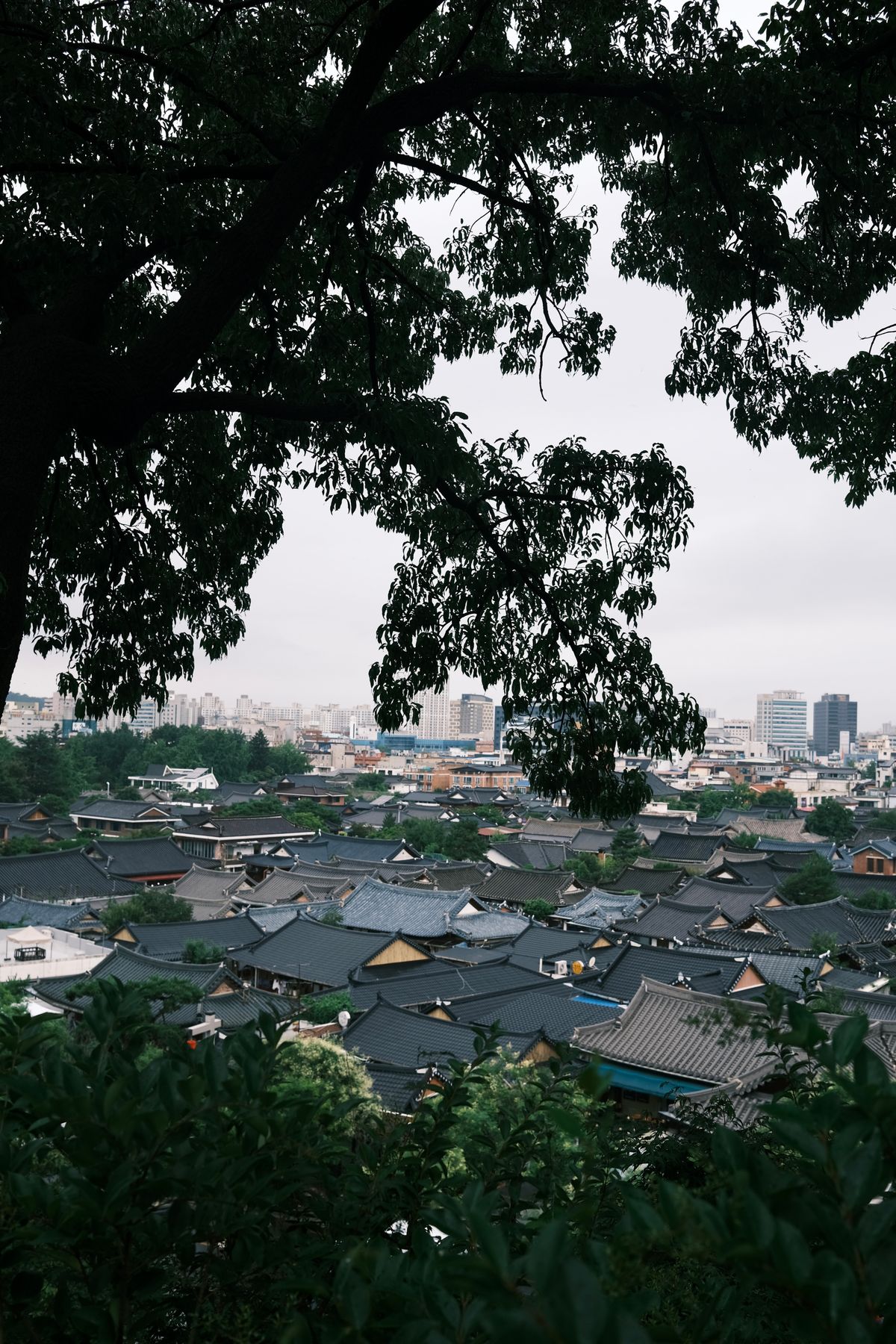
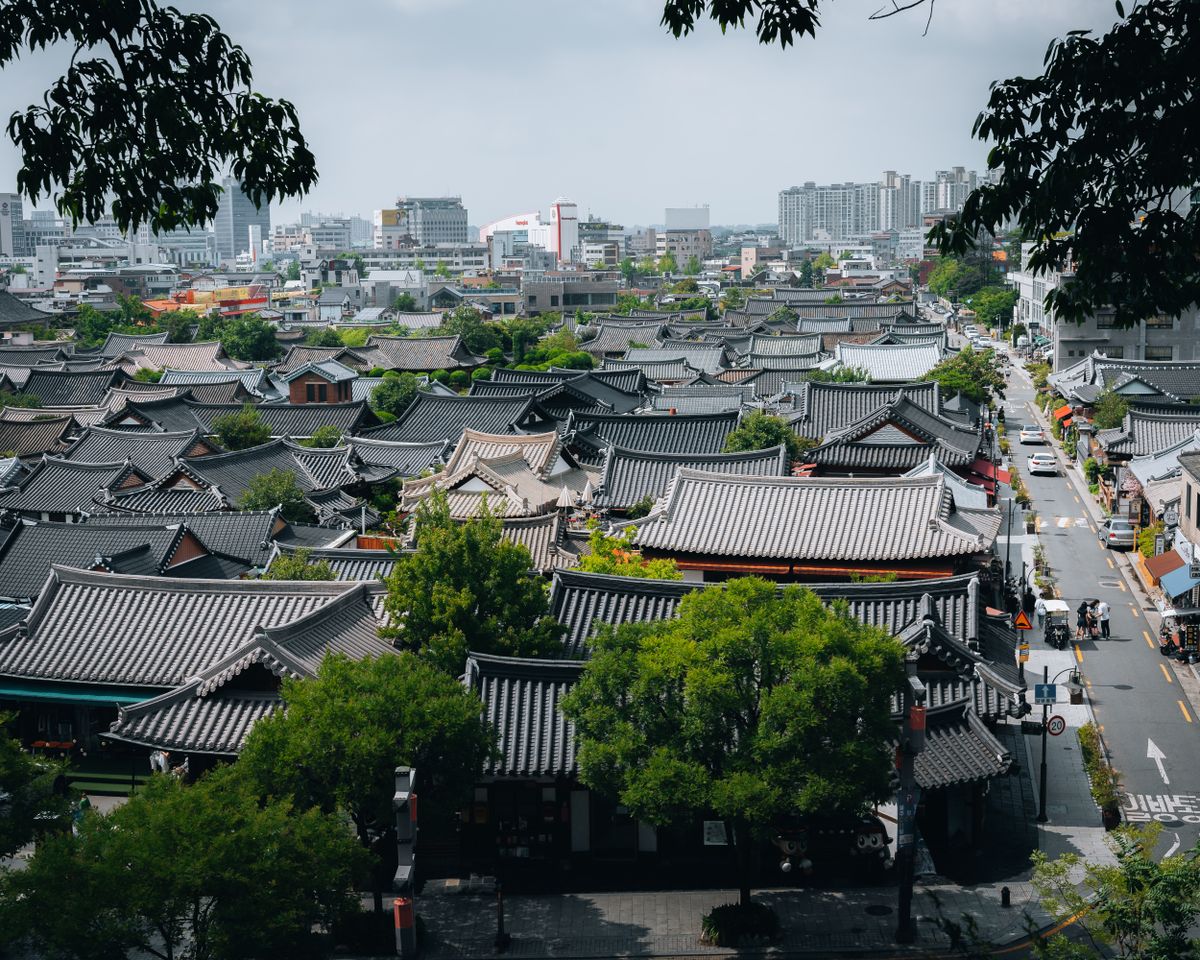
점심을 먹은 가족회관 골목에서 오목대 입구까지는 도보 8분. 한옥마을 안쪽, 승암산 방향으로 걸어 들어가면 오목대 오르는 계단이 시작된다. 완만한 편은 절대 아니다. 숨이 턱까지 차오르는 가파른 경사를 3분 남짓 오르면 정자가 나오는데, 여름 오후라면 그 짧은 시간에도 등이 축축해진다. 정상에서 내려다보는 한옥마을 기와지붕 전경은 사진으로 본 것보다 훨씬 넓게 펼쳐져 있어서, 올라오길 잘했다는 생각이 절로 들었다. 벌써 다리가 풀렸다고 여기서 발길을 돌리면 바로 옆 자만벽화마을을 놓치게 되는데, 이 골목이 은근히 알짜다. 담벼락마다 그려진 벽화 사이로 계단식 골목이 이어져서 사람 없는 시간대에 가면 조용히 사진 찍기 좋다.
마지막 코스는 남부시장, 저녁 8시 전에 도착해야 한다
오목대에서 내려와 한옥마을을 관통해 남부시장까지는 도보 20분 정도다. 다리가 슬슬 아파올 시간인데, 여기서 마시는 모주 한 잔이 그 피로를 꽤 달래준다. 막걸리에 계피와 생강, 대추를 넣고 끓인 전주식 전통 음료인데 알코올 도수가 낮아 술이 약해도 부담 없다. 한 컵에 2천 원 안팎이면 살 수 있고, 청년몰 2층 만남의광장에서 피순대 한 접시(1만 3천 원 안팎)를 곁들이면 저녁 식사 겸 마무리로 딱이다. 뜨끈한 국물이 함께 나오는데, 초장에 들깨가루를 듬뿍 풀어 찍어 먹으면 하루 종일 걸은 다리의 피로가 그제야 풀리는 느낌이 든다. 청년몰 야시장은 금요일과 토요일 저녁에만 서기 때문에 평일에 갔다면 이 부분은 아쉽게 넘어가야 한다.
남부시장에서 전주역이나 고속버스터미널까지는 택시로 10분 안팎이다. 저녁 8시쯤 시장을 나서면 저녁 9시 대 KTX나 고속버스를 여유 있게 잡을 수 있다. 아침 7시 43분에 시작해 저녁 8시 모주 한 잔으로 끝나는 이 12시간짜리 동선은, 전주를 가장 밀도 높게 소비하는 치트키에 가까웠다. 이동 시간을 빼면 실제로 걷고 구경한 시간은 여섯 시간 남짓이었는데, 그 안에 성당과 고궁, 시장과 벽화마을까지 다 눌러 담았다는 게 지금 생각해도 신기하다. 다음에 다시 온다면 완산칠봉시장 쪽 골목까지 욕심내볼 생각이다.
전주 당일치기 자주 묻는 질문
Q. 한옥마을 안에 주차하고 하루 종일 세워둘 수 있나요? 한옥마을 내부는 주차 공간이 좁고 요금도 시간당 오르는 구조라 하루 종일 세워두기엔 부담스럽다. 남부시장 공영주차장이나 오거리 인근 공영주차장에 세우고 걸어 다니는 편이 낫다. 주말 낮에는 골목 안쪽 사설 주차장부터 만차가 되는 경우가 많았다.
Q. 한복 대여는 어디서 하는 게 좋나요? 경기전 주변에 대여점이 몰려 있는데, 가격은 3시간 기준 1만 5천 원에서 2만 원대로 다양하다. 한복을 입으면 경기전 입장료가 면제되니 사진도 찍고 입장료도 아끼려면 오전 일찍 대여해서 바로 경기전으로 들어가는 순서를 추천한다.
Q. 여름철에 계단 코스(오목대)는 힘들지 않을까요? 한낮 뙤약볕 아래 오르면 확실히 힘들다. 오전 10시 전이나 오후 4시 이후로 시간을 옮기면 그늘도 많고 체감 더위가 훨씬 덜하다. 물병은 미리 채워서 올라가는 걸 권한다.