My son lost his shorts within four minutes of walking into the jjimjilbang. Not lost as in misplaced — lost as in he peeled them off in the locker room, handed them to me like a tiny drunk uncle handing off his coat, and sprinted toward the bathing hall wearing nothing but the biggest grin I have seen on his face in weeks. Nobody blinked. That is the thing about Korea that took me the longest to absorb: a four-year-old streaking across warm tile toward a soaking tub is not a scene, it is a Tuesday.
We go to a neighborhood jjimjilbang not far from our apartment, one of those unglamorous three-story buildings with a faded sign and a parking lot that never has enough spaces. It is not Dragon Hill Spa with its koi pond and its tour buses. It is not Siloam Sauna either, though I have taken my son there once and spent half the visit trying to keep him from launching himself into the ice room like it was a bouncy castle. Our place smells like a specific mix of eucalyptus, hot stone, and the instant noodles somebody is always eating by the TV. I have come to love that smell in a way I did not expect to when I first moved here.
Inside the Bathing Hall
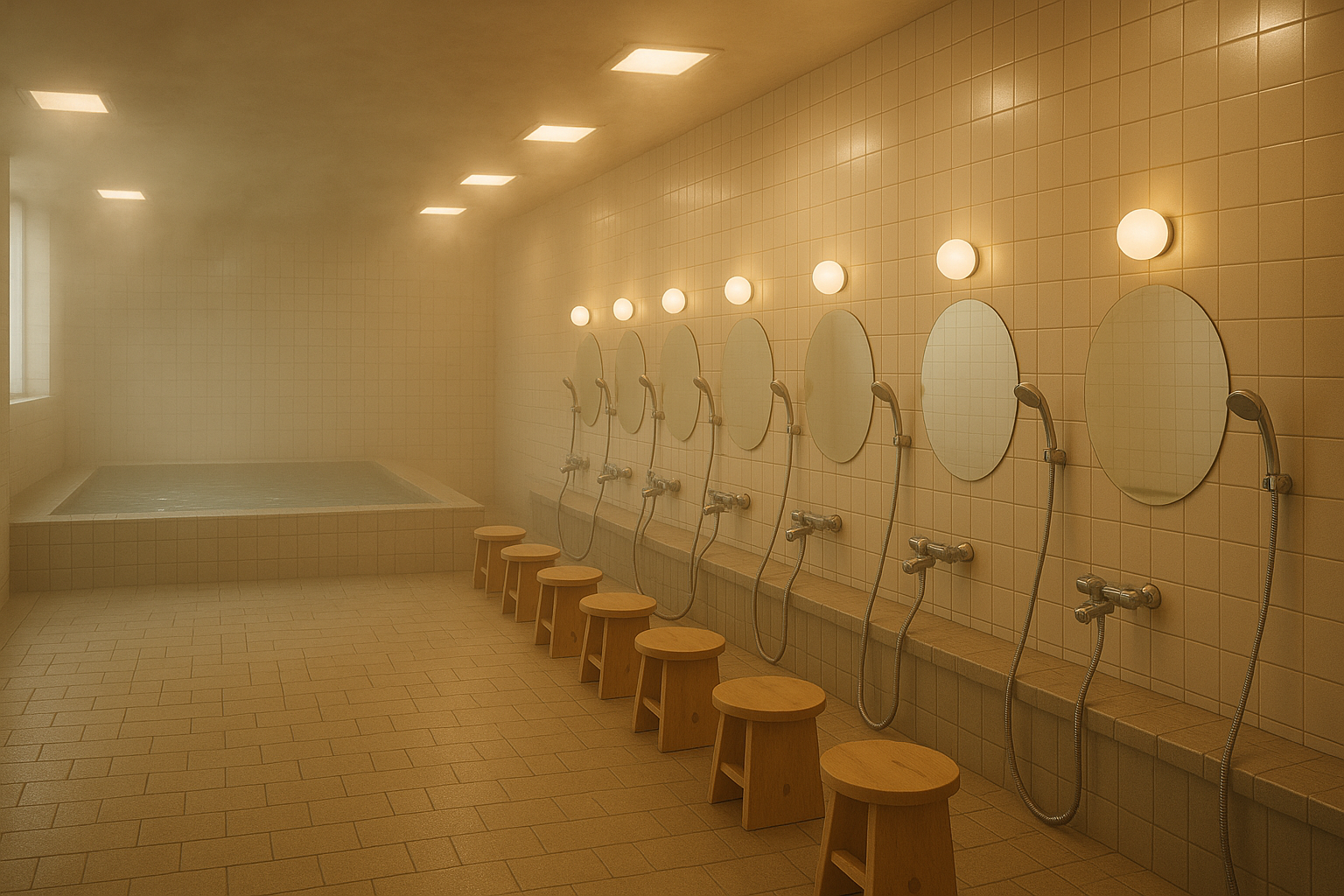
The men’s bathing floor is where the real culture shock lives, even years in. You strip down completely before you so much as touch the water — no swimsuit, no towel wrapped around your waist, nothing. You sit on a low plastic stool at a shower station and scrub yourself raw before you’re allowed anywhere near the communal tubs, because the tubs are for soaking, not washing, and Koreans take that distinction seriously in a way that Western gym locker rooms never taught me. The first few times I went, I kept my eyes fixed somewhere around eye level like I was trying not to stare at the sun. Now I barely notice. An ajusshi two stools down from me was humming trot music under his breath last week while he scrubbed his elbow with an Italy towel, and it struck me that I have genuinely relaxed into this place.
The hot tubs run somewhere around 40 to 42 degrees Celsius, which sounds fine until you’re actually lowering yourself in and your whole nervous system files a formal complaint. The cold pool sits closer to 17 or 18, and watching grown men gasp and curse quietly as they dunk in after the hot bath never stops being funny to me. My son cannot get enough of the cold pool. He treats it like a plunge pool at a resort, hopping in and out screaming “cha-gawo!” — cold! — with total delight, while I stand there half-boiled and increasingly aware that at some point I agreed to become the kind of dad who does this on a random weekday afternoon instead of working.
Up on the Jjimjil Floor
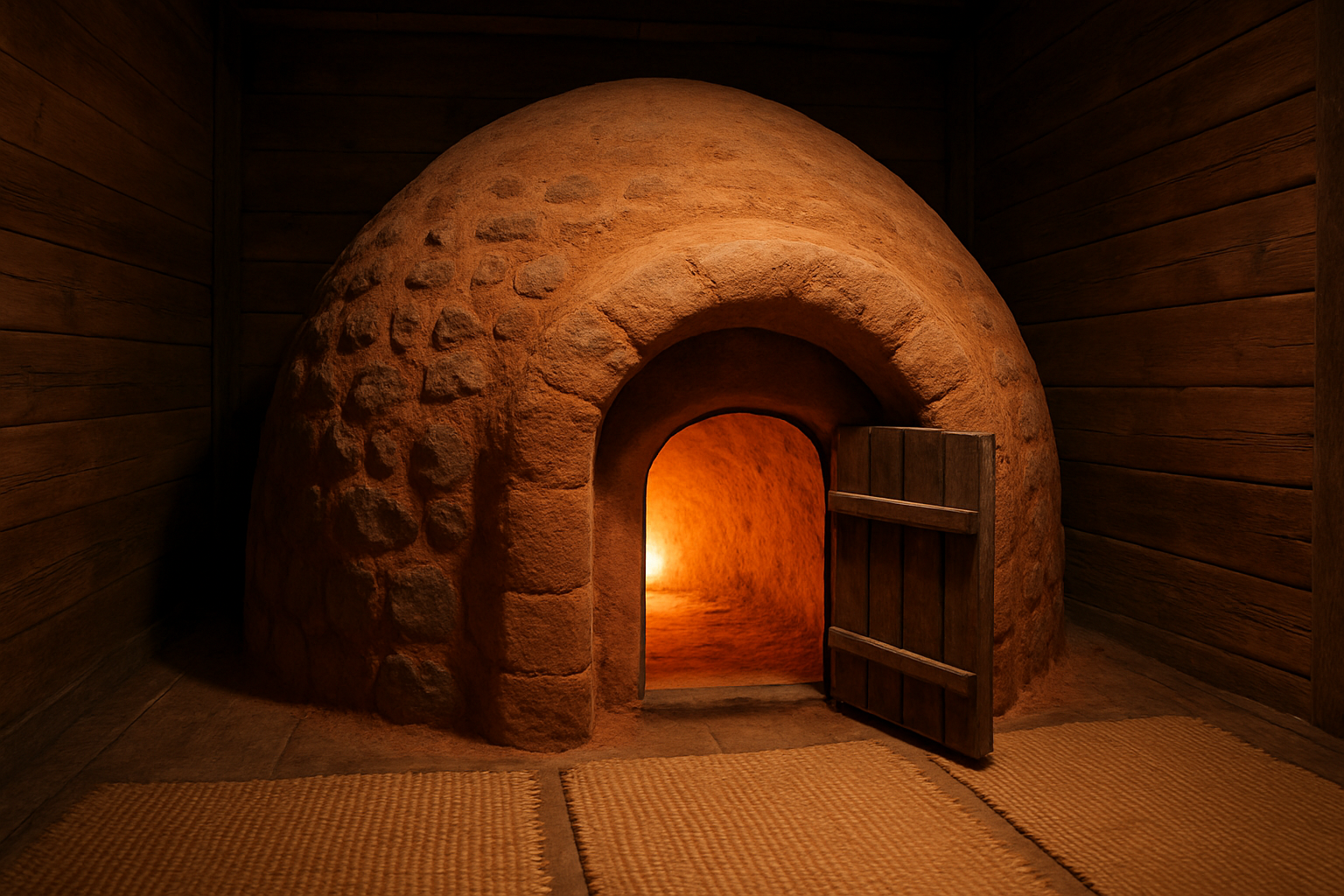
Once you’re washed and soaked, you put on the cotton shorts and t-shirt they hand you at the front counter and head up to the jjimjil floor, the co-ed part where the actual sauna rooms are. This is where things get genuinely strange for a foreigner and genuinely wonderful once it clicks. There’s usually a salt room, a jade room, sometimes a charcoal kiln room shaped like a little clay igloo that you crawl into and sit until your skin feels like it’s humming. Families sprawl out on the heated wooden floor between rooms, sharing boiled eggs and sikhye out of paper cups, some kid always asleep face-down on a wooden pillow block like he’s been shot with a tranquilizer dart. My most embarrassing moment happened here, not in the bathing hall — I fell asleep sitting upright against the wall in the salt room for what I swear was ten minutes and woke up to my son patting my cheek, asking loudly why appa’s face was so red. Everyone around us laughed. I laughed too, eventually, once the blood stopped rushing to my ears.
What Actually Gets Me

What actually gets me, every single time, is how unbothered everyone is by everyone else’s body and everyone else’s kid. Nobody at our jjimjilbang has ever shot me a look because my son is loud, or because he’s running around the mat area in his little cotton outfit like it’s a playground. An ajumma folding towels near the entrance once tossed him a boiled egg like she’d known him for years. That kind of casual, wordless warmth is hard to bottle up and explain to people back home, but it’s a real part of why I keep dragging a very tired toddler here on weekend mornings instead of just staying in.
A Few Practical Notes If You’re Going for the First Time
Entry is usually 8,000 to 15,000 won depending on the place and the city, and that covers unlimited hours in most spots — some people genuinely sleep there overnight for less than the price of a motel. Bring your own toiletries if you’re picky, though most places sell basic shampoo and soap at the counter for a few thousand won. Kids under about seven or eight can go into either the men’s or women’s bathing area regardless of gender, so my son comes in with me even though our friends’ daughter the same age goes in with her mom.
FAQ
Do you need to be naked in the bathing area?
Yes, in the actual mokyoktang (bathing hall) — no swimsuits, no towel-wrapping, everyone is nude and it is fully gender-separated. The upstairs jjimjil floor with the sauna rooms is co-ed and fully clothed in the provided shirt and shorts.
Are tattoos actually a problem?
It depends heavily on the place. Smaller, older neighborhood spots are more likely to raise an eyebrow or ask you to cover up; bigger tourist-friendly ones like Dragon Hill Spa are generally relaxed about it these days. When in doubt, call ahead or check reviews.
How long should we plan to stay with a toddler?
Honestly, two hours is plenty before a small kid hits a wall. We usually do one round of bathing, one sauna room, a snack on the mat floor, and call it — trying to stretch it past that with a four-year-old is asking for a meltdown near the vending machines, and I say that from experience.