Every month, a single sheet of paper changes the rhythm of our kitchen. It comes home in my daughter’s backpack, slightly creased, sometimes with a juice stain in the corner, and I tape it to the fridge like it’s a piece of art. It is, in its own bureaucratic way — a full month of lunches, day by day, dish by dish, laid out in a grid. Mackerel and radish soup on the 4th. Bulgogi and japchae on the 9th. Tteokguk the day after a holiday. Kimchi, always kimchi, somewhere on the tray.
I grew up packing a lunch that was, generously, a sandwich and whatever fruit didn’t get eaten out of the bowl. So the first time I saw my daughter’s school lunch menu, color-coded by food group, I genuinely didn’t know what to do with it. Was I supposed to approve it? It turns out I was just supposed to read it, the way you’d read a weather forecast — mildly useful, not really up for debate. It’s the same system I first bumped into during daycare drop-off and pick-up, just with a printed monthly grid instead of a phone notification.
A Menu With No Room for Negotiation

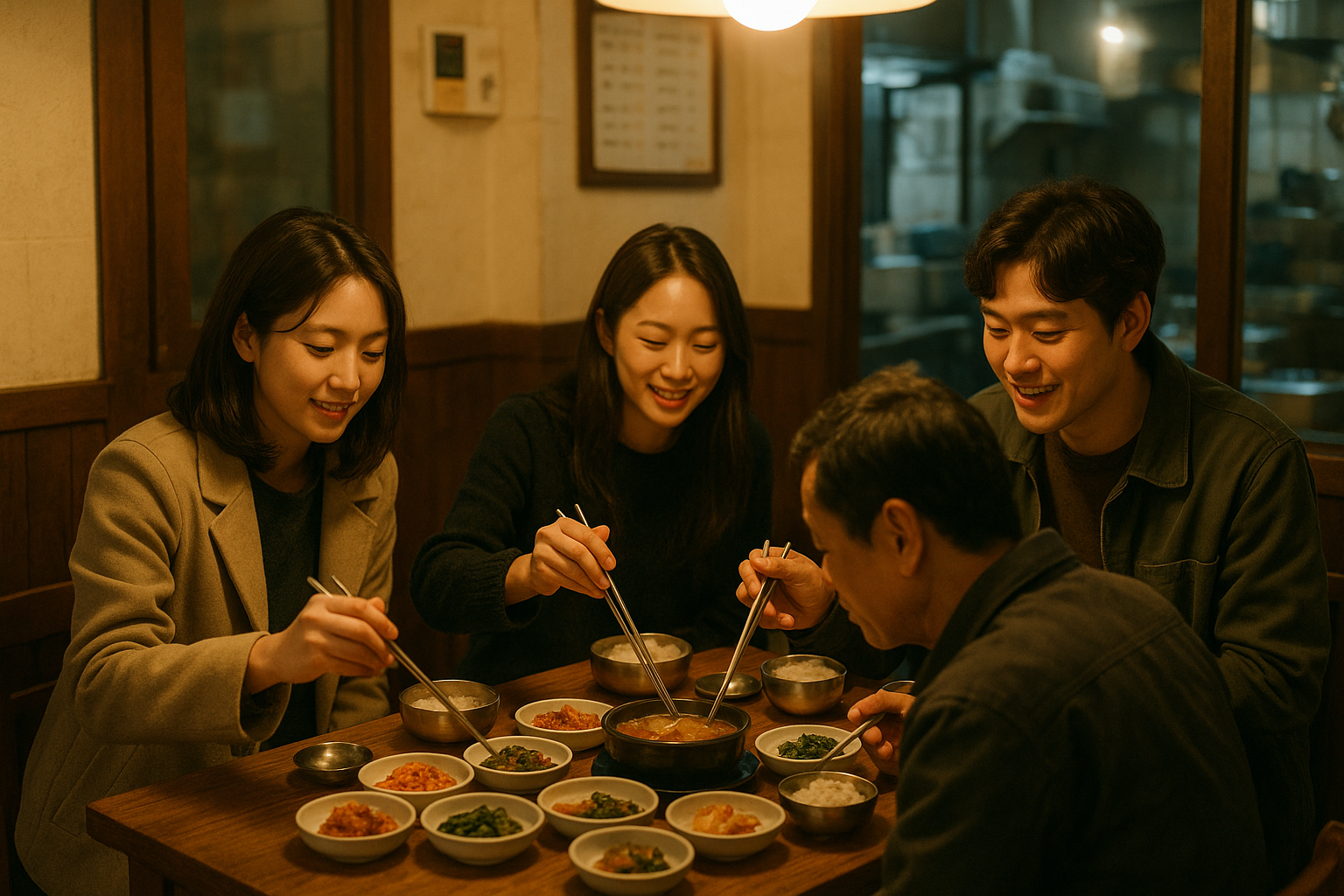
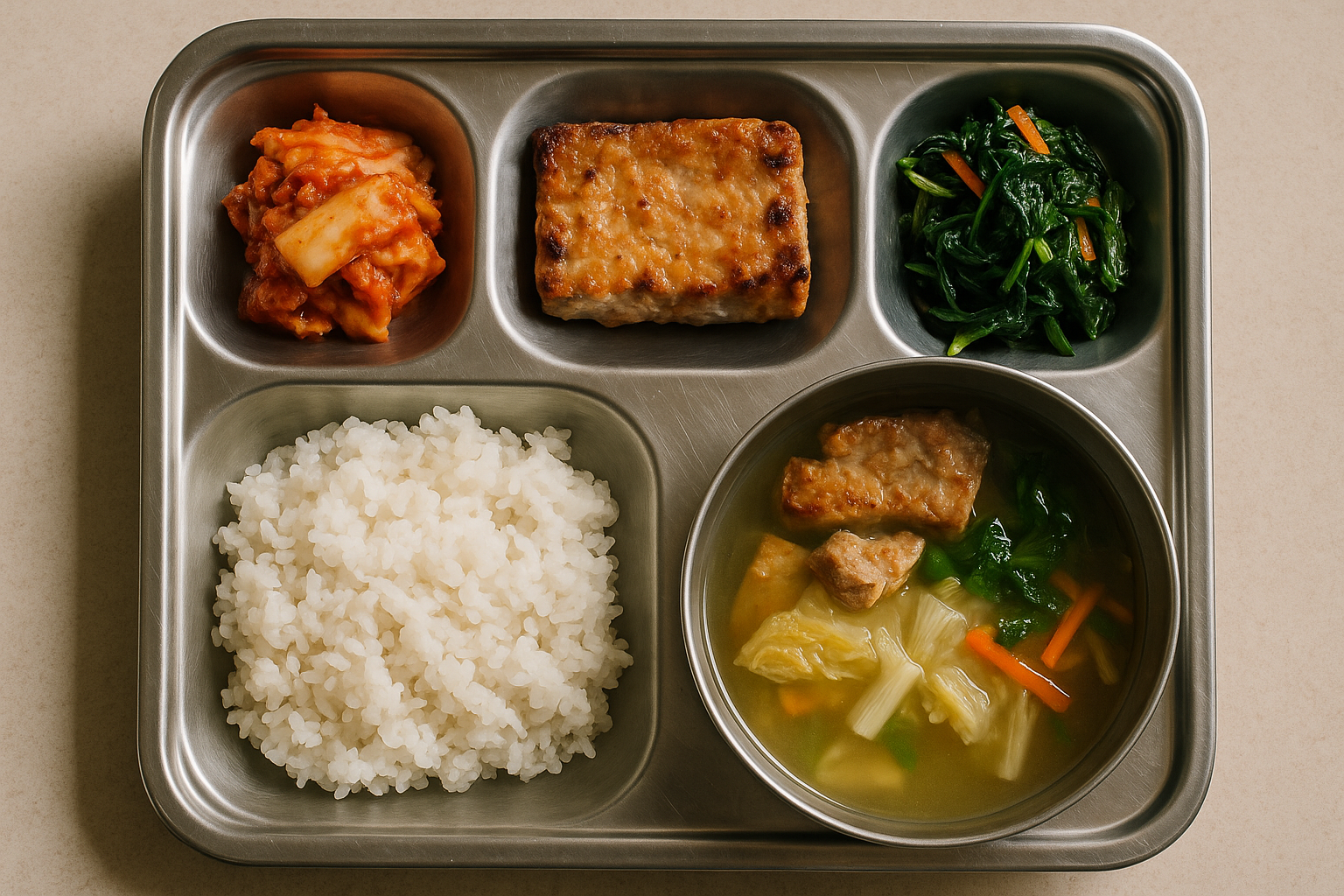
What struck me first wasn’t the food itself but the fact that there was no alternative to opt into. No packed lunch, no “just send a little something extra in case.” Every kid eats what’s on the tray: rice, a soup that rotates daily, a main protein, a couple of vegetable sides, and kimchi sitting there like a permanent fixture, whether the kid is four or fourteen. Nobody asks if the four-year-olds want it mild or want to skip it. They just start eating it early, in small amounts, the way you’d start anyone on anything they’re expected to eat for the rest of their life.
I won’t pretend every lunch is eaten with enthusiasm — I’ve heard enough about the “I only had the rice today” days to know better. But the range of what shows up on that tray over a month is genuinely wide: stews, grilled fish, japchae, bibimbap, the occasional curry or spaghetti thrown in as if to remind everyone the menu isn’t rigidly traditional. It rotates and rarely repeats, planned by an actual nutritionist thinking in food groups and seasonal variety, not by a tired parent staring into an open fridge at 7 a.m.
What the Tray Actually Teaches

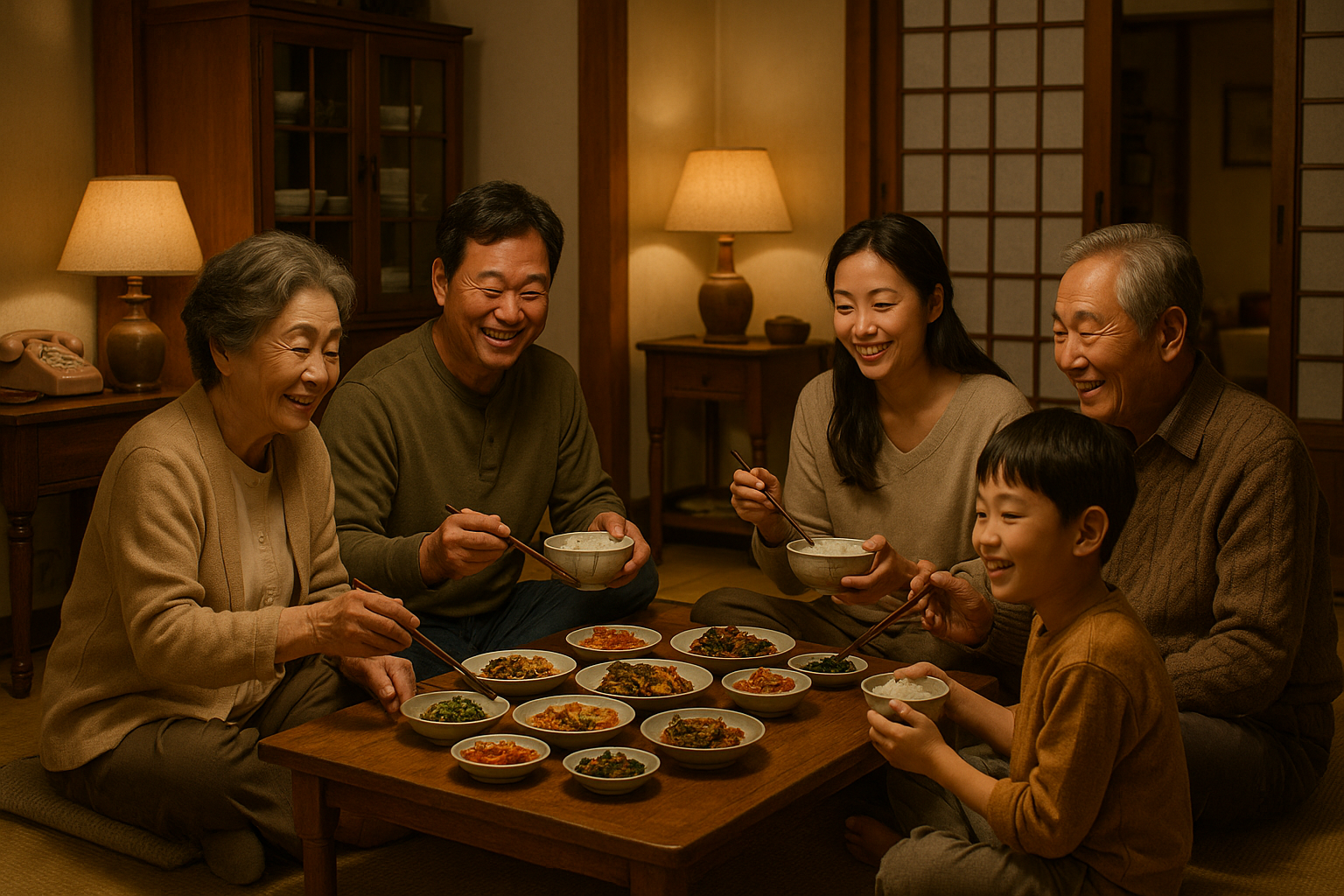
There’s something almost old-fashioned about kids eating what’s served, together, at the same table, without a parallel economy of snacks and substitutions. I think about this often, because it’s so different from how I was raised to think about food — as a set of individual preferences to be catered to. Here, the tray shows up already balanced, and the expectation is that palates adjust to the food, not the other way around.
I’m not claiming this produces perfectly adventurous eaters overnight. Some days the soup comes home untouched, I’m sure, on trays I never see. But over months and years, the sheer repetition of soup-rice-kimchi-vegetable-protein as the baseline of lunch does something. It sets a template — one that shapes what a kid quietly understands “a meal” is supposed to include, long before they’d ever think to argue about it.
Frequently Asked Questions
Do Korean kids really eat kimchi from daycare age?
Yes, typically in small, mild portions that increase gradually — cut smaller and less spicy than the adult version, but on the tray from early on rather than introduced later as an “acquired taste.”
Is packing a lunch from home even an option?
Generally no, for regular days. Public schools and most daycares run a unified meal program everyone eats from; packed lunches are more of an exception for specific dietary or medical needs than a standard alternative.
How do parents actually use the monthly menu sheet?
Mostly to plan dinner around it — if lunch already had a protein-heavy stew, we’ll lean lighter at dinner. It’s less a tool of control and more a scheduling aid.
Taped to the fridge, that monthly sheet has quietly become one of my favorite pieces of paper in the house — not exciting reading, but proof that someone thought carefully about what my kid eats on a Tuesday in March and wrote it down for me a month in advance. I still don’t fully know what to do with that kind of certainty. I just keep taping the next one up when it arrives.