There is a particular sound a Korean banquet hall makes about twenty minutes before a first birthday party starts: the click of stiletto heels on marble, a photographer testing his flash against a wall of pink and gold balloons, and somewhere in the back, a grandmother arguing with a stylist about whether the baby’s hanbok sash is tied correctly. I remember standing in a hallway like that, holding a gift envelope thick enough to embarrass me, and thinking: this is more production than my own wedding had. Nobody had warned me. And that, more or less, is the whole story of doljanchi in one hallway.
Doljanchi is the celebration held on a Korean child’s first birthday — “dol” meaning the one-year mark, “janchi” meaning feast or party. If you’ve lived in Korea for any length of time, you’ve probably been invited to one, RSVP’d without quite knowing what you were agreeing to, and then found yourself watching a one-year-old in silk robes crawl toward a table covered in string, coins, and a stethoscope. It looks whimsical from the outside. It is, underneath the whimsy, one of the more emotionally loaded traditions still actively practiced in modern Korean life.
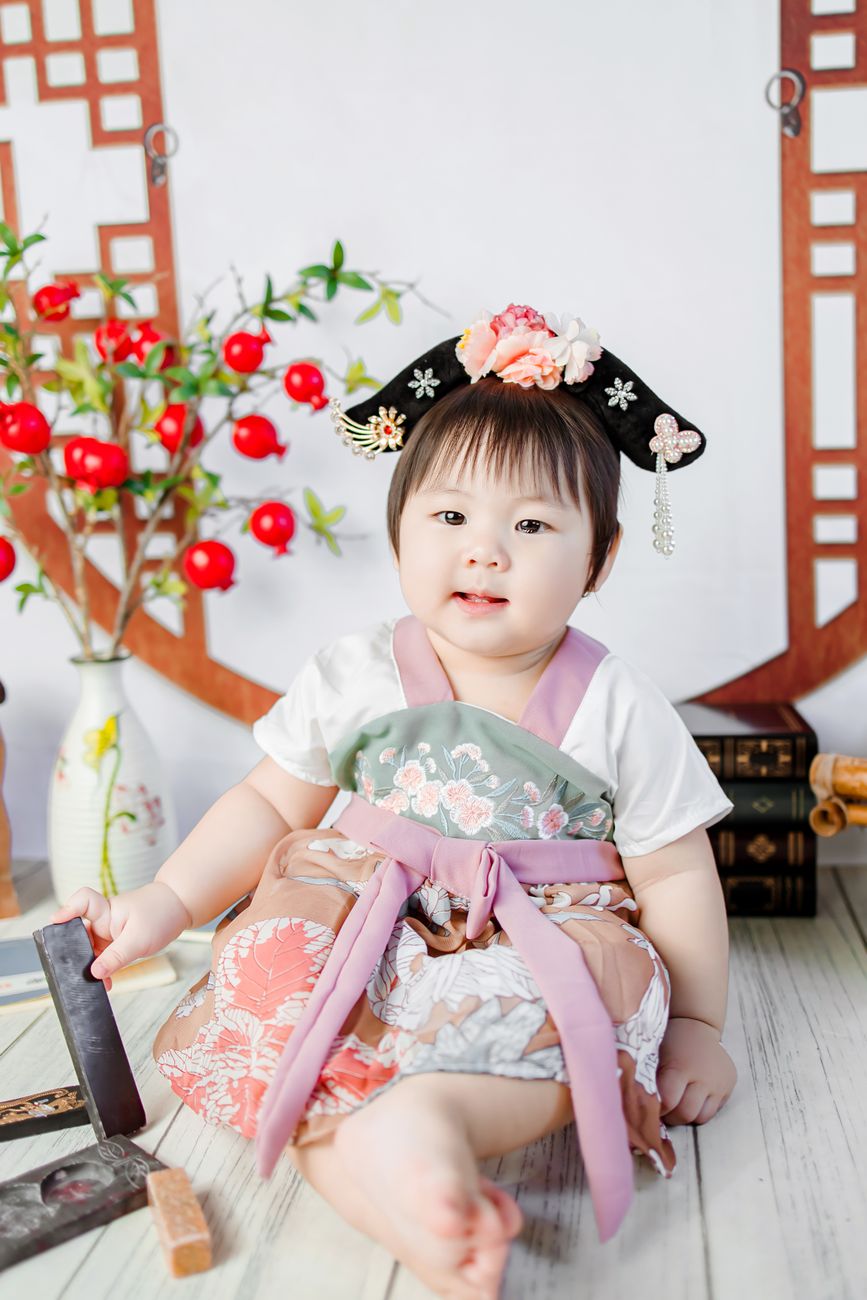
The centerpiece of the day is the doljabi, and it’s worth explaining properly because most foreigners get a watered-down version of it secondhand. The baby is set down in front of a low table — the dolsang — arranged with a curated set of objects, and whichever one the child grabs first is treated, half-jokingly and half not, as a preview of their future. A spool of thread means a long life. Rice or money means the child will never go hungry. A pencil, a brush, or a book points toward scholarship. A bow and arrow — historically, at least — suggested a future in the military; in some households it’s since been swapped for a gavel (a judge), a stethoscope (a doctor), or a microphone (a singer, and yes, parents absolutely say this hoping for a K-pop star). Both readings can be true at once, honestly — the fortune-telling and the fondness for a good coincidence.
You might expect a ritual this specific to feel stiff or ceremonial in the way some traditions do — all solemn faces and rehearsed movements. It isn’t, really. Everyone in the room is laughing, half-shouting suggestions at the baby, phones out, somebody’s uncle trying to nudge the money pile a little closer with his foot. It’s less a rite and more a party game with unusually high emotional stakes, which might be exactly why it has survived so well into the twenty-first century while other, more solemn ceremonies have quietly faded.
Here’s the part that changes how you see the whole event once you know it: doljanchi didn’t become a big deal by accident, and it definitely wasn’t always this glamorous. For most of Korean history, surviving to your first birthday was not a given. Infant mortality was brutal for centuries, and even as recently as the 1950s, in the aftermath of the Korean War, something close to one in four infants didn’t make it to age one. Turning one wasn’t a milestone the way it is in wealthier countries today — it was closer to a finish line. A baby who reached their first birthday had cleared the single riskiest stretch of their life, and families threw a feast because there was genuinely something enormous to be relieved about. That context reframes everything else: the elaborate table, the formal photographs, the mountain of rice cakes distributed to a hundred neighbors so the luck and gratitude would spread — none of it was decorative excess. It was people marking, as loudly and generously as they could afford, that their child had made it.
That history is also, I think, the real answer to a question a lot of expats ask sooner or later: why does a one-year-old’s birthday sometimes outshine an adult’s wedding? Modern Korea has one of the lowest infant mortality rates in the world now, so the original life-or-death urgency is gone — and yet the scale of the celebration hasn’t shrunk to match. If anything it’s grown. Rented hotel ballrooms, professional dol photographers who show up with lighting rigs, custom-designed dolsang tables that can run into the hundreds of dollars before a single guest arrives, hanbok tailored or rented specifically for the day, multi-course catered meals for a hundred-plus guests. A modest home gathering might cost a few hundred dollars; a full banquet-hall version with all the trimmings can climb well past ten thousand. Surprising as it sounds for a country with one of the world’s lowest birth rates, dol parties haven’t gotten smaller as families have gotten smaller — in some ways they’ve become the one celebration that gets the full budget, precisely because there may only be this one child, this one dol, ever.


As Yijidaddy, watching this from the outside-in seat of a foreign parent, I’ll admit the scale caught me off guard the first time I really understood it. Weddings, at least in a lot of Western contexts, are the “go big” event by default. Here, a wedding can be a relatively brisk, almost businesslike affair — sometimes over within the hour, guests filtering in and out to eat before the next couple’s slot begins. The first birthday, by contrast, gets the lingering afternoon, the seating chart, the emotional toasts. It felt backwards to me at first. It doesn’t anymore. Once you know that a hundred years ago this exact birthday was never guaranteed, throwing the bigger party for the baby stops looking backwards and starts looking like the most sensible instinct in the world.
There’s also a quieter continuity worth noting, one that connects doljanchi to an earlier milestone many of the same families will have already marked. If you want the fuller picture of how Korean families celebrate a baby’s survival milestones even before the first birthday, the hundred-day mark has its own rich tradition — see Baek-il: Why Korea Celebrates a Baby’s 100th Day for how that earlier, smaller feast set the stage for this bigger one.
None of this is a fixed script anymore, either, which is the other thing I didn’t expect. Doljabi tables now routinely include a joystick, a paintbrush, a stack of stock certificates, a soccer ball. Some families skip the banquet hall entirely and do a quiet, intimate version at home with just grandparents present, which is its own kind of doljanchi and no less valid for being smaller. Turns out a centuries-old survival ritual is perfectly comfortable sharing table space with a video game controller — a small, funny reminder that traditions here tend to bend without breaking.
Frequently Asked Questions
Q: I’ve been invited to a coworker’s baby’s doljanchi in Korea — how much cash should I put in the gift envelope, and is that even the right gift?
A: Cash in a plain white envelope is the standard and expected gift, much like at a Korean wedding. For a coworker or acquaintance, an amount in the same range as a wedding gift from a similar relationship is typical; close friends and family tend to give more. If you’d rather bring something physical alongside it, baby clothes, gold rings (a traditional dol gift symbolizing wealth), or a small toy are all safe, welcome additions — just don’t skip the envelope entirely, since that’s the part that’s actually expected.
Q: My daughter is turning one next month and we’re trying to decide between a home celebration and a rented venue — does skipping the big banquet hall mean we’re not doing it “right”?
A: Not at all. The doljabi ceremony, the hanbok, and the meaning behind the day don’t require a hundred guests or a hired photographer to be real — plenty of Korean families do a small, home-based version with just close relatives and still call it a full doljanchi. The banquet-hall version became common because families had the means and wanted to share the moment widely, not because it’s the only correct format.
Q: What if my son just grabs a random object and it doesn’t “match” anything meaningful — should I try to guide his hand toward a specific item?
A: Most families let the grab happen naturally and treat the result as playful fortune-telling rather than something to be engineered — half the fun is in the surprise and the good-natured teasing that follows, whatever gets picked. Nudging the outcome tends to defeat the point, and honestly, the story of “he went straight for the microphone and screamed into it” usually ends up being the more memorable one anyway.
Leave a Reply