My Korean landlord once asked me, half-joking, why every foreigner who moves to Seoul ends up taking the exact same five photos in the same six neighborhoods. I didn’t have a good answer at the time. Four years and more apartment moves than I’d like to admit later, I think I finally do. Nobody tells you where to look instead, so you default to whatever shows up first when you search “things to do in Seoul.” I’m Yijidaddy, and I’ve spent enough weekday mornings wandering this city with nowhere in particular to be that I’ve built up a mental map of the places my Korean friends and neighbors actually use, not the places built for people passing through.
A quick caveat before I get into it, because it matters more than the usual disclaimer paragraph: these places work precisely because they’re still residential. That means no blocking doorways for photos, keeping your voice down after dark on a quiet street in Seochon, and buying something from the small vendors instead of just walking through with a camera. None of this is a “secret Seoul” nobody has written about — every spot below has an address and shows up on a map. What’s different is who’s actually there on a random Tuesday.
Yeonnam-dong: the Hongdae everyone wishes existed
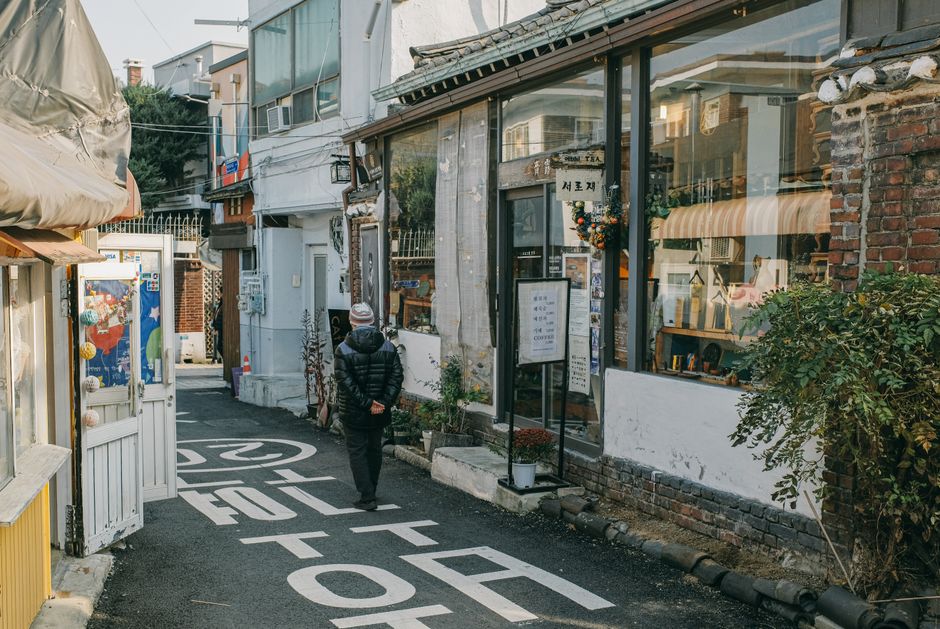
Cross the old railway line just north of Hongdae and the whole mood shifts within about four minutes of walking. Grandmothers doing their morning stretches pass twenty-somethings in pajama pants buying kimbap, and every third storefront is some cramped, design-obsessed cafe that seats maybe twelve people. Get there via the Airport Railroad or Line 2 to Hongik University Station, exit 3, then cut north into what’s now called Gyeongui Line Forest Park — that green strip is the spine of Yeonnam-dong.
Yeonnam-dong has gotten popular enough that calling it “hidden” is a stretch these days, and plenty of tourists have caught on — I’ll cop to the irony of writing about it here at all. But it’s still fundamentally a residential neighborhood that happens to have excellent coffee, not a district engineered around foot traffic. Walk the forest park end to end on a weekday afternoon around 2 or 3pm, after the lunch crowd clears and before the after-school crowd shows up, and you’ll get long, quiet stretches almost to yourself. A coffee runs about 4,500 to 6,000 won nearly everywhere, and a proper dinner for two at one of the neighborhood’s small, steam-filled Korean or Japanese-leaning restaurants lands somewhere around 30,000 to 45,000 won. Load a T-money card with at least 10,000 won before you set out; between the subway and the local buses that stitch these neighborhoods together, you’ll use it more than you expect.
Mangwon Market: where Mapo actually shops
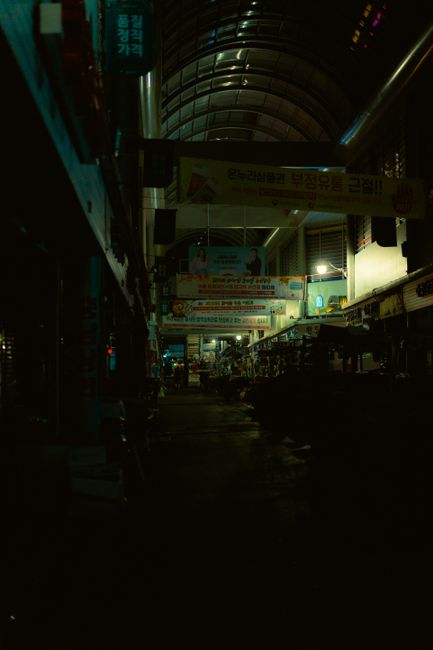
There’s no tteokbokki Instagram line here, no tour groups in headsets trailing a flag. Mangwon Market is a covered arcade of roughly 200 stalls where people from Mangwon, Hapjeong, and Hongdae buy their produce, their banchan, their fish, because it’s genuinely cheaper than the Lotte Mart down the road. You’d expect Mapo’s most famous market to be Gwangjang’s louder cousin across the river, but Mangwon isn’t performing for anyone — it’s just doing its job. Take Line 6 to Mangwon Station, exit 2, and walk three to five minutes in.
What struck me the first time I went wasn’t the food, oddly, it was how unremarkable I felt standing there. Nobody looked twice at a foreigner picking through perilla leaves. Go looking for the stalls doing chili-stuffed fish cakes straight off the fryer, or the corner selling fat, hand-folded mandu by weight rather than by the piece — that’s the kind of thing worth hunting for over a generic “try the street food” tip. A bag of hotteok or a bowl of noodles rarely runs past 5,000 won, and a full, wandering meal across three or four stalls stays under 15,000 won. Go in the late morning, around 10 or 11am, before the lunch rush and while the produce is still fresh off the early delivery trucks; evenings get busy with locals doing their actual dinner shopping, which is fascinating to watch but a tighter squeeze if you’re trying to eat while you browse.
Seochon and Tongin Market: Bukchon’s quieter sibling
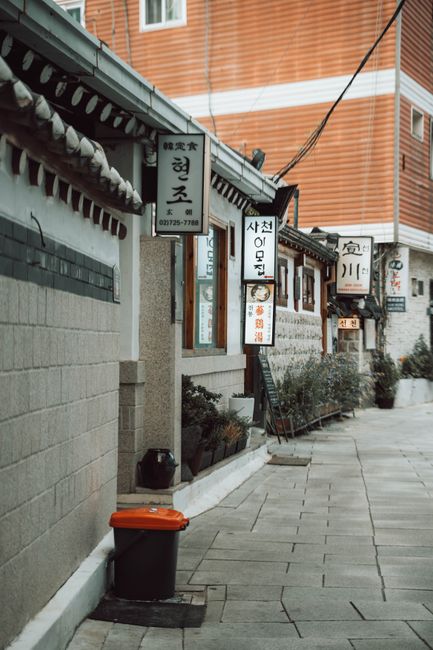
You’d think Bukchon Hanok Village is the traditional-Seoul experience everyone should chase, and it is beautiful, but it’s also so full of rented hanbok and selfie sticks that it can feel more like a costume party than a neighborhood. Seochon, just west of Gyeongbokgung Palace, is what I send people to instead. Poets and painters actually lived here a century ago, and plenty of older Seoulites still do, in low-rise houses tucked behind walls just tall enough to keep things private. Take Line 3 to Gyeongbokgung Station, exit 2, and walk north through the narrow residential streets to feel the difference almost immediately.
The market end of Seochon is Tongin Market, known for its yeopjeon dosirak: you buy old-style brass coin tokens, about 500 won each, and trade them for small portions of banchan and rice from different stalls, building your own tray as you go. It sounds gimmicky written out like that, sure, but it works, because it forces you to actually walk the market and talk to the ajummas running each stall instead of just pointing at a menu. Cash is still king at most of these stalls, so carry a mix of small bills and coins rather than assuming a card reader will be sitting there. Budget around 5,000 to 8,000 won for a full tray, and go late morning on a weekday, before the token booth line builds up.
Mullae-dong: iron, art, and jazz behind rusted shutters
This one still catches people off guard, even Koreans who haven’t been. Get off at Mullae Station on Line 2, exit 7, and for the first few minutes you’ll wonder if you took the wrong stop. It’s just small metalworking shops, welding sparks, and the sharp, metallic smell of machine oil clinging to the air. Then you round a corner and the scene flips entirely: a mural covers an entire shutter, a gallery door is propped open with a paint can, and the buttery smell of a bakery pulls you in before you’ve registered what changed. Mullae Creative Village grew out of an old ironworks district that never fully died. Instead, more than 200 artists moved into the empty upper floors and back alleys over the past couple decades, and now you get this genuinely unplanned coexistence of factory clatter and gallery openings on the same block.
It isn’t polished, and that’s the whole point. There’s no curated “art street” map at the entrance. You just wander, and eventually land at a converted factory space pulling pour-over coffee for around 6,000 won, or a bakery like Rust Bakery working out of a former ironworks, or a bar lit by filament bulbs with a jazz record spinning where you’d swear there was nothing but scrap metal five minutes earlier. Weekend afternoons bring more foot traffic from young Koreans doing exactly what you’re doing, but weekday evenings after the factories close around 6pm are when the neighborhood feels most like itself: half industrial, half gallery, entirely unbothered by anyone watching.
Suseongdong Valley and the Bugaksan trail: the hike locals do before work
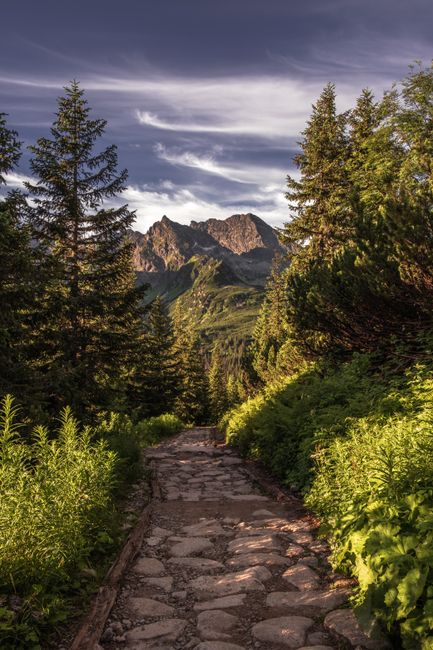
Hiking doesn’t sound like it belongs on a “hidden spot” list, but hear me out, because most visitors only ever manage Bukhansan or Namsan, and both fill up fast. Suseongdong Valley sits closer to the city center than either, tucked near Buam-dong on the northwest side of Gyeongbokgung, and it connects into the Bugaksan section of the old Seoul City Wall trail. I’ve run into more Korean retirees doing their morning loop here than tourists of any nationality on any given weekday, and that ratio tells you something about who this trail actually belongs to.
The valley itself is a short, shaded stretch with a stream cutting through rocky terrain, genuinely peaceful, and an easy warmup before the climb toward the wall. From there, the fuller loop past Changuimun Gate and up toward the Bugaksan summit takes maybe two to three hours round trip depending on your pace. The payoff is a view where Jongno’s glass towers look almost toy-sized against the granite ridgeline, with Gyeongbokgung’s tiled roofs laid out below and the old presidential compound’s grounds visible off to one side — a view that beats most of the paid observation decks in the city, and it costs nothing. Bring your passport or ID, since parts of the trail near that former presidential area still require a quick registration. Go early, ideally before 9am on a weekday, both to beat the heat in summer and to catch the neighborhood locals doing their loop before work, which is oddly the most reliable way to tell you’re somewhere that belongs to the city rather than to its visitors.
A few honest caveats
“Hidden” is doing some heavy lifting in a title like this, so let me be straight about it. None of these places are secret in the sense that no one’s written about them; you can find all five on a map in about ten seconds. What they have in common is that they weren’t built for you to visit. They were built for people to live in, and the reason they still feel different is that the primary audience walking through them on any given day is mostly local. That can change fast in Seoul, and Yeonnam-dong is proof of how quickly a quiet neighborhood turns into a destination once enough people write about it, myself apparently included now. So go, but go the way a neighbor would, not a spectator.
Frequently asked questions
Do I need cash for these markets, or will cards work? Bring both, but lean toward cash. Larger shops and cafes in Yeonnam-dong and Mullae-dong take cards without issue, but the smaller stalls at Mangwon Market and Tongin Market often run cash-only or prefer it, and fumbling for a card reader that isn’t there slows down the whole line behind you.
I only have one afternoon and want the “locals, not tourists” feeling without much walking, which single spot should I pick? Mangwon Market, without question. It’s compact, sits right at a subway exit, and is cheap enough that you’re not committing to anything. You’ll feel the difference from Gwangjang or Namdaemun within about two minutes of walking in.
Is the Bugaksan hike doable if I’m not an experienced hiker? Yes, if you keep to the Suseongdong Valley section and skip the push to the summit. It’s shaded, mostly gentle, and short enough for sneakers rather than proper hiking boots. If you do want the summit view, budget the extra two hours and pace yourself; there’s no shame in turning back halfway if the wall trail’s steeper stretches aren’t your thing.
Bonus tip: almost none of these places are geared toward English, and that’s part of the appeal, but it also means a basic translation app and a little patience go a long way. The stall owners at Tongin Market and Mangwon Market are used to pointing and gesturing, and nobody expects fluency from you. Showing up with a bit of effort and a smile gets you further in these neighborhoods than it does in any tourist zone in the city.
Leave a Reply