My first week at a Korean office, I made the mistake of asking a colleague her name so I could, you know, use it. She blinked at me like I’d asked something faintly rude. “You can just call me Kim-daeri-nim,” she said, which translated roughly to “Assistant Manager Kim, whom I respect.” Try to imagine addressing a coworker as “Chief Periodontist Smith, sir” every time you need to borrow a stapler, and you’re close to how it felt the first dozen times out of my mouth.
Six months later I was doing it without thinking, and I’d stopped hearing anyone’s actual first name at work at all — including, eventually, my own. If you’re picturing a workplace where everyone’s on a first-name basis and rank is something you infer from who has the corner office, Korean offices are going to rearrange that assumption fairly quickly. Here’s what that rearranging actually looks like, title by title.
The Ladder Nobody Explains to You Out Loud
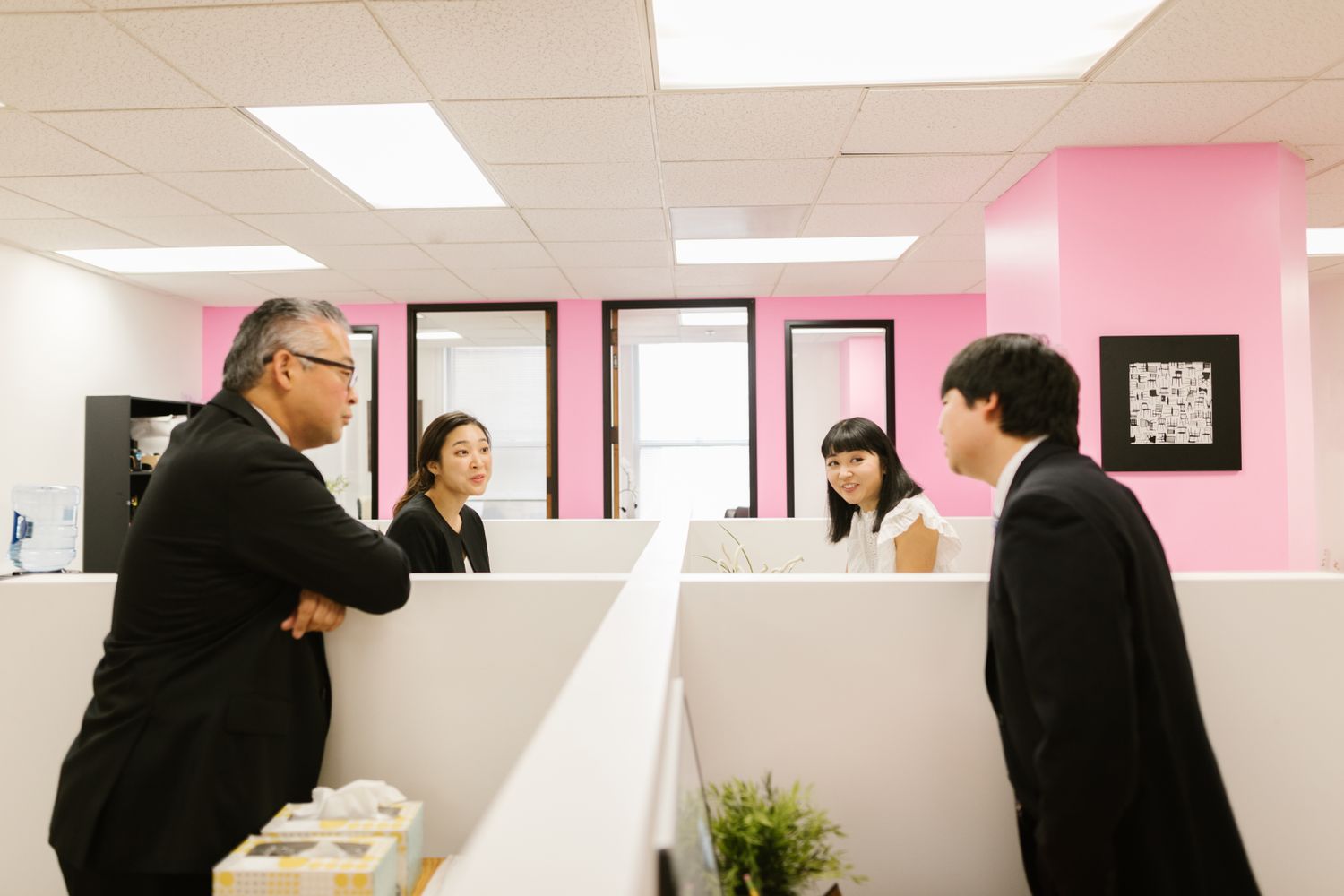
You’d think a company would just hand new hires a chart. Nobody does. You’re expected to pick up the ranking system through a mix of quiet observation and the occasional cringeworthy misstep, which is a strange way to run an org chart but is exactly how it works at most traditional Korean companies. The core ladder, from entry level up, runs: 사원 (sawon, entry-level associate, roughly years zero to three), 대리 (daeri, assistant manager, usually landing somewhere between years three and seven), 과장 (gwajang, manager or section chief, often around the seven-to-ten-year mark), 차장 (chajang, deputy director, a rung some companies skip entirely), and 부장 (bujang, general manager or senior director, typically a decade or more in). Above that you move into executive territory — 이사, 상무, 전무, and eventually 사장 (company president) — but those titles vary more by company and industry, so there’s no single universal chart everyone follows past 부장.
What surprised me is how loosely the job title tracks with what a person actually does day to day. A 과장 might be doing nearly identical work to the 대리 sitting next to them. The title isn’t really describing the job. It’s describing tenure, and by extension, exactly how much deference the room owes that person before anyone’s said a word.
If you’re wondering whether every company still runs this exact ladder — plenty don’t. Startups and tech companies have been flattening it for years, sometimes down to three tiers, sometimes scrapping titles altogether in favor of English nicknames or a flat “-nim” suffix on everyone’s name. But even at the loosest startup I’ve visited in Seoul, somebody in the room still quietly knew who the senior person was. The ladder gets shorter. It doesn’t disappear.

Honorific Speech Is the Hierarchy, Spoken Out Loud
Knowing the title chart is only half the job, though — the real test starts the moment you open your mouth to address someone on it. In Korean, you can’t really talk to a coworker without grammatically declaring where they sit relative to you. Address your 부장 directly and it’s 부장님 — the honorific 님 isn’t optional politeness, it’s closer to a mandatory field you have to fill in before the sentence is grammatically complete. Skip it and you haven’t been casual, you’ve been borderline insubordinate. I wrote a longer breakdown of how these speech levels work in Korean Honorifics Explained, but the short version for the office specifically: your verb endings, your pronouns, even which word you use for “eat” or “sleep” shift depending on who you’re addressing and who you’re talking about. A senior person can address you in blunt, clipped speech. You cannot answer the same way back. That asymmetry is baked into the language itself, not layered on top of it as some cultural nicety — which is exactly why hierarchy rarely feels optional here, in a way it might in an English-speaking office where the CEO can still say “just call me Dave” and mean it.
Hoesik: Dinner as a Performance Review You Didn’t Know You Were Taking

The hierarchy doesn’t just decide how you speak to people, either — it decides how you physically sit across from them. If you’ve heard one thing about Korean office culture, it’s probably hoesik, the after-work team dinner, often followed by a second round (2차) at a different venue, sometimes a third. I used to think of it as just dinner with extra steps. It’s closer to a live-action rehearsal of the entire office hierarchy, performed with soju bottles as props. Seating isn’t random — the most senior person usually gets the seat facing the door or furthest from it, depending on the venue’s convention, and everyone else arranges themselves accordingly without a word being said about it. Pouring drinks has its own choreography: you pour for seniors before yourself, you turn slightly away from a senior when you drink in front of them, and you generally don’t leave before they do, regardless of how badly your feet hurt in shoes you didn’t expect to be standing in for four hours.
None of this is written down anywhere. You absorb it by watching, or by getting it wrong once and watching the air noticeably leave the room.
You might be thinking this all sounds exhausting, and honestly, plenty of Koreans think so too — which is exactly why hoesik culture has been visibly softening. The classic marathon dinner-then-noraebang-then-more-drinks format has been giving way to shorter, earlier, lighter versions, and “I have other plans” has become a phrase younger employees will actually say to a manager’s face now, something that would have been unthinkable a decade ago. It hasn’t vanished. It’s just lost some of its stamina.
Why Titles Carry More Weight Here Than in a Western Office
It’s tempting to write this off as “Korea just really likes bureaucracy,” but that undersells what’s going on. The hierarchy isn’t primarily about paperwork — it’s a holdover from a Confucian social framework where age and seniority were understood to map onto wisdom and authority, and that framework never stayed confined to family life. It moved straight into the modern corporation. In a lot of Western offices, hierarchy is functional: your manager has more authority because they control your budget or your review, full stop, and outside that specific transaction, rank mostly evaporates. In a Korean office, rank travels with the person into the elevator, the cafeteria, the group chat, and the hoesik table. It’s less an org-chart fact and more a social operating system that happens to also run the org chart.
This is also why nunchi — reading the room, sensing status and mood without anyone stating it outright — gets talked about as basically a professional skill here. You’re expected to know where you rank relative to everyone in a meeting before the meeting has properly started.
The MZ Pushback Is Real, and Companies Are Actually Responding to It
If you assume this whole system is airtight and unchanging, I’d gently push back, because the loudest resistance to it right now is coming from inside the building. Korean media groups workers born from the 1980s through the early 2000s under the label MZ세대, and the numbers back up what you’d guess just from talking to them: a JobKorea survey of over 1,100 millennial and Gen Z employees found that 54.8 percent had no intention of ever pursuing a management position at all. Asked why, 43.6 percent said they simply didn’t want the added responsibility, and another chunk cited burnout risk and a shrinking sense that promotion was worth the trade against their personal time. That’s not a fringe opinion — that’s a majority.
Samsung Electronics, of all places, told its executives back in 2023 to drop seniority titles among themselves and use first names with the honorific suffix “-nim” instead — a fairly startling move for a company that basically defines Korean corporate conservatism. Other companies have gone further with English nicknames, no dress codes, and shortened workweek pilots. There’s real momentum at the policy level too: the current administration has pushed a 4.5-day workweek conversation that would have sounded like fantasy a few years back.
I don’t think any of this means the system is collapsing. What I actually see happening is more like erosion at the edges while the core structure holds — the titles are still there, the honorific speech is still mandatory, but the emotional expectation that you owe your 부장 your Friday night has gotten noticeably weaker, especially at younger, tech-adjacent companies.
FAQ
Do I have to memorize every title if I’m just visiting or working short-term in Korea?
Not every rung, no. Learn 사원, 대리, 과장, 부장, and how to attach 님 to whichever title someone actually holds, and you’ll cover the vast majority of daily office interactions. Executive titles above 부장 vary enough by company that even Koreans sometimes double-check them before a meeting.
What do I call my boss if I genuinely don’t know their exact title?
“팀장님” (team leader) is a safer catch-all than guessing at a rank you’re unsure of, since most managers hold that functional role regardless of the formal title underneath it. Guessing wrong on a formal title out loud is more awkward than quietly asking once what to call someone.
Is hoesik mandatory, or can I actually say no?
Officially, no company can force you to attend social events outside working hours, and that’s increasingly true in practice too, especially at younger companies. But at more traditional, hierarchy-heavy workplaces, skipping every single hoesik will still register as a quiet social cost, even if nobody says a word about it to your face.
What strikes me most, even now, is how much of this system runs on things nobody explains and everybody just absorbs — the seating, the pouring, the exact moment you’re allowed to leave. You don’t get a manual. You get a series of small, slightly mortifying corrections until you stop needing them.
Leave a Reply