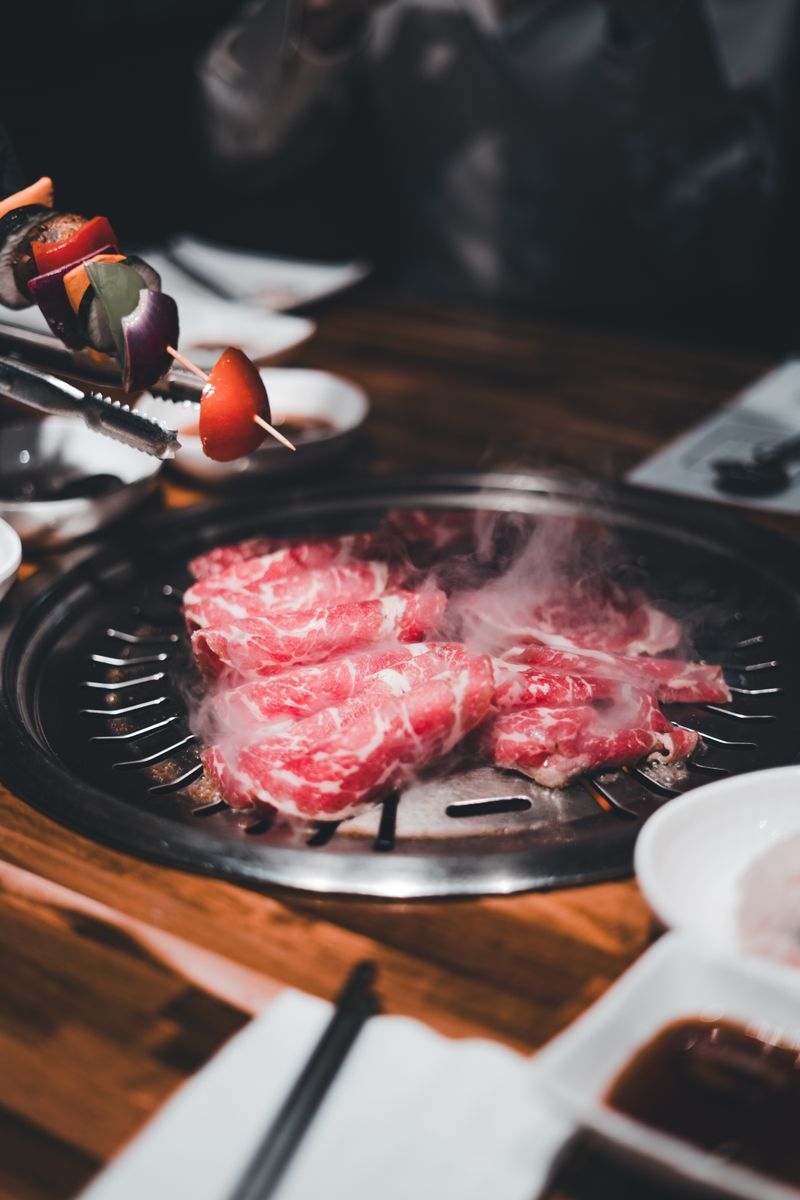
The first time I sat down at a Korean barbecue place by myself, the waiter looked at me, looked at the two-burner table, and asked — not unkindly — “Just you?” I said yes, braced for the “two-person minimum” I’d read about online, and instead got waved to a narrow counter seat facing the wall, a single-burner grill already lit, like the restaurant had been expecting someone exactly like me. That counter, it turns out, tells you almost everything about where honbap culture is right now: not fully normal, not still shameful, just quietly, structurally accommodated.
Korean pop culture is full of solo eating and solo drinking — variety shows, dramas, YouTube mukbangs — and yet travel forums still carry warnings that eating alone marks you as pitiful, someone to be quietly pitied by the ajumma running the restaurant. Both of those things are true, sort of, depending on where you eat, what you order, and how old the person judging you happens to be. I’m Yijidaddy, and after enough solo meals here to have opinions about which restaurants handle it gracefully, let me walk through what’s actually changed, what hasn’t, and how to eat alone in Korea without it feeling like a social experiment.
What “Honbap” Actually Means (and Why It Needed a Name at All)
Honbap is a portmanteau — “honja” (alone) plus “bap” (rice, or food generally) — and the fact that Korean needed a specific, catchy word for “eating by yourself” is itself a clue. Nobody coins a term for something unremarkable. English doesn’t have a punchy word for eating alone because, culturally, nobody needed one; you just eat lunch at your desk and move on. In Korea, meals have historically functioned as social infrastructure — bonding rituals for coworkers, family, classmates — which meant eating by yourself wasn’t neutral. It was legible. It said something about you, whether or not that something was true.
The companion term, “honsul,” splices “honja” with “sul” (alcohol), and it carries a slightly heavier charge, because drinking in Korea has traditionally been even more communal than eating — rounds poured for each other, toasts, the whole choreography of hoesik (company dinners) that runs on group drinking. Sitting alone at a bar with a bottle of soju used to read as borderline concerning. These days, less so — though “less so” still leaves plenty of gap between the headlines about honsul bars and what actually happens at a random neighborhood pojangmacha on a Tuesday night.
The Stigma Was Real, and It Wasn’t That Long Ago
I think people who arrive in Korea now, in 2026, and see honbap cafés with individual booth dividers assume this was always the norm. It wasn’t. Older Koreans I’ve talked to describe growing up with a blunt social verdict attached to solo dining: if you’re eating alone, it usually meant you had nobody to eat with, and in a culture that has historically prized group belonging — school groups, work teams, extended family gatherings — that verdict didn’t stay private. People noticed. Restaurants weren’t built for it either; tables were sized for four, portions were often priced or plated for two, and a party of one at a barbecue joint could genuinely be turned away at the door for not meeting a two-person minimum. To put a number on it: many traditional galbi houses price pork belly and other cuts in servings meant for two, which in practice meant a solo diner either paid for a portion they couldn’t finish or got told, flatly, to come back with a friend.
What shifted the cultural baseline wasn’t a policy or a campaign — it was television, gradually, making a private behavior feel public and even aspirational. A widely-noted moment came in 2018, when a K-pop idol was shown eating alone on TV and it became a genuine viral talking point, less because it was scandalous and more because it wasn’t. Variety shows like “I Live Alone” turned solo domestic life, honbap included, into entertainment rather than confession, following minor celebrities through the exact routines — grocery runs, solo dinners — that used to be seen as evidence of a sad life. A drama literally titled “Drinking Solo” leaned into honsul as a lifestyle choice rather than a red flag, not unlike how American sitcoms eventually stopped treating a character eating dinner alone as automatic shorthand for “this person’s life is falling apart.” None of that erased the old association overnight, but it gave people cultural permission to be seen doing something they’d already been doing quietly for years.
The Real Driver: Korea’s Household Numbers Changed First
Here’s the part that surprised me, because I assumed the honbap trend was mostly a vibe shift — attitudes softening because of Instagram and streaming shows. Actually, the underlying demographic shift is bigger and more concrete than the cultural narrative around it. Single-person households made up 36.1% of all households in South Korea in 2024 — over 8 million households — up from 31.7% in 2020 and 27.2% back in 2015. Seoul specifically is even higher, at roughly 39.9%. That’s not a subculture; that’s approaching two out of every five households in the capital.
Once you see that number, the honbap infrastructure stops looking like a trendy accommodation and starts looking like basic market response. Restaurants that ignore a customer base that size are leaving money on the table, and enough of them have figured that out that solo-friendly seating — counters facing the wall, single-serving hot pot burners, one-person galbi grills — has become a recognizable category rather than a novelty. Surveys have put the rate of Koreans eating lunch alone at around 26.9%, and dinner alone at 25.7%, which tracks with a workforce that’s often eating on its own schedule anyway.
So Is It Actually Normal Now? Depends Where You’re Standing
Even so, a demographic shift that big doesn’t rewire 170,000 individual restaurants overnight, and I don’t want to oversell how solved this is. A lot of those restaurants are small, family-run operations where the whole cost structure — banchan side dishes, shared grills, kitchen layout — was built decades ago around parties of two or more, and re-plating a menu around solo portions means real margin decisions, not just a sign in the window. By some estimates only around 10% of the roughly 170,000 restaurants across the country formally offer single-person meal options. Picture walking down an ordinary block of ten restaurants in a residential neighborhood on a Tuesday night: statistically, nine of those doors are still structurally built to say “bring a friend,” even if the owner behind the counter wouldn’t personally mind serving you alone. In business-heavy neighborhoods like Gangnam or Jongno, where office workers grab quick lunches solo as a matter of routine, that ratio flips, and you’ll find counter seating and single-serving menus almost everywhere. Walk into an old-school, family-run barbecue or hot pot restaurant built around big shared pots, though, and you can still run into a two-portion minimum, particularly outside Seoul or in more traditional neighborhoods.
And when that happens now, it tends to make news rather than pass unnoticed — there have been recent stories of restaurants publicly criticized, even internationally, for turning away solo diners, which is itself evidence of how far the norm has shifted: refusing a solo customer used to be default behavior, and now it’s newsworthy precisely because it’s the exception. I’d still call the current state “uneven normal” rather than “fully normal” — you’re very unlikely to get side-eye for honbap at a convenience store, a noodle counter, or a café, but a table for one at a place built for group grilling can still occasionally feel like you’re asking for something slightly off-script.
Generational Lines Matter More Than You’d Think
The generational split here isn’t subtle. Younger Koreans have folded honbap and honsul into a broader embrace of solo leisure — solo camping, solo travel, solo drinking at dedicated honsul bars that have popped up specifically to serve people who want a curated solo-drinking experience rather than an awkward one. Some of that is framed, fairly explicitly, as a quiet rebellion against the older generation’s group-first social scripts — a preference for personal time over obligatory bonding, especially among people already burning out from Korea’s notoriously long working hours, among the longest in the OECD.
Older Koreans, meanwhile, are more likely to hold onto the original reading: solo dining as circumstantial rather than chosen, something closer to loneliness than lifestyle. That doesn’t mean your average fifty-something is going to judge you for eating ramyeon alone at a counter — it means the emotional vocabulary around honbap still splits generationally, the same way “treating yourself” and “being isolated” can describe the exact same bowl of noodles depending on who’s asked.
Which is really the whole picture in miniature: a culture in the middle of a shift, where the rules depend on the neighborhood, the restaurant’s age, and who’s sitting at the next table. That unevenness is exactly why a few concrete ground rules save you the guesswork.
Practical Honbap Tips If You’re a Foreigner Eating Alone
If you’re visiting or new here and want to eat solo without friction, a few things genuinely help.
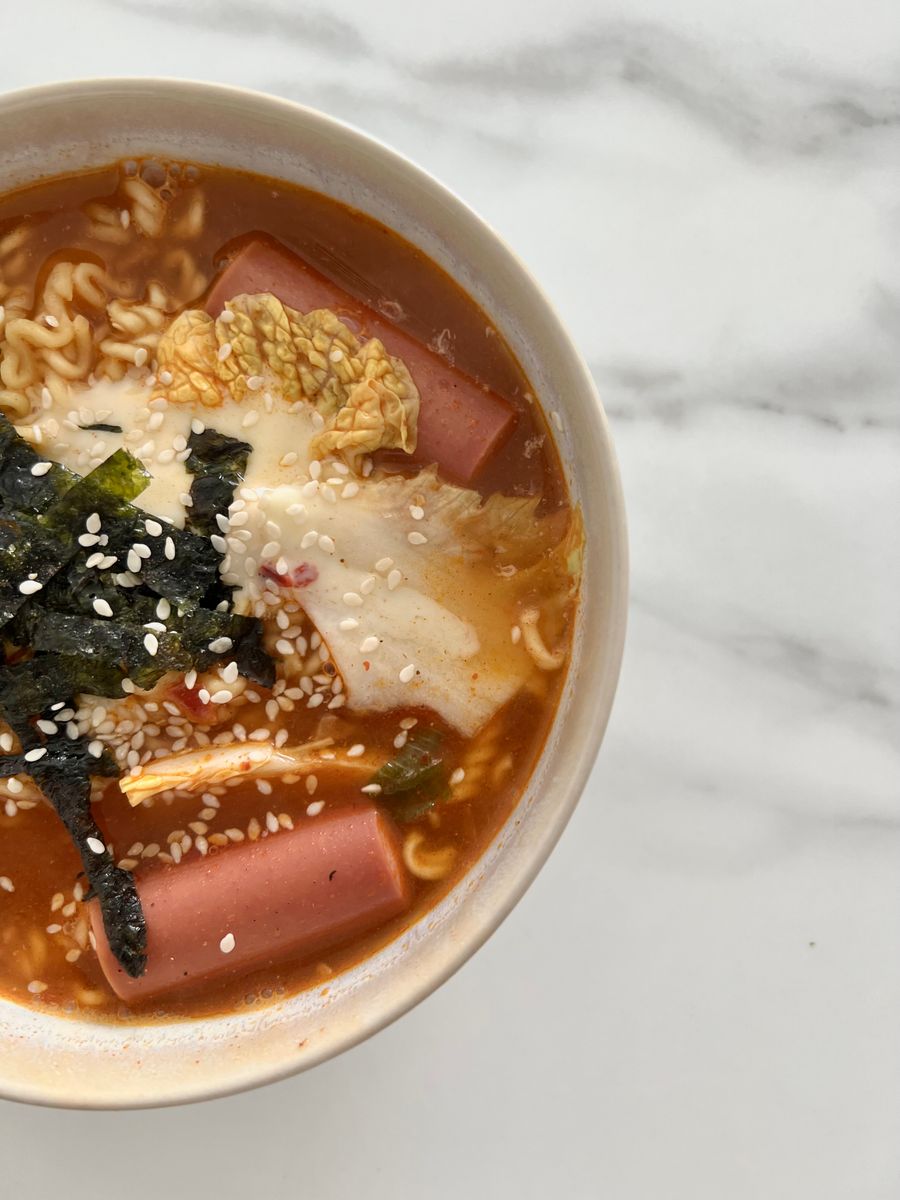
Convenience stores and noodle counters are basically zero-friction. CU, GS25, and similar stores have instant ramyeon stations and seating built for exactly one person; nobody blinks.
Look for “1인” (il-in, “one person”) on signage or menus — it’s now common enough at Korean BBQ and hot pot spots that specifically advertise single portions, and searching that term alongside a neighborhood name on a map app will usually surface a few solid options.
Skip the biggest, most traditional galbi houses if you’re worried about pushback — they’re the most likely to still run on a two-portion pricing model. Smaller, modern BBQ chains built around individual grills are far more reliable for honbap.
Bookstores-turned-cafés and quiet café chains are honestly some of the most comfortable honbap-adjacent spaces in the country — nobody there is eating in a group anyway, so a solo coffee or light meal draws zero attention.
And if you do get turned away for a “two-person minimum” somewhere, take it for what it is: a leftover pricing structure from a menu built decades ago, not a verdict on you. Just walk next door.
FAQ
Is it rude or awkward to order a full Korean BBQ meal alone?
Not inherently rude, but practically inconsistent — some traditional galbi and samgyeopsal restaurants still enforce a two-person minimum for cost reasons tied to shared grills and side-dish portions, while newer BBQ chains built around single burners will serve solo diners without hesitation. Checking for “1인” on the menu or storefront before you sit down saves you the awkward back-and-forth.
I don’t speak Korean — how do I order alone without a menu or help?
Easier than you’d expect: most Korean restaurants outside the countryside now have picture menus, kiosk ordering, or a QR code that pulls up an English option, and pointing at a photo works fine anywhere. Convenience stores and noodle counters, which are the easiest honbap entry point, almost always have a self-serve kiosk, so you never actually have to ask a stranger to seat you as a party of one.
Is honsul (drinking alone) viewed the same as honbap?
It’s carrying a bit more cultural weight, since group drinking has historically been so ritualized in Korean work and social life, but dedicated honsul bars now exist specifically for solo drinkers, and younger Koreans in particular treat it as a legitimate way to unwind rather than a warning sign.
Honbap isn’t a fully settled question in Korea yet, and I’d be lying if I said every restaurant treats a table for one the same way. But the trajectory is clear, the infrastructure is catching up to the demographics, and if you’re eating alone here in 2026, you’re closer to the mainstream than the outlier — even if the occasional galbi house hasn’t gotten the memo.
Leave a Reply