My first winter in Seoul, I walked into a samgyeopsal place near Sinchon by myself at lunchtime, stood at the entrance for a solid ten seconds while the owner looked at me, looked past me for whoever I was apparently still waiting on, and then told me, not unkindly, that the minimum order was for two people. I remember the grill smoke drifting out the propped-open door and the lunch crowd of pairs and small groups glancing up at the guy clearly eating alone. I ended up eating instant noodles alone in my apartment instead, feeling vaguely like I’d done something wrong just by showing up solo. These days, more than a decade later, I eat alone constantly and nobody blinks. I’m Yijidaddy, and the gap between those two moments says a lot about how fast Korea’s relationship with solo dining actually changed.
What Honbap Actually Means
Honbap (혼밥) is just the mashup of honja (혼자, “alone”) and bap (밥, “meal”) — eating alone, in other words. It sounds almost too simple to need its own word, but the fact that Korean developed a specific term for it tells you something. In a culture built around shared tables, shared side dishes, and portions sized for groups, eating by yourself was unusual enough that it needed naming. Once it had a name, though, it also somehow became easier to talk about, joke about, and eventually just do without a second thought.
Why It Used to Carry a Stigma
Korean cuisine is built on sharing in a pretty structural way, not just as a cultural nicety. Order Korean barbecue and the banchan land in the middle of the table for everyone to pick at together. Order a stew and you’re often spooning out of the same communal pot bubbling away on a portable burner. A lot of menu items are portioned and priced assuming at least two people are splitting the bill and the food, which is exactly the wall I ran into on that first solo barbecue attempt.
Because of all this, eating alone used to read as something close to pitiable, maybe a sign you didn’t have friends or family nearby to eat with, in a culture that places real weight on collective identity over individual preference. Some restaurants, especially barbecue and stew places built entirely around those family-style spreads, would flat out refuse to seat a table of one, not out of rudeness but because their whole kitchen rhythm, their whole floor plan, wasn’t built for it. A two-top covered in side dishes meant for four just didn’t make financial sense to the owner, solo customer or not.
Then Everything Flipped, Starting Around the Mid-2010s
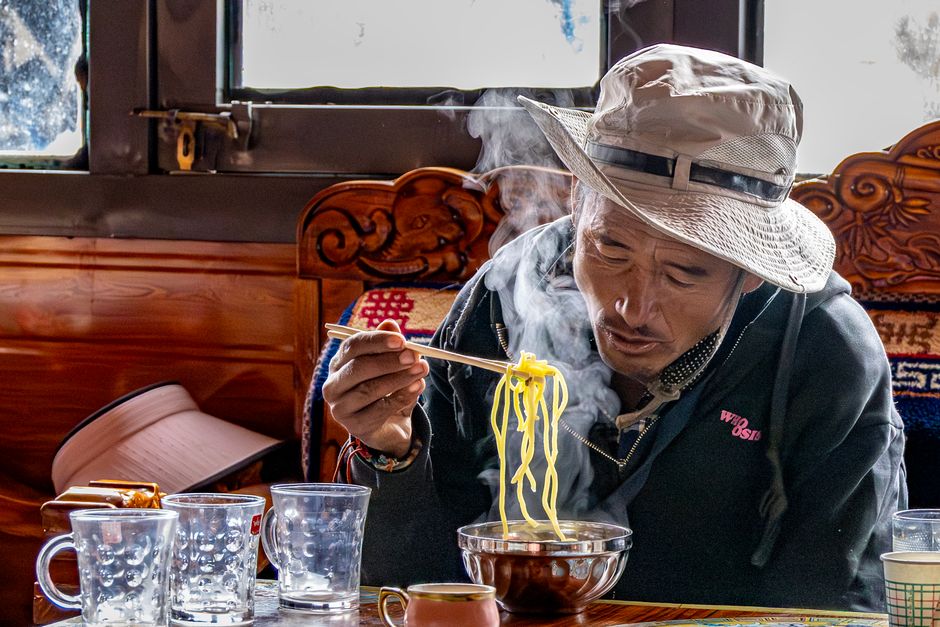
Somewhere around the mid-2010s, honbap stopped being a slightly sad workaround and turned into something people actively chose and even talked about with a bit of pride. Part of that shift tracks with something very unglamorous and demographic: single-person households in Korea climbed sharply through the 2010s, becoming the single most common household type in the country rather than a rare exception. More people living alone simply meant more people eating alone on an ordinary Tuesday, whether they felt sentimental about it or not, and the market eventually had to catch up to that reality.
Mukbang culture, those long-form videos of someone eating a huge spread of food on camera, played a surprisingly big part in normalizing the image of a single person enjoying a full meal without anyone else at the table, turning a potentially lonely scene into something millions of people would voluntarily watch during their own dinner. Around the same time, the honjok (혼족) lifestyle, the broader “alone tribe” trend covering everything from solo travel to solo karaoke booths, gave the whole concept of doing things by yourself a much more self-sufficient, even aspirational spin rather than a lonely one. I noticed it concretely at my own office too, when a coworker started mentioning her solo lunch spot not as something to apologize for but almost as a small flex, a twenty minutes of peace nobody could interrupt.
My Own Honbap Spots in Seoul
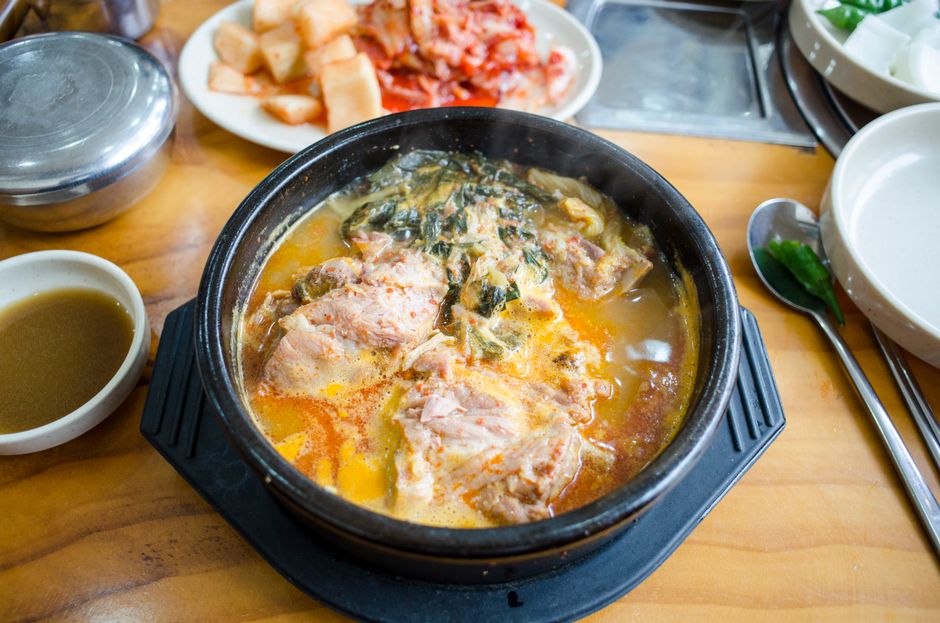
These days I’ve got a small, reliable rotation. A tiny sundubu jjigae place near my apartment in Mapo-gu has three single-seat counters along the window specifically built for one, each with its own little wooden partition, and I never feel like I’m occupying a table that should’ve gone to a bigger group. Sitting there on a freezing January afternoon, the window fogged up from the steam off the bubbling tofu stew, watching commuters hurry past outside while I take my time with one bowl, is honestly one of my favorite small rituals in this city. A gukbap spot near my office is designed almost entirely around solo lunches, with a tablet at the door for ordering so you don’t even need to speak to anyone before your bowl shows up fifteen minutes later. Even honsul, drinking alone, has its own quiet normalcy now. I’ll sometimes grab a canned beer and a quick plate of jeon at a late-night spot by myself after a long day, and the only person who seems to notice is the owner refilling my water without me having to ask twice. None of these places ever feel like compromises, either, the way “settling for the solo option” might sound. The gukbap counter is genuinely one of the best versions of that dish I’ve had anywhere in the city, tucked into a space too small to really accommodate a group table even if I’d wanted one.
Where You Might Still Catch a Flicker of the Old Rules
It’s not a complete flip, though. Big group-oriented meals like Korean barbecue or budae jjigae, the kind built around a shared pot bubbling in the middle of the table, still feel structurally awkward to order solo even at places that technically allow it now. And at certain very traditional restaurants, especially outside the bigger cities, you might still catch that same “minimum order for two” line I ran into on day one. Generationally, older Koreans sometimes still read solo dining through that older lens of pity or loneliness, even while their kids and grandkids treat it as completely unremarkable.
Even some of the group-oriented places have found workarounds, though. I’ve seen barbecue restaurants start advertising a “1인 세트,” a one-person set, scaled down from the usual family-style portion so a solo customer can still get their samgyeopsal fix without the awkward negotiation at the door. It’s a small adjustment on a menu board, but it signals something bigger: restaurants recognized there was real revenue sitting with the solo diners they’d been turning away for years, and adjusting a recipe card was a lot cheaper than losing that business permanently.
Frequently Asked Questions
Q1. Will I get weird looks eating alone at a nice restaurant in Seoul?
Honestly, less than you’d think, especially anywhere with a younger crowd or near a business district where solo lunches are the norm during weekday afternoons. Weekend dinners at more romantic or celebratory spots are where you’re more likely to stand out, simply because the crowd skews toward couples and groups marking an occasion.
Q2. How do I know if a restaurant is honbap-friendly before walking in?
Look for single-seat counters facing the kitchen or a window, or menus built around one-bowl dishes like gukbap, bibimbap, or jjajangmyeon. If you see a solo diner already eating inside when you glance through the window, that’s usually your green light.
Q3. Is it considered weird to drink alone (honsul) at a bar?
Not anymore, though it’s still a bit more common at smaller neighborhood spots and convenience store plastic-table setups than at loud group-oriented pub chains built around big shared platters. A quiet corner seat with a book or your phone and one drink barely raises an eyebrow these days.
Q4. As a foreigner, do I need to say anything special when asking for a table for one?
Just “일 인분이요” (one person’s portion, please) or holding up one finger at the entrance works fine almost everywhere now. I used to over-explain myself with a nervous little speech about being alone that day, and eventually realized nobody needed the backstory. One finger, a nod, and you’re seated.
Looking back, that first winter’s rejected solo barbecue order feels like it happened in a completely different country. These days when I duck into my go-to gukbap counter alone on a weeknight, the only awkward silence left in the room is the one in my own head from a decade ago, and even that’s mostly gone now too. If you’re planning your own first solo meal out here, honestly just walk in, hold up one finger, and let the tablet or the ajumma at the counter take it from there. The city’s already moved past the part where that used to be a whole production.
Leave a Reply