Okay, funny confession first: I lived in Seoul for almost a year before I understood how the single-use subway cards actually worked. I kept buying them, kept losing track of them, and it wasn’t until a Korean friend watched me toss one in a trash can near Hongik University Station and physically gasped that I learned I’d been throwing away free money the whole time. So today I want to save you that same small heartbreak, because it happens to almost every tourist who rides the Seoul subway.
Wait, there’s a deposit on the ticket?
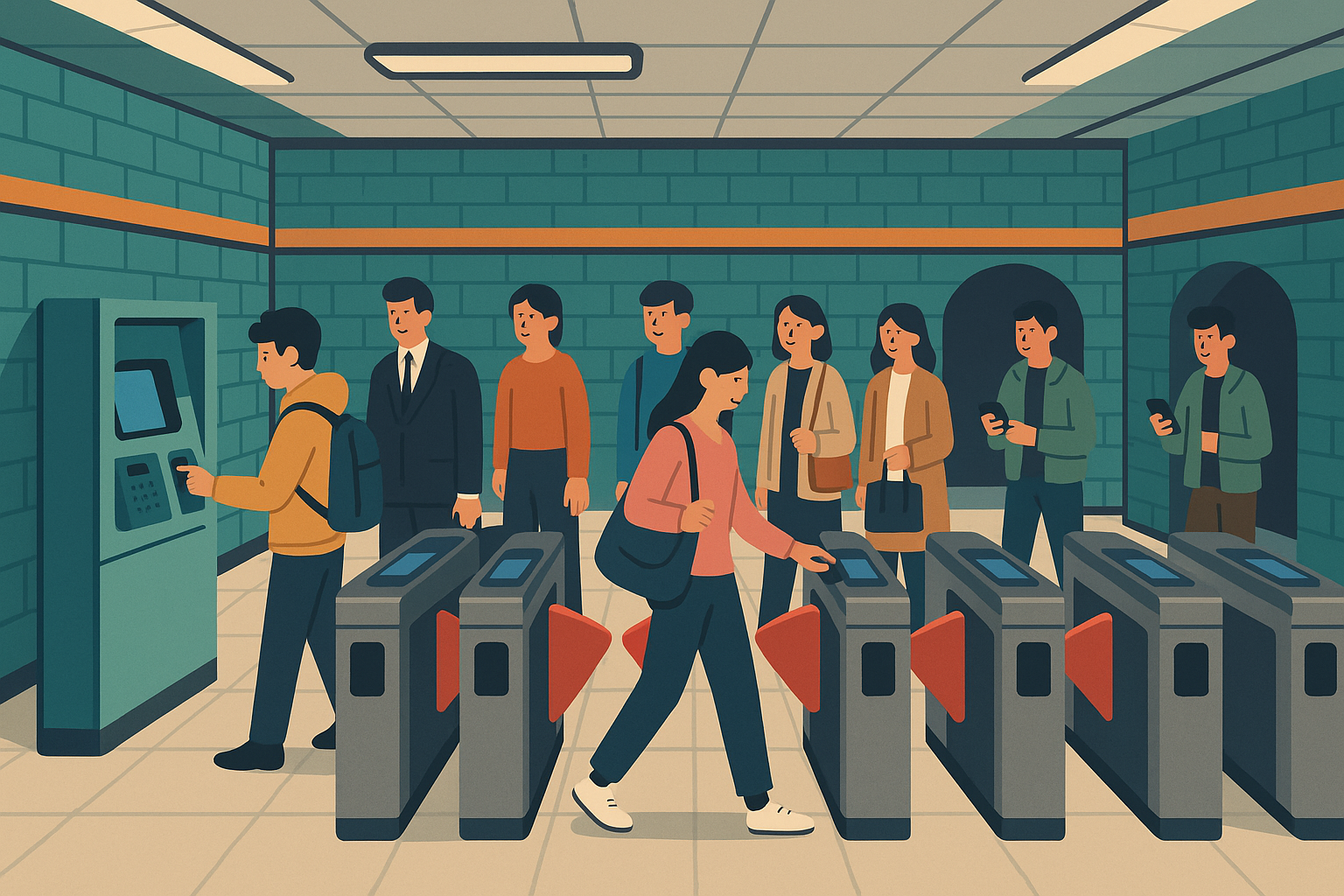
If you’ve used the Seoul subway without a T-money card, you’ve probably bought one of those plastic disposable tokens from the touchscreen ticket machines at the station. You tap your destination, pay the fare, and out pops a little round plastic card instead of a paper ticket. What most visitors don’t realize is that the price you just paid isn’t only the fare. It includes an extra 500 won deposit tacked on top. That deposit isn’t a fee, it’s yours, and it’s sitting there waiting for you to claim it back the moment you’re done riding.
The system exists because the operators would rather you return the card than have thousands of them piling up in drawers and landfills. Nobody announces this loudly, though, and the refund machine looks nothing like the one that sold you the ticket, so most tourists just assume the 500 won is gone for good.
Finding the refund machine
Here’s the part that trips people up: you don’t get your deposit back at the same colorful kiosk where you bought the card. You need a separate, much smaller machine, usually a plain box mounted on the wall labeled something like “Deposit Refund,” sometimes with a coin symbol. In my experience these are almost always near the ticket gates, often right beside the row of vending machines, and sometimes just past the turnstiles before you exit to the street. If you can’t spot one, station staff are used to the question and will point you toward it without missing a beat.
Using it is refreshingly simple. Feed your used card into the slot, and 500 won drops into the tray below. No screens, no menus, nothing to read in Korean. It takes about three seconds once you find the machine, which honestly feels a little anticlimactic after all that searching. Still, coffee money is coffee money.
The card has to be the disposable kind
One thing worth knowing is that these refund machines are strictly for the single-journey disposable cards. They won’t take your personal T-money card, the rechargeable one you buy at a convenience store and keep topping up all trip long. That card isn’t disposable at all, and there’s no deposit to refund on it, because you’re meant to keep using it, or hang onto it afterward as a souvenir if you like. Don’t feed your regular T-money card into the slot expecting coins back. It’s also worth checking your balance first, since if there’s leftover fare on the disposable card, some machines return that along with the deposit, not just the 500 won.
A small habit worth building before you fly home
My real tip here is timing. Do this before you’re rushing for your flight, because the last thing you want is sprinting through the airport train with a pocketful of plastic cards you meant to cash in three days earlier. I’ve made it part of my routine now: the moment I’m done with a disposable card, I walk it straight to the refund machine on my way out rather than tossing it in my bag and forgetting about it. It takes less time than tying your shoes.
Is 500 won going to change your trip? Of course not, it’s less than fifty cents. But there’s something satisfying about closing the loop properly, about leaving Korea having used the system the way it was designed instead of quietly donating loose change to the transit authority one card at a time. Now you also get to be the friend who mentions this to someone else and watches their face do exactly what mine did that day at Hongik University Station.