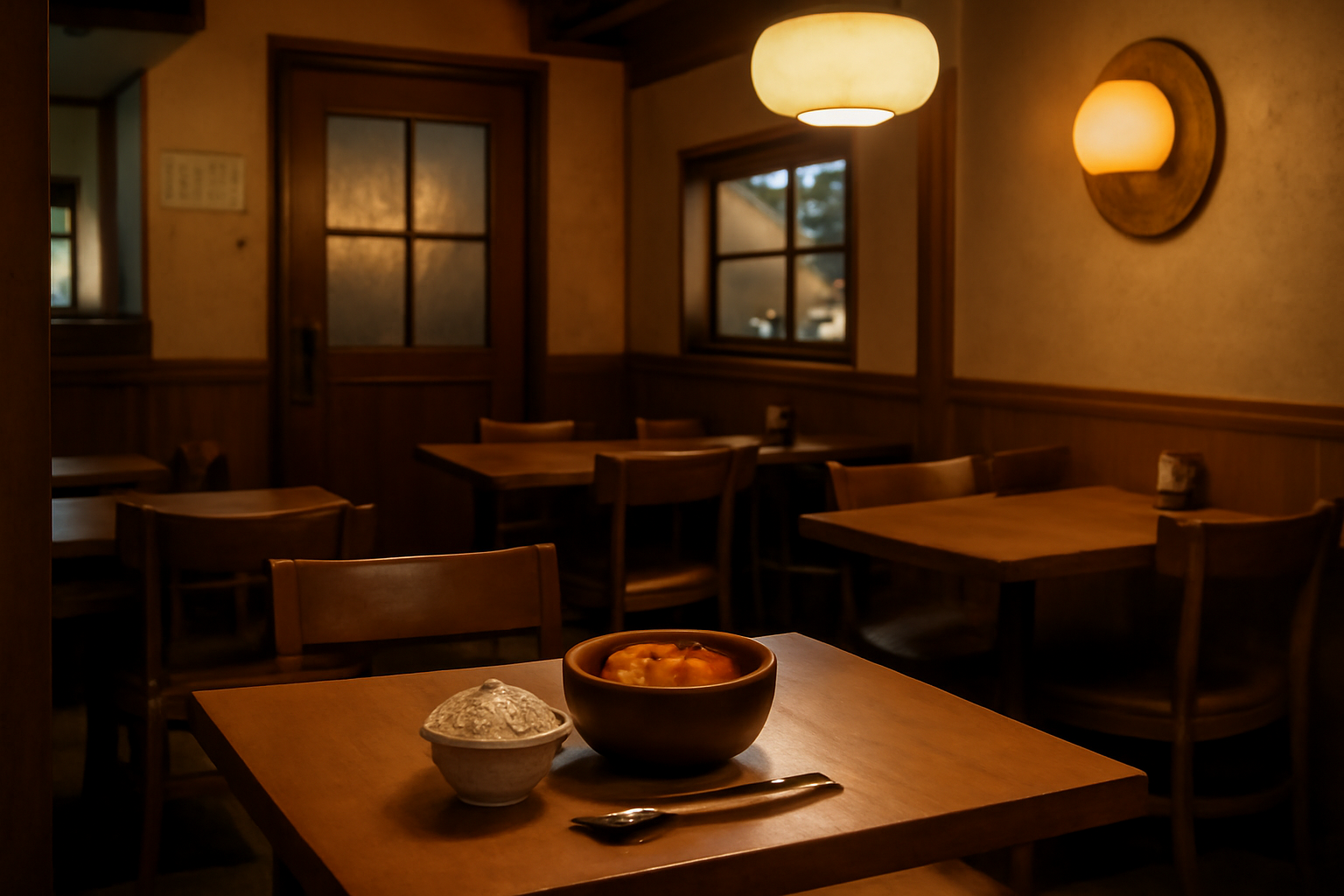
The first time I ate alone in Korea, I didn’t plan it that way. I’d gotten off work early, my wife had the kids at a birthday party across town, and I found myself standing in front of a small jjigae place near the subway station with about forty minutes to kill before I actually needed to be anywhere. I almost kept walking. There’s a specific kind of hesitation that hits you at a restaurant door when you’re by yourself, a half-second where you calculate whether it’s worth the awkwardness of asking for “just one.” I went in anyway. The ajumma running the place glanced up, said “honja seyo” — alone? — more as a statement than a question, and pointed me to a two-top by the window like it was the most unremarkable thing in the world. I ate my doenjang jjigae, read something on my phone, paid, and left. Nobody looked twice.
That non-event stuck with me, honestly, because I’d absorbed enough secondhand nervousness about eating alone in Korea before I moved here that I expected something closer to a scene. It never came. And the more I’ve thought about it since, the more I think that gap — between the reputation honbap culture has abroad and what actually happens at a random restaurant on a Tuesday — is worth unpacking.
What Honbap Actually Means
Honbap (혼밥) is a compound of honja, meaning alone, and bap, meaning rice or, more broadly, a meal. It sits alongside honsul (drinking alone) and honyeong (watching a movie alone) in a small family of words that Korean has developed for solo activities that used to be assumed to require company. The prefix “hon-” has become its own little cultural marker over the past decade, shorthand for an entire shift in how people, especially younger Koreans, structure their time.
I bring this up because the word itself tells you something. Languages don’t usually bother naming things that are unremarkable. English doesn’t have a dedicated word for eating alone because nobody felt the need to flag it as a category. Korean did, and that’s a clue that solo dining was, at some point fairly recently, notable enough to require its own vocabulary.
The Stigma Wasn’t Imaginary
It’s worth being honest about where honbap culture came from, because I think foreigners sometimes hear “eating alone used to be looked down on in Korea” and assume it’s an exaggeration, or some kind of Orientalist flourish added to make the culture seem more exotic than it is. It wasn’t exaggerated. Korean dining, for a long time, was built around groups by default. Meals were social infrastructure — a way of maintaining relationships at work, in families, among friends — and restaurant menus, portion sizes, and pricing reflected that assumption. A lot of Korean BBQ places priced their meat by the order of two portions minimum. Jjigae and stews were often served in a large communal pot meant to be ladled out, not a single bowl for one. Sitting alone at a table built for four, in a restaurant staffed for groups, could genuinely draw curious looks, not because anyone thought you’d committed a crime, but because it read as a small signal that something was off — that you had no one to eat with.
That’s a real cultural weight, and I don’t think it’s useful to pretend it evaporated overnight. It didn’t. It eroded, gradually, under pressure from several directions at once, and it eroded unevenly depending on where you are and who you’re asking.
What Actually Changed
The shift didn’t happen because attitudes softened first and infrastructure followed. If anything it went the other way — the infrastructure showed up because the demand was already there, and the attitudes caught up once eating alone became something people could physically do without friction.
A few things converged. Household composition changed a lot over the past fifteen or twenty years — a much larger share of people in Korean cities now live alone than used to be the case, whether that’s students, young professionals, or older people whose kids have moved out. That alone creates enormous daily demand for solo-friendly meals that has nothing to do with anyone’s philosophy about independence; it’s just what happens when you live by yourself and need to eat dinner on a Wednesday.
Restaurants responded. You now see a real category of places built specifically around single-portion service — soup-and-rice counters, noodle shops, gimbap places, curry spots — where the entire layout is a row of one-person seats facing a counter, sometimes with partitions between them so you’re not even making eye contact with the stranger next to you. Franchise chains figured this out early because it’s good business: a restaurant that can seat four solo diners at tables built for four singles is more efficient than one that waits for groups of four to show up together.
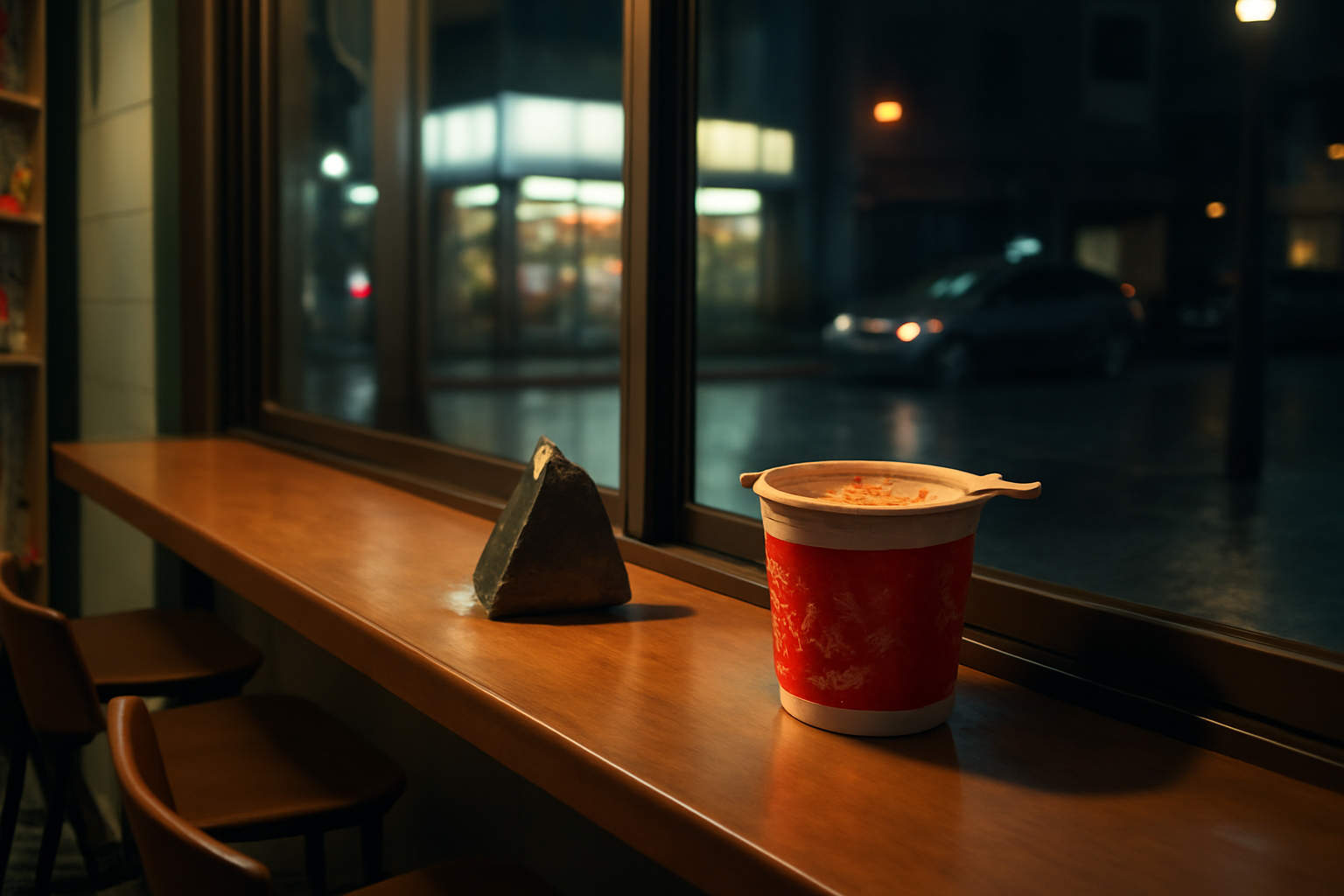
Then there’s the technology layer, which I think gets underrated in how much friction it removed. Self-service kiosks are everywhere now — you order and pay at a screen, no need to catch anyone’s attention or explain that it’s just you. Food delivery apps let you get restaurant-quality food to your door without setting foot anywhere. And convenience stores, which were already dense on nearly every block, expanded their fresh food sections aggressively — instant noodles with hot water right there, triangle kimbap, prepared meal boxes, and usually a little counter by the window where you can sit and eat without anyone registering it as unusual at all.
Naver Map and other apps now let you filter search results specifically for solo-dining-friendly restaurants, which tells you the market considered this common enough to be worth a filter. None of that existed in any organized way even a decade ago.
Where It’s Still a Little Awkward
I don’t want to oversell how completely this has flattened out, because it hasn’t, and I think pretending otherwise does a disservice to anyone actually planning a trip or a move here. There are still specific situations where solo dining creates mild friction, mostly tied to food formats that are structurally built around sharing.
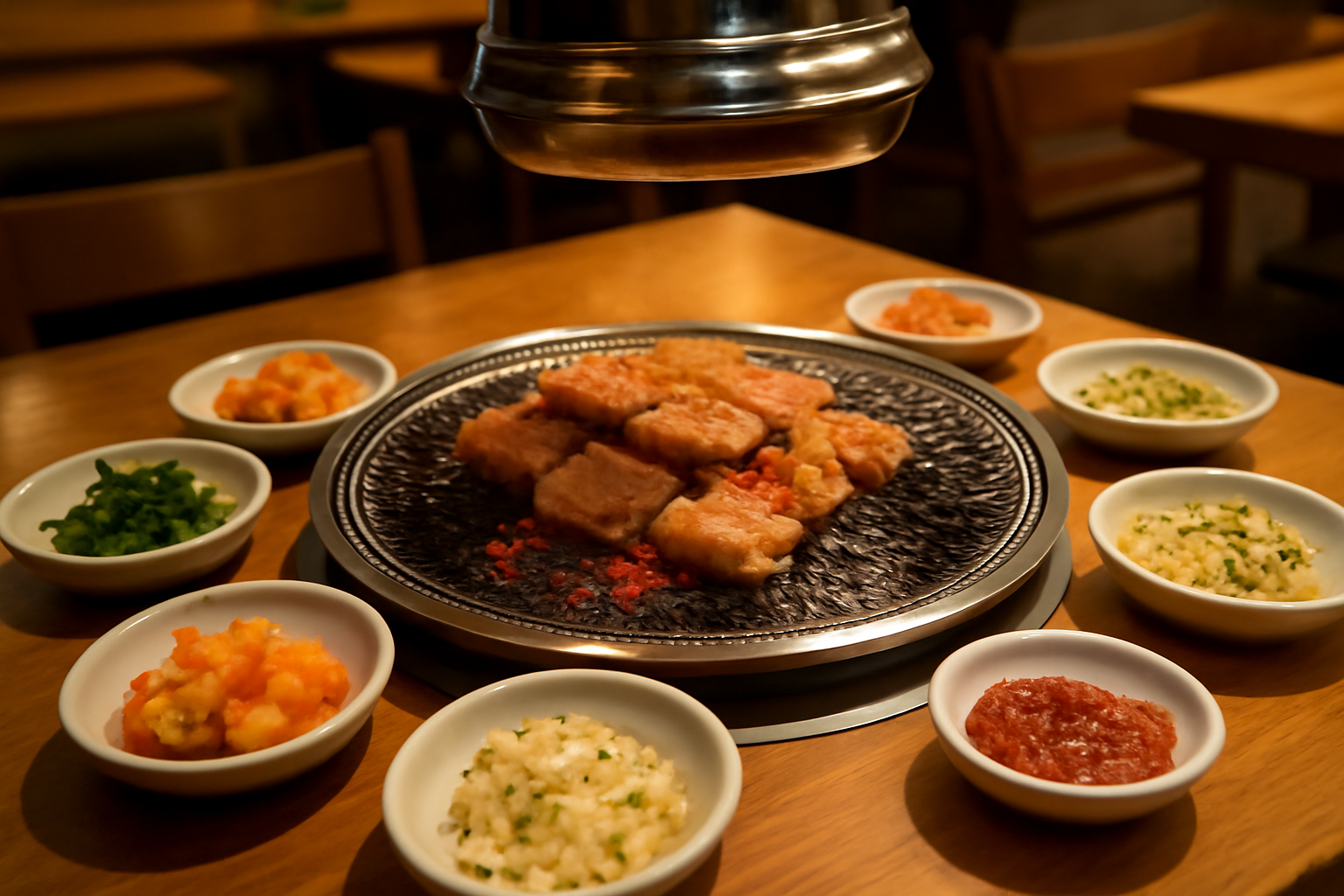
Korean BBQ is the classic example. A lot of barbecue restaurants set minimum orders at two portions, partly because the grill setup and the side dish spread are calibrated for a group, and partly because a table occupied by one person eating slowly is, from the restaurant’s perspective, less profitable than that same table turning over with a group. Some places have adapted — you’ll find dedicated 1인 (one-person) BBQ spots, especially in neighborhoods with a lot of single-person households, with individual mini grills built right into the counter. But it’s still not universal, and if you walk into a random barbecue place and ask for a single portion, you may get turned down, or get an apologetic explanation that it’s not really set up for that.
Hotpot and stew places built around a shared communal pot have a similar issue, for the same structural reason — the dish itself assumes multiple spoons. Some restaurants have introduced individual-pot versions specifically to capture solo diners, but plenty haven’t bothered.
There’s also a generational layer that’s less about the restaurant and more about the diner. Younger Koreans, particularly in Seoul and other big cities, treat honbap as completely unremarkable, sometimes even preferable — a chance to eat on your own schedule without managing anyone else’s preferences. Older generations, who came up when communal eating was the default and eating alone really did carry a whiff of “something’s wrong,” are more likely to view it through that older lens, even if they wouldn’t say anything to a stranger’s face about it. That generational gap means the “is this normal” question doesn’t have one universal answer — it depends a bit on where you are, what you’re eating, and who’s around you.
What’s Completely Normal Now
Outside of those specific formats, solo dining in Korean cities has genuinely become unremarkable, and I want to stress that because I think a lot of English-language writing about honbap still frames it as this fraught, faintly transgressive thing, which hasn’t matched my actual day-to-day experience here.
Bunsik places — the tteokbokki, sundae, and gimbap shops that are everywhere — have basically always accommodated single diners without a second thought, since a lot of their customer base has traditionally been students grabbing something quick between classes. Noodle shops, curry counters, soup-and-rice restaurants, and the whole category of quick, single-bowl meals are built for exactly this. Cafes are obviously fine — nobody bats an eye at someone sitting alone with a coffee and a laptop, and honestly a huge share of café seating in Korea seems designed with exactly that person in mind. Convenience store meals are a complete non-issue; eating a triangle kimbap and instant noodles alone at the in-store counter is about as socially loaded as buying gum.
Even sit-down restaurants that aren’t explicitly built for solo diners have generally adjusted their expectations, particularly in cities. Staff might ask “honja seyo?” to confirm the table size, but in my experience that’s a logistical question, not a judgment. Nobody has ever made me feel like I was doing something odd by eating by myself, and my read on it — for whatever an outside observer’s read is worth — is that solo diners have simply become common enough that they stopped registering as a category worth reacting to.
Practical Notes for Foreigners Eating Alone in Korea
A few things I’ve picked up that might save you some hesitation at the door:
Look for the one-person indicators before you commit. A counter-style layout facing the kitchen, individual seats with small partitions, or a sign mentioning 1인 seating are all good signs a place is set up for solo diners without any friction. Bunsik shops, noodle places, and gimbap restaurants are close to universally fine.
Kiosks are your friend if you’re nervous about ordering. Most self-service kiosks now have an English option, and using one means you never have to have the “just me” conversation at all — you order, pay, and take a number.
If you want Korean BBQ alone, search first. Look specifically for 1인 BBQ or solo grill restaurants rather than walking into a random spot and hoping. They exist in most cities now, especially near universities and areas with a lot of single-person housing, and they’ve solved the minimum-order problem by building the whole restaurant around individual grills.
Convenience stores are a legitimate dinner option, not a last resort. This took me a while to fully accept, coming from a food culture where a gas station dinner feels like a small defeat. Korean convenience store food is genuinely good, and eating at the in-store counter is completely normal at any hour.
Don’t overthink the phrase “honja yo” (it’s just me). Staff hear it constantly, and in my experience it gets a nod and a table, not a reaction. If you’re worried about the exact wording, holding up one finger works fine too.
And if a restaurant does say no to a solo booking — usually at group-format BBQ or hotpot places — it’s not personal. It’s almost always about the format of the food, not about you.
FAQ
Can I order Korean BBQ for one?
Sometimes, but not everywhere. Traditional BBQ restaurants often set a two-portion minimum because the grill and side-dish setup is designed around groups, so a random spot may turn you down or seem uneasy about it. Your best bet is searching for restaurants specifically marketed as 1인 BBQ or solo-grill spots, which have individual grills built into the counter and are increasingly common in university neighborhoods and areas with a lot of single-person households.
Will people stare if I eat alone?
In most everyday settings — bunsik shops, noodle places, cafes, convenience stores, casual restaurants — no, and honestly it won’t even register as unusual. Staff may ask if it’s just you to confirm your table size, but that’s practical, not judgmental. You’re more likely to feel self-conscious than to actually be noticed. The exceptions are group-oriented formats like BBQ or hotpot, where the question isn’t really about staring, it’s about whether the restaurant’s setup can accommodate one person at all.
Is honbap more common among younger or older Koreans?
It skews younger, especially in big cities, where solo dining is often treated as a genuine preference rather than something to tolerate. Older generations grew up when communal meals were the assumed default, so some of them still view solo dining through that older, slightly more skeptical lens, even if they wouldn’t say anything about it directly. That gap is narrowing as more people across age groups end up living alone, but it hasn’t fully closed.
What’s the easiest first honbap meal for a foreigner to try?
Something from the bunsik or noodle category is the lowest-friction starting point — gimbap, tteokbokki, a bowl of kalguksu, or a soup-and-rice combo. These places are built for quick, individual meals already, often have kiosks with English options, and nobody working there will think twice about a single diner. Save the group-format restaurants for when you’ve got company.
Leave a Reply