There is a specific kind of panic that hits foreign parents in Korea about eleven months into their baby’s life, and it has nothing to do with sleep training. It’s the moment someone — a coworker, an in-law, the ajumma who runs the corner store and has somehow tracked your child’s age this whole time — asks, “Doljanchi jun-bi haseyo?” Have you prepared the first birthday party? And you realize this is not a suggestion. This is an expectation with a venue, a caterer, and possibly a stage.
If you grew up somewhere that treats a first birthday as a nice excuse for cake and a slightly bewildered baby smearing frosting on the carpet, doljanchi (돌잔치) will recalibrate your sense of scale. I assumed, going in, that the fuss was mostly about the party — the photographer, the hanbok, the rented event hall with the LED backdrop. It isn’t. The party is the visible layer sitting on top of something much older and, honestly, much sadder than it first appears, and once you understand that layer, the whole production stops looking excessive and starts looking almost tender.
Why the first birthday became the big one
You’d think Koreans just like round numbers, but the real reason the first birthday outranks every other birthday is grim: for most of Korean history, a huge share of infants did not survive their first year. Historians studying premodern Korea and the wider region commonly cite infant and early-childhood mortality somewhere in the range of 20 to 30 percent before age one — disease, malnutrition, and cold winters in homes without reliable heating took a brutal, routine toll. Compare that to South Korea’s infant mortality rate today, which sits below 3 per 1,000 births, one of the lowest figures in the world, and the gap stops being an abstract statistic. A baby who made it to their first “dol” (돌, meaning both “birthday” and, not coincidentally, “one full turn of the year”) had cleared the single most dangerous stretch of their life. That was worth throwing a party over. It still is, even now that the danger has largely disappeared — the ritual outlived the crisis that created it, the way a lot of traditions do, and to mark that hard-won survival, communities pulled out all the stops visually, starting with the clothes.
Once you know that history, a few things about doljanchi make more sense. The emphasis on longevity symbols. The slightly superstitious energy in the room even among families who’d otherwise call themselves totally non-superstitious. The fact that grandparents tend to take this event more seriously than the parents do, sometimes visibly more emotional than anyone expects them to be. I’ve seen a grandmother tear up watching a baby just sit there in a hanbok doing nothing in particular, and it took me a while to understand that she wasn’t reacting to the outfit. She was reacting to the fact that the kid was there at all, a full year in, healthy. That context reframes the whole event from “elaborate baby party” to something closer to a survival milestone people are still instinctively grateful for, even generations after the danger passed.
The hanbok, and the photo studio culture around it
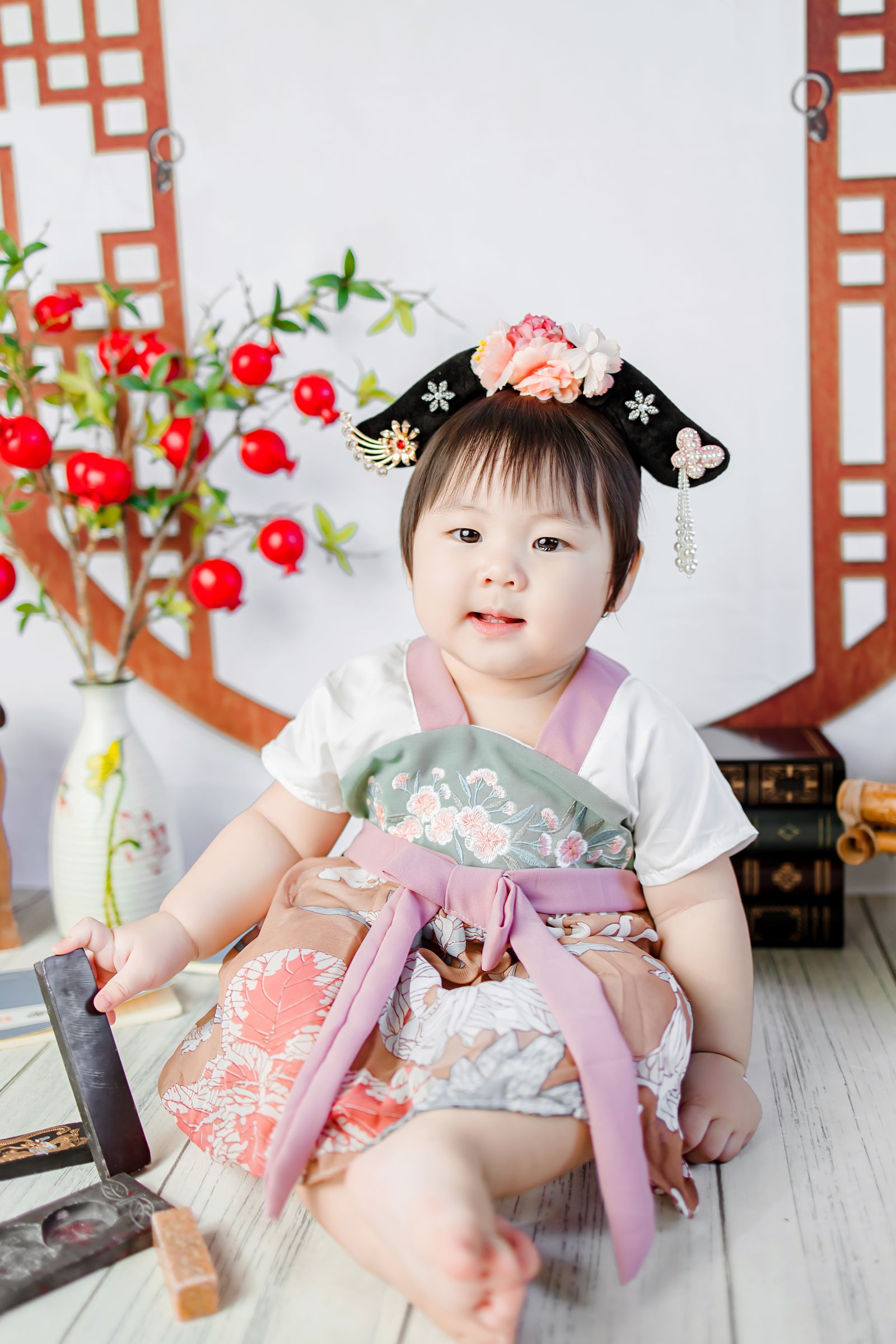
The outfit is where doljanchi announces itself visually before anything else happens. Baby boys typically wear a version of the sekdong jeogori — a jacket with rainbow-striped sleeves (obangsaek, the five traditional colors representing the cardinal directions and elements) — paired with a vest and sometimes a small black hat called a bokgeon or a jobawi. Girls wear a miniature hanbok with a wrap skirt (chima) and jacket (jeogori), often in equally saturated colors, sometimes with a decorative headpiece. None of this is randomly pretty. The colors and layers borrow directly from the ceremonial dress of Joseon-era nobility, which is a deliberate choice — for one day, every baby, regardless of the family’s actual background, gets dressed like they matter that much. It’s a nice inversion, honestly: a culture that can be sharply status-conscious in adult life takes one day to dress every single infant like royalty.
What surprised me, watching this up close, is how commercialized and yet how sincerely maintained the hanbok tradition is at the same time. You can rent a full doljanbok set for under 100,000 won at most event hall packages, or buy one outright for a few hundred thousand won if you want to keep it. That commercial layer extends straight into photography. Dol photo studios book up weeks in advance during peak season, and most run a formula: a dedicated shoot happens before the actual party, with two or three outfit changes — hanbok, then a Western-style suit or dress, then often a themed costume — plus staged doljabi props set up early so the “official” album can be shot and edited regardless of how the baby’s mood holds up on the real day. Parents effectively rehearse the milestone photographically before living through it live in front of guests. It would be easy to call this pure consumerism, and there’s plenty of markup baked into a rush-season studio package, but the underlying impulse is the same one that existed five hundred years ago: document this thoroughly, because it once wasn’t guaranteed. The equipment just got much better.
Doljabi: where the small talk stops
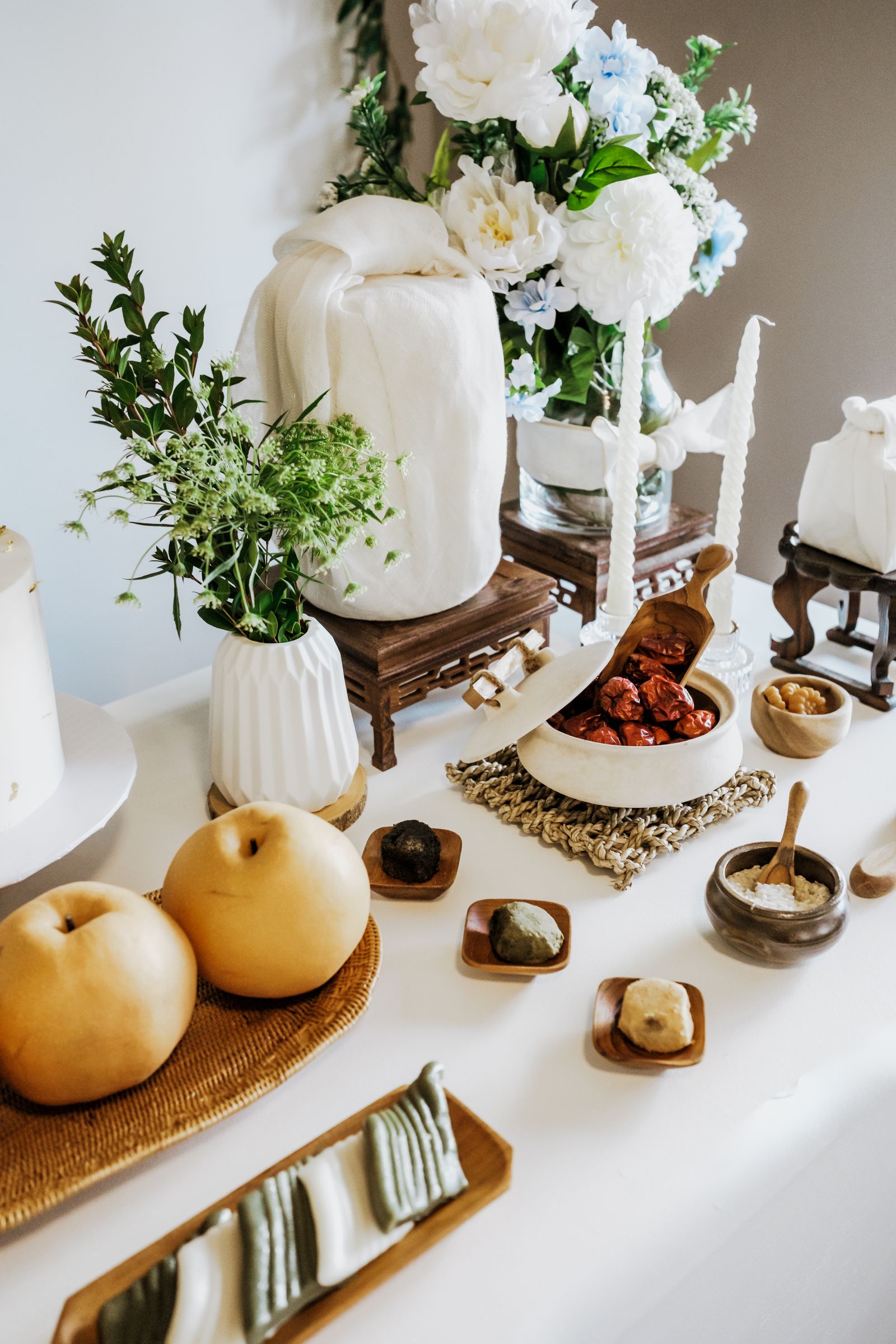
Doljabi (돌잡이, literally “grabbing at the dol”) is where polite chatter around the buffet suddenly cuts out and the whole room leans in at once. It’s the fortune-telling centerpiece of the party: the baby is set down in front of a table lined with symbolic objects, and whatever they grab first is treated as a genuinely meaningful sign of their future. I went into my first doljabi assuming it was a scripted photo-op everyone knows isn’t real. Then I watched a room full of adults — engineers, a pharmacist, someone’s very no-nonsense uncle — go completely silent as the kid’s hand hovered between options, and I revised that opinion fast. Nobody actually believes a one-year-old’s grab predicts anything with statistical reliability. Everyone acts, for about eight seconds, like they might.
The traditional lineup includes thread (silsa), which represents a long life; money, for wealth; rice, for a life of abundance; and a book or a brush/pencil (bit or yeonpil), representing scholarly success. Some tables include a bow and arrow for boys, symbolizing courage, or scissors and a ruler for girls, symbolizing skill with handiwork — though modern doljanchi have mostly dropped the gendered version in favor of one shared set of items regardless of the baby’s sex. Modern tables have also expanded well beyond the classic four or five objects: a stethoscope (future doctor), a microphone (future singer or broadcaster), a golf ball (future athlete), a gavel (future judge or lawyer), or a mouse — as in a computer mouse — for a future in IT. I’ve heard of tables with a tiny airplane for a future pilot and, more than once, a miniature basketball. The core mechanic hasn’t changed in five hundred years; the vocabulary of aspiration has just updated itself for whatever careers a given generation of parents actually respects. Part of why the room actually pays attention: some event-hall MCs run a small side game where guests guess in advance which item the baby will grab, sometimes for a token prize like a bottle of olive oil or a coffee gift card. That silence during the grab isn’t purely sentimental — there’s occasionally a minor bragging right riding on it too.
What nobody tells you beforehand is how rigged it secretly is. Parents will angle the table, place their preferred item slightly closer to the baby’s dominant hand, or have someone gently redirect a wandering arm. I’ve seen a father visibly wince when his daughter went straight for the microphone instead of the stethoscope he’d been not-so-subtly nudging toward her. Is this cheating a fortune-telling ritual nobody believes in literally? Sure, technically. Does it matter? Not even slightly, and everyone in the room knows the game while playing along completely straight-faced, which is honestly the most Korean detail in the whole ceremony. That playful manipulation of destiny happens in front of an audience, which is part of why these parties rarely stay confined to a living room anymore.
Why the party outgrew the living room
You might expect a baby’s first birthday to be a small, private, at-home affair — immediate family, maybe a few close friends, cake on the coffee table. That is very much not the default in urban Korea today. Doljanchi has its own dedicated event-hall industry, the same way weddings do, and the packages look surprisingly similar: a rented hall, often inside a hotel or a purpose-built party venue, for anywhere from thirty to well over a hundred guests; a buffet running roughly 30,000 to 50,000 won per head; a hired MC who runs the doljabi segment like a mini game show, complete with a script and sometimes that guessing game; a professional photographer working the room in real time; a rented hanbok set bundled into the package; and a slideshow of the baby’s first year, cut to music, playing on a loop while guests eat. Total package prices in Seoul commonly run from roughly 1 to 3 million won depending on guest count and venue tier, sometimes considerably more for upscale hotel banquet rooms. It is, structurally, a wedding-sized production for a guest of honor who cannot yet walk unassisted.
I found this baffling at first, honestly a little absurd — why stage a full banquet for someone who will spend half the event asleep or crying and remember none of it? But it clicked once I connected it back to the infant mortality history. If your culture spent centuries treating “made it to age one” as an event worth genuinely celebrating with the whole extended community, then scaling that celebration up as families got wealthier and event infrastructure got more sophisticated is just consistent. Weddings got bigger. Funerals got more elaborate. Of course the first birthday party did too. It was never really about the baby’s own enjoyment — babies this age are famously indifferent to venue quality — it’s about the community formally witnessing that the child made it.
Gifts: why so much gold
Guests do not show up empty-handed, and cash envelopes are common, often in the same format as wedding cash gifts, with amounts scaled to how close you are to the family. But the gift that actually defines Korean doljanchi culture is gold, specifically gold rings, called dol banji. A one-don gold ring (about 3.75 grams) is the traditional benchmark gift from close relatives, and at recent gold prices that single ring can run roughly 500,000 to 600,000 won or more — gold has climbed sharply in the past couple of years, and dol banji prices climbed right along with it. A baby with five or six close relatives, each bringing one ring, can plausibly leave their own first birthday party holding well over two million won in gold, in a form they obviously can’t spend, wear, or even understand receiving.
You’d think giving a baby jewelry it can’t wear for another fifteen years would feel like an odd gift choice, and I thought so too, until someone explained the logic plainly: gold doesn’t spoil, doesn’t go out of style, and holds value regardless of what’s fashionable that particular year, unlike baby clothes or toys, which are irrelevant within six months. It’s less a toy and more a small, physical head start, something the family can hold onto or convert later. Some families genuinely still keep the rings in a drawer for years; others quietly sell them and put the money toward the actual costs of raising a kid, which, in a country with Korea’s cost-of-living pressures, is a pretty reasonable thing to do with several grams of gold. Either way, it’s one of the more practical superstitions I’ve come across here — a gift that’s simultaneously symbolic and, unlike most symbolic gestures, retains real liquid value.
The pressure underneath the pastel photos
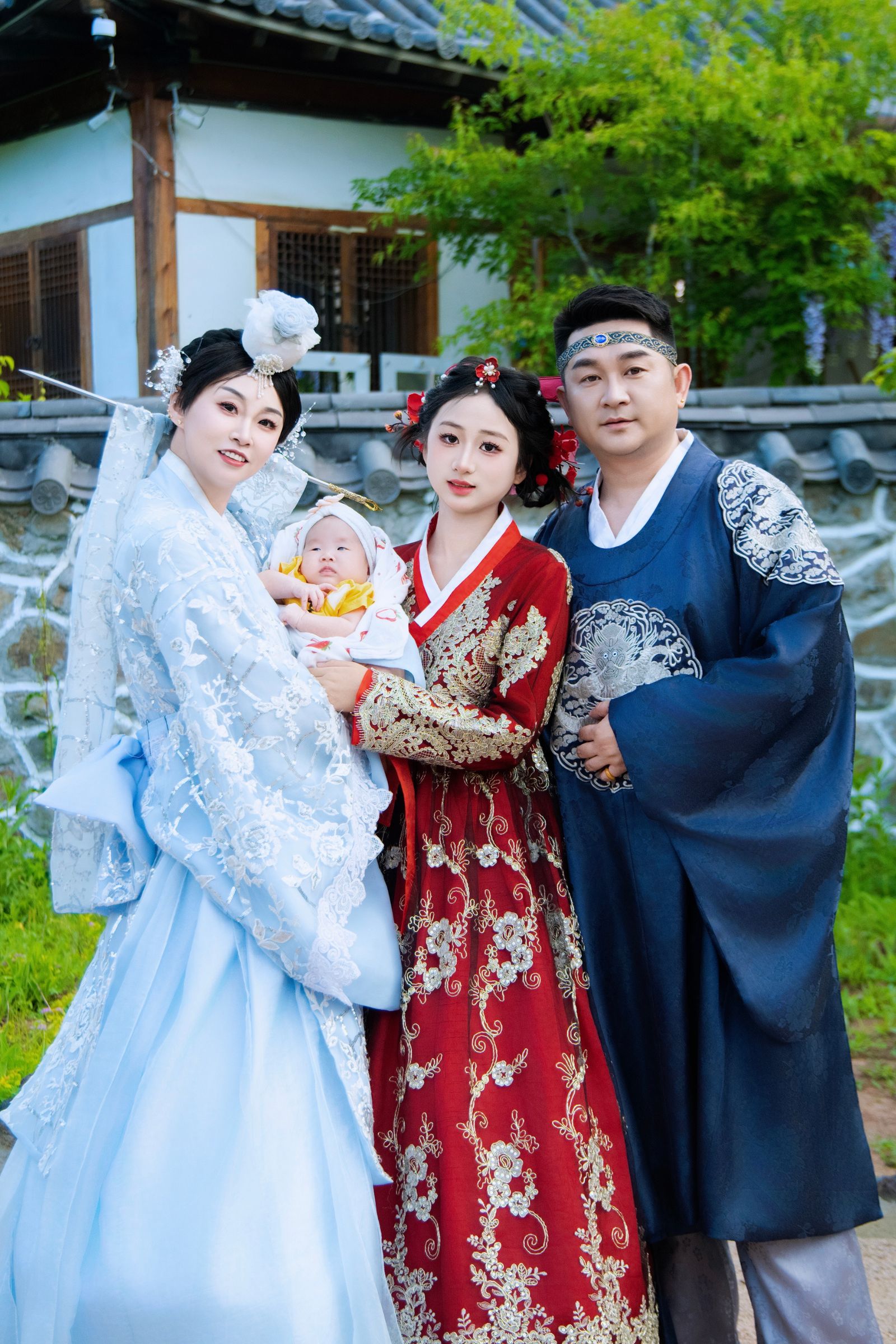
Is there pressure in all of this? Undeniably. Parents compare venues, compare hanbok quality, compare how elaborate the slideshow was, in ways that echo the same social comparison that shows up around Korean weddings or around Seollal gift-giving, if you’ve read about either of those on this blog before. The glossy, professionally retouched photo-album aesthetic that comes out of a dol studio session sets a bar that not every family wants to or can match, and I won’t pretend that pressure is imaginary or that every family loves the expense. But underneath the polished surface, I keep coming back to the same thing: this entire, slightly overproduced circus exists because, for most of human history in this part of the world, getting a baby safely to age one was not something you could take for granted. The party is loud and a little much. The reason for the party is quiet and, once you sit with it, kind of moving.
Frequently asked questions
Do I have to rent an event hall, or can doljanchi be small and at home? Plenty of families, especially younger or more budget-conscious ones, now do a smaller version — immediate family only, at home or at a casual restaurant, with a simplified doljabi table and a hired photographer for an hour instead of a full banquet package. The scaled-down version is increasingly common and nobody treats it as a lesser celebration; it’s just a different budget decision, the same way not every wedding needs a hotel ballroom.
I’m invited to a doljanchi and have no idea how much cash to give — what’s normal? As a general guideline, cash gifts for a doljanchi you’re attending as a casual acquaintance or coworker tend to run somewhere around 50,000 to 100,000 won, similar in logic to wedding cash gifts. Closer relatives or very close friends often give considerably more, sometimes alongside a gold ring instead of, or in addition to, cash. When in doubt, matching what you’d give at a coworker’s wedding is a reasonable baseline.
What if the baby doesn’t grab anything, or just cries through the whole doljabi? This happens constantly, and nobody treats it as a bad omen — it’s usually just filed under “the MC will make a joke about it and move on.” Some families do a second attempt a few minutes later once the baby calms down; others just laugh it off and move straight to cutting the cake. The ritual is taken seriously in the moment and shrugged off immediately afterward if it doesn’t go as planned, which is honestly a pretty healthy way to treat a fortune-telling game involving a one-year-old.
Leave a Reply