Fourteen floors, no words. That’s how long the ride usually takes in my building — long enough to notice the small crack in the mirror, the faint smell of someone’s dinner from three floors down, and absolutely nothing else, because nobody speaks. I used to think this was coldness. Three years and a few hundred elevator rides later, I know it’s something closer to respect wearing a very quiet coat.
When I first moved to Korea, I brought my home-country instincts into every elevator car: eye contact, a friendly “hey,” maybe a comment about the weather if the ride was long enough. I got polite nods in return and, occasionally, a look that told me I’d misjudged the room. It took a while — and a patient mother-in-law — to learn that elevators here run on a different social operating system, and once you understand the logic, it stops feeling awkward and starts feeling almost restful.
Do Koreans Greet Neighbors in the Elevator?
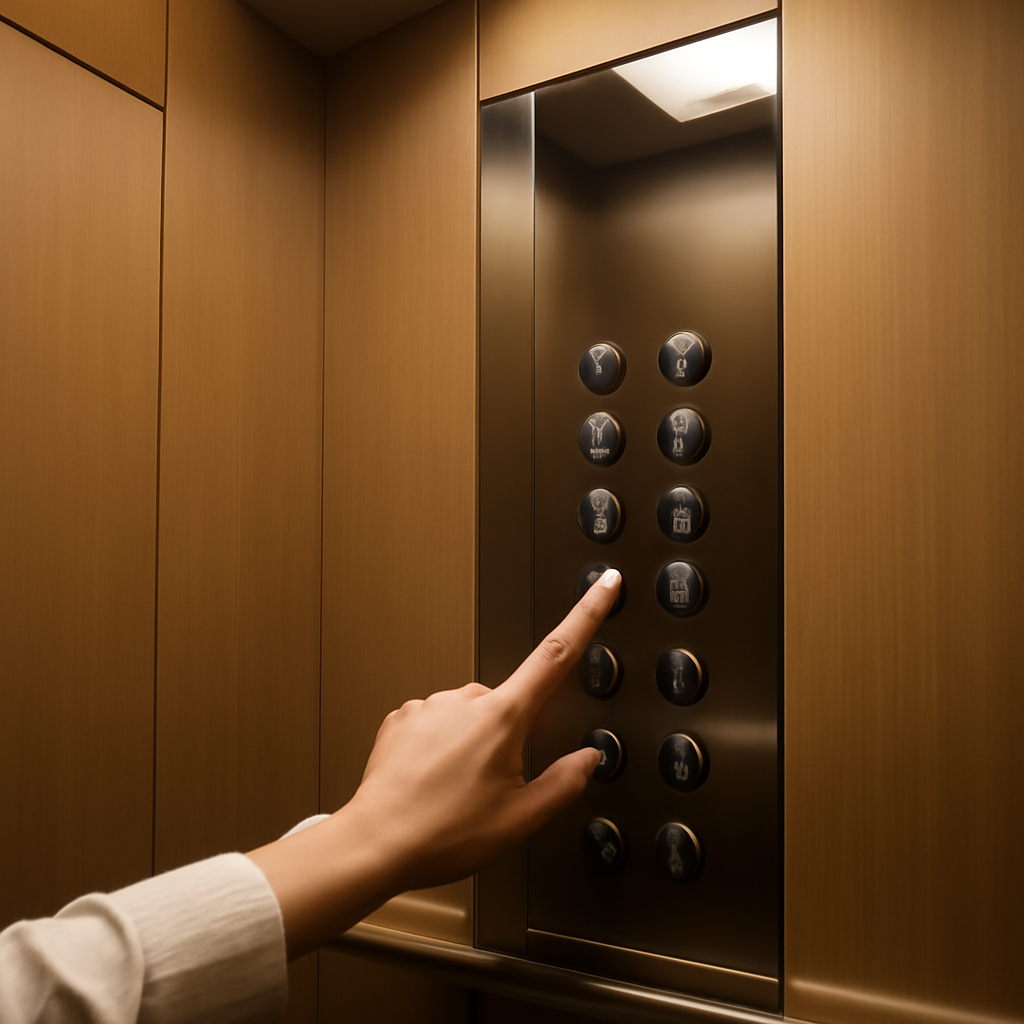
The honest answer is: not really, and that’s normal. Riding up with someone you don’t know, in a box barely big enough for four people, isn’t treated as a social occasion here — it’s a shared inconvenience to get through with minimal friction. Most adults glance at the numbers overhead, check their phones, or just stare at the door. A small nod is common if eye contact happens by accident. A full “hello, how are you” to a total stranger is not expected, and can actually read as a bit much.
This isn’t rudeness. Korean social interaction runs heavily on context — who you are to each other, whether you’ve been introduced, whether there’s a reason to talk. Two strangers sharing forty seconds of vertical travel don’t have that context yet, so silence is the default, not a failure to be polite. Once you’ve actually met a neighbor — through the building’s parents’ group, a shared elevator mishap, or just enough repeat encounters — the ice does melt, usually into a quick bow and a first-name-optional “annyeonghaseyo.”
The People You Do Greet
There’s a clear exception to the silence rule, and it’s the security guard. Almost every Korean apartment complex has a guard station near the entrance or lobby, staffed by older men who track deliveries, manage the parking gate, and generally keep an eye on things. You greet them, every time. A short bow of the head and a quiet “annyeonghaseyo” as you pass is standard, and skipping it repeatedly gets noticed — these are the people who end up holding your late-night package, remembering your car, and occasionally saving you when you’re locked out. My daughter figured this out faster than I did; she bows to our guard like it’s a reflex, and he lights up every time.
Holding the Elevator: An Unwritten Contract
Here’s where Korean elevator culture gets genuinely warm rather than just quiet. If someone is sprinting for the elevator, or wheeling a stroller, or wrestling a grocery cart through the lobby, people hold the door. Reliably. It’s one of the most consistent small kindnesses I’ve seen anywhere — the “open” button gets pressed and held without a second thought, no eye-rolling, no doors-closing games. The same goes for exiting: whoever is nearest to the panel usually holds “open” so the rest of the car can file out first, especially if there are elderly residents or someone carrying too many bags.
What you generally won’t get is a verbal exchange around it. The door gets held, you step in, maybe there’s a small nod of thanks — and that’s the whole transaction. Coming from a culture where “thank you so much!” is basically required, this took adjustment. Nobody’s being cold; the courtesy itself is the message, and piling words on top of it can feel like overkill in a culture that tends to communicate a lot through small, efficient gestures.
Hallways, Packages, and the Quiet Zone
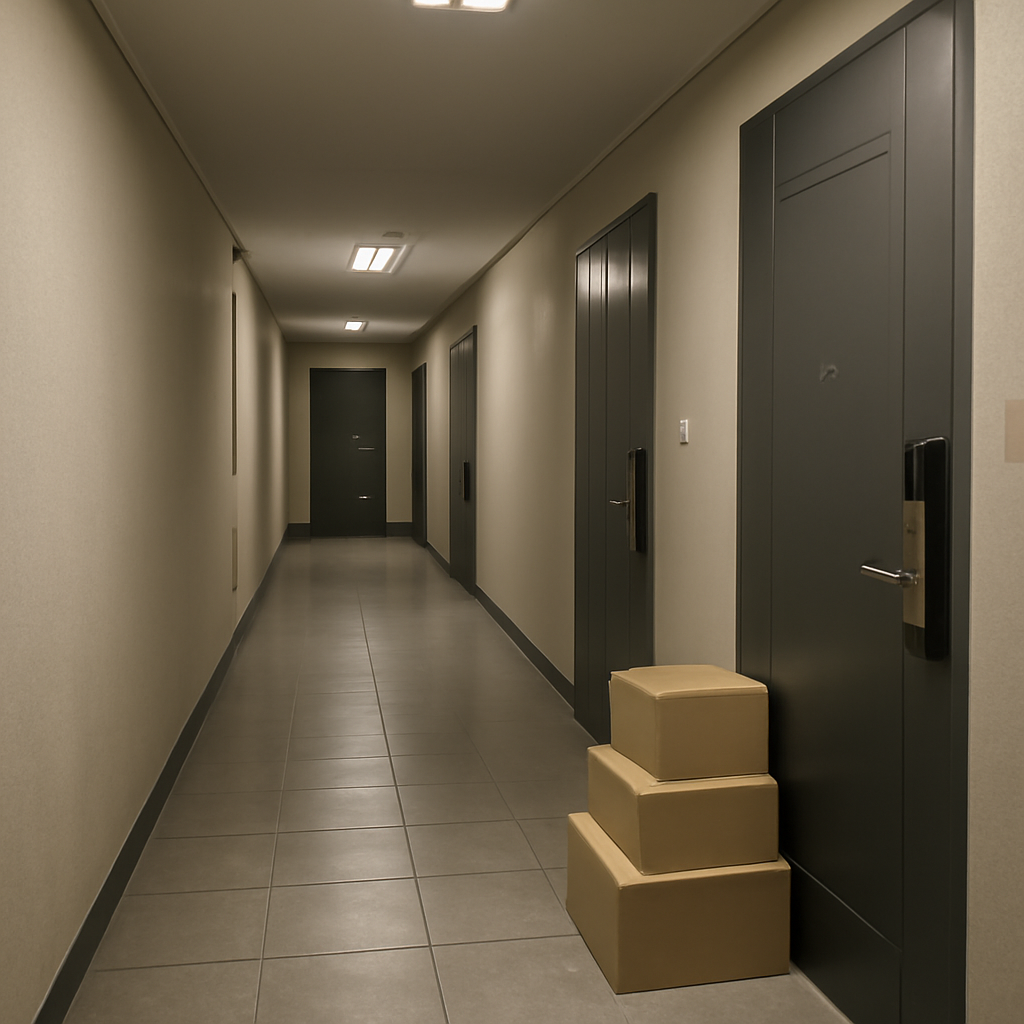
Step out of the elevator and the same low-key etiquette continues down the hallway. Korean apartment corridors are narrow and every sound carries, so hallway behavior tends to be hushed by default — no loud phone calls, no lingering conversations right outside someone’s door, especially at night. If you’re moving furniture or hosting guests, a bit of extra hallway noise is tolerated, but it’s understood as temporary, not a nightly habit.
Package culture is its own small ecosystem. With how much Korean households order online — everything from groceries to furniture arrives same-day or next-day — hallways regularly have boxes stacked outside doors, sometimes for hours before anyone’s home to bring them in. Nobody touches a box that isn’t theirs, nobody complains about a neighbor’s delivery pile blocking half the hallway for an afternoon, and delivery drivers know the routine well enough to stack things neatly rather than scatter them. It’s an honor system that, in my experience, works better than it has any right to.
Moving In: The One Time You Do Introduce Yourself
There’s exactly one moment when the usual “don’t bother your neighbors” rule flips, and that’s move-in day. Tradition holds that new residents give a small gift — a pack of tissues or laundry detergent are the modern go-tos — to the households directly next door and sometimes above and below, as a sort of “hi, I live here now, sorry in advance for any noise” gesture. I won’t get into the full mechanics of it here since it deserves — and already has — its own dedicated post on this blog, but the short version is: it’s a genuinely nice icebreaker, and it’s the one context where showing up at a stranger’s door in this country is not only accepted but appreciated.
A Word on Noise Between Floors
I’ll keep this brief, because I’ve written a whole separate post about the sound my daughter’s feet make on our floor and what the building’s noise rules actually cover. But it’s worth noting here because it bleeds into elevator and hallway life too: Korean apartments are famously sound-conductive between floors, and that shared awareness quietly shapes how people behave in shared spaces generally. It’s part of why the hallway hush and the elevator silence feel less like coldness and more like a whole building of people trying not to add to each other’s noise load. Once you clock that logic, half of the “unfriendly” elevator behavior actually reads as consideration in disguise.
How I Actually Handle It Now
These days my approach is simple: I nod if eyes meet, I hold the door without fail, I bow to the guard like my daughter taught me, and I keep my voice down between the elevator and my own front door. I don’t force conversation, and I don’t take the silence personally anymore. Some of the neighbors I’ve bonded with the most started as nothing but elevator nods for a solid year before either of us said a word — and that turned out to be exactly the right pace.
FAQ
Should I say hello to neighbors I don’t know in the elevator?
A quiet nod is enough, and often more natural than a verbal greeting to someone you haven’t been introduced to. Save the actual “hello” for neighbors you’ve met before — through the building, your kids’ school, or a shared event. Nobody will think you’re rude for staying quiet; a loud stranger-greeting is more likely to raise eyebrows than skipping one.
What if my elevator gets stuck or breaks down often in an older building?
Older apartment complexes, especially ones built decades ago, can have elevators that are slower or occasionally temperamental. If you get stuck, there’s almost always an intercom or emergency button that connects directly to the security office or a maintenance line — use it and stay calm; response times are usually fast since the guard station is often just downstairs. For chronic issues, mentioning it to the building’s management office (관리사무소) tends to get more traction than complaining to neighbors, since repairs are typically handled through the complex’s maintenance fund.
Is it rude not to thank someone for holding the elevator?
Not at all, though a small nod is common courtesy. Korean etiquette in these micro-interactions leans on gesture rather than words — the held door is itself a complete, unspoken exchange. A verbal “thank you” isn’t required, though it’s never unwelcome either, especially if you’re a foreigner still finding your footing; most neighbors will read it as friendliness, not awkwardness.
Leave a Reply