A Tuesday-night samgyeopsal dinner near my apartment ran until midnight, pork belly hissing on the grill, green soju bottles clinking as they got refilled faster than anyone could finish them. A twenty-year-old I’d met through a language exchange was shipping out to boot camp in four days, his hairline freshly buzzed and looking strange under the restaurant’s fluorescent lights. His friends kept topping off his glass and taking turns saying some version of the same thing: “Don’t get hurt, don’t volunteer for anything, and call us the second you get your phone privileges back.” Nobody cried, exactly, but nobody was quite normal either. That night was my real introduction to the fact that in Korea, “he’s in the military right now” isn’t a rare biographical detail. It’s a phase almost every able-bodied Korean man passes through, on a schedule the whole country quietly organizes itself around.
If you didn’t grow up here, the scale of it is hard to picture. This isn’t a volunteer army topped up with the occasional draft notice. Virtually every Korean man serves, and everyone around him — parents, girlfriends, professors, employers — plans their lives with that fact baked in. I’d read about conscription in the abstract before moving here. Watching it play out at a dinner table, over and over, with different faces each time, taught me things no article had.

The Basic Shape: Who Serves, How Long, and When
South Korean law requires able-bodied male citizens to complete military service, and in practice that means most men enlist sometime between age 18 and their late twenties, with active duty typically happening between 18 and 28. Women aren’t conscripted at all — the small number who serve are volunteers who chose to enlist as career soldiers or officers, which surprises a lot of visitors who assume the obligation is gender-neutral somewhere on paper. It isn’t.
Length of service depends on which branch you land in, and this is one detail I’d hedge slightly on, because the government has trimmed the numbers several times over the past decade and could again. As of now, the widely cited lengths are roughly 18 months for the Army and Marine Corps, around 20 months for the Navy, and about 22 months for the Air Force. It’s counterintuitive that the “easier” branches — Navy, Air Force — actually keep you in longer, but that’s the trade conscripts make: fewer field exercises in exchange for more total months in uniform.
Around age 19, every Korean man gets called in for the 신체검사 (physical and mental fitness screening), and it has the reputation you’d expect from a mass government medical exam: cattle-call lines, cold clinic hallways, standing around in your underwear with a hundred other guys waiting for a number to get called. The result sorts you into one of seven grades. Grades 1 through 3 are essentially “fit for combat duty” with only mild distinctions between them. Grade 4 routes a person into non-combat supplementary service rather than the front line. Grades 5 and 6 mean a reduced obligation or a full exemption, usually tied to a documented medical condition. It’s a blunt system, and unsurprisingly guys complain that the grading feels arbitrary depending on which clinic and which doctor you get — but the basic architecture, a number that quietly decides the next two years of your life, is the same for everyone.
Why So Many Guys Vanish Mid-Degree
One thing that took me a while to wrap my head around: enlistment doesn’t wait for you to finish university. It’s extremely common for Korean men to complete a year or two of college, then take what’s called a 휴학 (hyuhak), a formal leave of absence, specifically to go serve, before coming back to finish the degree afterward. You’ll meet plenty of 24- or 25-year-old college sophomores this way, and it’s not remotely embarrassing — it’s just the calendar everyone operates on.
The logic makes sense once you see it from the outside. Delay service too long, and you finish your two years just as your peers are already a couple years into their careers. Get it out of the way early instead, and you return to campus with a clearer head — and, frankly, in noticeably better shape than when you left. Most guys I’ve talked to say they’d rather eat the two years during school than have it interrupt a job they’ve just started. It does mean Korean classrooms have this odd rhythm where the freshman class thins out every spring as a chunk of the guys disappear for two years, then reappear looking sunburned and slightly more serious than before.
What Boot Camp and Daily Life Actually Look Like
Basic training runs about five weeks for most conscripts, and it’s exactly what you’d expect from the outside — shaved heads, shouted instructions, obstacle courses, rifle drills, very little sleep. What surprised me more was what happens after that initial shock period. Life in the barracks has modernized in ways that would have been unthinkable a generation ago. Conscripts are now allowed limited smartphone use, generally an hour or two on weekday evenings and longer stretches on weekends — which in practice means a barracks room glowing blue at 9 p.m. while guys frantically catch up on messages, sneak in a round of a mobile game, or video call a girlfriend before the screen has to go dark again. Older Korean men — the ones who served in the ’90s, when a letter from home might take a week to arrive — find this almost impossible to believe. “We wrote actual letters,” one coworker told me, sounding genuinely wounded by the injustice of it.
Day to day, it’s less about combat drama and more about routine: physical training at dawn, meals on a fixed schedule, cleaning duties, guard shifts, endless small maintenance tasks, and a strict hierarchy where a soldier who enlisted two months before you outranks you regardless of age. That last part trips up foreigners constantly — Korea’s usual age-based respect system gets partly overridden by rank and length of service, so a 21-year-old private first class can genuinely be senior to a 23-year-old private. It’s one of the few places in Korean life where birth year briefly loses its authority.
Phrases You’ll Hear Constantly Once You Notice
Once you’re plugged into daily conversation here, certain military-adjacent phrases come up so often you stop noticing they’re unusual. “언제 가?” (When are you going?) is a standard question the moment a guy hits his early twenties, asked as casually as “what’s your major?” “제대했어요” (I’ve been discharged) is a small badge of relief people wear audibly, often with visible pride. And the classic dinner-table complaint — a guy launching into a long, detailed military story while everyone else’s eyes glaze over — is such a recognizable social pattern that it’s become a running joke, the Korean equivalent of a dad recounting the same fishing trip for the hundredth time. If you’re a foreigner at that dinner table, just nod. Every Korean at that table has heard some version of that story already.
Alternative Service: What Happens If You Don’t Pass the Physical
Not everyone who’s fit for grades 1 through 3 ends up on a front-line base, and not everyone who fails the standard physical gets a free pass either. Men placed in grade 4 due to a documented physical or mental condition are typically assigned to what’s called social service or supplementary service — non-combat public duty, often at a government office, hospital, or public facility, where they commute from home rather than living in a barracks. It’s still mandatory, still tracked, and still shows up on paperwork the same way active duty does, just without the uniform-and-rifle version of the job.
There’s also a newer and much more debated category: conscientious objection, formally recognized only since 2020. Objectors don’t get to skip service; instead they serve a 36-month alternative term, currently structured around work inside correctional facilities — notably the longest service commitment in the entire system, nearly double the standard Army term. It’s a trade-off that’s generated real public argument here, mostly along the lines of whether three years in a facility is a genuine accommodation or a punitive hurdle dressed up as one. I’ll leave that argument to Koreans; I’m just noting that the option exists and that almost nobody describes it as an easy way out.
Why a Celebrity Enlisting Is Actual National News
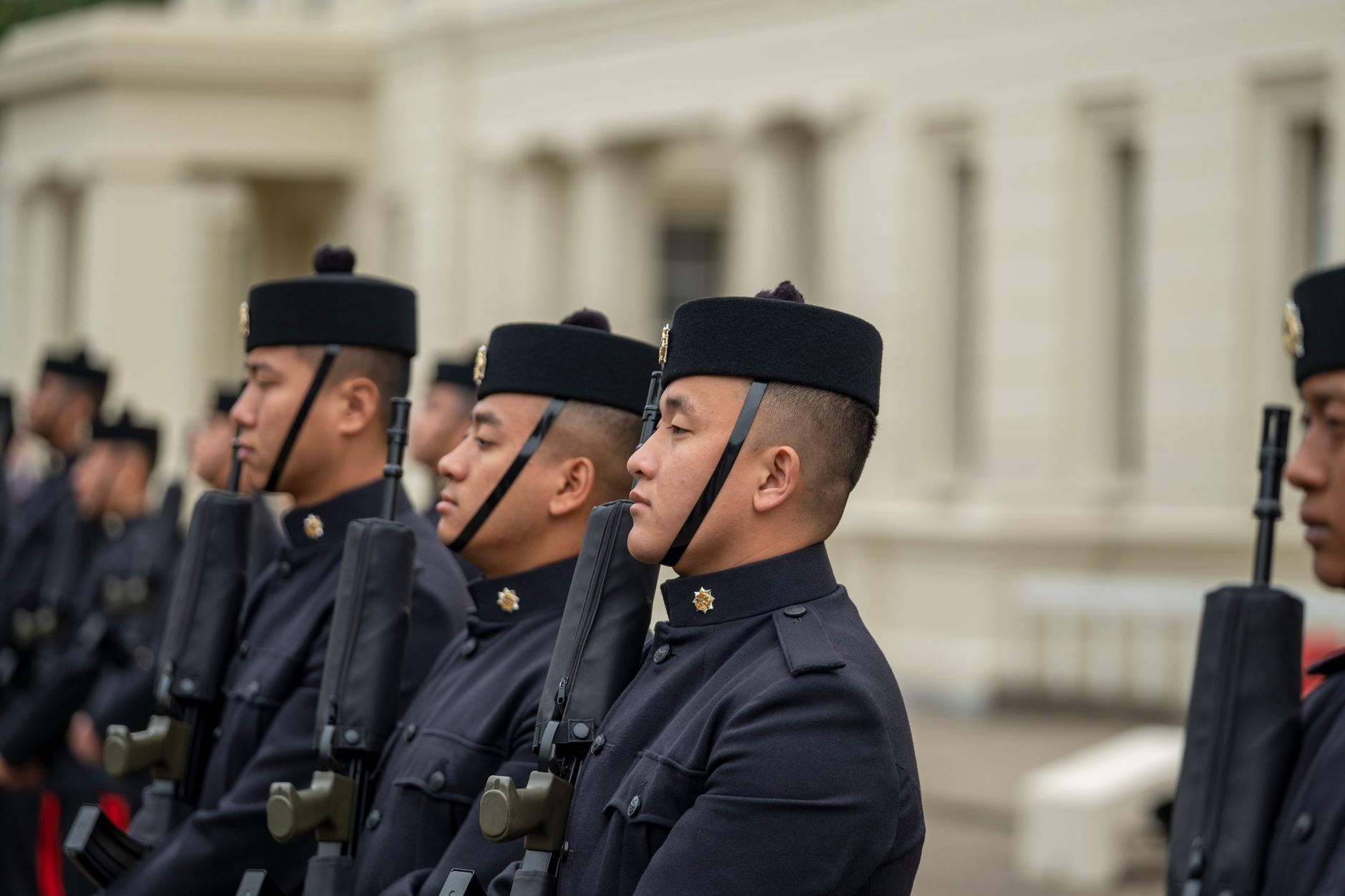
This is the part that genuinely startled me the first time I saw it happen. A famous idol or actor announcing his enlistment date isn’t a quiet footnote — it’s a full news cycle, with fan crowds gathering outside the induction center, television crews covering the send-off, and group members openly emotional on camera. Some of the biggest K-pop acts of the last decade have had their members enlist together, group by group, and each one becomes a genuine cultural event, discussed on entertainment shows the same way a comeback album would be.
Part of what makes it land so hard is precisely because there’s no way around it. A wildly famous, wealthy 27-year-old idol goes to the same induction center, gets the same buzz cut, and eats the same barracks food as anyone else’s son. There’s no VIP lane. Fans seem to find something almost reassuring in that — proof the system doesn’t bend for money or fame — even while they’re visibly heartbroken about losing their favorite performer from the stage for close to two years. I remember watching a livestream of one such farewell with a Korean friend who wasn’t even a fan of the group, and she was tearing up anyway. “It’s not really about him,” she said. “It’s about knowing my little brother’s going through the exact same thing right now.”
The Ripple Effects: Dating, Careers, and the Two-Year Pause
Military service doesn’t just interrupt a guy’s life — it interrupts everyone dating one. Long-distance relationships across an 18-to-22-month gap, with limited phone access and rare leave days, are common enough that there’s an entire vocabulary around them. Couples who make it through are practically celebrated for their patience; couples who don’t have a widely used, slightly rueful shorthand for the breakup pattern — the joke being that the phone call ending things tends to arrive suspiciously close to when he ships out or right around his first long leave. I’ve heard a specific percentage thrown around casually in conversation about how many relationships don’t survive the gap, but I’d treat any exact number you hear as folklore rather than verified data. The sentiment is accurate even if the statistic isn’t.
On the career side, service functions like a universal, unavoidable gap year that both employers and job seekers have simply built into their expectations. Résumés in Korea often list military service dates the way an American résumé might list a study-abroad semester — not a red flag, just a fact of the timeline. It does create a real timeline gap between when Korean men and Korean women enter the full-time workforce, and that gap feeds into ongoing, sometimes heated conversations about gender and fairness in Korean hiring that go well beyond what I can responsibly unpack in a post about how conscription works.
Frequently Asked Questions
Do foreigners living in Korea have to serve?
No. The obligation applies to Korean male citizens, including dual citizens in most cases, but not to foreign nationals residing in the country. A foreign resident on a work or student visa has no service requirement at all.
Can someone avoid service just by not wanting to go?
Not legally. Evasion is treated seriously — it can mean fines or jail time, and it tends to end careers, especially public ones, when it comes to light. There have been well-publicized cases of public figures losing citizenship status or facing entry bans after evading service, which is part of why enlistment announcements get treated as such a big, unavoidable milestone rather than something people try to quietly skip.
Does everyone go to the front line near the border?
No. Assignments vary enormously by branch, specialty, and the physical grade a conscript receives, and plenty of service members spend their two years in administrative, technical, or support roles far from any front-line post. Where you end up has more to do with test scores, skills, and a given unit’s needs than with anything dramatic.
Leave a Reply