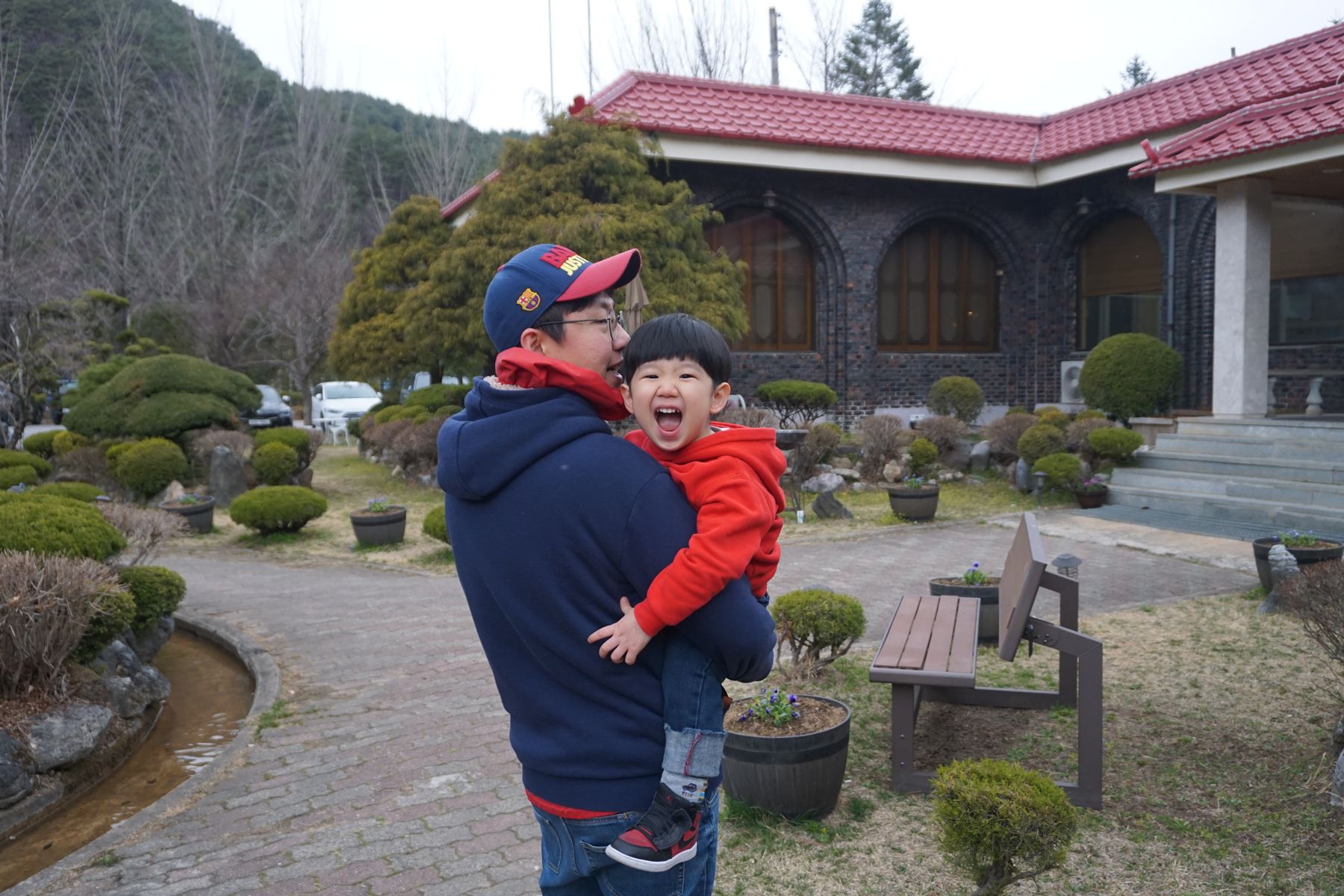
The first time I filled out a form here and saw two boxes — 성 (surname) and 이름 (given name) — already separated for me, I thought, finally, a country that gets it. Then I tried to explain the same two boxes to my mother back home over a video call, using my son’s name as the example.
I watched her eyes glaze over somewhere around “no, Mom, the family name goes first, so it’s not his middle name.” That phone call pretty much sums up what this post is about.
Korean names are not hard. The order they come in is not hard either, once you sit with it for five minutes. But almost nobody outside Korea sits with it for five minutes, and that’s how you end up with airport agents calling my son by his father’s name, hotel reservations split across two separate guest profiles, and at least one well-meaning English teacher who spent a semester calling a student “Min-jun Kim” like it was a Western name with the words swapped for flavor.
The Basic Rule: Family Name First
In a Korean name, the family name comes first and the given name comes second. Son Heung-min is a Son, first name Heung-min — not a man named Heung whose last name is Min. Bong Joon-ho, the director of “Parasite,” is a Bong. Kim Yuna, the figure skater, is a Kim. If you’ve ever seen a roster of Korean Olympic athletes and assumed the second word was the surname because that’s how it works in English, you’ve been doing it backwards the whole time, and so was I for about my first six months here.
Most Korean family names are a single syllable, and the pool of them is small — Kim, Lee, Park, Choi, and Jung alone account for roughly half the population, which is a genuinely strange thing to wrap your head around if you come from a country where surnames are practically a form of personal identification. Given names are usually two syllables, and each one is traditionally chosen for the meaning of its hanja, the Chinese character behind the sound. “Jun” (준) often carries a sense of talent or excellence, “Min” (민) tends to mean clever or quick-witted, “Ji” (지) frequently points to wisdom. Put two of those together — Min-jun, Ji-won, Seo-yeon — and you’ve got a name that’s doing real semantic work, not just a pleasant collection of syllables. Plenty of modern parents now skip hanja entirely and pick pure Korean names instead, something that would have raised eyebrows a couple of generations ago, but the two-syllable, meaning-first habit has stuck around regardless. So a typical name looks like one syllable, then two more: surname, then given name, no commas, no reordering, no exceptions for how it “sounds better” in English.
Why Family Comes First, Not Last
A naming convention can be as arbitrary as which hand you use to hold your chopsticks — just a habit, no deeper meaning. This one isn’t. The family-first order reflects something structural about how Korean society has organized identity for centuries: the lineage is the unit that matters, and the individual is a member of it, not the other way around. For most of the 20th century this wasn’t just a cultural attitude, it was written into law. Korea maintained a family registry system called hoju, where every household was recorded under a head, almost always the eldest male, and your legal identity was tied to that household on paper rather than to yourself as an individual.
That system caused real, specific harm, which is part of why it finally fell. Under hoju, a divorced mother couldn’t easily register her own children under her own name if she remarried; a child from a remarried household often couldn’t take a stepfather’s surname without a legal fight; and single mothers routinely found their children’s paperwork stamped in ways that outed their marital history to anyone who looked. Women’s rights groups spent decades pushing against it on exactly these grounds, and the hoju system was finally abolished in 2008, replaced by individual family relation registers that track each person separately rather than folding them into a household head’s file. The family-first naming order survived that reform. The legal machinery that once backed it up did not.
This isn’t unique to Korea, either. China and Vietnam follow the same family-first pattern, and Japan traditionally does too, even if Japan has increasingly flipped the order in English-language contexts since around 2019, when the Japanese government formally requested that media outlets write Prime Minister Abe Shinzo’s name as “Shinzo Abe” to match Western convention. Korea, for what it’s worth, has mostly not followed suit. Officially, the government still recommends keeping the family name first even when a name is romanized for English use — which is part of why the confusion persists. Korea asks the world to adapt to its order; much of the world just assumes it should be the other way and quietly rearranges it.
Stage Names Add a Whole Other Layer
Before we even get to paperwork, it’s worth pausing on K-pop, because it scrambles this whole system in a completely different direction. Idols often perform under a single stage name with no surname attached at all — Jungkook, IU, RM — which trains international fans to think of Korean names as single-word identities with no order to worry about. Underneath, though, the performer’s legal name almost always still follows the standard family-first structure: RM’s full legal name is Kim Nam-joon, IU is Lee Ji-eun. Fans who only ever encounter the stage name can go years without realizing a surname exists at all, which flips the usual confusion on its head. Instead of getting the order wrong, some people don’t even know there’s an order to get wrong in the first place.
What This Looks Like on Paper — and Why Even Korea Isn’t Consistent About It
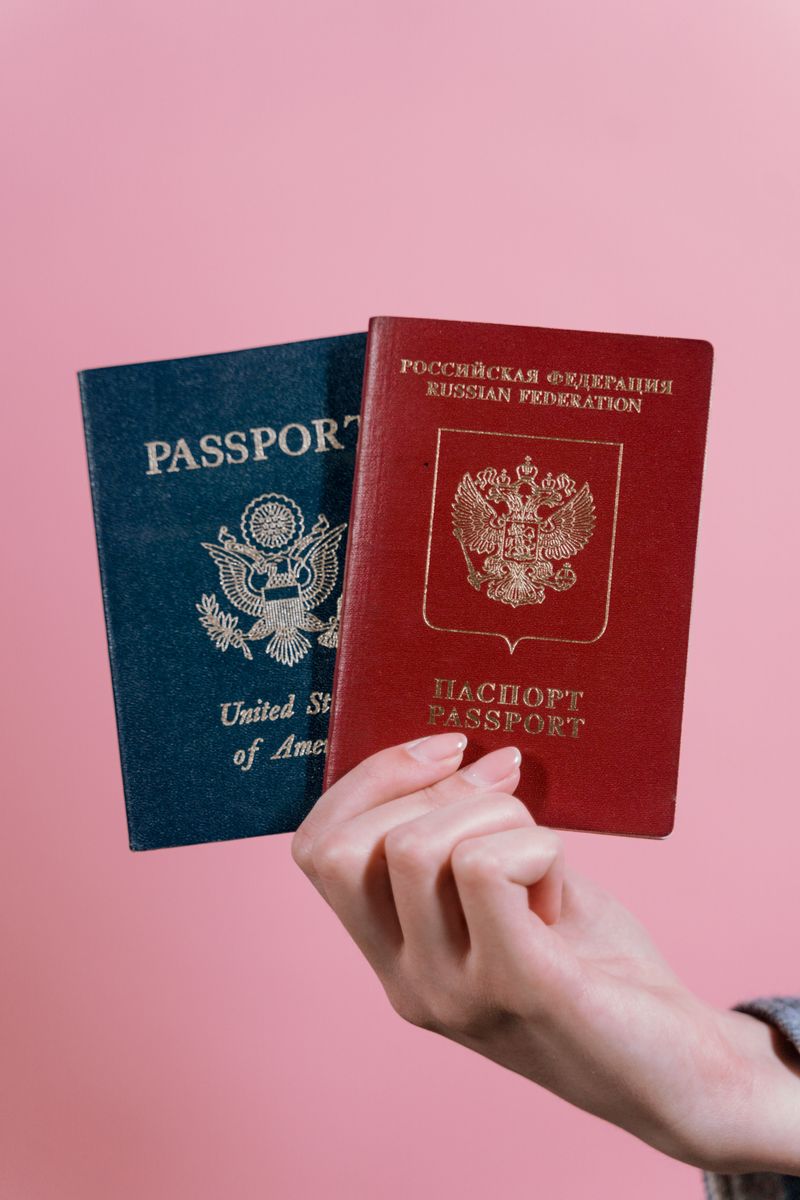
If you want to see the system in its purest form, look at an Alien Registration Card, the ID issued to foreign residents like me. Mine lists my name exactly the way my passport does, Western order intact, because the government isn’t trying to convert foreigners’ names into Korean convention — it’s the reverse direction, Korean names rendered into English, that creates the mess. A Korean passport prints the surname first in the machine-readable zone at the bottom, same as every passport on earth, but on the printed data page above it, the label often reads GIVEN NAME, then SURNAME, specifically so the format matches international norms and doesn’t confuse a customs officer in Frankfurt or Toronto. So even the Korean government, in its own official documents, hedges — family-first order in Korean text, given-first order in the English rendering, sometimes on the very same page. No wonder people get confused. The document itself isn’t fully consistent.
Where it gets genuinely messy is the given name’s internal punctuation. Is it Min-jun, Minjun, or Min Jun? All three show up, sometimes for the same person on different documents, because there’s no single enforced standard for how to join or separate the two syllables of a given name in romanized form. The 2000 Revised Romanization of Korean, the government’s official transliteration system, has clear rules for converting Hangul sounds into Latin letters, but it leaves the hyphen-or-no-hyphen question largely up to the individual filling out the paperwork that day. I’ve met people who hyphenate their name on their passport but write it as one word on their business card, and when I asked one of them why, she just shrugged and said the passport office clerk typed it that way years ago and she’d never bothered to change it. That’s not a satisfying answer if you’re a Western database trying to match two records as the same person, but it’s an extremely honest one — and it means the “same” Korean name can legitimately look like three different strings of text depending on which document you’re holding.
Where the Confusion Actually Starts Abroad
In theory the fix is obvious: find the field labeled “surname” and put the family name there. The math sounds simple on paper. Reality is messier, because nearly every booking system, hotel check-in page, and online form was designed around a Western assumption that whatever a person types into the first box is their given name — no exceptions considered. So when a Korean traveler types their name the way they’ve used it their entire life, surname first, the system doesn’t ask any clarifying questions. It just files the surname as a first name and moves on, silently, and nobody notices until a boarding pass doesn’t match a passport. I’ve watched this happen to friends booking flights out of Incheon: they find out three weeks later, standing at a check-in counter at 5 a.m., being told politely but firmly that the names don’t match and someone needs to call a help desk. It’s a small thing individually. It’s also a small thing that happens to an enormous number of people, over and over, which is less a one-off mistake and more a design flaw nobody’s bothered to fix.
And it isn’t only machines doing the flipping — people do it too, usually with the best intentions. I’ve sat through introductions where a Korean colleague says their name in the correct order, family first, and the Western listener immediately parrots it back reversed, as a kind of reflexive courtesy, assuming they’re “fixing” an error that was never there in the first place. It happens so often that plenty of Koreans who deal regularly with international colleagues just preempt it themselves, introducing their names in Western order right from the start — “Call me Jun-ho Kim” instead of “Kim Jun-ho” — not because that’s how their name actually works, but because it’s one less thing to correct in a meeting that’s already running long. Which, if you think about it, is a strange kind of accommodation: the burden of avoiding confusion lands almost entirely on the Korean speaker, not on the system that keeps getting it wrong.

So What Should You Actually Do With a Korean Name?
If you’re filling out a form for a Korean colleague, client, or friend, the safest move is also the simplest: ask which part is the family name rather than guessing based on word order, especially if the name has already been flipped somewhere upstream and you can’t tell anymore which version you’re looking at. If you’re writing a name in running English text and the person hasn’t told you otherwise, keeping the traditional order — family name first — is the more respectful and more accurate default, even if it occasionally confuses a reader who assumes otherwise; a short clarifying note on first mention, the way journalists do, solves it without erasing the actual structure of the name. And if you’re the one introducing yourself, it’s entirely your call how you want to present it. Plenty of Koreans flip the order for international convenience and plenty don’t, and neither choice is wrong. The name itself doesn’t change. Only the order you’re reading it in does.
Frequently Asked Questions
Is it rude to get the order wrong?
No, and most Koreans won’t take offense if you mix it up, especially on a first meeting — it happens constantly and everyone here has made peace with it. That said, getting it right on something that actually matters, like addressing a business letter or introducing a colleague at a conference, does register as a small sign that you paid attention, and people notice that more than you’d think.
Do Korean married couples share a family name?
Not automatically, and this surprises a lot of foreigners. Korean women traditionally keep their own family name after marriage rather than taking their husband’s, a practice rooted in the same lineage-based logic that puts the family name first — you belong to the family you were born into, not the one you married into, at least not on paper. Children usually take the father’s surname by default, but since the 2008 reform, parents can actually agree at the time of marriage registration to give children the mother’s surname instead, and a small but growing number do. It’s still far from the norm, but it’s no longer the legal non-option it used to be, which is a bigger shift than it might sound like given how recently the old household-head system was still in force.
How can I tell which part of a Korean name is the surname if it’s already been flipped on a form?
When in doubt, check against the handful of extremely common single-syllable surnames — Kim, Lee, Park, Choi, Jung, Kang, Cho, Yoon, Jang, and Lim cover a large share of the population — and if one of those words appears anywhere in the name, it’s very likely the family name regardless of which position it’s sitting in. It’s not a perfect method, but it catches the majority of cases, and when it doesn’t, just ask.
Leave a Reply