My mother-in-law walked into our bedroom at midnight once, took one look at the standing fan oscillating gently in the corner with the door closed and the windows shut, and switched it off without a word of explanation, like she was defusing something dangerous. I turned it back on twenty minutes later, slightly annoyed and sweating in July humidity. She turned it off again the next time she passed by. We did this dance for most of that summer before I finally asked her straight out what the actual problem was.
I’m Yijidaddy, and that fan standoff was my real introduction to the fact that some Korean superstitions aren’t just old wives’ tales trotted out for Halloween-style fun — people I love dearly genuinely, unironically believe them.
Fan Death: The One That Started It All for Me
Fan death, seonpunggi samang, is probably the single most internationally famous Korean superstition, and once you hear the full version it’s almost impressive how specific the fear gets. The belief is that sleeping in a closed room with an electric fan running overnight can actually kill you, through some combination of suffocation, hypothermia, or the fan supposedly circulating stale carbon dioxide until you choke on your own exhaled air. The fear traces back to 1927, when electric fans were still a novel, slightly mysterious import, and a Korean newspaper ran a story warning that this new household technology came with real medical risks, everything from nausea to facial paralysis to outright asphyxiation. Newspapers in that era carried enormous authority, colonial-period Korea was hungry for anything resembling modern scientific explanation, and a warning printed in ink carried the weight of medical fact whether or not anyone had actually tested it. Nearly a century later, that one uncorrected story’s fingerprints are still all over my in-laws’ bedroom habits.
What got me wasn’t that my mother-in-law believed it, exactly — plenty of countries have at least one weird appliance-related fear floating around somewhere in folk memory. It was how specific the safety protocol was. Crack a window an inch, apparently, and the danger supposedly disappears. Set a timer so it shuts off at some point during the night, and that’s also considered safe. Leave a closed door and a fully sealed room with the fan running until morning, though, and you’ve apparently invited real risk into the house. I eventually negotiated a compromise: window cracked open, timer set for three hours, fan pointed away from the bed. My mother-in-law still checks when she visits, and I’ve genuinely stopped minding.

Why You Never, Ever Write Someone’s Name in Red
Fan death might stay behind closed bedroom doors, but other taboos follow you straight into the workplace, as I found out in front of actual coworkers, which is its own special kind of mortifying. I grabbed the nearest pen at a meeting to jot down a colleague’s name on a shared whiteboard, and it happened to be the only red marker in the cup. There is a very specific kind of cold sweat that breaks out when you realize, from the sudden silence and the way two people’s eyes snapped to the board, that you’ve just done something closer to cursing someone than labeling a sticky note. One coworker actually reached over and gently took the marker out of my hand before I’d even finished writing the last letter, swapping it for a blue one without a word, the way you’d calmly take scissors away from a toddler. Historically, red ink was used specifically to write the names of the deceased on official family registers, so writing a living person’s name in red carries the old implication that you’re marking them for death, or at minimum wishing serious harm their way. Nobody genuinely thinks a red marker is a death sentence today, but the discomfort around it hasn’t faded nearly as fast as the original reasoning behind it has.
The Number Four, and Why Some Elevators Skip It Entirely
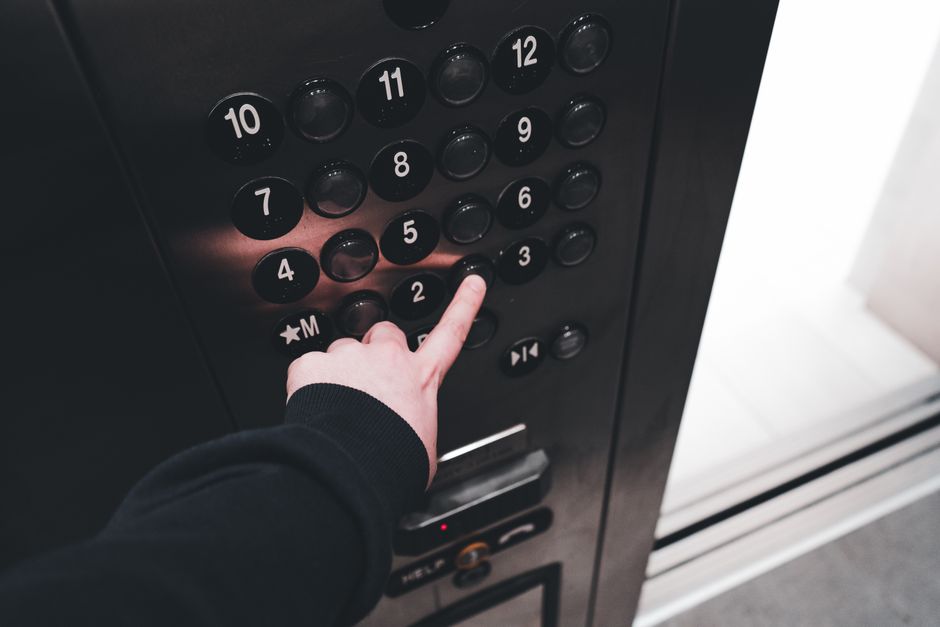
The first time I noticed an elevator panel in Korea jump straight from 3 to 5, or label the fourth floor “F” instead of a number, I genuinely thought it was a manufacturing defect, some weird printing mistake nobody had bothered fixing. It’s not a mistake at all. The Korean word for four, sa (사), sounds identical to the word for death, also sa (사), and that phonetic overlap has made the number itself feel unlucky enough that plenty of buildings, hospitals especially, just sidestep it entirely rather than make anyone ride an elevator to a floor that sounds like a bad omen. Apartment units and parking levels do the same skip-the-number trick often enough that I stopped being surprised by it, and started actively checking elevator panels out of pure curiosity whenever I walk into somewhere new.
Two More That Caught Me Off Guard
Once I started paying attention, the list kept growing. My wife once got genuinely excited after a dream about pigs, immediately checking the lottery numbers that weekend, because dreaming of pigs is widely considered a sign of incoming good fortune or money, strange as that sounds to someone who grew up associating pigs mostly with bacon. On the flip side, cutting your nails at night is something my father-in-law still actively avoids, tied to an old belief that doing so invites bad spirits or even death into the house after dark, back from an era before electric lighting made it hard to see a stray nail clipping rolling under the floor mats anyway. Neither belief gets explained with a straight face exactly, but neither one gets casually ignored either.
Do Younger Koreans Actually Believe Any of This?
Here’s where it gets interesting rather than just quaint. My wife, firmly in her thirties and about as rational a person as I know, will still absolutely not let our kids sleep with a sealed room and a fan running all night, not because she’s genuinely convinced it’ll kill them but because, in her words, “why take the risk for literally no reason.” That’s the pattern across most of these beliefs among younger Koreans. It’s not blind faith exactly. It’s more a kind of low-cost precaution that costs nothing to follow and might, in some tiny percentage chance, matter. There’s also a social layer underneath it that took me a while to notice, something close to nunchi, that quiet social instinct for reading a room and not making waves. Following the superstition isn’t really about fearing a curse. It’s about not being the one family member who makes everyone else feel uneasy over something that would’ve cost nothing to just go along with.
That’s basically where I’ve landed on all of it too, somewhere between skeptic and quiet participant. I didn’t move here believing in any of this, and nothing that’s happened since has given me a reason to start. But going along with it costs me a cracked window and a blue pen, and in exchange I get a house full of in-laws who don’t have to worry about me.
Frequently Asked Questions
Q1. Should I actually worry about fan death if I visit or live in Korea?
No, there’s no medical evidence supporting the idea that a fan alone can kill someone in a room with any ventilation at all. That said, cracking a window or setting a sleep timer costs you nothing, and it’ll spare you an awkward conversation if a Korean host or in-law happens to notice the fan running in a sealed room.
Q2. Is writing in red pen always considered bad, even for things like correcting homework?
Context matters quite a bit here. Teachers correcting papers in red ink is completely normal and expected, since that’s a globally standard convention with no connection to the name-related superstition. The taboo specifically targets writing a living person’s actual name in red, not red ink in general.
Q3. Are there other unlucky numbers besides four?
Four gets the most attention by far, but some people also treat certain date and time combinations as worth avoiding for big life events like weddings or moving day, often based on traditional lunar calendar calculations rather than anything tied to how the numbers sound. It’s a much softer, less universally followed belief than the number four thing, though.
Q4. Will I offend someone if I accidentally break one of these rules as a foreigner?
Almost never, in my experience. Most Koreans extend a pretty generous amount of patience to foreigners who clearly didn’t grow up with these habits. The red pen incident got me a raised eyebrow and a quiet correction, not a lecture. The real test comes later, once you’ve been here long enough that people stop assuming you don’t know better.
These days I crack the window without even being asked, sign everything in blue or black ink out of sheer reflex, and don’t think twice when an elevator skips straight from three to five. I didn’t exactly convert to believing any of it myself — I just got tired of being the reason everyone else in the room felt uneasy.
Leave a Reply