Blog

  • Korean Delivery Culture: Why Everything Comes in 20 Minutes

    Korean Delivery Culture: Why Everything Comes in 20 Minutes

    It was raining on a Tuesday night in Bundang, the kind of cold October drizzle that makes you want to disappear under a blanket and never move again, when I did something that still feels a little absurd typing out: I ordered a single can of Chilsung Cider off Coupang Eats. Not a meal. Not even a snack to go with it. Just the soda, because I didn’t feel like putting on shoes. Nineteen minutes later, a rider in a green helmet was standing at my door with exactly that — one can, no judgment, receipt tucked under the bag’s flap, delivery fee for the whole errand somewhere around 2,500 won, or roughly two dollars.

    Koreans have a phrase for this: “baedal-ui minjok,” or “the nation of delivery” — and yes, that’s also literally the name of the country’s biggest delivery app, Baedal Minjok (usually shortened to Baemin). It’s not just branding bravado. In August 2025 alone, Baemin logged over 23 million monthly active users in a country of roughly 51 million people — meaning close to every economically active adult in Korea opened that one app at least once that month. For comparison, DoorDash’s entire U.S. user base, spread across a country with more than six times the population, sits in a similar ballpark of monthly actives. Scale that down to Korea’s size and the density of delivery-app usage here is on another level entirely. Coupang Eats trails Baemin with close to 12 million, and a newer discount-focused challenger called Ddaenggyeo is climbing fast. This isn’t a niche convenience for busy office workers — it’s infrastructure, as fundamental to daily life here as the subway.

    Motorcycle delivery rider navigating a Seoul alley at night

    Why “20 minutes” isn’t even the fast option anymore

    You’d think 20 minutes sounds like marketing copy, something no company could actually pull off consistently. But depending on where you live, it’s genuinely closer to the norm than the exception. Baemin and Yogiyo, the older-generation apps, tend to run 40 to 50 minutes during peak dinner hours because they route through independent riders juggling several restaurants’ orders at once. Coupang Eats, on the other hand, built its own dedicated rider network and regularly clears 25 to 30 minutes even on a busy Friday.

    The real stress test of that speed, though, isn’t a quiet residential alley — it’s an open public park with no street address at all. Along the Han River, at spots like Ttukseom, Banpo, and Yeouido, there are marked “delivery zones” with numbered flags planted in the grass, so a rider can actually find you among a thousand identical blue picnic tarps on a warm Saturday. Order from one of those zones and food still shows up in about 20 minutes flat. I’ve used the Banpo one, sitting cross-legged on a mat with zero landmarks around me except a flag with a number on it, and it worked exactly as advertised. It’s a little unsettling how well it works.

    What still gets me, even after years here, is the sheer range of what qualifies as “deliverable.” I’ve ordered a single roll of toilet paper at 11 p.m. because I miscounted my stock. I’ve had someone bring me two ice cubes’ worth of ice — okay, a small bag of ice, but it felt about that dramatic — during a heat wave when my freezer’s ice maker broke. Coffee, a full traditional market’s worth of banchan, a single stick of gum, a phone charger cable, an entire birthday cake with candles already in it — all of it arrives on the back of a scooter, usually faster than you’d get a table at the restaurant itself. In most countries I’ve lived in or visited, there’s an unspoken minimum order size before delivery makes economic sense. Here, that line barely exists.
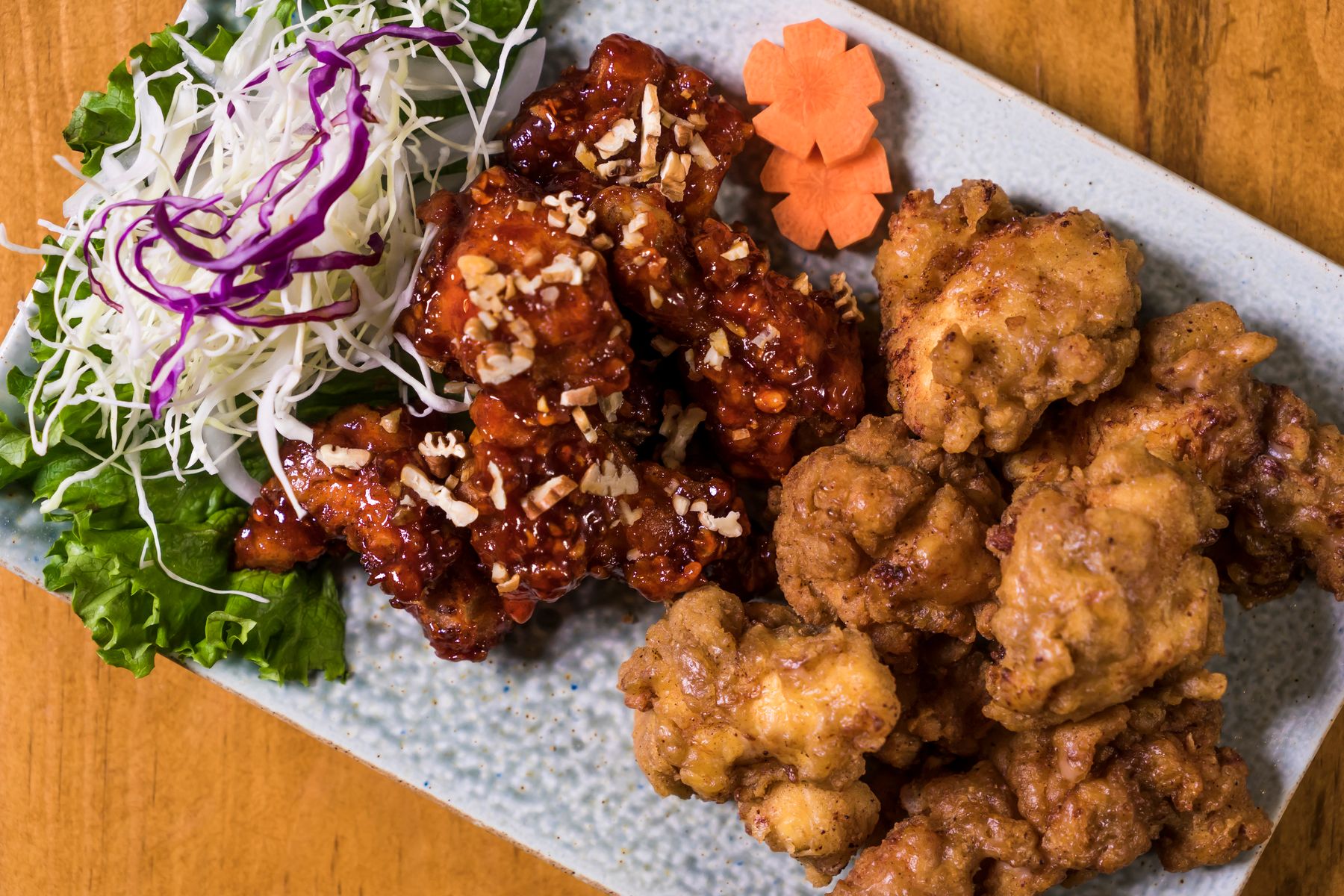
    Korean fried chicken served for delivery

    Chicken, beer, and the traffic-light problem nobody wants to talk about

    Chicken is what built this industry, more than any single dish. Specifically the double-fried, often gochujang-glazed kind that Koreans eat with beer in a combo so iconic it has its own word, “chimaek” (chicken plus maekju, beer). Walk down almost any residential street after 9 p.m. and you’ll see at least one scooter idling outside a chicken shop, insulated delivery box strapped to the back, engine still running, rider glancing at his phone for the next assigned drop.

    Here’s the part that’s less fun to write about but matters: baedal riders often treat traffic lights and lane markings as more of a suggestion than a rule, and that’s not exaggeration for effect. Platforms in Korea have leaned on algorithmic dispatch systems that route riders by estimated delivery windows, and when those windows get tight — especially during rainstorms, snow, or the dinner rush — the pressure to shave off two or three minutes translates directly into riskier riding. Rider deaths and injuries from delivery-related traffic accidents have shown up regularly enough in Korean news coverage that unions representing riders have staged public protests over commission structures and speed-based incentive pay, including organized actions against Baemin’s fee policies in 2025. It’s worth holding both truths at once: the convenience is genuinely remarkable, and it’s built partly on riders absorbing risk that customers rarely think about while refreshing the tracking map, waiting for their wings.

    The tracking map, the checkout screen, and zero tips

    That tracking map, by the way, might be the single most addictive UI element in the country. Every app shows a little icon — a scooter, sometimes shaped like the food itself — crawling along a live map from restaurant to your building. You can watch it stop at a red light. You can watch it apparently take a wrong turn and correct itself a block later. There’s something almost hypnotic about it, and I say this as someone who has opened the app just to check the dot’s progress instead of doing anything useful with those four minutes.

    Once that dot reaches your door, the payment side is where things diverge sharply from what a lot of foreign readers expect. If you’re coming from the U.S., the tipping question is probably the first thing on your mind, and the answer surprises a lot of newcomers: you don’t tip, and nobody expects you to. There’s no tip prompt on the checkout screen, no awkward moment at the door, no mental math about 15 versus 20 percent. Delivery fees are baked into the order upfront — usually somewhere between 2,000 and 4,000 won, or roughly $1.50 to $3, depending on distance and time of day, sometimes waived entirely above a certain order size — and that’s treated as the full and complete cost of getting food to your door. Riders are paid per delivery by the platform or the restaurant, not by customer generosity, so there’s no social pressure hanging over the transaction the way there can be elsewhere. Which, when you think back to that single can of soda from the intro, is what makes the whole system work financially: a flat two-dollar fee on a low-cost item still pencils out because the rider isn’t waiting around for a tip that may or may not come.

    That said, it’s not universally a tip-free zone in every micro-context — some apartment complexes and older customers will occasionally hand a rider a canned coffee or a small cash “thank you” for a delivery made in brutal weather, but this is a personal gesture, not a system. Nobody calculates a percentage. Nobody feels guilty for not doing it. Coming from a tipping culture, this took me an embarrassingly long time to get used to — I kept hovering my finger over an imaginary tip button that simply didn’t exist, out of pure muscle memory.
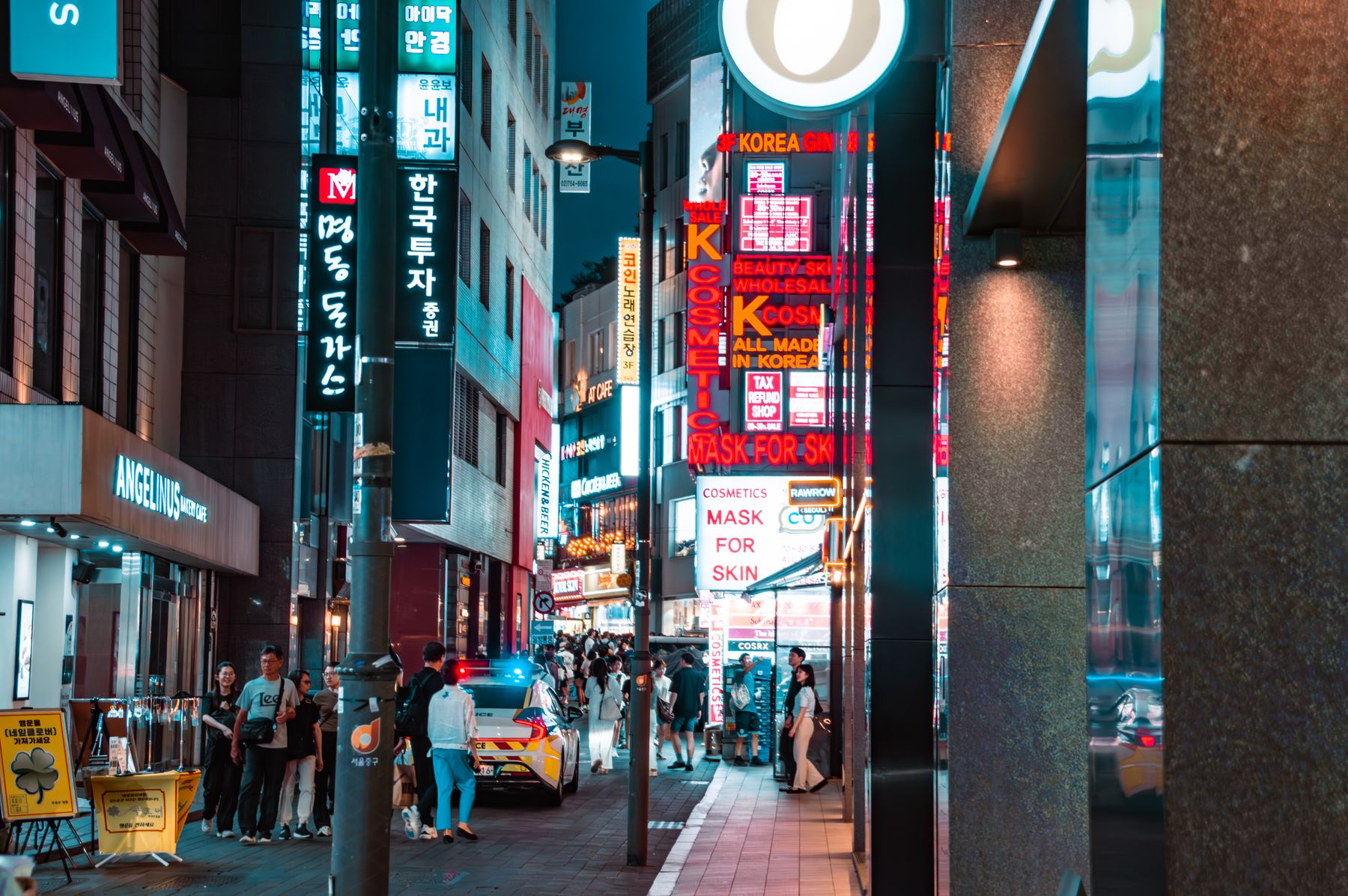
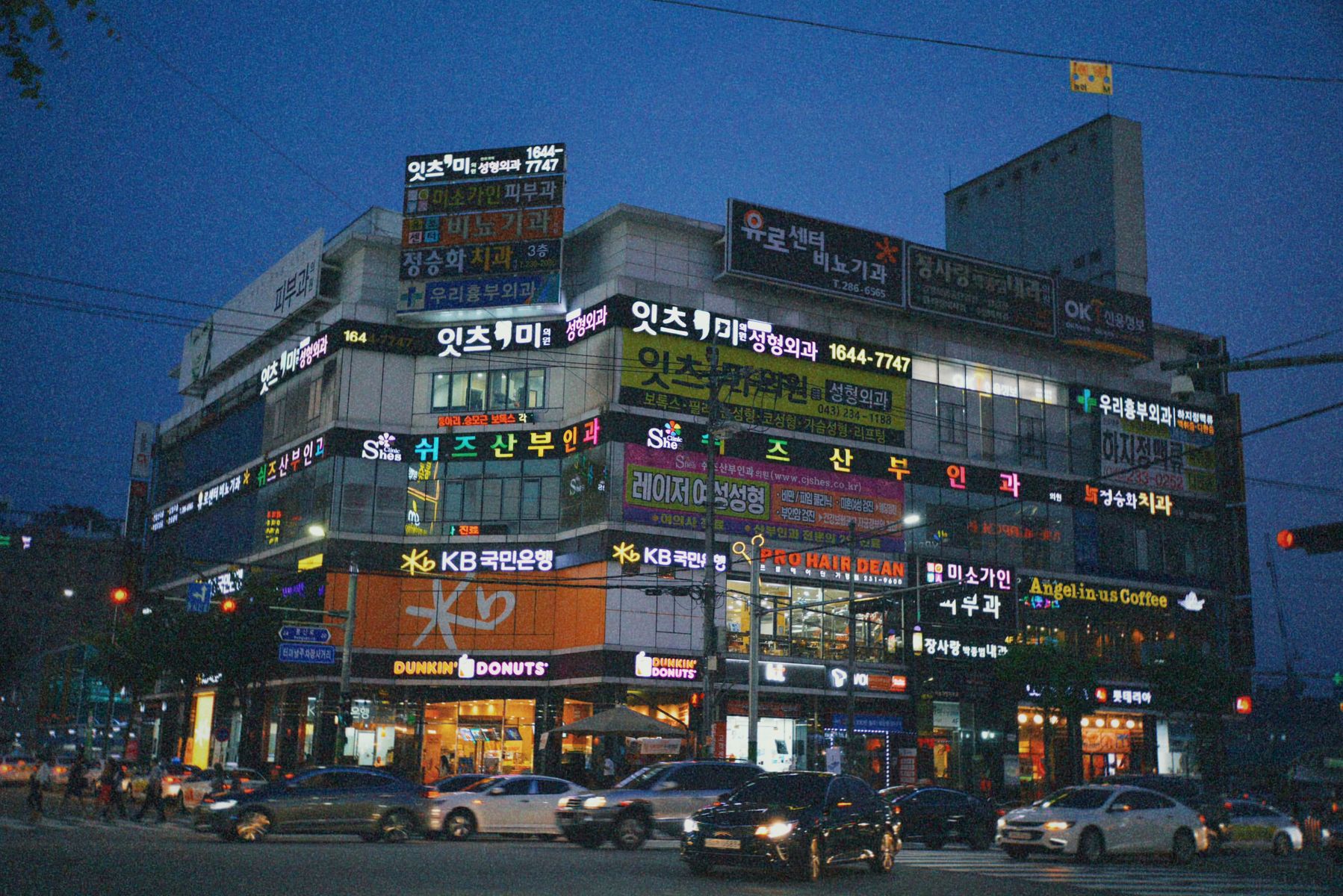
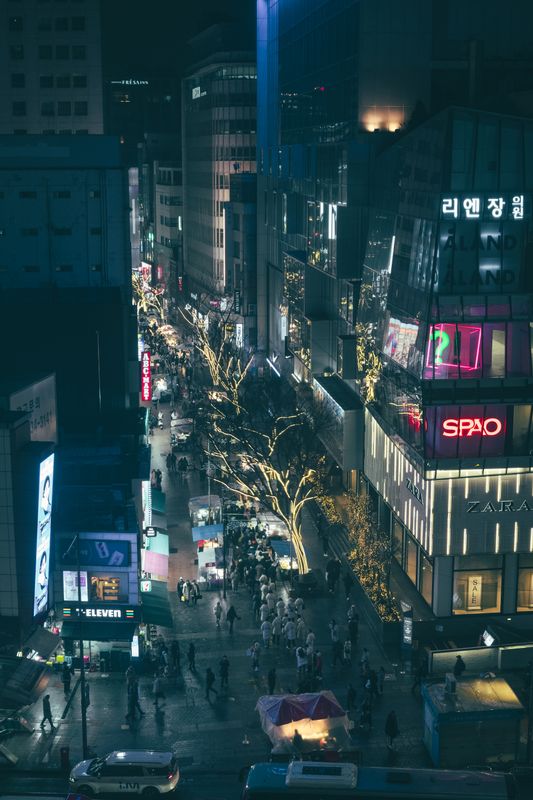
    Busy Myeongdong street in Seoul at night with neon signage

    How this rewired daily expectations

    Living here long enough changes your baseline for what “reasonable” even means. I now genuinely feel a flicker of impatience if delivery takes 35 minutes, which is a ridiculous thing to admit out loud given that in plenty of other cities I’ve lived, 35 minutes would count as impressively fast. Korea’s delivery ecosystem grew out of a particular combination of factors that reinforce each other: extremely dense apartment living where a rider can hit dozens of doors in one building without moving the bike, a culture where working late is common enough that cooking dinner from scratch isn’t always realistic, small restaurants that depend on delivery volume to survive razor-thin margins, and a broader cultural instinct that treats speed itself as a form of quality and respect for the customer’s time.

    That last part matters more than it sounds. In a lot of places, “fast” and “good” service are separate conversations. Here, they’re often treated as the same conversation — a restaurant that’s slow to deliver is quietly judged as worse at its job, even if the food itself is identical.

    There’s also a quieter side effect worth mentioning: the sheer convenience has made it easy to almost never cook, which some Korean friends have half-jokingly told me is its own kind of trap. A few have mentioned cutting back on delivery apps specifically because it got too easy to order chicken three nights a week without noticing. I don’t think that’s a uniquely Korean problem — it’s just that the infrastructure here makes the path of least resistance unusually smooth. Once ordering food takes less effort and less time than boiling water for ramen, the decision basically makes itself.

    Frequently Asked Questions

    Do I need to speak Korean to use delivery apps like Baemin or Coupang Eats?

    Not really, at least not anymore. Coupang Eats runs almost entirely in-app with photos and set menus, so you can order by tapping images without typing a word of Korean. Baemin added an English interface option in its settings menu, and both apps let you leave delivery notes (“leave at door,” “call on arrival”) in English — most riders will understand or just default to the standard drop-off if you don’t specify. The trickier part isn’t the language, it’s that both apps typically require a Korean phone number and a Korean bank card or a linked payment method to sign up, which is the actual hurdle for new arrivals.

    Is it true you can get things other than food delivered, like from convenience stores?

    Yes, and this is one of the more underrated parts of the system. Apps like Baemin have a dedicated “B Mart” or similar quick-commerce section that functions like a mini convenience store — think phone chargers, instant noodles, diapers, beer, ice packs, even basic medicine — and it gets delivered in roughly 20 to 30 minutes from a local dark store, not an actual restaurant. I’ve used this for last-minute birthday candles and, once, a phone case after I dropped mine down a stairwell at 1 a.m.

    Why don’t Korean delivery apps have a tipping option built in?

    It comes down to how the delivery fee structure was designed from the start. The upfront fee you pay at checkout is meant to fully compensate the platform and rider for that trip, rather than functioning as a base price that assumes supplemental tipping, the way service industries in the U.S. are often structured. Some critics argue this means riders are more dependent on volume and speed bonuses to make a living wage, which ties back into the safety concerns around fast delivery — but from the customer side, the checkout experience stays simple: what you see is what you pay, full stop.


  • 실업급여 수급 조건과 실제 받는 금액 계산법 (2026년 기준)

    실업급여 수급 조건과 실제 받는 금액 계산법 (2026년 기준)

    통장에 월급이 안 들어온 지 이틀째. 퇴사 도장 찍을 때만 해도 “쉬면서 재충전해야지” 했는데, 막상 다음 달 카드값 문자가 오니까 머릿속이 복잡해진다. 이럴 때 다들 한 번쯤 검색해보는 게 실업급여다. 그런데 막상 고용센터 홈페이지를 열어보면 피보험단위기간이니 소정급여일수니 하는 단어들이 쏟아져서 두 번째 창을 닫아버리게 된다. 실업급여, 아무나 주는 돈이 아니다. 조건도 까다롭고 금액 계산법도 생각보다 복잡하다. 2026년 기준으로 정확히 얼마를 받을 수 있는지, 누가 받을 자격이 있는지 숫자로 정리해봤다.

    퇴사 후 짐을 챙겨 나오는 직장인

    미리 요약하면 이렇다. 2026년 실업급여는 하루 최소 66,048원, 최대 68,100원이다. 30일 기준으로 계산하면 약 198만 원에서 204만 원 사이. 받으려면 퇴사 전 18개월 중 180일 이상 고용보험에 가입돼 있어야 하고, 이직 사유가 비자발적이어야 한다. 신청 후 첫 입금까지는 보통 3~4주가 걸린다. 여기까지 알았다면 이제 조건부터 하나씩 짚어보자.

    실업급여, 아무나 받는 게 아니다 — 수급 조건부터 확인하자

    일단 이름부터 정정하고 시작하자. ‘실업급여’라고 통칭하지만 정식 명칭은 ‘구직급여’다. 실업급여는 구직급여, 취업촉진수당 등을 포함한 큰 개념이고, 우리가 흔히 말하는 매달 통장에 들어오는 그 돈은 구직급여를 가리킨다. 조건은 크게 두 가지로 나뉜다.

    첫째, 이직일 이전 18개월 동안 고용보험 피보험단위기간이 통산 180일 이상이어야 한다. 여기서 헷갈리는 부분이 있는데, 이 180일은 달력상 6개월이 아니라 실제로 임금을 받고 근무한 날을 기준으로 센다. 주 5일 근무자라면 주말도 유급휴일로 포함되니 대략 7개월 정도 다니면 채워지는 경우가 많다. 그런데 아르바이트를 짧게 여러 번 옮겨 다닌 경우라면 이야기가 달라진다. 이전 직장에서 고용보험에 가입하지 않았거나 상실신고가 누락됐다면 아무리 오래 일했어도 피보험기간으로 인정받지 못한다. 퇴사 전에 4대보험 가입 여부를 꼭 확인해야 하는 이유다.

    둘째, 이직 사유가 ‘비자발적’이어야 한다. 회사 사정으로 권고사직을 당했거나, 계약 기간이 만료됐거나, 회사가 문을 닫아서 그만둔 경우가 대표적이다. 본인이 사표를 쓴 자발적 퇴사는 원칙적으로 대상이 아니다. 그런데 여기서 다들 놓치는 부분이 있다. 자발적 퇴사여도 인정되는 예외가 꽤 넓다는 점이다. 임금이 2개월 이상 밀렸다거나, 회사 사무실 자체가 이전해서 왕복 통근시간이 3시간을 넘게 됐다거나(본인이 이사한 경우는 해당 안 된다, 어디까지나 회사가 옮긴 경우다), 직장 내 괴롭힘이나 성희롱을 신고했는데도 회사가 아무 조치를 취하지 않았다면 자발적 퇴사여도 정당한 사유로 인정받아 수급이 가능하다. 이 부분은 서류 증빙이 관건이라 퇴사 전에 고용센터에 먼저 문의해보는 걸 권한다.

    2026년 기준, 하루에 얼마를 받을 수 있나

    조건을 통과했다면 이제 숫자를 볼 차례다. 계산식 자체는 단순하다. ‘이직 전 3개월 평균임금의 60%’가 하루치 구직급여액이다. 그런데 이 식만 믿고 계산기를 두드리면 헛다리를 짚기 쉽다. 상한선과 하한선이라는 벽이 하나 더 있기 때문이다.

    2026년 기준 1일 상한액은 68,100원이다. 2019년에 66,000원으로 오른 뒤 6년 넘게 동결돼 있다가 이번에 처음 오른 금액이라 체감상 크게 느껴지진 않을 수 있다. 월급이 아무리 높았어도 하루 68,100원, 30일이면 약 204만 원이 최대치라는 뜻이다. 반대로 하한액은 66,048원인데, 이 숫자는 2026년 최저임금 10,320원의 80%에 8시간을 곱해서 나온 값이다. 최저임금이 오르면 하한액도 자동으로 따라 오르는 구조라서, 올해는 특이하게 상한액과 하한액 차이가 2,052원밖에 나지 않는다. 평균임금이 웬만큼 낮지 않은 이상 대부분의 수급자가 이 좁은 구간 안에서 실업급여를 받게 되는 셈이다.

    예를 들어보자. 월급 250만 원을 받던 직장인이 퇴사했다면, 하루 평균임금은 대략 8만 2천 원 정도고 여기에 60%를 곱하면 약 49,300원이 나온다. 이 값이 하한액 66,048원보다 낮기 때문에 실제로는 하한액인 66,048원을 받게 된다. 반대로 월급 500만 원을 받던 사람이라면 계산상 하루 10만 원 가까이 나오지만, 상한액에 걸려서 68,100원만 받는다. 결국 월급이 250만 원이든 500만 원이든 실제 수령액은 하루 66,048원에서 68,100원 사이, 큰 차이가 나지 않는다는 얘기다. “월급 250만 원이나 500만 원이나 거의 비슷하다니” 싶겠지만, 직장인 입장에서는 허탈할 수밖에 없다. 고소득자일수록 실업급여의 소득대체 효과가 낮다고 느끼는 이유가 여기에 있다.

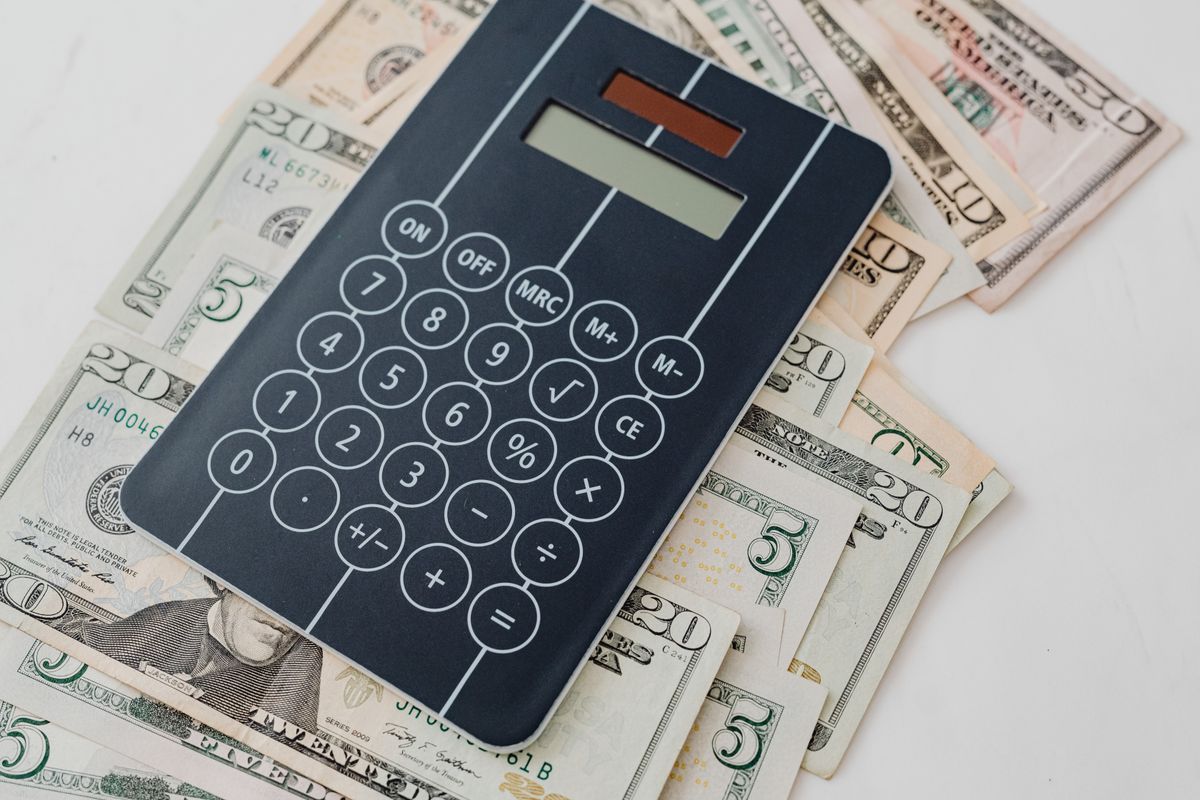
    계산기와 서류로 실업급여 금액을 계산하는 모습

    며칠 동안 받을 수 있나 — 소정급여일수 계산

    하루 금액을 알았으니 이제 며칠 치를 받는지가 남았다. 이건 나이와 고용보험 가입기간으로 정해지는데, 표로 보면 훨씬 빠르다.

    가입기간 50세 미만 50세 이상 / 장애인
    1년 미만 120일 120일
    1년~3년 150일 180일
    3년~5년 180일 210일
    5년~10년 210일 240일
    10년 이상 240일 270일

    숫자로 감이 잘 안 온다면 계산을 하나 해보자. 20대 후반에 한 회사를 3년 다니고 퇴사한 사람이라면 표에서 150일 구간에 걸린다. 하루 하한액 66,048원을 곱하면 약 990만 원. 적은 돈은 아니지만 이걸로 반년 가까이 버틴다고 생각하면 넉넉하다고 하긴 어렵다. 여기서 진짜 주의할 점은 따로 있다. 소정급여일수가 아무리 많이 남아 있어도 퇴직 후 12개월이 지나면 수급 자격 자체가 소멸해버린다는 것이다. 실업급여는 신청을 미루면 미룰수록 손해라는 뜻이다. 퇴사하고 나서 “일단 좀 쉬다가 신청해야지” 하며 서너 달을 흘려보내는 경우를 종종 보는데, 이러다 남은 급여일수를 다 못 받고 12개월이라는 소멸시효에 걸려버리는 사례가 실제로 적지 않다. 신청은 늦어도 손해, 서둘러도 손해 볼 일은 없다.

    신청 절차 — 순서를 지켜야 지연이 없다

    신청 순서를 헷갈려서 시간을 허비하는 사람이 의외로 많다. 순서대로 정리하면 이렇다.

    1. 회사의 이직확인서 제출 — 회사가 고용보험 상실신고와 이직확인서를 제출해줘야 시작된다. 처리에 보통 며칠에서 2주 정도 걸리니, 퇴사 면담 자리에서 바로 요청해두는 게 낫다. 회사가 늑장을 부리면 그만큼 내 신청도 밀린다.

    2. 워크넷 구직등록 — 본인이 워크넷(work24)에 이력서를 올리고 구직 신청을 해야 한다. 형식적인 절차처럼 보이지만 이게 없으면 다음 단계로 못 넘어간다.

    3. 고용24 온라인 교육 이수 — 고용24 홈페이지에서 ‘수급자격 신청자 온라인 교육’ 영상을 봐야 한다. 대략 1시간 정도 걸리는데, 중간에 끊으면 처음부터 다시 봐야 하니 한 번에 몰아서 보는 게 좋다.

    4. 고용센터 방문 — 교육 이수 후 14일 이내에 거주지 관할 고용센터를 방문해서 수급자격 인정 신청을 해야 한다. 신분증은 필수로 챙겨야 한다.

    여기서 끝이 아니다. 수급자격이 인정됐다고 바로 통장에 돈이 꽂히는 게 아니라서 다들 한 번씩 당황한다. 신청 후에는 1~4주 간격으로 지정된 ‘실업인정일’에 출석해서 구직활동 실적을 증빙해야 급여가 나온다. 이력서를 넣었다거나 면접을 봤다는 식의 활동을 최소 1회 이상 인정받아야 하는 식이다. 수급자격 인정부터 첫 실업인정일까지 보통 2~4주가 걸리고, 실업인정이 승인되면 2~3일 안에 계좌로 입금된다. 결국 퇴사한 시점부터 첫 입금까지 통상 한 달, 늦으면 그보다 더 걸릴 수 있다는 뜻이다. 퇴사 직후 통장 잔고만 믿고 있다가는 이 공백 기간에 발등 찍히기 쉽다. 최소 한 달 치 생활비는 따로 마련해두고 퇴사하는 게 현실적이다.

    자주 묻는 질문

    Q. 권고사직인데 회사가 자진퇴사로 서류를 처리해버렸어요. 실업급여 받을 수 있나요?

    이직확인서에 이직 사유가 ‘자발적 퇴사’로 잘못 기재되면 수급자격 신청 자체가 반려될 수 있다. 이런 경우 무작정 고용센터를 찾아가기보다, 회사에 정정을 요청하는 게 먼저다. 회사가 정정을 거부하면 고용센터에 이의를 제기하면서 문자나 메신저 대화, 권고사직 통보 이메일 같은 증빙 자료를 함께 제출하면 된다. 실제로 이런 사례가 적지 않아서 고용센터 상담 창구에서도 익숙하게 처리해준다.

    Q. 실업급여를 받는 중에 아르바이트를 해도 되나요?

    가능은 하지만 반드시 신고해야 한다. 실업인정일에 근로 사실을 숨기고 신고하지 않으면 부정수급으로 걸려서 지급된 급여를 전액 반환하고 추가로 배액까지 징수당할 수 있다. 소득이 일정 기준을 넘지 않으면 그 주간의 급여만 조정되고 나머지 기간은 정상적으로 받을 수 있으니, 짧은 알바 정도는 숨기지 말고 그대로 신고하는 편이 훨씬 이득이다.

    Q. 자영업자도 실업급여를 받을 수 있나요?

    자영업자는 고용보험에 임의가입한 경우에 한해 ‘자영업자 고용보험’이라는 별도 제도로 구직급여를 받을 수 있다. 다만 조건이 좀 더 까다로워서, 폐업일 이전 24개월간 1년 이상 보험료를 납부했어야 하고 매출 감소나 적자 지속 같은 폐업 사유도 비자발적으로 인정되는 범위에 들어야 한다. 일반 근로자와 계산식이나 상한액도 다르게 적용되니 별도로 확인이 필요하다.

  • Korean Mandatory Military Service Explained

    Korean Mandatory Military Service Explained

    A few years ago, a friend of mine just… vanished. One week he was answering my texts within minutes, cracking jokes about how bad the Lotte Giants were doing that season, and the next week: nothing. No reply for two days, then a short message at 11 p.m. saying he’d just gotten off “training” and could only use his phone for twenty minutes before lights-out. That was my introduction to Korean military service — not a textbook, not a news article, but a friend disappearing into a system that every single Korean man I know has gone through, is going through, or is dreading.

    I’m not Korean, and I never served — obviously. Everything I know comes from nine years of living here, marrying into a Korean family with two brothers-in-law who did their time, and a small graveyard of friendships that got put on a low simmer for about a year and a half while guys I knew were off in Gangwon-do somewhere holding a rifle. So think of this as the outsider’s field guide — not policy analysis, just what I’ve actually seen and learned about how this works day to day, from the family side of the fence.

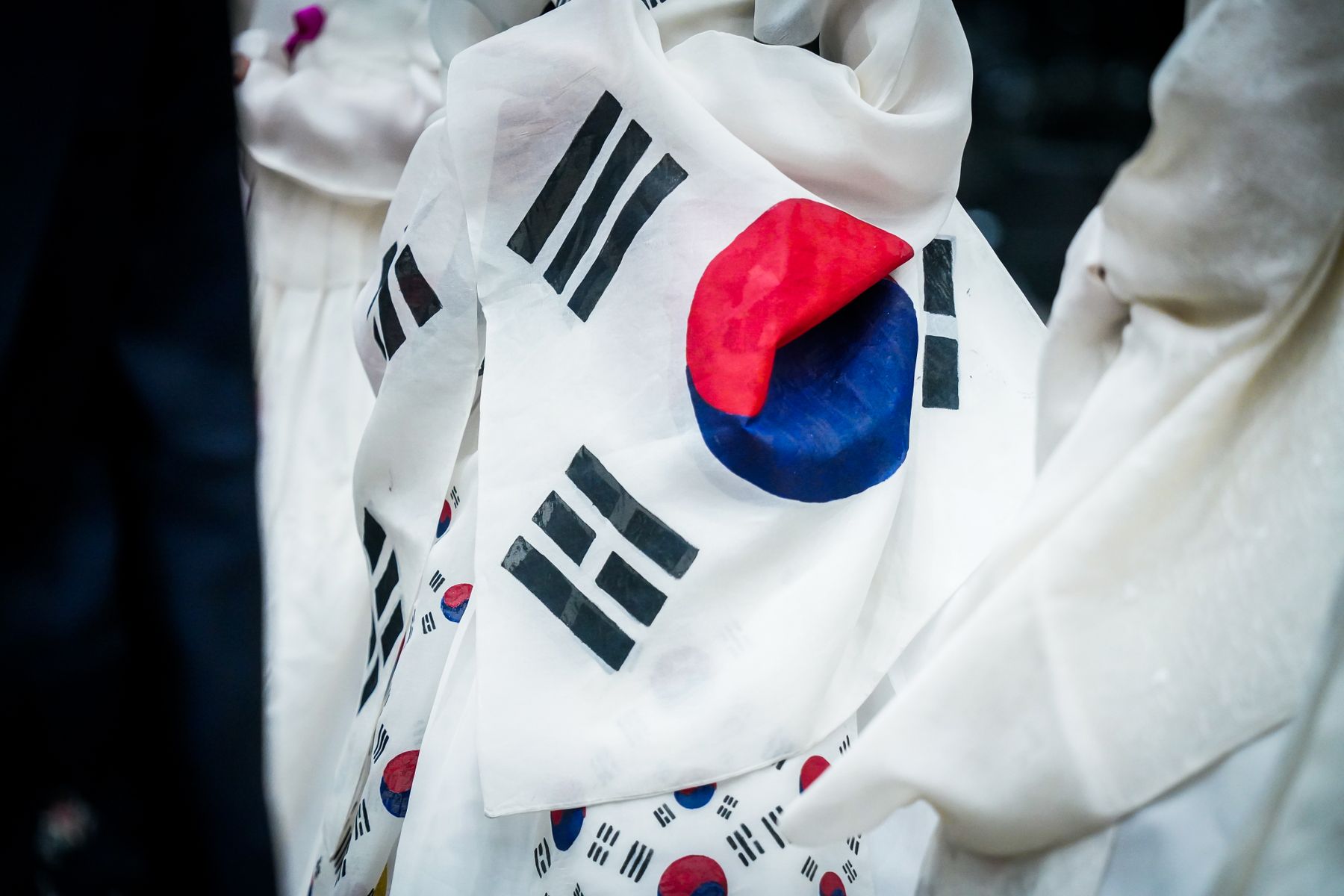
    Close-up of the South Korean flag

    How long, and starting when

    Here’s the first thing that surprises most foreigners: it’s not a fixed two years like a lot of people assume from old movies or vague rumors. As of the past few years, Army and Marine Corps service runs about 18 months, the Navy around 20, and the Air Force the longest at roughly 21 months. It used to be closer to 24 months a couple decades ago, so if you’re talking to an older Korean man — say, my father-in-law — his experience is going to sound noticeably harsher and longer than what his own son went through.

    Every able-bodied Korean man is legally on the hook starting at 18, and he technically has until 28 to enlist, though almost nobody waits that long on purpose. What actually happens is more interesting than the law itself: most guys start university, do a year or sometimes two, and then enlist somewhere between ages 20 and 22 — right smack in the middle of their degree. Then they come back afterward and finish school. I remember being genuinely confused the first time a friend told me he was a “22-year-old sophomore.” In the U.S. that would sound like someone was held back. Here, it’s completely normal — he just did his 18 months in between.

    Around age 19, every man gets called in for what’s basically a full-body and mental fitness physical, and the result is a grade from 1 to 7. Grades 1 through 3 mean active duty. Grade 4 routes you into what’s called “social service agent” duty, or gongik — and if you’ve ever wondered who those young guys in slightly different uniforms are, staffing the metal detectors at subway stations or sitting at the front desk of your local community center, that’s them, serving out their time in a civilian-facing role instead of a barracks. Grades 5 through 7 mean anything from a desk-only wartime role to a full medical exemption. I’ve heard guys joke about which grade they pulled and I’ve heard guys go quiet when it comes up, which tells you it’s not something to poke at lightly — it’s less a single dramatic event and more the starting gun for a countdown that hangs over the rest of university life.

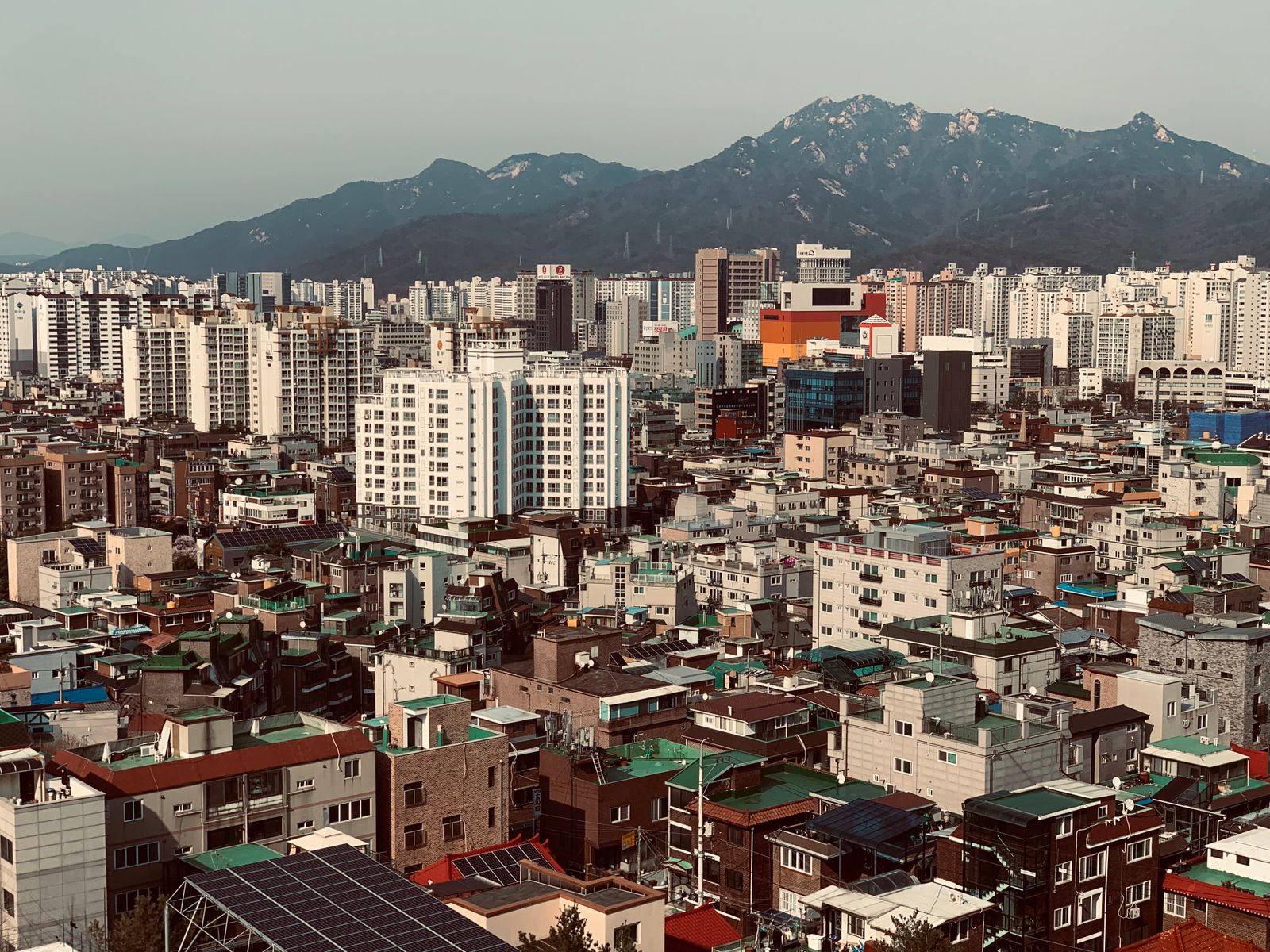
    Aerial view of Seoul, the city many recruits leave behind on their way to training centers like Nonsan

    What actually happens once you enlist

    Enlistment day itself has become a small, semi-public ritual. Families drive their sons out of Seoul and down to a training center — Nonsan, a couple hours south in Chungcheongnam-do, is the most famous one, practically a household name the way certain boot camp towns are recognizable in other countries — and there’s a very specific choreography to it. The mom cries. The dad tries not to. The girlfriend, if there is one, cries harder than the mom, honestly, because everyone already knows the statistics on relationships that don’t survive an 18-month deployment to a mountain base with spotty phone service. Guys get a buzz cut days or even weeks before they show up, sometimes as a kind of ritual send-off with friends rather than waiting for the army barber.

    Once they arrive, the first stretch — about five weeks — is basic training, called hullyeonso, and this is where every K-drama cliché you’ve ever half-watched turns out to be more or less true: the screaming instructors, the crawling through mud, the 5 a.m. wake-up calls. After that, though, life diverges a lot depending on your assigned unit (bo-jik), and this is where I think foreigners get it most wrong. We picture eighteen months of trench warfare readiness. In reality a huge number of conscripts end up doing things that look a lot more like an office job with a uniform — paperwork, logistics, driving, cooking, IT support for the unit. My younger brother-in-law spent a chunk of his service basically doing administrative data entry, which he still complains was “boring, not hard.” My older one, in a combat unit, has very different stories involving winter field exercises in weather I genuinely don’t understand how anyone survives.

    One thing that’s changed enough to surprise even Koreans who served fifteen years ago: cell phones. Since around 2020, soldiers have generally been allowed to use personal phones during designated off-duty hours in the evenings and on weekends, and what that actually looks like, according to my brother-in-law, is a barracks room full of guys sprawled on their bunks at 9 p.m., half of them FaceTiming their moms and the other half grinding through a mobile game before lights-out. That sounds small, but ask anyone who served before that policy and they’ll tell you it’s a completely different experience psychologically — the isolation used to be much more total. Food has also improved; the old jokes about grim, gray institutional slop are increasingly outdated, with some bases running buffet-style dining halls now. Pay has changed even more dramatically. A decade ago conscripts were making something like 100,000 to 200,000 won a month — pocket change, basically a symbolic allowance. As of last year a sergeant makes somewhere around 1.25 million won a month, plus a government savings-match program that means a lot of guys walk out with a surprisingly decent lump sum, sometimes north of 10 million won — which is, for many of them, the first real savings account they’ve ever had, and more than a few put it straight toward a post-service trip to Southeast Asia.

    How Korean families actually treat it

    This is the part I find genuinely touching, and it took me a while to notice the pattern. It’s not treated like an inconvenience. It’s treated more like a rite of passage on the scale of a wedding or a big exam — there’s real ceremony around it. Parents post about “ipdae” (enlistment) day on KakaoTalk with photos of their newly shorn son standing at the gate. Friend groups do a big meal beforehand, sometimes framed almost like a going-away party. And when the guy is finally discharged — jaedae — there’s an equally enthusiastic homecoming, often with a “counting the days” app that girlfriends and mothers alike use religiously, watching a number tick down for a year and a half.

    My mother-in-law still talks about visiting my brother-in-law during his “family day” — a scheduled visit weekend partway through training where parents can come see their sons, eat together on base grounds, and take approved photos. She describes it the way you’d describe visiting someone in a very structured, very clean summer camp, not a stint in the armed forces. That tone — half-pride, half-worry, with an undercurrent of “this is just what happens” — seems to be the default emotional register for most families I’ve met here.

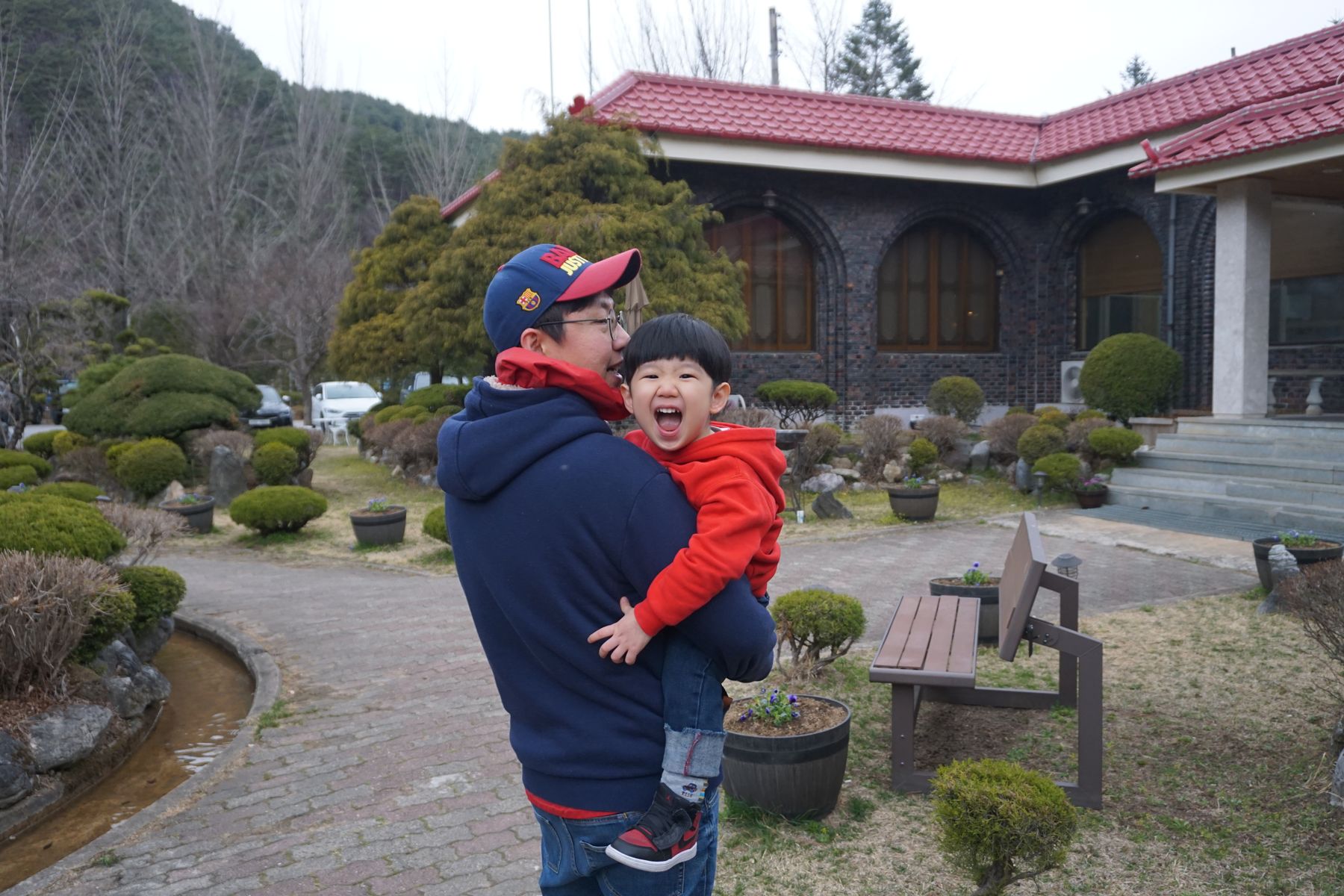
    A Korean father and son together, the kind of bond families lean on around enlistment day

    Misconceptions foreigners tend to have

    The biggest one, by far, is thinking of it as uniformly brutal and dangerous — like every conscript is training for imminent combat every single day. Some units are genuinely tough, no argument there, but a large share of the experience is closer to monotony than danger: standing watch, doing drills, filling out forms, waiting for meals, waiting for the weekend phone window. Boredom, not fear, is usually the dominant emotion people describe once they’re a few months in.

    Another one: people assume every Korean man serves the exact same way, when in reality there’s a whole spectrum, from combat units down to that gongik desk job I mentioned earlier. Even the famous cases foreigners have heard about — chart-topping K-pop idols enlisting right on schedule despite millions of fans wishing they wouldn’t — get treated pretty matter-of-factly here rather than as some kind of scandal. Nobody in Korea seems to expect a carve-out; the grade-1 exam result doesn’t care how many albums you’ve sold. And a smaller but persistent misconception: that guys come back from service completely transformed, hardened soldiers. Mostly what I’ve noticed is subtler — better posture, weirdly, a newfound tolerance for early mornings, and an ability to fold laundry with military precision that Korean mothers seem to appreciate more than anyone.

    Frequently asked questions

    I’m a foreigner married to a Korean woman — does that mean I owe any service?

    No, and this is a question I actually got asked by a coworker back home, half-joking. Conscription applies to Korean male citizens, full stop. Marrying into a Korean family, having Korean in-laws, even raising kids here doesn’t put a foreign national on the hook — the only scenario where it would matter is if someone naturalizes as a Korean citizen, and even then there are age-based rules about how that intersects with service obligations. As someone who married in, I’ve never had so much as a form to fill out about it.

    Can a guy pick his branch or job, or does the army just assign whatever it wants?

    There’s a little more agency than most people assume, but it’s not exactly a menu. Recruits can request certain branches or specialties — Navy, Air Force, KATUSA (the units attached to U.S. forces, which require passing an English test and are famously competitive to land) — but final placement comes down to your exam grade, the timing of your enlistment, and how many spots a given unit has open that month. My older brother-in-law wanted a technical role and ended up in a combat unit instead simply because that’s where the numbers needed filling.

    What actually happens to a couple when the guy enlists?

    It varies wildly, but the honest answer is: a lot of relationships don’t survive it, and everyone here sort of already knows that going in. The ones that do tend to lean hard on the family-day visits, the weekend phone windows, and a fair amount of care packages — Korean girlfriends mailing snacks and letters to bases is practically its own mini-tradition. The joke I’ve heard more than once is that surviving your boyfriend’s military service is basically a relationship milestone in itself, on par with meeting the parents.

  • Korean Hagwon Culture: Why Kids Study Until 10 PM

    Korean Hagwon Culture: Why Kids Study Until 10 PM

    Around 9:50 on a weeknight, if you’re anywhere near Daechi-dong in Gangnam, you’ll see something that looks less like a school letting out and more like a stadium emptying after a concert. Streams of kids in puffer jackets and school backpacks pour out of glass office buildings — because that’s what hagwons usually are, floors 3 through 9 of an ordinary commercial building — and the sidewalk fills with waiting parents in double-parked cars, hazard lights blinking in a long orange chain down the block. It’s not a special event. It’s just Tuesday.

    “Hagwon” (학원) simply means private academy, and on paper that sounds as mundane as “tutoring center” does anywhere else. But calling Korean hagwons “tutoring” undersells the scale of the thing by a wide margin. This isn’t a once-a-week session to catch up on algebra. For a huge share of Korean students, hagwon is a second, parallel school system that runs every single weekday, often stacked two or three sessions deep, and it shapes the rhythm of childhood here in a way that’s hard to grasp until you’ve watched it happen block by block, night after night.

    Illuminated academy district street signs in Seoul at night

    What an actual school day looks like, hour by hour

    You’d expect regular school to be the demanding part and hagwon to be the add-on. In practice, it often works the other way — regular school is treated almost like the baseline, and hagwon is where the real academic differentiation happens. A fairly typical middle or high schooler’s day might run something like this: school from 8 a.m. to somewhere around 4 or 4:30 p.m., then a math academy from 5 to 7, an English academy from 7:30 to 9:30, and homework from both once they’re finally home — often past 10 p.m., sometimes closer to midnight once exam season hits.

    Dinner in that schedule tends to get squeezed into whatever gap exists between academies, which is why gimbap rolls, a cup of instant ramyeon eaten standing at a convenience store counter, or a boxed dosirak meal are such common sights among students in these neighborhoods around 6 or 7 p.m. Step inside one of these buildings and the aesthetic is fairly consistent from one academy to the next: fluorescent-lit rooms divided into narrow desks, whiteboards covered in problem sets, and stacks of thick workbooks that look more like phone books than textbooks. Multiply the daily grind by five weekdays, add a Saturday session for standardized test prep, and you start to see why Korean high schoolers are frequently cited as sleeping somewhere around 5 to 6 hours a night on average, well under what pediatric sleep guidelines recommend for their age group.

    What surprised me most isn’t that this happens — plenty of countries have demanding school cultures — it’s how early it starts. This isn’t just a high-school-junior-cramming-for-college phenomenon. Elementary schoolers, some as young as six or seven, already shuttle between an English hagwon and a math hagwon in the same afternoon, sometimes with a piano or taekwondo class wedged in as the “fun” one between two academic ones. Parents refer to this bouncing between academies as a kid’s “schedule,” the same word you’d use for a business executive’s calendar, and by middle school an empty afternoon with nothing booked is often treated less as freedom and more as a gap that needs filling.

    Korean students in uniform studying together in a classroom

    The buildings themselves, and the money behind them

    Walk down a hagwon street after dark — Daechi-dong in Gangnam is the most famous example, but every Korean city has its own smaller version — and the first thing you notice is the signage. Buildings that look completely ordinary during the day, just glass-and-concrete offices, turn into vertical stacks of illuminated academy names once the sun goes down: a math academy on the third floor, English on the fifth, a science academy on the seventh, each with its own backlit sign competing for the same sidewalk’s attention. The elevator banks fill up around class-change times with teenagers trading gossip, half-asleep, backpacks heavy enough to visibly round their shoulders.

    Korean households collectively spend somewhere north of 27 trillion won a year on private after-school education, according to figures tracked by Statistics Korea — and that figure has climbed almost every year this survey has run, even as the country’s birthrate has fallen to among the lowest in the world. Fewer kids, more spending per kid. That combination alone tells you something about how central this is to Korean family life. A single well-regarded English or math hagwon in a district like Daechi-dong can run several hundred thousand won a month per subject, and it’s completely normal for a family to be paying for two or three subjects simultaneously, per child.

    You might assume this spending is concentrated only among wealthy families chasing an edge, and while income obviously affects which hagwons a family can afford, the baseline expectation cuts across income levels in a way that’s genuinely striking. Skipping hagwon entirely, even for families with tighter budgets, is often treated less as a neutral choice and more as an active risk — the fear being that your kid falls behind not just their smartest classmate, but the entire grade’s baseline pace, because so many other students are already ahead of the regular curriculum by the time a topic is taught in class. That fear doesn’t come from nowhere, either — it traces back to a single exam day that looms over the entire system.

    Why it got this normalized

    It’s tempting to look at this from the outside and assume something has gone specifically, uniquely wrong in Korea. But the roots make a certain kind of sense once you know the history. Korea’s modern hagwon system grew rapidly alongside the country’s postwar transformation from one of the poorest nations on earth into a developed economy within a single generation — and education became the primary, almost the only, socially agreed-upon ladder for that mobility. A single national exam, the Suneung, taken on one day each November, still carries enormous weight in determining which university a student can attend, and university prestige in Korea continues to matter for hiring, marriage prospects, and social standing in ways that are more pronounced than in a lot of Western countries. The scale of what’s built around that one day is honestly hard to overstate — flight schedules get adjusted so planes don’t fly during the English listening portion of the test, stock markets have historically opened later that morning, and it’s not unusual to see a police car giving a panicked, running latecomer a ride straight to their exam hall. When the stakes of one test day feel that concentrated, it’s not exactly surprising that families start preparing years, not months, in advance.

    There’s also a structural reason hagwons keep multiplying rather than fading: they’re privately run, for-profit businesses competing directly with each other for enrollment, which means marketing, reputation, and parental anxiety all feed the system’s growth in a self-reinforcing loop. A hagwon that produces visibly strong test results becomes the one every parent on the block wants their kid enrolled in, waiting lists form, and the perceived necessity of academy-based prep gets baked in even further for the next cohort of parents watching from the sidelines.

    Student studying late at night under a desk lamp

    What it looks like from an expat parent’s chair

    This is the kind of thing that rarely makes it into the standard “moving to Korea” checklists about visas and phone plans (I covered more of those practical basics in What I Wish I Knew Before Moving to Korea), but if you’re raising a family here, it ends up shaping your weekly calendar more than almost anything else on that list.

    Watching this as an outsider raising kids here puts you in an odd spot, somewhere between admiration and mild alarm, and honestly the two feelings show up in the same five minutes rather than taking turns. There’s something genuinely impressive about the sheer discipline and consistency of it — kids as young as ten managing a schedule that would tire out a lot of working adults, and doing so with a kind of matter-of-fact acceptance, because to them, this is simply what childhood looks like, not an exception worth complaining about. Yet it’s hard not to notice how little unstructured time survives in a given week, and how completely normalized that scarcity has become. Nobody around you treats it as unusual, which somehow makes it feel both less alarming and slightly more so at the same time — like the strangeness has been fully absorbed into the wallpaper of daily life.

    To be fair, not every family goes all-in, and there’s more internal debate about this within Korea than outsiders might assume. Some parents have started deliberately pulling back, citing burnout concerns or simply wanting their kids to have evenings free, and there’s ongoing public conversation here about reforming the college admissions system precisely because the pressure has gotten so intense. This piece isn’t trying to render a verdict on whether the system “works” or whether it’s “too much” — those are genuinely contested questions even among Korean parents and educators themselves, and the honest answer is that reasonable people here disagree. What’s not really in dispute is how deeply normalized the hagwon rhythm has become, and how much it structures the visible texture of daily life, right down to the timing of dinner and the traffic jam of parents’ cars outside a nondescript office building at ten at night.

    Frequently Asked Questions

    Is hagwon only for students who are struggling academically?

    Not at all — if anything, it often skews the opposite direction. Many of the students filling hagwon seats are already performing well in regular school and are there specifically to get ahead of the curriculum, not to catch up. A student who’s already the top of their class in math might still attend a math hagwon that teaches a full grade level ahead, because the competitive bar within Korean classrooms is set by the students who’ve had that extra preparation, not by the official curriculum pace.

    Do hagwons only cover academic subjects like math and English?

    No — the hagwon category is much broader than test-prep subjects. There are hagwons for piano, taekwondo, art, coding, even handwriting practice for young kids. That said, the ones running until 9 or 10 p.m. on weeknights, packed with middle and high schoolers, are overwhelmingly the academic ones tied to school subjects and the university entrance track, since those are the ones parents feel the most pressure to keep up with.

    Is this level of hagwon attendance required by law or by the school system?

    No, hagwon attendance is entirely optional and privately arranged — there’s no legal requirement or school mandate involved. What makes it function almost like an unofficial requirement is social and competitive pressure rather than policy: because such a large share of a given cohort attends, opting out can feel like falling behind a curve set by everyone else, even though no rule technically obligates any family to participate.

  • 40대 이후 무릎에서 소리 나는 이유, 병원 가야 할 때는 언제일까

    40대 이후 무릎에서 소리 나는 이유, 병원 가야 할 때는 언제일까

    지난달 동창 모임에서 있었던 일이다. 45살 된 친구 하나가 지하철 계단을 내려가다 말고 갑자기 멈춰 섰다. “야, 방금 뚝 소리 들었어?” 본인 무릎에서 난 소리인데 정작 본인은 놀라서 웃음이 터졌다. 아프진 않은데 소리가 유독 크게 났다는 거였다. 그러고 보니 요즘 부쩍 이런 얘기가 많다. 계단에서, 양반다리로 앉았다 일어날 때, 스트레칭할 때. 20대 땐 없던 소리가 어느 순간부터 무릎에서 들리기 시작했다면, 그게 정말 걱정할 일인지부터 차근차근 짚어보자.

    무릎에서 소리가 나는 진짜 이유

    그 친구는 대수롭지 않게 웃어넘겼지만, 정말 신경 쓰지 않아도 되는 걸까. 알고 보면 무릎 소리는 원인에 따라 크게 세 갈래로 나뉜다. 첫 번째는 관절 안의 기체가 터지면서 나는 소리다. 무릎 관절 안에는 활액이라는 윤활액이 차 있는데, 무릎을 갑자기 굽히거나 펼 때 관절 사이 압력이 순간적으로 바뀌면서 그 안에 녹아있던 이산화탄소 기포가 터진다. 손가락 마디를 꺾을 때 나는 소리와 원리가 똑같다. 이 경우는 통증이 없고, 한 번 소리가 나면 같은 자세에서 바로 다시 소리를 내기 어렵다는 특징이 있다.

    두 번째는 힘줄이나 인대가 뼈 위를 미끄러지듯 지나가면서 나는 마찰음이다. 무릎을 굽혔다 펼 때 힘줄이 뼈 돌출 부위를 넘어가면서 “딱” 하는 소리를 내는 건데, 이것도 대부분은 큰 문제가 아니다. 문제는 세 번째 경우다. 연골이 얇아지면서 뼈와 뼈, 혹은 뼈와 거칠어진 연골 표면이 서로 갈리듯 스치며 나는 소리인데, 이건 ‘서걱서걱’하거나 ‘자글자글’한 느낌에 가깝다. 맑고 경쾌한 뚝 소리와는 질감 자체가 다르다.

    계단을 내려가는 사람의 다리

    흔하지만 잘 모르는 원인, 추벽증후군

    세 가지 유형 말고도 의외로 흔한 원인이 하나 더 있다. 소리와 함께 무릎 안쪽이 뻐근하다면 한 번쯤 들어봤을 법한 이름, 추벽증후군이다. 태아 때 무릎 관절을 나누던 얇은 막 조직이 다 자란 후에도 남아있는 경우가 있는데, 한국인 3명 중 1명 정도가 이 막을 갖고 있다는 자료도 있다. 평소엔 아무 문제 없이 지내다가 특정 계기로 막이 두꺼워지면서 문제가 시작된다. 이를테면 주말에 등산을 다녀온 다음 날, 혹은 자전거 안장을 평소보다 낮게 세팅하고 무릎을 깊이 굽힌 채로 오래 탄 날 같은 경우다. 이런 날 저녁 무릎을 굽힐 때마다 막이 뼈와 부딪혀 소리와 불편감을 만든다. 이름이 생소해서 무서운 병처럼 느껴질 수 있지만, 흔한 만큼 대부분은 생활 습관 조정만으로도 충분히 편해진다.

    왜 하필 40대 이후에 소리가 잦아질까

    20대엔 조용하던 무릎이 40대 들어 갑자기 시끄러워지는 데는 이유가 있다. 관절 안의 활액량이 나이가 들면서 서서히 줄어든다. 활액이 넉넉할 땐 뼈와 연골 사이가 부드럽게 미끄러지지만, 양이 줄면 마찰이 늘고 그만큼 소리도 잘 난다. 연골 자체의 수분 함량도 젊을 때보다 떨어져서 탄력이 예전만 못하다. 물을 잔뜩 머금은 새 스펀지는 말랑말랑하게 눌리지만, 오래 방치해서 바짝 마른 스펀지는 누르면 뻣뻣하다 못해 부스러지는 느낌마저 든다. 무릎 연골이 겪는 변화도 딱 그 정도 차이라고 보면 된다.

    여기에 근육량 감소도 한몫 거든다. 무릎 주변, 특히 허벅지 앞쪽 대퇴사두근이 무릎 관절을 잡아주는 역할을 하는데, 40대 이후로는 별다른 운동을 안 하면 이 근육이 눈에 띄게 줄어든다. 근육이 흔들리는 관절을 덜 잡아주니 움직일 때마다 관절 안에서 미세한 마찰이 늘어난다는 얘기다. 체중이 예전보다 조금 늘었다면 그 무게가 고스란히 무릎 연골에 실린다는 점도 무시할 수 없다. 계단 하나 내려갈 때 무릎에 실리는 하중이 체중의 3~4배에 달한다는 걸 생각하면, 5kg만 늘어도 무릎 입장에서는 15~20kg을 더 짊어지는 셈이다. 배낭에 쌀 한 포대를 얹고 계단을 오르내리는 셈이라고 하면 감이 좀 더 올까 싶다.

    무릎 스트레칭 하는 모습

    그냥 넘겨도 되는 소리, 신경 써야 할 소리

    그렇다고 무릎에서 소리 난다고 매번 겁먹을 필요는 없다. 통증 없이 가끔, 특정 자세에서만 한 번씩 나는 소리라면 크게 걱정할 상황은 아니다. 반면 아래 상황 중 하나라도 겹친다면 그냥 넘기지 않는 게 좋다.

    • 소리와 함께 무릎이 붓거나 열감이 느껴질 때
    • 계단을 내려갈 때마다 통증이 반복될 때
    • 아침에 일어나면 무릎이 뻣뻣하다가 30분 이상 지나야 풀릴 때
    • 무릎에 힘이 빠지거나 갑자기 꺾이는 느낌이 들 때
    • 같은 자세로 오래 앉아있다가 일어설 때 시큰거림이 심해질 때

    소리와 통증이 같이 나타나는 경우는 단순한 노화 신호를 넘어설 가능성이 있어서 조금 더 눈여겨봐야 한다. 반월상연골이라는, 허벅지뼈와 정강이뼈 사이에서 쿠션 역할을 하는 조직이 손상되면 뚝 소리와 함께 붓기, 시큰거림이 동반되는 경우가 많다고 알려져 있다. 등산이나 축구처럼 무릎을 비트는 동작이 많은 운동을 하다가 갑자기 이런 증상이 나타났다면 더더욱 그렇다. 이런 신호들이 겹쳐서 나타난다면 혼자 스트레칭이나 파스로 버티기보다는 정확한 상태를 확인해보는 편이 낫다.

    일상에서 무릎을 아끼는 생활관리 팁

    헬스장 등록이나 값비싼 운동기구 없이도, 오늘 당장 거실 바닥이나 사무실 의자에서 바로 실천할 수 있는 것들부터 정리해봤다. 첫째, 양반다리와 쪼그려 앉기를 의식적으로 줄인다. 바닥 생활이 익숙한 한국인에게는 쉽지 않은 습관이지만, 이 자세들은 무릎을 90도 이상 깊이 접어서 관절 압력을 크게 높인다. 식탁과 의자를 쓰는 것만으로도 무릎 부담이 눈에 띄게 줄어든다.

    둘째, 계단보다는 평지 걷기나 실내 자전거를 택한다. 계단 오르내리기, 특히 내려가는 동작은 무릎에 실리는 하중이 가장 큰 움직임 중 하나다. 반면 자전거는 무릎을 굽혔다 펴는 동작이 부드럽고, 체중 부하가 적으면서도 대퇴사두근을 단련할 수 있어서 관절 전문가들도 자주 추천하는 운동이다. 하루 30분 정도의 평지 걷기나 수영도 관절 유연성을 유지하는 데 도움이 된다.

    셋째, 앉아서도 할 수 있는 대퇴사두근 운동을 챙긴다. 의자에 앉아 한쪽 다리를 쭉 펴서 5초간 버텼다가 천천히 내리는 동작을 좌우 각 15회씩만 반복해도 무릎을 잡아주는 근력이 서서히 붙는다. 익숙해지면 발목에 500ml 생수병 하나 정도를 끈으로 묶어 걸고 하면 부하가 붙어 효과가 더 뚜렷해진다. TV 보면서도 할 수 있는 수준이라 꾸준히만 하면 부담이 크지 않다. 체중이 예전보다 늘었다면 식단 조절을 병행하는 게 결국 무릎에 가장 직접적인 도움이 된다. 앞서 말했듯 체중 1kg 차이가 무릎에는 3~4kg 차이로 돌아온다.

    실내 자전거를 타는 중년 여성

    자주 묻는 질문

    Q. 운동할 때만 소리가 나고 평소엔 괜찮은데, 이것도 문제가 될 수 있나요?

    운동 중 특정 각도에서만 소리가 나고 통증이나 붓기가 없다면 대부분은 힘줄 마찰 같은 기계적인 소리일 가능성이 크다. 다만 스쿼트나 런지처럼 무릎을 깊이 굽히는 동작에서 반복적으로 소리가 난다면, 운동 강도를 낮추고 무릎 각도를 얕게 조정해보는 게 도움이 된다.

    Q. 소리는 안 나는데 무릎이 시큰거리기만 해요. 이것도 같은 원인인가요?

    소리와 통증은 항상 같이 오는 게 아니다. 연골이 마모되는 초기 단계에서는 소리 없이 시큰거림만 먼저 나타나는 경우도 흔하다. 특정 동작에서 반복적으로 시큰거림이 느껴진다면 소리가 없더라도 관절 상태를 한 번 점검해보는 게 좋다.

    Q. 파스나 찜질만으로도 충분할까요?

    일시적인 뻐근함이나 가벼운 근육 피로라면 온찜질과 휴식만으로도 나아지는 경우가 많다. 다만 같은 부위에서 통증이 반복되거나 점점 심해진다면 파스로 계속 덮어두기보다 원인을 먼저 확인해두는 쪽이 나중에 무릎과 오래 평화롭게 지내는 데 유리하다.

    무릎에서 나는 소리 자체는 대부분 크게 걱정할 일이 아니다. 그런데도 소리가 통증과 함께 반복되거나, 붓기나 뻣뻣함처럼 다른 신호가 같이 나타난다면 이야기가 달라진다. 소리는 무릎이 보내는 작은 신호일 뿐이다. 그 신호를 무시하지 말고 오늘부터 계단 한 칸이라도 덜 내려가는 작은 습관부터 바꿔보면 어떨까. 증상이 지속되거나 통증이 동반된다면 정형외과 전문의와 상담하세요.

  • Korean Coffee Culture: Why There’s a Cafe on Every Corner

    Korean Coffee Culture: Why There’s a Cafe on Every Corner

    Stand on almost any street corner in my neighborhood in Korea and do a slow 360-degree turn. I’ve actually done this, more than once, half out of boredom and half out of genuine disbelief — and I routinely count four, five, sometimes six cafes without moving my feet. Not coffee carts. Full sit-down cafes, with baristas, oat milk options, and background jazz. One time near Hongdae I counted three coffee shops stacked in the same building, one on top of the other, like some kind of caffeine layer cake — a loud dessert cafe with pink neon on the ground floor, a quiet study cafe with individual desk lamps on the second, and a tiny plant-filled roastery up on the third that you’d never find unless someone told you it existed. By all economic logic, a setup like that should collapse under its own competition. It doesn’t. New ones open anyway.

    I moved here assuming Korea would be a tea country, honestly — that was my mental image before I actually lived here, probably left over from vague ideas about “Asian tea ceremonies” that don’t even really apply to Korea specifically. Turns out Korea runs on coffee harder than most Western countries I’ve lived in, and once you dig into why, it stops looking like an accident and starts looking like the natural output of how densely people live here.

    The numbers are genuinely absurd

    There are somewhere north of 95,000 cafes in South Korea right now, in a country roughly the size of Indiana. Seoul alone is estimated to have more coffee shops per capita than New York, Tokyo, or even Seattle — which, if you’ve ever tried to walk down a street in downtown Seattle without tripping over a espresso stand, tells you something. Korea has around 1,384 specialty coffee shops per million people, more than double Japan’s number, and Japan is hardly a tea-only country either. The average Korean adult drinks something like 405 cups of coffee a year — more than double the global average, and enough that I stopped feeling self-conscious about my own three-a-day habit pretty quickly after arriving.

    What surprised me more than the raw number, though, is how the market keeps absorbing new shops instead of collapsing under its own weight. In most places I’ve lived, an oversaturated market gets brutal fast — half the shops close within a year. Here, sure, plenty of small independent cafes do fold, often within twelve months, which locals will tell you matter-of-factly, almost like discussing the weather. But the space gets filled again almost immediately by someone else with a slightly different concept — a plant-themed cafe, a study cafe, a cafe that’s secretly also a bookstore. The churn is real, but so is the demand underneath it. If the business math doesn’t quite add up on paper, the social math underneath it makes a lot more sense — because it turns out this isn’t really about coffee at all.

    Cozy Korean cafe interior with wooden tables and natural light

    Why, though — the apartment theory

    The explanation that actually clicked for me, after a couple years of just accepting it as background noise, has to do with housing. Korean apartments, especially in Seoul, tend to be small, and hosting people at home isn’t really a default social move the way it is in, say, the American Midwest where I’m from. Nobody’s throwing a dinner party in a 24-pyeong apartment with in-laws visiting for the weekend. So where do you meet a friend, have a work meeting, do a first date, or study for an exam without either paying for a full meal or awkwardly loitering in a park in the middle of winter? The cafe. It’s not a luxury indulgence here so much as a rented living room, and once you frame it that way, 95,000 of them stops sounding like overkill and starts sounding almost logical. Walk into any decent-sized cafe near a business district around 2 p.m. and you’ll see it in action — a couple of guys in suits doing what is obviously a client meeting over Americanos, three moms at the next table who just dropped their kids at hagwon and have ninety minutes to kill before pickup, and a table of teenagers splitting one enormous bowl of shaved-ice bingsu between four spoons because none of them can afford their own.

    There’s actually a specific word for one very particular subset of cafe users: kagongjok, roughly “the cafe-study tribe” — students and remote workers who set up camp for four, five, six hours with a laptop, a textbook, and one drink they nurse the entire time. Some cafes have started pushing back with time limits or minimum order policies during exam season, which tells you the phenomenon got big enough to actually threaten table turnover. I’ve sat next to enough of these study marathoners to know it’s not a myth — I once watched a guy hold the same seat from 10 a.m. to closing at 10 p.m., living on one iced Americano and refills of water.

    The vending machine parallel universe

    Here’s a detail that catches almost every visitor off guard: alongside the artisanal, $6-latte cafe culture, there’s an entire parallel economy of coffee vending machines. They dispense a hot, pre-mixed, syrupy-sweet coffee in a tiny paper cup for around 300 to 500 won — less than fifty cents. You’ll find them tucked into the corner of nearly every convenience store, subway station, and old-school barber shop. Older generations especially still swear by them. There’s something almost touching about watching an ajusshi grab one on his way into work, the exact same ritual his father probably had decades ago, while twenty feet away a line of twenty-somethings waits for a hand-poured single-origin pour-over that costs ten times as much. Both exist side by side, on the same block sometimes. Neither one is going anywhere. Korea just runs two coffee economies at once, and nobody seems to find that strange except foreigners like me.

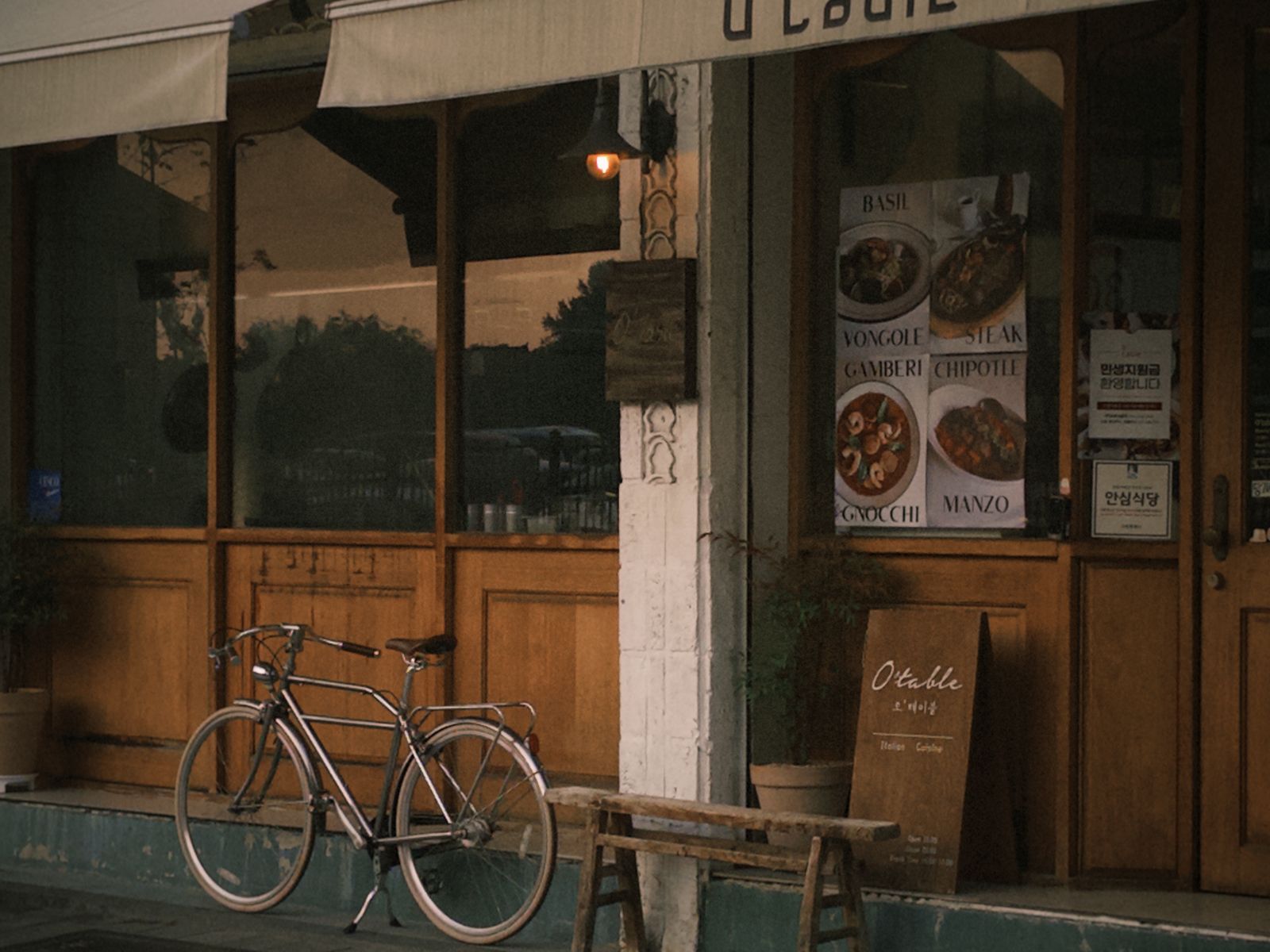
    Vintage-style cafe on a Seoul street with a bicycle parked outside

    Mega-chains versus the independents

    You’d expect a market this saturated to be dominated entirely by a couple of giant chains, and to some extent it is — Starbucks Korea operates nearly 2,000 stores nationwide, a density that outpaces the chain’s per-capita footprint in the U.S. by some counts, and homegrown challengers like Mega Coffee, Compose Coffee, and Ediya have exploded specifically by undercutting Starbucks on price, some selling a decent Americano for around 1,500 to 2,000 won. But wander two blocks off any main street and you’ll still find a wildly disproportionate number of independent cafes doing something specific and strange — a cafe that only serves drinks in ceramics the owner throws himself, a “book cafe” where you pay by the hour and get unlimited coffee plus a wall of secondhand novels. My favorite version of this is the hanok cafe, where you slip your shoes off at the entrance, sit cross-legged on a heated wooden floor inside a century-old courtyard house, and get handed an iced latte in a to-go cup that feels almost comically modern against the old tiled roof and paper doors around you. The chains handle volume and convenience; the independents seem to exist almost purely to be Instagrammable and specific, and Koreans clearly want both, because both keep multiplying.

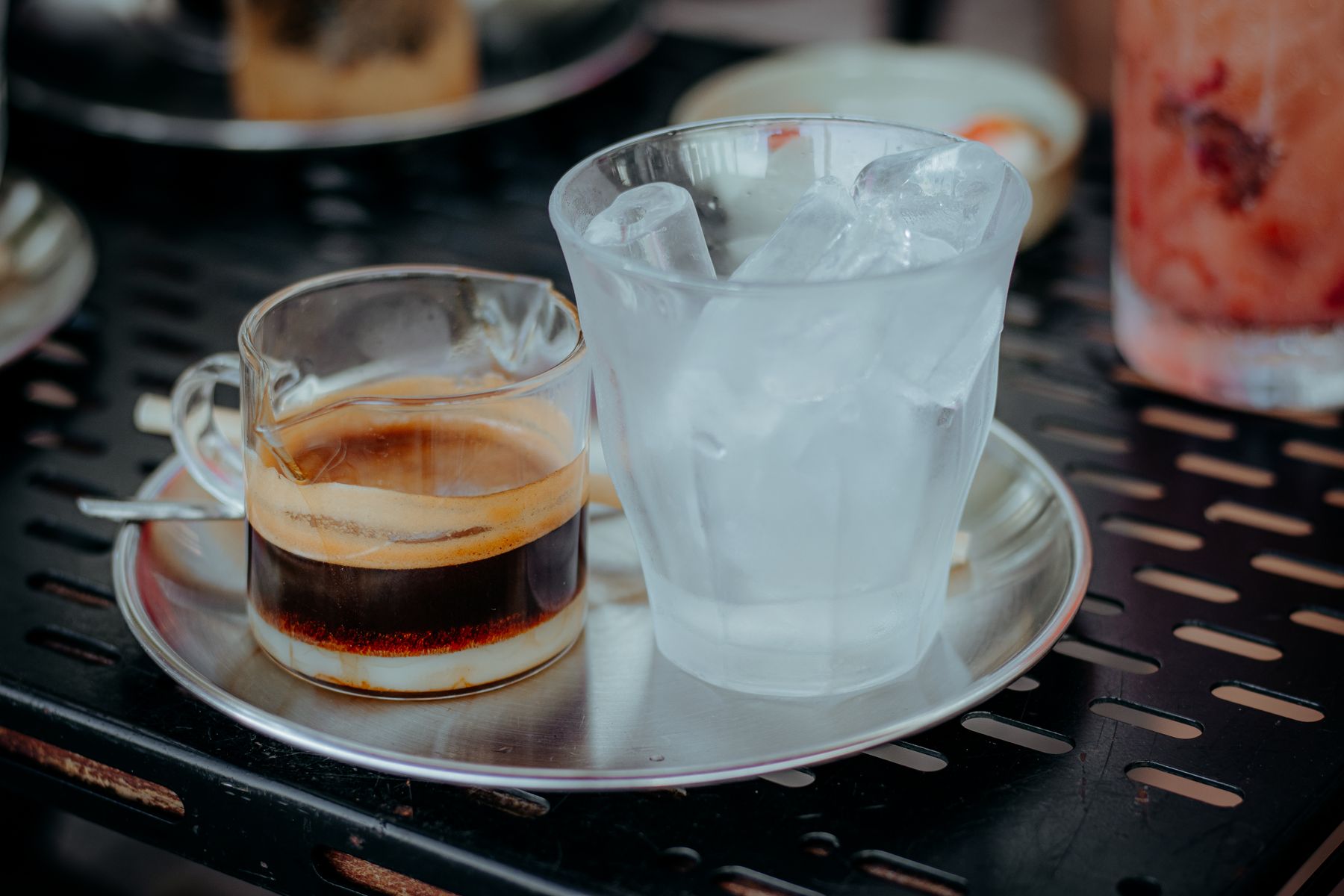
    Iced Americano with espresso layered over ice, the default order year-round in Korea

    Eoljukah: the iced coffee thing that breaks foreigners’ brains

    If there’s one Korean coffee habit that genuinely confused me at first, it’s this: Koreans drink iced Americanos in the dead of winter. Not occasionally — as a default. There’s even a slang term for it, eoljukah (얼죽아), short for “I’d rather freeze to death than drink hot coffee,” and it’s said half-jokingly but represents something real. I remember standing in line at a cafe near Gwanghwamun in January, snow actually falling outside, watching person after person order iced drinks while I stood there with numb fingers ordering a hot Americano like some kind of tourist. The cashier didn’t even blink. She’d clearly seen this exact scene play out a hundred times a week.

    Ask a Korean friend why, and you’ll get a few different theories, and honestly they’re probably all a little bit true at once. Some say it’s about speed — you can gulp an iced drink in seconds flat, which fits neatly into the broader ppalli-ppalli, “hurry hurry,” pace of daily life here, whereas a hot drink demands you slow down and sip. Others point out that Korean buildings and subways run their heating so aggressively in winter that an iced drink actually feels more balanced once you’re indoors bundled in three layers. My own theory is that it’s partly become an identity marker at this point — ordering hot coffee in January can genuinely mark you as an outsider or an older-generation type, the same way ordering a well-done steak might raise an eyebrow at certain restaurants. I still remember walking down a side street near Gwanghwamun that same January, wind cutting straight through my coat, holding a plastic iced coffee cup that had gone lukewarm-to-cold in about four minutes flat, my fingers stiff around it, and thinking: this is objectively a strange way to survive a Korean winter, and yet I kept doing it, week after week, because somehow it started to feel normal too. Whatever the real mix of reasons behind eoljukah, it’s not fading. If anything, it seems to have gotten more entrenched, not less, since I first noticed it.

    Frequently asked questions

    Just how cheap — or expensive — is a Korean cup of coffee, really?

    It depends entirely on where you go, and the range is wider than in most countries I’ve lived in. A vending machine coffee runs under 50 cents. A Mega Coffee or Compose Coffee Americano is usually somewhere around $1.10 to $1.50. But a specialty pour-over at an independent cafe in a trendy neighborhood like Seongsu can easily run $6 to $8, on par with Melbourne or Portland prices. Korea doesn’t really have one coffee price point — it has at least three running side by side.

    Do Korean cafes actually let you sit for hours without buying more?

    Traditionally, yes, and that’s exactly why the kagongjok phenomenon took off in the first place — there’s no strong cultural expectation to keep ordering the way there sometimes is in the US. That said, this has been shifting; a growing number of cafes, especially near university areas during midterms and finals, now post explicit time limits (two hours is common) or require a minimum spend per person, precisely because students were treating tables like personal offices for entire days.

    Why do so many small independent cafes close if the industry is booming?

    Rents are high, competition is fierce, and opening a beautifully designed cafe has become something of a popular small-business dream in Korea — which means a lot of first-time owners underestimate how thin the margins actually are once you account for rent and the cost of imported espresso machines. It’s not unusual for a stylish new cafe to close within its first year even in a busy area, only to be replaced within weeks by another one with a different aesthetic. The demand for cafes as a category stays strong even when any individual shop struggles.

  • 국민연금 조기수령 vs 연기수령 — 5년 당겨 받으면 실제로 얼마나 손해일까

    국민연금 조기수령 vs 연기수령 — 5년 당겨 받으면 실제로 얼마나 손해일까

    지난달 국민연금공단에서 예상수령액 안내문을 받아 든 61년생 지인은 봉투를 열자마자 계산기 앱부터 켰다. “어차피 일찍 받으나 늦게 받으나 평생 받는 총액은 비슷한 거 아니냐”는 게 그의 첫마디였는데, 실제로 숫자를 뽑아보니 생각과는 거리가 있었다. 5년 당겨 받는 것과 5년 늦춰 받는 것 사이에는 매달 수십만 원, 평생으로 따지면 수천만 원 단위의 격차가 생긴다.

    퇴직 시점과 연금 개시 시점이 어긋나면서 생기는 소득 공백, 이게 요즘 50대 후반~60대 초반이 가장 자주 부딪히는 고민이다. 당겨 받으면 무조건 손해라는데, 당장 다음 달 생활비가 아쉬운 사람 입장에서는 “그래도 어쩔 수 없는 것 아니냐”는 반문이 나올 수밖에 없다. 지갑을 열기 전에, 이 ‘은퇴 시계’의 오차가 실제로 얼마짜리인지부터 짚어보자.

    조기노령연금, 매달 0.5%씩 깎이는 계산법

    조기노령연금은 원래 받을 나이보다 최대 5년 먼저 신청해서 받는 제도다. 1969년 이후 출생자는 원래 65세부터 받는데, 이 경우 60세부터 당겨 받는 게 가능하다. 1957~1960년생은 62세가 기준이라 57세부터, 1961~1964년생은 63세 기준이라 58세부터 신청할 수 있다. 출생연도별로 기준 나이가 다르니 본인 생년월일 기준으로 몇 세부터 가능한지부터 확인해야 한다.

    감액 방식은 한 달 앞당길 때마다 0.5%씩, 그러니까 1년이면 6%가 깎인다. 5년을 꽉 채워 앞당기면 총 30%가 줄어든 금액으로 확정되고, 이 감액률은 평생 유지된다. 여기서 의외로 많은 사람이 놓치는 부분이 있는데, 조기수령은 아무나 신청할 수 있는 게 아니라 가입기간 10년 이상, 그리고 ‘소득이 있는 업무’에 종사하지 않아야 한다는 조건이 붙는다.

    숫자로 감을 잡아보면 이렇다. 정상수령액이 월 100만 원으로 확정된 사람이 5년을 앞당기면 월 70만 원으로 줄어든다. 30% 감액이 그대로 적용된 결과다. 2026년 기준 국민연금 평균 수령액이 월 69만 8천 원 수준인 걸 감안하면, 이 감액된 70만 원이 실제로 많은 수급자가 마주하는 현실적인 금액대라는 뜻이기도 하다.

    국민연금 상담 창구에서 조기수령과 연기수령을 상담하는 장면

    조기수령의 숨은 리스크 — 소득 제한, 건강보험료, 그리고 손익분기점

    30% 감액만 계산하고 신청 버튼을 누르면 몇 달 뒤 예상 못 한 청구서를 받을 수 있다. 첫 번째 변수는 소득 제한이다. 이 기준이 2026년 6월 17일부터 바뀌었는데, 기존에는 월평균 소득이 319만 3,511원을 넘으면 조기수령 대상에서 제외됐지만 이제는 519만 원 수준으로 문턱이 올라갔다. 조기수령 중에 다시 취업해서 이 기준을 넘기면, 그 초과 기간만큼 연금 지급 자체가 정지된다.

    두 번째는 의외로 더 아픈 변수, 건강보험 피부양자 자격이다. 그동안 자녀나 배우자의 건강보험에 피부양자로 얹혀 있던 은퇴자가 조기수령을 시작하면, 연간 합산소득이 2,000만 원을 넘는 순간 피부양자 자격이 박탈되어 지역가입자로 전환된다. 재산 규모에 따라 다르지만 이렇게 전환되면 월 10만~20만 원대의 건강보험료가 새로 부과되는 경우가 흔하다. 연금은 월 10만 원 더 받으려고 앞당겼는데, 건보료로 그보다 많은 돈이 빠져나가는 주객전도 상황이 실제로 벌어질 수 있다는 뜻이다.

    그러면 몇 살까지 살아야 조기수령이 유리한가. 여러 계산 사례를 종합하면 조기수령과 정상수령 사이의 손익분기점은 대략 만 76~80세 근방에 형성된다. 그 나이보다 일찍 세상을 떠난다면 총 수령액 기준으로는 조기수령이 유리하고, 그보다 오래 산다면 정상수령 쪽이 누적 총액에서 앞선다. 막상 이 얘기를 들으면 씁쓸해하는 사람들이 많다. 내 여생을 기준으로 연금 수령 시점을 계산해야 한다는 사실 자체가 유쾌할 리는 없으니까.

    지폐와 계산기로 국민연금 실수령액과 건강보험료를 점검하는 모습

    반대로 늦추면? 연기연금 가산율 7.2%와 공백기 메우는 법

    연기연금은 반대 방향이다. 원래 받을 시점에 신청하지 않고 최대 5년까지 미루면, 미룬 기간만큼 연금액이 늘어난다. 가산율은 한 달에 0.6%, 연 환산으로는 7.2%다. 5년을 꽉 채워 미루면 36%가 늘어난 금액을 죽을 때까지 받는다.

    같은 월 100만 원 사례를 그대로 가져와 보자. 5년 미루면 월 136만 원이 된다. 조기수령 70만 원과 연기수령 136만 원, 이 둘의 격차는 매달 66만 원이다. 연간으로 환산하면 792만 원 차이가 나는데, 이 정도면 웬만한 생활비 항목 하나를 통째로 좌우할 수 있는 금액이다.

    그런데도 연기수령을 선택하는 사람이 생각보다 많지 않다. 이유는 단순하다. 연기하는 5년 동안은 연금 없이 다른 소득으로 버텨야 하기 때문이다. 이 공백을 메우는 방법으로 흔히 거론되는 게 퇴직연금 IRP 계좌를 먼저 인출해 쓰는 방식이나, 소유한 주택을 담보로 매달 생활비를 받는 주택연금 제도를 가교 자금처럼 활용하는 방식이다. 두 방법 모두 각자의 조건과 세금 문제가 얽혀 있어서, 무작정 따라 하기보다는 본인의 자산 구성을 놓고 국민연금공단이나 금융기관 상담을 통해 실행 가능 여부부터 짚어보는 게 순서다.

    계산기로 국민연금 조기수령과 연기수령 예상액을 계산하는 모습

    그럼 누구에게 어느 쪽이 맞을까

    퇴직 후 별다른 소득 없이 당장 생활비가 필요한 사람, 혹은 가족력이나 건강상의 이유로 평균 수명보다 이르게 노후를 계획해야 하는 사람이라면 조기수령의 감액분을 감수하더라도 지금 당장의 현금흐름을 확보하는 쪽이 합리적일 수 있다.

    반대로 퇴직 후에도 재취업이나 프리랜서 활동으로 일정 소득이 유지되고, 가족 중 장수한 사례가 많은 편이라면 연기수령으로 36% 가산을 받는 쪽이 장기적으로 더 큰 금액을 손에 쥐게 해준다. 저희 블로그에 실린 은퇴 후 현금흐름 설계 관련 글에서도 다룬 적이 있는데, 이럴 때는 개인연금이나 퇴직연금을 가교연금처럼 세팅해 연기수령 기간의 공백을 메우는 방법을 함께 검토해볼 만하다.

    여기서 다룬 감액률과 가산율, 손익분기점은 일반적인 기준선일 뿐이다. 가입기간, 소득이력, 부양가족 여부에 따라 실제 수령액은 사람마다 다르게 계산되니, 신청 전에는 국민연금공단 콜센터(국번 없이 1355)나 가까운 지사에 직접 연락해 본인 가입 이력 기준의 예상수령액을 다시 한번 확인하고 결정하길 권한다.

    자주 묻는 질문

    Q1. 55세에 퇴직했는데 지금 바로 조기수령을 신청할 수 있나요?

    아니다. 조기수령은 원래 수급 개시 연령보다 최대 5년까지만 앞당길 수 있다. 예를 들어 1965년생이라 원래 수급 개시가 64세라면, 조기수령이 가능한 최소 연령은 59세다. 55세에 퇴직했다고 해도 59세가 되기 전까지는 국민연금 조기수령 자체가 불가능하고, 그 사이 소득 공백은 퇴직금이나 실업급여, 개인연금 등 다른 재원으로 메워야 한다.

    Q2. 조기수령을 받던 중 다시 취업해서 소득이 생기면 어떻게 되나요?

    월평균 소득이 기준 금액(2026년 6월 17일부터 519만 원 수준)을 넘으면 그 초과 기간 동안 연금 지급이 정지된다. 소득이 다시 기준 이하로 줄어들면 지급이 재개되는 구조라 완전히 자격이 박탈되는 건 아니지만, 재취업 계약이 예정되어 있다면 신청 전에 예상 소득 수준을 국민연금공단에 미리 알리고 지급 정지 여부를 확인하는 편이 안전하다.

    Q3. 연기연금을 신청했다가 중간에 마음이 바뀌면 취소하고 바로 받을 수 있나요?

    연기 기간 중이라도 연기 신청을 철회하고 그 시점부터 정상적으로 연금을 받는 것은 가능하다. 다만 이미 지나간 연기 기간에 대해 소급해서 받을 수는 없고, 철회 이후 시점부터의 가산율만 적용된다. 연기 기간 도중 갑자기 목돈이 필요해지거나 건강상의 이유가 생겼다면, 국민연금공단에 연락해 철회 절차와 그 시점까지의 가산율 적용 방식을 정확히 확인하는 게 우선이다.

  • Is It Rude to Pour Your Own Drink in Korea?

    Is It Rude to Pour Your Own Drink in Korea?

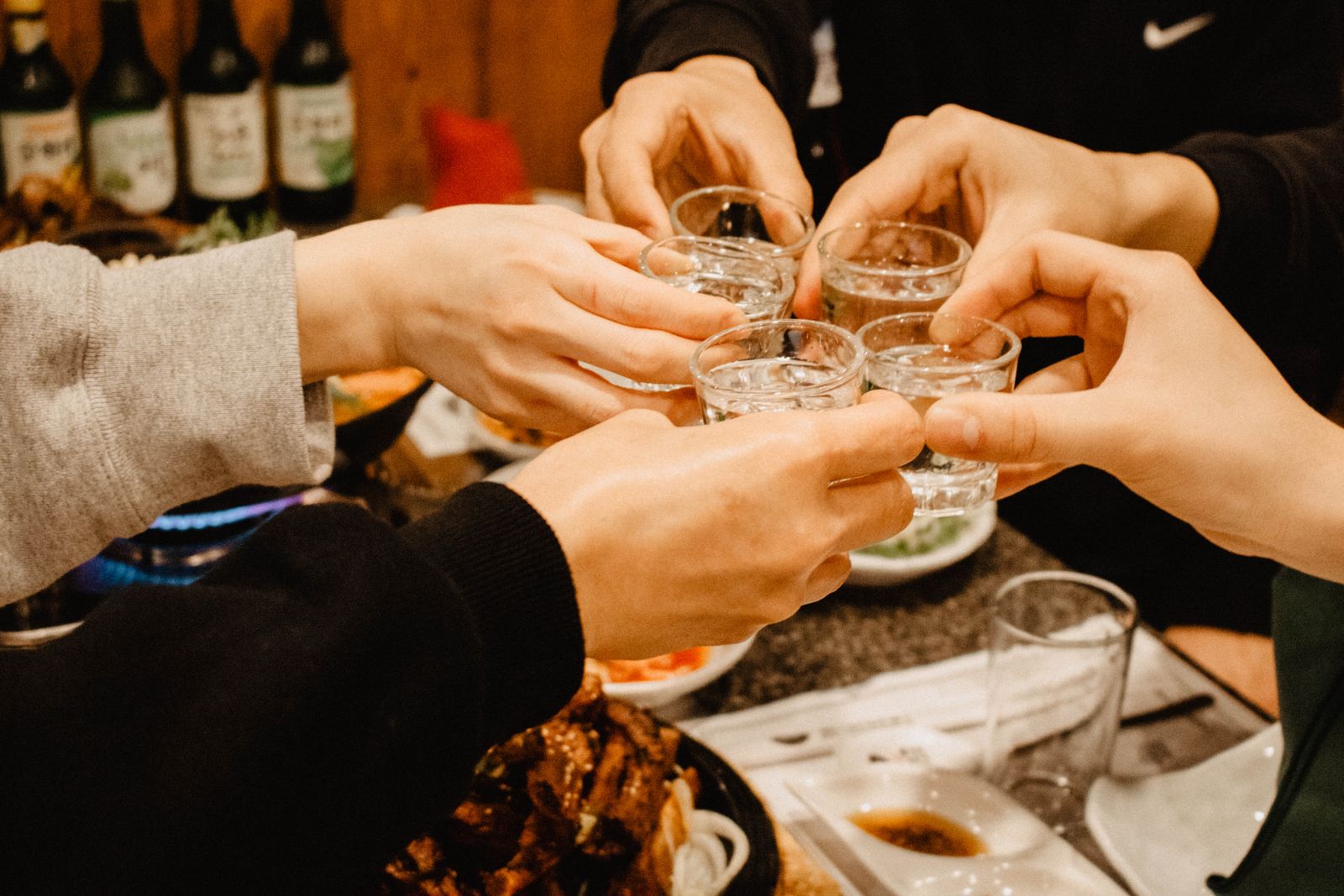
    The first time I reached over and topped up my own soju glass at a work dinner in Yeongdeungpo, the guy next to me — a mild-mannered accountant who’d said maybe ten words all night over the sizzle of a tabletop grill — physically took the bottle out of my hand. Not aggressively. More like he was rescuing a toddler from a hot stove. The table was crowded with side dishes, someone two seats down was mid-toast, and in the middle of all that noise he still noticed my glass and reached across three plates of grilled pork belly to fix it before I could. “No, no,” he said, already pouring for me himself. I remember sitting there holding an empty shot glass, slightly stunned, thinking: I just wanted more soju. What did I do wrong?

    That was probably eight years ago now, and I still think about it, weirdly enough, because it was such a small gesture that told me so much about how differently Korea thinks about a dinner table. In most of the English-speaking world, reaching for your own bottle is just efficiency. Nobody’s going to stop the conversation to police your glass. But in Korea, that one motion — self-pouring — sits at the intersection of hierarchy, care, and a set of unwritten rules that took me years, honestly, to fully absorb.

    So, Is It Actually Rude?

    The simple answer is yes. The real answer is: it depends entirely on who’s sitting across from you. As a baseline social rule, pouring your own drink in a group setting reads as self-centered, even a little lonely-looking, like you couldn’t be bothered to include anyone else in the moment. But the intensity of that judgment shifts a lot depending on the room — a formal company dinner versus a late-night bottle of makgeolli with your college roommate are two completely different worlds, even though the same bottle is on the table.

    You’d think this would just be a minor quirk of table manners, the kind of thing you nod at and forget. But it’s not, really. It’s tied to a much bigger idea in Korean social life, and once you understand why it feels so counterintuitive to Westerners, the whole thing clicks into place: drinking together here is fundamentally a shared act, not a series of individual acts happening at the same table. Pouring for someone is a small transfer of attention. You noticed their glass was low. You cared enough to fix it, mid-conversation, without being asked. Which, honestly, is a nicer way to think about it than I gave it credit for when I first ran into the rule.

    Where the Rule Comes From

    A lot of Korean table etiquette — this included — traces back to Confucian ideas about hierarchy and mutual obligation that shaped Korean social life for centuries, and that history is exactly why the custom feels less like “manners” and more like a small ritual once you know the backstory. The core logic is pretty simple: younger people pour for older people first, juniors pour for seniors, and the person being poured for reciprocates once their own glass runs low. It’s a loop. Everyone is, in theory, taking care of everyone else, and the oldest or most senior person at the table is typically served first as a mark of respect before anyone else touches their glass.

    There’s also the physical choreography that goes with it, which caught me off guard the first several times I saw it. When you pour for someone older or more senior than you, you’re expected to use two hands — or at least steady your pouring arm at the wrist or elbow with your free hand. In practice this is genuinely awkward the first dozen times you try it: you’re reaching across a table crammed with banchan — the little side dishes of kimchi, seasoned spinach, bean sprouts — trying not to knock over the bean-paste soup while keeping your forearm braced just so. It looks almost ceremonial if you’re not used to it, like you’re handling something fragile. Receiving works the same way: you take the glass with both hands, or one hand supported at the elbow, rather than just sticking your cup out like you’re at a backyard barbecue. Between people roughly the same age, one-handed pouring is totally normal and nobody thinks twice about it. The two-handed thing is specifically a hierarchy signal, not a universal soju rule, which is a distinction that took me embarrassingly long to figure out.

    And then there’s the turning-away part, which still catches me off guard even now. If someone senior — your boss, your father-in-law, an older relative — pours you a shot, the polite move when you actually drink it is to turn your body slightly away from them and cover your mouth and glass with your free hand. It looks almost like you’re hiding the drink, which is sort of the point: you’re not flaunting the act of drinking in front of someone you owe deference to. The first few times I did this I felt ridiculous, like I was playacting in a historical drama, glass angled away, shoulder half-turned, hoping I looked respectful and not just constipated. Now it’s just muscle memory — I do it before I even consciously register who poured for me.

    The Exceptions Nobody Tells You About

    Here’s the part most etiquette articles skip, and it’s the part that actually matters if you live here rather than just visit for a week. The “never pour your own drink” rule loosens up fast once the context shifts. If you’re alone at a pojangmacha — one of those orange tent bars that pop up along the sidewalks in neighborhoods like Jongno or near Konkuk University — nobody expects you to flag down a stranger to top off your glass. You pour your own. Nobody blinks.

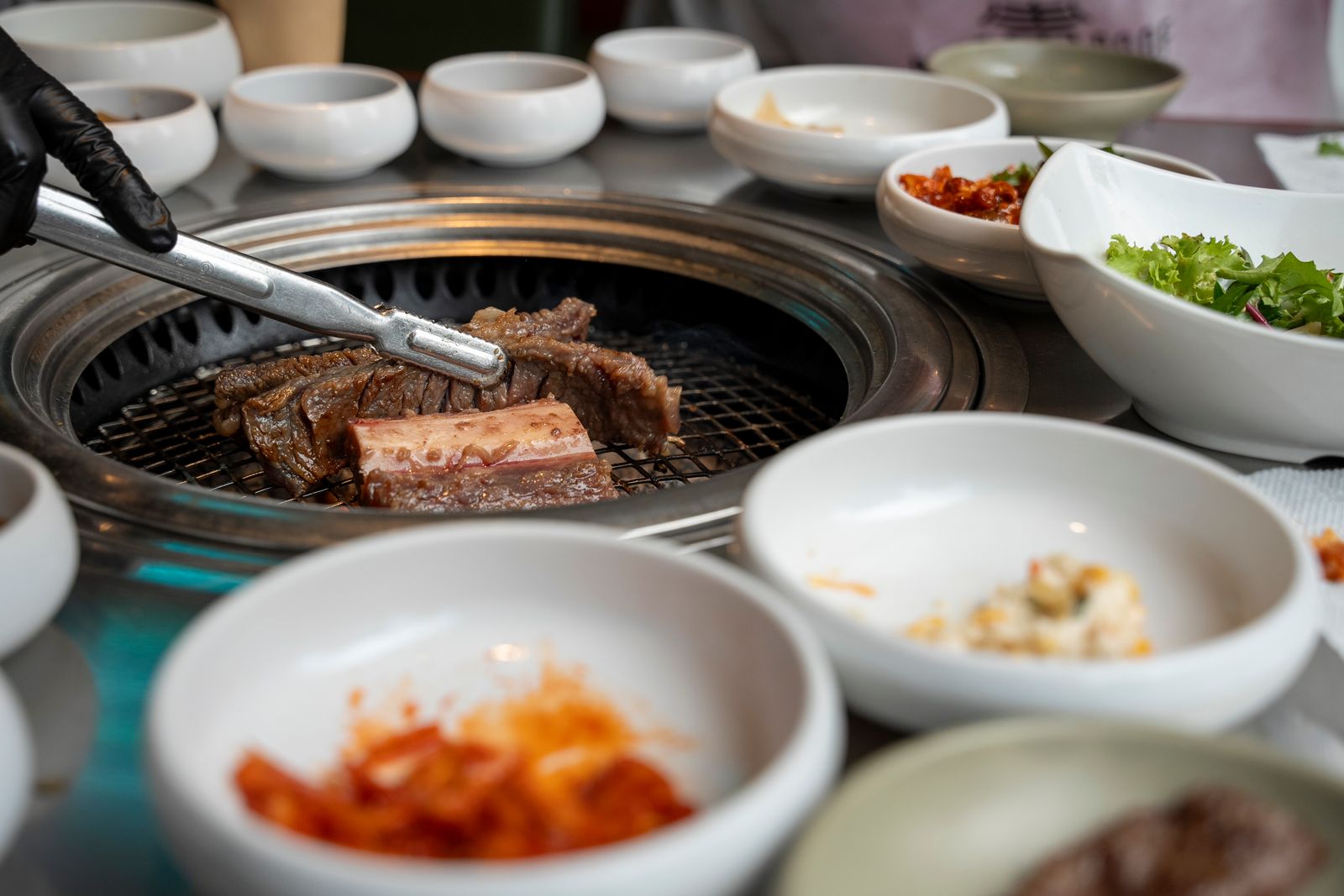
    A Korean barbecue restaurant table set up for a group dinner

    Same with close friends in a genuinely casual setting. If I’m at my friend’s apartment in Ilsan splitting a couple of cans of Cass and a bag of dried squid, we’re not performing formal etiquette at each other. Somebody pours, somebody doesn’t, glasses get topped off in whatever order makes sense, and it would honestly feel a little stiff and try-hard to insist on strict pouring order between two people who’ve known each other for a decade. The rule is really at its strongest in situations with a status gap — work dinners, meeting your partner’s parents for the first time, a reunion with a much older mentor — where getting it wrong reads as either not knowing better or, worse, not caring to.

    There’s also a generational shift happening that’s worth spelling out, because Korea’s drinking culture in 2026 is not identical to what it was even ten years ago. Younger Koreans, especially in casual friend groups, have relaxed a lot of the stricter hoesik-era customs — the forced shots, the rigid seating by seniority, the endless second and third rounds that used to bleed into a 2 a.m. noraebang session whether you wanted to go or not. You’ll see it in small ways: so-maek (soju mixed with beer, at a lower effective ABV than a straight soju shot) has become the default order for a lot of twenty- and thirty-somethings instead of round after round of pure soju, and some companies have started swapping the marathon dinner-then-drinks hoesik format for lighter alternatives — an early dinner, a round of bowling, something that wraps up by nine. The core pouring etiquette still holds up reasonably well even in these lighter settings, but the surrounding pressure — being made to drink until someone decides you’re done — has softened considerably at a lot of workplaces, partly because younger employees have pushed back on it and companies have noticed.

    What Happens If You Mess It Up

    You’d think breaking a drinking etiquette rule would trigger some visible reaction — a raised eyebrow, a comment, something. Usually it doesn’t, at least not out loud. Koreans are generally very forgiving of foreigners who don’t know the rules yet; there’s a wide berth given for people who are clearly still learning. What you’ll notice instead, if you’re paying attention, is more subtle: someone quietly reaches over and pours for you before you can pour for yourself, the way that accountant did to me years ago. Or an older person at the table might gently correct you — “here, let me” — without making it a whole moment. It’s corrective, but it’s rarely punitive.

    Even now, I slip. Just a few months back at a family gathering, I caught myself reaching for the bottle to refill my own glass mid-story, completely on autopilot, before my mother-in-law’s hand appeared and took it from me with a small laugh — no words needed, just a look that said she’d clocked the habit years ago and expected nothing less from me by now. That said, in more formal or hierarchical settings — a first dinner with a boss’s boss, a very traditional family gathering — repeatedly self-pouring or ignoring the pouring order can read as a bit tone-deaf, even if nobody says anything directly. Face and harmony matter a lot in these settings, and direct confrontation over a social misstep is rare. The silence itself is sometimes the feedback. I’ve actually written before about the flip side of this — how to politely refuse a drink you don’t want without causing offense, which comes up constantly once you understand how central pouring and reciprocity are to the whole ritual — and a lot of the same gauge-the-vibe, don’t-make-it-a-scene logic applies here too.

    How I Handle It Now

    These days my default move at any group table, Korean or otherwise, is to just keep an eye on the glasses around me — not in a performative, watch-me-be-culturally-fluent way, but because it’s genuinely become second nature after enough dinners. If someone’s glass is low, I fill it. If mine gets low, I wait a beat before someone else notices, and if nobody does within a reasonable window, I’ll pour my own without much drama, especially in a mixed group where not everyone follows the same customs anyway. There’s no secret ledger being kept. It’s less about rigid rule-following and more about paying attention to the people you’re sitting with, which — okay, this sounds a little precious when I write it out, but it’s true — is kind of the whole point of the custom in the first place.

    What surprised me most, looking back, isn’t the rule itself. It’s how much a tiny physical habit — who lifts the bottle, who holds the glass, which hand goes where — can carry an entire philosophy of respect and interdependence without a single word being spoken. You don’t need to memorize a manual before your first Korean dinner. You just need to watch the table for five minutes, follow along, and let someone steal the bottle out of your hand at least once. Most people will meet you more than halfway, and honestly, that one awkward moment tends to stick with you a lot longer than any etiquette guide ever could.

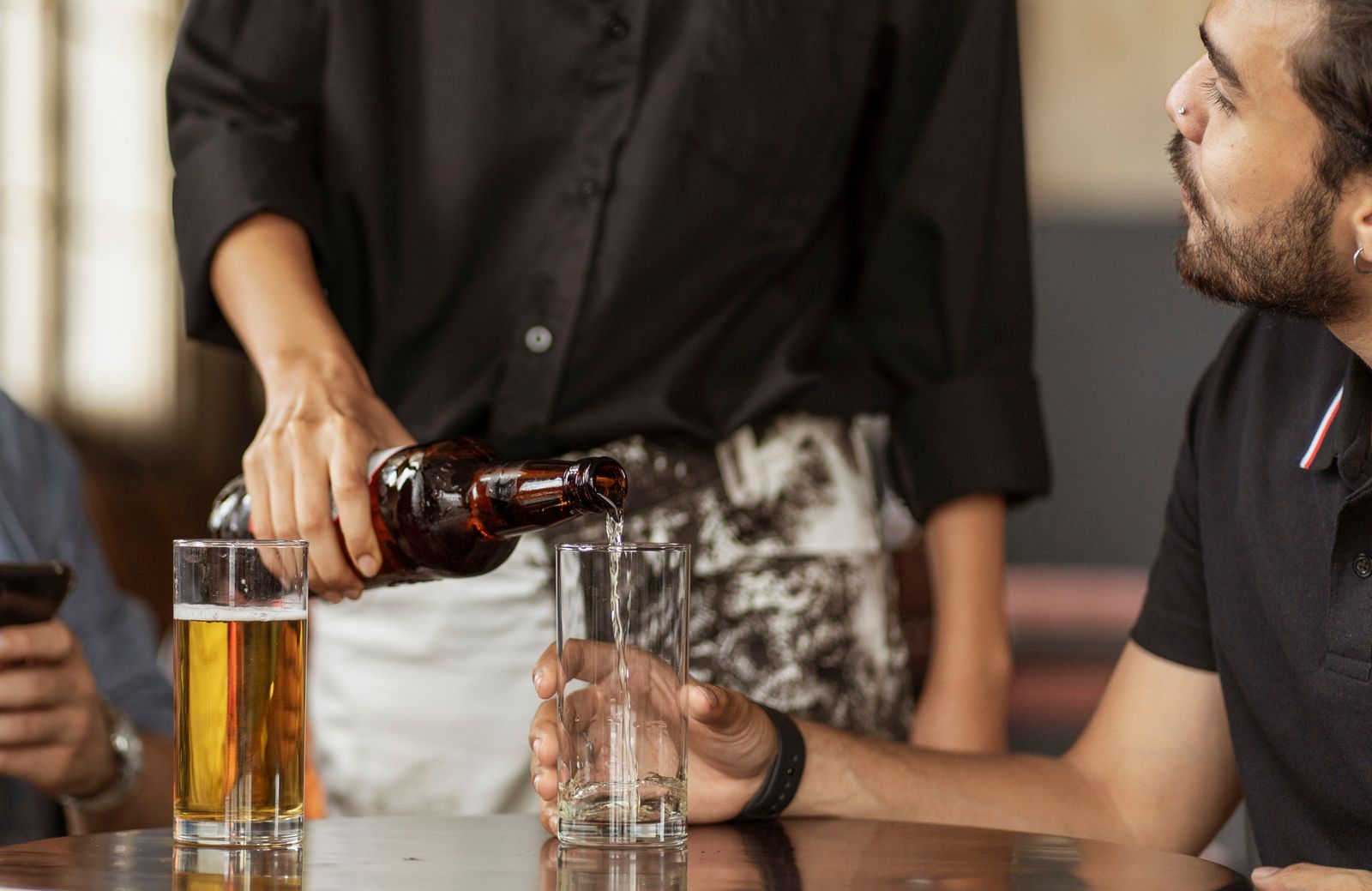
    A man pouring a drink for someone at a restaurant table in Korea

    FAQ

    I’m at a company dinner (hoesik) and my glass is empty but the senior manager is deep in conversation with someone else. Can I just pour my own?

    In that exact spot, most people would quietly pour for the person next to them first, which usually prompts a chain reaction where someone eventually notices your glass too. If a few minutes go by and truly nobody catches it, a quiet self-pour isn’t going to end your career — nobody’s watching that closely — but the more socially fluent move is to pour for someone else nearby first. It tends to solve the problem for you within a round or two.

    My Korean boyfriend’s parents keep pouring for me even after I say I’ve had enough. Is it rude to refuse?

    This one trips up a lot of foreigners dating into Korean families. You’re not obligated to drink everything poured for you, and leaving a glass mostly full is a perfectly normal way to signal you’re done, especially for health or driving reasons. What matters more is how you decline — a polite “I’m okay for now, thank you” with a small hand gesture over the glass reads much better than an abrupt “no.” Covering your glass lightly with your hand when someone reaches for the bottle is a widely understood, non-awkward way to say you’re done without making a scene.

    Does this pouring rule apply to non-alcoholic drinks too, like at a family meal with soda or tea?

    Less strictly, but the underlying courtesy carries over. At a formal meal, especially with elders present, it’s common and appreciated to pour tea or water for others before yourself, particularly for the oldest person at the table. Nobody’s going to correct you the way they might with soju, but doing it anyway tends to land as thoughtful rather than performative.

  • 떡볶이 황금레시피 — 밀떡이냐 쌀떡이냐부터 국물 농도 맞추는 법까지

    떡볶이 황금레시피 — 밀떡이냐 쌀떡이냐부터 국물 농도 맞추는 법까지

    분식집 그 맛을 집에서 내보려다 싱거운 국물에 퉁퉁 불은 떡만 건져본 적 있다면, 이 글이 도움이 될 거다. 레시피마다 물 양은 다르고 떡 종류도 다른데, 계량은 죄다 “적당히”로 뭉개놓아서다. 여기서는 그 적당히를 그램과 큰술, 분 단위로 바꿔놓았다.

    밀떡이냐 쌀떡이냐, 여기서 국물 농도가 갈린다

    밀떡 대신 쌀떡 쓰면 되지 않냐 싶지만, 둘은 완전히 다른 재료로 봐야 한다. 밀떡은 씹으면 말캉하고 야들야들하게 끊기는 식감이고, 쌀떡은 이 사이에서 쫄깃하게 버티는 묵직한 타격감이 있다. 표면도 다르다. 밀떡은 매끈해서 양념을 천천히 머금고, 쌀떡은 전분 함량이 높아 표면이 거칠어 양념을 빨리, 많이 빨아들인다. 처음엔 국물이 넉넉해 보여도 10분만 지나면 반으로 줄어드는 경험, 쌀떡으로 만들어본 사람이라면 다들 겪어봤을 거다. 마트 냉장 코너에서 고를 땐 국수처럼 길고 얇은 게 밀떡, 짧고 통통한 원통형이 쌀떡이라고 보면 헷갈릴 일이 없다.

    떡 100g 기준으로 비교하면 차이가 더 명확해진다. 밀떡은 끓는 물에 담근 뒤 3~4분이면 부드러워지고, 쌀떡은 냉동 상태였다면 최소 5~6분은 끓여야 심이 남지 않는다. 그런데도 많이들 쌀떡을 냉동에서 바로 꺼내 찬 국물에 던져 넣는다. 그러면 겉은 익었는데 속은 딱딱한, 그 애매한 식감이 나온다. 쌀떡은 조리 10분 전에 미지근한 물에 담가 심을 풀어주는 게 먼저다.

    냄비부터 골라야 재료가 고르게 익는다

    양념 비율만 맞으면 다 될 것 같지만, 의외로 냄비 크기가 결과를 좌우한다. 지름 20cm 정도의 좁은 냄비에 떡 300g과 어묵 100g을 한꺼번에 넣으면 재료끼리 눌려서 열이 고르게 전달되지 않는다. 위쪽 떡은 설익고 바닥 쪽 떡은 눌어붙는 식이다. 2인분이라면 지름 24~26cm 정도의 넓은 팬을 미리 꺼내두는 게 좋다. 재료를 다 넣고 나서야 냄비가 작다는 걸 깨달으면 이미 늦다.

    떡볶이 재료와 양념

    2인분 황금 비율 — 고추장과 고춧가루는 1:1

    양념 비율부터 적어두겠다. 물 500ml, 고추장 1.5큰술, 고춧가루 1.5큰술, 설탕 2큰술, 진간장 1큰술, 물엿 1큰술, 다진마늘 0.5큰술. 이게 2인분 기준이고, 여기서 핵심은 고추장과 고춧가루를 정확히 1:1로 맞추는 것이다.

    고추장만 많이 넣으면 어떻게 되냐고 묻는 사람이 꽤 있다. 결과는 텁텁하다. 고추장 특유의 장 냄새가 진해지고 단맛도 애매하게 뭉개진다. 반대로 고춧가루만 왕창 넣으면 색은 예쁘게 빨간데 감칠맛이 확 빠지고 매운맛만 튄다. 두 재료가 서로의 단점을 메꿔주는 구조라서, 비율을 흐트러뜨리면 다른 부분을 아무리 잘해도 티가 난다. 설탕 2큰술은 매운맛을 순화하는 최소 마지노선이고, 아이들도 먹을 거라면 여기서 반 큰술 정도 더 넣는 정도까지는 괜찮다.

    고춧가루도 은근히 무시하는 변수다. 개봉한 지 6개월 넘은 걸 쓰면 색은 그대로여도 매운맛과 향이 눈에 띄게 죽어 있다. 그래서 같은 1.5큰술을 넣어도 어떤 날은 맵고 어떤 날은 심심하다. 냉동 보관한 게 아니라면 개봉 후 3개월 이내 것을 기준으로 삼으면 편차가 훨씬 줄어든다. 고추장 역시 오래된 통 밑바닥 쪽은 수분이 빠져 되직해져 있어 계량이 흐트러지기 쉽다.

    육수부터 잡아야 국물이 산다

    물로만 끓여도 되지 않냐 싶은데, 의외로 육수 하나로 완성도가 확 갈린다. 멸치 10마리 정도 내장을 제거하고, 5cm x 5cm 다시마 두 장과 함께 물 600ml에 넣고 끓인다. 순서가 중요하다. 물이 끓어오르는 순간 다시마부터 건져낸다. 다시마를 오래 두면 미끈거리는 점액질이 나오면서 비린 맛이 배어든다. 다시마를 건진 뒤에는 멸치만 7~8분 정도 더 끓이고 체에 걸러낸다.

    그런데도 막상 해보면 육수 우리는 걸 귀찮아해서 그냥 수돗물로 때우는 경우가 많다. 급할 땐 어쩔 수 없지만, 시간이 조금이라도 있다면 육수 하나만 제대로 잡아도 나머지 조리 과정에서 실수를 좀 해도 맛이 크게 무너지지 않는다. 멸치 육수 600ml에서 끓이는 동안 100ml 정도는 증발하니, 양념 계량은 끓기 전 물 양 기준으로 잡으면 된다.

    순서를 틀리면 열에 아홉은 여기서 망한다

    떡볶이가 망하는 이유 중 압도적으로 많은 케이스가 하나 있다. 양념과 육수를 먼저 끓이지 않고 떡부터 넣는 것이다. 떡을 처음부터 넣으면 떡이 물을 먼저 다 빨아들여서 정작 국물에는 양념 맛이 배지 못한다. 결과물은 떡만 퉁퉁 불어있고 국물은 밍밍한, 그 실패한 떡볶이가 된다.

    순서는 이렇다. 먼저 육수에 고추장, 고춧가루, 설탕, 간장, 마늘을 풀어서 중불로 3분 정도 끓여 양념 맛을 국물에 완전히 녹인다. 이 단계에서 국물을 한 숟갈 떠서 맛을 봐야 한다. 짜다 싶으면 물을, 밍밍하면 간장을 반 큰술씩 더한다. 그다음에 미리 찬물에 10분 불려둔 떡을 넣고 중약불로 8~10분 졸인다. 어묵과 대파는 마지막 3분 남았을 때 넣는다. 너무 일찍 넣으면 어묵이 퍼석해지고 대파 향도 다 날아간다.

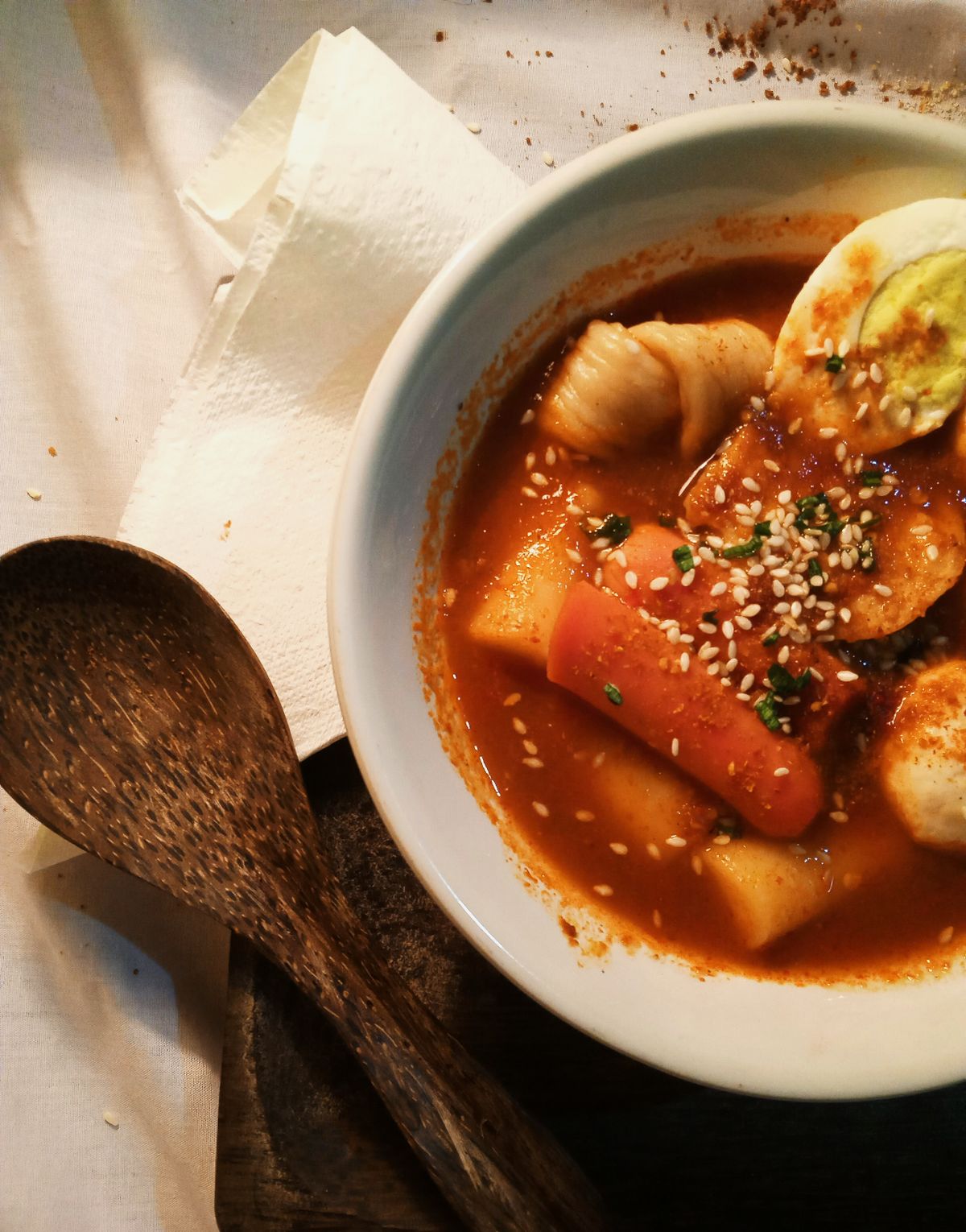
    완성된 매운 떡볶이

    국물 농도, 졸이는 시간으로 조절한다

    국물 자작한 스타일을 원하면 물엿을 넣은 직후부터 8분을 넘기지 않는 게 좋다. 반대로 국물이 거의 없이 떡에 양념이 코팅되듯 붙는 걸 원한다면 뚜껑을 열고 중불에서 12~15분까지 졸인다. 이때 계속 저어주지 않으면 바닥이 눌어붙으니 2분에 한 번씩은 뒤적여야 한다.

    여기서 자주 하는 실수가 하나 더 있다. 국물이 너무 졸아들었다고 찬물을 그냥 부어버리는 것이다. 이러면 애써 잡아둔 양념 농도가 다시 흐트러진다. 이럴 땐 찬물 대신 남겨둔 멸치육수를 30ml씩 나눠 넣으면서 맛을 다시 맞추는 편이 훨씬 안전하다. 육수를 100ml 정도 여유 있게 더 우려서 냉장 보관해두면 이럴 때 바로 쓸 수 있다. 불을 끄기 직전 마지막 1분 동안은 국물을 계속 숟가락으로 떠서 떡 위에 끼얹어야 한다. 이 마지막 1분을 건너뛰면 떡 윗면만 색이 옅게 남아 접시에 담았을 때 얼룩덜룩해 보인다.

    어묵도 종류에 따라 결과가 다르다

    사각 어묵과 부산 어묵은 익는 속도부터 다르다. 얇은 사각 어묵은 3분이면 충분히 익지만, 두툼한 부산 어묵은 5분은 끓여야 속까지 양념 맛이 배어든다. 부산 어묵을 사각 어묵과 같은 타이밍에 넣으면 겉만 데워진 채 부드럽지 않은 상태로 끝나버린다. 예전에 소개한 오뎅탕 레시피에서도 비슷한 얘기를 한 적 있는데, 어묵은 두께 차이가 조리 시간 차이로 그대로 이어지는 재료라서 한 냄비에 여러 종류를 섞을 땐 두꺼운 것부터 먼저 넣는 게 안전하다.

    자주 묻는 질문

    Q. 밀떡을 마트에서 못 구했는데 쌀떡으로 바로 대체해도 되나요?
    가능은 하지만 물을 100ml 정도 줄여야 한다. 쌀떡이 양념을 더 많이 흡수하기 때문에 물 500ml를 그대로 쓰면 다 졸아들고 나서 짠맛만 남는 경우가 흔하다. 대신 졸이는 시간을 2~3분 짧게 잡아 국물을 좀 더 남긴 채로 마무리하는 게 낫다.

    Q. 만들고 남은 떡볶이는 어떻게 보관하나요?
    당일 다 못 먹었다면 국물과 떡을 분리해서 냉장 보관하는 게 낫다. 떡이 국물에 계속 잠겨 있으면 하루만 지나도 떡이 퍼져 원래 식감이 완전히 사라진다. 재가열할 때는 물을 2~3큰술 정도 더해 약불에서 데우면 처음 만들었을 때의 농도에 가깝게 돌아온다.

    Q. 매운 걸 잘 못 먹는데 아이들과 같이 먹으려면 어떻게 조절하나요?
    고춧가루 양을 1.5큰술에서 0.5큰술로 줄이고, 그 자리를 고추장으로 채우지 말고 케첩 1큰술로 대체해보는 걸 권한다. 케첩의 산미와 단맛이 매운맛 대신 감칠맛과 붉은 색을 어느 정도 채워준다. 다만 이 경우 설탕은 1큰술로 줄여야 전체적으로 너무 달아지지 않는다.

    떡볶이는 재료 자체는 단순하지만, 순서와 시간을 얼마나 지키느냐에 따라 결과물 차이가 크게 벌어지는 음식이다. 오늘 삶은 계란을 반으로 갈라 국물에 콕 찍어 먹거나, 튀김 하나 옆에 곁들이면 완성도가 한층 올라간다. 오늘 적어둔 순서와 시간만 그대로 따라가면, 적어도 국물이 밍밍하거나 떡이 퍼지는 흔한 실패는 피할 수 있을 거다.

  • What NOT to Do in Korea as a Foreigner

    What NOT to Do in Korea as a Foreigner

    Somebody handed me a paper cup of makgeolli at a company dinner in my second month living in Korea, and I did what felt completely normal to me back home: I poured my own refill about ten minutes later when the cup ran dry. The table went quiet for a second. Not dramatically quiet, nobody gasped, but there was this tiny pause, like a skipped beat in a song, before my coworker reached over, took the bottle from my hand, and topped me off himself with a little laugh. I didn’t fully understand what had happened until months later. That’s the thing about living here as a foreigner: the mistakes are rarely catastrophic, but they pile up in small, specific ways, and nobody really sits you down and explains the whole list at once.

    I’m Yijidaddy, and I’ve been based in Korea long enough now that I’ve made most of the mistakes on this list personally, sometimes more than once. This isn’t a tourist pamphlet with the usual “don’t point with one finger” bullet points you’ve probably already read on ten other sites. I want to walk through the ones that actually trip up people who are here for months or years, not just a weekend in Myeongdong, because the traps change once you’re not just sightseeing anymore.

    The Drinking Trap

    You might assume a drink is a drink, and refilling your own glass is just efficient — nobody wants to sit there with an empty cup waiting for someone to notice. But in Korea, especially at hoesik, the after-work dinner-and-drinks gatherings that are still a real fixture of office culture here, pouring your own soju or beer reads as a small signal that you’re either not paying attention to the people around you or, worse, that you don’t need anyone. Drinking here is relational, not just consumption. You watch other people’s glasses, you top them off when they’re low, and you let them do the same for you.

    There’s a physical component too that I got wrong for longer than I’d like to admit. When you’re pouring for someone senior — a boss, an older coworker, someone’s parent — you use two hands, or at minimum one hand on the bottle with your other hand resting lightly against your forearm. Same when you’re receiving a pour: two hands on the glass, or one hand on the glass with the other touching your forearm or chest. It looks almost ceremonial the first few times you see it, but it becomes automatic embarrassingly fast, which honestly says something about how much repetition this culture runs on.

    Underneath all the choreography, though, it’s really just a running, wordless check-in happening across the table the entire night — who’s had enough, who needs a refill, who’s being looked after. It’s less about the alcohol and more about that. If you want more on how drinking culture works here, from the toasting to the check dynamics to why nobody just orders one round and leaves, I wrote a longer piece specifically on that.

    A restaurant table set up for a Korean group meal with shared side dishes

    The Subway Code

    I used to think the pink seats near the subway doors — the priority seats reserved for elderly passengers, pregnant women, and people with disabilities — were more of a suggestion than a rule, the way they can feel back where I’m from. In Seoul, they are not a suggestion. I sat in one exactly once during rush hour, half asleep after a long shift, and an older man boarded a few stops later. Nobody said anything to me directly. But three or four people near me gave this specific, deliberate look toward him and then quickly back at me — not a glare exactly, more the kind of look that dissolves into staring at their phone the second you notice it — and I got up so fast I nearly dropped my phone. Weirdly, that silent social pressure works better than any sign could.

    Phone calls are the other one that catches people off guard. You’ll see people texting, gaming, watching dramas with earphones in, completely absorbed in their phones the entire ride — but actually talking on a call, especially at normal volume, gets you looks fast. Line 2 during evening rush hour, packed tight enough that you can feel the person next to you’s backpack against your ribs between Gangnam and Hongdae stations, is not the place to catch up with a friend on speakerphone. If a call is unavoidable, people tend to cup a hand over their mouth and speak just above a whisper. It felt excessive to me at first, honestly, but after a year of quiet commutes I’ve come to genuinely prefer it. There’s something calming about a train car where the loudest sound is the door chime.

    The Chopstick Rule That Makes Older Koreans Actually Flinch

    This one gets repeated so often in guidebooks that it almost sounds like an urban legend, but it’s real and it matters: don’t stick your chopsticks upright in a bowl of rice. It visually mirrors the incense sticks placed for ancestral memorial rites, so doing it at a dinner table, even by accident while you go grab something from another dish, can land as genuinely unsettling to an older Korean at the table rather than just a minor faux pas. I’ve watched a host quietly reach over and lay a friend’s chopsticks flat without a word, mid-conversation, like muscle memory, and keep right on talking as if nothing happened.

    There’s a rhythm to eating with a group here that took me longer to absorb than the rules themselves. You generally wait for the oldest or most senior person at the table to pick up their spoon first before anyone else starts eating. It’s not enforced with any kind of scolding, at least not with foreigners, but you’ll notice everyone else naturally pausing for that first beat, and if you’re the one who dives in early, you’re the only person whose spoon moved.

    And if you’re offered more food or another drink, the polite move is to decline once, maybe twice, before accepting — which felt bizarre and even a little dishonest to me at first, since where I’m from you just say what you actually want. Here it’s less about honesty and more about a small ritual of showing you’re not being greedy, even when everyone at the table knows you’re going to say yes eventually.

    The Tipping Habit That Doesn’t Translate

    Tipping just doesn’t exist in Korea in the way it does in the US, and I mean that literally — there’s no line on the receipt for it, no jar by the register expecting it, and leaving cash on a restaurant table is more likely to make a server chase you down the street to return it than to be received as a kindness. I tried tipping a taxi driver during my first month, a ride from Hongik University Station to my old apartment in Mangwon that came to about 4,700 won, and I told him to keep the change from a 10,000 won bill and stepped out. He rolled the window down, called out, and held the coins and small bills out flat on his open palm until I turned around and took them back — no annoyance in his face, just a kind of patient correction, like he’d done this exact routine with a foreigner before.

    It’s not that Koreans think tipping is rude exactly, more that the entire pricing structure here assumes the listed price is the full price, service included, full stop. You’ll still occasionally see tip jars appear at trendy dessert cafes clearly aimed at foreign tourists, which, honestly, muddies the water for everyone and probably confuses first-time visitors more than it helps.

    Commuters riding a Seoul subway train, seated and standing quietly

    The Sacred Boundary of the Front Door

    You’d think shoes-off-at-the-door is simple enough to get right immediately, and mostly it is, but the gray areas are where people slip up. Some smaller traditional restaurants with raised floor seating, certain guesthouses, temples obviously, and pretty much every Korean home require shoes off right at the entrance, usually marked by a small step up called a hyeongwan. What surprised me was how far the “no shoes” logic extends beyond just floors — at a jjimjilbang, the Korean bathhouse and sauna, you change into sandals the moment you’re inside, and wearing your outdoor shoes even one step past the entrance mat is treated as genuinely unclean, not just a style violation.

    I once wandered two steps too far into a friend’s apartment entryway while checking my phone for directions, still half in the hallway, and got a very polite but very immediate “ah, ah, ah” and a pointed look at my sneakers before I’d even managed to say hello properly. I hopped back onto the hyeongwan, laughing, and untied my shoes right there while she held the door.

    Public Affection and Reading the Room

    Public displays of affection are more restrained here than in a lot of Western countries, though this one has genuinely loosened over the years I’ve been watching it, especially among younger couples in areas like Hongdae or Yeonnam-dong. Still, a hand on the small of someone’s back or a quick hug reads very differently from what would be unremarkable in, say, a park in Los Angeles. Loud laughter, group photos that block a whole sidewalk, or a boisterous conversation carried across an entire cafe are the kind of thing that won’t get you confronted, but will get you noticed, and being noticed in a culture that generally prizes not standing out is its own quiet kind of mistake.

    I’ve caught myself doing this more than once, laughing too loudly at something on my phone on a quiet bus, and felt that specific prickle of a dozen polite, uninterested-looking people who are absolutely aware of me. Nobody turns their head. That’s almost the point — the awareness is there without anyone needing to show it.

    The Mistake That Actually Matters Most

    If there’s a single thread running through everything above, it’s that Korea isn’t one uniform rulebook, it’s closer to a set of overlapping social radars — generational, regional, situational — that locals read instinctively and foreigners have to learn consciously. A twenty-two-year-old barista in a Hongdae coffee shop and a sixty-year-old shop owner in a Jongno alley are operating on somewhat different versions of the etiquette I’ve described here, and the honest, if unsatisfying, answer is that you calibrate as you go.

    I still get things wrong. Last month I accidentally handed a business card with one hand to a client visiting our office, a man clearly in his fifties who’d flown in from Busan for the meeting, and caught myself half a second too late, card already halfway across the table. He took it graciously, gave a small nod, and didn’t miss a beat in the conversation. Nobody made a scene about it.

    That’s really the pattern I’d want anyone new here to understand: the social cost of a mistake is almost always smaller than the anxiety of anticipating it, and Koreans I’ve met are, on the whole, remarkably graceful about foreigners who are visibly trying.

    A busy Seoul street at night lined with illuminated signs

    Frequently Asked Questions

    I’m going to a work dinner with Korean colleagues for the first time next week and I don’t drink alcohol. Will I offend anyone by refusing soju?

    You won’t, and this is genuinely one area where things have relaxed a lot even in the years I’ve lived here. Saying “저는 술을 못 마셔요” (I can’t drink alcohol) is understood immediately, and most hoesik dinners these days will have cola, juice, or non-alcoholic options on the table without anyone blinking. What matters more than whether you drink is that you still participate in the pouring ritual — top off other people’s glasses with theirs, let them pour your soda for you using the same two-handed gesture, and stay through at least part of the meal rather than ducking out the second food arrives. The social participation matters more than the alcohol itself.

    I accidentally sat in a priority seat on the subway and nobody said anything directly to me — was that actually fine, or did I mess up?

    Nobody confronting you doesn’t mean it went unnoticed. Korean social correction tends to be indirect rather than direct confrontation, so silence isn’t the same as approval — it’s more likely that people simply expected you’d notice and move on your own, the way I described happening to me. If it happens again, the safest habit is to treat the pink-marked seats as fully off-limits regardless of how empty the car is, even late at night, since an elderly rider boarding at the next stop is always a possibility and the seat being empty when you sat down doesn’t really factor into the etiquette at all.

    My Korean host family keeps insisting I eat more even after I’ve said I’m full twice — am I doing something wrong by declining?

    You’re actually doing it exactly right, and this pattern is a genuine, recognized social ritual here rather than a communication breakdown. Hosts are expected to insist two or three times as a show of generosity, and guests are expected to decline once or twice before accepting, so both sides are essentially performing a small, mutually understood dance. If you’re truly full, a firm but warm “저는 배불러요, 정말 잘 먹었습니다” (I’m full, I really enjoyed the meal) after the second offer usually closes it out gracefully. The mistake isn’t in the back-and-forth itself, it’s assuming the first “I’m full” is meant to be taken as the final answer.