
The first time I realized I actually lived in Korea — not just visited, not just stayed for a while, but lived here — wasn’t when I signed a lease or got my Alien Registration Card. It was the day I stood in front of the recycling bins behind my building in Mapo-gu, holding a plastic container stained red from fermented kimchi jjigae paste, genuinely stuck on whether that red residue disqualified it from the plastics bin and demoted it to the district’s paid food-waste bag system instead. Nobody warns you that “moving abroad” eventually comes down to moments like that. Not the visa paperwork, not the flight, but a Tuesday evening standing next to your own trash, feeling like a complete beginner at adult life again.
I’ve been in Korea long enough now that I forget which parts still confuse newcomers and which parts I’ve simply absorbed. So this post is the version of “moving to Korea” advice I actually wish someone had handed me — not the checklist of documents (you’ll find that easily enough), but the stuff that sits underneath the checklist. The systems, the small humiliations, the things that cost more than I expected and the things that turned out to matter less than I feared.

Housing hits differently once you’re actually signing the lease
Everyone tells you Seoul apartments are small. Fine, I believed that going in. What nobody quite prepared me for was the deposit structure. Korea runs largely on two systems: jeonse, where you hand over a lump-sum deposit — sometimes 70-80% of the apartment’s value — in exchange for living rent-free until you move out, and wolse, the more familiar monthly-rent-plus-deposit setup that most foreigners actually use. As a newcomer without deep local banking history, jeonse is basically off the table unless you have serious capital sitting somewhere, so you’ll almost certainly be looking at wolse. The deposit on a modest one-room (a “one-room,” not a one-bedroom — Korean listing terms don’t map cleanly onto English ones) in a decent area can run anywhere from 5 million to 20 million won, with monthly rent from around 500,000 to over a million won depending on the neighborhood. To put the space itself in perspective: a one-room in that price range is often somewhere between 16 and 23 square meters total, bed, kitchen, and bathroom included — closer to a generously-sized walk-in closet than to what “studio apartment” conjures up back home, and that surprised me more than the price did.
And the neighborhood matters more than I expected it to. I ended up in Mapo-gu, close to Yeonnam-dong, mostly because a coworker mentioned it offhand, and I’m genuinely glad I didn’t overthink it — it’s walkable, close to Gongdeok station where several subway lines meet, and has enough of a mixed local-and-expat feel that I wasn’t the only foreigner in the building. Compare that to somewhere like Itaewon or Haebangchon, which are more obviously “foreigner-friendly” with English menus everywhere, but also noticeably pricier and, depending on who you ask, a little more insulated from actual Korean daily life. If you’re the type who wants convenience over immersion, that trade-off is worth thinking through before you sign anything, not after.
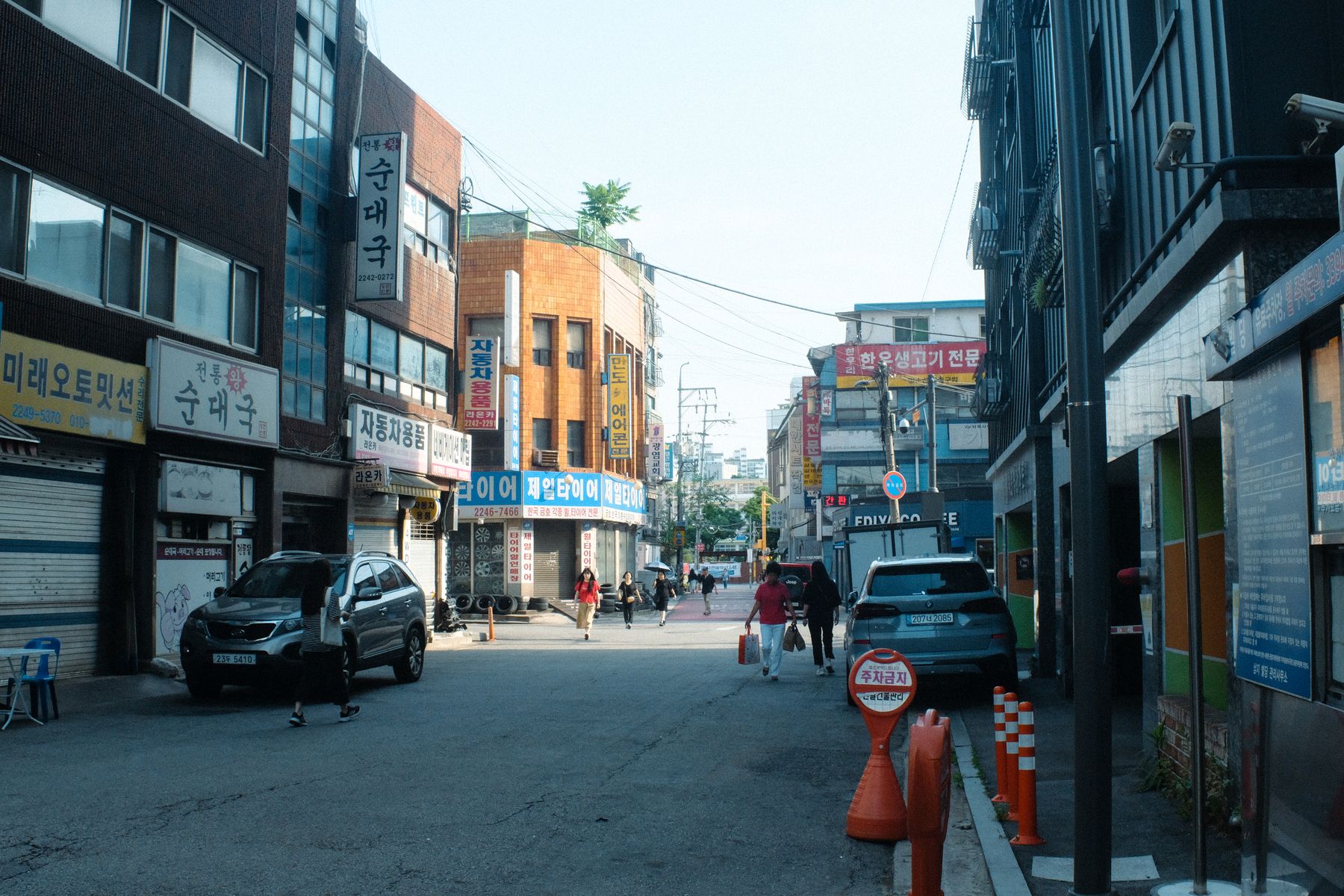
One thing I underestimated badly: real estate agents (부동산, budongsan) are not neutral parties the way they might function elsewhere. They’re paid by whoever they close the deal for, and they will absolutely show you a “perfect” apartment that has some detail — a landlord who’s slow to return deposits, a management fee that’s oddly high — that only comes out if you ask directly. I didn’t know to ask about 관리비 (gwanlibi, management fees) separately from rent the first time, and got mildly blindsided by an extra 150,000 won a month I hadn’t budgeted for. That fee usually covers building cleaning, elevator maintenance and repairs, common-area electricity, and sometimes a chunk of your water or internet bill bundled in — which is worth knowing, because it means two apartments with identical rent can end up costing very different amounts once you add the management fee on top, and the listing itself won’t always make that obvious.
The ARC card is the actual key to your life here
Your Alien Registration Card (ARC) is not a formality; it’s the master key to your whole life here. You have 90 days after arrival to apply for one at your local immigration office, and until it arrives, you are functionally locked out of most of Korean adult life — no proper phone contract, no bank account at most mainstream banks, no easy way to sign a lease in your own name. I naively assumed I could “get settled” first and deal with the ARC card whenever convenient. That’s backwards, and it cost me weeks I didn’t need to lose. The ARC should be the very first bureaucratic domino you knock over, because everything else — banking, phone, sometimes even gym memberships — waits on it.
The process itself isn’t dramatic, just slow: you book an appointment (increasingly through the Hi Korea website rather than walk-in, depending on your immigration office), bring your passport, visa documents, a passport photo, proof of address, and the application fee, and then wait. Processing typically takes two to three weeks, and the card arrives by mail — which means you also need a Korean address sorted before you even apply, creating a slightly circular problem for anyone who lands without housing already arranged. If you can, sort out at least temporary housing before you fly, purely so this clock can start immediately.
Banking and phones: the chicken-and-egg problem nobody explains well
Here’s where I got genuinely frustrated. You’d think opening a bank account and getting a phone plan would be simple errands. They’re not, not at first, because the two systems lean on each other in a way that feels almost designed to test you. Most banks want a Korean phone number to verify your account and send one-time passwords; most phone carriers, for a full contract plan, want proof of stable residency that effectively means your ARC card. So during that early gap — after landing, before your ARC arrives — you’re stuck with workaround options: an airport prepaid SIM or a tourist eSIM to get by, and maybe a foreigner-friendly bank branch, since Citibank Korea and the global-service desks at KB Kookmin or Shinhan tend to be more used to processing passport-only accounts, though even they’ve tightened up over the years due to financial fraud rules.
Once your ARC does arrive, everything opens up, and honestly the relief is bigger than I expected it to be. I switched from an expensive tourist SIM to an MVNO plan — one of the budget carriers, like KT M Mobile or a similar reseller, riding on the big three networks’ actual infrastructure, with starter SIM kits available at convenience stores like GS25 or 7-Eleven — and cut my monthly phone bill from around 55,000 won down to about 28,000 won for basically the same data allowance. Kakao Bank and Toss also became usable at that point, and honestly, once I had those two apps plus a real Korean number, probably 90% of my daily friction — splitting bills, paying rent transfers, ordering delivery — just evaporated. Your Alien Registration Card is genuinely the master key here: don’t fight the airport-SIM-then-ARC-then-real-plan sequence, just budget two or three weeks of slightly annoying, slightly overpriced workarounds and move on.
The apps you didn’t know you needed
Google Maps is close to useless for walking or transit directions in Korea — a quirk of local mapping regulations — so you’ll need Naver Map or Kakao Map almost immediately, and honestly they’re better once you adjust to them. I still remember ordering a box of eggs, milk, and vegetables from Coupang’s Rocket Delivery at around 11 p.m. and finding it sitting outside my door at 6:15 the next morning, still cold, before my alarm had even gone off — that, plus Baemin for hot food delivery, became so normal to me that I now find it strange when a country doesn’t treat overnight grocery delivery as a baseline expectation rather than a luxury. That said, I’d be lying if I said the delivery culture doesn’t come with a quieter cost — it’s very easy to stop walking to your local market entirely, and I noticed after a few months that I barely knew the shop owners two blocks from my apartment, which felt like a loss I hadn’t anticipated.
The culture shock nobody warns you about isn’t the big stuff
People prepare you for chopsticks, for bowing, for the drinking culture at company dinners. Fair enough — those things are real, and yes, if you work at a more traditional Korean company, you should expect that turning down every single 회식 (company dinner) invitation will read as more antisocial than it might at home. But what actually wore on me wasn’t any of that. It was the accumulation of tiny systems I had to relearn from zero: how recycling actually works (food waste, general waste, and recyclables are separated with real enforcement, sometimes with weight-based fee stickers for food waste bags), how to read an elevator button panel that lists basement parking floors in a way that trips up anyone used to ground-floor-is-zero logic, how apartment building intercoms work when a delivery driver buzzes and you don’t yet have the Korean to say “just leave it at the door.”
It’s relentless, in the way that a hundred small unfamiliarities are more exhausting than one big obviously “foreign” experience. If you’re the sort of person who assumes you’ll adjust quickly because you’re generally adaptable, I’d gently push back on that assumption — adaptability helps, but it doesn’t make the learning curve shorter, it just makes you less miserable while you’re on it.
Health insurance and the money question people avoid
Contributions depend on your visa type, employer, and income, so I won’t throw out a number that might just confuse your situation more than help it. Broadly, though: once you’re on a work visa and enrolled through an employer, you’re automatically part of National Health Insurance (NHIS), with premiums split between you and your employer and deducted directly from your paycheck. If you’re on a different visa type or self-employed, you may need to enroll as a regional subscriber instead, and those premiums are calculated differently. The smartest thing I did was ask my HR contact directly, in writing, exactly how enrollment worked for my specific visa, rather than assuming it matched what a friend on a different visa type had told me. Assuming visa categories all work the same way is a surprisingly common and completely avoidable mistake.
What I’d actually tell someone about to move
If I’m honest, most “moving to Korea” advice online focuses on the exciting parts — the food, the neighborhoods, the K-culture access — and skips the administrative fog that eats your first month. So here’s my blunt version: front-load your paperwork obsessively, accept that your first two or three weeks will involve some frustrating workarounds around phones and banking, pick a neighborhood based on your actual daily commute rather than Instagram appeal, and budget both money and patience for management fees, deposit structures, and the general friction of doing everyday adult tasks in a system you didn’t grow up inside. None of it is insurmountable. Most of it, honestly, becomes second nature faster than you’d expect — I don’t think twice about recycling sorting anymore, and my Korean coworkers still occasionally find it funny how confidently I now correct newer expats on management fee etiquette.
If you’re also trying to make sense of workplace culture here specifically, I wrote a bit more about how Korean names and titles work in the office in an earlier post — it trips up almost every new arrival at some point, usually in an email signature or a meeting introduction, and it’s worth a read before your first day at a Korean company.
Frequently asked questions
Can I open a Korean bank account before I get my ARC card? At a handful of foreigner-friendly branches, sometimes yes, with just a passport and proof of your address (even a temporary one, like a hotel or short-term stay contract) — but it’s inconsistent, varies by branch and by the individual teller you get that day, and some banks have tightened these rules recently due to financial fraud concerns. If you’re arriving without an ARC yet, I’d plan around not having full banking access for your first few weeks rather than counting on an exception.
Is it realistic to live in Seoul without speaking Korean at all? Realistic, yes, especially in neighborhoods like Itaewon, Haebangchon, or parts of Hongdae where English signage and staff are common. Comfortable long-term, less so. I’d say basic survival Korean — enough to handle a delivery call, a landlord text, or a pharmacy visit — makes an outsized difference to daily stress levels compared to how much studying it actually takes to get there.
How long does it actually take to feel “settled” rather than constantly adjusting? For me it was somewhere around the four-to-six month mark, once banking, phone, housing, and a basic daily routine were all in place and no longer required active problem-solving. That timeline will vary a lot depending on whether you arrive with a job and housing pre-arranged or are sorting it out from scratch on the ground, so take any specific number, including mine, as a loose reference point rather than a promise.
Bonus: what’s the one thing you’d change if you could redo your first month? I’d apply for my ARC card literally the first week instead of treating it as a lower-priority task behind “settling in.” Every other piece of friction I dealt with in that first month traced back to not having it yet.
Leave a Reply