지하철역 계단을 오르는데 예전과 다르게 다리가 무겁고 숨이 차올랐다. 5년 전만 해도 아무렇지 않던 코스인데, 중간에 한 번 멈춰서야 했다. 마트에서 생수 묶음을 들다가 손목이 시큰거리고, 병뚜껑 하나 여는 데도 힘이 예전 같지 않다고 느낀 적이 있다면 단순한 컨디션 저하가 아닐 수 있다. 근육이 조용히 줄어들고 있다는 신호일 가능성이 있기 때문이다.
근감소증이란 무엇인가
근감소증은 나이가 들면서 골격근의 양과 근력, 신체 기능이 함께 떨어지는 상태를 말한다. 단순히 살이 빠지는 것과는 다르다. 체중은 그대로거나 오히려 늘었는데 근육만 줄고 지방 비율이 높아지는 경우도 흔하다. 이런 상태를 ‘마른 비만’이라 부르기도 하는데, 겉보기로는 건강해 보여도 실제로는 근력과 균형 감각이 떨어져 있는 경우가 많다.
근육량은 얼마나 빨리 줄어들까
근육량 감소는 생각보다 이른 시기부터 시작된다. 30대 이후부터 10년마다 근육량의 3~5%가 줄어든다는 연구 결과가 있고, 연간으로 환산하면 남성은 약 0.47%, 여성은 약 0.37%씩 감소한다는 보고도 있다. 40대에 접어들면 이 속도가 체감될 만큼 누적되는 시점이다. 60대 이후로는 감소 폭이 더 커져서 매년 근육량이 약 1%씩, 근력은 그보다 훨씬 빠른 연간 약 3%씩 줄어드는 것으로 알려져 있다. 65세에서 80세 사이에는 10년 동안 근육량의 최대 8%가 빠질 수 있다는 자료도 있다. 숫자만 보면 작아 보이지만, 40대부터 아무런 대응 없이 지내면 60대에는 이미 상당한 근력 손실이 쌓여 있는 셈이다.
왜 40대부터 근육이 빠지기 시작할까
호르몬과 대사의 변화
40대 이후에는 근육 합성에 관여하는 호르몬 분비가 서서히 줄어든다. 기초대사량도 함께 낮아지면서 같은 양을 먹어도 체지방으로 축적되기 쉬운 몸 상태가 된다. 세포 안 미토콘드리아의 기능이 떨어지고 산화 스트레스가 늘어나는 것도 근육 손실을 촉진하는 요인으로 거론된다.
움직이지 않는 생활 습관
앉아서 일하는 시간이 길어지고 계단 대신 엘리베이터를 타는 일상이 반복되면 근육을 쓸 일 자체가 줄어든다. 근육은 쓰지 않으면 유지할 이유를 잃는 조직이라, 활동량이 적은 사람일수록 근감소가 빠르게 진행된다는 점이 여러 연구에서 확인된다. 단백질 섭취가 부족한 식습관, 만성질환으로 인한 활동 제한, 수면의 질 저하까지 복합적으로 작용하면서 근육 손실을 앞당긴다.
이런 증상이 있다면 주의가 필요하다
같은 거리를 걷는데도 예전보다 숨이 쉽게 차오른다
병뚜껑을 열거나 무거운 가방을 드는 일이 힘겹게 느껴진다
의자에서 일어날 때 손을 짚어야 편하다
이전보다 자주 휘청거리거나 균형을 잃는 느낌이 든다
허벅지나 종아리가 눈에 띄게 가늘어졌다
허벅지 근육은 몸 전체 근육 중에서도 비교적 먼저 줄어드는 부위로 알려져 있다. 하체 힘이 약해지면 무릎과 허리에 가해지는 부담이 커지고, 작은 낙상에도 골절 같은 큰 부상으로 이어질 위험이 높아진다. 근력 저하가 자세 불균형을 만들고, 그 불균형이 다시 관절 통증을 악화시키는 악순환으로 이어지는 경우도 드물지 않다.
근육을 지키는 생활 습관
저항 운동을 일상에 넣기
근육은 자극을 주지 않으면 유지되지 않는다. 걷기나 등산 같은 유산소 운동만으로는 근육량 유지에 한계가 있다는 지적이 많다. 스쿼트, 런지, 밴드 운동처럼 근육에 저항을 가하는 동작을 주 2~3회 정도 꾸준히 넣는 것이 근력 유지에 도움이 된다고 알려져 있다. 처음부터 무리한 무게를 다루기보다 자신의 체중을 이용한 동작부터 천천히 늘려가는 방식이 부담 없이 지속하기 좋다.
단백질을 끼니마다 나눠 먹기
근육을 만드는 재료인 단백질은 하루 한 끼에 몰아 먹기보다 세 끼에 고르게 나눠 섭취하는 편이 근육 합성에 유리하다는 연구가 있다. 달걀, 두부, 생선, 살코기, 콩류처럼 흔히 구할 수 있는 식품으로도 충분히 챙길 수 있다. 나이가 들수록 젊을 때보다 더 많은 단백질이 필요하다는 점도 함께 알아두면 좋다.
충분한 수면과 활동량 늘리기
수면 부족은 근육 회복을 방해하고 호르몬 균형을 무너뜨린다. 하루 7시간 안팎의 수면을 확보하는 것만으로도 근육 관리에 보탬이 된다. 엘리베이터 대신 계단을 이용하거나, 한 정거장 먼저 내려 걷는 식으로 일상 속 활동량을 조금씩 늘리는 습관도 장기적으로 근육 유지에 긍정적인 영향을 준다.
자주 묻는 질문
Q. 운동을 전혀 안 하다가 40대 후반에 처음 시작해도 효과가 있을까요?
나이와 상관없이 근력 운동을 시작하면 근육은 반응한다는 연구 결과가 많다. 처음에는 맨몸 운동이나 가벼운 밴드 운동부터 시작해서 몸이 적응하는 속도에 맞춰 강도를 서서히 높여가는 것이 안전하고 꾸준히 이어가기에도 좋은 방법이다.
Q. 다이어트로 체중을 줄이는 중인데 근육도 같이 빠질까 걱정됩니다.
식사량을 급격히 줄이면 지방과 함께 근육도 함께 소실될 가능성이 높아진다. 체중 감량 기간에도 단백질 섭취량을 충분히 유지하고 저항 운동을 병행하면 근육 손실을 최소화하면서 체지방 위주로 감량하는 데 도움이 된다고 알려져 있다.
Q. 계단을 오를 때 유독 다리에 힘이 없고 자주 넘어질 뻔합니다. 그냥 나이 탓일까요?
단순한 노화 현상으로 넘기기보다 근력과 균형 감각의 변화를 점검해볼 필요가 있는 신호다. 일상에서 반복적으로 이런 느낌이 든다면 자가 진단으로 판단하기보다 정확한 상태를 확인해보는 편이 안전하다.
근감소증은 하루아침에 생기지 않는 만큼, 되돌리는 데도 시간이 걸린다. 40대는 근육을 잃기 시작하는 시기이면서 동시에 관리를 시작하기에 늦지 않은 시기이기도 하다. 오늘 계단 한 층을 더 걷고, 오늘 식탁에 단백질 반찬 하나를 더 올리는 작은 선택이 10년 뒤의 체력을 결정할 수 있다. 본인의 건강 상태가 걱정된다면 자가 진단에 의존하지 말고 전문의와 상담하시기 바랍니다.
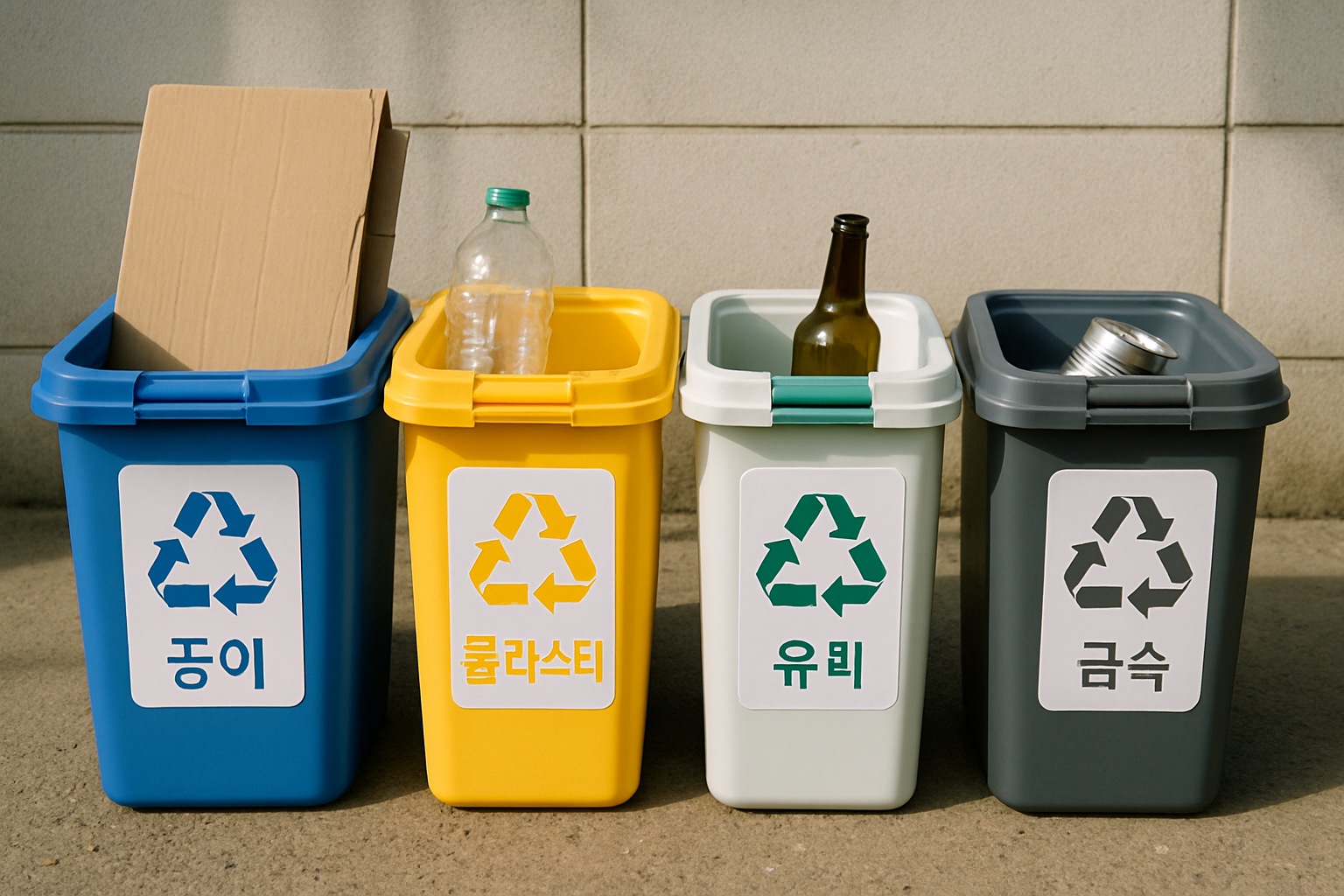
The bag was sitting right there on top of my building’s recycling bins, exactly where I’d left it twenty minutes earlier, except now it had a strip of blue tape across it and a Post-it note that just said, in Korean, “This is not separated. Please redo.” No name. No apology. Just a small act of quiet civic judgment, left for me and every neighbor walking past to see. I stood there in my socks and slides, holding my coffee, staring at a rejected bag of my own garbage like it was a returned exam.
That was maybe eight months into living in Korea, and I genuinely thought I’d gotten the hang of 분리수거 (bunli-sugeo, “separate collection”) by then. I had not. I want to be clear: nobody warns you how seriously this country takes its trash. Back home, garbage day meant one bin, maybe a second blue one for recycling if your city was feeling ambitious, and nobody was checking your work. Here, someone is always checking your work.
The System Nobody Explains to You on Day One
Korea’s waste system runs on a principle called 종량제 (jongnyangje), which translates roughly to “volume-based system,” though English-language guides usually just call it “pay-as-you-throw.” The logic is simple and, honestly, kind of brilliant: instead of paying a flat garbage fee buried in your management costs, you pay by how much trash you actually produce. And the way they enforce that is through the now-infamous 종량제 봉투 (jongnyangje bongtu) — the designated trash bags.
You cannot just put your general household waste out in any bag you like. It has to be one of these officially licensed bags, sold at every corner convenience store and supermarket, color-coded and printed with your specific district’s name, because each of Korea’s roughly 3,500-plus local jurisdictions issues and prices its own. Try to use a bag from the wrong neighborhood and it will, in fact, get rejected. A 20-liter bag typically runs somewhere in the ballpark of 500 to 600 won, and the tiny 2- or 3-liter bags you’d use for a studio apartment cost next to nothing, maybe 150 to 200 won. It sounds trivial, but multiply it out over a month, over a family, and you start doing the math on every takeout container before you buy it. That’s the point. The system was introduced back in 1995, and it’s a big reason Korea now recycles somewhere north of 60% of its waste, which is genuinely one of the best rates in the world.
Then There’s Food Waste, Which Is Its Own Battle
General trash — the stuff that actually goes in the jongnyangje bag — is supposed to be the leftover, non-recyclable, non-food scraps. Everything else gets its own category, and food waste, 음식물쓰레기 (eumsingmul sseuregi), is the one that broke me first. You cannot throw food scraps in with regular garbage. Ever. It goes into a separate bin system, and depending on your building, that means one of two things: either you buy special yellow food waste bags sized by the liter, similar to the general trash bags, or — increasingly common in newer apartment complexes — you use an RFID-chipped bin. You tap your resident card or apartment fob on a sensor, the lid pops open, you dump your scraps in, and a scale inside weighs exactly how much you added. At the end of the month, the fee shows up folded into your building’s management bill, usually somewhere around 100 to 200 won per kilogram. My kids think it’s basically a vending machine that takes garbage instead of giving snacks, which, fair.
The tricky part isn’t the paying, it’s the sorting logic, because “food waste” in Korea has a narrower definition than you’d assume. Onion skins, garlic peels, eggshells, walnut shells, tea bags, bones from meat or fish — none of that counts as food waste. It goes in general trash instead, because it doesn’t decompose the same way or isn’t suitable for the animal-feed and compost processing that Korea does with the food waste it collects. I did not know this. I threw an eggshell in the food waste bin for probably four months before someone gently corrected me. Nobody had told me. Nobody thinks to tell you, because everyone who grew up here just absorbed it the way you absorb which side of the escalator to stand on.
Recycling Day Is Its Own Calendar Event
Then, separately from all of that, there’s 재활용 (jaehwal-yong), recycling — glass, plastic, paper, cans, styrofoam, vinyl. In most apartment complexes these don’t go out whenever you feel like it. There’s a schedule, often posted on a laminated sheet by the elevator, and it might mean plastics only go out on Tuesdays and Fridays, paper on Wednesdays, and so on, depending on your district’s pickup contract. You’re expected to rinse containers, remove lids and labels where you can, flatten boxes, and crucially, put a lot of it — plastic bottles, cans — into a mesh bag, one of those net sacks you can buy at the same convenience stores that sell the trash bags. The mesh lets whoever’s collecting see what’s inside without opening it, which honestly explains a lot about why sorting mistakes get spotted so fast. There’s nowhere to hide a mistake in a see-through net bag.
Getting Caught, and Getting Better
Back to the blue tape. What had happened, it turned out, was that I’d mixed a greasy pizza box in with clean paper recycling, and our building’s 경비 아저씨 (gyeongbi ajeossi, security guard) — who unofficially but very much actually manages the recycling area — had flagged it. I found him later that day sweeping near the bins and, in my broken Korean, tried to apologize. He wasn’t mad, really. He just launched into a two-minute tutorial, pointing at each bin, explaining what went where, speaking slowly like he’d done this speech for foreign residents a hundred times before, because he probably had. That guy taught me more practical Korean in ten minutes than a month of textbook study. I’ve since learned this is a very common Yijidaddy-adjacent rite of passage — every foreign parent I know here has a version of the rejected-bag story, usually starring a security guard or an older neighbor who takes trash sorting as seriously as a national exam.
Honestly, once it clicks, it becomes second nature fast, and there’s something almost satisfying about it once you’re not constantly failing. My kids now correct me before I make mistakes, which is its own special kind of humbling. My youngest holds up an eggshell like a tiny judge and says “not food waste, Appa,” and she’s right, and she’s six, and I am a grown adult who has lived in multiple countries and still needed a six-year-old to keep me honest about garbage.
FAQ: Trash Sorting in Korea, the Questions People Actually Ask
What actually happens if I sort my trash wrong?
In most cases, nothing dramatic happens legally to an individual on the first offense — you’re far more likely to get a sticky note, a rejected bag left sitting out, or a talking-to from a building security guard or apartment management office than an actual fine. That said, local governments can and do issue fines, sometimes up to around 300,000 won in serious or repeated cases, particularly for illegal dumping of unsorted waste or using the wrong district’s bags. For everyday residents, the real consequence is usually just social: your bag sits there unclaimed until you fix it.
How much do the designated trash bags actually cost, and where do I buy them?
You buy them at any convenience store or supermarket in your area — CU, GS25, Emart, wherever — and you have to buy the ones printed with your specific district’s name (구 or 시), because a bag from the next neighborhood over won’t be accepted. Prices vary by size and by district, but a small 3-liter bag might run under 200 won, while a large 20-liter bag is typically somewhere around 500-600 won. It’s genuinely one of the cheapest recurring expenses of living here, but it adds up as a habit-forming nudge to waste less.
Do I really need to rinse and separate everything, or is that overkill?
It’s not overkill, and it’s worth doing properly, because the recycling bins are usually communal and shared with your whole building, meaning your neighbors — and often that same watchful security guard — will see exactly what you contributed. Rinse containers, remove caps and labels where possible, flatten boxes, and remember that greasy items like pizza boxes or oily takeout containers generally can’t go in with clean paper or plastic recycling; they often need to go in general waste instead. It takes an extra thirty seconds per item and saves you the blue-tape experience entirely.
The bowl arrived with a fist-sized chunk of ice still floating in it, and I remember thinking, not for the first time, that someone in the kitchen had made a mistake. We had just finished a table full of galbi — the grill still ticking as it cooled, the last scraps of lettuce wilting in their basket, my father-in-law loosening his belt a notch and announcing, the way he announced it at the end of every meal like this, that it was time for naengmyeon. Not a suggestion. A verdict. The waitress was already walking over with four stainless bowls, condensation running down the sides, steam rising off the room-temperature air around them in a way that made the broth look like it belonged in a different season entirely.
That was my first real naengmyeon, eaten under duress, at a barbecue restaurant somewhere in Gyeonggi-do, on a July night so humid the napkins had gone soft in their holder. I did not, at that point, understand why anyone would want icy buckwheat noodles in beef broth after a meal of grilled pork belly. I do now. It took me a few summers, a fair amount of gentle mockery from my wife’s family, and one memorably wrong decision involving an entire spoonful of mustard, but I got there.
The Meal After the Meal
If you’ve never eaten Korean barbecue with a Korean family, there’s a rhythm to it you only learn by living through it a few times. The meat comes first — samgyeopsal, galbi, whatever the occasion calls for — grilled in batches, wrapped in lettuce or perilla leaves, dipped in ssamjang, washed down with soju poured by whoever is youngest at the table. And then, when everyone is full in that specific way where you swear you couldn’t eat another bite, someone orders naengmyeon anyway. It isn’t dessert, exactly. It isn’t really a separate meal either. It’s a kind of punctuation mark — a cold, clean, faintly sour palate reset that cuts through all that grilled fat sitting in your stomach. My mother-in-law calls it “wrapping up” the meal, and after enough summers I’ve come to agree that a barbecue dinner without it feels unfinished, like a sentence missing its period.
What I didn’t know back then — and what took some reading, and a lot of questions to my wife’s family, to piece together — is that naengmyeon has a long history that has almost nothing to do with summer at all. The dish is traced back to the Joseon era, documented in a nineteenth-century record of Korean seasonal customs, and it started life as a winter food in the northern regions of the peninsula, particularly around Pyongyang and Hamhung. Buckwheat noodles in an icy, tangy broth made from dongchimi — fermented radish water kimchi — were something northern households ate during the cold months, when the broth itself was essentially already refrigerated by the weather outside. It only became a summer dish, and only became widespread in South Korea, after the Korean War, when people who had fled the North brought their regional recipes south with them and opened restaurants to make a living. The dish adapted to its new home and its new season, and somewhere along the way it turned into the thing my father-in-law now orders automatically every time the grill goes cold.
Two Noodles, Two Cities
The first thing that confused me, honestly, was that “naengmyeon” isn’t really one dish — it’s a category, and the two most common versions are different enough that ordering the wrong one for your mood can genuinely ruin the moment. Mul-naengmyeon (물냉면), the “water” version, is what most people picture: thin, dark buckwheat-and-starch noodles sitting in a shallow lake of icy, faintly sweet-and-sour broth, usually beef-based or made with dongchimi, topped with a few slices of Korean pear, cucumber, a boiled egg, and sometimes a thin cut of cold beef brisket. This is the style associated with Pyongyang, and the noodles there traditionally lean more heavily on buckwheat, which gives them a looser, more crumbly bite and a subtler flavor than people expect.
Bibim-naengmyeon (비빔냉면), on the other hand, has no broth at all. The noodles — usually made mostly from potato or sweet potato starch, which makes them thinner, glassier, and much chewier than the Pyongyang style — are tossed table-side or in the kitchen with a fiery, sweet-and-sour gochujang sauce, sometimes crowned with a tangle of seasoned raw fish or squid. This is the Hamhung lineage, named for the northern port city where that style is said to have originated, and it is, in my experience, the version that separates the naengmyeon believers from the naengmyeon tourists. My brother-in-law orders it every single time and sweats through the whole bowl with visible satisfaction. I still can’t quite keep up with him.
Scissors, Vinegar, and Learning Not to Be American About It
The scissors were the second shock. The first time our waitress produced a pair of kitchen shears and started snipping directly into my bowl, I actually flinched — it felt like watching someone attack dinner with gardening tools. But naengmyeon noodles are long, elastic, and genuinely difficult to eat gracefully; pull one strand with your chopsticks and the whole tangled nest tends to come with it, flicking broth across the table in the process. Cutting the noodles into shorter, more manageable lengths a couple of times isn’t laziness — it’s basic table etiquette, and at most restaurants the server will simply ask if you’d like them cut before doing it for you. It’s worth knowing that traditionally, uncut noodles were considered symbolic — a long, unbroken strand was thought to represent long life — so some older diners still prefer to leave a portion whole out of that old superstition, even as they let the rest be trimmed for convenience.
Then there’s the vinegar and the mustard, sitting on the table in their own small bottles like a dare. My mistake, that first summer, was reaching for both immediately and dumping in far more than any reasonable person should. My father-in-law, without a word, just raised an eyebrow at my bowl and went back to his own. The polite approach, I eventually learned, is to taste the broth plain first — that’s how the kitchen intended it, and a good naengmyeon broth is deliberately a little understated so you can adjust it yourself. Only after a few bites do people add a small splash of sikcho, the vinegar, to brighten the broth, and a touch of gyeoja, the sharp yellow mustard, which hits you somewhere behind the nose rather than on the tongue. A little goes a long way. I know that now.
What Changed
I can’t point to the exact summer it happened, but at some point the icy shock of that first bite stopped registering as strange and started registering as relief. There’s something almost architectural about a good bowl of mul-naengmyeon after barbecue — the fat from the pork belly still coating your mouth, and then this clean, cold, faintly sweet broth arriving to reset everything. I’ve come to actually crave the ice chunk clinking against the side of the bowl, the snip of the scissors, the ritual of tasting it plain before I touch the vinegar. It’s not really about the noodles anymore, if I’m honest. It’s about sitting at a table that’s been fed and re-fed, with people who have spent years quietly teaching me, one raised eyebrow at a time, how to eat like I belong there.
FAQ
What’s the actual difference between mul-naengmyeon and bibim-naengmyeon?
Mul-naengmyeon (물냉면) is served in a cold, savory-sweet broth — usually beef stock, dongchimi radish-kimchi water, or a mix of the two — with thin buckwheat noodles. Bibim-naengmyeon (비빔냉면) has no broth; the noodles, typically made largely from starch rather than buckwheat, are tossed in a spicy-sweet gochujang sauce instead. If you want something cooling and mild, order mul. If you want heat and a workout for your sinuses, order bibim.
Why do restaurants cut the noodles with scissors?
Naengmyeon noodles are long and unusually elastic, which makes them genuinely hard to eat with chopsticks alone — pulling one strand tends to drag the whole tangle up out of the broth. Servers cut them a couple of times with kitchen shears purely for practicality, though some diners still ask to leave a portion uncut, since long, unbroken noodles were traditionally seen as a symbol of long life.
How much vinegar and mustard should I actually add?
Start with none. Take a few bites of the broth and noodles as served, since the kitchen usually balances the broth to be enjoyed both plain and doctored. After that, add sikcho (vinegar) a small splash at a time to brighten the broth, and gyeoja (mustard) sparingly — a little on your chopstick tip is plenty, since it’s meant to be a subtle sharpness in the background, not the main flavor.
It was almost midnight, the apartment was thick with the kind of July heat that makes the walls feel warm to the touch, and my mother-in-law was standing in the doorway of our bedroom with her hand already on the fan’s power button. My daughter had just fallen asleep after forty-five minutes of fighting it, sweat matting her hair to her forehead, and I was one deep breath away from doing the same. Then the fan clicked off, the room went dead silent except for the hum of the refrigerator down the hall, and my mother-in-law said, in the calm voice of someone stating an obvious fact, that we couldn’t leave it running all night with the door closed. “It’s dangerous,” she said. I remember blinking at her, genuinely unsure if this was a joke.
It was not a joke. She set the timer for two hours, patted my arm like she’d just saved my life, and went back to bed. I lay there in the reheating dark, sweat pooling at the small of my back, completely baffled. A fan. She was worried about a fan.
That was my introduction to 선풍기 사망설 — seonpunggi samangseol, which translates roughly to “electric fan death theory” or “fan death rumor” — the belief, once nearly universal in Korea, that sleeping in a sealed room with an electric fan running all night could kill you. Not just make you uncomfortable or dry out your throat. Kill you. Depending on who’s telling the story, the mechanism varies: the fan supposedly “chops up” the oxygen in the room until you suffocate, or it lowers your body temperature to the point of hypothermia, or it creates some kind of vacuum effect that stops your lungs from working properly. None of these explanations agree with each other, and none of them agree with basic physics, but for decades that didn’t seem to matter much.
I spent a good chunk of that summer half-annoyed and half-fascinated, which is usually my sign to go digging. What I found was a lot stranger and older than I expected.
Where the Fear Actually Comes From
The suspicion of electric fans in Korea isn’t some quirky internet-era myth — it goes back nearly a century. Newspaper reports from the 1920s and 1930s, back when electric fans were a novel imported technology, apparently carried warnings about the dangers of running them in an enclosed space: nausea, facial paralysis, even asphyxiation. Nobody today can point to a clean, single origin story for the belief, but it’s clear it didn’t spring up overnight in the 2000s the way a lot of foreigners assume when they first hear about it. It’s old.
The myth really took hold in the 1970s, and this is where one of my favorite pieces of speculation comes in. There’s a persistent theory that the South Korean government quietly encouraged fan death warnings as a form of energy-conservation messaging during the oil crisis of that decade — scare people into not running appliances all night, and you cut electricity use. It’s a great story, and it may have added fuel to the fire, but the belief clearly predates the 1970s energy crisis by decades, so the government-propaganda explanation is probably more folklore-about-folklore than the real root cause. Either way, by the latter half of the twentieth century, fan death had become part of the cultural furniture — something doctors, parents, newspaper editors, and even fan manufacturers treated as basically settled fact.
Which brings me to the timer.
The Timer Is the Whole Story
If you’ve ever bought or used an electric fan in Korea, you’ve probably noticed something: nearly all of them, even cheap ones, have a built-in timer dial or button, usually letting you set the fan to shut off after one, two, or four hours. In most other countries this is a somewhat unusual feature. In Korea it’s close to standard equipment, and it exists largely because of fan death anxiety. Manufacturers built a safety valve into the product itself so that customers who believed an all-night fan was a genuine hazard could still enjoy some cool air without, in their minds, risking their lives. It’s a wonderfully Korean solution — instead of arguing everyone out of a widespread cultural belief, just design around it.
I actually think the timer is the single most concrete, undeniable piece of evidence that this myth was once taken seriously at a mass-market level. Nobody engineers a whole product category around a joke.
What the Science Actually Says
Here’s the part that matters most, and I want to be straightforward about it: there is no verified mechanism by which a running electric fan in a closed room can cause death. Fans don’t consume oxygen, they don’t create carbon dioxide, and a closed bedroom door isn’t remotely airtight enough to cause suffocation even if fans did somehow use up air, which they don’t. The hypothermia theory doesn’t hold up either — a fan moving air around a room at typical Korean summer indoor temperatures isn’t going to drop your core body temperature to a dangerous level while you sleep under a blanket. Doctors, physicists, and fact-checking organizations have picked this myth apart repeatedly over the years, and it consistently fails to survive contact with actual evidence. Whatever isolated deaths were historically attributed to “fan death” almost certainly had other causes — pre-existing health conditions, alcohol, extreme heat exposure before sleep, or simple misdiagnosis in an era when death investigation wasn’t especially rigorous.
What’s genuinely interesting to me now, as someone raising kids here, is how the belief is fading — but unevenly. Ask a lot of people in their sixties and seventies and you’ll still get a firm, sincere warning about closed-room fans. Ask someone in their twenties and you’re more likely to get a shrug, or an amused “my grandmother still says that.” A decade-plus of internet fact-checking, viral debunking videos, and international media coverage poking fun at the myth has done more to erode it among younger Koreans than any single scientific explanation ever could. But the habit — the timer, the cracked window, the instinct to not let a fan run all night — persists even among people who will tell you outright that they don’t actually believe it can kill anyone. It’s become more ritual than conviction, which is a pattern you see with a lot of old folk beliefs once they stop being taken literally but haven’t quite disappeared either.
So What Should You Actually Worry About?
This is the question I eventually landed on, and it’s the one worth taking seriously. Korean summers are brutal — long stretches of high heat combined with suffocating humidity, sometimes with nighttime temperatures that barely dip enough to give your body a break. Heatstroke and other heat-related illnesses are a real, well-documented, medically serious risk here every summer, and public health authorities track the numbers closely because they’re not small. The actual danger in a Korean summer isn’t a fan spinning quietly in the corner of a sealed bedroom. It’s dehydration, heat exhaustion, and heatstroke, particularly for small children, elderly people, and anyone spending long hours outdoors or in un-air-conditioned spaces during the hottest parts of the day.
These days I still set the timer. Partly out of habit, partly because it genuinely is nice to have the fan power down once the room has cooled and everyone’s asleep, and partly, if I’m honest, because it makes my mother-in-law happy and costs me absolutely nothing to do. I’ve just stopped believing it’s the thing standing between my kids and a medical emergency. The window stays closed, the fan runs, the timer clicks off around 2 a.m., and everybody wakes up fine — same as they would have anyway.
Frequently Asked Questions
Is fan death real?
No credible medical or scientific evidence supports the idea that a running electric fan in a closed room can cause suffocation or fatal hypothermia. Fans don’t remove oxygen from a room or generate carbon dioxide, and typical indoor conditions don’t get cold enough for a fan to induce dangerous hypothermia while someone sleeps under a blanket. The belief is a long-standing Korean folk myth, not a documented medical phenomenon.
Why do Korean fans have timers?
Built-in shutoff timers became a standard feature on Korean electric fans largely as a response to fan death anxiety, giving anxious users a way to enjoy a fan overnight without leaving it running the entire time. It’s less a safety necessity and more a product design choice shaped by decades of cultural belief.
What should I actually worry about in a Korean summer?
Heat itself. Korean summers bring intense heat and humidity, and heatstroke, heat exhaustion, and dehydration are genuine, well-documented seasonal health risks, especially for young children and elderly people. Staying hydrated, avoiding prolonged exposure to peak afternoon heat, using air conditioning or shade when possible, and watching for symptoms like dizziness, confusion, or excessive sweating followed by an abrupt stop in sweating are far more useful precautions than worrying about an overnight fan. If you or someone with you shows signs of heat illness, treat it as a medical situation and seek appropriate care rather than trying to diagnose it yourself.
The woman behind the desk at our neighborhood community center tapped her pen against the registration form and asked, not unkindly, “So is he four or five?” I looked down at my son, who was standing on his toes trying to see what was written about him, and I genuinely did not know how to answer. He was born in November. It was February. On paper, in my head, in every birthday candle we’d ever blown out, he was four. But the woman was already halfway through writing “5” in the box for the taekwondo class roster, because in the version of Korea she’d grown up in, that was simply correct.
This is the moment every foreign parent in Korea eventually has, usually while holding a clipboard. You think you’ve got the age thing sorted — you’ve read a blog post, maybe a friend explained it once at a barbecue — and then you’re standing in a fluorescent-lit office with a stranger who needs a number right now, and the two systems in your head start arguing with each other.
Two Years Old on Day One
Here’s the version I eventually had explained to me, patiently, by my mother-in-law, who has zero patience for most things but infinite patience for this one topic. In the traditional Korean counting method — 세는나이, “counting age” — a baby is considered one year old the moment they’re born. Not zero. One. The nine months in the womb count as the first year of life, so you arrive already a year into existence. Then, instead of aging up on your actual birthday, everyone in the entire country ages up together on January 1st. It doesn’t matter if you were born on January 2nd of last year or December 30th of last year — when the calendar flips, you both gain a year on the same morning.
Which means a baby born on December 31st is one year old on the day of birth, and two years old the very next day. Forty-eight hours old, and already in what looks, on paper, like their toddler stage. It sounds like a joke the first time you hear it. It is not a joke. It is how birth certificates, family conversations, and generations of Korean grandmothers have tracked age for centuries.
Compare that to international age — what most of the world, including where I grew up, just calls “age.” You’re zero when you’re born, and you tick up one year on your actual birthday, whenever that happens to fall. Simple, linear, boring in the best possible way.
For most of modern Korean history, though, there was actually a third system quietly running in the background too — 연나이, or “year age,” which counts from birth year but changes on New Year’s Day rather than on the birthday, without the “born at one” head start. Three different ways to answer the question “how old are you,” all technically in use at the same time, depending on who was asking and why. I used to think I was just bad at Korean. Turns out even Koreans found this genuinely confusing.
The Law That Tried to Fix It
The confusion got serious enough that the government eventually stepped in. On June 28, 2023, South Korea’s “Age Standardization Act” (revisions to the Civil Act and the General Act on Public Administration) officially took effect, requiring international age to be used as the default across nearly all legal, medical, and administrative contexts. Overnight, in a manner of speaking, tens of millions of people became one or two years younger on paper — not because anything about them changed, but because the ruler measuring them did.
The stated goal was to cut down on exactly the kind of confusion I was standing in the middle of: contracts that specified an age without clarifying which system, insurance forms, medical dosage charts, pension eligibility, all the quiet places where a one-or-two-year discrepancy could actually matter. Lawmakers had been debating it for years, and the pandemic reportedly nudged things along, since vaccine eligibility by age had turned the whole issue from an academic curiosity into a logistical headache.
What the law did not do, interestingly, is erase every exception. A handful of specific areas still run on that third system, 연나이 — counting age based on birth year, but without international age’s day-of-birthday precision. School enrollment for daycare, kindergarten, and elementary school still follows this cutoff-based logic, so classroom cohorts are still built the way they always were. Military service age is calculated the same way. And the drinking and smoking age is pegged to the calendar year you turn 19, not the actual date — meaning a teenager can legally buy a beer on January 1st of the year they turn 19, months before their actual birthday, because the law counts the whole year, not the day.
The Registration Desk, Round Two
None of that history was rushing through my head at the community center, obviously. What I said, out loud, in my clumsy Korean, was something like “he is four years old by birthday age,” which earned me a look somewhere between amused and mildly suspicious. The staff member paused, actually double-checked something on her computer — probably confirming the new international-age default applied to enrollment here — and quietly changed the “5” to a “4.” No further discussion needed. The system had already been fixed above her head, by lawmakers in Seoul two years earlier; she just hadn’t fully caught up to it in daily habit yet, and honestly, neither had I.
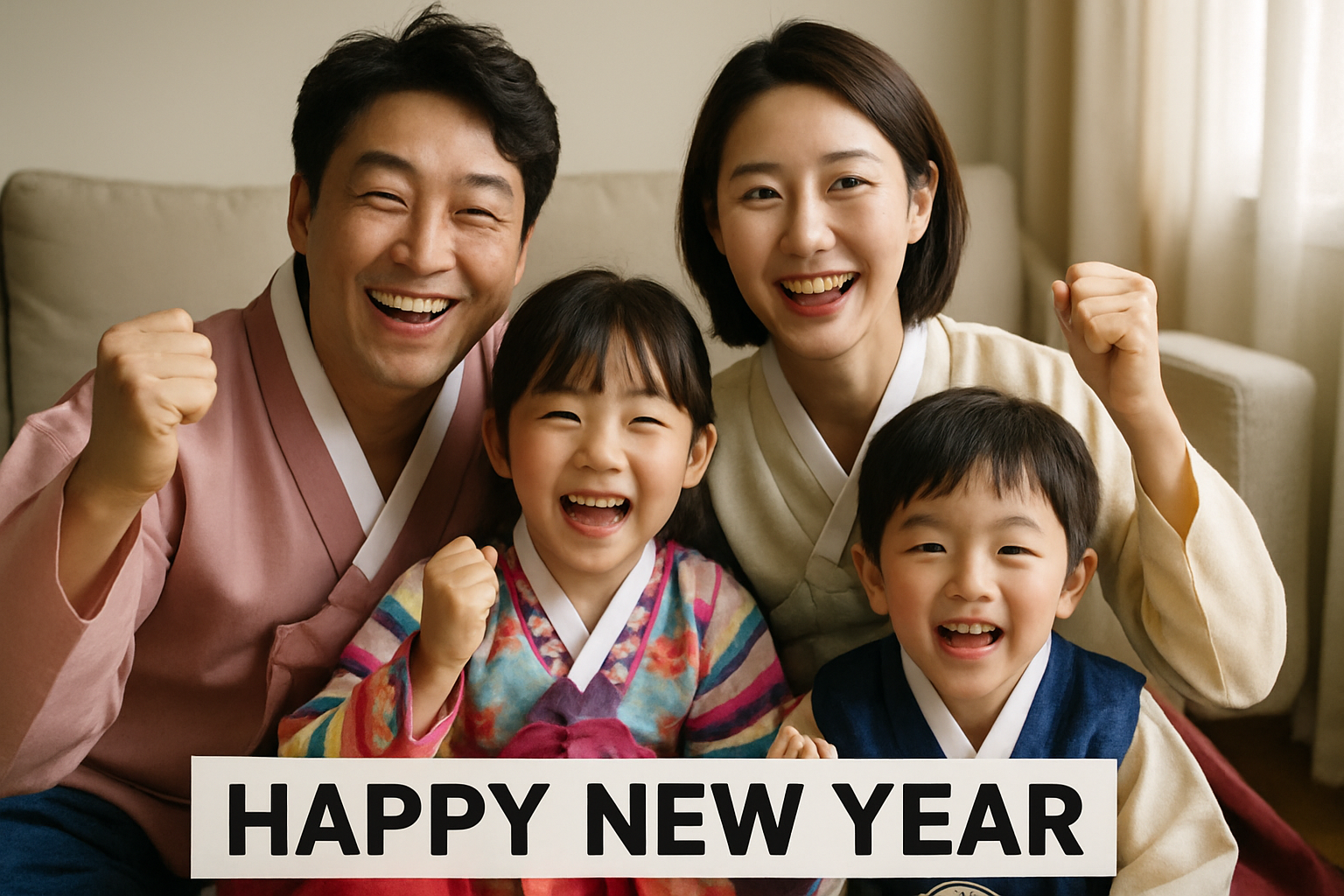
That’s the part nobody tells you before you move here: the law can change cleanly, in a single afternoon, with a bill number and an effective date. Habits don’t work that way. A few months after that registration-desk moment, we were at a family gathering for the New Year, and my father-in-law asked my daughter how old she was. She answered correctly, by international age, the way her preschool now records it. He nodded, did some visible mental math, and then said, mostly to himself, “so that makes her six, really,” reverting instantly to the old counting method out of what seemed like pure muscle memory. Nobody corrected him. Nobody needed to. Everyone at the table understood exactly which “six” he meant, and moved on to the food.
That’s when it clicked for me that the law and the culture were now operating on slightly different timelines, and both of them were fine with that. The paperwork had modernized. The dinner table hadn’t, not entirely, and probably won’t for another generation or two. My kids will likely grow up bilingual not just in language but in age math — knowing their real number for school forms and passports, and knowing the other number too, the one their grandparents will keep using out of habit, affection, and about sixty years of not thinking about it any other way.
A Few Questions I Get Asked Constantly
Do Koreans still use Korean age at all, or is it basically gone now?
It’s gone from almost all official use, but very much alive in daily speech. Ask a Korean stranger their age in casual conversation and there’s a real chance they’ll still answer with the old counting-age number, or clarify which one they mean. It’s less a legal question at this point and more a habit of a certain generation, similar to how some people still give directions in miles even after their country switched to kilometers.
So when does the 2023 law actually apply, and when doesn’t it?
It applies as the default for contracts, medical records, most government paperwork, insurance, and general legal age references — anywhere the law doesn’t specifically say otherwise, international age is now assumed. It does not apply to school-entry cutoffs, mandatory military service age, or the legal drinking and smoking age, all of which still run on the older “counting age by birth year” method for practical, administrative reasons rather than tradition.
If my child was born in Korea, which age goes on the official birth record now?
International age — counted from zero at birth, adding a year on the actual birthday. That’s the number that will follow them through passports, school registration paperwork, and most legal documents going forward, even if grandma keeps a separate number in her head for New Year’s toasts.
I still catch myself doing the mental conversion sometimes, especially around the New Year, when half the country seems to age up in conversation even though nothing changed on the calendar of their actual birth. It’s a small thing, in the end — a couple of digits, a habit of speech — but it’s one of those details that reminds me I’m raising kids inside a culture that’s still gently negotiating with its own past, one form, one dinner table, one patient correction at a time.
It’s 11:52 p.m. on a Tuesday, and my seven-year-old is standing in the hallway in dinosaur pajamas telling me, with total conviction, that she “just remembered” she’s hungry. Not for anything in our kitchen. Specifically for the tuna mayo triangle kimbap from the CU on the corner, the one with the orange awning that never turns its lights off. My three-year-old, who was supposedly asleep twenty minutes ago, hears the word “pyeonuijeom” — convenience store — through his bedroom door and appears in the hallway like he’d been summoned. So we go. Slippers, no socks, a five-minute walk under streetlights, and nobody in my house thinks this is a strange way to spend a weeknight.
This is maybe the single most Korean thing I do as a parent, and it took me a solid year of living here to stop feeling like I was doing something wrong. Back where I grew up, taking two small kids out after 11 p.m. for snacks would have required a car, a plan, and probably a small internal debate about whether it was safe. Here it barely counts as a decision. It’s just Tuesday.
The Store as Living Room
Korea has something like 54,000 convenience stores, which works out to roughly one for every thousand people, and the big four — CU, GS25, 7-Eleven Korea, and Emart24 — are stacked on top of each other so densely that in my neighborhood I can see two different ones from my apartment window. What makes them different from a gas station mart back home isn’t really the density, though. It’s that nobody treats them as a last resort. They’re a destination.
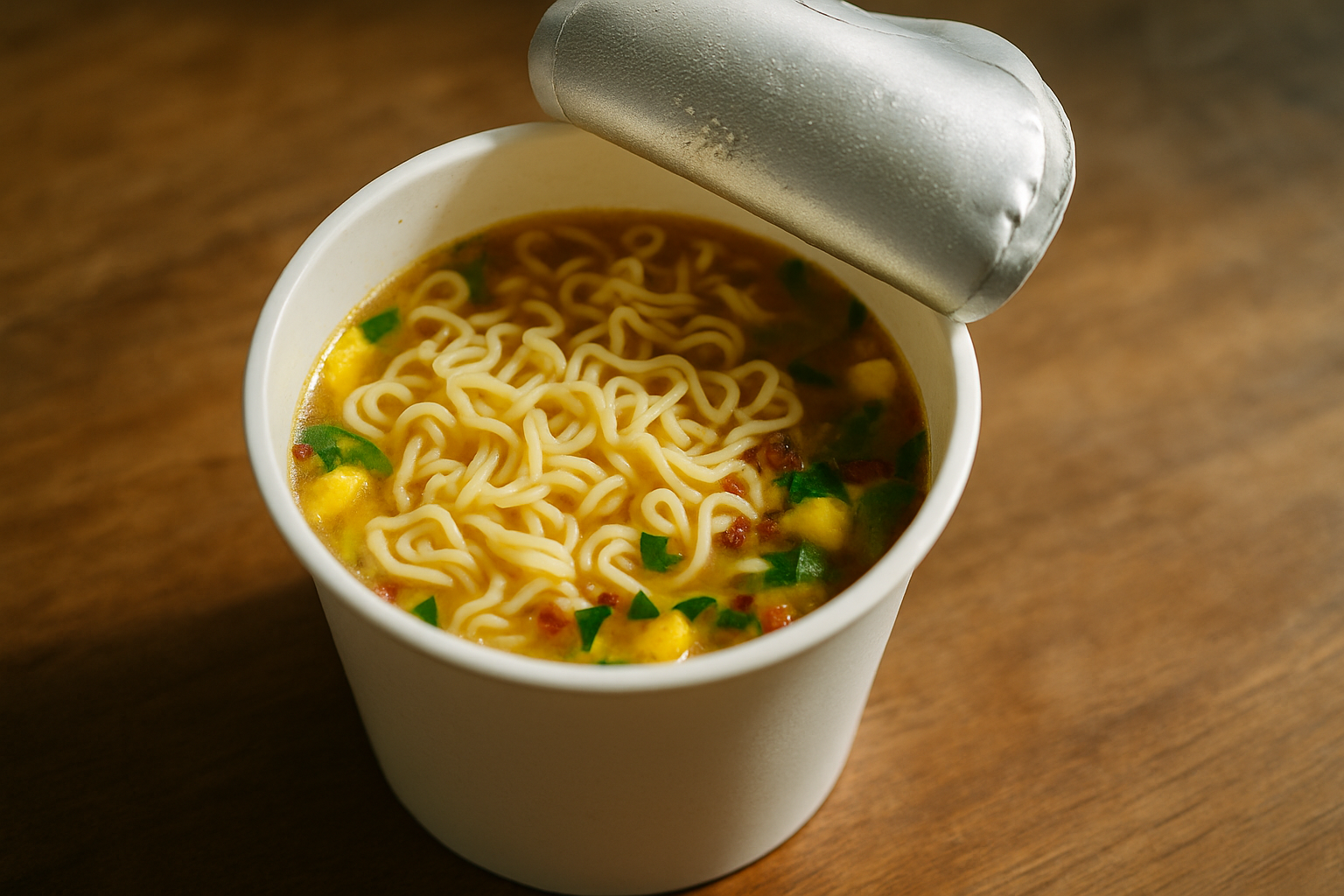
Outside almost every CU and GS25 you’ll find the same setup: a couple of white or green plastic tables, plastic stools bolted or chained down, sometimes a little awning, sometimes just open sky. Those tables aren’t overflow seating for people who couldn’t find a real restaurant. They’re the whole point. On any given night you’ll see high schoolers splitting a bag of honey butter chips, a couple of guys in suits with a can of Cass and some dried squid, an ajumma eating a triangle kimbap standing up because she’s in a hurry, and — sometimes — me, watching my kids methodically destroy a bag of Homerun Ball chocolate puffs while a cup of ramyeon steams on the table between us.
The Ritual of the Cup Ramyeon
If you’ve never done this, here’s how it works. You grab a cup of instant ramyeon — Shin Ramyun, Jin Ramen, Ottogi’s Jin Jjajang if you’re feeling ambitious — from the shelf, usually somewhere between 1,500 and 3,000 won. You peel back the lid partway. Near the register, or sometimes tucked into a corner by the window seats, there’s a hot water dispenser that runs at a full rolling boil all day and night. You fill the cup to the little line, press the lid back down, and set a timer. No fee, no asking permission, no cashier hovering. It’s an honor-system ritual that every single Korean person over the age of six seems to know by heart, and it took me embarrassingly long to learn the etiquette of not walking away from the machine while it fills.
Three minutes later — my son insists on counting down out loud, badly, starting from whatever number he feels like — you’ve got dinner, or a midnight snack, or breakfast if you’re the kind of person who’s still out at that hour. My daughter has strong opinions about which broth is “too spicy for babies” (her brother) and which one is acceptable, and watching her negotiate this with the seriousness of a UN delegate is honestly one of my favorite parts of the week.
Triangle Kimbap: The Real MVP
If cup ramyeon is the ritual, samgak gimbap — triangle kimbap — is the reason we actually leave the apartment. It’s a triangle of rice wrapped around a filling, sealed in a sheet of dried seaweed, and packaged in this ingenious plastic wrapper with numbered tabs that you pull in order so the seaweed stays crisp instead of going soggy against the rice. Tuna mayo is the classic, the one CU and GS25 both do well, though CU’s tends to lean a little richer and spicier in its lineup. My daughter is a spicy-bulgogi loyalist. My son mostly eats the rice and hands me the rest, which, fine, I’ll take it.
It costs about 1,200 to 1,800 won — genuinely less than a dollar and a half — and it’s become the thing my kids request the way American kids might ask for a bag of goldfish crackers. There’s something almost absurd about how good and how cheap it is, this perfectly engineered little rice triangle sitting under fluorescent lights next to the energy drinks.
What’s Actually Different From Back Home
The food is fun, but honestly, the thing that still gets me is the safety of it. Not just the absence of danger — the total absence of the feeling of danger. Back home, a late-night convenience store run with two young kids would have meant driving, parking under a light, and being at least a little alert walking from the car to the door. Here I don’t think about any of that. We walk. There are grandmothers out with their dogs at midnight. There are teenagers walking home from hagwon — private academy — at 10 or 11 p.m. by themselves, backpacks bouncing, completely unremarkable. CCTV cameras are everywhere, the streets are well lit, and the culture around kids being out and independent is just fundamentally different from what I grew up with.
I’m not naive enough to say nothing bad ever happens here — no place is that. But the baseline sense of “is this normal” has completely recalibrated for me. A dad and two small kids in pajamas at a convenience store at midnight doesn’t get a second look from anyone. It’s not brave. It’s not even notable. It’s just what a Tuesday looks like for a lot of families here, and honestly, that ordinariness is the thing I didn’t expect to move me as much as it has.
The Things I Never Knew I Needed
Beyond the ramyeon and the kimbap, the convenience store has become our late-night pharmacy, our emergency milk run, our “we’re out of eggs” fix, and our reward system all rolled into one. Banana milk in the yellow bottle. Hodu-gwaja walnut cakes when the machine version is stocked. Melona bars in summer. A rotisserie hot dog from the warmer by the register when my son is in a mood and needs bribing. GS25 tends to win points in our house for its collaboration snacks — they’re constantly doing tie-ins with shows and characters my kids somehow already know about — while 7-Eleven Korea has its own rotating lineup that barely resembles the American chain sharing its name. Emart24 is the one nearest my in-laws, so it comes with its own set of family associations now.
What strikes me most, writing this as Yijidaddy and thinking back over almost a decade of these midnight runs, is how much a convenience store can end up meaning to a family without ever being planned as a “thing.” It just became one, the way small rituals do — one late-night craving at a time, one plastic table at a time.
Frequently Asked Questions
Is it really safe to bring kids out at midnight in Korea?
Yes, and this is one of the most consistent things visitors notice. Korea has a low violent crime rate, extensive CCTV coverage in public areas, well-lit streets even in residential neighborhoods, and a strong cultural norm of children and teens moving around independently, including at night. It’s genuinely common to see kids walking home from evening academy classes alone. That said, use the same basic common sense you would anywhere — stick to lit main streets, and use your judgment as a parent about your own child’s age and comfort level.
What should I try at a Korean convenience store?
Start with a triangle kimbap (samgak gimbap) — tuna mayo is the reliable classic — and a cup of Shin Ramyun or Jin Ramen from the free hot water dispenser. Add a banana milk, and if you’re there in summer, a Melona bar. CU is known for its hot snack bar and bold triangle kimbap flavors, GS25 for creative collaboration snacks, and Emart24 and 7-Eleven Korea each have their own private-label lineups worth digging through.
Do you have to pay to use the hot water machine for cup noodles?
No. As long as you’ve bought the cup ramyeon at that store, using the hot water dispenser is free and expected — it’s built into the shopping experience, not an extra service. Just don’t walk away and leave the machine running, and rinse or dispose of your cup at the provided station when you’re done, since the outdoor tables are shared space.
The first time I stood in a bingsu line, it was ninety minutes long, wrapped around a corner in Seongsu-dong, and I nearly walked away twice. My wife stopped me both times. “It’s worth it,” she said, the same thing she’d said about every line I’d ever complained about since I moved to Korea. She was right, obviously, the way she almost always is about this stuff.
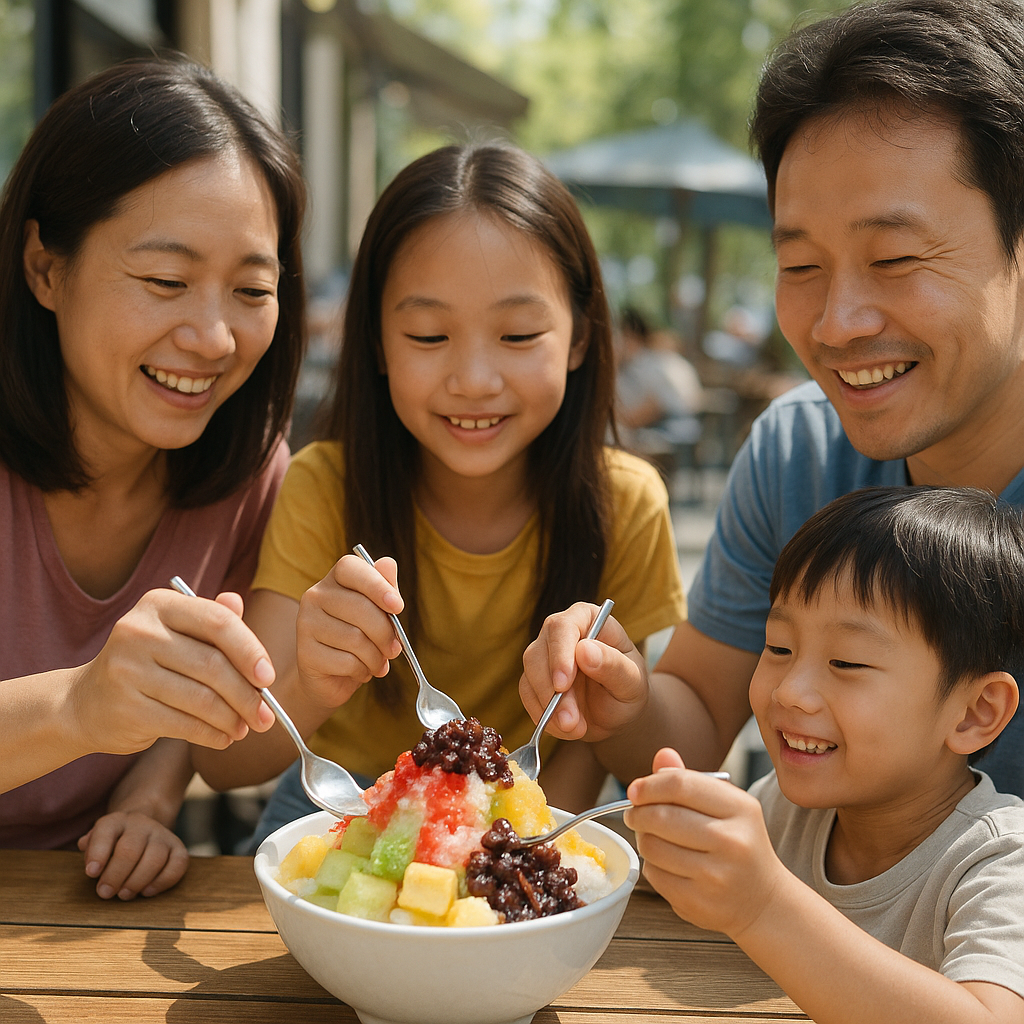
Patbingsu — shaved ice topped with sweet red beans — has been Korea’s answer to brutal summer heat since long before air conditioning existed. What surprised me once I dug into it was how far back it actually goes. During the Joseon dynasty, ice was such a rare luxury that it was harvested from the Han River in winter and stored in massive underground ice houses — Seobinggo and Dongbinggo, names that are still on the map in Yongsan today — reserved for royalty. It wasn’t until hand-cranked ice shavers showed up during the Japanese colonial period that bingsu made its way onto ordinary streets, and red beans didn’t become the standard topping until the 1970s.
A mountain taller than my daughter’s head
None of that history mattered to my kids the first time they had it. What mattered was the mountain of shaved ice arriving at the table, taller than my daughter’s head, with mango cubes sliding down the sides like it was some kind of edible landslide. She was maybe three, and she cried — actual tears — when the bowl was empty, which is a level of grief I hadn’t previously associated with dessert.
Our unofficial summer ritual
Now it’s a full-blown summer ritual for us. Every year around the time the cicadas start up outside our window, we pick one new bingsu place to try, usually somewhere my wife found on a map app with a suspiciously specific pin drop. Last summer it was a place in Ikseon-dong doing a version with injeolmi rice cake dust and roasted soybean powder that my son, who normally rejects anything that isn’t mango-flavored, finished by himself.
What the waiting actually teaches
What I’ve come to appreciate isn’t really the dessert — it’s the waiting. Korean bingsu culture has this built-in patience test where you show up, you queue, sometimes for over an hour in July heat that makes the wait itself feel like a small punishment, and somehow the payoff still lands. My kids have learned to wait in that line without the meltdown that used to happen at year one. They know what’s coming. I think that’s the real lesson bingsu ended up teaching this family, more than any lecture I’ve given about patience actually stuck.
FAQ
What’s the difference between patbingsu and regular bingsu?
“Bingsu” is the general term for Korean shaved ice desserts, while “patbingsu” specifically refers to the version topped with sweetened red beans (pat), the most traditional and widely recognized style. Modern cafes now offer dozens of variations — mango, injeolmi, cheese, even coffee bingsu — but patbingsu remains the classic.
Why is Korean shaved ice so much finer than shaved ice elsewhere?
Korean bingsu machines typically shave ice made from frozen milk rather than water, producing a snow-like texture that melts almost instantly on the tongue. This is a big part of why bingsu feels different from kakigori or other shaved ice styles that use water-based ice blocks.
Is bingsu only a summer food in Korea?
Traditionally yes, tied closely to the hottest months, but many cafes now serve it year-round. That said, the cultural moment for bingsu is still overwhelmingly summer — cafes will often only put certain seasonal bingsu flavors on the menu between June and September.
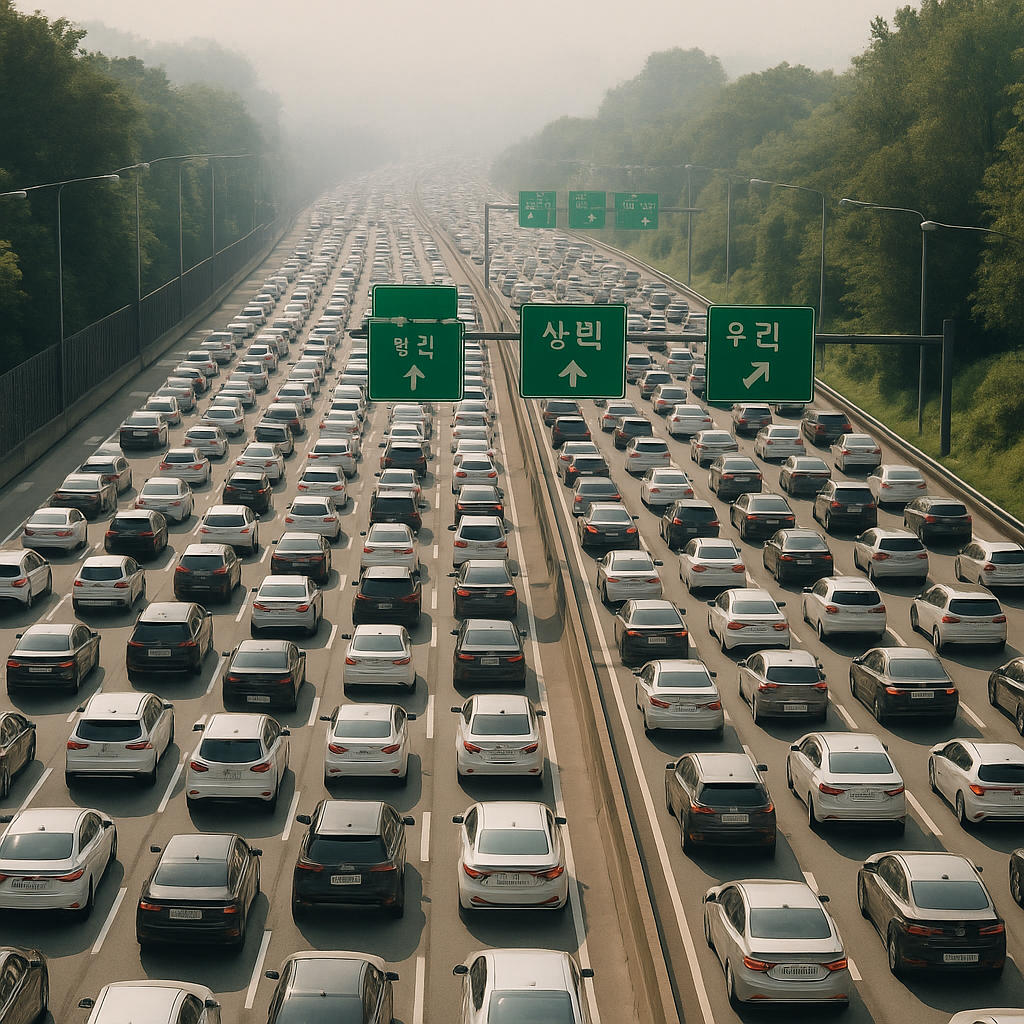
My father-in-law called me at 6:40 in the morning on the first Saturday of August, already sitting in traffic on the Gyeongbu Expressway, and the first thing he said wasn’t hello. It was “still not moving.” He’d left Seoul at 5 a.m. to beat the rush to Busan, a drive that takes four hours on a normal Tuesday. He arrived at 11:30. Somewhere behind him, I found out later, another 5.57 million vehicles were doing the exact same thing that day across the country’s highway network. He wasn’t unlucky. He was on schedule, by Korean summer standards.
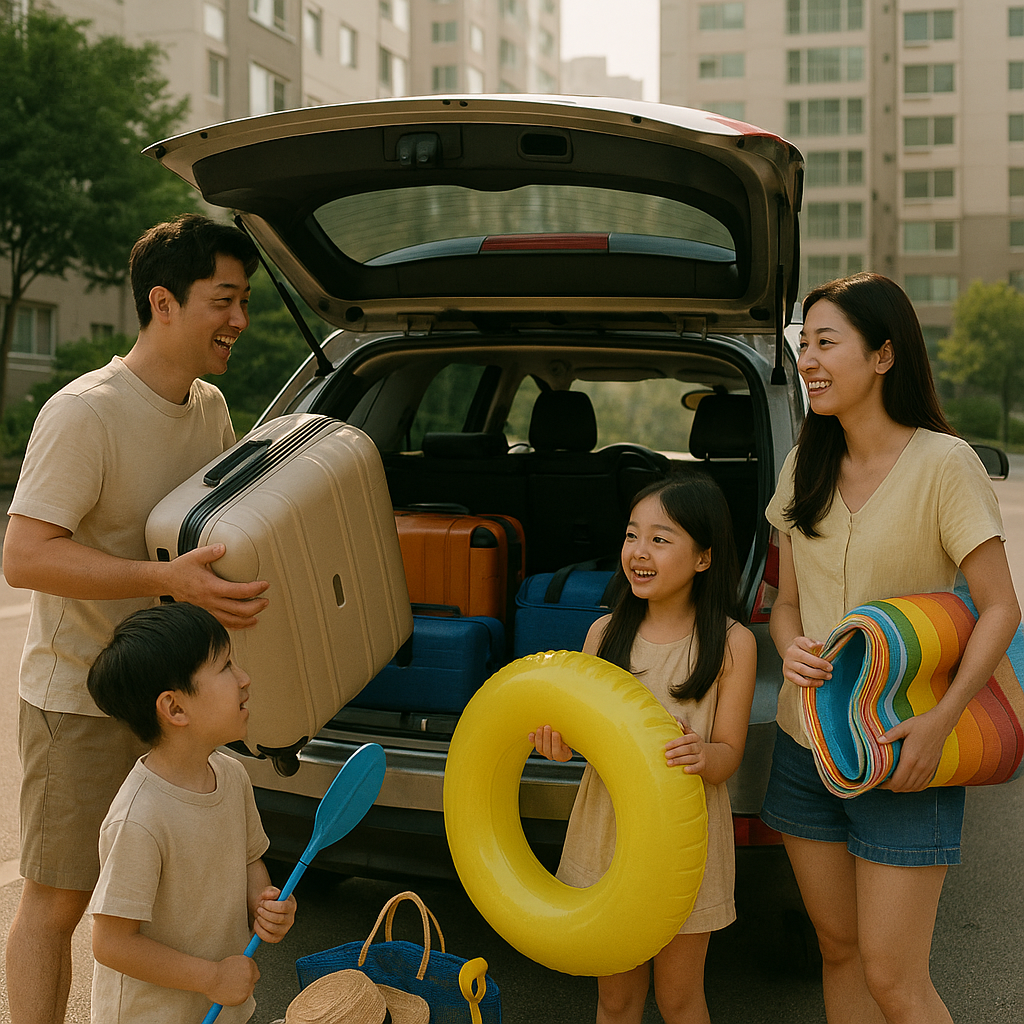
This is the week I still haven’t gotten used to, even after years of living here, married into a Korean family, raising two kids who now correct my Korean pronunciation. Somewhere in the last week of July or the first two weeks of August, a huge share of the country simply stops at the same time. Factories go dark. Small restaurants near our apartment tape handwritten signs to their doors — 여름휴가 (summer vacation), back on such-and-such date. Hagwons close. My wife’s office empties out. It isn’t a national holiday in the way Chuseok or Lunar New Year is marked on the calendar with a red number. It’s something looser and, in its own way, stranger: an informal, deeply synchronized pause that almost everyone seems to take during the same seven-to-ten-day window, as if the whole country agreed on a schedule nobody actually wrote down.
The Gyeongbu and Yeongdong expressways fill up fast once the peak vacation week starts.
Why everyone picks the same week
The mechanics of it aren’t mysterious once you look at how Korean vacation time actually works. Surveys of Korean companies this year found that about 67.5% scheduled their break for early August, with another 23.8% choosing late July — meaning roughly nine in ten businesses cluster into essentially the same fifteen-day band. The average paid summer vacation length companies offer is just 3.8 days, longer at bigger firms with 300+ employees, shorter at small ones. Compare that to the two-to-four-week August breaks common in parts of Europe, and you start to understand why Korea’s version feels less like a slow, staggered exhale and more like everyone holding their breath together and letting go at once.
There’s a cultural layer under the calendar one too. Vacation here still carries a whiff of guilt in a lot of workplaces. In one survey, close to a fifth of workers said they were flatly not planning to take a summer trip at all, worried about how a request for leave might read to a manager, or about the pile of work waiting when they got back — answering the odd Slack message from the beach is, unofficially, viewed as a plus in some year-end reviews, which tells you something about the pressure. So when the whole team, the whole factory floor, the whole department takes the same fixed week off together, nobody has to be the one employee who’s “always gone.” It spreads the guilt evenly, the way it spreads the traffic unevenly.
What that week actually looks like from a car seat
We tried to book a family pension near Gangneung two summers ago, the kind of small guesthouse with a shared barbecue pit and rooms named after flowers instead of numbers. I called in mid-June, feeling proud of myself for being so far ahead. Fully booked, the owner told me, cheerfully, for the entire first week of August — had been for a month. I ended up booking a spot forty minutes further inland, in a town I’d never heard of, and we still hit the kind of Yeongdong Expressway backup where my daughter finished an entire coloring book and asked, not unreasonably, if we were “just going to live in the car now.” Seoul to Gangneung, a two-hour-forty-five-minute drive most of the year, was running four and a half to five hours that weekend. Seoul to Busan, normally around four hours, was stretching past five and even six.
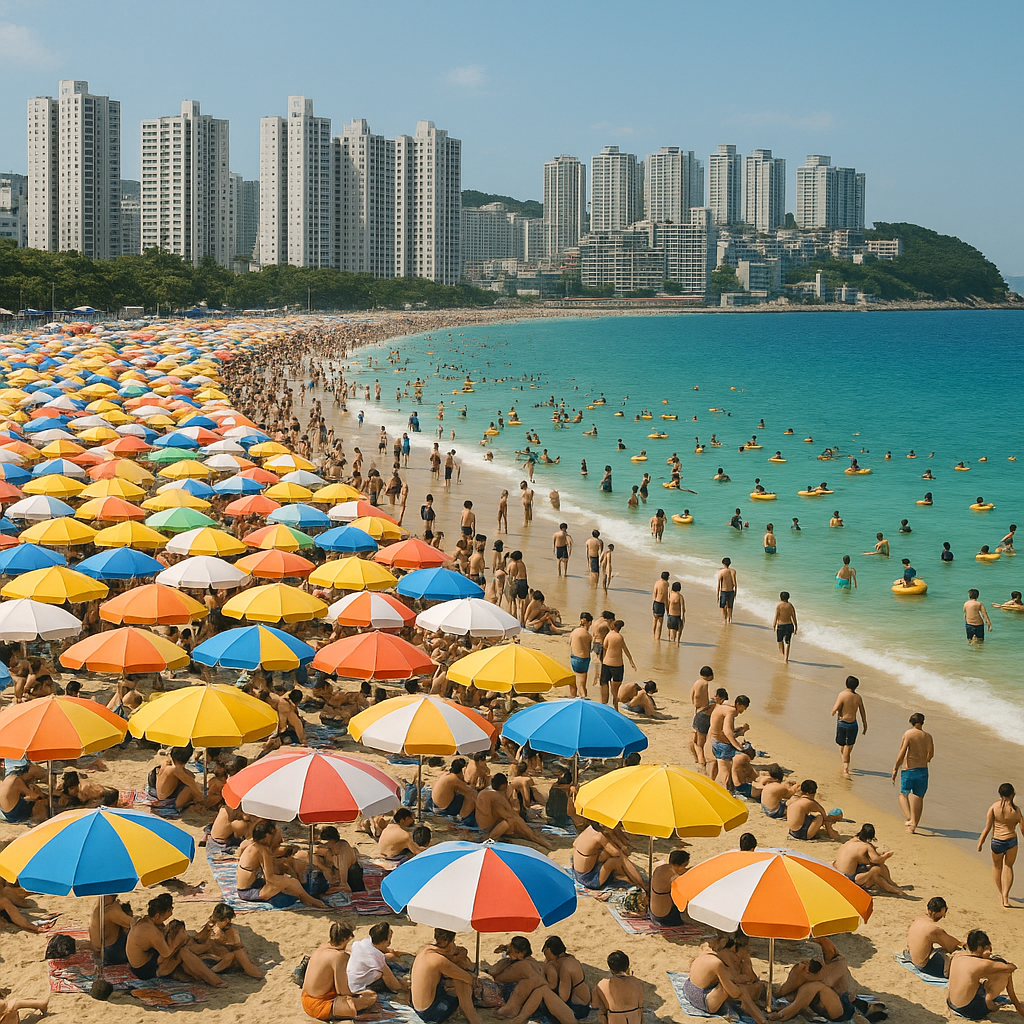
Then there’s the other end of it — the beaches once you finally arrive. Haeundae, on a big summer weekend, has drawn crowds estimated at up to 600,000 people in a single day, a wall of umbrellas and tubes and coolers that makes the sand nearly invisible by noon. Gwangalli, just down the coast, closes its beachside road to cars on Friday and Saturday evenings through July and August, a rule the city’s had in place since 2007 specifically because the foot traffic gets that dense. I remember standing at the edge of Gwangalli with my son on my shoulders, looking for a patch of sand the size of a picnic blanket, and thinking that “getting away from it all” is a strange phrase for a week where you’re never more than an arm’s length from a stranger’s cooler.
And yet — this is the part that took me longest to understand as an outsider — nobody seems to resent the crowding the way I expected them to. There’s a kind of collective shrug to it, an unspoken agreement that this is simply what the week costs, and that the alternative, going it alone on some other week, means feeling like you’re the one person out of step. My wife’s family doesn’t discuss whether to go somewhere during the peak week; the discussion is only ever where. The synchronization itself has become part of the ritual, not a flaw in it.
Beaches like Haeundae can see hundreds of thousands of visitors on a single peak-week day.
FAQ
When exactly is Korea’s peak vacation week?
It moves slightly year to year, but it clusters around the last week of July into the first two weeks of August. Roughly two-thirds of Korean companies set their official vacation dates in early August, with most of the rest choosing late July, so the heaviest overlap tends to land on the first weekend of August, when national highway traffic volume peaks.
Is it actually hard to get a flight, train, or hotel that week?
Yes, and earlier than most first-timers expect. Domestic flights to Jeju and KTX seats to Busan or Gangneung during that window can sell out weeks in advance, and popular pensions or guesthouses near beaches routinely fill a month or more ahead. If you’re planning a trip during that specific stretch, book accommodations by mid-June and expect to pay a premium.
Why don’t Korean companies just stagger vacation schedules to avoid the crush?
Some larger corporations do split staff into shifts across a few weeks, but for many small and mid-sized businesses, a single fixed week is simpler to manage and feels fairer — nobody has to negotiate for a “better” slot, and closing the whole office or factory for one set week avoids the awkwardness of asking who covers for whom. The tradeoff is that almost everyone ends up on the road, and at the beach, at exactly the same time.
통장 잔고 3천200만원, 가입기간 8년째인데 최근 청약 가점 계산기를 두드려보고 24점이라는 숫자를 마주한 순간 머리가 하얘졌다. 서울 인기 단지 커트라인이 60점을 넘나드는 상황에서 24점이면 예비 순번조차 기대하기 어렵다는 얘기다. 청약통장을 만들어놓기만 하면 언젠가는 당첨될 거라 믿었던 게 착각이었던 셈이다. 이 글에서는 2026년 기준으로 청약통장의 기본 구조부터 가점 계산법, 1순위 조건까지 실제 숫자를 넣어서 정리해본다.
청약통장, 정확히 뭘 가입하는 건가
2015년 9월 이후로 청약저축·청약예금·청약부금은 신규 가입이 막혔고 지금은 ‘주택청약종합저축’ 하나로 통합돼 있다. 만 19세 이상이면 누구나 가입할 수 있고 미성년자도 법정대리인 동의로 가입이 가능하다. 월 납입액은 최소 2만원부터 최대 50만원까지 자유롭게 낼 수 있는데, 국민주택(공공분양) 1순위 조건에는 납입 횟수가 들어가기 때문에 매달 최소 10만원씩 꾸준히 넣는 사람이 많다. 만 19~34세이면서 연소득 3천600만원 이하 무주택자라면 청년우대형 주택청약종합저축으로 갈아타서 이자를 더 받는 방법도 있다.
2026년 청약 가점제, 84점 만점의 구조
민영주택 일반공급에서 쓰이는 가점제는 무주택기간(32점) + 부양가족수(35점) + 청약통장 가입기간(17점)을 더해 총 84점 만점으로 계산한다. 항목별로 뜯어보면 이렇다.
무주택기간 — 32점
만 30세부터 계산을 시작하고, 30세 이전에 혼인신고를 했다면 그 날짜부터 센다. 1년 미만이면 2점, 이후 1년 늘어날 때마다 2점씩 붙어서 15년 이상이면 32점 만점이다. 만 38세에 무주택 기간이 8년이라면 18점을 받는 식이다.
부양가족수 — 35점
기본 점수가 5점이고 부양가족 1명당 5점씩 더해진다. 배우자, 직계존속(부모·조부모, 3년 이상 같은 주민등록등본에 등재되고 동일 세대 부양 조건을 충족해야 함), 미혼 직계비속(자녀)이 대상이다. 부양가족이 6명 이상이면 35점 만점을 받는데, 신청자 본인은 부양가족 수에 포함되지 않는다는 점을 자주 헷갈린다. 나도 처음 계산기를 돌릴 때 내 몫까지 넣어서 계산했다가 점수가 이상하게 안 맞아서 한참 헤맸던 기억이 있다.
청약통장 가입기간 — 17점
가입 6개월 미만이면 1점, 6개월~1년이면 2점, 이후 1년마다 1점씩 늘어나 15년 이상 가입하면 17점 만점을 받는다. 2024년부터는 배우자 명의 청약통장 가입기간의 절반을 합산할 수 있게 됐는데 최대 3점까지만 인정된다는 점은 놓치기 쉬운 부분이다.
1순위 조건, 지역마다 다르다
가점이 아무리 높아도 1순위 자격 자체가 안 되면 소용없다. 청약통장 가입기간 기준으로 보면 투기과열지구(현재 서울 강남·서초·송파·용산 등 일부 지역)는 가입 후 2년 경과 및 24회 이상 납입, 수도권 중 규제지역이 아닌 곳은 1년 경과, 비수도권은 6개월 경과가 기본 요건이다. 민영주택은 여기에 예치금 기준이 추가되는데, 전용 85㎡ 이하 주택형에 청약하려면 서울·부산 거주자는 300만원, 기타 광역시는 250만원, 그 외 시·군 지역은 200만원이 통장에 들어있어야 한다. 면적이 넓어질수록 필요 예치금도 커져서 전용 135㎡ 초과 기준으로는 서울·부산 거주자가 1천500만원까지 채워야 한다.
여기서 헷갈리는 사람이 정말 많은데, 예치금 기준은 청약하려는 아파트가 있는 지역이 아니라 본인 주민등록상 거주지를 기준으로 판단한다. 화성시에 있는 단지에 청약한다고 해도 본인이 서울 거주자라면 서울 기준 예치금을 채워야 한다는 뜻이다.
실제 사례로 점수 매겨보기
38세 무주택 가장, 배우자와 자녀 1명을 부양 중이고 청약통장은 9년째 유지 중이라고 가정해보자. 무주택기간이 8년(30세부터 계산)이면 18점, 부양가족 2명(배우자+자녀)이면 15점, 가입기간 9년이면 11점이다. 합산하면 18+15+11=44점. 최근 서울 비인기 단지 당첨 커트라인이 40점 초중반대에 형성되는 경우가 있어 아슬아슬하게 걸치거나 예비번호를 받을 가능성이 있는 점수대다. 강남권 같은 인기 단지라면 얘기가 다르다 — 60점대 후반, 70점 가까이까지 커트라인이 올라가는 경우가 흔하다.
자주 묻는 질문
Q. 청약통장 가입기간은 오래됐는데 중간에 납입액을 줄이면 가점이 깎이나?
A. 가입기간 점수 자체는 최초 가입일 기준으로 유지되기 때문에 중간에 납입액을 줄이거나 일시적으로 미납했다고 해서 가입기간 점수가 깎이지는 않는다. 다만 민영주택 1순위 자격을 위한 예치금 기준액은 입주자모집공고일 전까지는 채워 넣어야 하니, 청약 넣기 전에 잔액을 반드시 확인해야 한다.
Q. 미혼 1인 가구도 가점제로 당첨될 수 있나?
A. 이론적으로는 가능하지만 현실적으로 쉽지 않다. 부양가족 0명이면 기본 5점만 받고, 30세 미만 미혼 무주택자는 무주택기간 점수도 0점으로 잡히기 때문에 만점 84점 중 아무리 오래 통장을 유지해도 가입기간 17점과 부양가족 5점을 더한 20점대 초반에 머무는 경우가 많다. 이런 상황이라면 가점제보다는 추첨제 물량이나 생애최초·신혼부부 특별공급 쪽을 함께 알아보는 편이 현실적이다.
Q. 청년주택드림청약통장은 기존 통장과 뭐가 다른가?
A. 2024년 출시된 청년주택드림청약통장은 만 19~34세 무주택자를 대상으로 하며 이자율이 더 높고, 청약 당첨 후 주택 구입자금 대출과 연계되는 게 핵심 차이다. 기존 주택청약종합저축 가입자도 조건을 충족하면 전환 가입이 가능한데, 전환하더라도 기존 가입기간과 납입 실적은 그대로 인정된다는 점은 알아두면 좋다.
정리하면
가점표를 미리 계산해보지 않고 청약을 넣는 사람이 의외로 많다. 청약홈 홈페이지나 애플리케이션에서 제공하는 공식 가점 계산기로 본인 점수를 먼저 확인하고, 관심 있는 단지의 최근 당첨 커트라인과 비교해보는 습관을 들이는 게 시간 낭비를 줄이는 방법이다. 통장은 일단 만들어두는 편이 손해 볼 일은 없다. 가입기간 점수는 시간이 지나면 자동으로 쌓이기 때문이다.
비행기가 고도를 3000피트까지 낮추자 조종사가 갑자기 오른쪽 날개를 기울였다. 창밖 아래로 붉은 흙바닥 위에 새 한 마리가 떠올랐다. 부리 길이만 96미터, 날개를 펼친 폭은 축구장 몇 개를 합친 크기였다. 걸어서는 절대 알아볼 수 없는 그림이었다. 이것이 페루 남부 나스카 사막에 새겨진 ‘벌새’ 지상화를 처음 보는 사람들이 공통적으로 겪는 순간이다. 두 발로 사막을 걷는 사람에게는 그저 어지러운 선과 흙무더기로만 보이던 것이, 하늘에서 보는 순간 완벽한 그림으로 완성된다.
1927년, 우연히 발견된 거대한 그림
나스카 라인이 처음 학계에 보고된 건 1927년이다. 페루 고고학자 토리비오 메히아 세스페가 인근 언덕을 오르다 발밑에 펼쳐진 이상한 선들을 발견했다. 당시만 해도 이게 뭔지 아무도 몰랐다. 진짜 관심이 쏟아진 건 1930년대 말, 상업 항공기가 리마와 아레키파를 오가며 이 지역 상공을 지나다니기 시작하면서부터다. 조종사와 승객들이 창밖으로 거대한 도형과 동물 그림을 목격했다는 이야기가 퍼졌고, 1939년 미국 롱아일랜드 대학의 역사학자 폴 코속이 현지 관개 수로를 조사하러 왔다가 이 선들을 직접 확인하러 나섰다.
코속은 하지와 동지 즈음 태양이 특정 선과 정확히 일직선을 이루는 걸 목격하고 나스카 라인을 “세계에서 가장 큰 천문학 책”이라 불렀다. 이듬해인 1940년, 그는 독일 출신 수학자 마리아 라이헤를 조수로 데려온다. 라이헤는 이후 40년 넘게 나스카에 머물며 줄자와 빗자루만 들고 선을 하나하나 측량했다. 1955년 페루 정부가 나스카 평원에 대규모 관개 계획을 발표하자, 라이헤는 정부 관계자들을 직접 설득해 계획을 철회시켰다. 그가 없었다면 이 유적은 지금쯤 포도밭이나 저수지 밑에 묻혀 있었을지 모른다.
얼마나 큰가, 어떻게 그렸나
나스카 라인은 페루 리마에서 남쪽으로 약 400km 떨어진 나스카와 팔파 사이 건조 고원에 걸쳐 있다. 전체 면적은 450~500㎢, 대략 가로 50km 세로 15km 범위에 300개가 넘는 도형이 흩어져 있다. 기원전 500년에서 기원후 500년 사이, 나스카 문화 사람들이 표면의 붉은 산화철 자갈을 걷어내 그 아래 밝은 색 흙을 드러내는 방식으로 그렸다는 게 정설이다. 이 지역은 연중 강우량이 거의 없고 바람도 약해서 침식이 최소화된 덕분에 2000년 가까이 형태가 남아 있다.
가장 큰 도형인 펠리컨은 길이 285m, 벌새는 93m, 원숭이는 꼬리를 포함해 110m에 달한다. 직선 하나가 수 킬로미터씩 뻗어 있는 경우도 있는데, 측량 도구도 없던 시절 사람들이 어떻게 이렇게 정확한 비율로 그렸는지는 여전히 논쟁거리다. 말뚝과 끈을 이용해 작은 원본 도안을 확대했을 거라는 실험 고고학 연구 결과가 있긴 하지만, 완전히 증명된 건 아니다.
세 가지 가설 — 관개수로설, 천문달력설, 그리고 외계인설
왜 그렸는지에 대해선 지금도 학자마다 의견이 갈린다. 폴 코속과 마리아 라이헤가 밀었던 천문달력설은 일부 선이 하지·동지의 일출·일몰 방향과 일치한다는 관측에서 출발했다. 그런데 1970년대 미국 천문학자 제럴드 호킨스가 컴퓨터로 수백 개 선의 방향을 전수 분석한 결과, 통계적으로 유의미한 천체 정렬은 소수에 불과했다. 우연으로 설명 가능한 수준이라는 게 그의 결론이었다.
두 번째는 물과 관련된 가설이다. 존스홉킨스 대학의 데이비드 존슨은 2000년대 들어 선들이 지하 대수층이나 수맥의 위치를 표시한 지도라는 주장을 내놓았다. 나스카 문명이 극심한 가뭄 속에서도 지하수를 찾아 생존했다는 점을 근거로 든다. 세 번째는 대중적으로 가장 유명한 외계인설이다. 스위스 작가 에리히 폰 데니켄이 1968년 저서 ‘신들의 전차’에서 나스카 라인이 외계 우주선의 활주로이거나 하늘에서 봐야 할 신호라고 주장하면서 폭발적으로 퍼졌다. 다만 이 주장은 학계에서 거의 받아들여지지 않는다. 도형 대부분이 새나 원숭이처럼 활주로 기능과 무관한 형태이고, 착륙에 필요한 평탄함이나 강도도 갖추지 못했다는 반박이 뒤따른다. 개인적으로 예전에 본 다큐멘터리에서 폰 데니켄 본인이 나와 여전히 우주인설을 굽히지 않는 장면을 본 기억이 있는데, 카메라 앞에서도 흔들림 없던 그 확신이 오히려 더 인상 깊었다.
현재 페루 문화부와 대부분의 고고학자들은 나스카 라인이 종교 의식용 순례길이거나, 물의 신에게 비를 기원하며 걷는 제의 공간이었을 가능성에 무게를 두는 편이다. 확정된 답은 아직 없다.
지금도 계속되는 발견
나스카 라인은 1994년 12월 유네스코 세계문화유산으로 등재됐다. 그런데 연구는 끝나지 않았다. 2022년 12월 일본 야마가타 대학 연구팀이 인공지능과 드론 촬영을 결합해 이전까지 알려지지 않았던 지상화 168개를 새로 확인했다고 발표했다. 이로써 야마가타 대학이 확인한 도형만 총 358개로 늘었다. 대부분 사람이나 낙타과 동물, 새 모양의 소형 도형으로, 기존에 알려진 대형 도형보다 오래된 시기에 그려진 것으로 추정된다.
2020년에는 나스카 인근 언덕 경사면에서 길이 37m짜리 고양이 형상이 새로 발견되기도 했다. 오랜 세월 침식으로 형체가 흐릿해져 있었는데, 관광로 정비 작업 중 우연히 드러났다. 이런 발견이 이어질 때마다 나스카 라인을 둘러싼 그림 수는 계속 늘어나는 중이고, 그만큼 왜 만들었는지에 대한 답도 하나로 좁혀지지 않고 있다.
자주 묻는 질문
Q1. 나스카 라인은 땅에서도 보이나요?
대부분의 대형 도형은 지상에서는 형태를 알아보기 어렵다. 다만 나스카 시내 인근 팬아메리칸 고속도로 옆에 세워진 약 13m 높이의 전망탑(미라도르)에 오르면 손, 나무 도형 등 일부 작은 그림은 육안으로도 확인할 수 있다. 벌새나 원숭이처럼 큰 그림은 경비행기를 타고 상공에서 봐야 전체 형태가 드러난다.
Q2. 경비행기 관광은 안전한가요?
나스카 라인 항공 투어는 소형 세스나기를 이용하며 30~40분 정도 소요된다. 급선회를 반복하는 특성상 멀미를 겪는 관광객이 많아 페루 항공 당국이 조종사 자격과 비행 횟수를 엄격히 관리하고 있다. 과거 사고 이력이 있었던 만큼 정식 허가를 받은 항공사인지 확인하고 예약하는 게 안전하다.
Q3. 나스카 라인을 그린 사람들은 누구인가요?
기원전 100년경부터 기원후 800년경까지 이 지역에 살았던 나스카 문화가 만든 것으로 본다. 나스카 문화는 화려한 채색 토기와 직물로도 유명하며, 인근 파라카스 문화의 영향을 받은 것으로 알려져 있다. 문자 기록이 남아 있지 않아 이들이 스스로 무엇을 남겼다고 생각했는지는 알 길이 없다.
사막 한가운데 그려진 그림을 정작 그린 사람들은 하늘에서 볼 방법이 없었다는 사실이 나스카 라인을 더 묘한 유적으로 만든다. 관개수로설이든 천문달력설이든 외계인설이든, 확실한 건 2000년 전 사람들이 남긴 흔적이 지금도 우리를 사막 한복판으로 불러들이고 있다는 점이다.