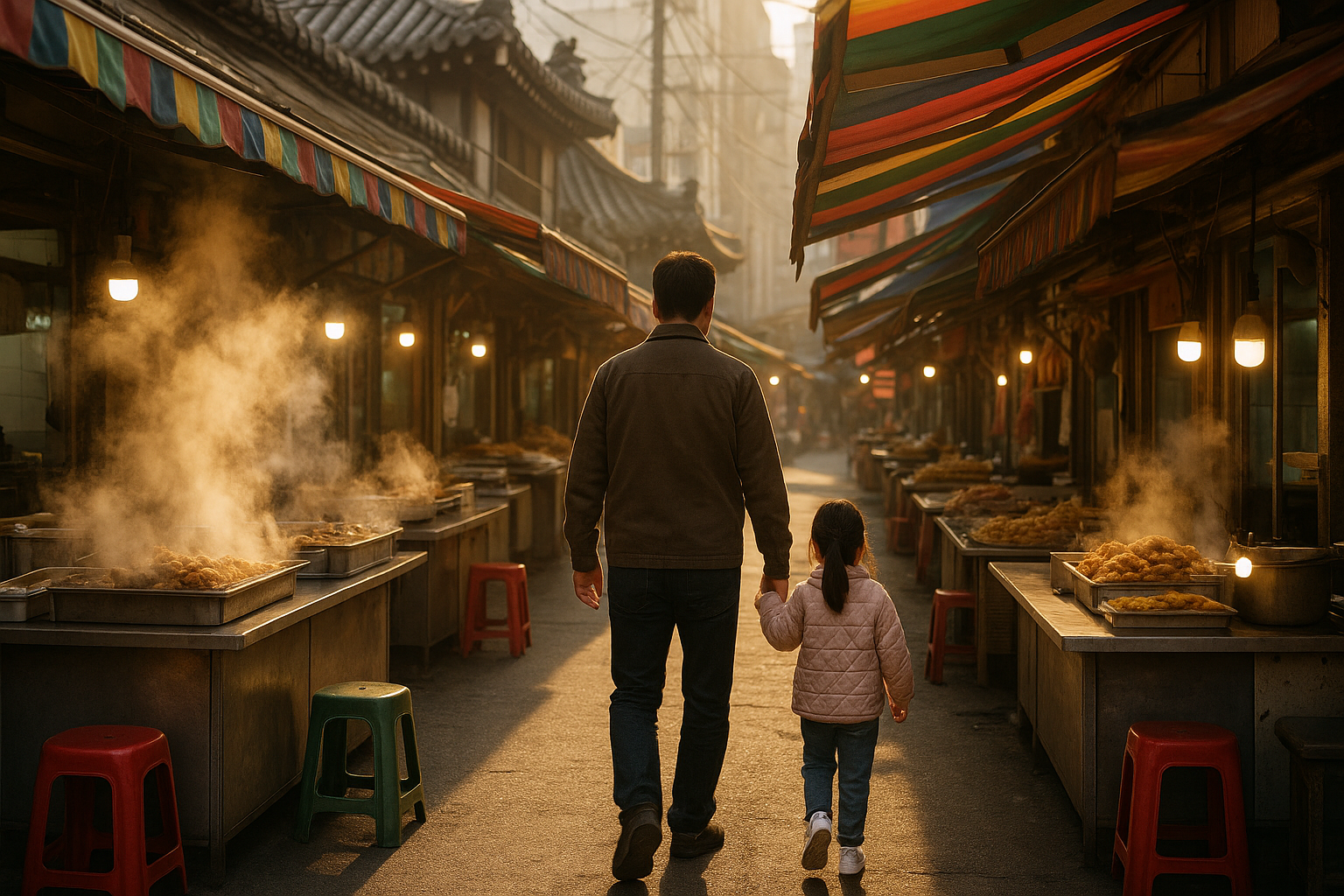
저녁 7시, 속초 중앙시장 정문에 들어서자마자 기름 냄새와 매콤달콤한 소스 냄새가 동시에 훅 끼쳐왔다. 양손에 종이컵을 든 사람들이 골목 한가운데 선 채로 닭강정을 뜯고 있고, 옆 가게에서는 국자로 홍게라면 국물을 뜨는 소리가 쉴 새 없이 들린다. 주말 저녁이면 발 디딜 틈이 없을 정도로 붐비는 이 시장에서, 어디를 가야 줄 서고 후회하지 않을지 세 번의 방문 끝에 정리해봤다.
저녁 무렵 붐비는 속초 중앙시장 먹거리 골목
닭전골목 두 집, 중앙이냐 만석이냐
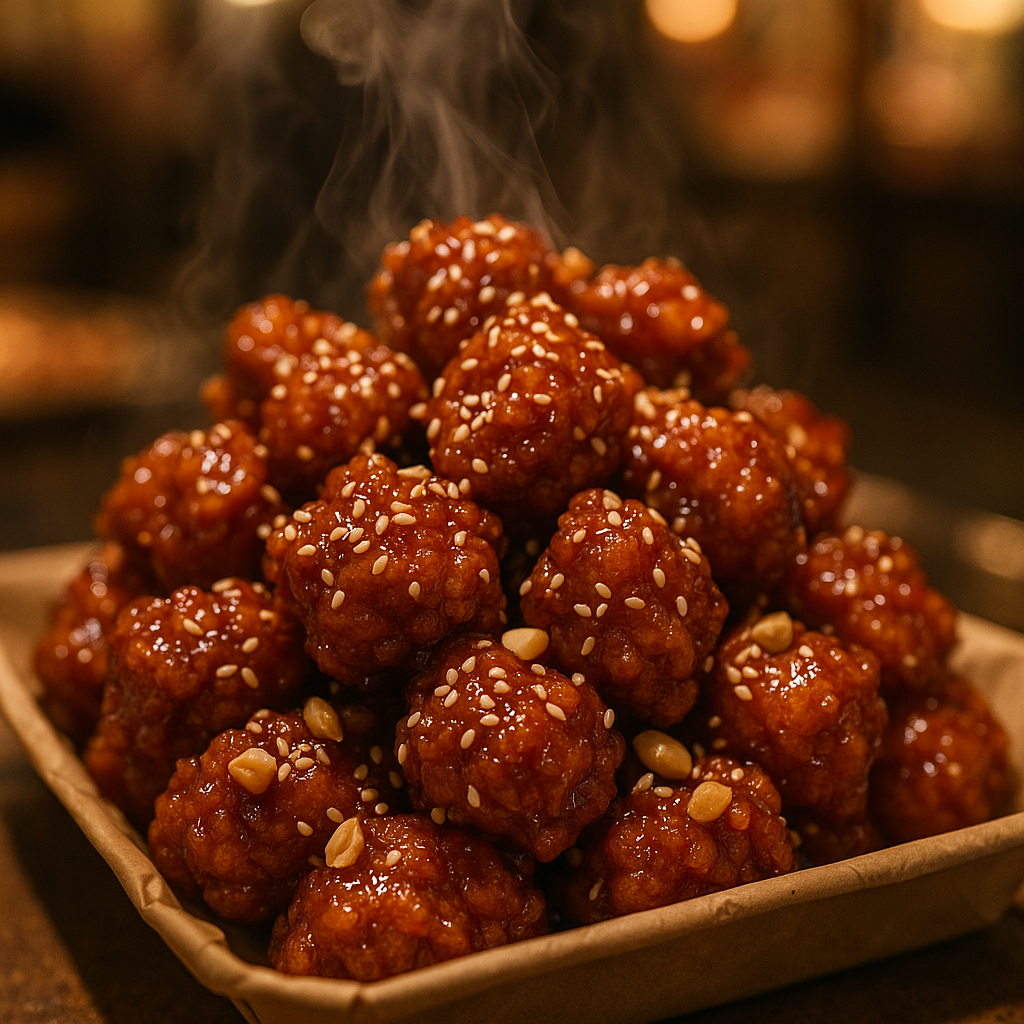
중앙시장 안쪽에는 아예 ‘닭전골목’이라 불리는 구간이 따로 있다. 여기서 가장 줄이 긴 두 집이 중앙닭강정과 만석닭강정이다. 중앙닭강정은 중앙로147번길 16, 매일 오전 9시 30분부터 오후 7시 30분까지 영업하고 가격은 19,000원에서 21,000원 선이다. 맛 옵션이 순한맛, 보통, 매운맛으로 나뉘는데 매콤한 쪽을 원한다면 이 집이 낫다는 반응이 많다.
만석닭강정은 1970년부터 이어온 원조 격 매장이다. 중앙시장 안에만 지점이 여러 곳이라 줄이 짧은 매장을 골라 들어가면 대기 시간을 크게 줄일 수 있다. 뼈닭강정과 순살닭강정 중 고를 수 있고 맛 강도도 3단계로 세분화되어 있다. 만석 쪽은 대체로 달달한 편이라 아이와 함께 온 가족 단위 손님들이 많이 찾는다. 개인적으로는 매운 걸 좋아해서 중앙닭강정 쪽을 자주 가는데, 같이 간 조카는 만석 순살을 더 좋아했다.
속초 중앙시장 닭전골목의 명물, 닭강정
아바이순대는 갯배를 건너야 진짜다
아바이순대의 원조는 사실 중앙시장 안이 아니라 갯배를 타고 건너가는 아바이마을에 있다. 대표 격인 단천식당은 아바이마을길 17에 있고, 오전 8시 30분부터 오후 7시까지, 마지막 주문은 오후 6시 30분이다. 가는 길은 간단하다. 중앙시장에서 갯배 선착장까지 걸어서 5분, 갯배를 타면 3분 만에 건너편에 닿는다. 편도 요금은 500원 수준이고, 내려서 도보로 8분 정도 걸으면 단천식당 간판이 보인다.
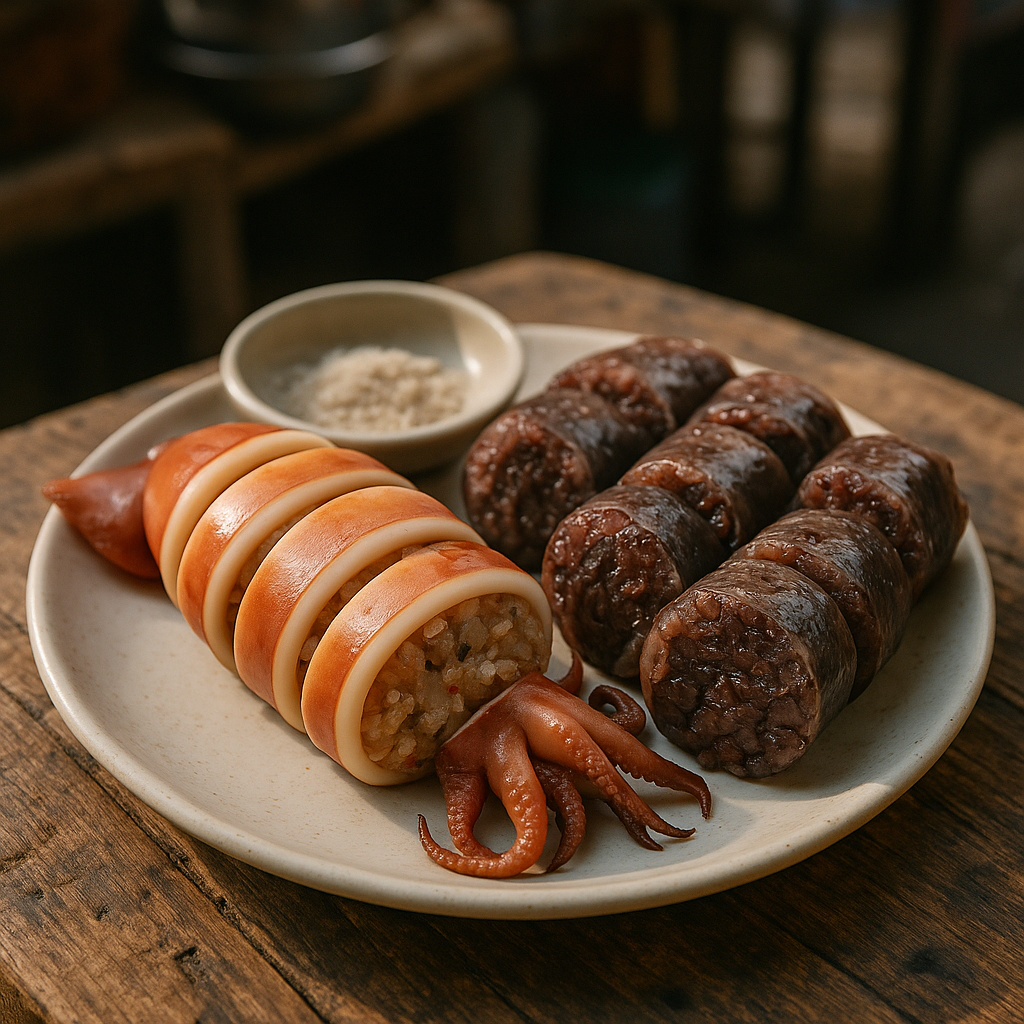
시간이 빠듯해서 시장 안에서 바로 해결하고 싶다면 순대골목 노점에서도 아바이순대와 오징어순대를 살 수 있다. 3대째 가업을 이어온 현태네튀김 같은 곳은 노란 달걀물을 입힌 아바이순대와 감자전으로 이름이 알려져 있다. 오징어순대는 오징어 몸통 안에 당면과 채소를 채워 쪄낸 음식인데, 초고추장이나 간장에 살짝 찍어 먹는 게 이 동네 방식이다. 처음 먹는 사람은 새콤한 초고추장 쪽을 더 좋아하는 편이었다.
속초 실향민 음식, 아바이순대와 오징어순대
배 채우고 나면 씨앗호떡, 회오리감자, 홍게라면
닭강정과 순대로 배가 부르면 다들 그냥 나가는데, 나는 항상 씨앗호떡 하나를 더 먹는다. 사시사철 파는 메뉴지만 바람이 차가운 날일수록 줄이 길어지는 걸 보면 다들 비슷한 생각인 모양이다. 회오리감자는 아이들이 더 좋아하고, 홍게라면은 게 껍질을 통째로 넣고 끓여 국물이 시원한데 한 그릇에 6천 원에서 8천 원 사이다. 대게딱지밥은 게살을 발라 딱지에 비벼주는 방식이라 사진 찍기도 좋고 맛도 나쁘지 않다. 다만 배가 이미 부른 상태라면 굳이 다 먹으려 하지 말고 한두 개만 골라 나눠 먹는 걸 추천한다.
어느 골목부터 돌아야 덜 헤매나
중앙시장은 품목별로 골목이 나뉘어 있다. 순대골목, 고추골목, 젓갈어시장골목, 닭전골목이 각각 따로 구획돼 있어서 처음 가면 방향을 잃기 쉽다. 내가 쓰는 순서는 이렇다. 먼저 닭전골목에서 포장 주문을 걸어두고, 조리되는 10분 남짓한 시간 동안 근처 순대골목에서 오징어순대나 국물 요리로 입맛을 돋운다. 닭강정을 픽업한 뒤에는 디저트 격으로 씨앗호떡이나 회오리감자로 마무리한다. 이렇게 돌면 같은 자리를 두 번 지나가는 일이 줄어든다.
주차와 웨이팅, 아는 만큼 편하다
중앙시장 자체 주차장은 물건을 1만 원 이상 구매하면 30분 무료 주차권을 주는데, 최대 2장까지 받아 2시간을 채울 수 있다. 토요일, 일요일, 공휴일에는 도보 8분에서 10분 거리인 속초시청 주차장이 무료로 열려 있으니 주말이라면 여기부터 확인하는 게 좋다. 시장 바로 앞이 꽉 찼다면 조양동 갯배 선착장 주차장까지 걸어가는 방법도 있다. 시장에서 조금 떨어져 있지만 자리가 넉넉한 편이고, 어차피 아바이마을에 갈 계획이라면 동선도 겹친다.
Q. 주차는 어디에 하는 게 가장 편한가요?
평일이라면 시장 자체 주차장에서 1만 원 이상 영수증으로 30분권 두 장을 받아 2시간을 채우는 게 가장 간단하다. 주말이나 공휴일이라면 도보 8~10분 거리의 속초시청 주차장이 무료로 개방되니 그쪽에 세우고 걸어오는 걸 추천한다. 그마저 꽉 찼을 때는 조양동 갯배 선착장 주차장까지 가는 사람도 많다.
Q. 몇 시에 가야 웨이팅이 적은가요?
개장 직후인 오전 10시 반 이전에 도착하면 닭전골목 대기가 거의 없다. 낮 12시부터 오후 2시 사이, 그리고 저녁 6시 이후로는 대기 줄이 눈에 띄게 길어진다. 세 번 방문해본 경험으로는 평일 오전이 가장 여유로웠고 토요일 오후는 어느 가게든 30분 이상 기다릴 각오를 해야 했다.
Q. 닭강정은 포장만 되나요, 매장에서 바로 먹을 수 있나요?
두 곳 다 포장이 기본이지만 매장 안이나 근처에 간이 좌석을 두고 있어서 즉석에서 먹는 손님도 많다. 다만 자리 수가 넉넉하지 않으니 앉아서 먹고 싶다면 서서 기다리는 다른 팀들 눈치를 보게 될 수 있다. 시간을 아끼고 싶다면 포장해서 근처 방파제나 해변 벤치로 이동해 먹는 것도 나쁘지 않은 선택이다.
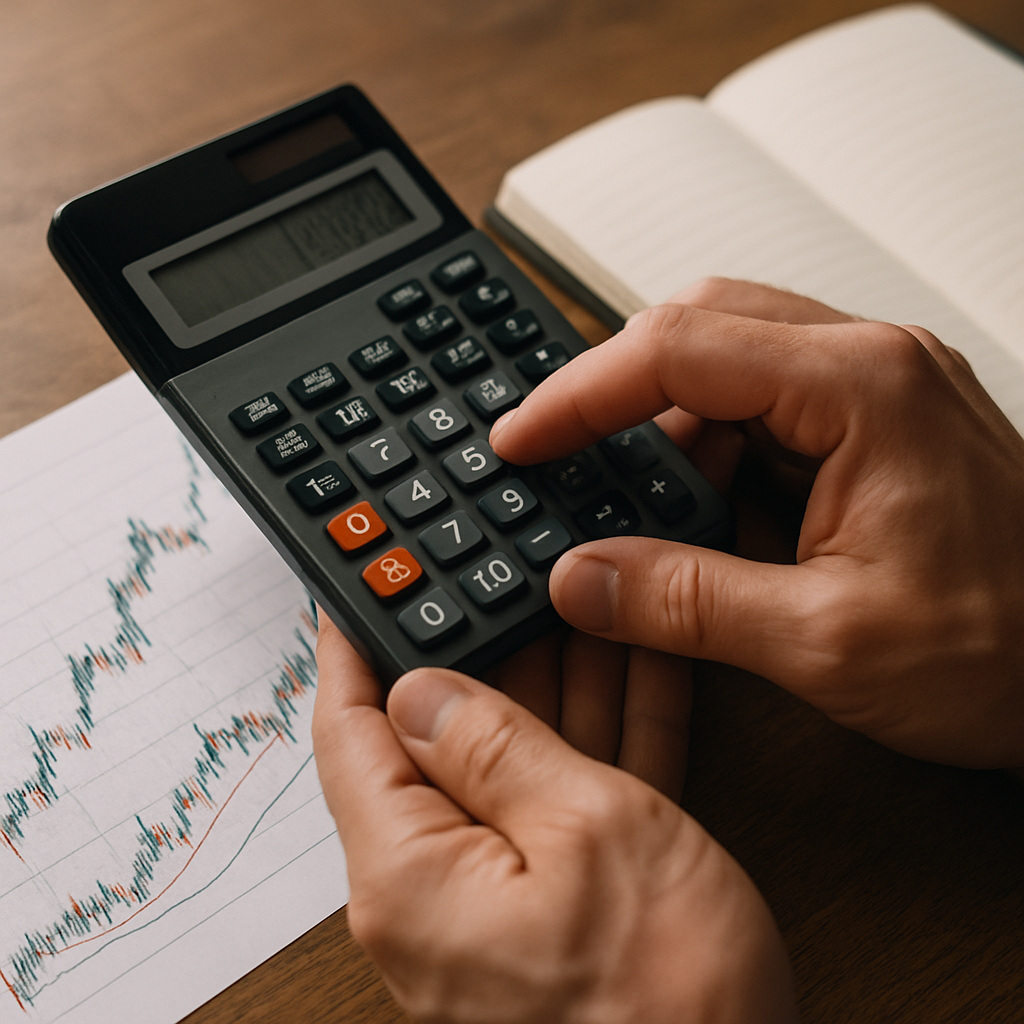
지난주에 친구가 전화로 물었다. “삼성전자 PER이 12배면 싼 거야, 비싼 거야?” 순간 말문이 막혔다. 2019년에 처음 증권 계좌를 텄을 때 나도 똑같은 질문 앞에서 얼어붙었던 기억이 났다. 유튜브 영상 몇 개를 봐도 용어만 나열할 뿐 실제로 숫자를 어떻게 읽어야 하는지는 아무도 알려주지 않았다.
PER, 지금 주가가 이익 대비 몇 배인지 보여주는 숫자
PER(주가수익비율)은 주가를 주당순이익(EPS)으로 나눈 값이다. 예를 들어 A기업의 주가가 5만원이고 1주당 순이익이 5천원이라면 PER은 10배다. “이 회사가 지금 버는 돈을 그대로 유지한다면 10년치 이익만큼 주가가 매겨져 있다”는 뜻으로 풀면 감이 잡힌다. 업종마다 평균 PER이 다르다는 게 함정인데, 반도체나 바이오처럼 성장 기대가 큰 업종은 PER 20~30배도 흔하고 은행·건설처럼 성숙한 업종은 5~8배 수준에서 거래되는 경우가 많다. 그래서 PER 하나만 떼어놓고 낮으니까 저평가라고 단정하면 곤란하다.
PBR, 회사 자산 대비 주가를 재는 자
PBR(주가순자산비율)은 주가를 주당순자산(BPS)으로 나눈다. PBR 1배는 회사를 지금 당장 청산해서 주주들에게 나눠준다고 가정했을 때의 가치와 주가가 같다는 뜻이다. PBR이 0.8배라면 장부상 자산가치보다 주가가 20% 싸게 거래되고 있는 셈이다. 다만 장부가치와 실제 가치가 항상 일치하지는 않는다. 부동산을 옛날 가격 그대로 장부에 적어둔 회사라면 PBR이 낮아 보여도 실제로는 저평가가 아닐 수 있다.
ROE, 회사가 자기 돈으로 얼마나 잘 벌었나
ROE(자기자본이익률)는 당기순이익을 자기자본으로 나눈 값이다. ROE 15%라면 주주 돈 100원을 굴려서 1년에 15원을 벌었다는 얘기다. 워런 버핏이 오랫동안 강조해온 지표가 바로 이거다. ROE가 꾸준히 10% 이상 나오는 회사는 그만큼 사업 효율이 좋다고 볼 수 있다. 다만 부채를 잔뜩 끌어다 써서 ROE를 인위적으로 높인 경우도 있으니 부채비율도 같이 봐야 한다. 복리 개념까지 이해해두면 장기 투자에서 ROE가 왜 중요한지 훨씬 잘 와닿는다.
세 지표, 따로 말고 같이 봐야 진짜 그림이 보인다
PER만 보면 싸 보이는데 ROE가 형편없이 낮은 회사가 있다. 반대로 ROE는 훌륭한데 PER이 지나치게 높게 거래되는 회사도 있다. 개인적으로는 ROE로 “이 회사가 돈을 잘 버는가”를 먼저 걸러내고, 그 다음에 PER로 “지금 가격이 합리적인가”를 따지는 순서를 쓴다. PBR은 그 판단이 헷갈릴 때 자산 안전판 역할로 참고하는 정도다. 세 숫자를 나란히 놓고 업종 평균과 비교하는 습관만 들여도 무작정 싸다더라는 말에 휘둘리는 일이 줄어든다.
자주 묻는 질문
Q. PER이 마이너스로 나오는 경우는 뭔가요?
A. 해당 회사가 적자를 냈다는 뜻이다. 순이익이 마이너스면 PER 계산 자체가 의미가 없어지므로 이런 경우 증권사 HTS에서는 보통 N/A로 표시하거나 계산에서 제외한다. 성장 초기 바이오 기업이나 적자 스타트업 상장사에서 흔히 볼 수 있다.
Q. PBR이 1배 미만이면 무조건 사도 되나요?
A. 아니다. 저PBR주 테마가 유행할 때도 PBR만 보고 들어갔다가 실적 부진이 계속되며 주가가 더 빠진 종목이 여럿 있었다. PBR은 ROE, 부채비율과 함께 봐야 의미가 생긴다.
Q. 초보자는 이 셋 중 뭘 가장 먼저 봐야 하나요?
A. 개인적으로는 ROE부터 확인하라고 권한다. 최근 3~5년치 ROE 흐름이 꾸준한지부터 보고, 그다음 PER로 가격 부담을 체크하는 순서가 실수를 줄이는 데 도움이 됐다.
※ 이 글은 투자 참고용 정보 제공을 목적으로 하며 특정 종목의 매수·매도를 권유하지 않는다. 투자 판단과 그 결과에 대한 책임은 투자자 본인에게 있다.
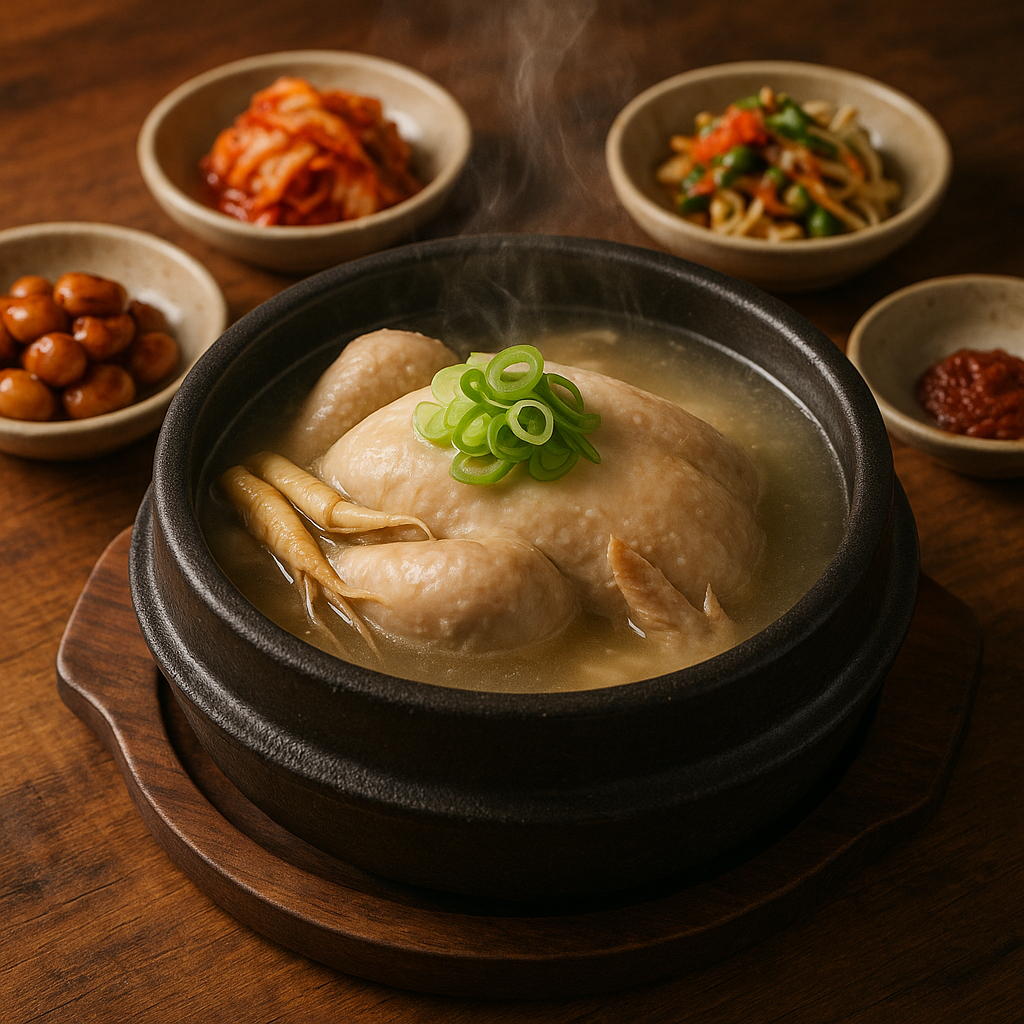
내일(8월 14일)이 말복이라는 걸 어제 저녁 반찬가게 사장님한테 듣고 알았다. “내일 삼계탕 재료 미리 사가세요, 손님 몰려요”라는 말에 달력을 보니 정말 금요일이었다. 매년 이맘때가 되면 삼계탕집 앞에 줄이 늘어서는 걸 보면서도 정작 왜 하필 이날인지, 올해는 왜 유독 늦게 오는지 궁금했던 적은 없었다.
2026년 삼복, 초복·중복보다 말복이 유독 늦게 온 이유
2026년 초복은 7월 15일 수요일, 중복은 7월 25일 토요일이었고 말복은 8월 14일 금요일이다. 보통 초복과 중복은 열흘 간격으로 딱 맞아떨어지는데, 올해는 중복과 말복 사이가 스무날이나 벌어졌다. 이렇게 간격이 벌어지는 해를 ‘월복(越伏)’이라고 부르는데, 그만큼 늦더위가 예년보다 길게 이어질 가능성이 크다는 신호로 읽힌다. 삼복은 24절기가 아니라 갑자(甲子)의 경일(庚日)을 기준으로 정해지다 보니 해마다 날짜가 들쭉날쭉하다.
왜 하필 뜨거운 국물을 먹을까
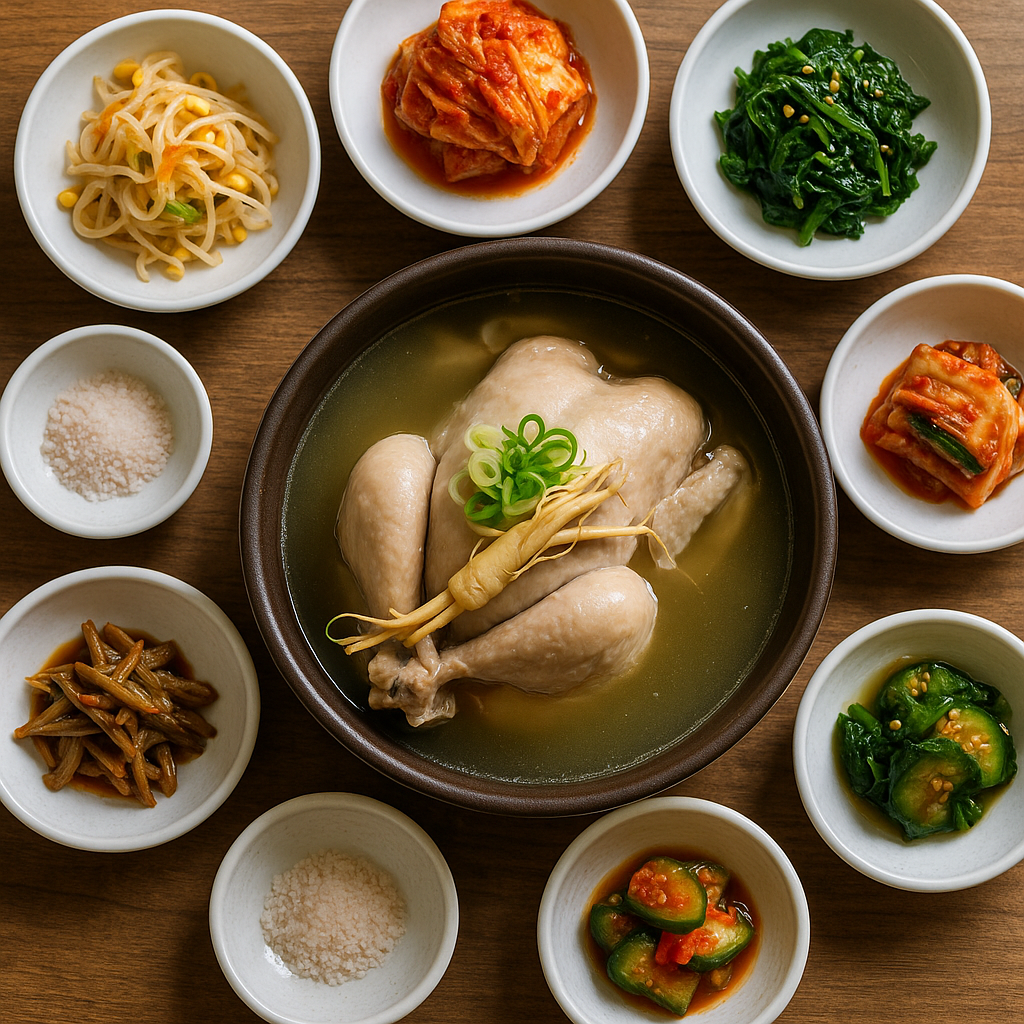
이열치열이라는 말은 많이 들어봤어도 그 유래까지 아는 사람은 드물다. 삼복의 기원은 중국 진나라까지 거슬러 올라간다고 전해지는데, 기원전 676년 진 덕공 시절 삼복 제사를 지내고 신하들에게 고기를 나눠줬다는 기록이 사기(史記)에 남아 있다. 냉장고도 에어컨도 없던 시절, 뜨거운 음식을 먹고 땀을 왈칵 쏟아내는 게 오히려 체온 조절에 도움이 된다고 믿었던 셈이다. 실제로 삼계탕 한 그릇을 다 먹고 나면 등에 땀이 흥건해지면서 이상하게 몸이 개운해지는 느낌, 다들 한 번쯤 경험해봤을 거다.
삼계탕집 줄 서기 싫은 사람들의 대안
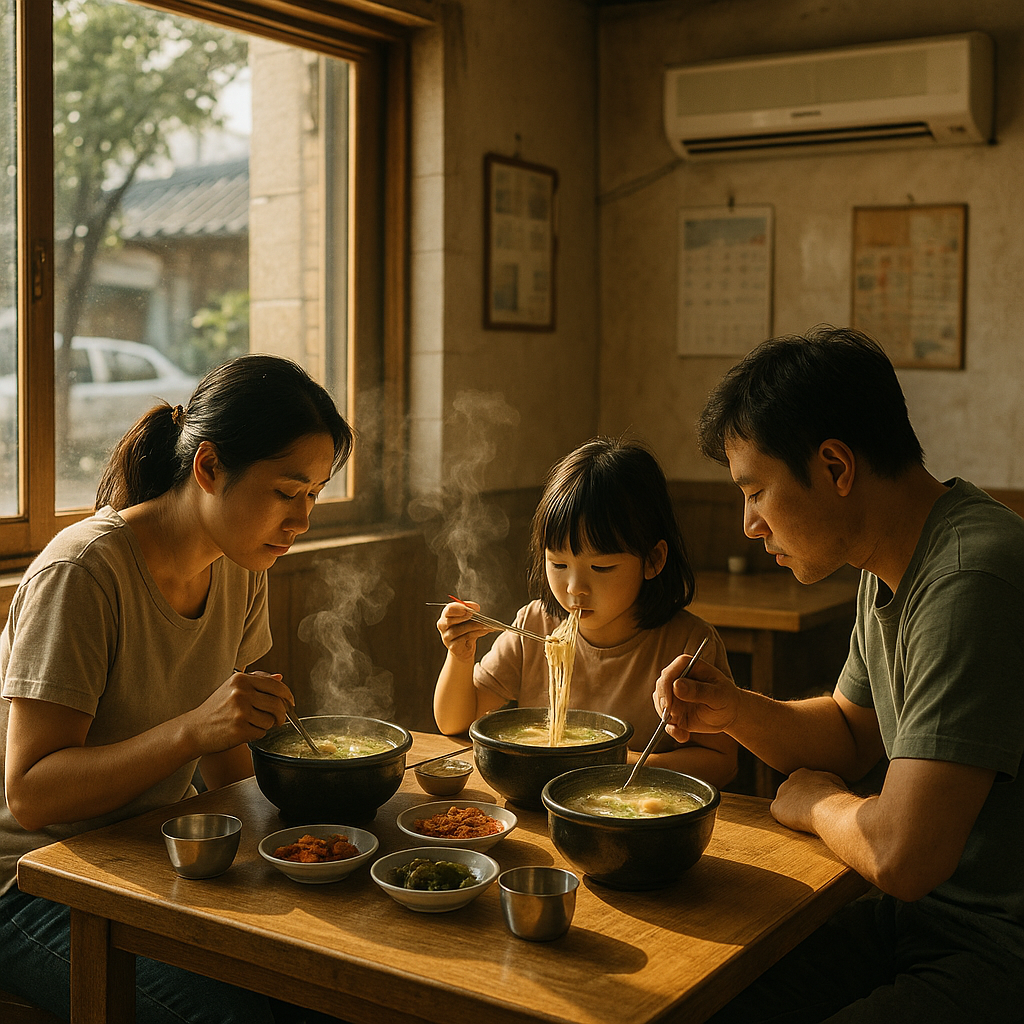
말복 당일 유명 삼계탕집은 오픈 전부터 줄이 생긴다. 광화문 인근 오래된 식당들은 평소에도 웨이팅이 있는데 복날엔 1시간 넘게 기다리는 경우도 흔하다. 굳이 줄을 서지 않아도 되는 방법들이 있는데, 대형마트에서 파는 반조리 삼계탕 밀키트를 전날 미리 사두는 것도 방법이고, 닭백숙이나 옻닭처럼 비슷한 보양식으로 대체하는 집도 많다. 개인적으로는 복날엔 오히려 삼계탕집을 피하고 집에서 닭볶음탕을 해먹는 편인데, 매운 국물이 땀 빼는 효과는 오히려 더 확실하다고 느낀다.
자주 묻는 질문
Q. 말복이 지나면 더위가 확실히 꺾이나요?
A. 반드시 그렇지는 않다. 2026년처럼 월복이 낀 해는 말복 이후로도 늦더위가 8월 말까지 이어지는 경우가 많았다. 실제로 최근 몇 년간 처서(8월 23일 무렵)를 지나서도 열대야가 계속된 해가 적지 않았다.
Q. 삼계탕 대신 먹기 좋은 보양식은 뭐가 있나요?
A. 전복이 들어간 전복삼계탕, 오리백숙, 장어구이 등이 대표적이다. 개인적으로는 콩국수처럼 차가운 음식으로 원기를 보충하는 사람들도 주변에 꽤 있다. 꼭 뜨거운 음식을 먹어야 한다는 법은 없다.
Q. 복날에 삼계탕집이 몇 시부터 붐비나요?
A. 유명 맛집 기준으로 점심엔 11시 반, 저녁엔 6시 전후로 대기가 시작되는 경우가 많다. 포장 주문이 가능한 곳이라면 전화로 미리 예약해두는 게 기다림을 줄이는 가장 확실한 방법이다.
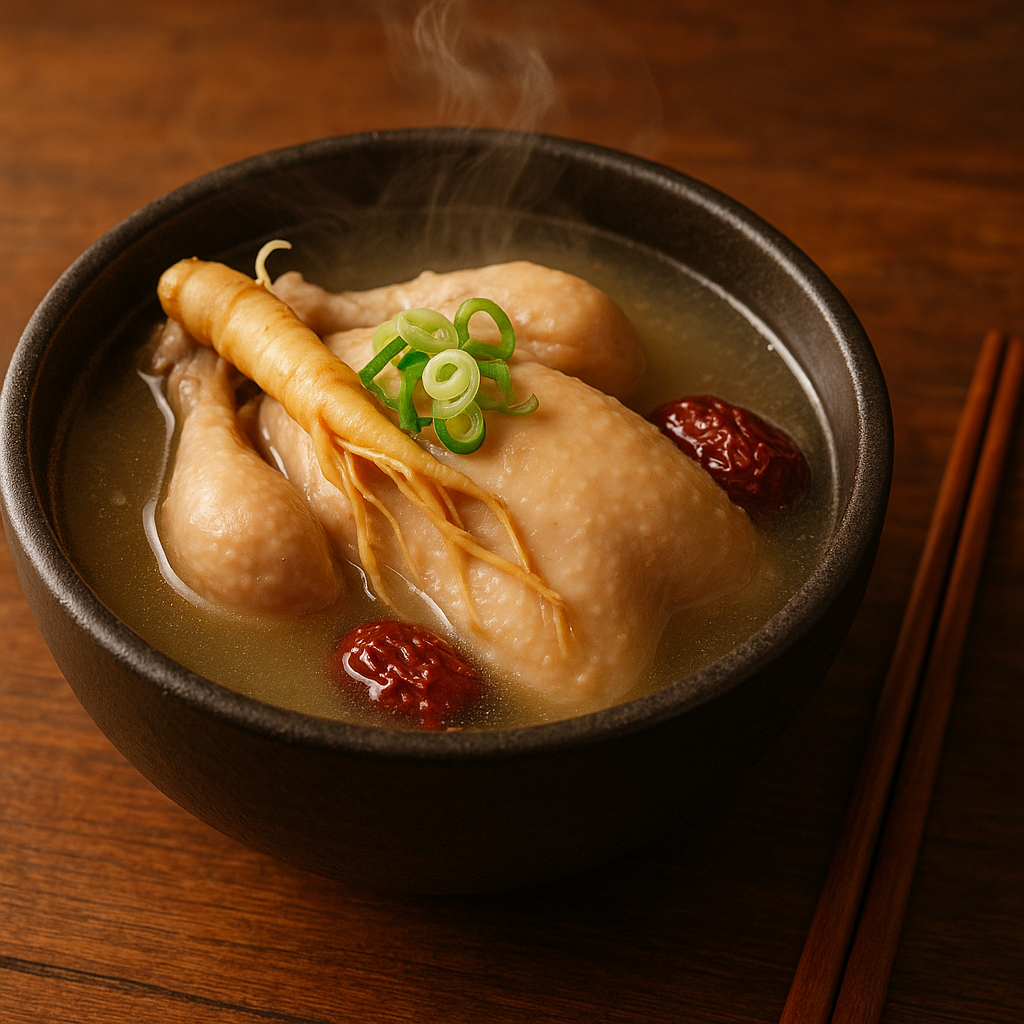
Tomorrow is malbok — the last of Korea’s three “dog days” — and my mother-in-law already called twice to make sure we have plans for samgyetang. It’s August 14th this year, and the woman at the side-dish shop near our apartment told me the same thing yesterday: buy your chicken today, because tomorrow the lines start at ten in the morning.
The first summer I lived in Korea, I genuinely thought eating hot soup on a 34-degree day was a joke someone was playing on the new foreigner. My wife’s family piled into a tiny restaurant with no air conditioning worth mentioning, ordered bowls of ginseng chicken soup that arrived still bubbling in stone pots, and ate like it was the most normal thing in the world. I remember sweating through my shirt before I’d even picked up a spoon.
What “wolbok” means, and why this year is different
Here’s what nobody explained to me until years later: this year is what’s called a “wolbok” — the gap between jungbok (the middle dog day) and malbok stretched to twenty days instead of the usual ten, which older Koreans read as a sign that the heat is going to hang around longer than normal. My father-in-law, who’s followed the lunar calendar his whole life, mentioned it almost as a warning. Buy extra chicken. This one’s going to be a long one.
Fighting heat with heat
The logic behind eating hot soup on the hottest day — called “iyeolchiyeol,” fighting heat with heat — sounded backwards to me for the longest time. But there’s something to it that I only understood after I stopped resisting. You eat the scalding soup, you sweat it out within minutes, and for whatever reason your body actually cools down faster than if you’d had cold noodles instead. I’m not a doctor and I won’t pretend to explain the physiology, but I’ve felt the difference enough summers now to trust it.
My kids grew into it before I did
What surprised me more was watching my kids grow into it. My daughter, who used to push the chicken leg away and only eat the rice porridge at the bottom of the bowl, now asks for extra jujubes without being told what they’re for. She just knows malbok means soup night, the same way she knows Chuseok means songpyeon.
We’re not going to fight the crowds tomorrow. After a few summers of standing in lines that wrapped around the block near Gwanghwamun, we’ve made peace with picking up a pre-cooked kit from the grocery store the day before and simmering it ourselves. It’s not quite the same as the stone pot version, still bubbling when it hits the table, but my kids don’t seem to notice the difference, and honestly, neither do I anymore. If you’re trying to survive the rest of Korea’s brutal summer stretch, it helps to also know how the rainy season before it works — the humidity doesn’t really let up until well after malbok passes.
FAQ
What is malbok, and when is it in 2026?
Malbok is the last of Korea’s three “bok” days — chobok, jungbok, and malbok — traditionally marked as the hottest stretch of summer. In 2026, chobok fell on July 15, jungbok on July 25, and malbok lands on August 14, a Friday.
Why do Koreans eat hot soup like samgyetang on the hottest day?
The custom is called iyeolchiyeol, or “fighting heat with heat.” The idea is that eating something hot enough to make you sweat helps regulate body temperature faster than eating something cold. It’s tied to centuries-old beliefs, but plenty of Koreans today follow it simply because it’s tradition passed down from their grandparents.
Do all Koreans actually eat samgyetang on malbok?
Not everyone, and not always samgyetang specifically. Some families go for duck, grilled eel, or even cold noodles instead. What’s consistent is the idea of eating something nourishing to get through the worst of the heat — the specific dish is more flexible than outsiders might assume.
My daughter is four, and by the time she was two, she already knew the word “salgeumhi” — softly. Not because we taught it to her as a vocabulary word, but because it came out of my mouth roughly forty times a day, usually right before she broke into a run across the living room.
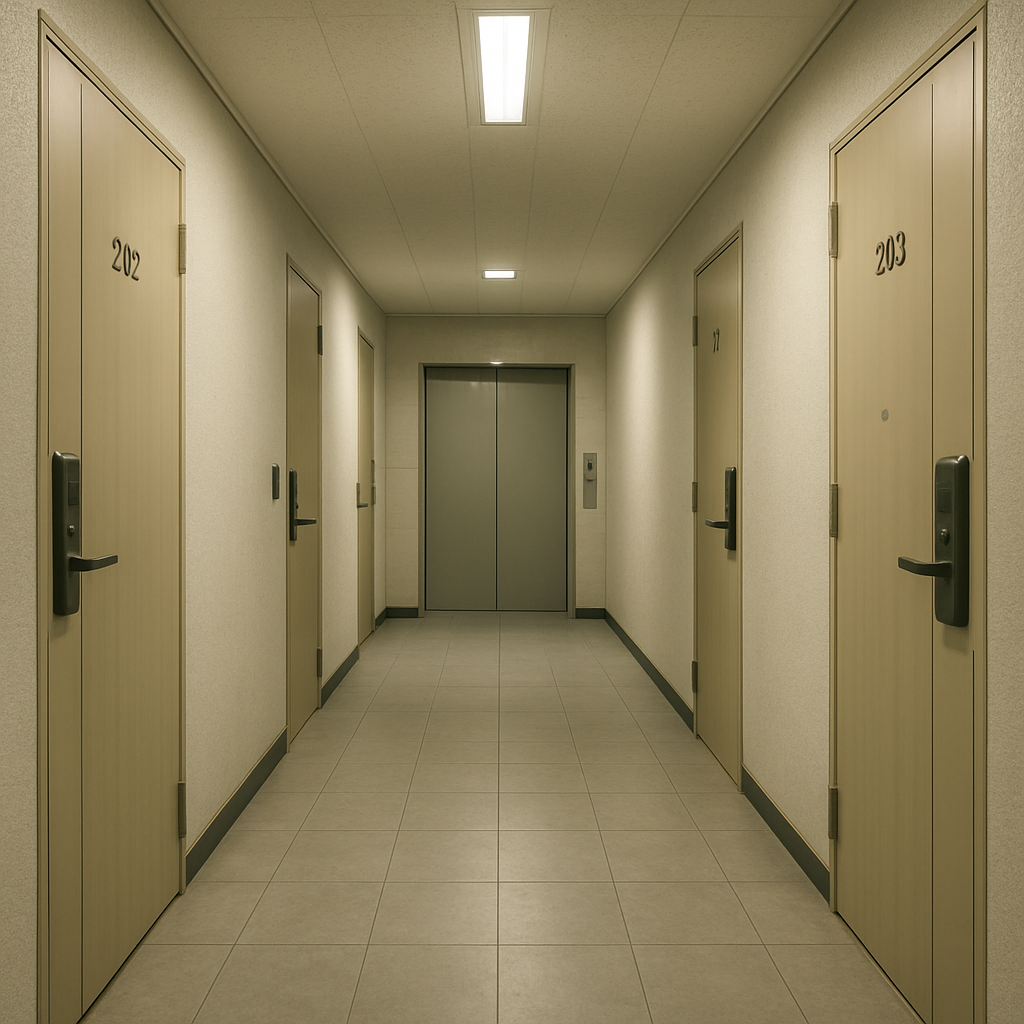
I didn’t understand why until the night our downstairs neighbor sent a message through the building’s intercom system. It wasn’t rude, exactly — a recorded, almost apologetic voice asking our unit to please be mindful of noise after 10 PM. My wife translated it for me with a face that told me this wasn’t the first warning, just the first one I happened to be home for.
Why floor noise is such a big deal here
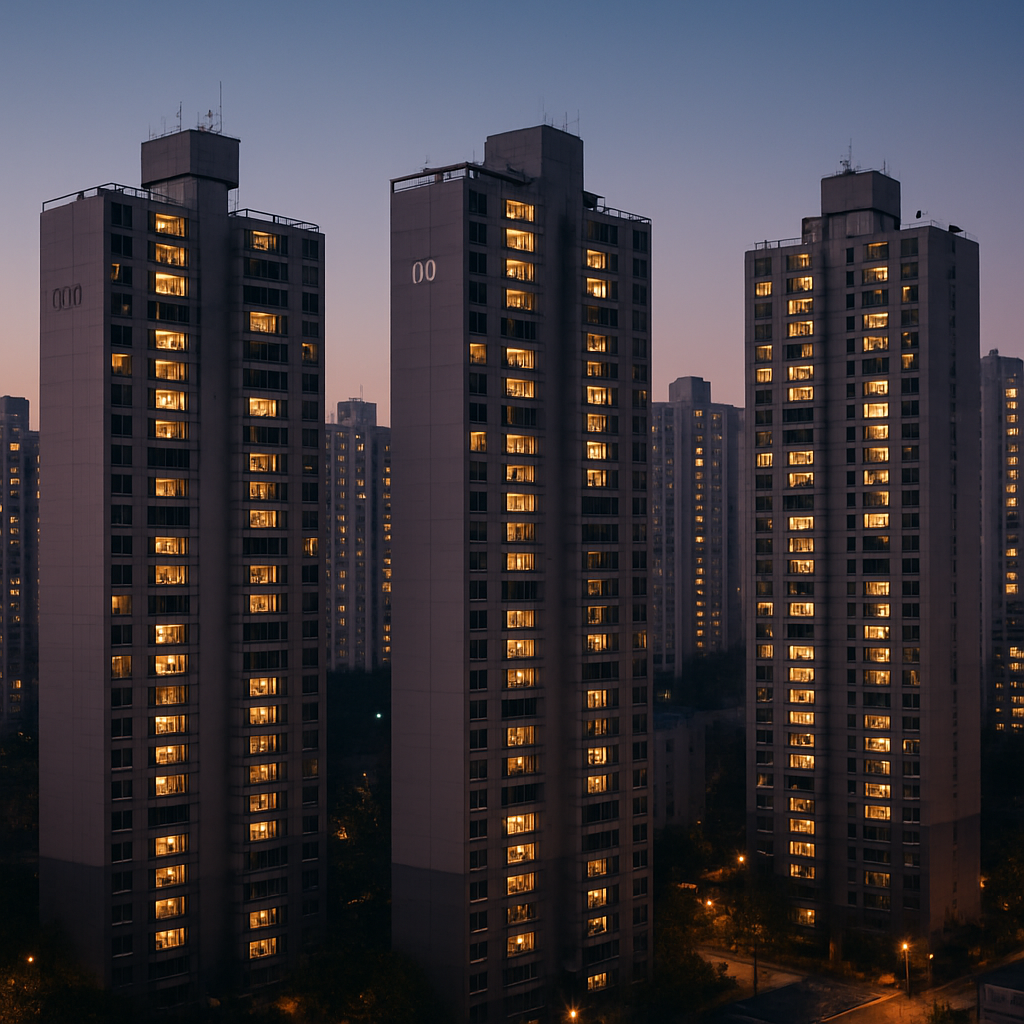
Floor noise — cheungganso’eum — is not a minor annoyance in Korea the way it might be back home. Close to two-thirds of Koreans live in apartment buildings stacked five stories or higher, packed into cities that ran out of room to build outward decades ago. Every footstep, every dropped toy, every game of pretend-it’s-a-trampoline on the living room floor travels straight down through concrete that, as I’ve learned the hard way, carries sound far better than it should.
The complaint nobody says to your face
What struck me as a foreigner wasn’t the rule itself — plenty of countries have quiet hours — it was how the complaint gets delivered. Nobody knocks on your door. Nobody yells across the hallway. The building management office fields the complaint and relays it through an intercom that crackles into every room of your apartment at once, polite and impersonal, which somehow makes it worse. You can’t argue with a recording. You just turn to your kid and start whispering “salgeumhi” again.
What we changed after that call
We bought the thick rubber play mats within the first month — the kind every parenting forum in Korea recommends before you’ve even finished unpacking. We banned running indoors, which felt cruel until I realized every other parent on our floor had done the exact same thing before we moved in. My son learned to walk on his toes around 8 PM without being told twice, which is either impressive discipline for a six-year-old or proof that kids absorb house rules faster than adults ever will.
I used to think this was overly strict, honestly. Then I spent one week in a rental where the family upstairs clearly hadn’t gotten the same memo, and I understood completely. There’s a particular kind of exhaustion that comes from lying in bed at 11 PM listening to what sounds like furniture being dragged across a floor above your head. I don’t send passive-aggressive notes. I just remember why my downstairs neighbor sent that message, and I go find my daughter’s slippers.
FAQ
What does “cheungganso’eum” mean, and why is it such a big deal in Korea?
It translates roughly to “inter-floor noise,” and it’s a big deal because most Koreans live in dense, high-rise apartment complexes where concrete slab floors transmit impact sound easily. Disputes over it are common enough that some buildings have dedicated noise-mediation committees, and severe, prolonged cases have occasionally escalated into real neighbor conflicts covered in local news.
How do apartment complaints usually get communicated?
Most complexes route noise complaints through the management office rather than direct confrontation. The office typically calls or messages the offending unit through a building-wide intercom system, often anonymously, as a first step before things escalate further.
What can foreigners moving into a Korean apartment do to avoid trouble?
Buying interlocking rubber floor mats for any room with kids, establishing a no-running-indoors rule, and avoiding vacuuming or moving furniture late at night go a long way. Many newer complexes also post specific quiet hours, usually starting around 10 PM, worth checking when you move in.
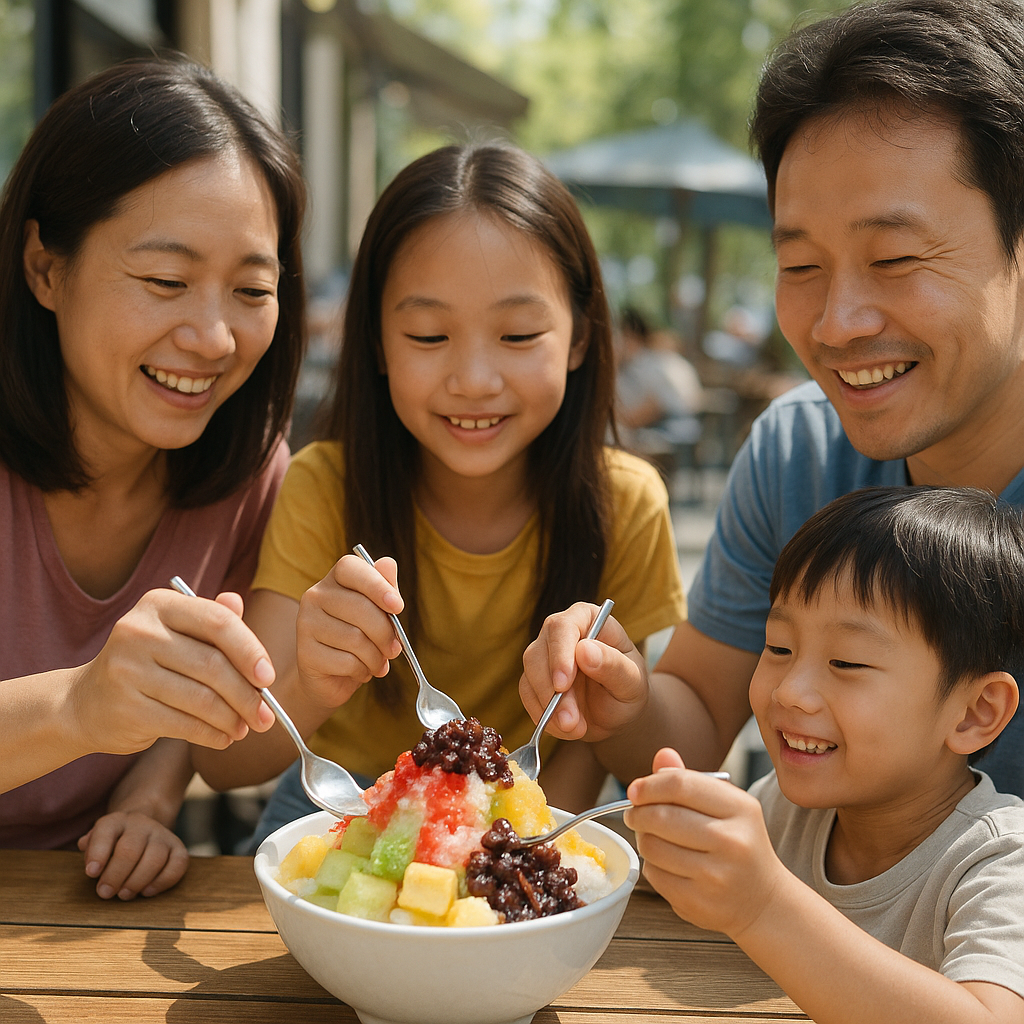
The first time I stood in a bingsu line, it was ninety minutes long, wrapped around a corner in Seongsu-dong, and I nearly walked away twice. My wife stopped me both times. “It’s worth it,” she said, the same thing she’d said about every line I’d ever complained about since I moved to Korea. She was right, obviously, the way she almost always is about this stuff.
Patbingsu — shaved ice topped with sweet red beans — has been Korea’s answer to brutal summer heat since long before air conditioning existed. What surprised me once I dug into it was how far back it actually goes. During the Joseon dynasty, ice was such a rare luxury that it was harvested from the Han River in winter and stored in massive underground ice houses — Seobinggo and Dongbinggo, names that are still on the map in Yongsan today — reserved for royalty. It wasn’t until hand-cranked ice shavers showed up during the Japanese colonial period that bingsu made its way onto ordinary streets, and red beans didn’t become the standard topping until the 1970s.
A mountain taller than my daughter’s head
None of that history mattered to my kids the first time they had it. What mattered was the mountain of shaved ice arriving at the table, taller than my daughter’s head, with mango cubes sliding down the sides like it was some kind of edible landslide. She was maybe three, and she cried — actual tears — when the bowl was empty, which is a level of grief I hadn’t previously associated with dessert.
Our unofficial summer ritual
Now it’s a full-blown summer ritual for us. Every year around the time the cicadas start up outside our window, we pick one new bingsu place to try, usually somewhere my wife found on a map app with a suspiciously specific pin drop. Last summer it was a place in Ikseon-dong doing a version with injeolmi rice cake dust and roasted soybean powder that my son, who normally rejects anything that isn’t mango-flavored, finished by himself.
What the waiting actually teaches
What I’ve come to appreciate isn’t really the dessert — it’s the waiting. Korean bingsu culture has this built-in patience test where you show up, you queue, sometimes for over an hour in July heat that makes the wait itself feel like a small punishment, and somehow the payoff still lands. My kids have learned to wait in that line without the meltdown that used to happen at year one. They know what’s coming. I think that’s the real lesson bingsu ended up teaching this family, more than any lecture I’ve given about patience actually stuck.
FAQ
What’s the difference between patbingsu and regular bingsu?
“Bingsu” is the general term for Korean shaved ice desserts, while “patbingsu” specifically refers to the version topped with sweetened red beans (pat), the most traditional and widely recognized style. Modern cafes now offer dozens of variations — mango, injeolmi, cheese, even coffee bingsu — but patbingsu remains the classic.
Why is Korean shaved ice so much finer than shaved ice elsewhere?
Korean bingsu machines typically shave ice made from frozen milk rather than water, producing a snow-like texture that melts almost instantly on the tongue. This is a big part of why bingsu feels different from kakigori or other shaved ice styles that use water-based ice blocks.
Is bingsu only a summer food in Korea?
Traditionally yes, tied closely to the hottest months, but many cafes now serve it year-round. That said, the cultural moment for bingsu is still overwhelmingly summer — cafes will often only put certain seasonal bingsu flavors on the menu between June and September.
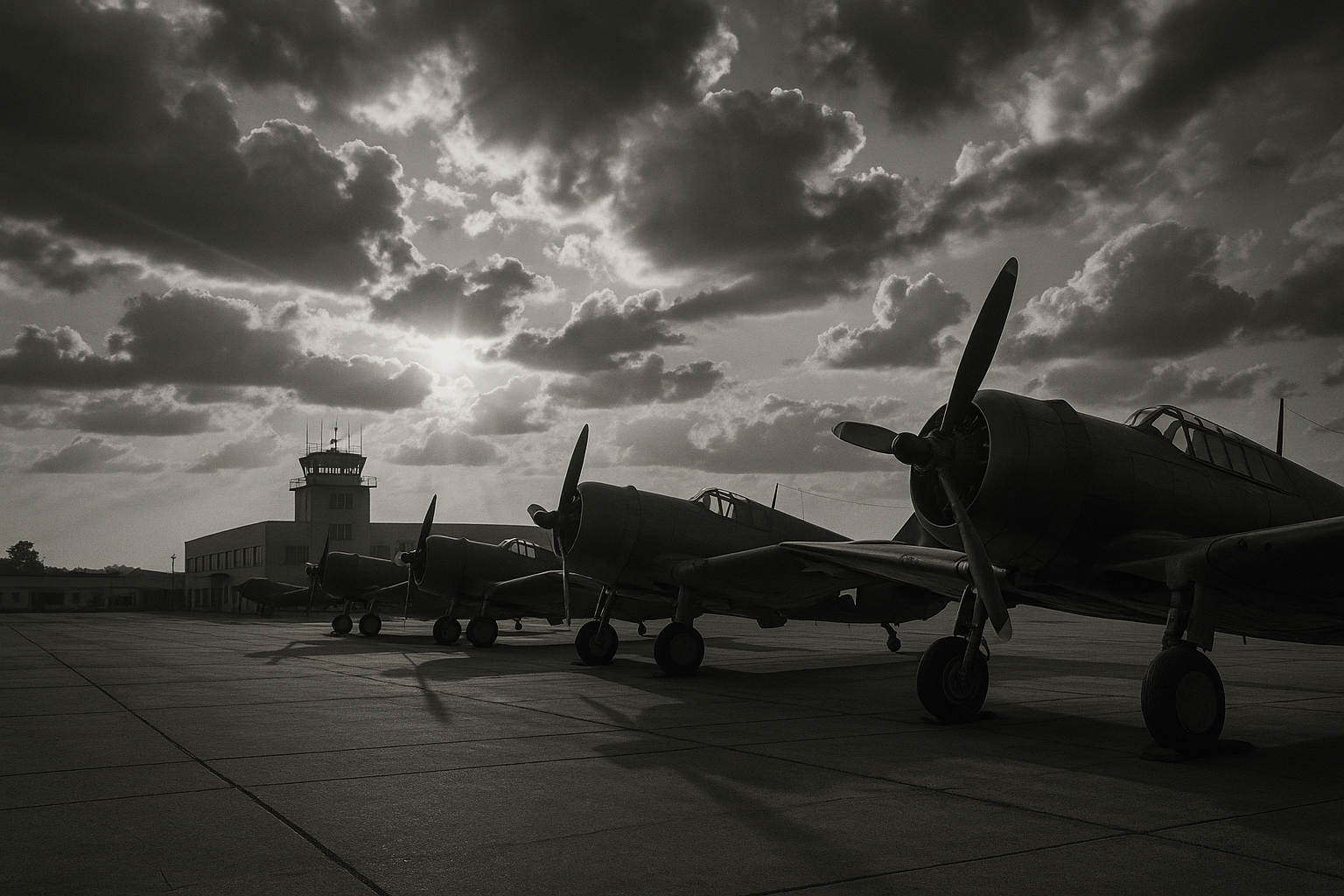
1947년 7월 8일 오전, 뉴멕시코주 로즈웰 육군 항공대(Roswell Army Air Field) 공보장교 월터 하우트(Walter Haut)는 짧은 보도자료 한 장을 지역 언론에 돌렸다. 내용은 몇 줄뿐이었다. “제509폭격전대 정보부대가 로즈웰 인근 목장에서 비행접시 한 대를 회수했다.” 다음 날 로즈웰 데일리 레코드는 “RAAF Captures Flying Saucer On Ranch in Roswell Region”이라는 제목을 1면에 실었다. 그리고 딱 하루 뒤, 같은 군은 말을 바꿨다. 그 잔해는 기상 관측용 기구였다고.
세계 유일의 원자폭탄 투하 부대가 주둔하던 기지에서 나온 발표가 하루 만에 뒤집힌 이 사건은, 80년 가까이 지난 지금까지도 미국에서 가장 유명한 UFO 미스터리로 남아 있다. 몇 년 전 히스토리 채널 다큐멘터리를 우연히 보다가 이 사건에 빠져든 적이 있는데, 볼 때마다 새로운 디테일이 튀어나오는 게 신기했다. 목장 위치 하나만 해도 자료마다 조금씩 다르게 서술돼 있을 정도다.
1947년 6월, 브래즐의 목장에서 시작된 일
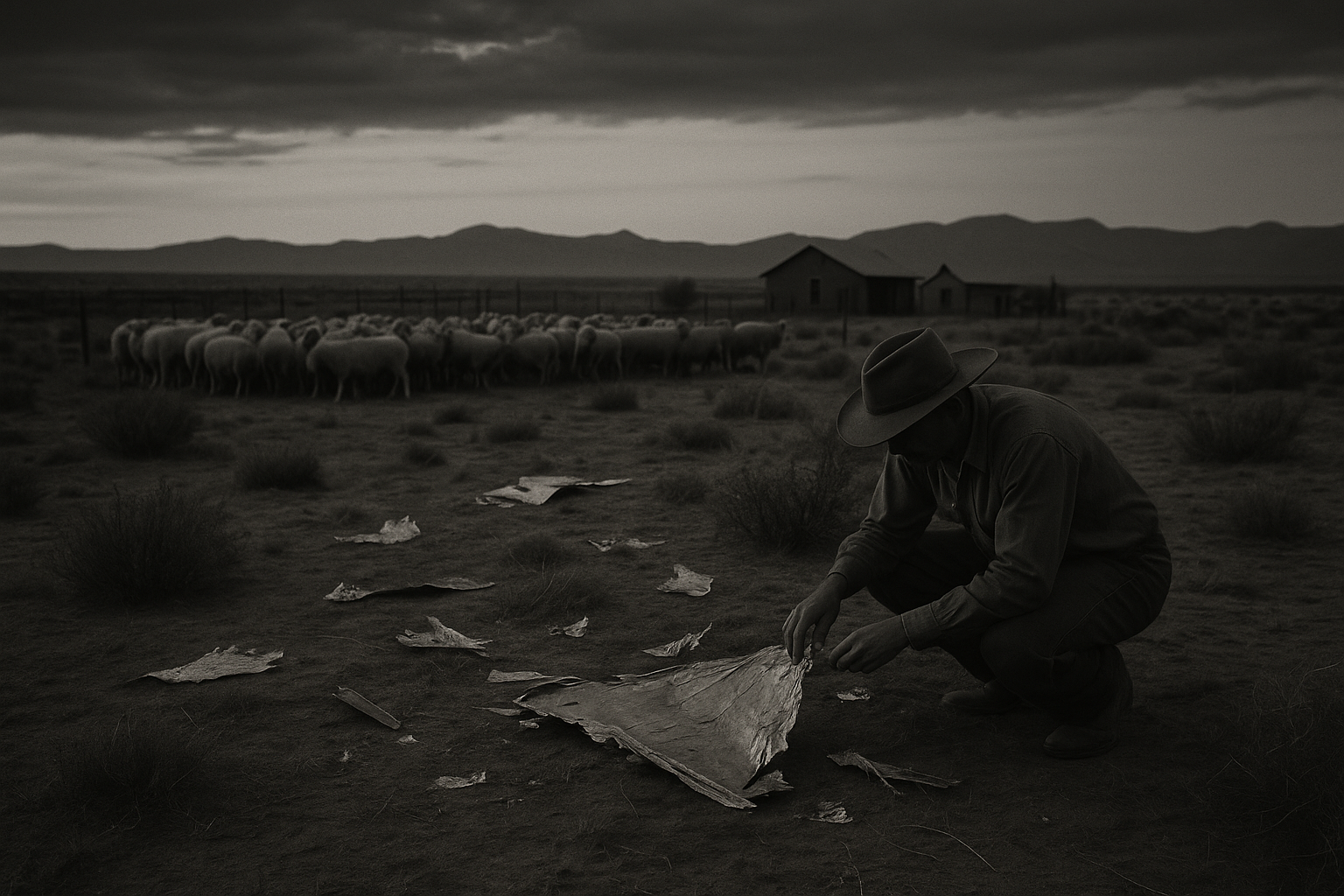
사건의 시작은 로즈웰이 아니라 로즈웰에서 북서쪽으로 약 120km 떨어진 코로나(Corona) 근처의 한 목장이다. 이곳에서 일하던 목장 관리인 윌리엄 “맥” 브래즐(William “Mac” Brazel)은 6월 중순 어느 날, 양떼를 몰다가 넓은 지역에 흩어진 이상한 잔해를 발견했다. 은박지 같은 얇은 금속 조각, 가늘고 질긴 막대, 접착테이프처럼 보이는 조각들이 수백 미터에 걸쳐 널려 있었다고 한다.
브래즐은 처음엔 대수롭지 않게 여기고 잔해 일부를 주워 창고에 던져뒀다. 그런데 7월 초, 마을에 나갔다가 최근 미국 전역을 휩쓴 “비행접시” 목격담 소식을 듣게 됐다. 자신이 본 것이 그 비행접시와 관련이 있을지도 모른다는 생각에 로즈웰의 카운티 보안관 조지 윌콕스(George Wilcox)를 찾아갔다. 7월 7일의 일이다.
제시 마셀 소령이 도착하다
윌콕스 보안관은 곧바로 인근 로즈웰 육군 항공대에 연락했다. 당시 이 기지에는 제509폭격전대(509th Bomb Group)가 주둔하고 있었는데, 인류 역사상 최초로 원자폭탄을 투하한 바로 그 부대였다. 기지 정보장교 제시 마셀(Jesse Marcel) 소령과 방첩대(CIC) 소속 셰리든 캐빗(Sheridan Cavitt) 대위가 현장으로 파견됐다.
마셀은 훗날 여러 인터뷰에서 잔해의 이상함을 강조했다. 얇은 금속 조각은 손으로 구겨도 원래 모양으로 펴졌고, 망치로 두드려도 흠집이 나지 않았으며, 라이터로 태워도 그을리지 않았다는 것이다. 캐빗 대위는 반대로 자신이 본 것은 대나무 막대와 은박지, 고무 조각 정도였다고 훨씬 평범하게 회상했다. 같은 현장을 본 두 사람의 기억이 이렇게 갈리는 것부터가 이 사건을 복잡하게 만드는 요소 중 하나다.
비행접시에서 기상 기구로, 하루 만의 반전
7월 8일 발표된 보도자료는 곧바로 AP통신을 타고 전국으로 퍼졌다. 로즈웰뿐 아니라 시카고, 뉴욕의 신문들까지 “비행접시 포획” 소식을 실었다. 그런데 기지 사령관 윌리엄 블랜차드(William Blanchard) 대령의 상급자였던 제8공군 사령관 로저 라미(Roger Ramey) 준장이 텍사스 포트워스에서 기자회견을 열어 상황을 정리했다. 잔해는 레이더 반사판이 달린 기상 관측 기구, 이른바 레이윈 표적(rawin target)이라는 설명이었다. 기자들 앞에서 마셀 소령이 알루미늄 포일과 나무 막대, 종이 조각을 들고 서 있는 사진까지 찍혔다.
이 사진은 이후 수십 년간 논쟁거리가 됐다. 회의론자들은 사진 속 잔해가 실제로 평범한 기상 기구 부품이라고 보는 반면, 일부 연구자들은 마셀이 들고 있는 게 목장에서 처음 수거한 진짜 잔해가 아니라 나중에 바꿔치기된 물건이라고 주장한다. 마셀 본인도 은퇴 후 인터뷰에서 기자들 앞에서 보여준 건 진짜가 아니었다는 취지로 말한 적이 있다.
1994~1997년, 미 공군의 뒤늦은 해명 — Project Mogul
사건은 1970년대 말까지 거의 잊혔다. 그러다 1978년, 은퇴한 마셀 중령이 UFO 연구자 스탠턴 프리드먼(Stanton Friedman)과 인터뷰하면서 그때 회수한 잔해는 지구의 것이 아니었다고 믿는다고 밝혔고, 이 인터뷰가 1980년 찰스 벌리츠와 윌리엄 무어가 쓴 책 《The Roswell Incident》로 이어지면서 사건은 완전히 다시 불붙었다.
여론의 압박 속에 미 공군은 1994년과 1997년 두 차례에 걸쳐 공식 보고서를 냈다. 1994년 보고서의 결론은 이랬다. 잔해는 기상 기구가 아니라 프로젝트 모굴(Project Mogul)이라는 극비 프로그램에서 쓰인 고고도 풍선 열이었다는 것. 뉴욕대학교 연구팀이 개발한 이 프로젝트는 여러 개의 기구를 줄줄이 묶어 마이크로폰과 레이더 반사판을 매달아 성층권 높이까지 띄우는 방식으로, 목적은 소련의 핵실험을 감지하는 것이었다. 냉전 초기 미국이 소련의 핵무기 개발 상황을 파악할 마땅한 수단이 없던 시절, 대기 중 음파를 이용해 핵실험 징후를 잡아내려 한 시도였다. 실제로 1947년 6월 4일 뉴멕시코주 앨라모고도에서 발사된 모굴 관측기구 중 하나(NY-4로 불리는 비행체)가 레이더에서 사라진 기록이 남아 있고, 그 낙하 예상 지점이 브래즐의 목장과 대체로 겹친다는 게 공군 설명의 핵심이다.
외계인 시신 목격담은 어디서 왔나
1990년대 들어 로즈웰 이야기에는 새로운 층이 하나 더 쌓였다. 잔해뿐 아니라 “외계인 시신”까지 목격했다는 증언들이 나오기 시작한 것이다. 1997년 미 공군의 두 번째 보고서 《The Roswell Report: Case Closed》는 이 부분을 정면으로 다뤘다. 목격자들이 기억하는 작은 인체 형상은 1950년대 공군이 고고도 낙하산 실험에 사용한 인체모형(anthropomorphic dummy)이었을 가능성이 크다는 게 보고서의 판단이었다. 실험은 1947년보다 몇 년 뒤인 1950년대 초·중반에 진행됐는데, 세월이 흐르면서 서로 다른 시기의 기억이 하나로 뒤섞였을 수 있다는 설명이다.
이 설명에 모두가 만족한 건 아니다. 전직 장의사 글렌 데니스(Glenn Dennis)가 1990년대에 증언한 것처럼, 시점이 명백히 1947년으로 못박힌 증언들도 여전히 존재하기 때문이다. 물론 이런 2차, 3차 증언 상당수는 당사자가 이미 사망했거나 익명으로만 알려져 있어 교차 확인이 쉽지 않다는 한계가 있다.
지금도 남아 있는 질문들
공군의 공식 설명은 두 갈래다. 잔해는 프로젝트 모굴의 풍선, 시신 목격담은 1950년대 실험 기억의 혼선. 그런데도 로즈웰이 여전히 논쟁적인 이유는 단순하다. 첫 번째 발표(비행접시)와 두 번째 발표(기상 기구), 그리고 47년 뒤 나온 세 번째 발표(프로젝트 모굴)가 서로 계속 바뀌었기 때문이다. 정부 기관이 같은 사건을 두고 반세기에 걸쳐 설명을 세 차례나 수정한 사례는 흔치 않다. 회의론자들은 이걸 관료 조직의 뒤늦은 기밀 해제 과정으로 보고, 열혈 연구자들은 진짜 이유를 숨기기 위한 임기응변으로 본다. 어느 쪽이 맞는지는 지금 남은 공개 문서만으로 완전히 가려지지 않는다.
목장에서 발견된 잔해의 실물이 현재 남아 있지 않다는 점도 논쟁을 계속 살려두는 요인이다. 당시 수거된 조각들은 별도로 보존되지 않았고, 프로젝트 모굴 자체가 1990년대 초까지 기밀로 묶여 있어 관련자들의 증언을 그때그때 검증할 방법이 없었다. 로즈웰은 지금 인구 4만 8천여 명의 소도시지만, 매년 7월 첫째 주에는 로즈웰 UFO 페스티벌(Roswell UFO Festival)에 수만 명의 방문객이 몰린다. 1992년 문을 연 국제 UFO 박물관 겸 연구센터(International UFO Museum and Research Center)도 이 도시의 상설 명소가 됐다.
자주 묻는 질문
Q. 로즈웰 잔해가 무엇이었는지에 대한 미 공군의 최종 결론은 무엇인가요?
1994년 공군 보고서는 잔해가 프로젝트 모굴에서 쓰인 고고도 풍선 열의 일부, 그중에서도 레이더 반사판과 풍선 재질이었다고 결론지었다. 1947년 6월 발사된 모굴 비행체 NY-4가 레이더 추적에서 사라진 지점이 브래즐 목장과 겹친다는 점을 근거로 들었다. 다만 이 결론이 마셀 소령이 묘사한 “구겨도 펴지는” 재질의 특성까지 설명하는지에 대해서는 지금도 이견이 남아 있다.
Q. 로즈웰에서 외계인 사체를 봤다는 목격자들은 실제로 존재하나요?
글렌 데니스를 포함해 여러 명이 1990년대 인터뷰에서 시신 목격을 증언했다. 하지만 1997년 공군 보고서는 이들이 언급한 작은 인체 형상이 1950년대 초중반 실시된 고고도 낙하산 실험의 인체모형과 혼동됐을 가능성을 제시했다. 증언자 상당수가 익명이거나 이미 사망해 교차 검증이 어렵다는 점도 함께 지적된다.
Q. 로즈웰에 가면 지금도 볼 수 있는 게 있나요?
메인스트리트에 있는 국제 UFO 박물관 겸 연구센터에서 당시 신문 스크랩, 증언 녹취록, 관련 서적을 전시하고 있다. 매년 7월 초 열리는 UFO 페스티벌에는 코스튬 퍼레이드와 강연이 함께 열리며, 지역 관광청 집계로 수만 명 단위의 방문객이 다녀간다. 사건이 실제로 일어난 브래즐의 옛 목장 부지는 코로나 인근 사유지라 일반 관광객이 접근하기는 쉽지 않다.
예전에 다룬 미국 정부가 공개한 UFO 파일 160건 기사에서도 비슷한 패턴이 보인다. 정부가 뭔가를 처음엔 부인하다가, 수십 년 뒤 부분적으로만 인정하는 흐름 말이다. 로즈웰 사건은 그 패턴의 원조 격이라고 봐도 무리가 없을 것 같다.
The hotteok ajumma at the second stall past the fish shop has a system, and my daughter and I are not part of it. There’s a line of regulars who just hold up fingers — one, two, three — and get their syrup-filled pancakes wrapped in paper before they’ve even finished paying. Yuna, five years old and holding my hand in a death grip because of the crowd, points at the griddle and says, loud enough for half of Mangwon Market to hear, “Appa, that one is bleeding sugar.” The ajumma laughs so hard she has to set down her spatula. That’s the whole trip, honestly. Everything after that was just details.
We go to Mangwon Market most Saturday mornings, partly because it’s a ten-minute walk from our apartment in Mapo-gu and partly because my wife has decided, correctly, that a five-year-old who only ever sees food arrive through a delivery app’s plastic bag is missing something. It was a hot one this past weekend — late July heat that hadn’t broken yet even at nine in the morning, the kind that makes the awnings smell like warm canvas and the ice buckets under the fish stalls sweat as much as I do.
The Market Doesn’t Whisper
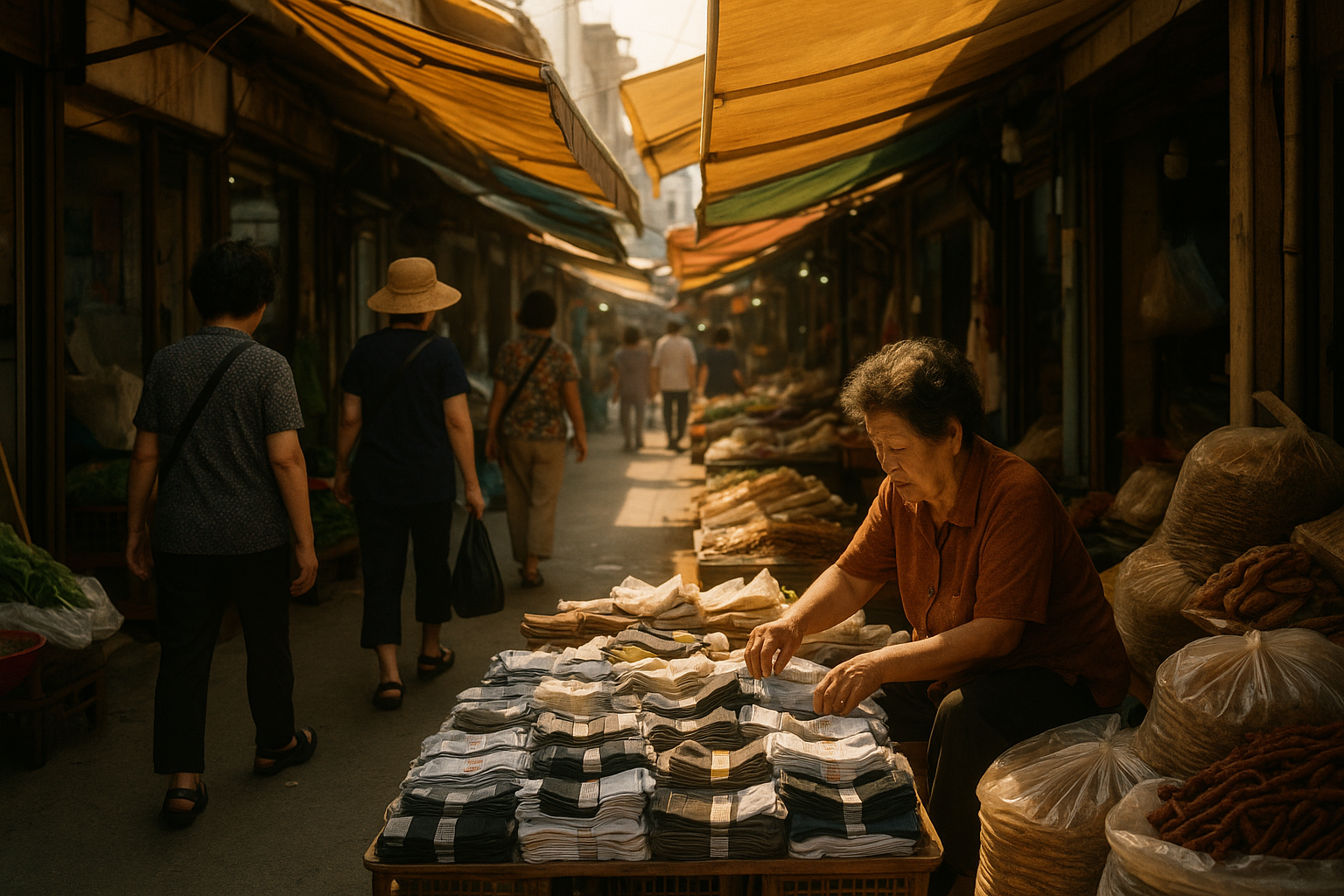
What hits you first isn’t a smell, it’s noise. Mangwon isn’t a tourist market like Gwangjang or Namdaemun — there’s no English menu anywhere, and I’ve never once seen a tour group come through — so the calls aren’t performed for anyone, they’re just how business gets done. “골라 골라, 골라 골라!” — pick one, pick one — from a woman selling socks three for 5,000 won, her voice pitched to cut through the crowd without a microphone. A man near the entrance sells roasted chestnuts and says the price like it’s one long word, “이천원이천원이천원,” until someone stops.
Underneath the calling is the metal-on-metal clang of a woman flattening dough with what looks like a hockey puck welded to a handle, the hiss of oil at the twigim stand, and somewhere, always, a radio playing trot music a decade too old for the vendor working next to it. My daughter has stopped being scared of the noise. Now she just narrates it back to me in a running commentary, which is somehow louder than the market itself.
Ordering Anchovies Badly
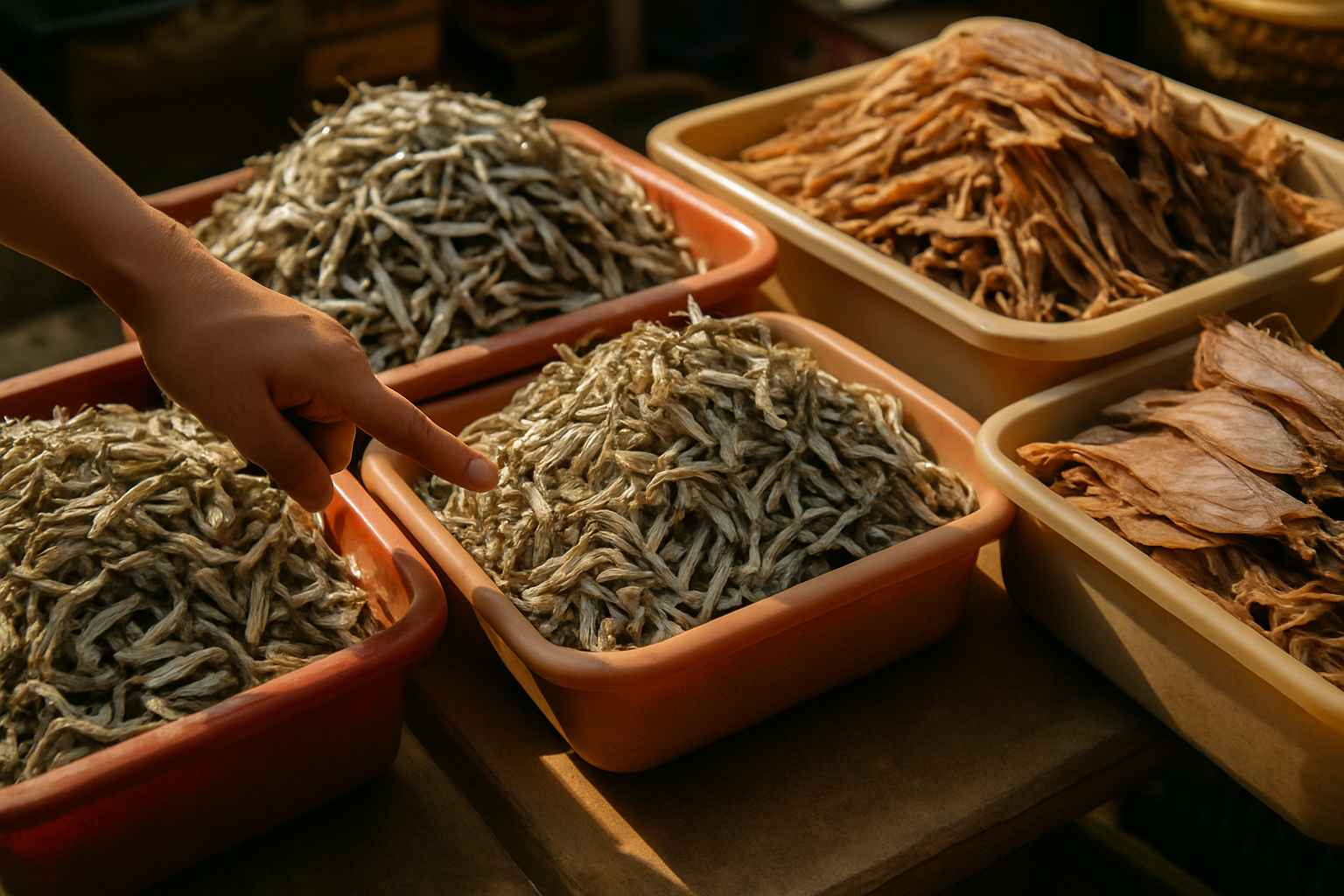
I’ve lived here nine years and my market Korean is still held together with duct tape. There’s a stall near the middle of the alley run by a woman who sells dried myeolchi (멸치, dried anchovies) by the small plastic tub, and I wanted the medium-size ones for anchovy stock, not the tiny ones for banchan. I pointed and said, with total confidence, “이거 큰 거 주세요” — give me the big one — except I pointed at the wrong bin, and she handed me a bag of dried squid instead, laughing, and said something too fast for me to catch that I’m fairly sure translated to “you want fish, this is fish, close enough, sir.” We ended up with both. The anchovies were 4,000 won for a bag; the squid I hadn’t planned on was another 3,000, and I paid it because arguing felt more embarrassing than just eating dried squid for a week.
My daughter thought this was the funniest thing that had happened to her all summer. She still brings it up at dinner — “Appa bought the wrong fish” — like it’s a title I’ve earned permanently.
The Bargain That Wasn’t Really a Bargain
Everyone warns you about haggling in Korean markets, and I want to be honest about how bad I am at it. At a produce stall selling bags of participation-trophy-sized peaches, I tried the classic move — “깎아주세요,” knock a little off — on a 10,000 won bag of six. The ajeossi running the stall looked at me, looked at Yuna, and threw in a seventh peach for free without dropping the price at all, which is not technically a discount but felt like winning. That’s the real shape of bargaining at a neighborhood market like this one: it’s less about the number and more about being seen, being a regular, having a kid with you who says thank you in Korean loud enough that everyone within ten feet turns to smile. Yuna has figured this out faster than I have. She’s started saying “감사합니다!” to absolutely everyone, unprompted, and it works better than any Korean I’ve ever spoken.
Why I Keep Bringing Her Back
None of this is efficient. The supermarket two blocks from our place has air conditioning, self-checkout, and produce that doesn’t require me to gesture apologetically at a stranger. But Yuna knows the tteokbokki lady’s face now, knows to duck under the low edge of the tarp at the banchan stall, knows that the market smells different depending on which direction the wind is blowing the grill smoke. That’s not something an app delivers. If you’re raising a kid here and wondering whether the market fuss is worth it over ordering groceries on your phone — the way I learned to navigate Korean convenience stores as a dad taught me that convenience and connection aren’t the same thing, and the market is where she’s actually getting the second one.
FAQ
Is it normal to bargain at a Korean traditional market?
Yes, but mostly at produce, dried goods, and clothing stalls — not at food stands selling a single cheap item like a 1,500 won hotteok or a bowl of tteokbokki. Asking for a discount on a small snack is considered a little rude. Buying in bulk, like a whole bag of peaches or a kilo of anchovies, is where a small discount or a free extra item is normal and expected.
What should I bring cash for at a market like Mangwon?
Bring small bills and coins. Most stalls now take cards or mobile pay, but the smallest food stands — hotteok, twigim, a paper cup of fish cake broth — still run faster and friendlier on cash, and vendors sometimes round down or throw in an extra piece when you pay in exact change.
Is a neighborhood market like Mangwon worth visiting with young kids, or should I stick to Gwangjang or Namdaemun?
Both have their place. Gwangjang and Namdaemun are bigger, louder, and built for visitors, which makes them fun once. A smaller neighborhood market is better for a regular routine with kids — it’s slower, vendors start recognizing your child, and there’s less crowd pressure per square meter for a five-year-old’s hand to get lost in.
The guy two seats down handed me an orange plastic bag full of inflated thundersticks before I’d even found my row. “Section 301, you’ll need these,” he said in English, like it was obvious, like I’d ordered them. I hadn’t. He just had extra. That was my introduction to Jamsil Baseball Stadium, and it took about four minutes for a stranger to hand me equipment for a ritual I didn’t understand yet.
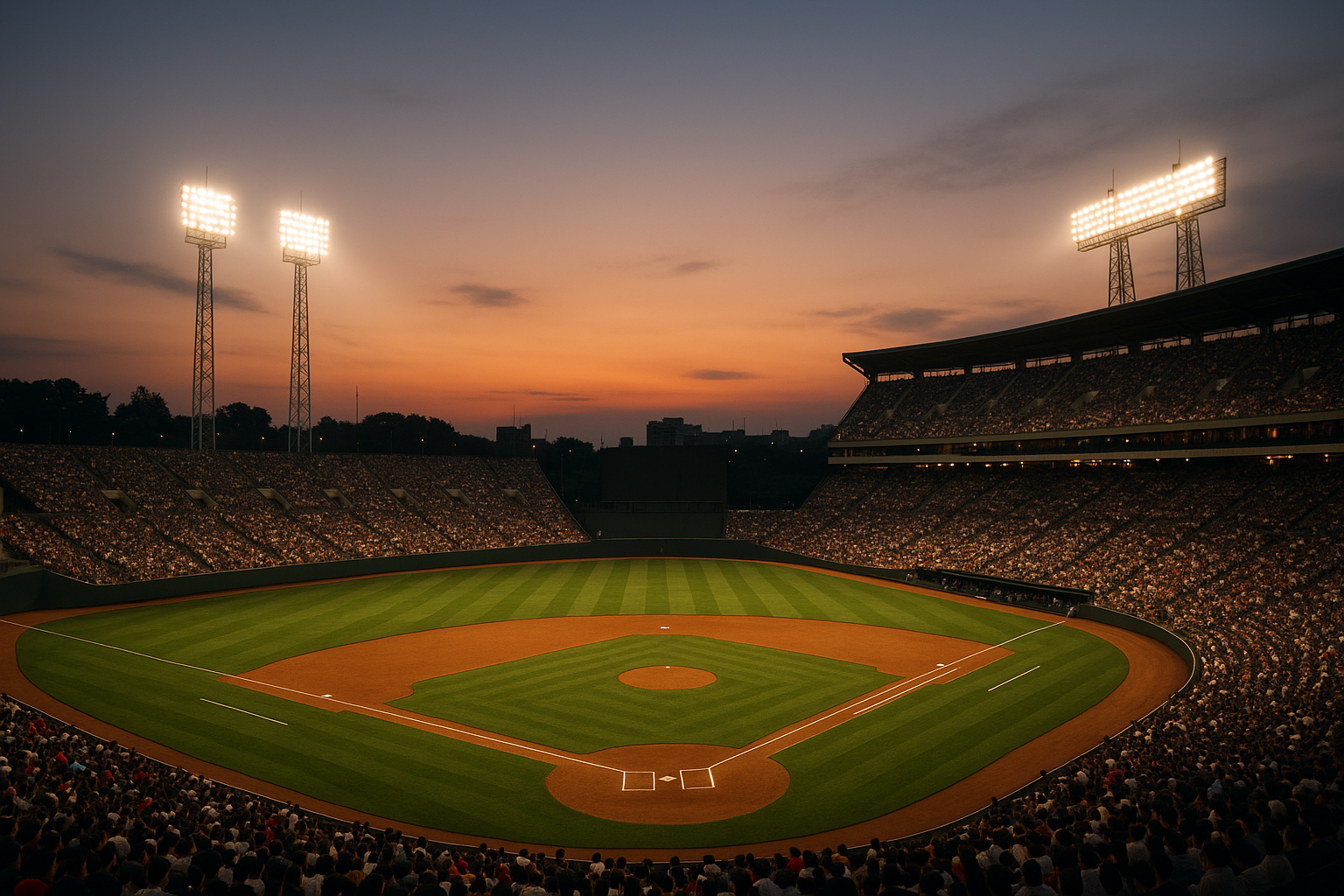
It was a Saturday night game, LG Twins against the Doosan Bears — the two teams that share Jamsil, which still strikes me as strange, like two families splitting one kitchen. My ticket cost 15,000 won, standing-outfield tier, bought from a scalper-free kiosk twenty minutes before first pitch. I went alone. My wife had the kids, and honestly I think she wanted me to have one night of not translating snack requests for anyone but myself.
The Chicken Arrives Before the First Pitch Does
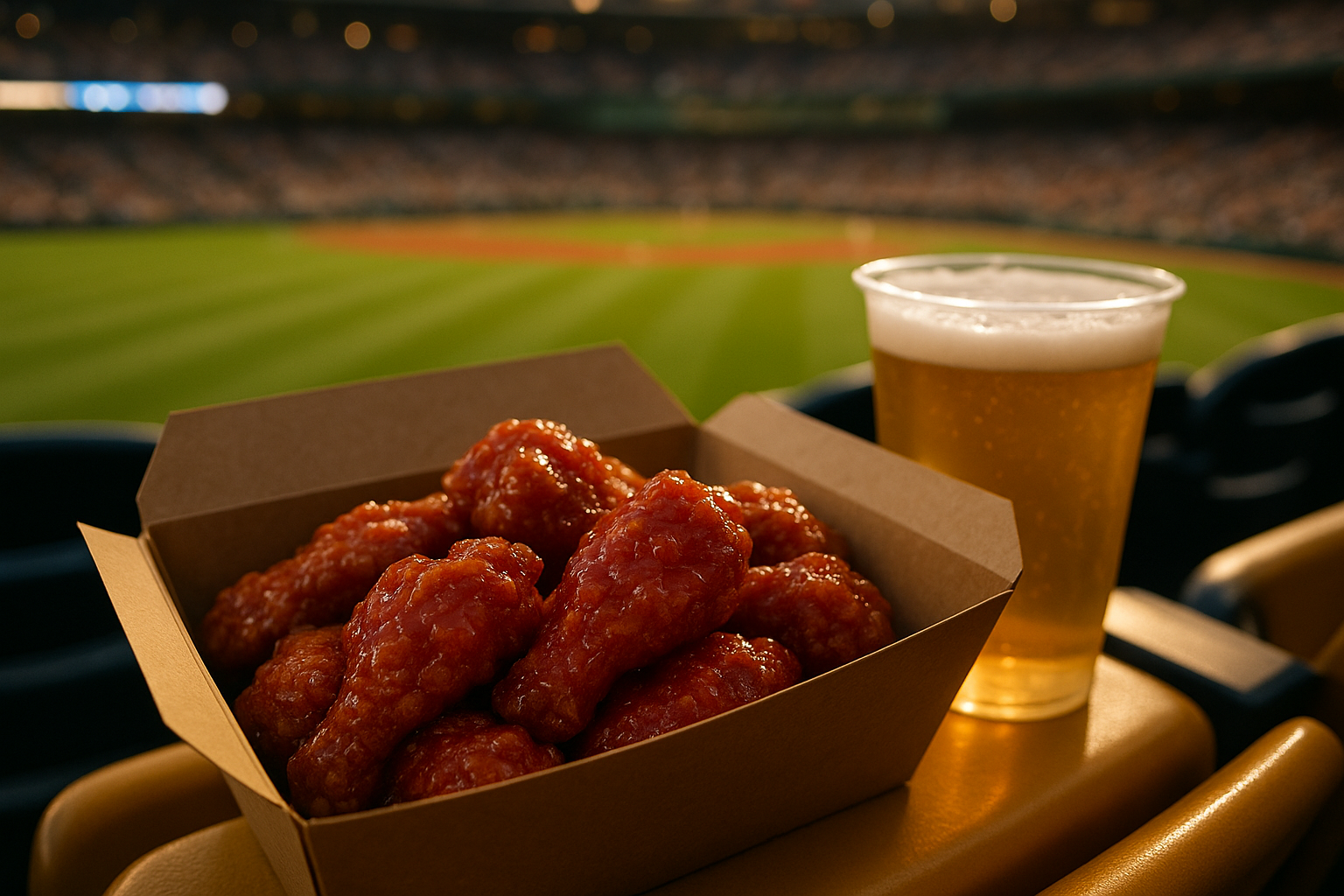
I didn’t even have to leave my seat. A vendor walked the aisle with a cardboard sign taped to a pole listing seat-number order codes, and when I raised two fingers and pointed at the fried chicken photo, he shouted my section number back down the row like an auction call. Twelve minutes later a box of yangnyeom chicken showed up — 23,000 won, still steaming — passed hand to hand down eleven strangers until it reached me. Nobody took a piece. Nobody even really looked at it. It just arrived, the way mail arrives.
Beer came from a woman with a keg strapped to her back like some kind of tactical gear, 5,000 won a cup, no ID check, no line. Chimaek — chicken and beer — isn’t a stadium concession here so much as it’s the actual plot of the evening. The baseball is almost the subplot.
Learning the Choreography By Accident
When the Twins cheerleaders came out in the third inning, the entire section around me stood up in one motion, like a wave that had been rehearsing. I stayed seated for maybe eight seconds before the guy who’d given me the thundersticks pulled me up by the elbow, not unkindly, just efficiently, the way you’d catch someone before they walked into a door.
The chant for that inning was “dollyeo dollyeo” — twist, twist — and everyone crossed their thundersticks and rotated them in a figure-eight while chanting the batter’s walk-up phrase in unison. I mouthed nonsense syllables and rotated my sticks a half-beat behind everyone else. Nobody corrected me. Nobody needed to. By the fifth inning I wasn’t a half-beat behind anymore.
There’s a towel-swinging chant reserved for the seventh inning, when the whole stadium — all 23,750 seats’ worth, give or take — spins white and blue rally towels overhead while the cheer squad conducts from a small platform in front of the outfield stands. I didn’t have a towel. The woman behind me, who I never learned the name of, handed me hers without asking if I wanted it, the same casual transfer as the thundersticks earlier. I spun it badly. She laughed, not at me exactly, more like she remembered being new to it too.
What Nine Innings Actually Taught Me
I’ve lived in Korea for a while now, long enough that most of the disorientation has worn smooth. But that night in Jamsil was the first time belonging felt like something handed to me in stages — a bag of thundersticks, a shared box of chicken, a towel from a stranger’s hands — rather than something I had to earn by being fluent or invisible. Nobody asked where I was from. Nobody needed me to explain myself. The chant didn’t care if I understood the words. It only needed my arms moving with everyone else’s.
I thought about the first time I ordered fried chicken to a park bench and felt like an outsider fumbling an app. This was the opposite of that — nobody made me order anything. The whole system was built to fold you in without asking permission first.
The Twins lost, 4-2, on a two-run double in the eighth that sent a groan through the whole stadium in perfect unison, which felt, weirdly, like its own kind of togetherness. I walked out past the chicken boxes stacked six feet high by the gate, thundersticks still in my bag, and realized I hadn’t checked my phone once in three hours.
Frequently Asked Questions
Do you need to know Korean to enjoy a KBO game?
No. I didn’t understand maybe 80 percent of the chants at my first game and still walked out of Jamsil having had one of the best nights I’d had in Korea that year. The cheer squad leads with gestures and rhythm you can copy visually within a couple of innings — thunderstick crosses, towel swings, clap patterns — and the people around you will physically pull you into it if you’re slow to catch on.
How much should I budget for a night at the stadium?
My night ran about 45,000 won total: 15,000 for the outfield ticket, 23,000 split loosely with chicken I never technically ordered myself, and 5,000 for one beer. If you buy your own chicken and a couple of beers solo, figure 40,000 to 55,000 won for ticket plus food and drink, depending on the section and how much chimaek you commit to.
What’s the etiquette around the food delivery and shared items?
Vendors call out seat-section numbers rather than walking a full circuit, so listen for your block number if you’ve ordered ahead through a seatback code or an app. Sharing thundersticks, towels, or even a bite of chicken with neighbors you’ve just met is completely normal in the cheering sections — it’s less generosity, more just how the seating blocks function as temporary teams for three hours.
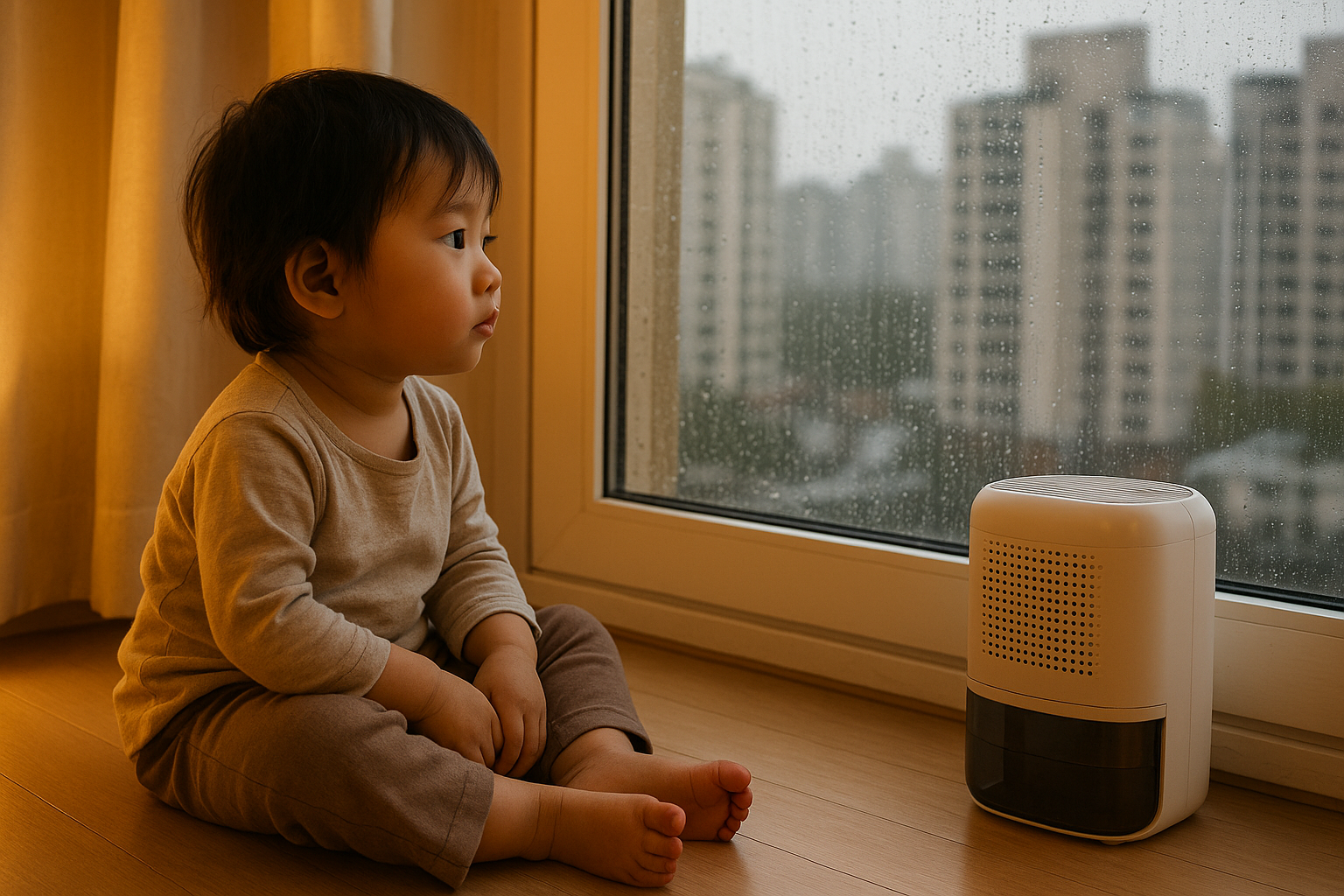
My daughter has started narrating the rain. She sits on the windowsill in her pajamas, points at the water running sideways across the glass, and says “more, more, more” like she’s cheering it on. I used to find that endearing. Around day nine of jangma, I started finding it a little personal.
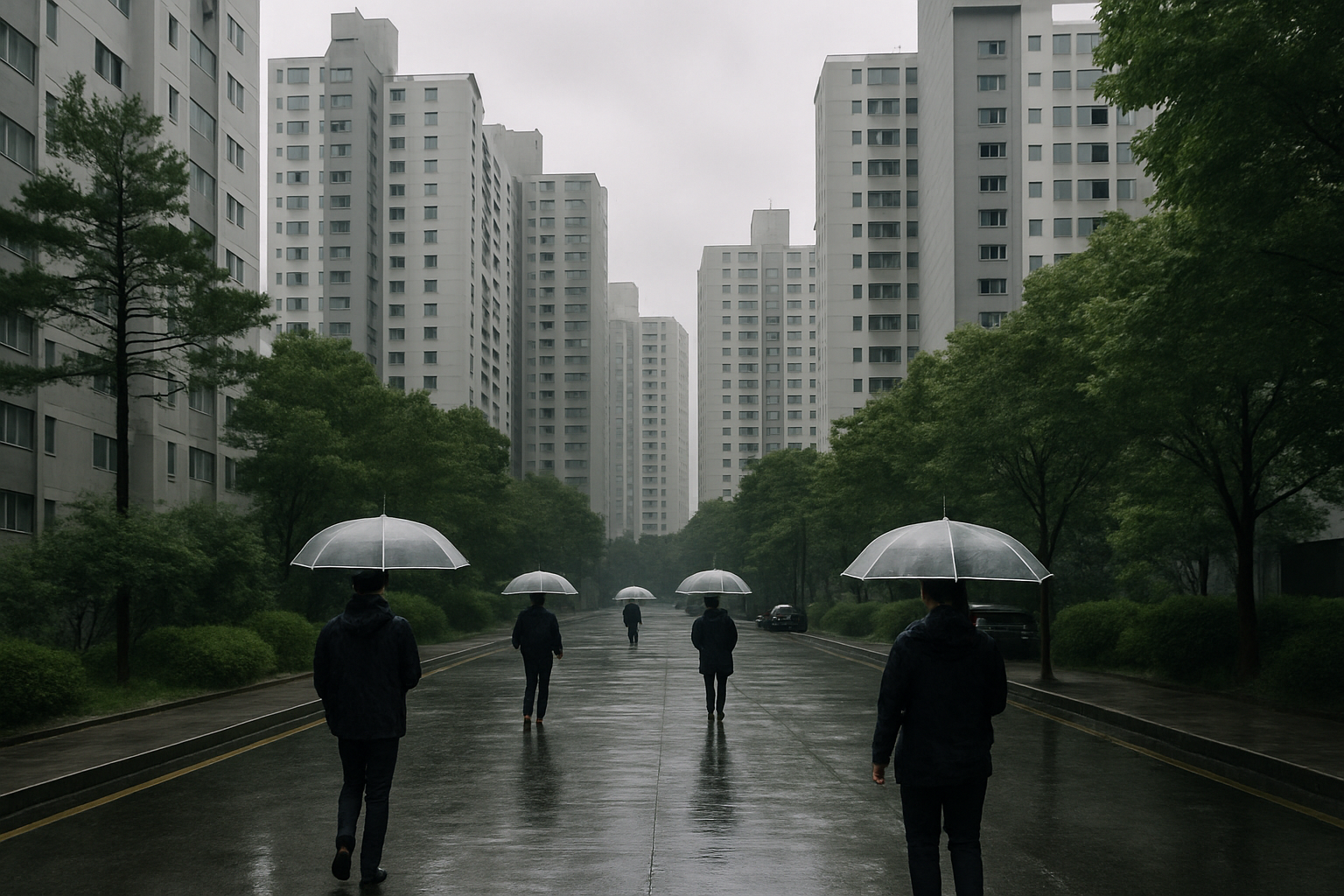
We’re three weeks into the wet season here in our apartment outside Seoul, and the whole building smells faintly like a gym bag that never quite got aired out. That’s not a complaint exactly — more of a fact I’ve made peace with. Korean summers come in two acts. First the heat builds for a few weeks, then sometime around late June the sky just gives up holding it in, and it rains, hard, for what feels like a month straight. My wife’s family calls it jangma, and every year they warn me about it like it’s a relative visiting from out of town who overstays.
The laundry situation has become a personality trait
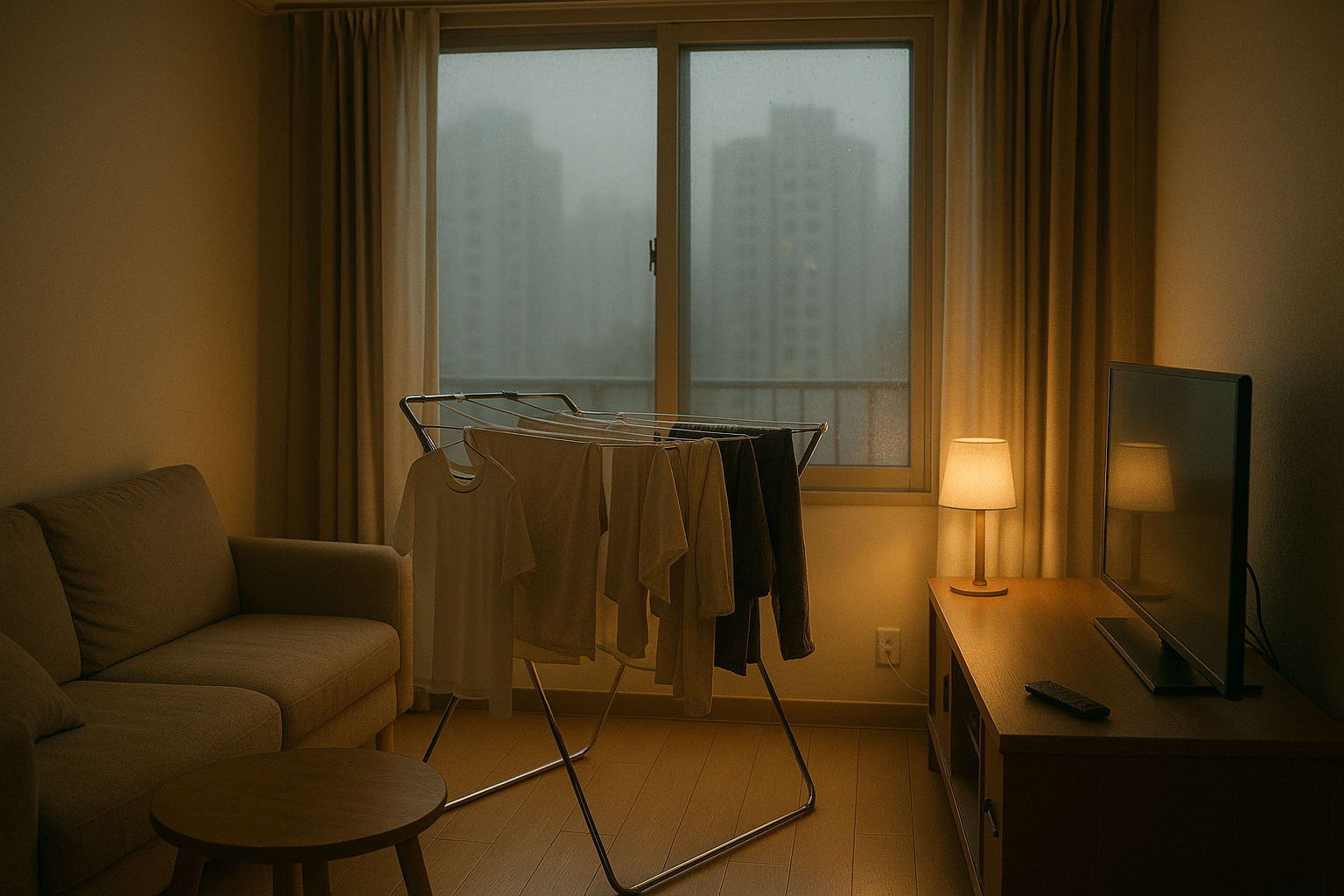
I never thought I’d have opinions about drying racks, but here we are. We own two now — one folding rack that lives permanently unfolded in the corner of the living room, and a second one we bought in a moment of panic during week two, when I realized the first rack alone couldn’t keep up with a toddler who goes through three outfits a day between meals, mud, and whatever mysterious substance ends up on her sleeves by 10 a.m.
The problem isn’t washing the clothes. It’s that nothing dries. You hang a load in the morning, come back that evening, and it’s still damp in that specific way where the fabric feels cool and slightly clammy against your hand, like it’s sweating instead of drying. Leave it another day and you get the smell — that sour, slightly mildewy note that no amount of fabric softener quite covers up. My mother-in-law taught us to run a small fan pointed directly at the rack, which helps, and we finally caved and bought a dehumidifier in our second summer here after I ruined a good work shirt by accidentally re-washing it three times because I kept forgetting which load was “actually clean” versus “clean but cursed.”
The dehumidifier tank fills up almost daily now. I empty it into the bathroom sink most mornings, and there’s something almost satisfying about watching a liter and a half of water pour out of a machine that’s just been sitting quietly in the corner pulling moisture out of the air we’re all breathing. My daughter likes to watch the little indicator light change color when the tank gets full. It’s become part of the morning routine, right after brushing teeth and right before she asks — for the fourth day running — why we can’t go to the playground.
Stuck indoors, and the great umbrella graveyard
That’s the harder part, honestly. Not the laundry — the containment. A two-year-old with unlimited energy and zero outdoor options for days at a time is its own weather system. We’ve done every indoor mall play area within a twenty-minute drive. We’ve built blanket forts. On one particularly grim Tuesday I let her “help” me reorganize the pantry just to burn forty-five minutes, and she ate a spoonful of dry oats directly from the bag while I wasn’t looking, which felt like a fitting metaphor for the whole month.
When we do go out — for a doctor’s appointment, for groceries we can’t put off any longer — the convenience store becomes a small ritual. You duck in soaked, and there’s always a bucket of those clear plastic umbrellas by the register, three or four thousand won each, flimsy enough that you half expect it to turn inside out on the walk home but somehow it never quite does. I have at least six of them scattered around our apartment and car now. Nobody buys a nice umbrella during jangma. You buy the sad clear one, use it twice, and add it to the pile.
There’s a sound I’ve started to associate with this whole season — rain hitting the metal casing of the window-unit air conditioner on our building’s exterior wall, a kind of irregular drumming that picks up and slows down depending on the wind. I hear it while I’m making coffee before anyone else is awake, and for about ninety seconds each morning, before the day’s laundry math and playground negotiations start, it’s actually kind of nice. Then my daughter wakes up and starts narrating the rain again, and the ninety seconds are over.
The mold watch
Living in an apartment here means you become, somewhat against your will, an amateur mold inspector every July. We check the closets. We check behind the bookshelf we probably shouldn’t have pushed flush against the exterior wall. There’s a specific dark corner near our daughter’s crib that I check almost obsessively, because I read once that kids’ rooms are worse for this — lower airflow, more soft surfaces, a crib mattress that traps warmth. So far, so good, though I’ll admit I’ve become the kind of person who sniffs a wall unprompted, which is not a sentence I expected to write when I moved to Korea.
FAQ: Surviving jangma with kids
When does jangma actually start and end?
It varies by region and by year, but the general pattern is late June through late July. Jeju and the southern coast usually see it first, sometime around June 19–23, while central Korea (including Seoul) typically starts a few days to a week later and runs into late July. It’s not a fixed calendar date — the Korea Meteorological Administration announces the actual start each year once the rain band stabilizes over the peninsula.
What do Korean families actually do to fight mold and mildew?
Dehumidifiers are the big one — running daily, aiming to keep indoor humidity somewhere in the 40–60% range rather than the 80–90% jangma likes to push you toward. Silica gel packs (제습제) in closets and shoe cabinets are everywhere this time of year — you’ll see them stacked near the entrance of every mart. We also run the bathroom fan longer than usual and try to crack windows for ten minutes on the rare dry-ish hour to keep air moving, even though it feels counterintuitive when it’s humid outside too.
Do schools and daycares close for jangma?
No, not as a rule — Korean schools and daycares operate through the rainy season, though outdoor activities and field trips get cancelled or moved indoors on heavy rain days, and there’s occasionally an early pickup or closure if there’s a serious flood warning in the area. For us it mostly just meant swapping the playground hour for indoor free play, which our daughter tolerated with varying degrees of grace.
Anyway. The forecast this week shows a few days without rain, which around here counts as a small holiday. I already know what I’m doing with it — hanging every damp thing we own outside at once and hoping the sun does its job before the next front rolls in.