Somewhere in my first few months in Korea, I did the thing every foreigner eventually does. I walked into a barbecue place, saw a wooden platform a step up from the entrance, and sat straight down at the low table without noticing my shoes were still on. Nobody yelled. Nobody had to. A waitress glanced at my feet, then back at my face, and I understood the entire situation in about a second and a half. That’s usually how it goes: no sign on the door, no icon anywhere, and yet everyone else in the room already knows the rule, and the one person who doesn’t is you.
It’s not really a rule in the way “no smoking” is a rule, with a sign and a fine attached. It’s closer to a language written into the floor itself, and once you learn to read it, you start noticing it everywhere — at the dentist’s office, in a friend’s studio apartment, at that same kind of barbecue restaurant with a raised platform in the back. I’m Yijidaddy, and this is the thing I wish someone had mapped out clearly for me on day one, instead of leaving me to piece it together one awkward glance at a time.
The floor is doing more work than you think
Here’s the reframe that made everything click for me. In a lot of Western homes, the floor is just infrastructure — something you walk across to get to the furniture. In a traditional Korean home, the floor basically is the furniture. People historically sat on it, ate on it, and slept on it directly, without a bed frame lifting them off the ground. Once you accept that premise, the shoe rule stops feeling like an arbitrary formality and starts feeling like plain common sense. You wouldn’t walk across your own dinner table in hiking boots. Koreans, for a very long time, treated the entire floor the way you’d treat that table.
The reason the floor could hold that role at all is a heating system called ondol (온돌), and its backstory is more impressive than most people realize. The earliest known forms date back roughly 2,000 years, with archaeological evidence from the Bronze Age and the Goguryeo kingdom, one of Korea’s Three Kingdoms, which controlled the northern peninsula and parts of Manchuria starting around 37 BC. Early versions weren’t full-room systems — they were partial, running along a single wall, like a strip of warmth rather than a whole floor. The full-room version, where heat spread evenly under an entire living space, became widespread and refined by the Goryeo dynasty in the 13th century, and by the early Joseon period in the 1400s and 1500s, ondol had spread across the peninsula as a near-universal feature of Korean homes, from farmhouses to palace quarters.
Mechanically, it’s a strikingly elegant piece of engineering for something built centuries before central heating existed anywhere. A wood or straw fire in a kitchen hearth called an agungi sent hot smoke through a maze of stone-and-clay channels called gorae, running beneath the floor before venting out a chimney on the far side of the house. The floor itself became a massive, slow-release radiator, holding warmth for hours after the fire had died down. Modern apartments have swapped the wood fire for hot water pipes, but the underlying logic — heat the floor, not the air — hasn’t really changed. Which, if you think about it, is a little remarkable. A pre-industrial heating solution is still the backbone of how tens of millions of people warm their homes today.
The step you’re not supposed to walk past
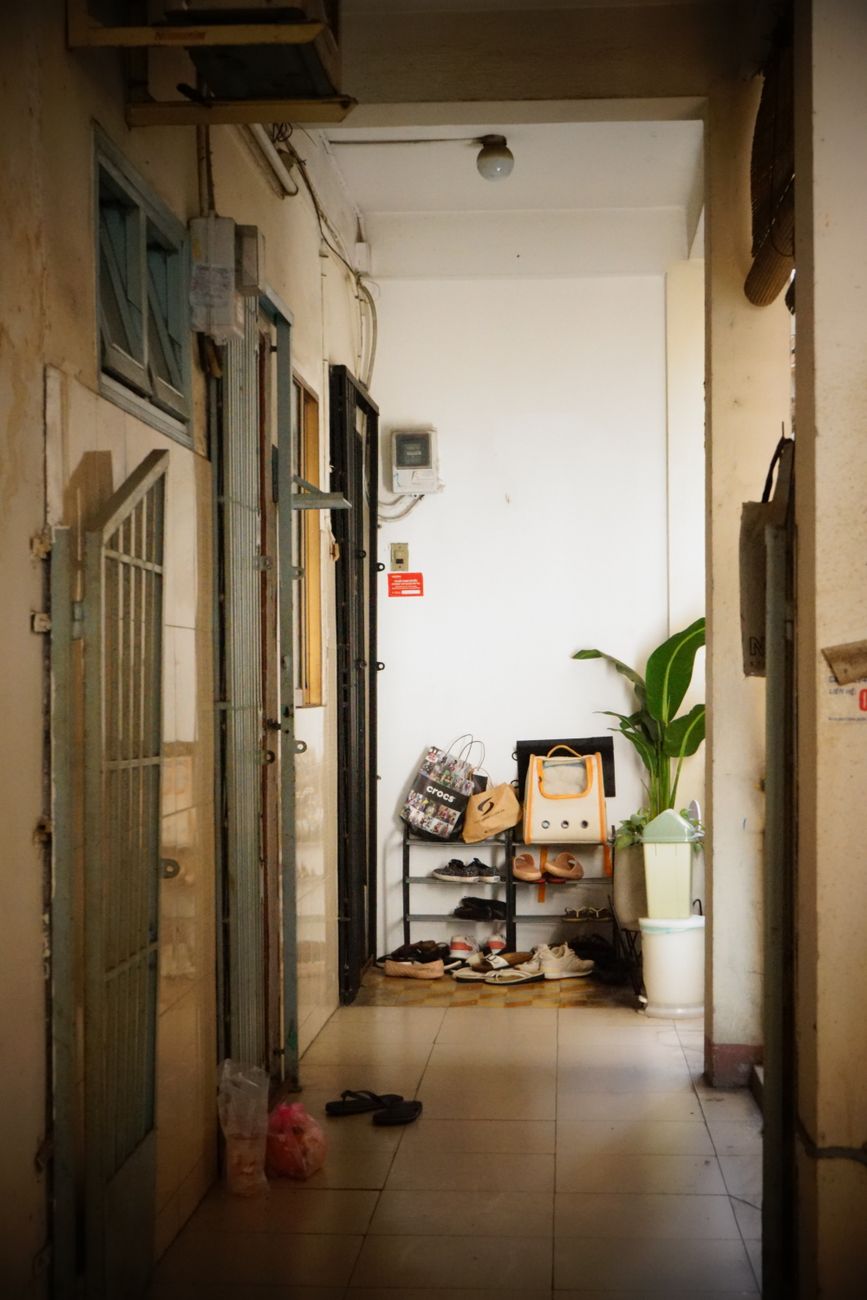
Because the floor was designed to be lived on, not just walked across, Korean architecture had to build in a clear boundary to protect it from the outside world — and that boundary is a physical step, not a suggestion. Every Korean home has this small architectural cue built specifically to stop you before you make a mistake, and it’s easy to miss if you don’t know to look for it. It’s called the hyeon-gwan (현관), and it’s usually a drop of somewhere between 15 and 20 centimeters between the entry area and the main living space, often tiled in a slightly different material or color from the floor beyond it — you can hear the difference almost as clearly as you can see it, the hard click of a heel on entryway tile giving way to the softer sound of socked feet on warm wood or vinyl. It functions almost exactly like the genkan in a Japanese home — a small transitional zone that’s technically “inside” the building but still counts as “outside” in terms of footwear rules.
You’d think a step that obvious would be impossible to miss, but somehow it isn’t. New visitors walk past it constantly, mostly because Western homes don’t train your eyes to look for that kind of boundary. After a few weeks in Korea, though, something clicks, and you start noticing the drop automatically — the same reflex as checking for a curb before stepping off a sidewalk. Give it long enough and you’ll find yourself doing it back home too, pausing for half a second at a doorway that doesn’t actually require it.
Reading the room in public spaces
Private homes are the easy case, with an obvious step and an obvious answer. It’s everywhere else that the rule gets genuinely messy, because Korea doesn’t apply one single standard across every kind of building — it applies a kind of situational logic you have to learn to read on the fly, building by building, floor level by floor level.
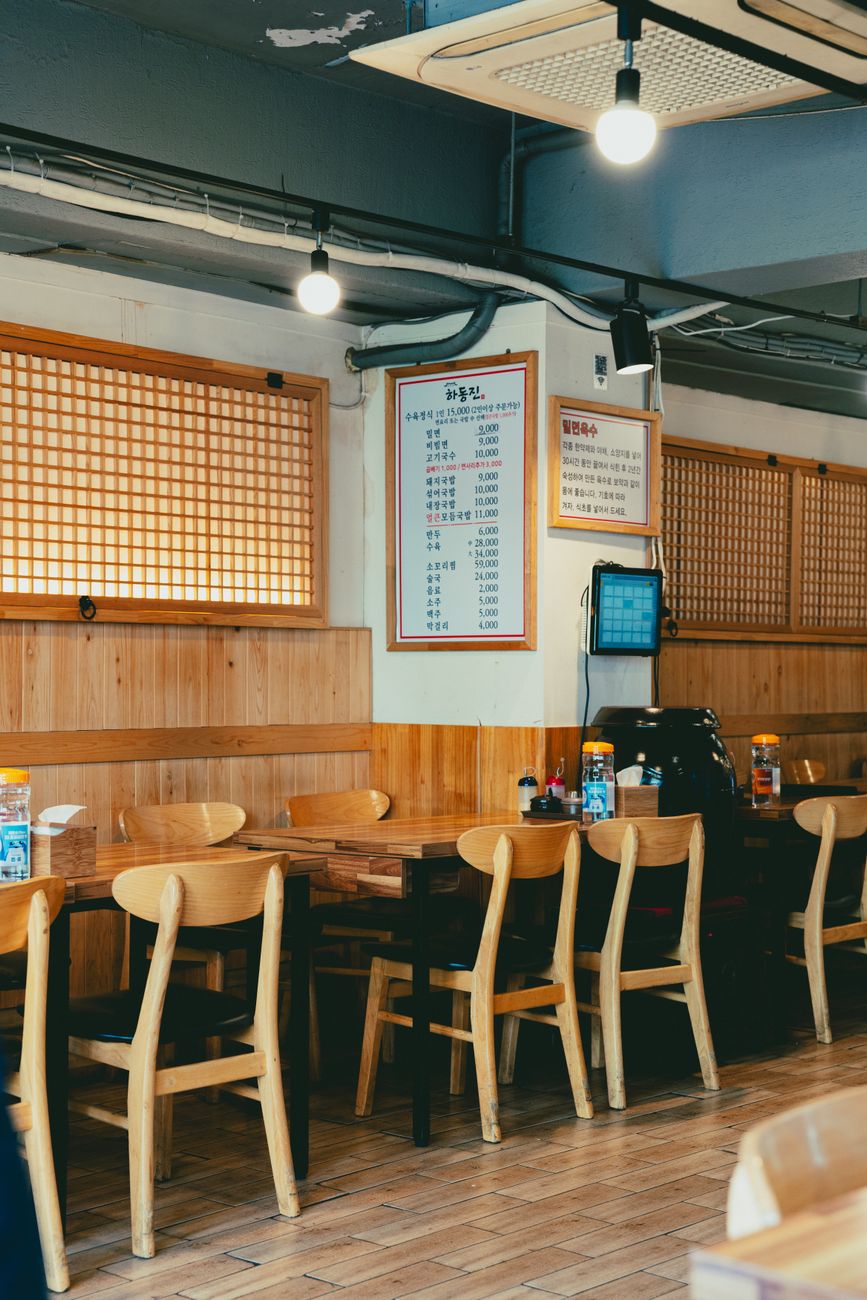
Traditional and mid-range Korean restaurants, especially ones specializing in Korean barbecue, grilled fish, or anything served on a low table, tend to use jwa-shik (좌식) floor seating, where the dining area is raised slightly and you sit on cushions with your shoes left at the edge. Walk past that edge in your sneakers and, yes, someone will notice — usually a staff member, occasionally another diner. On the other hand, a modern Western-style Korean restaurant with regular tables and chairs at floor level is functionally no different from a restaurant anywhere else; shoes stay on the whole time, and nobody bats an eye. The tell is almost always the seating height. If the floor you’d be sitting on is elevated even slightly above where you’re standing, that’s your cue.
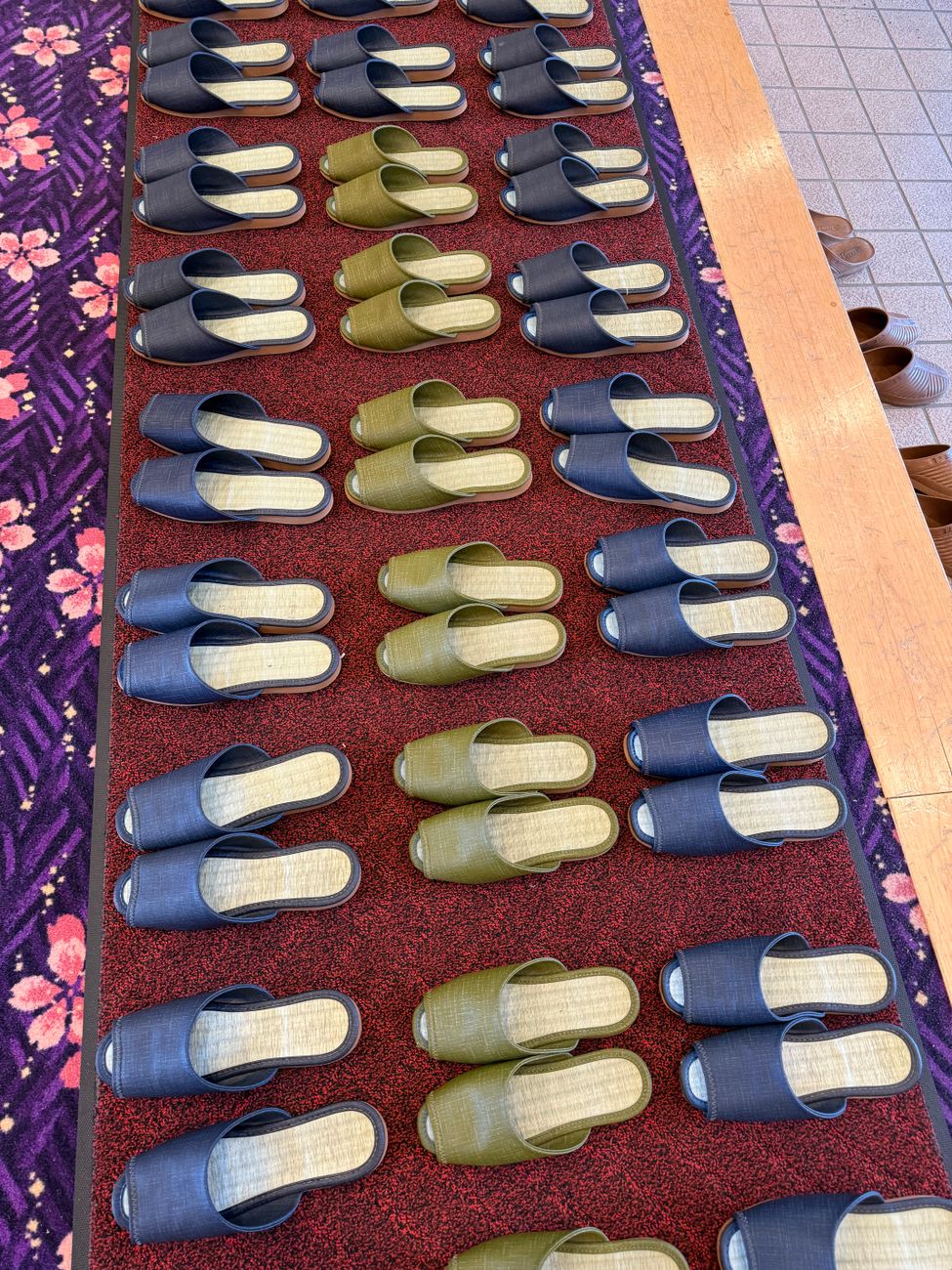
Offices and schools complicate things further, and this is the part guidebooks tend to skip entirely. Many Korean elementary and middle schools require students, and often visiting parents, to swap into indoor shoes at the entrance, a practice that overlaps with — but isn’t identical to — Japan’s well-known uwabaki system. Clinics, some hagwons (private academies), and traditional guesthouses called hanok stays frequently expect the same thing. If you see a wall of small lockers or open cubbies near an entrance stacked with slippers in various sizes, that’s your answer before anyone has to say a word.
So what happens the inevitable time you get it wrong?
Less than you’d fear, honestly, but more than nothing. Korean social correction tends to be quiet rather than confrontational, and nobody is likely to shout across a restaurant at you. What actually happens, in most cases, is a staff member walks over fairly quickly, points at your feet, and either mimes taking shoes off or says a short phrase like “sin-bal juseyo” (신발 주세요) — roughly, “your shoes, please.” If it’s a home rather than a restaurant, the correction is usually even gentler, though not necessarily quieter: a host might just glance at your feet and let the silence do the talking, or — and this is the version that actually gets you — a small child somewhere in the house spots the problem and announces it at full volume, with zero social tact and total confidence, pointing directly at your sneakers while three adults suddenly develop a very strong interest in their tea. It is, without fail, more effective than any adult correction could ever be.
What surprises a lot of foreigners is how little lasting judgment attaches to the mistake itself. It’s treated as an understandable foreigner error, not a character flaw — the kind of thing that gets fixed on the spot and then genuinely forgotten by everyone except you. There’s a specific flavor of awkwardness to being the person everyone briefly looks at, and it tends to stick in memory far longer than it deserves to; you’ll still be thinking about it on the subway ride home while the person who corrected you has already moved on to refilling water glasses. The fix itself is almost always immediate: take the shoes off, maybe apologize once, and the moment passes within seconds. It’s less a punishment and more a very fast, very visible correction — over before it really had time to become a scene.
It’s not only about dirt
It’s tempting to write this whole custom off as a simple matter of sweeping and mopping, and hygiene is genuinely part of it — outdoor shoes track in dust, bacteria, and whatever you stepped in on the subway platform, and nobody wants that ground into a floor where people sit and eat. But reducing it to a cleanliness rule alone misses something. Confucian ideas about respect for shared and domestic space run underneath a lot of Korean etiquette, and the shoes-off custom is one of the clearer physical expressions of that: keeping outside mess and outside status literally outside the boundary of the home. It’s less “shoes are gross” and more “the home is a different category of space than the street,” which is a subtler and, I’d argue, more interesting distinction than the hygiene explanation alone gives it credit for.
How this compares to Japan
Because the two customs look so similar from the outside, people visiting both countries often assume they’re the exact same rule wearing two different names. They’re related, but not identical, and the difference comes down to what the floor is actually for. In Japan, the genkan boundary is deeply tied to tatami preservation and a long-standing conceptual line between soto (outside) and uchi (inside) — the floor itself, especially tatami matting, is treated as something that degrades and must be protected. In Korea, the emphasis leans more toward the floor as a heated, multi-purpose living surface descended directly from ondol culture — something you sit, eat, and once slept on, rather than something fragile you’re protecting from wear. Both end with the same result at your feet. The reasoning underneath is genuinely different, and neither version is the “more strict” or “more correct” one — they just grew out of different domestic histories.
If you want the deeper backstory on the heating system itself, I’ve gone further into how ondol actually works and how it changed Korean architecture in a separate piece. And if bare feet indoors is a theme that interests you, the same shoes-off logic shows up in an even more intense form at Korean jjimjilbang culture, where footwear comes off before you’ve even reached the front desk.
A short, practical checklist
If you want the condensed version for your next trip: look for a step down at any entrance, treat any visibly raised or elevated floor area in a restaurant as shoes-off territory, check for a shoe rack or slipper cubby near the door of any office, clinic, or school, and when genuinely unsure, just glance at what everyone else already did with their shoes before you walked in. It sounds almost too simple to work. Somehow, it works nearly every time.
FAQ
What if I’m wearing socks with holes, or no socks at all?
Nobody is going to say anything about it directly, but it’s worth planning around anyway. There’s a very specific and very universal panic that hits the moment you realize, mid-shoe-removal at a barbecue place, that today happens to be the day your left sock has a hole exactly at the big toe — and there’s no fixing it once you’re already sitting cross-legged on the floor with your feet in full view of the table. Bare feet are completely fine in a private home, though it can feel a little exposed in a business setting like a clinic or a formal dinner. The safest habit, and one plenty of long-term expats fall into eventually, is just keeping a decent pair of socks on hand whenever you’re headed somewhere you suspect will involve floor seating — a barbecue spot, a hanok stay, a friend’s apartment. It’s a small thing, but it saves you one extra layer of self-consciousness you don’t need.
Is it rude to ask a Korean host directly whether I should take my shoes off?
Not at all — if anything, it tends to land well. Asking signals that you already know the custom exists and are being careful about it, which most hosts read as thoughtful rather than clueless. The only mildly awkward version is asking in a restaurant that obviously has regular chairs and no elevated seating anywhere in sight, where the answer is self-evident and the question mostly just tells the staff you’re new to the country, which, again, is not actually a problem.
What about gyms, hospitals, or other public buildings — do the same rules apply?
Gyms are usually a hard no on the shoes-off rule — you’ll wear indoor athletic shoes, not outdoor ones, but you keep footwear on throughout. Hospitals and larger clinics vary by department; some entryways provide disposable shoe covers instead of asking you to remove shoes entirely, particularly in areas that need to stay especially clean. The general pattern holds, though: if you see a rack, cubby, or a visible line of other people’s shoes sitting at an entrance, that’s your signal, regardless of what kind of building it is.
Leave a Reply