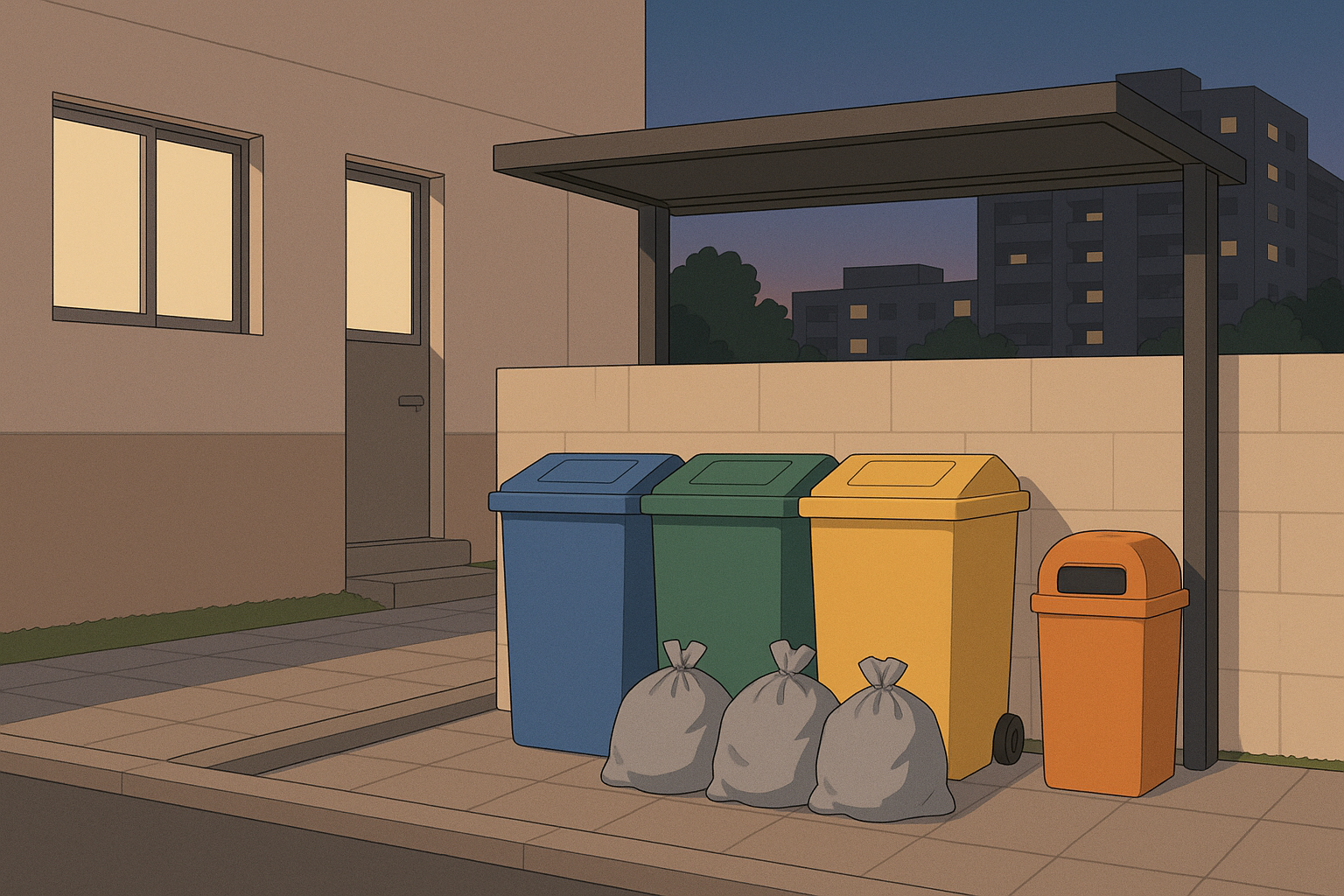
The knock came at 9:40 on a Tuesday night, three sharp raps on our apartment door in Ilsan, and I already had a bad feeling before I opened it. Our building’s security guard, Mr. Bae, was standing there holding my own trash bag out in front of him like evidence, a torn Coupang delivery label with our unit number still stuck to the side of a cereal box inside it. “이거 안 돼요,” he said, not unkindly. This one’s not allowed. I had put it out a night early, in a plain black bag instead of the yellow 20L 종량제 봉투 we were supposed to buy from the GS25 across the street, and I had mixed a glass jar in with the food waste for good measure. It was, Mr. Bae informed me with the patience of a man who has had this exact conversation with every new foreign tenant on the fifth floor, a three-part failure.
That was my second week in the building, back when I still thought “just take the trash out” was a task with no learning curve. It has one. It is steep, it is oddly specific to your own apartment complex, and getting it wrong in front of a neighbor or a 경비아저씨 stings in a way that burning your tongue on tteokbokki never quite does.
The Bag Is Not Just a Bag
In most Korean cities, general household waste has to go out in an officially licensed bag — 종량제 봉투 — sold by weight-equivalent size and stamped with the name of your specific 시 or 구. Goyang’s bags are not interchangeable with Seoul’s, and a plain black garbage bag from a discount store, no matter how sturdy, will simply sit there uncollected, or worse, get flagged with a warning sticker for everyone on your line to see. We eventually settled on the 20L size for a family of three, bought in stacks of twenty from the convenience store, and it became one of those small errands I now do on autopilot, the way I used to grab milk without thinking about it back home.
Byeoldo Day Is Its Own Operation
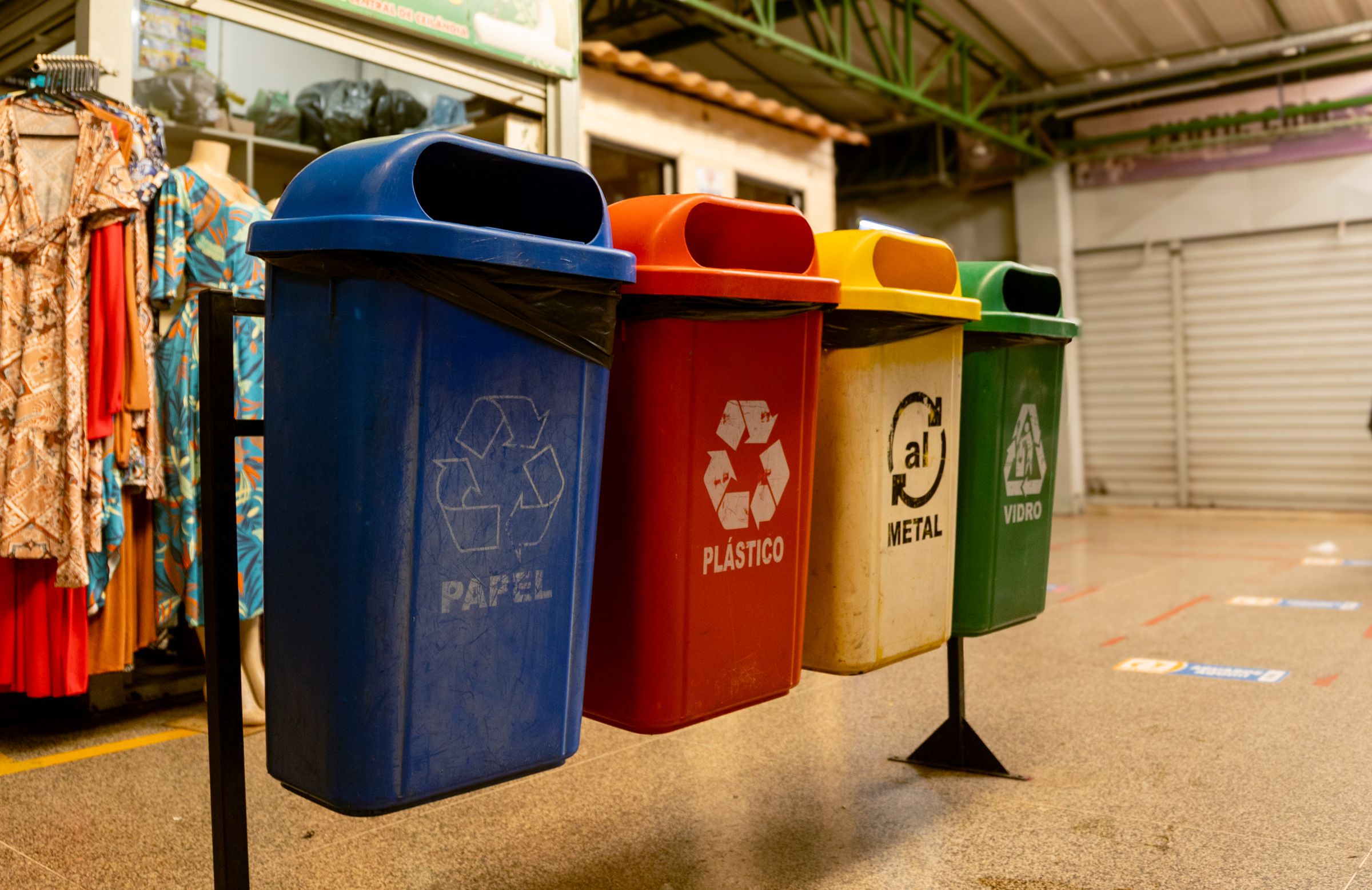
Separate from the bagged general waste is 별도 배출 — byeoldo, or “separately” — collection, which covers cans, glass, plastic, paper, and styrofoam. Our building only collects these on Tuesday and Friday evenings, after 7 p.m., and they have to be split into their own bins in the basement collection area rather than bagged together. The first time I brought down a single bag with a soju bottle, a shampoo container, and a flattened cardboard box all mixed in, a neighbor sorting her own recycling two bins over gave me a look I can only describe as patient disappointment, then quietly started pulling my items apart into the correct bins without a word of complaint. I have never felt more like a guest in someone else’s house while standing in my own building’s parking garage.
Food Waste Has a Meter Running
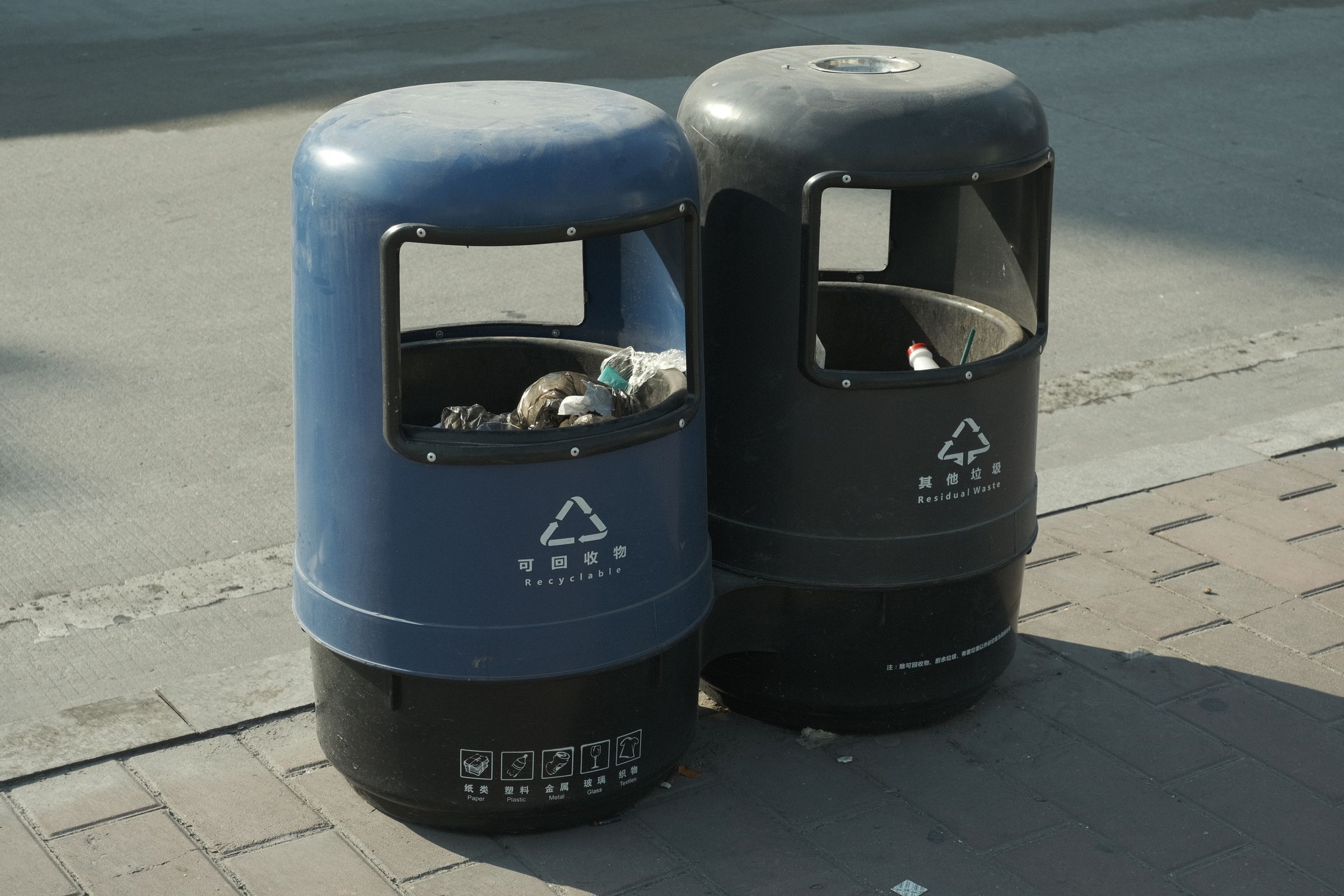
Food waste, 음식물 쓰레기, is its own category entirely, and in our complex it goes into an RFID-chipped bin activated by tapping a small key fob against a sensor, which weighs your bag and deducts credit from a prepaid balance the management office tops up. Put in a chicken bone or a fruit pit — technically not food waste, since they do not break down the same way — and if the bin catches it during a spot check, you get a sticky note on your door courtesy of the management office. I got one of those notes in my first month, for a peach seed. I still feel a little defensive about it. It is worth noting, as I learned only after asking a neighbor, that the same building announcements that carry the recycling schedule also cover water shutoffs and parking notices, so it pays to actually listen to that wall speaker instead of tuning it out like background noise.
The Week I Got It Completely Wrong
What actually happened that Tuesday night was less a single mistake than a pileup of small ones, compounded by not yet knowing our building had its own printed schedule taped inside the elevator, which I had walked past probably fifteen times without reading. Mr. Bae ended up walking me through it standing in the hallway, gesturing at the schedule on his phone, patient in the specific way people are patient with someone who is clearly trying and clearly behind. My wife found the whole story much funnier than I did once I retold it at dinner, though she did admit she’d made a nearly identical mistake with our old apartment’s food waste bin the year before we met. Small comfort, but I took it. These days I keep a photo of our building’s collection calendar saved on my phone, right next to the one of my daughter’s school lunch menu, which tells you a lot about what actually runs a household here.
FAQ
What size garbage bag should I buy for a one- or two-person apartment in Korea?
Most convenience stores near residential buildings stock 10L, 20L, and 50L 종량제 봉투. For a single person or couple, a 10L bag emptied twice a week is usually enough; a family of three or four in a place like Ilsan typically goes through 20L bags. Buy the bag stamped with your city’s name — a Goyang-si bag will not be collected in Seoul, and vice versa.
What actually happens if you sort your recycling wrong in Korea?
In most apartment complexes, nothing dramatic happens the very first time — a 경비아저씨 or building manager will usually just leave the item out, attach a warning sticker, or mention it to you directly, as Mr. Bae did with me. Repeated or larger violations, especially in single-family home areas without a manager to intervene, can result in a fine from the local district office, though for most apartment residents the real consequence is smaller and more immediate: the mild, lingering embarrassment of a neighbor sorting your trash for you.
Do all Korean neighborhoods use RFID food waste bins?
No — it depends on the building and the district. Newer apartment complexes, like ours in Ilsan, tend to use chip-based bins tied to a prepaid card or fob. Older buildings and many single-family home areas still use standardized yellow food waste bags instead, sold at the same convenience stores as general waste bags. It is worth checking with your building’s management office or landlord in your first week, rather than assuming either system applies by default.
Leave a Reply