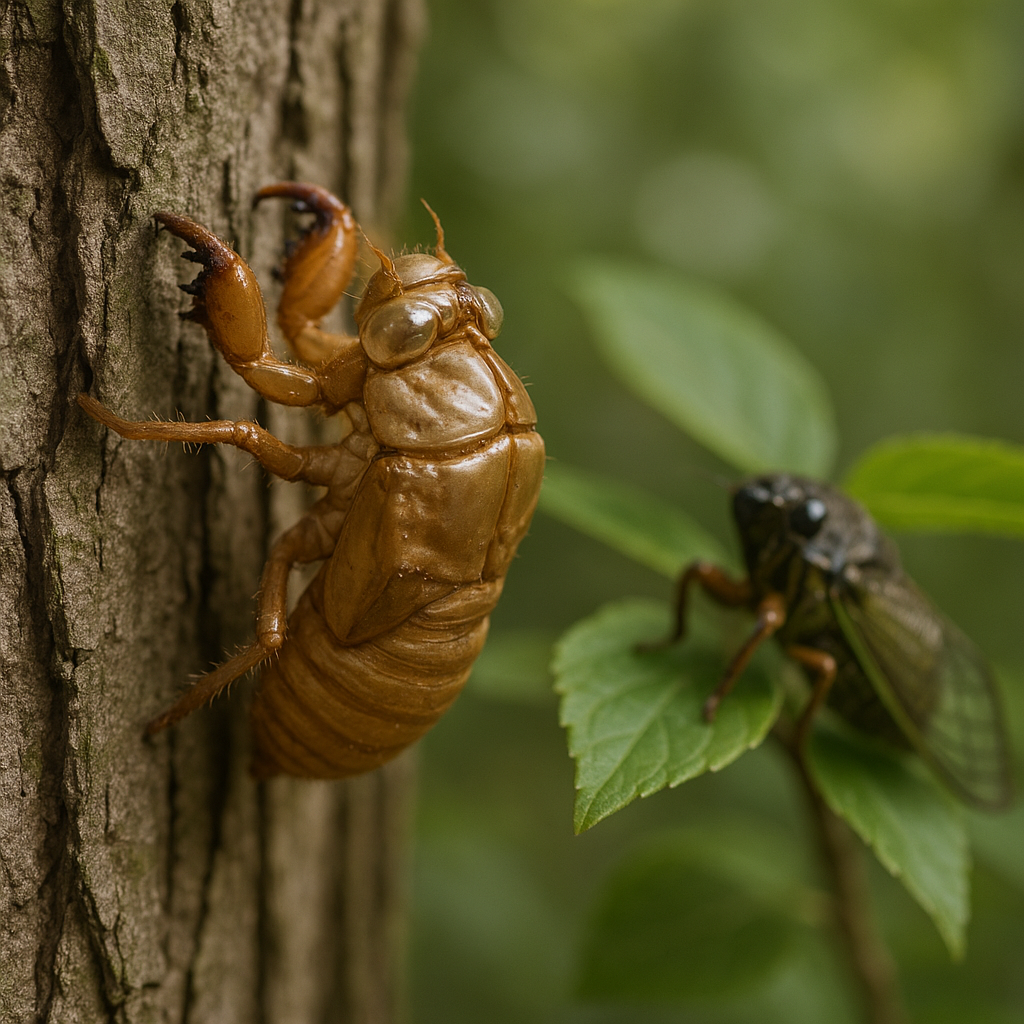
It was 11:40 p.m. on a Tuesday in early August, and I was lying on the floor next to my daughter’s mattress, one hand on her back, doing the slow-count thing we do when the air conditioner is off and the windows are open. Somewhere just past the balcony, maybe two trees over in the apartment complex courtyard, a single cicada started up like someone had flipped a switch on a table saw. Not the gentle “maem-maem-maem” I remembered from childhood summers somewhere else. This was a flat, mechanical shriek — sssssseeeeeeee — that didn’t taper off so much as just keep going, joined seconds later by two more from different trees, then four, then what felt like the whole courtyard. My daughter’s eyes popped open. “Appa, is that an alarm?” No, I told her. That’s just a 매미 (maemi). She did not believe me for a long time.
That was my real introduction to 말매미 (malmaemi), the black cicada that, more than any other insect I’ve met, has rearranged how I think about a Korean August. I’m Yijidaddy — a foreign dad raising two kids in a Seoul-style apartment complex — and if there’s one sound that defines this city’s summer more than jangma rain or the hum of a hundred air conditioners, it’s this one.
The loudest bug in the neighborhood
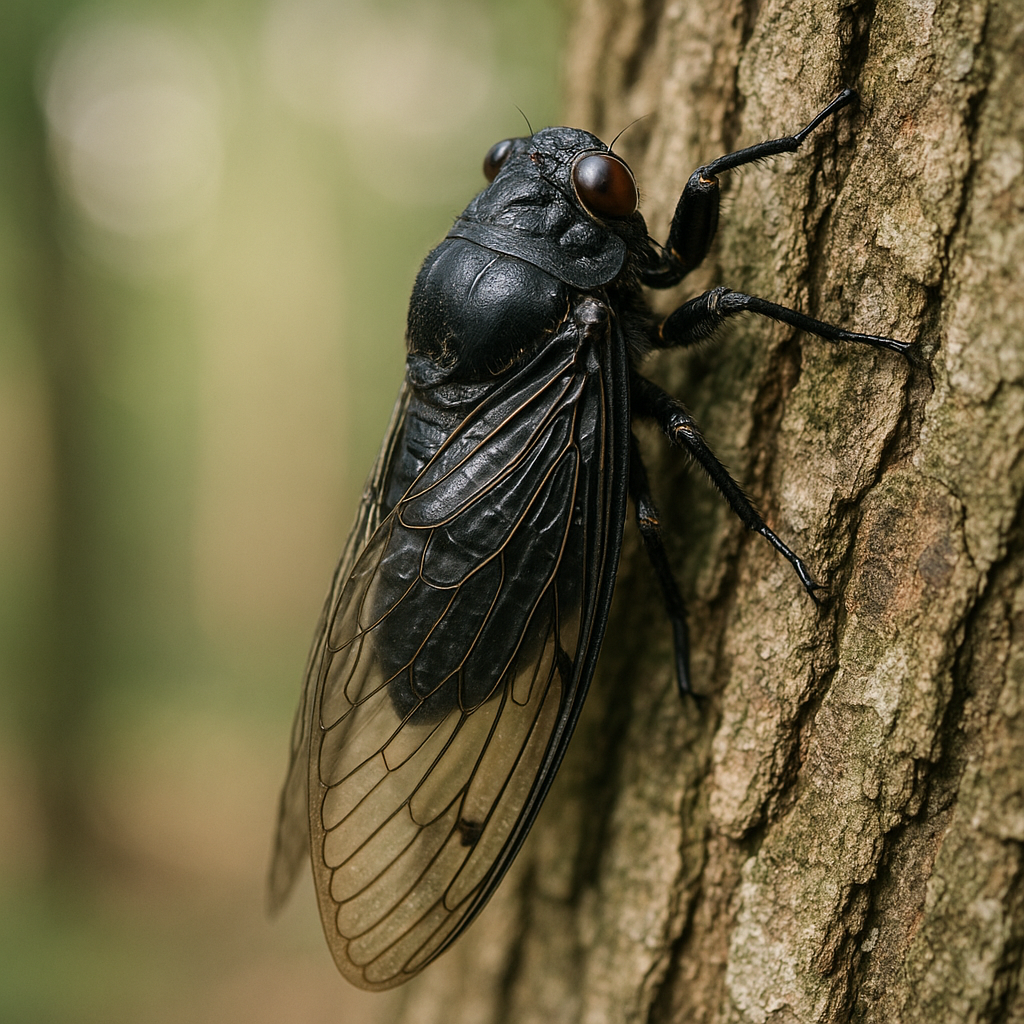
Korea is home to roughly a dozen cicada species, and they don’t all sound alike. 참매미 (chammaemi), the “true cicada,” sings a comparatively soft, rhythmic “맴- 맴- 맴-” that most people associate with a nostalgic countryside summer. 말매미, by contrast, is the largest cicada native to Korea, solid black, and its call is closer to a continuous, high-pitched buzz-saw drone than anything resembling a song. Where chammaemi pulses, malmaemi just holds the note, sometimes for ten or fifteen seconds at a stretch, sometimes what feels like minutes when there’s a whole tree of them going at once.
Individual malmaemi calls have been measured around 80-90 decibels — in the range of a passing freight train — and when a cluster of them synchronizes in the same stand of trees, the combined noise reaching an apartment window can feel far louder than any single insect has a right to produce. I am not a scientist and I won’t pretend the number I heard quoted is gospel, but anyone who has stood under a courtyard zelkova tree in the second week of August does not need a decibel meter to believe it.
What surprised me more than the volume, honestly, was the timing. I’d always associated cicadas with daytime — background noise for a walk to the convenience store, gone by dusk. Korean apartment cicadas do not respect that schedule in late July and August.
Why the nights don’t go quiet
I went looking for an explanation after one too many 1 a.m. Google searches, half-convinced something was wrong with our particular tree. What I found, repeated across several Korean news reports on the phenomenon, was a combination of two things researchers and city officials keep pointing to: urban heat and urban light.
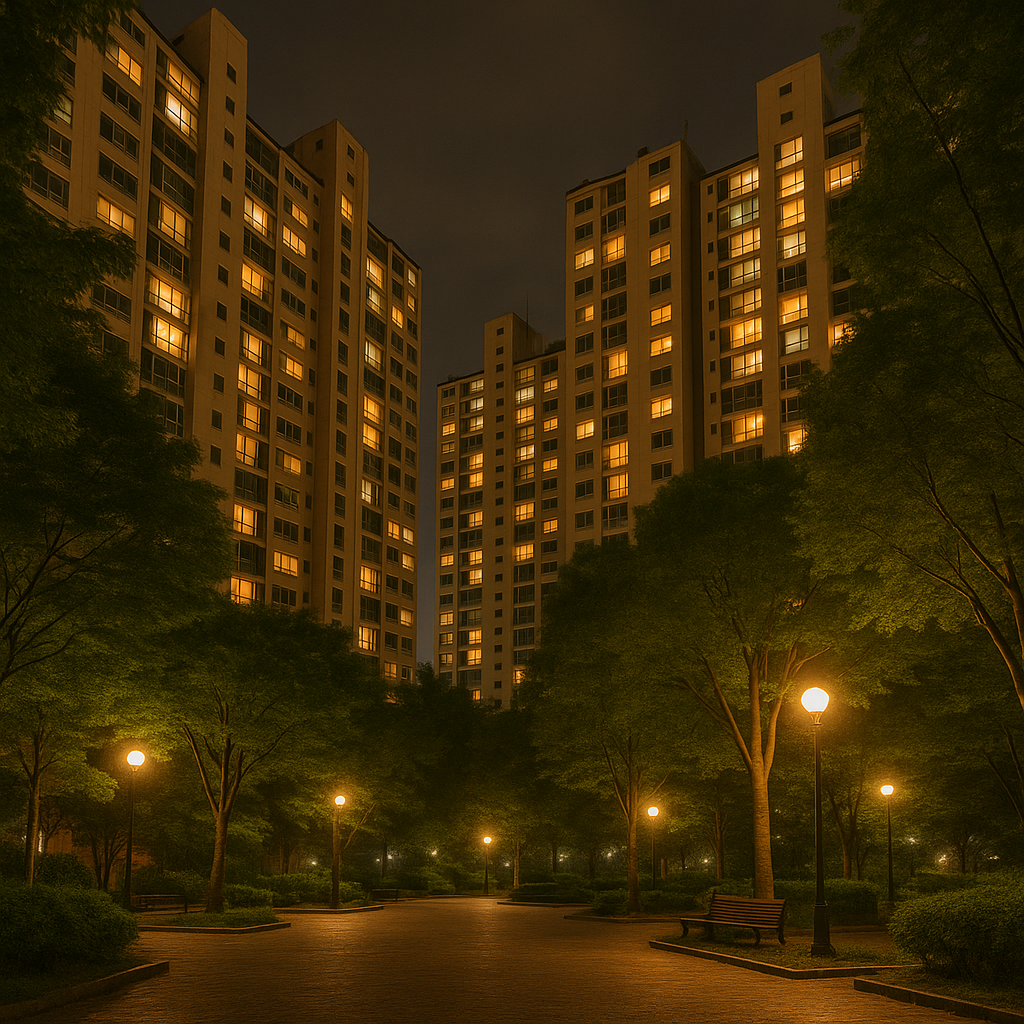
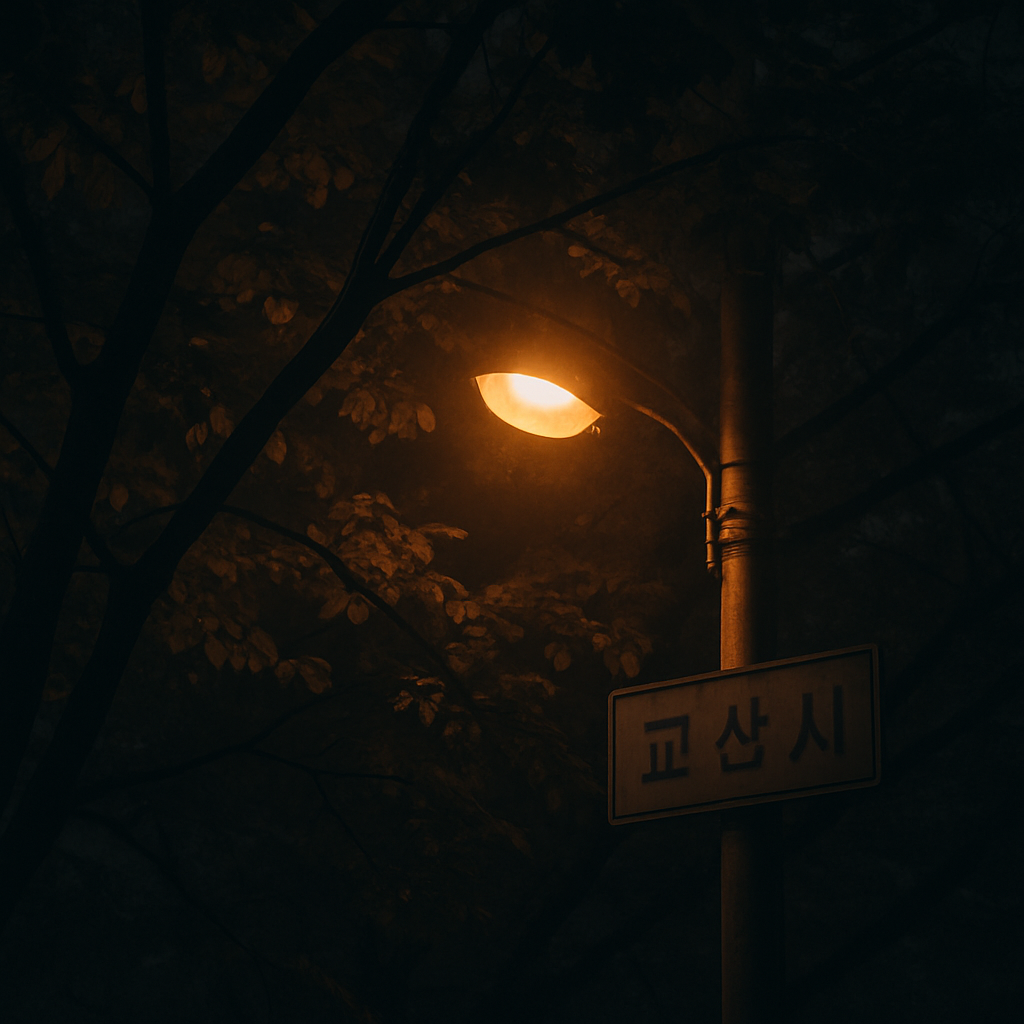
Cicadas are naturally diurnal insects — they respond to light, not a body clock, which is part of why they usually go quiet after sunset in a forest with no artificial light. But apartment complexes are ringed with streetlights, security lighting, and the glow spilling out of hundreds of lit windows well past midnight during 열대야 (tropical nights, when the temperature never drops below 25°C). To a cicada clinging to a plane tree twenty meters from a streetlamp, that light-polluted courtyard plausibly reads as daytime that simply never ends. Combine that with the urban heat-island effect — asphalt, concrete, and clustered buildings holding daytime heat well into the night — and malmaemi in particular, a species that seems to like it hot, keeps calling long after the sun is down and the temperature outside has barely dropped.
Add to that the specific landscaping choices in most apartment complexes: rows of zelkova, plane trees, and cherry trees planted for shade and looks, which happen to be exactly the broadleaf trees malmaemi favors for laying eggs and living out its adult weeks. Put a lot of the right trees close to a lot of artificial light and heat-retaining concrete, and you get exactly the kind of courtyard chorus that had my daughter asking if the building was malfunctioning.
The season itself runs roughly from mid-July through early September, with the peak — the days when you genuinely cannot hold a conversation on a bench outside — usually landing across late July and August. By early September the numbers taper fast; some counts suggest the volume drops to a fraction of its peak within a couple of weeks as the adults finish out their brief few weeks above ground. Until then, though, an open window at midnight isn’t an unlucky exception. It’s the default.
Windows open, sleep optional
We don’t run the air conditioner all night, partly for the electricity bill (a whole separate education in itself) and partly because my daughter sleeps better with the balcony door cracked and a fan going. Most nights that’s a fine trade. During the loudest stretch of cicada season, it is not. I’ve spent more than one night propped against her bed frame, phone brightness turned all the way down, waiting for a lull that never quite arrives, because malmaemi calls in relay — one section of the courtyard trees goes quiet just as another picks up, so the net effect from an eighth-floor window is something closer to a drone that never fully stops, just changes location.
My son, four years older, has the opposite reaction. He thinks it’s hilarious. He’ll stand at the window trying to spot the source, convinced if he just looks hard enough at the right branch he’ll catch one mid-call — he never has, they’re maddeningly well camouflaged against bark — and he’s taken to doing his own impression of the sound at breakfast, which is somehow both accurate and unbearable. There’s something particular about the fact that this isn’t a rare event you plan around. It’s a known, recurring feature of the season, the way jangma rain or a heat wave is, except it announces itself at a volume that makes it impossible to ignore.
What strikes me most, coming from a place where cicadas were a daytime, late-summer, mostly background sound, is how thoroughly Korean apartment cicadas colonize the night itself. It’s not that they’re simply louder — though they are — it’s that the entire rhythm is different. There is no reliable quiet hour. There is just a courtyard full of trees, doing exactly what an unusually hot, unusually lit environment tells them to do, for about six weeks every summer, whether the humans underneath are ready for it or not.
Until early September rolls around and the courtyard finally goes quiet again, this is just what Yijidaddy’s summer nights sound like — windows cracked, kids half-asleep, and a chorus of malmaemi outside doing their best impression of an alarm that never quite goes off.
FAQ
Why do Korean cicadas, especially 말매미, sound louder than cicadas in other countries?
It’s largely a mix of species and environment. 말매미 is Korea’s largest native cicada and its call is a sustained, high-pitched drone rather than the intermittent pulse of species like 참매미, so it reads as louder and more relentless to the ear. On top of that, dense apartment complexes concentrate the specific broadleaf trees (zelkova, plane, cherry) malmaemi prefers, and the urban heat-island effect plus constant nighttime lighting keep them active later into the evening than cicadas in rural or forested areas would typically be.
When does cicada season start and end in Korea?
Cicadas generally begin calling from mid-to-late July, with the peak noise — both in volume and in how late into the night it continues — falling across late July and August. Numbers drop off noticeably by late August, and by early September most of the chorus has quieted, though a few species continue calling into mid-September in warmer years or regions.
Why do cicadas keep calling at night in Korean apartment complexes instead of stopping at dusk?
Cicadas are light-responsive insects, and the combination of streetlights, building security lighting, and lit apartment windows appears to keep some individuals calling well past sunset, especially during tropical nights (열대야) when temperatures stay high. Reports from Korean city offices and researchers point to this light exposure, combined with heat retained by concrete and asphalt, as the reason nighttime cicada noise has become a recurring summer complaint in dense residential areas.
Is malmaemi noise actually harmful, or just annoying?
For most people it’s a sleep and quality-of-life nuisance rather than a health hazard — the frustration comes from disrupted rest during already-hot, humid nights rather than any lasting harm from the sound itself. That said, if noise is seriously affecting your household’s sleep, running a fan or air conditioner with the window closed during the loudest hours is the simplest practical fix, alongside the usual sleep-hygiene advice for tropical nights.
Leave a Reply