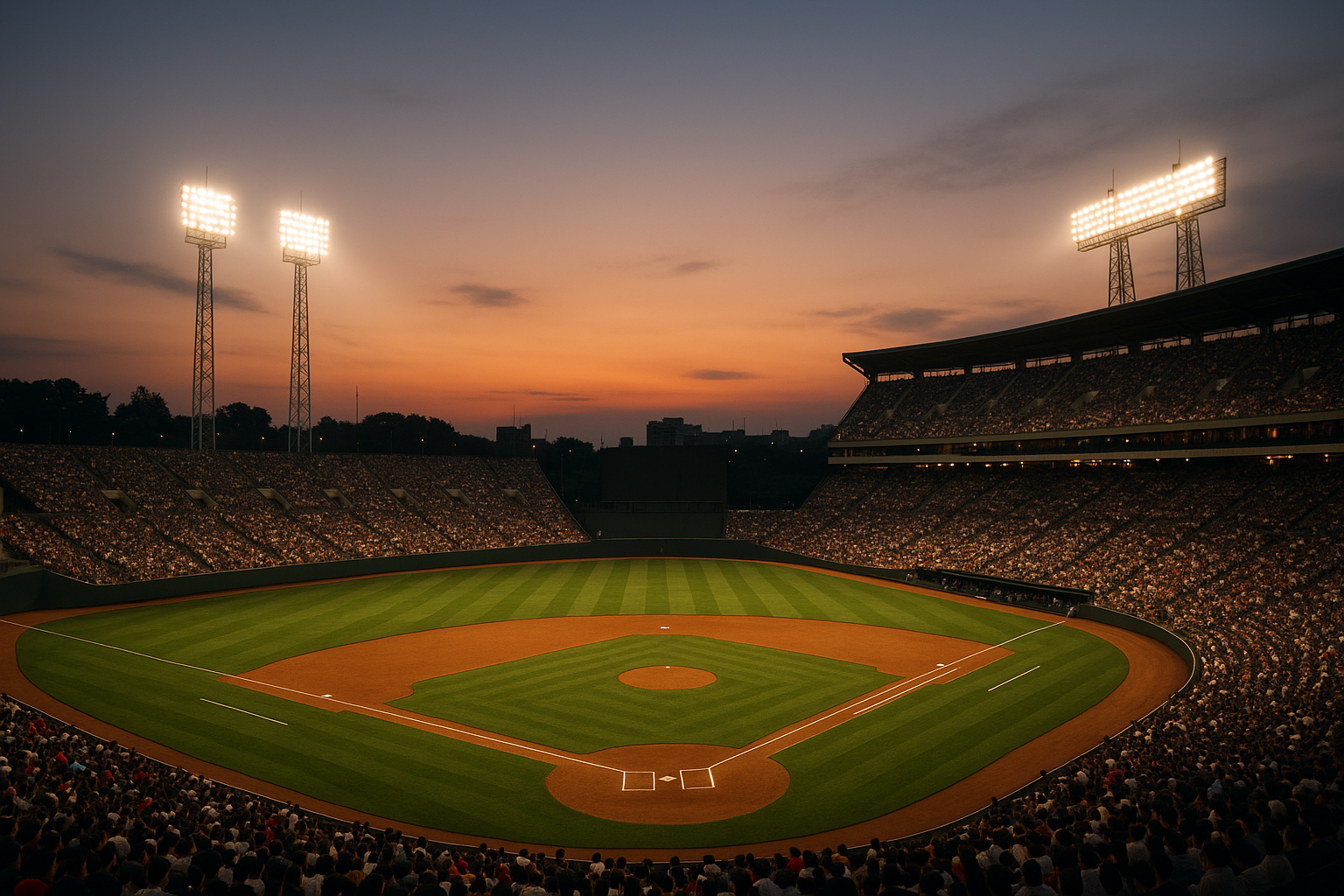
The guy two seats down handed me an orange plastic bag full of inflated thundersticks before I’d even found my row. “Section 301, you’ll need these,” he said in English, like it was obvious, like I’d ordered them. I hadn’t. He just had extra. That was my introduction to Jamsil Baseball Stadium, and it took about four minutes for a stranger to hand me equipment for a ritual I didn’t understand yet.
It was a Saturday night game, LG Twins against the Doosan Bears — the two teams that share Jamsil, which still strikes me as strange, like two families splitting one kitchen. My ticket cost 15,000 won, standing-outfield tier, bought from a scalper-free kiosk twenty minutes before first pitch. I went alone. My wife had the kids, and honestly I think she wanted me to have one night of not translating snack requests for anyone but myself.
The Chicken Arrives Before the First Pitch Does
I didn’t even have to leave my seat. A vendor walked the aisle with a cardboard sign taped to a pole listing seat-number order codes, and when I raised two fingers and pointed at the fried chicken photo, he shouted my section number back down the row like an auction call. Twelve minutes later a box of yangnyeom chicken showed up — 23,000 won, still steaming — passed hand to hand down eleven strangers until it reached me. Nobody took a piece. Nobody even really looked at it. It just arrived, the way mail arrives.
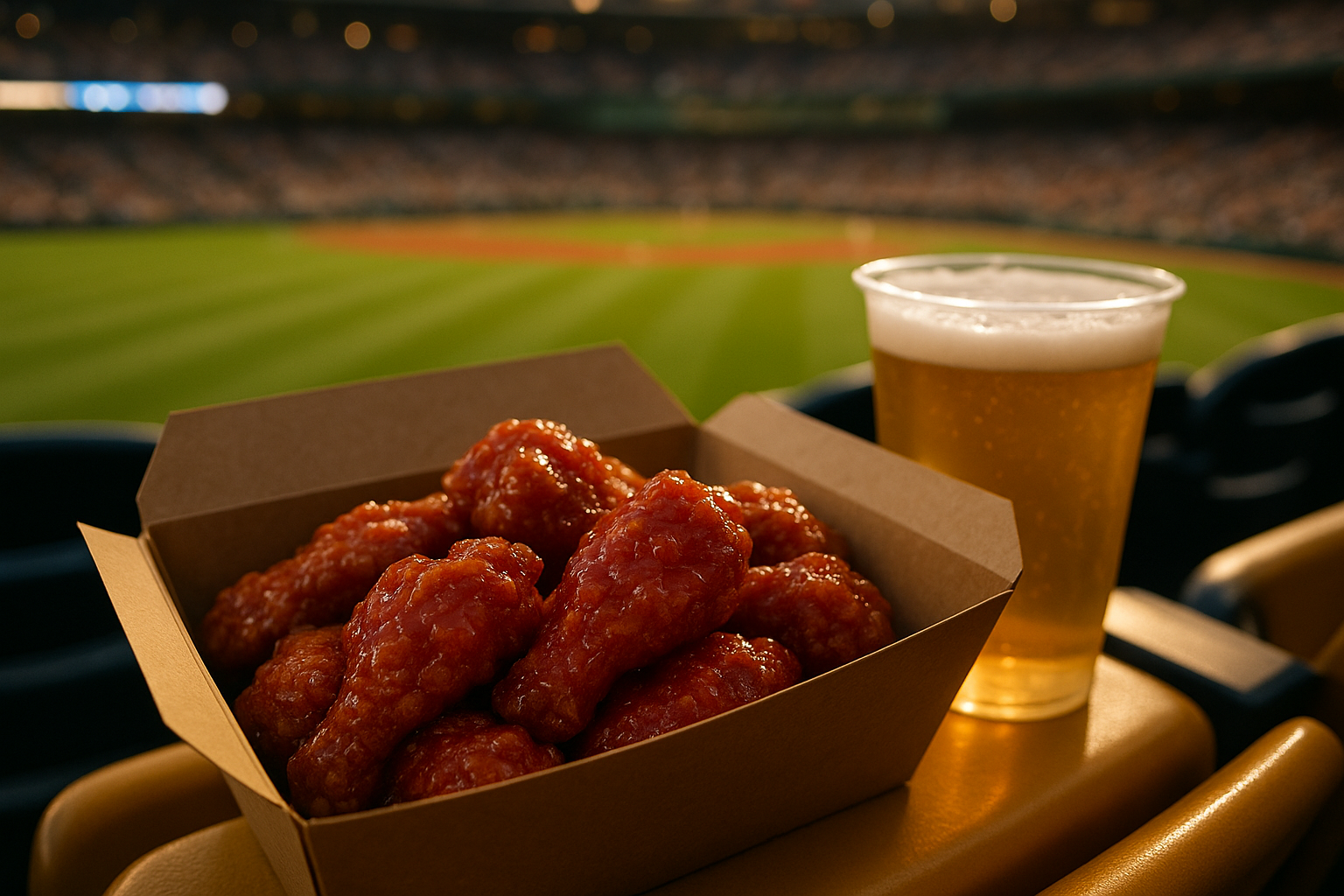
Beer came from a woman with a keg strapped to her back like some kind of tactical gear, 5,000 won a cup, no ID check, no line. Chimaek — chicken and beer — isn’t a stadium concession here so much as it’s the actual plot of the evening. The baseball is almost the subplot.
Learning the Choreography By Accident
When the Twins cheerleaders came out in the third inning, the entire section around me stood up in one motion, like a wave that had been rehearsing. I stayed seated for maybe eight seconds before the guy who’d given me the thundersticks pulled me up by the elbow, not unkindly, just efficiently, the way you’d catch someone before they walked into a door.
The chant for that inning was “dollyeo dollyeo” — twist, twist — and everyone crossed their thundersticks and rotated them in a figure-eight while chanting the batter’s walk-up phrase in unison. I mouthed nonsense syllables and rotated my sticks a half-beat behind everyone else. Nobody corrected me. Nobody needed to. By the fifth inning I wasn’t a half-beat behind anymore.

There’s a towel-swinging chant reserved for the seventh inning, when the whole stadium — all 23,750 seats’ worth, give or take — spins white and blue rally towels overhead while the cheer squad conducts from a small platform in front of the outfield stands. I didn’t have a towel. The woman behind me, who I never learned the name of, handed me hers without asking if I wanted it, the same casual transfer as the thundersticks earlier. I spun it badly. She laughed, not at me exactly, more like she remembered being new to it too.
What Nine Innings Actually Taught Me
I’ve lived in Korea for a while now, long enough that most of the disorientation has worn smooth. But that night in Jamsil was the first time belonging felt like something handed to me in stages — a bag of thundersticks, a shared box of chicken, a towel from a stranger’s hands — rather than something I had to earn by being fluent or invisible. Nobody asked where I was from. Nobody needed me to explain myself. The chant didn’t care if I understood the words. It only needed my arms moving with everyone else’s.
I thought about the first time I ordered fried chicken to a park bench and felt like an outsider fumbling an app. This was the opposite of that — nobody made me order anything. The whole system was built to fold you in without asking permission first.
The Twins lost, 4-2, on a two-run double in the eighth that sent a groan through the whole stadium in perfect unison, which felt, weirdly, like its own kind of togetherness. I walked out past the chicken boxes stacked six feet high by the gate, thundersticks still in my bag, and realized I hadn’t checked my phone once in three hours.
Frequently Asked Questions
Do you need to know Korean to enjoy a KBO game?
No. I didn’t understand maybe 80 percent of the chants at my first game and still walked out of Jamsil having had one of the best nights I’d had in Korea that year. The cheer squad leads with gestures and rhythm you can copy visually within a couple of innings — thunderstick crosses, towel swings, clap patterns — and the people around you will physically pull you into it if you’re slow to catch on.
How much should I budget for a night at the stadium?
My night ran about 45,000 won total: 15,000 for the outfield ticket, 23,000 split loosely with chicken I never technically ordered myself, and 5,000 for one beer. If you buy your own chicken and a couple of beers solo, figure 40,000 to 55,000 won for ticket plus food and drink, depending on the section and how much chimaek you commit to.
What’s the etiquette around the food delivery and shared items?
Vendors call out seat-section numbers rather than walking a full circuit, so listen for your block number if you’ve ordered ahead through a seatback code or an app. Sharing thundersticks, towels, or even a bite of chicken with neighbors you’ve just met is completely normal in the cheering sections — it’s less generosity, more just how the seating blocks function as temporary teams for three hours.
Leave a Reply