
Nobody hands you a manual for this. There’s no orientation packet, no HR slide deck, no app that tells you what everyone in the room already silently agrees on. You feel your way toward it, usually by getting it wrong a few times first. That, as far as I can tell after years of living here, is the entire point of nunchi.
My wife’s family uses the word almost as a diagnosis — someone “has no nunchi,” the way you might say someone can’t read a map. It’s not really about manners or intelligence. It’s closer to social radar: sensing mood, hierarchy, and unspoken expectation fast enough to adjust before you cause a problem, not after.
What Nunchi Actually Means, Beyond the Dictionary Definition
Translated literally, nunchi is something like “eye-measure.” Most explanations stop at “reading the room,” which is accurate but undersells how physical the skill is. It isn’t just noticing a meeting has gone quiet — it’s clocking who went quiet first, and whether the safer move is to fill the silence or let it sit. Koreans don’t usually say someone has “good” nunchi. They say quick nunchi, as if the value lives almost entirely in the speed.
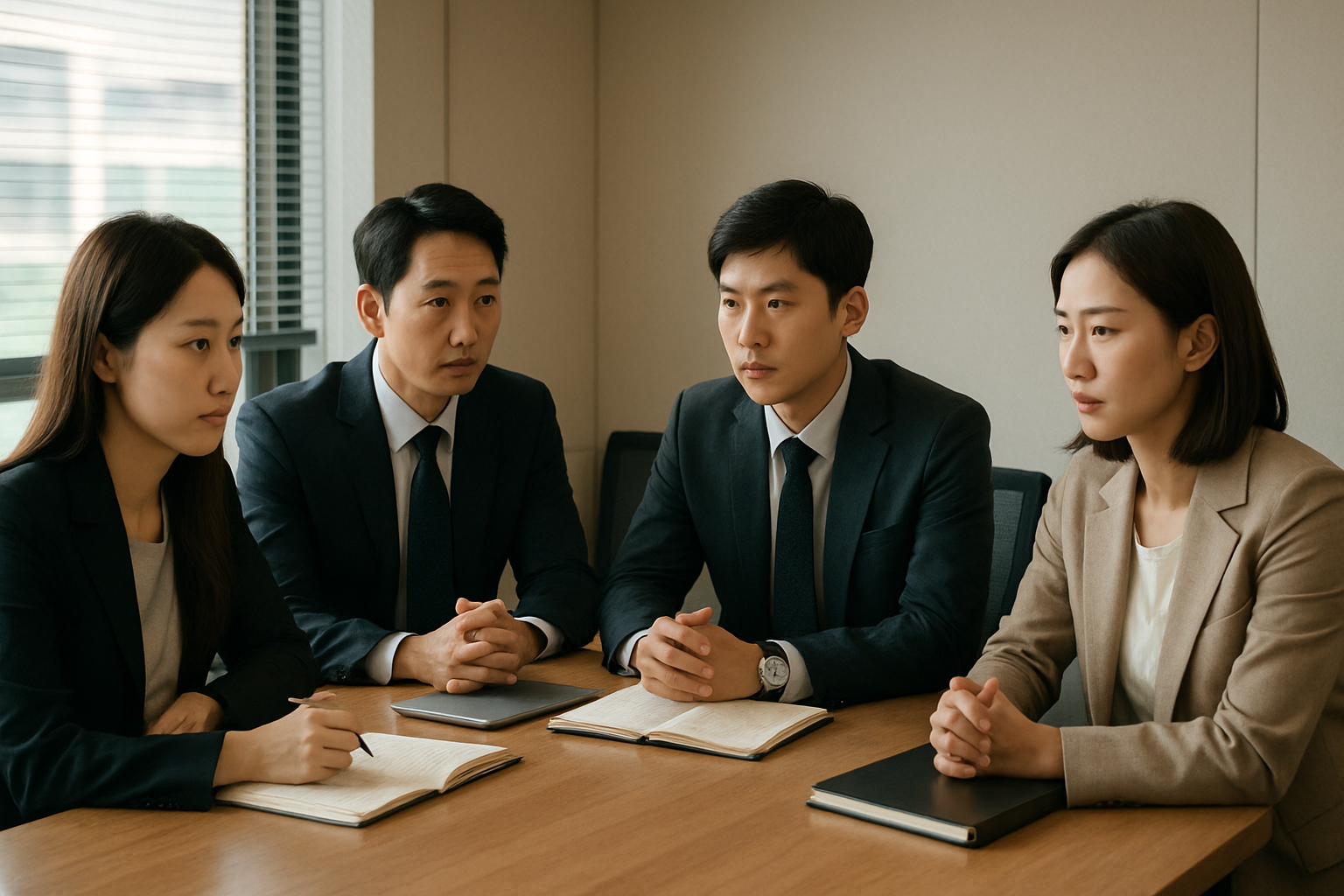
The workplace is where I’ve watched this operate most visibly, mostly because I keep failing at it in small, low-stakes ways. A senior colleague makes a suggestion phrased as optional. Everyone else understands it isn’t. I have, more than once, treated it as optional anyway. Nobody corrects you loudly — the correction is itself a nunchi exercise, a slightly cooler tone next time, a meeting invite quietly dropped. You’re expected to notice the shift and adjust without being told why.
At the Dinner Table, Everyone Is Reading Everyone
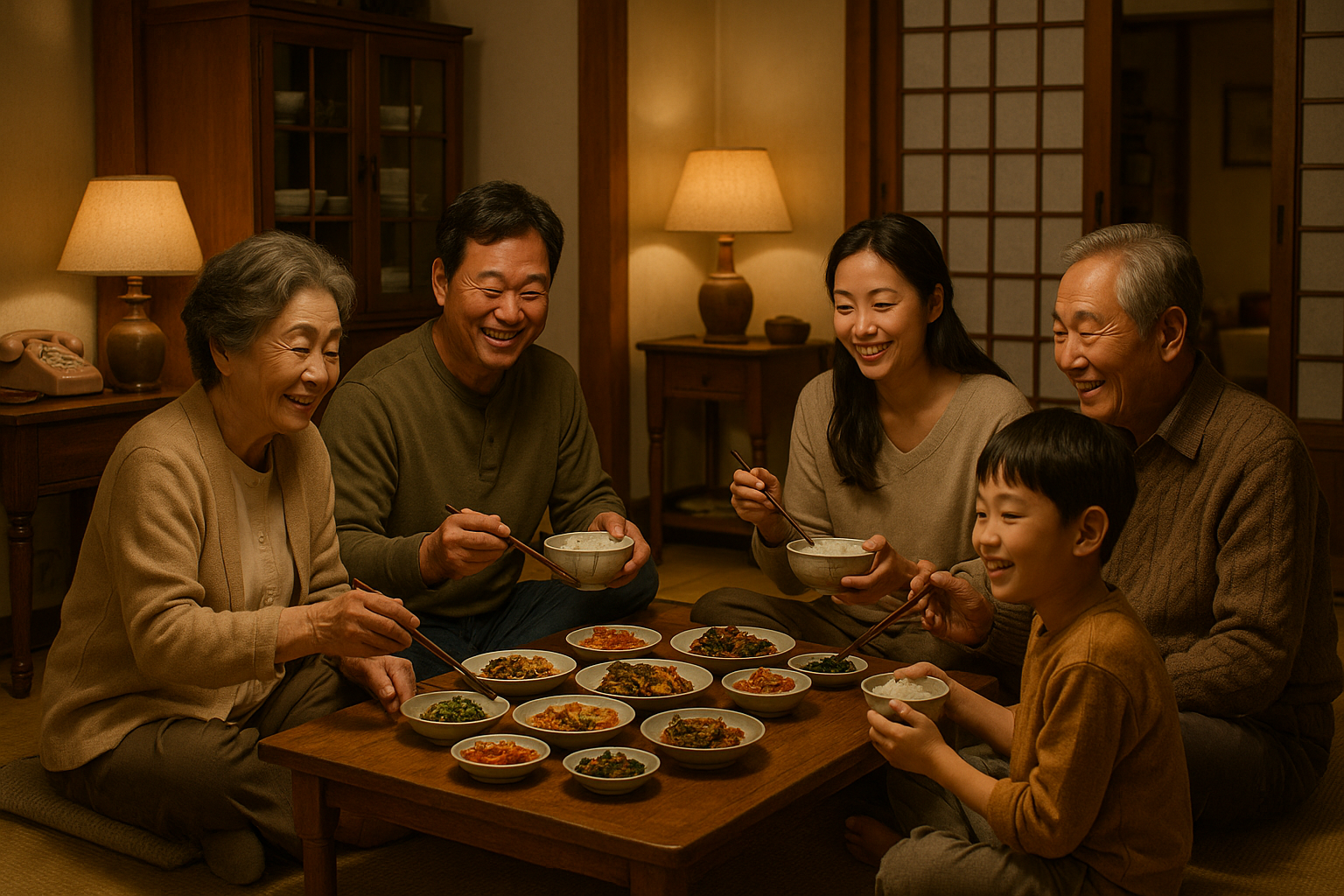
Family gatherings are, if anything, more demanding. There’s a quiet choreography to who serves whom first, who waits for the eldest to lift a spoon, when a joke is safe and when it will land wrong. As a foreigner I get a certain amount of grace — people assume, correctly, that I’m still calibrating. But the grace has a shelf life. Nunchi isn’t only a younger person’s obligation toward elders; it runs in both directions, and everyone at the table is doing it at once without announcing it.
The Restaurant Is a Test You Didn’t Know You Were Taking
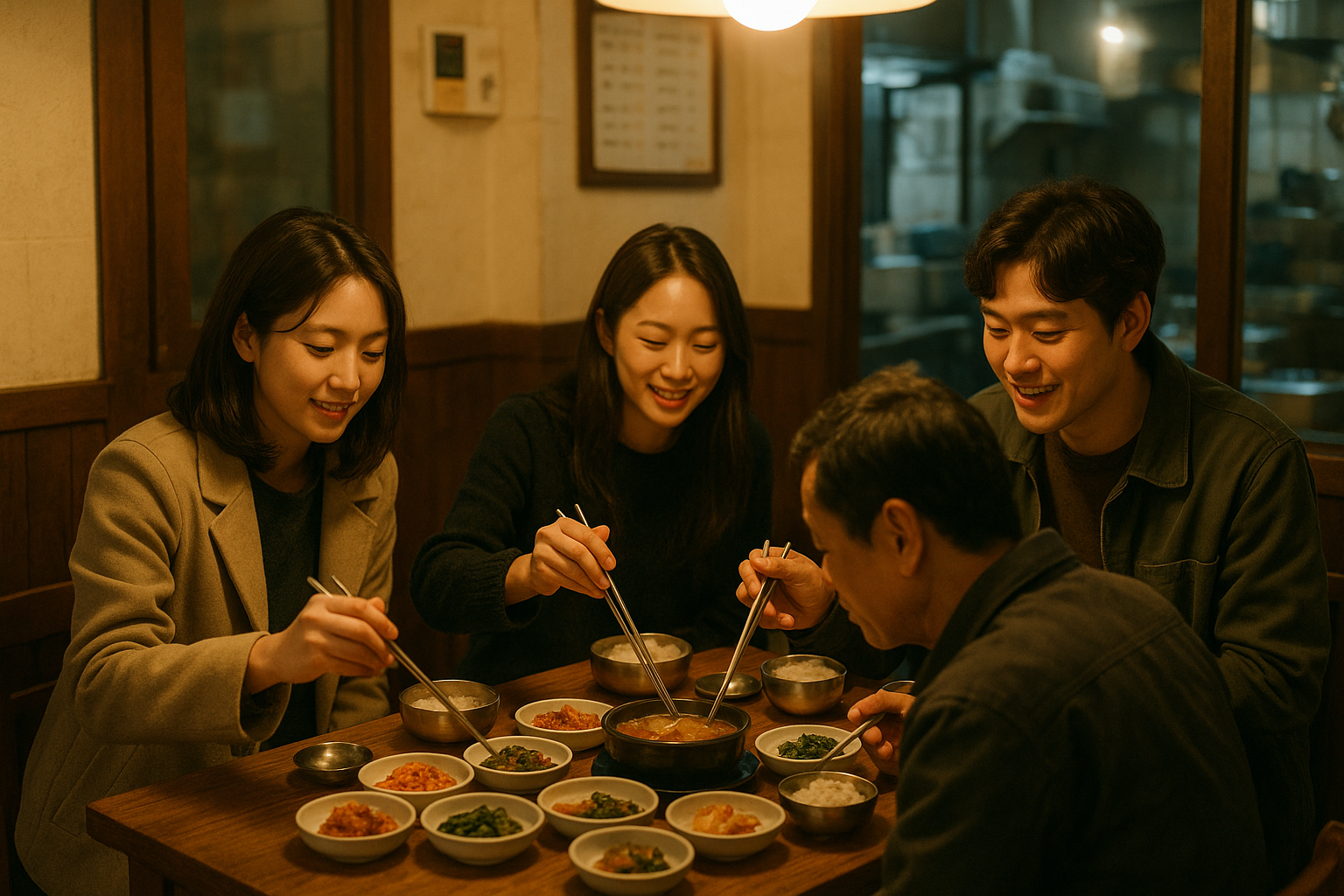
Restaurants and cafés are their own small classroom — whether you flag a server or wait for a glance, how long you linger after the meal, whether the group has decided, without a vote, that it’s time to move on. None of this is written down. You absorb it by watching, and by that particular flush of embarrassment that teaches faster than any lesson could. It runs on the same wiring I wrote about in why people on the street here seem to clock you before you clock them — a low-grade social awareness that never fully switches off.
Why Speed Matters More Than Being Technically Right
What surprised me most is that nunchi resists being reduced to a checklist, which is why guidebooks about it always feel a little hollow. It’s closer to a rhythm you either catch or you don’t, adjusted in real time. I don’t think I’ll ever have native-level nunchi, and I’ve made peace with that. What’s changed is that I now notice when I’m missing something, even when I can’t quite name what. That noticing might be the real beginning of the skill, rather than a consolation prize for lacking it.
Frequently Asked Questions
Is nunchi the same thing as emotional intelligence?
They overlap but aren’t identical. Emotional intelligence, as usually described in the West, centers on understanding your own emotions alongside others’. Nunchi is more outward-facing — less about internal awareness, more about reading a specific room at a specific moment and adjusting to preserve group harmony.
Can nunchi be learned as an adult, or do you need to grow up with it?
Koreans generally say it’s cultivated from childhood, through constant correction inside family and school hierarchies. Adults can still improve, but usually the slow way — small missteps, watching reactions instead of words, and resisting the urge to ask directly for rules that were never meant to be spoken aloud.
Does strong nunchi mean always staying quiet and agreeing with everyone?
Not really. Reading a room well sometimes means knowing exactly when a dissenting opinion will be welcomed, or when a joke will cut tension rather than cause it. Good nunchi is closer to well-timed judgment than passivity.
Leave a Reply