I remember standing at the immigration office counter in Mokdong, ticket number long since called, watching an officer flip through my passport like she was looking for something I’d forgotten to bring. I hadn’t forgotten anything, as it turned out, but I hadn’t known there was a specific photo size requirement, a specific application form number, or that the whole process would take closer to a month than a week. Nobody dies from that kind of surprise. But it sets the tone for the first few months in Korea, and a little more preparation would have saved me a lot of standing around in fluorescent-lit waiting rooms.
This isn’t a list of things that shocked me culturally — that’s a different essay, and I’ve already written it. This one is narrower and, honestly, more useful: the practical groundwork I wish someone had handed me before I got on the plane. Banking, housing deposits, phone plans, health insurance, the address system, even just knowing enough Hangul to read a sign. None of it is dramatic. All of it would have made my first three months smoother.
The ARC Is the Key to Everything Else
The Alien Registration Card — officially renamed the Residence Card a few years back, though almost everyone including immigration staff still says ARC out of habit — is the single document that unlocks a functioning life in Korea. Without it, you can’t open a real bank account, sign a postpaid phone contract, or register for health insurance under your own name. You have up to ninety days after arrival to apply, and the fee is a modest 30,000 won, but the processing time is the part people underestimate. I’d budgeted a week in my head, somehow, and it took closer to a month.
Sounds bureaucratic, and it is, but the fix is simple: bring more documents than you think you need. A passport photo with a plain white background (3.5cm by 4.5cm, and yes, they measure), the application form, proof of address, and, depending on your visa type, a tuberculosis screening result. Miss a single item and you get sent home, clock still running, just to come back and stand in line again. And here’s the part that catches newcomers off guard: for those first weeks without an ARC, you’re functionally locked out of a surprising number of everyday systems, from bank accounts to postpaid phones to insurance registration. You can get by on prepaid SIMs and cash, but it’s a strange limbo, still a visitor on paper while your actual life has already started.
Jeonse and Wolse: Don’t Let the Vocabulary Scare You
Korea’s rental system runs on a deposit structure with no real equivalent back home, and the terminology alone stopped me cold the first time an agent used it. Jeonse is the traditional model: a lump-sum deposit, often half to seventy percent of the property’s value, in exchange for living rent-free through the lease term, usually two years. The landlord invests that money elsewhere and returns it in full when you move out. Wolse, far more common for foreigners, means a smaller deposit — often five to ten million won — plus monthly rent, structurally closer to renting anywhere else in the world.
It’s tempting to assume jeonse is the smarter long-term deal, since you technically get the full amount back. In practice, most agents steer foreigners toward wolse or the hybrid ban-jeonse, and there’s a real reason beyond convenience: jeonse deposits are large enough that fraud has become a serious nationwide problem, with tens of thousands of recognized victims in recent years, landlords defaulting and deposits vanishing into disputes that take months to resolve. For someone still learning the language and legal system, that risk rarely matches the reward. Either way, get the lease registered at the local community center — this confirms the date and protects your deposit priority if the building runs into trouble — and don’t skip it just because the agent calls it optional. It rarely is, in any way that matters.

Getting a Phone Number That Actually Works Like One
You can get online the moment you land. Airport SIM counters at Incheon sell prepaid tourist SIMs on nothing but a passport, and eSIMs let you skip the counter entirely. What surprisingly few people mention beforehand is that a prepaid number isn’t registered under your legal identity the way carriers and apps expect. Calls and texts work fine, but Korean banking and delivery apps often want a postpaid line tied to your real name, which requires an ARC plus, usually, a bank account — a chicken-and-egg stretch early on. I got through it with a prepaid SIM and patience, switching to postpaid once my ARC came through. Still, I’d have looked into smaller MVNO carriers instead of assuming the big three were my only option; they’re often easier for newcomers, and somehow cheaper too.
Health Insurance Isn’t Optional, and That’s Good News
This is one area where the bureaucracy actually works in your favor once you understand it. Since 2019, foreign residents staying more than six months are automatically enrolled in the National Health Insurance Service — you don’t apply in the usual sense, and can’t really opt out unless you hold specific visa categories or show comparable private coverage. Some visa holders, including language trainees and non-professional employment visas, get enrolled the moment their ARC is issued, no six-month wait required. It might sound heavy-handed, being folded into a system without much say in the matter, but the coverage is genuinely solid, with the government typically covering a large share of essential treatment costs. What I wish I’d known earlier is that premiums get calculated retroactively and can arrive as a startling lump-sum bill. Budget for that. It isn’t a scam, just the billing cycle catching up to your enrollment date.
The Address System Will Make You Feel Illiterate for a While
Korea officially moved to a road-name address system in 2011, fully replacing the older lot-number (jibun) system by 2013 — road name plus building number, reading from large administrative unit down to specific building, similar to how the US or much of Europe format addresses. In practice, plenty of people, Koreans included, still use the old jibun addresses in casual conversation and on business cards. I’d look up an address on a map, arrive at the building, and still get slightly turned around because the taxi driver was working off the neighborhood’s old lot-number logic. Learning to spot the road suffixes helped more than expected: -daero for major boulevards, -ro for standard roads, -gil for smaller streets, roughly decided by lane width. Once that clicked, addresses stopped being random syllable strings and started being at least somewhat readable, even before my Hangul was any good.
Hangul Before Arrival: The Advice I’d Actually Insist On
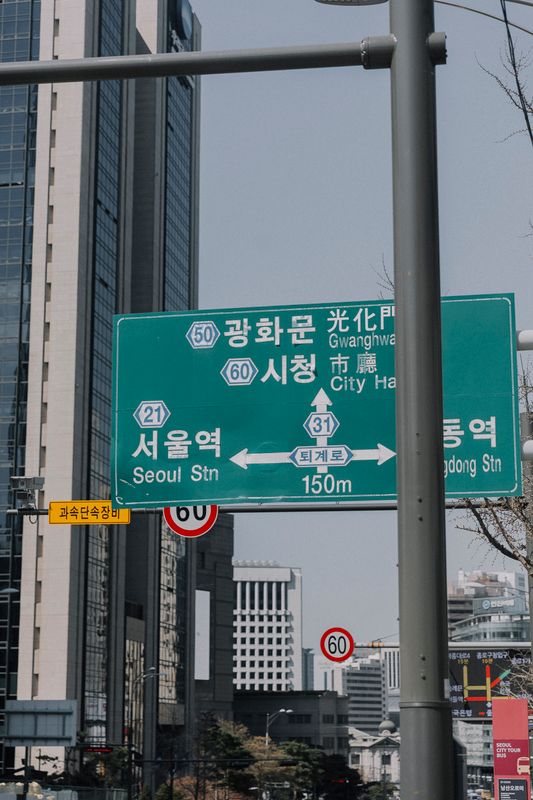
Of everything on this list, this is the one I’d push hardest on. Hangul is genuinely one of the more learnable writing systems out there — most people get through the basics in a weekend of focused practice — and yet I met so many people, myself half-included, who arrived unable to sound out a single sign. That gap makes every other item on this list harder too: reading a lease, a phone plan brochure, immigration signage instead of wandering the hallway looking lost. You don’t need fluency, just the ability to sound words out, a fundamentally lower bar. I’m not saying this because I nailed it myself — I didn’t, not at first. But every week I put off learning the alphabet was a week I stayed dependent on translation apps for things that should have taken five seconds to read.
Bringing It Together
None of this is meant to scare anyone off. Korea has been, on balance, an easy place to build a life once the initial paperwork settles. It settles faster when you know roughly what’s coming: an ARC timeline longer than expected, a deposit structure that rewards caution over ambition, a phone plan limbo before registration comes through, an insurance bill that surprises even though it isn’t really one, an address system needing some getting used to. If I had to boil it down to one piece of advice, it wouldn’t be about any single document — it would be this: give yourself more runway than feels necessary, on every front, before you actually need it. It’s the kind of quiet preparation nobody notices when it works, but that everybody feels when it doesn’t.
Frequently Asked Questions
Do I need my ARC before I can open a bank account in Korea?
In most cases, yes — major banks require an ARC to open a full account, part of why the first few weeks feel like a holding pattern. Some offer limited foreigner-friendly accounts with just a passport, but functionality stays restricted until your ARC is issued, so ask your branch what’s possible in the interim.
Is jeonse ever a good option for a first-time foreign resident?
It can work, but it’s rarely the first move I’d recommend. The deposits are large, and navigating the legal protections takes real familiarity with Korean contract law. Most agents steer newcomers toward wolse or ban-jeonse for exactly that reason, and I’d lean the same way unless you have someone trustworthy guiding you through the jeonse process specifically.
How much Hangul do I actually need before landing?
Enough to sound out syllables, not enough to hold a conversation. Being able to read a sign phonetically, even without understanding every word, changes how navigable daily errands feel. A weekend or two of focused study before arrival goes a surprisingly long way, more than most people expect going in.
Leave a Reply