The first time I moved into a Korean apartment, the moving crew got there before I did. You’d think movers hauling furniture all day would be the last people worried about a little dirt, but by the time I walked in, three men were already carrying my mattress frame through the front door in their socks, and a fourth was standing at the threshold pulling plastic covers over his boots before he’d take another step. I was still holding a box of kitchen utensils in my shoes when one of them looked at my feet, then at the floor, then back at my feet, and said nothing at all. He didn’t have to. That one look taught me more about Korean home culture in three seconds than any guidebook had in three months.
I go by Yijidaddy, and I’ve lived in Korea long enough now that taking my shoes off before I’m even fully through a doorway has become an involuntary reflex, the kind of thing my body does before my brain catches up. Strange as it sounds, it took a while to get there, and the “why” behind it turned out to be a lot deeper than I expected.
The Floor Is the Furniture
Most explanations of this custom start and end with “it’s cleaner,” which is true but incomplete. Even so, the real starting point is architectural, not hygienic. Traditional Korean homes were built around a heating system called ondol, and archaeologists have traced early versions of it back roughly three thousand years, long before anyone was debating carpet versus hardwood.
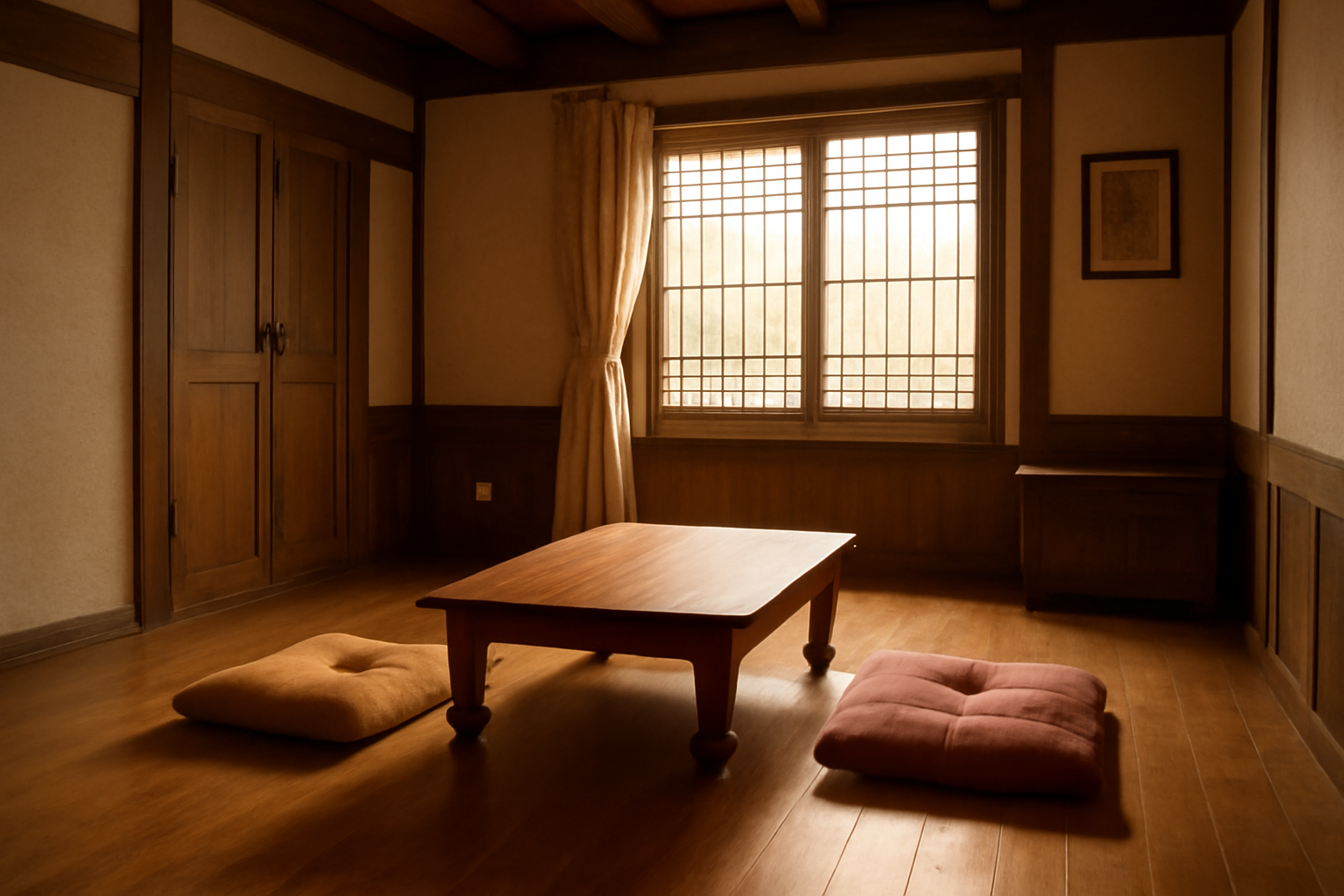
The system worked by channeling heat and smoke from a cooking fire through stone flues running beneath the floor. The stones absorbed the heat and released it slowly upward, warming the entire room from the ground up rather than through the air, the way a fireplace or a radiator does. That single design choice shaped almost everything else about how people lived inside a Korean home. If the floor is the warmest, most comfortable surface in the house, you don’t put your furniture on it, you put yourself on it. Families ate at low tables while sitting on the floor. They slept on thin padded mats called yo, laid out directly on the warm ondol surface at night and folded away in the morning. The floor wasn’t something you walked across to get to the furniture. It was the furniture.
Once you understand that, the shoes rule stops looking like an arbitrary custom and starts looking like plain common sense. Still, it’s easy to underestimate how much this shapes daily behavior, and nobody wants to eat dinner, let alone fall asleep, on a surface that strangers have been tracking street dirt across all day.
It’s Not Just About Dirt
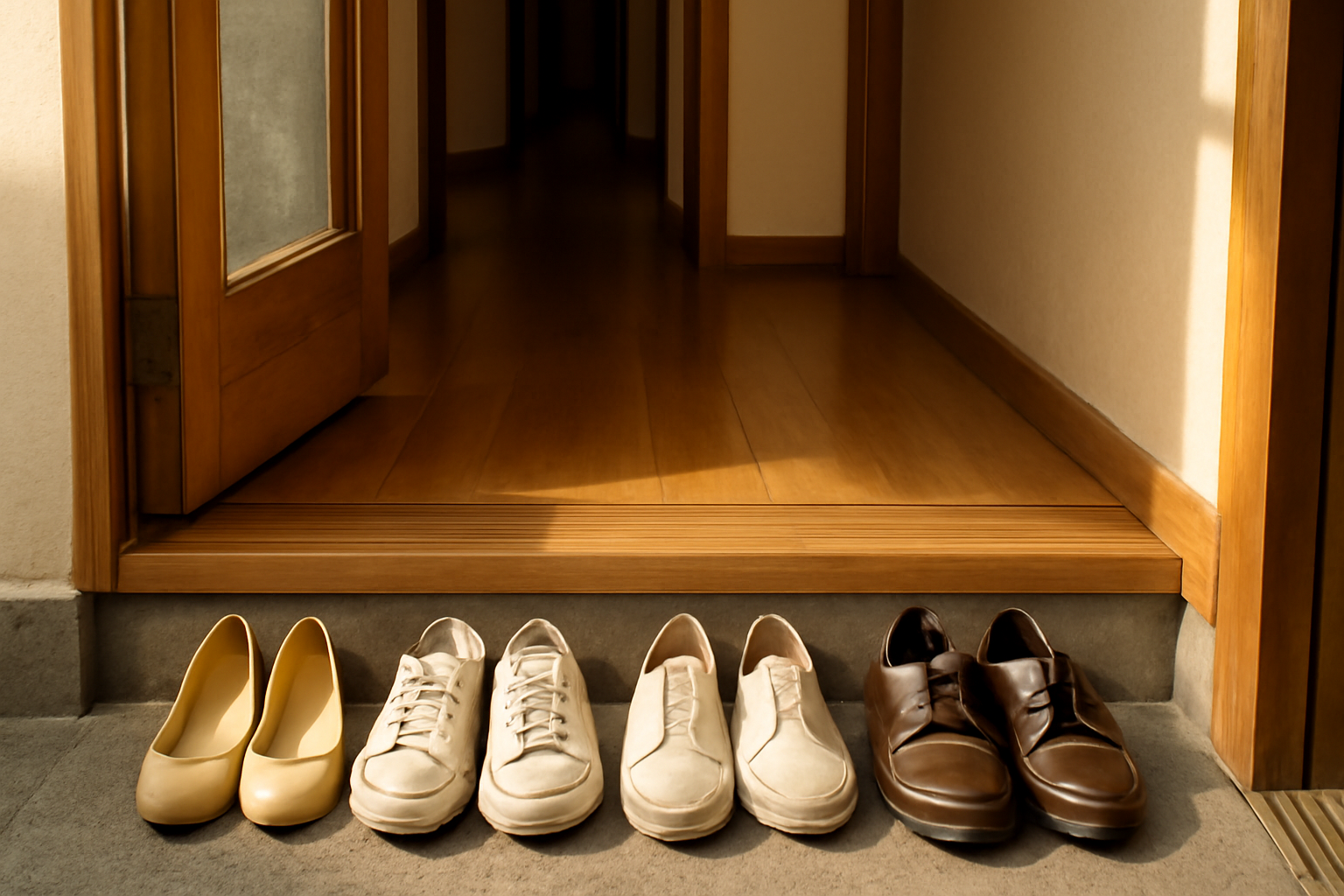
The hygiene argument is real, and Koreans will happily explain it to you in detail: shoes carry rain, mud, dust, and whatever else the city sidewalk had to offer, and none of that belongs on a surface where children crawl, elderly relatives sit, or anyone might eventually stretch out for a nap. But there’s a second layer to it that took me longer to notice, which is that removing your shoes functions as a kind of quiet ceremony. It marks the exact moment you stop being a visitor from the outside world and become a guest inside someone’s private space. You see this most clearly at a Korean funeral hall or a friend’s family gathering, where the row of shoes lined up neatly at the entrance says something the doorbell already announced: everyone who matters is already here, and you’re about to join them on equal footing, literally.
Where the Rule Follows You Outside the Home
The entryway step
Nearly every Korean home, and a fair number of older public buildings, has a small sunken entry area called a hyeon-gwan, usually just a step down from the main floor. This is the transition zone, and it trips up more visitors than you’d expect. You take your shoes off standing in that lower section, then step up onto the raised floor in socks or bare feet. Getting this backwards, planting a shod foot on the raised part even for a second, is the kind of mistake that draws a polite but pointed look, the same one I got on moving day.
Restaurants and floor seating
Traditional Korean restaurants, particularly ones serving barbecue or home-style meals, often have a floor-seating section with low tables and cushions instead of chairs. Shoes come off at the edge of the platform and go into a small cubby or shelf built for exactly that purpose. I’ve watched plenty of first-time visitors freeze at that threshold, unsure whether the shoe rule from home really applies to a restaurant too. It does. If there are cushions on a raised platform, shoes stay behind, no exceptions.
Offices, schools, and the indoor slipper
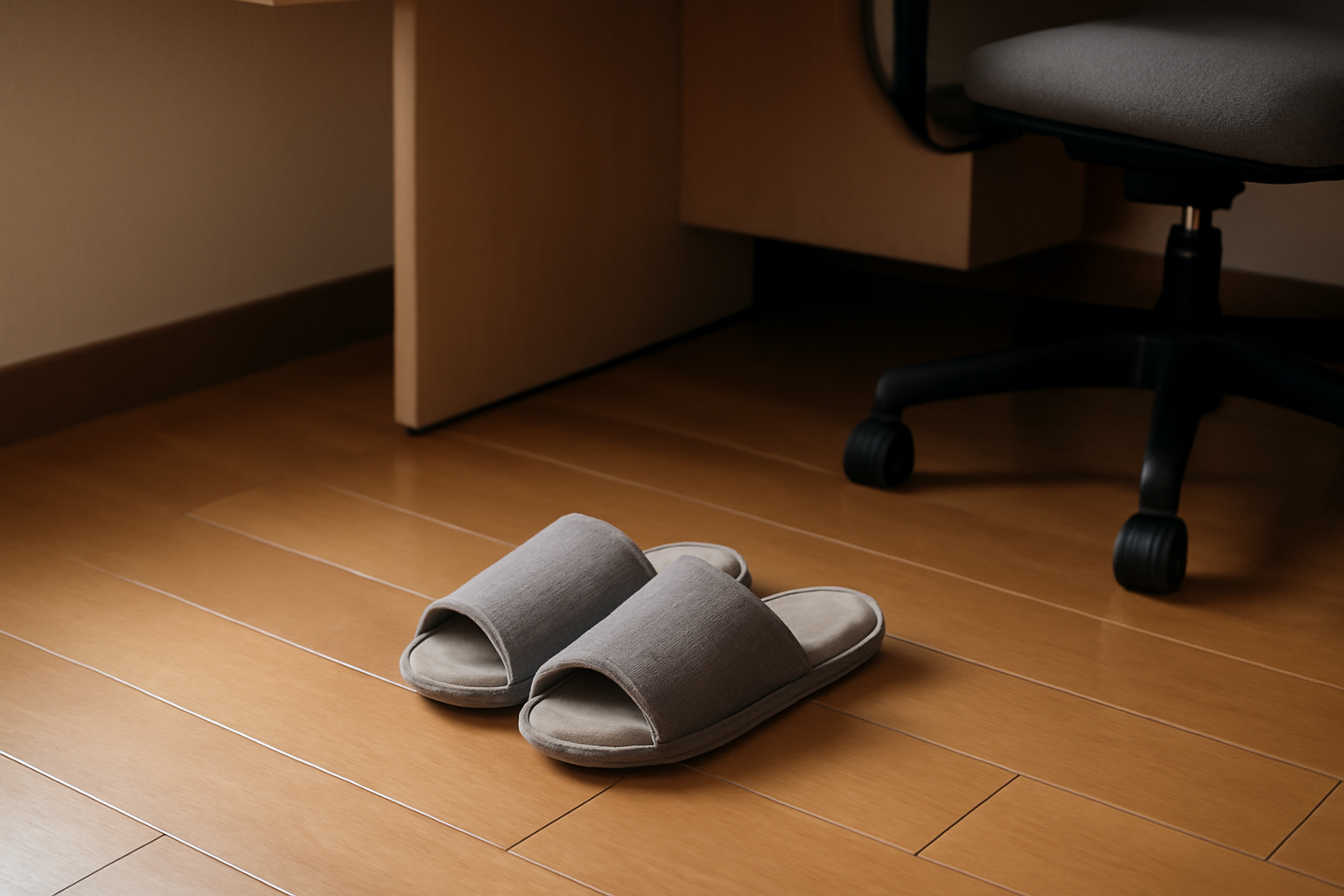
This is the one that surprises newcomers most. Plenty of Korean offices, schools, and academies keep a shelf of slippers at the entrance, and employees switch out of their outdoor shoes the moment they arrive, working the entire day in slip-ons under their desk. You might think this is overkill for a workplace, but it’s less about hygiene at that point and more about comfort and habit; after a lifetime of associating “indoors” with “shoes off,” sitting at a desk in dress shoes for eight hours just feels wrong to a lot of people. Cafes and Western-style restaurants are generally the exception. If everyone is seated at a normal table and chairs, your shoes stay on.
What I Had to Unlearn
Adjusting to this wasn’t hard exactly, but it was humbling in small ways. I remember standing in a friend’s kitchen holding a bag of takeout, having already taken my shoes off at the door like a good guest, and then realizing I’d walked across the living room and back out toward the balcony without ever thinking about where the “indoor” zone actually ended. Balconies in Korean apartments are often unheated and tiled, closer in spirit to the outside world than the living room, and some hosts genuinely prefer shoes back on out there. Oddly, nobody had told me that rule existed until I’d already broken it.
What eventually clicked for me wasn’t a set of rules so much as a mental model: treat the floor the way you’d treat someone’s bed. You wouldn’t climb into a friend’s bed in your shoes, and once you think of a Korean living room floor the same way, the whole system makes sense without needing to memorize anything. These days I notice the opposite problem when I visit family back home, standing at their door out of habit, waiting for a shoe rack that isn’t there.
Frequently Asked Questions
What if I’m wearing socks with holes in them?
It happens to everyone eventually, and nobody will say a word about it. That said, if you know you’re heading somewhere shoes will come off, like a Korean home or a floor-seating restaurant, it’s worth keeping a decent pair of socks in your bag for exactly this reason. A small habit, but it saves a little embarrassment.
Do Airbnbs and short-term rentals in Korea expect this too?
Almost always, yes. Look for a small entryway with a step down, or a shoe rack near the door, and take that as your cue. Many hosts leave a note about it, but even without one, following the entryway design is a safe bet. Most places also keep a pair of guest slippers waiting for you just past the door.
Is it rude to ask a Korean friend whether shoes off is expected?
Not at all, if anything it’s the opposite. If you’re ever unsure walking into someone’s home, glancing at the entryway for a row of shoes or simply asking is completely normal, even for Koreans visiting an unfamiliar place. Nobody expects a foreigner to know every detail on the first try, and asking shows more respect than guessing wrong.
Leave a Reply