The First Time I Watched a Stranger Eat Noodles for an Hour
The first time I actually sat through a full mukbang, I wasn’t trying to. I was in a waiting room at a pediatric clinic in Seoul, half-asleep, and the TV bolted to the wall was tuned to a cable channel where a young woman was working her way through what looked like four servings of jjajangmyeon, two servings of tangsuyuk, and a liter of cola, narrating the whole thing between bites. Nobody else in the room seemed to find this remarkable. My daughter was the only person watching the screen with any real curiosity, and even she lost interest before the host did. That, more than anything, told me mukbang isn’t a novelty act here. It’s furniture.
The premise still sounds odd the first time you say it out loud — people watching other people eat, sometimes for an hour at a stretch, sometimes daily, sometimes while eating their own dinner in front of the same screen. But once you’ve lived here a while, the “why would anyone watch this” question stops mattering, because you start noticing how deeply the format is wired into ordinary Korean life: television, YouTube, convenience store shelves, even how some restaurants arrange their seating. I want to actually explain that, piece by piece, rather than just describe it from the outside.
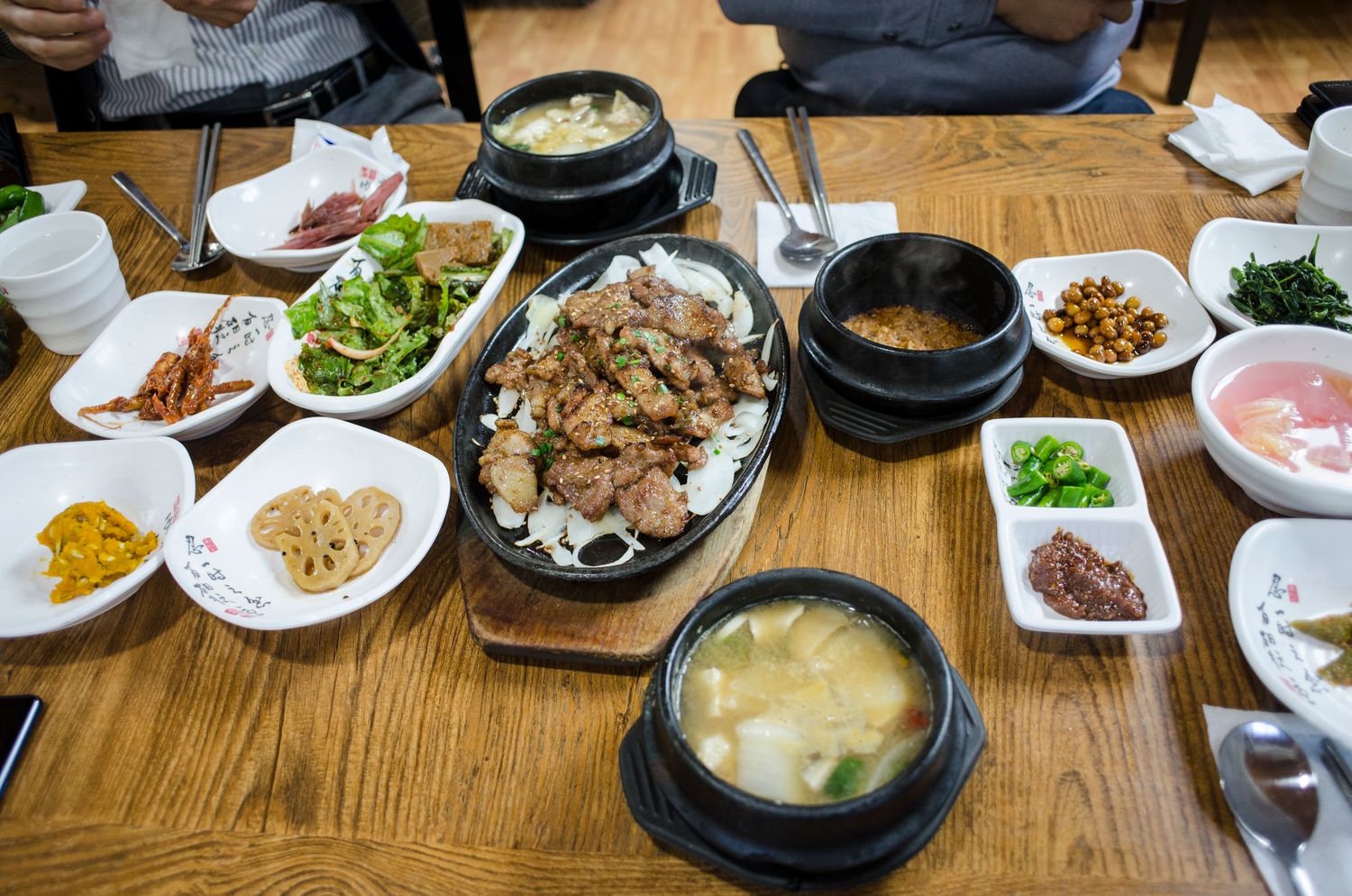
What “Mukbang” Actually Means
Mukbang (먹방) is a portmanteau of meongneun (먹는, “eating”) and bangsong (방송, “broadcast”). That’s the whole etymology — eating, broadcast. The host is traditionally called a BJ, short for “Broadcast Jockey,” a term borrowed from Korean radio culture that existed long before YouTube did. A mukbang isn’t just footage of someone eating; it has a loose but recognizable grammar to it. There’s an opening greeting to the audience, a reveal of the food laid out for the camera like a trophy — often an amount no single person should reasonably finish — and then the eating itself, usually paired with either constant chatter or near-total silence except for the sound of chewing.
That silent option grew into its own branch of the genre, and it’s worth treating as a sister format rather than a footnote: ASMR mukbang, where microphones are placed close enough to pick up every crunch, slurp, and swallow. Described in a sentence, it sounds unpleasant. In practice, a lot of viewers find it strangely calming, the same mechanism that makes some people fall asleep to rain sounds or keyboard-typing videos. I still don’t fully get the appeal myself, even after years of living next to it, but I’ve stopped pretending it’s a fringe taste — some of the biggest mukbang channels in the country are built almost entirely around sound design rather than personality.
Where It Actually Started
The format traces back to around 2009 on AfreecaTV, a Korean live-streaming platform that predates Twitch by several years. AfreecaTV had already built a donation economy around “star balloons,” a virtual currency viewers buy and send to streamers in real time, which the streamer can later cash out. Eating on stream turned out to be a low-barrier way to hold an audience for a long session — no special skill required, just a camera, a table, and an appetite — and the donation model meant a popular host could make a genuinely good living by eating dinner in front of a webcam. The format migrated to YouTube around the mid-2010s, where it found a far bigger international audience, and by roughly 2018 it had become a recognizable global genre rather than a Korean curiosity people stumbled on by accident.

The Loneliness Behind the Feast
It’s worth pulling this apart from the platform history, because the “why Korea” question has its own answer, separate from AfreecaTV’s business model. Korea has one of the more communal eating cultures in East Asia — meals function as social infrastructure, not just fuel, and a surprising number of restaurant menus still assume a table of two or more splitting dishes. Eating alone in public, called honbap (혼밥, literally “alone meal”), carried a mild social stigma for a long time; some restaurants genuinely weren’t set up for solo diners, down to the seating itself facing outward in rows rather than at shared tables.
Mukbang, in its earliest form, filled a specific gap in that setup: people eating alone at home who still wanted the feeling of a shared meal, even a one-sided, parasocial version of one. You get company without the obligation of conversation, noise without small talk. It’s an odd fix for loneliness when you lay it out like that, and I’m not going to pretend it’s a healthy substitute for actual company. But it’s not an irrational one either, and that distinction matters if you’re trying to understand the genre instead of just gawking at it.
The Business Behind the Bite
It would be easy to assume mukbang stayed a niche, ad-supported hobby, but the economics outgrew that framing years ago. Top Korean mukbang creators earn through a mix of platform ad revenue, live-stream donations, and increasingly, brand sponsorships from food delivery apps and restaurant chains eager to get their product in front of a captive, hungry audience. Tzuyang, probably the best-known mukbang creator working today, has built a channel with billions of combined views across her videos — a scale that puts her well outside “internet hobbyist” territory and squarely into mainstream media personality, with the sponsorship deals to match. Watching a creator unbox a specific brand of instant noodles or a chain’s new limited-time menu item isn’t incidental; it’s paid placement dressed up as spontaneous indulgence, and convenience store chains like GS25 and CU have both run limited-edition snack collaborations built around a particular creator’s face and catchphrase.
None of that makes the content fake, exactly. Most hosts really are eating what’s on screen, and really are hungry when the camera starts rolling. But it does mean the “just a regular person eating dinner” framing is doing some quiet work. There’s a production logic underneath the casual tone — camera angles chosen to make the food look more generous than it is, pacing edited so a two-hour shoot becomes a twenty-minute video, and a host who has, in many cases, done this thousands of times and knows exactly how to make a bite look satisfying on camera rather than just functional.
How Do They Actually Eat That Much?
This is the question I get asked most by friends back home, and it deserves a real answer instead of a shrug. Most established creators film in long, broken-up sessions rather than one unbroken sitting — pausing the stream, resting, sometimes spacing the “meal” out over several hours even though the final edit compresses it into something that looks continuous. Some of what looks like a single enormous plate is genuinely eaten across that stretched timeline; some of it is managed through smaller real bites combined with camera angles that exaggerate portion size. A handful of creators over the years have faced public accusations of using tricks — hiding food, spitting discreetly, or simply not finishing what the camera implies they finished — and those accusations have occasionally ended careers when they stuck. I’d treat any single viral claim about a specific creator with some skepticism rather than assuming it describes the genre as a whole; the honest answer is that it varies a lot by channel, and nobody outside the room actually knows for certain what happened in someone else’s two-hour shoot.
The Health Conversation Nobody Fully Resolves
I want to be careful here, because this is the part of the mukbang conversation that gets oversimplified in both directions. In 2018, South Korea’s Ministry of Health and Welfare included binge-eating broadcasts in a broader national obesity-management plan, explicitly naming mukbang-style content as something worth monitoring alongside other contributors to rising obesity rates. That was a policy footnote, not a ban, and nothing close to a crackdown followed — but it’s a real, documented moment, not an urban legend, and it tells you the conversation isn’t purely a foreign observer’s anxiety projected onto Korean entertainment. At the same time, individual creators have made their own claims over the years about fast metabolisms, specific diets, or how they manage the sheer volume of food they eat on camera, and I’m not going to repeat any of those as settled fact, because none of us watching from outside actually know what’s true for a given person’s body or habits. What I will say plainly is that the genre normalizes a scale of eating that is, by definition, not typical. Viewers can enjoy the spectacle of it without mistaking it for a menu plan, and most people here do exactly that without needing to be told.
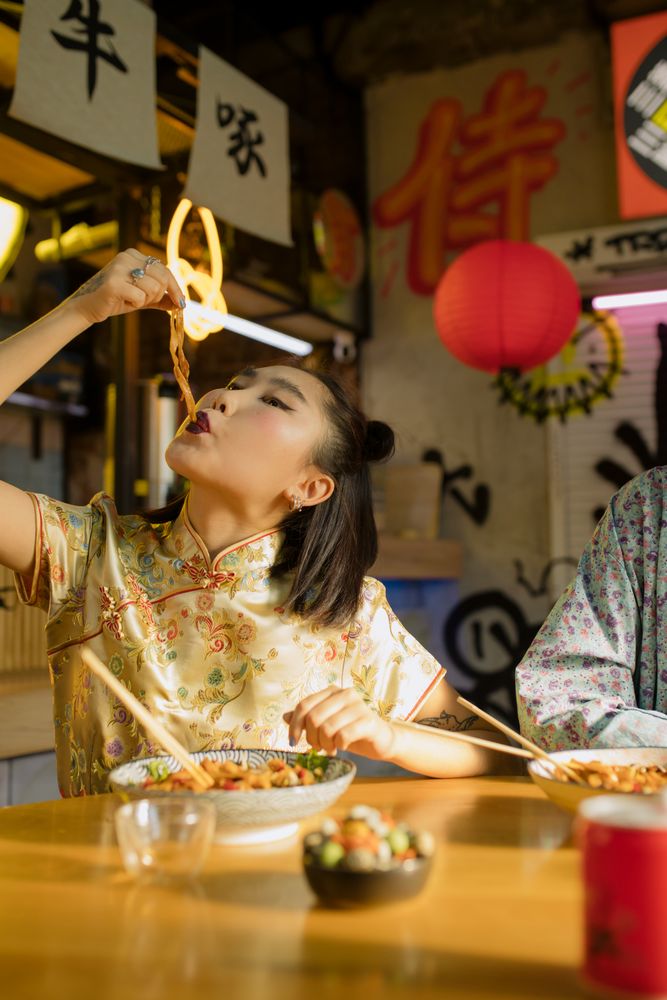
What It’s Actually Like to Encounter in Daily Life
Outside the phone screen, mukbang has leaked into the physical texture of Korea in ways that caught me off guard when I first noticed them. Convenience stores sell “mukbang-size” instant noodle bowls, sometimes packaged with a specific creator’s likeness on the sleeve. Some restaurants have an actual designated seat near a window or corner, angled for filming, because enough customers film their own meals there that it’s worth designing around. Delivery apps run promotions timed to when popular mukbang streams go live, on the fairly reasonable theory that watching someone eat fried chicken at 11 p.m. makes you want fried chicken at 11 p.m. I’ve ordered that fried chicken. It worked on me too, which was a humbling thing to admit out loud to my wife.
What struck me most, though, is how unremarkable all of this feels to people who grew up with it already running in the background. For a lot of Koreans under maybe forty, mukbang was just always there — playing on a phone propped against a water bottle during a solo lunch, as ordinary a genre as a cooking show is anywhere else. The “why would you watch this” reaction turns out to be almost entirely a foreigner’s question, mine included, back when I first saw it on that clinic TV. I don’t ask it anymore. I just notice where it’s playing next — the dentist’s waiting room, the gym locker room TV, a coworker’s phone propped up at lunch — and move on, the way you’d stop registering a radio station that’s always on somewhere in a building.
FAQ
Is mukbang still popular in Korea, or has it faded?
It’s shifted rather than faded. The pure “watch a stranger eat an enormous amount of food” format has leveled off somewhat as a novelty, but it’s splintered into healthier-eating mukbang, cooking-plus-eating hybrids, and ASMR-only channels, so the overall category is arguably bigger than ever, just less monolithic than it was around 2015 to 2018.
Is mukbang uniquely Korean, or did other countries invent similar formats too?
The name, the specific grammar of the format, and its mainstream normalization are distinctly Korean, tied closely to AfreecaTV’s donation economy and the honbap culture described above. Plenty of other countries developed their own eating-content traditions separately, but when people say “mukbang” worldwide now, they’re almost always referring to the Korean format and borrowing its conventions, not an independently invented local version.
Why do some mukbang videos have no talking at all?
That’s the ASMR branch of the genre, built around close-mic’d chewing and crunching sounds rather than conversation. It appeals to a different instinct than the chatty, personality-driven mukbang — more sensory, less social — and it’s become one of the most internationally exported corners of the format, often reaching viewers who’ve never watched a single talking mukbang video in their life.
Leave a Reply