The first sign that Chuseok is coming isn’t a calendar notification. It’s the produce section. Sometime in early September, the neighborhood mart starts stacking gift boxes near the entrance — glossy sets of Korean pears the size of softballs, tinned ham arranged like jewelry, hairtail fish wrapped so carefully it looks like it’s going to a wedding rather than a kitchen. If you’ve never lived through a Korean autumn before, that’s usually the moment a foreigner turns to a coworker or a neighbor and asks, “wait, what exactly is this holiday?”
So here’s the answer, laid out the way I wish someone had laid it out for me: what Chuseok actually is, when it happens in 2026, what your family will eat, why the ancestral rite matters, why the highways turn into parking lots, what’s going to be locked up tight, and what you should put in a gift bag if a Korean friend or coworker is expecting one from you.
So what is Chuseok, exactly?
Chuseok (추석) is Korea’s harvest festival, and it lands on the 15th day of the 8th month of the lunar calendar — the full moon closest to the autumn equinox. English-language guides love to call it “Korean Thanksgiving,” and that’s not wrong, but it undersells it a little. Thanksgiving in North America is mostly about one meal. Chuseok is a multi-day event built around three overlapping ideas: giving thanks for the harvest, honoring ancestors, and getting the whole family back under one roof, usually the grandparents’ roof.
It’s one of the two biggest holidays on the Korean calendar, the other being Seollal (Lunar New Year) in winter. If you want a rough Western comparison, imagine Thanksgiving, a family reunion, and a solemn memorial service all scheduled for the same weekend, and you’re most of the way there.
The 2026 dates — mark these down
Because Chuseok follows the lunar calendar, the date shifts every year on the solar calendar we’re used to. For 2026, Chuseok itself falls on Friday, September 25. The official public holiday period runs three days, Thursday, September 24 through Saturday, September 26, 2026. Because none of those three days lands on a Sunday, there’s no substitute holiday tacked on this year — what you see is what you get.
Plenty of families stretch it further by taking the Wednesday or the following Monday off as personal leave, so don’t be surprised if offices, schools, and even some hagwons feel thinner than usual on the days bracketing the official break. If you’re an employee, ask your HR contact well before September what the company’s actual observed schedule looks like, because “the holiday” and “the days everyone actually disappears” aren’t always identical.
The food: songpyeon, jeon, and a table full of history
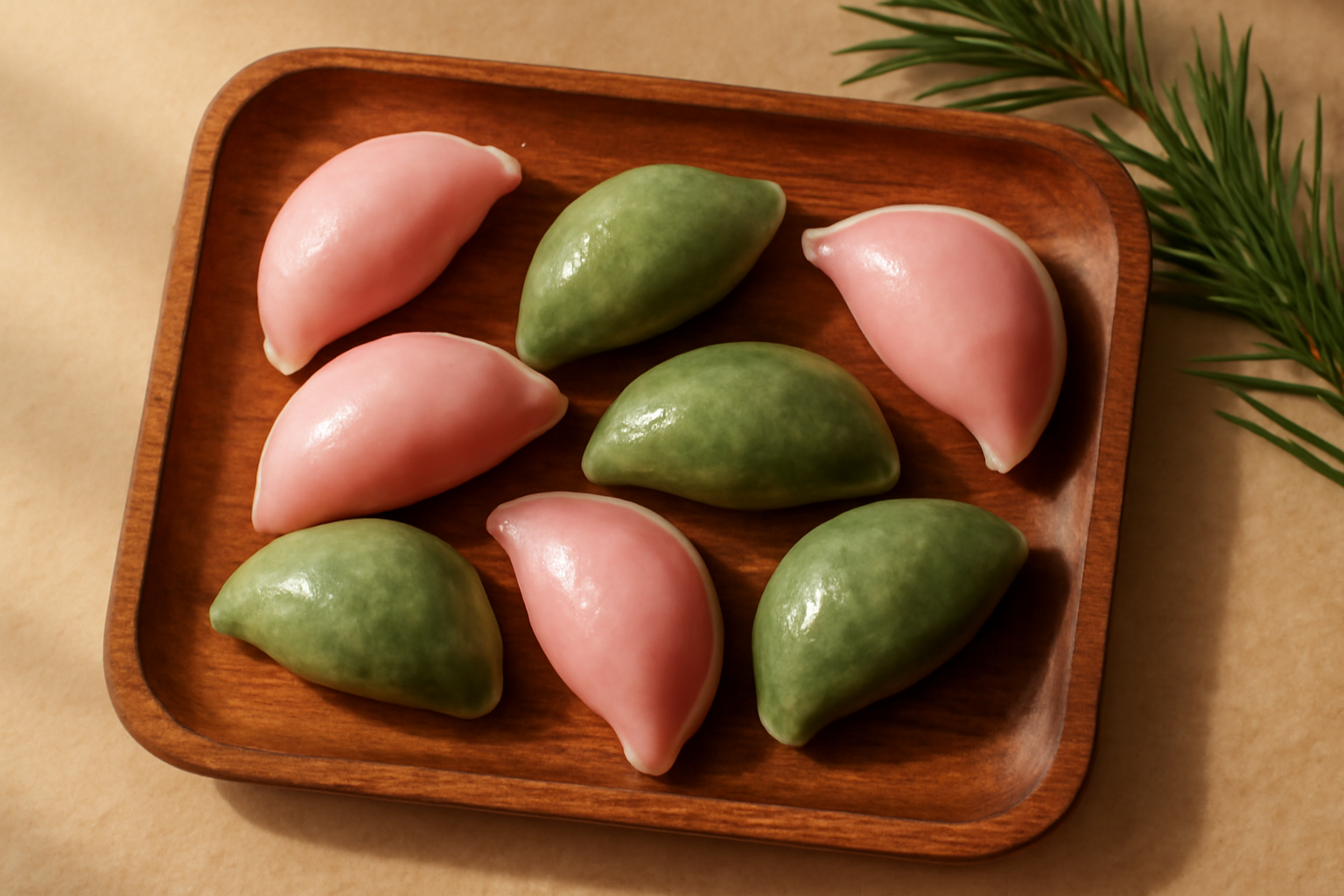
Ask any Korean grandmother what Chuseok tastes like and the answer will start with songpyeon (송편) — small, half-moon-shaped rice cakes made from glutinous rice flour, filled with sweetened sesame seeds, red beans, chestnuts, or honey, then steamed over a bed of pine needles. The pine needles aren’t decorative; they perfume the rice cake and, depending on who you ask, keep the cakes from sticking together. There’s an old bit of folk wisdom that says whoever shapes a beautifully formed songpyeon will have a beautiful daughter or a good spouse — take that with the same seriousness you’d take a fortune cookie, but don’t be shocked if an aunt says it to you with a completely straight face while pinching rice dough.
Then there’s jeon (전), the umbrella term for Korea’s savory pancakes — thin batter fried around vegetables, fish fillets, or meat. Making jeon is usually a group project, and it’s often the loudest, most chaotic part of the whole holiday: someone’s frying at the stove, someone’s slicing zucchini, someone’s complaining about the smoke alarm. Round it out with japchae (glass noodles with vegetables), fresh fruit — Korean pears and persimmons are in peak season right around Chuseok — and rice wine, and you’ve got the core of the holiday spread.
Charye: the ancestral rite at the center of it all
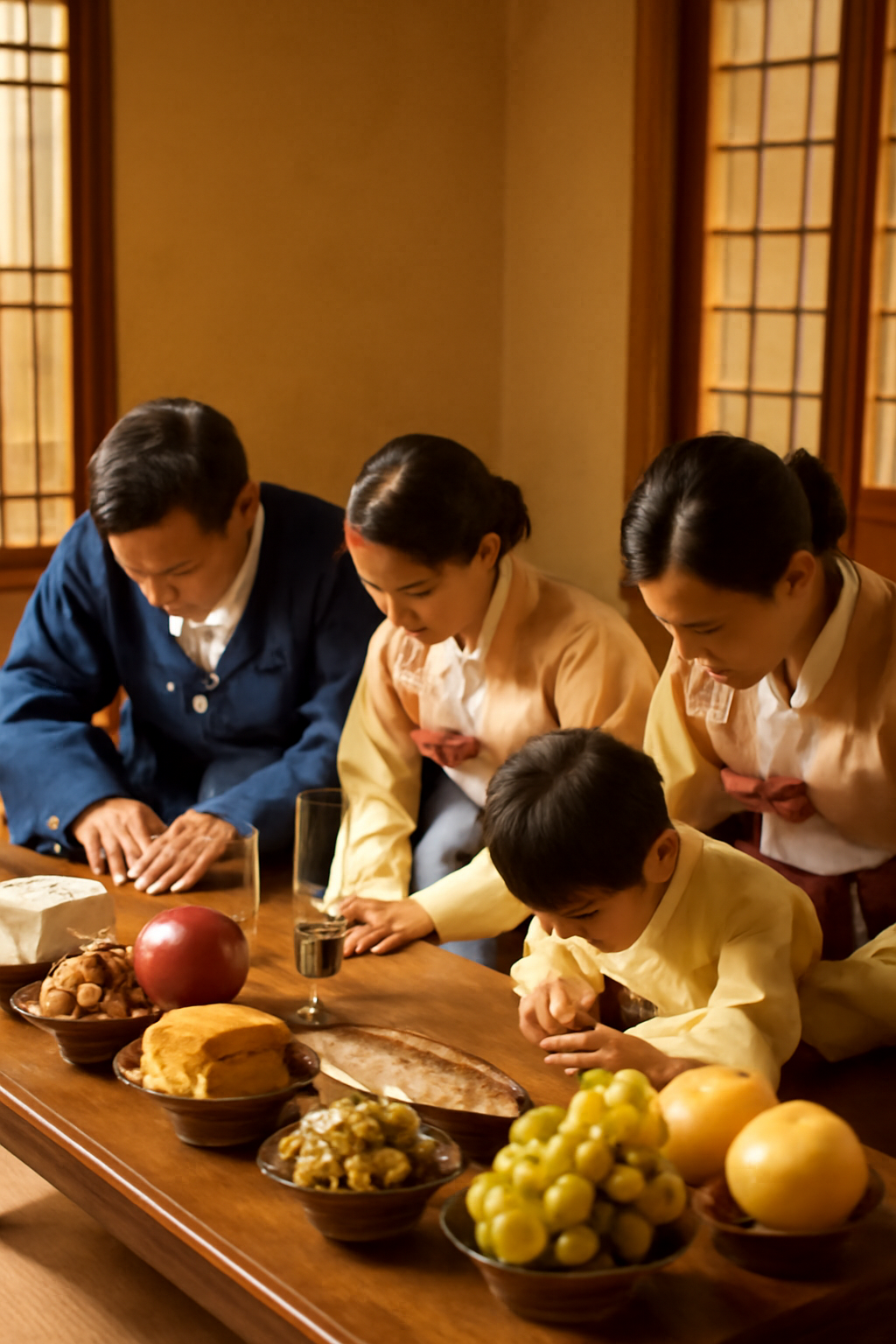
Before anyone eats, there’s usually a ceremony. Charye (차례) is a memorial rite performed for deceased ancestors, typically held on the morning of Chuseok itself in front of a specially arranged table of food — the songpyeon, the jeon, fruit, rice, and soup, set out in a fairly specific order that varies slightly by region and by family. Family members bow in turn, and the ritual is understood as a way of inviting ancestors to share in the harvest with the living family.
It’s not a somber funeral. It’s closer to a formal family greeting — respectful, a little rehearsed, and over within twenty or thirty minutes, after which everyone sits down to eat the same food that was just on the ceremonial table. If you’re a foreign spouse or partner being folded into a Korean family’s Chuseok, this is usually the part that feels most unfamiliar, and also the part your Korean family will most appreciate you taking seriously, even if you’re just standing quietly to the side.
Minjok daeidong: the mass migration nobody warns you about
Koreans have a name for what happens on the roads before Chuseok: minjok daeidong (민족대이동), roughly “the great migration of the people.” Because so much of the country’s population moved to Seoul and other big cities for work over the past few decades, but ancestral hometowns and family gravesites are often somewhere else entirely, Chuseok triggers one of the largest simultaneous domestic travel events anywhere in the world. A drive that normally takes three hours can stretch past eight or nine. Train tickets for the KTX and other intercity lines sell out within minutes of going on sale, sometimes weeks in advance.
If you’re a foreigner in Korea and you’re not personally headed to a hometown for the holiday, my honest advice is: don’t fight the traffic just to see it. Let the country migrate around you.

What actually closes — and what doesn’t
This is the part that catches new arrivals off guard every single year. Government offices, banks, most hospitals (aside from emergency rooms), and a huge share of small, family-run restaurants and shops close for at least part of the three-day holiday — sometimes longer, since the owners themselves are traveling to see their own families. Traditional markets in particular can feel like ghost towns.
What stays open: convenience stores, which run 24 hours regardless of the calendar and become a genuine lifeline for hot food, instant rice, and basic groceries when the restaurant next door has its shutters down. Large department stores, big chain restaurants, cafes in major franchises, and most tourist attractions and palaces generally continue operating on some kind of holiday schedule, though hours can shift, so it’s worth checking ahead rather than assuming. Convenience stores and franchise coffee shops are, in my experience, the two things you can count on no matter how quiet the neighborhood gets.
Gift-giving culture: what’s actually in those boxes
Chuseok gift sets (추석 선물세트) are a genuine institution in Korea, and the retail displays start going up weeks in advance. The classic, almost cliché example is the SPAM gift set — boxed cans of tinned ham, sometimes bundled with cooking oil, that trace back to the postwar decades when canned meat was a genuine luxury and has since become an oddly beloved holiday staple. From there, gift sets range widely: premium fruit boxes of pears or apples, sets of high-grade Korean beef (hanwoo), traditional rice cakes and sweets, ginseng, cooking oil sets, or even household goods like toiletries and detergent for lower-key relationships.
The general logic is that the gift should be practical and shareable rather than sentimental or overly personal — you’re giving something the recipient’s whole household can use or eat, not a one-off personal treasure.
Frequently asked questions
Will restaurants be open during Chuseok if I’m stuck in Seoul with nowhere to go?
You won’t go hungry, but you will need to lower your expectations for the little neighborhood spots. Small, independently owned restaurants close more often than not during the three-day stretch, especially in residential areas, because the owners are traveling too. Convenience stores stay open around the clock and are a legitimate meal option — hot food counters, instant noodles, gimbap, and pre-packaged rice dishes. Larger franchise restaurants, chain cafes, and eateries inside department stores and hotels tend to keep something close to normal hours, and tourist-oriented areas generally stay lively. If you’re planning to eat out on the holiday itself, it’s worth checking a specific restaurant’s hours in advance rather than just showing up.
What should I gift a Korean coworker or landlord for Chuseok?
You don’t need to overthink it, and you definitely don’t need to go with SPAM unless you want to be a little playful about it. A modest, practical gift is the safest and most appreciated choice — a boxed set of Korean pears or apples, a set of nice teas, or a small assortment of traditional sweets all read as thoughtful without being extravagant. For a landlord or a more senior coworker, a mid-range fruit or ginseng set is a common, low-risk choice. Present it with both hands if you’re handing it over in person; that small gesture goes a long way regardless of how imperfect the rest of your Korean might be.
Is Chuseok a good time to travel around Korea as a tourist, or should I avoid it entirely?
It depends entirely on what kind of trip you want. If your plan involves intercity trains, highway driving between cities, or visiting places locals also flock to on their days off, expect serious crowds and inflated travel times — this is genuinely one of the most congested travel periods of the year. On the other hand, Seoul itself gets noticeably quieter as residents leave for their hometowns, and some palaces and folk villages run special Chuseok programming — traditional games, hanbok events, ceremony demonstrations — specifically aimed at people spending the holiday in the city. If you’re not trying to cross the country, staying local during Chuseok can actually be a pretty pleasant way to experience it.
A holiday worth paying attention to
You don’t have to have Korean ancestors of your own to feel the pull of Chuseok once you’ve lived here a while. It shows up in small ways before it shows up in big ones — a coworker mentioning she’s driving nine hours to see her parents, a shuttered noodle shop with a handwritten sign taped to the door, a gift box of pears sitting a little too formally on your desk. However you end up spending it — folded into a Korean family’s charye, wandering a suddenly quiet Seoul neighborhood, or just watching the holiday unfold from the outside — Chuseok is one of those pieces of life here that rewards paying attention to, rather than just working around.