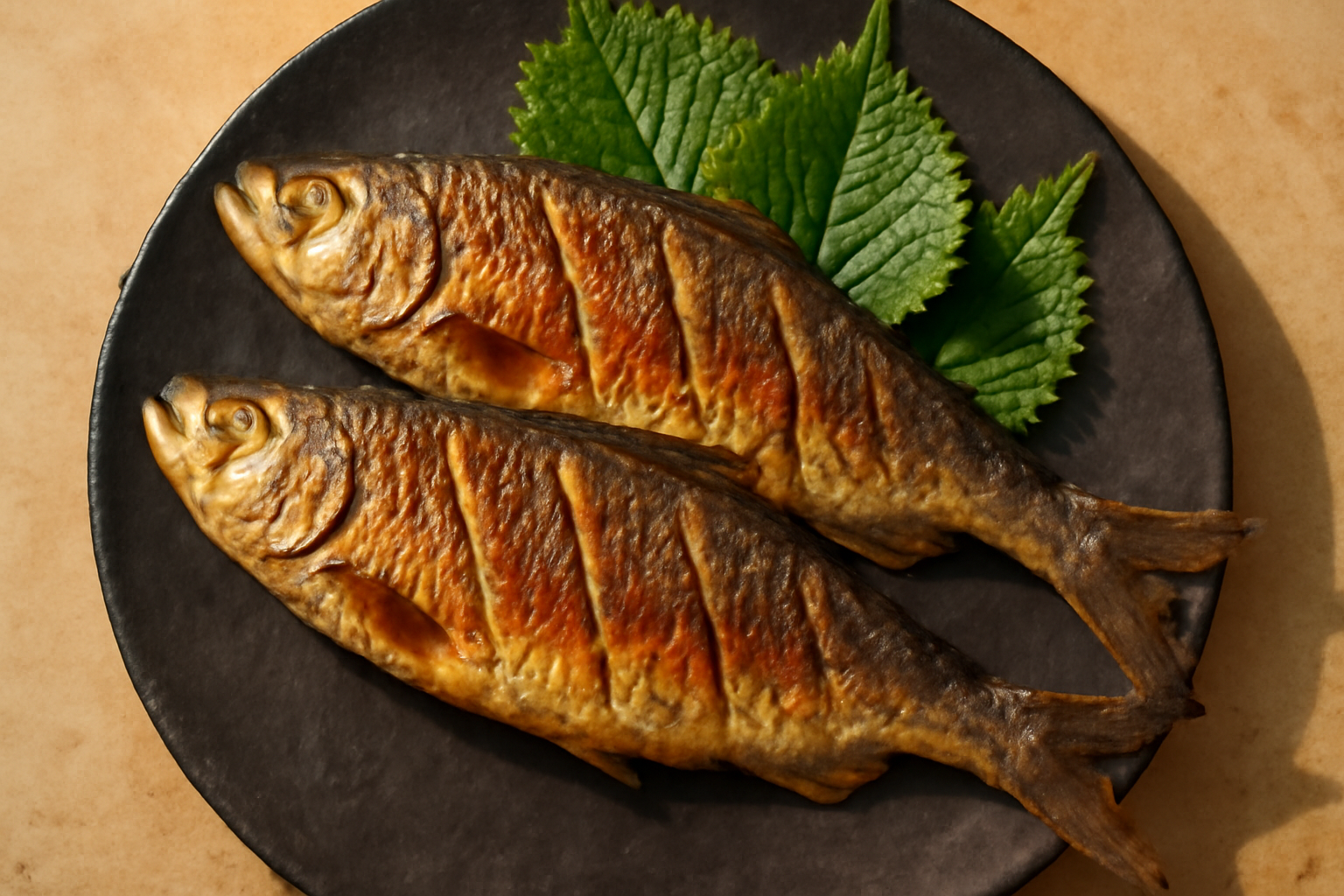
연기가 채 가시기도 전에 은빛 비늘 위로 기름이 자글자글 끓어오른다. 창문 틈으로 스며 나온 고소한 냄새에 옆집 아주머니가 “오늘 전어 굽나 봐요” 하고 인사를 건넨다. 9월 초, 살이 오를 대로 오른 전어를 숯불도 아닌 프라이팬 하나로 이 정도까지 재현할 수 있다는 걸 알게 된 건 지난 가을이었다.
재료 준비
4인 기준으로 준비할 재료는 이렇다. 손바닥만 한 전어 8~10마리(약 800g), 굵은소금 1작은술, 청주 2큰술, 식용유 2큰술. 여기에 무침용으로 쓸 깻잎 10장, 양파 반 개, 고추 1개 정도면 곁들임 준비는 끝난다. 전어는 크기가 일정한 것보다 15cm 안팎으로 통통한 놈이 기름기가 많아 구웠을 때 훨씬 고소하다. 시장에서 살 때는 아가미가 선명한 붉은색인지, 눈이 탁하지 않고 맑은지부터 확인하자.
손질법
전어는 비늘이 유난히 단단하게 붙어 있어 손질이 까다로운 편이다. 칼등이나 비늘치기를 이용해 꼬리에서 머리 방향으로 밀어내듯 긁어낸다. 힘을 너무 세게 주면 살이 뭉개지니 얇은 날로 살살 문지르는 느낌으로 작업한다. 지느러미는 가위로 잘라내고, 내장은 아가미 아래쪽에 살짝 칼집을 넣어 젓가락으로 빼낸다. 통째로 구울 계획이라면 내장을 남겨도 무방하지만, 초보자라면 제거하는 편이 비린내 걱정 없이 편하다.
손질이 끝나면 몸통 양옆에 1.5cm 간격으로 어슷하게 칼집을 3~4개 낸다. 칼집은 열이 뼈까지 고르게 전달되게 하는 동시에 소금과 청주가 속살까지 스며들게 하는 역할을 한다. 키친타월로 물기를 완전히 제거한 뒤 청주 2큰술을 골고루 뿌리고 5분 정도 재워둔다.
굽는 법(황금비율과 시간)
굵은소금 1작은술을 온몸에 골고루 뿌린다. 이 소금과 청주의 비율이 핵심인데, 전어 800g 기준 소금 1작은술 대 청주 2큰술이 비린내는 잡고 짠맛은 과하지 않은 균형점이다. 팬에 식용유 2큰술을 두르고 중약불로 예열한 뒤 전어를 올린다. 한쪽 면을 4분간 굽고, 칼집 사이로 하얀 속살이 올라오기 시작하면 뒤집는다. 반대편도 4분, 마지막 30초는 강불로 올려 껍질을 바삭하게 마무리한다.
에어프라이어를 쓴다면 190도에서 15분, 뒤집어 10분이 기준이다. 꼬리와 지느러미 끝이 살짝 타기 직전의 갈색을 띨 때, 살이 뼈에서 부드럽게 떨어질 때가 가장 맛있는 순간이다. 너무 오래 구우면 기름기가 다 빠져나가 퍽퍽해지니 타이머는 꼭 맞춰두자.
곁들임 밑반찬
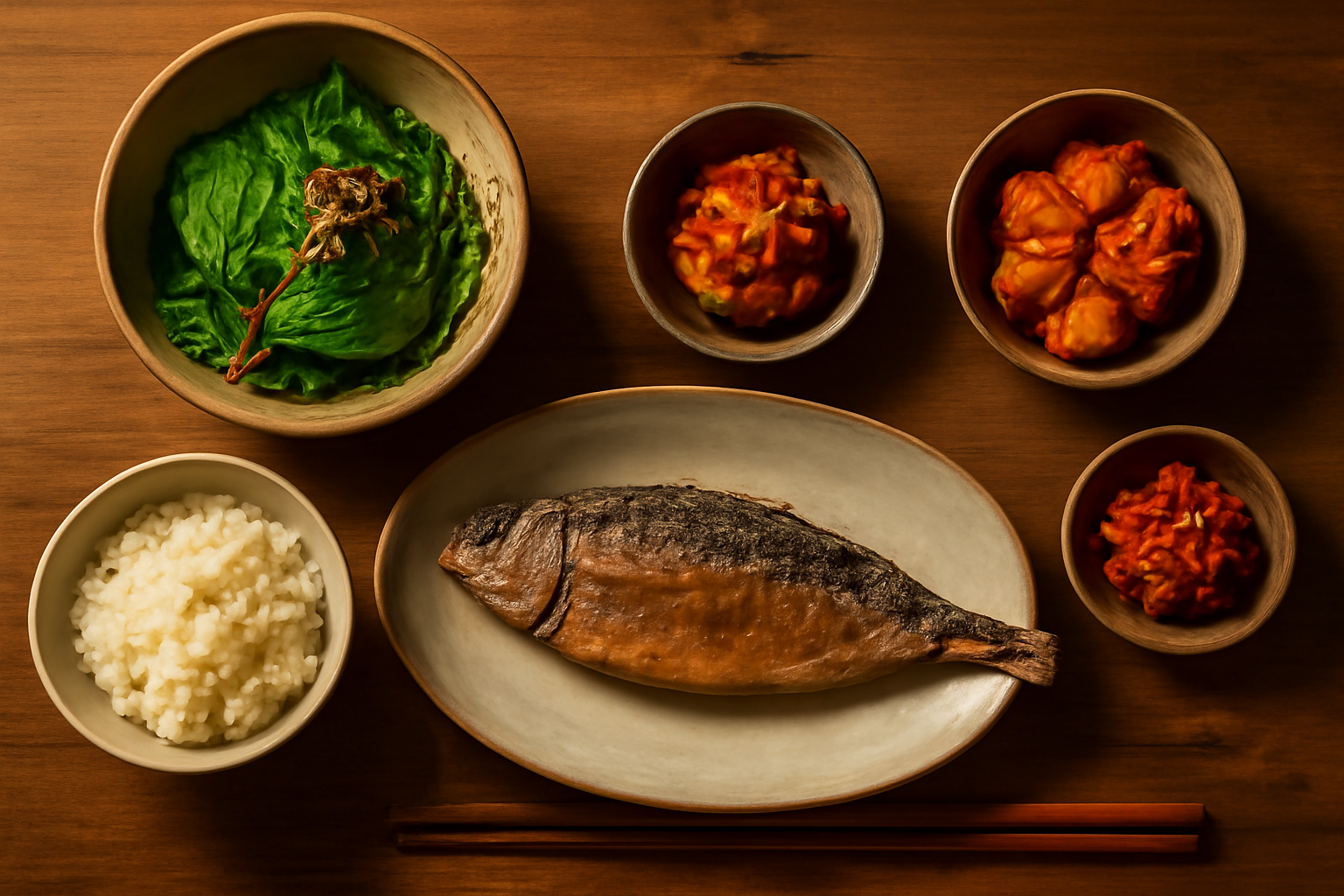
전어구이 옆에는 무말랭이무침이나 깻잎장아찌처럼 짭조름하고 아삭한 반찬이 잘 어울린다. 양파와 깻잎을 채 썰어 고추장 1큰술, 식초 1큰술, 설탕 반큰술로 새콤하게 무친 겉절이도 기름진 맛을 잡아준다. 갓 지은 흰쌀밥에 전어 살을 발라 얹고 깻잎으로 싸 먹으면 뼈째 씹히는 고소함과 밥알의 단맛이 동시에 느껴진다. 된장국이나 시원한 콩나물국을 곁들이면 한 상이 완성된다.
FAQ
Q. 전어는 뼈째 먹어도 되나요?
잔가시가 있지만 충분히 구우면 부드러워져 씹어 먹을 수 있다. 굽는 시간을 조금 더 늘리거나 칼집을 촘촘히 내면 뼈가 훨씬 잘 부서진다. 큰 전어는 가시가 억셀 수 있어 어린아이나 노약자는 살만 발라 먹는 편이 안전하다.
Q. 전어 비린내는 어떻게 없애나요?
손질 후 청주나 소주를 뿌려 5분 재워두는 방법이 가장 효과적이다. 굵은소금으로 밑간을 하면서 표면의 미끈한 점액을 함께 씻어내는 것도 도움이 된다. 팬에 구울 때 마지막에 불을 세게 올려 껍질을 바삭하게 익히면 비린내가 덜하다.
Q. 남은 전어구이는 어떻게 보관하나요?
식힌 뒤 밀폐용기에 담아 냉장 보관하면 이틀 정도 먹을 수 있다. 다시 데울 때는 전자레인지보다 에어프라이어나 팬에 살짝 구워야 눅눅해지지 않고 처음 구웠을 때의 바삭함이 살아난다.
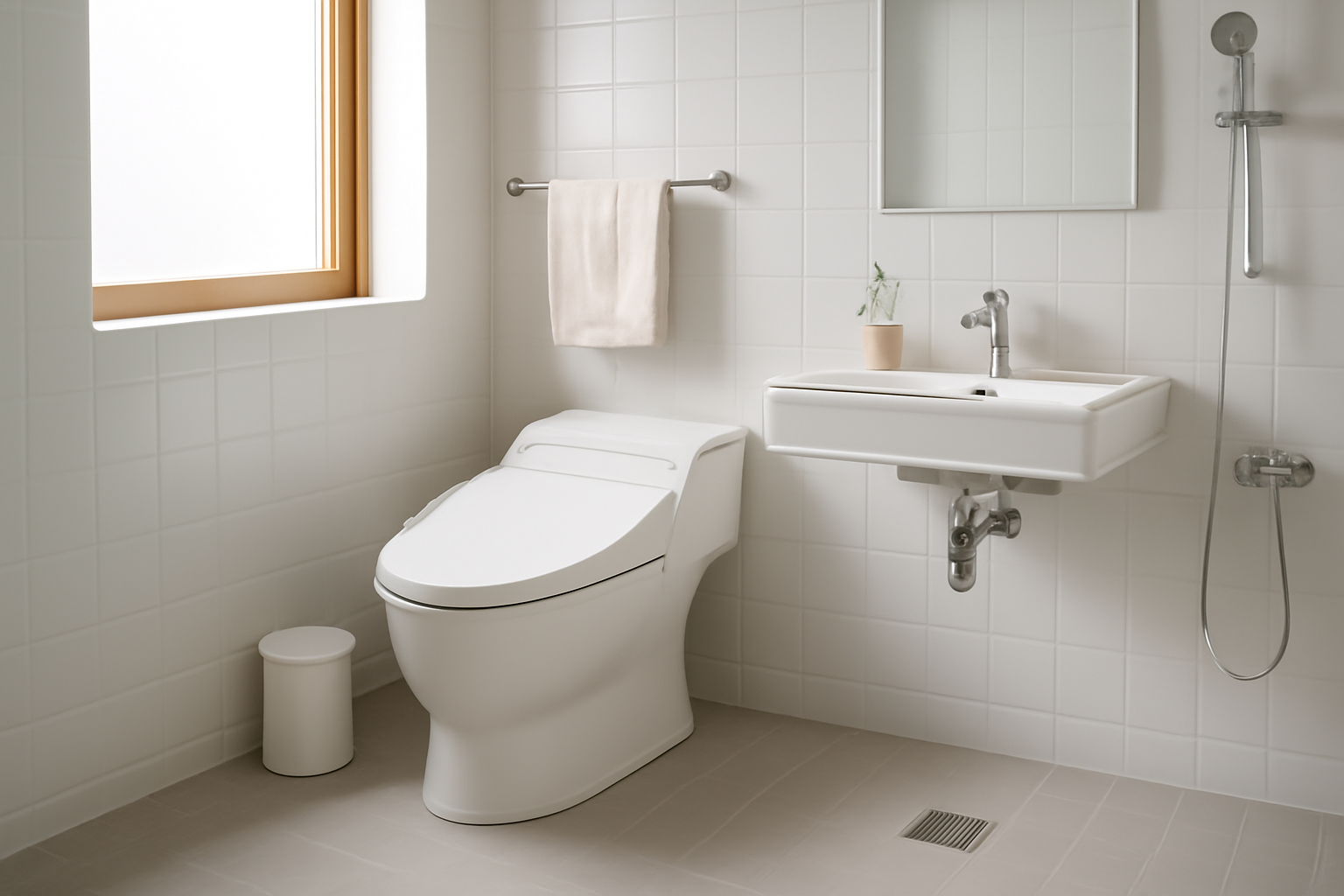
The first time I noticed the little wastebasket parked next to a toilet in Korea, I genuinely thought it was for something else — feminine products, maybe, or just a stray trash can that had wandered into a weird spot. I stood there a beat too long, toilet paper in hand, running through possibilities, until my father-in-law called through the cracked door, “just put it in there,” like it was the most obvious thing in the world. For him it was. For me, it took a solid year before I stopped double-checking myself every single time.
If you’re new to Korea, this is one of those small daily-life details nobody warns you about, and it trips people up more than jet lag ever does. So let’s actually talk about it — why the habit exists, where it’s changing, and how to handle a Korean bathroom without a minor identity crisis every time you need to pee.
Why the Bin Exists in the First Place
This isn’t some deep cultural mystery. It’s plumbing. A lot of Korea’s older buildings, especially in older neighborhoods, were built with narrower pipes than you’d find in a newly constructed high-rise elsewhere, and older domestic toilet paper didn’t break down in water as easily as what you’re probably used to. Put those together and you get pipes that clog — often enough that binning the paper became the practical workaround, and it stuck around as a habit long after it started as a necessity.
Once a habit settles into a culture, it doesn’t evaporate the moment the original reason fades. My wife’s grandmother still does it in her apartment with brand-new plumbing, purely out of muscle memory. It’s less a rule and more a grooved-in default.
Here’s the part that matters for you: this is changing, and fairly fast. Newer apartment complexes, most hotels, airports, and modern office buildings now have plumbing that handles flushed paper fine, same as anywhere else. My rule as a newcomer: look before you sit. Small covered bin next to the toilet? Use it. No bin, or a little sign showing paper going into the bowl? You’re almost certainly fine to flush. When genuinely unsure, I still default to the bin — nobody has ever been annoyed at me for using a trash can correctly, but plenty of building managers get annoyed about clogged pipes.
The Bidet Situation
Related, but its own universe: Korean toilets, especially in homes and nicer public buildings, are frequently bidets — 비데 (bidae) — with a control panel that looks like it belongs on a small aircraft. Heated seat, adjustable water pressure, a drying function, sometimes a deodorizer. My first winter here, I sat down on a heated seat at a friend’s place and nearly said something out loud I shouldn’t repeat. It felt like witchcraft, in the best way.
The icons aren’t hard once you know them — a water-spray symbol is the bidet function, a fan icon is usually the dryer, and there’s typically a big, easy-to-find stop button, a design choice I appreciate as a slightly nervous foreigner in a hurry. The bidet doesn’t fully replace toilet paper for most people; think rinse-and-dab rather than paper-free living. But plenty of Koreans do use it as their main method at home.
Slippers Are Not Optional
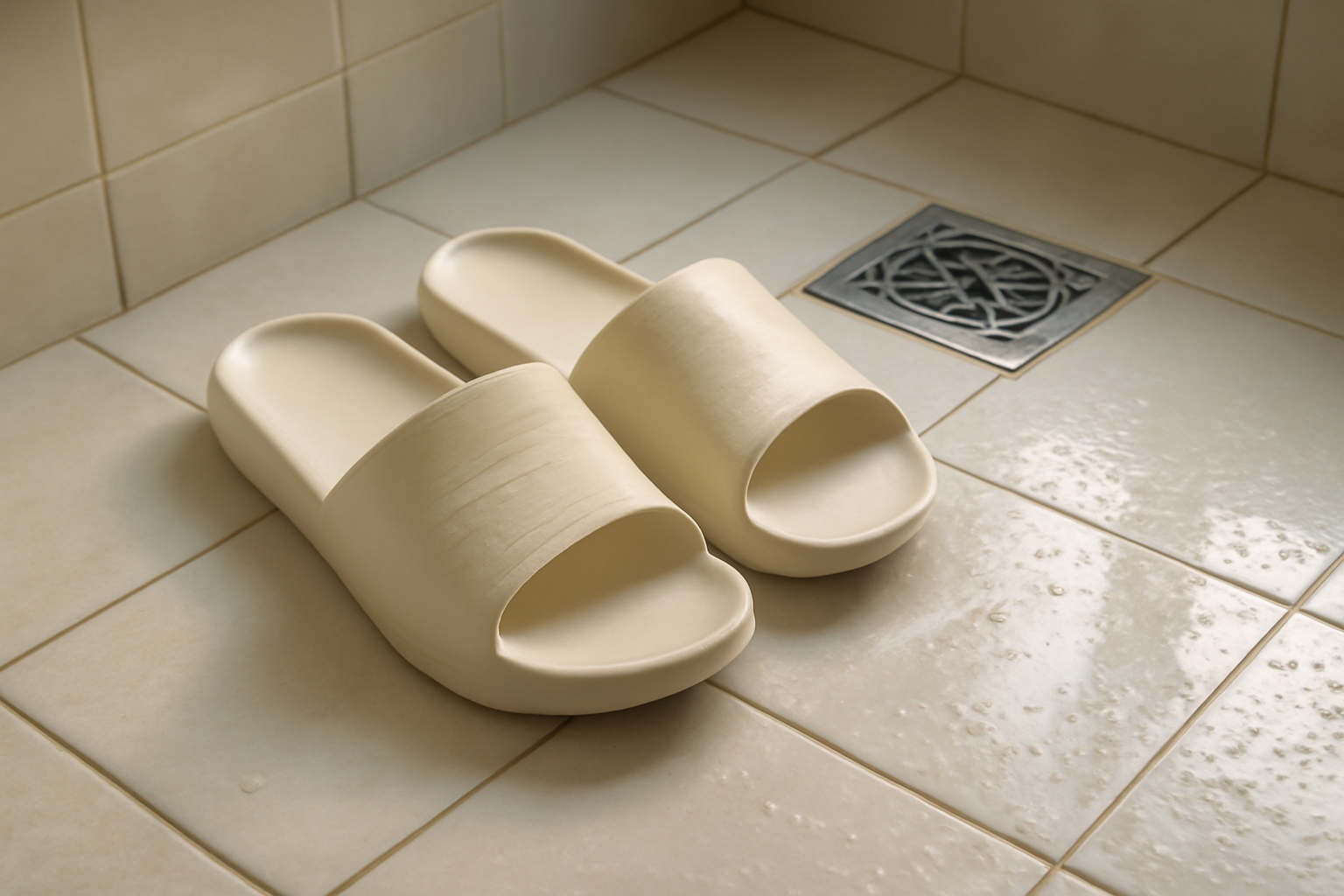
Korean bathrooms, particularly in homes and older buildings, are often full wet-rooms — the shower drains straight into the bathroom floor, no separate stall or curtain sealing anything off. The whole floor gets wet regularly, and walking it in socks is asking for a fall.
The fix is a dedicated pair of bathroom slippers kept just inside the door, that never leave the room. You step out of your house slippers at the threshold, into the bathroom ones, and back out when you’re done. It’s the same logic as taking your shoes off at the front door — keeping “outside wet” separate from “inside dry,” one room more specific. If you’re staying with a Korean family and see a slightly damp pair of plastic sandals sitting right at the bathroom entrance, that’s not clutter. That’s the system working.
Public Restrooms Play by Different Rules
Public restrooms deserve their own note because the etiquette shifts slightly. Most public restrooms in Korea — subway stations, parks, department stores — are cleaner and more plentiful than a lot of visitors expect. But a real number of them, especially older subway stations, simply don’t stock paper in the stalls.
That’s not neglect. It’s partly a cost and theft issue — dispensers get emptied fast — and partly a hygiene push, since bins have been steadily removed from public stalls to cut smell. Some stations solved it with one shared dispenser near the entrance, so you grab what you need on the way in.
My advice, learned the mildly unpleasant way: carry a small pack of tissues. Convenience stores sell travel packs for next to nothing, and there’s one roughly every fifty meters here, so restocking is never the problem. Treat it like carrying hand sanitizer — a small habit that saves you from a genuinely bad ten minutes.
The Squat Toilets You’ll Occasionally Still Meet
Mostly in older buildings, rural areas, and a handful of traditional rest stops, you’ll still run into a squat toilet — a fixture set into the floor rather than a raised bowl. They’re increasingly rare in cities as buildings renovate, but not extinct. If you meet one, face the raised hood, not the flat end, and yes, the same paper etiquette from earlier still applies.
FAQ
Do all bathrooms in Korea still require binning the paper?
No, and it’s getting less common every year. Newer buildings and modern apartments generally handle flushed paper fine. When you’re not sure, check for a bin or a sign — and if there’s truly no clue either way, bin it and move on.
Is it rude to just ask a Korean friend which to do?
Not at all. People usually seem relieved you asked instead of guessing. I’ve never had it treated as awkward — it reads as considerate, not clueless.
Should I carry my own toilet paper when I go out?
A small tissue pack, yes. Most places have it, but public restrooms occasionally run out or never stocked it stall-side to begin with, and carrying your own is a five-minute fix.
None of this is complicated once you’ve done it a few times — it just takes that first confused encounter to file it away for good. A while in, I don’t even think about the bin anymore. It’s just what my hand does. Which, now that I say it out loud, might be the most accurate definition of settling into a new country there is.
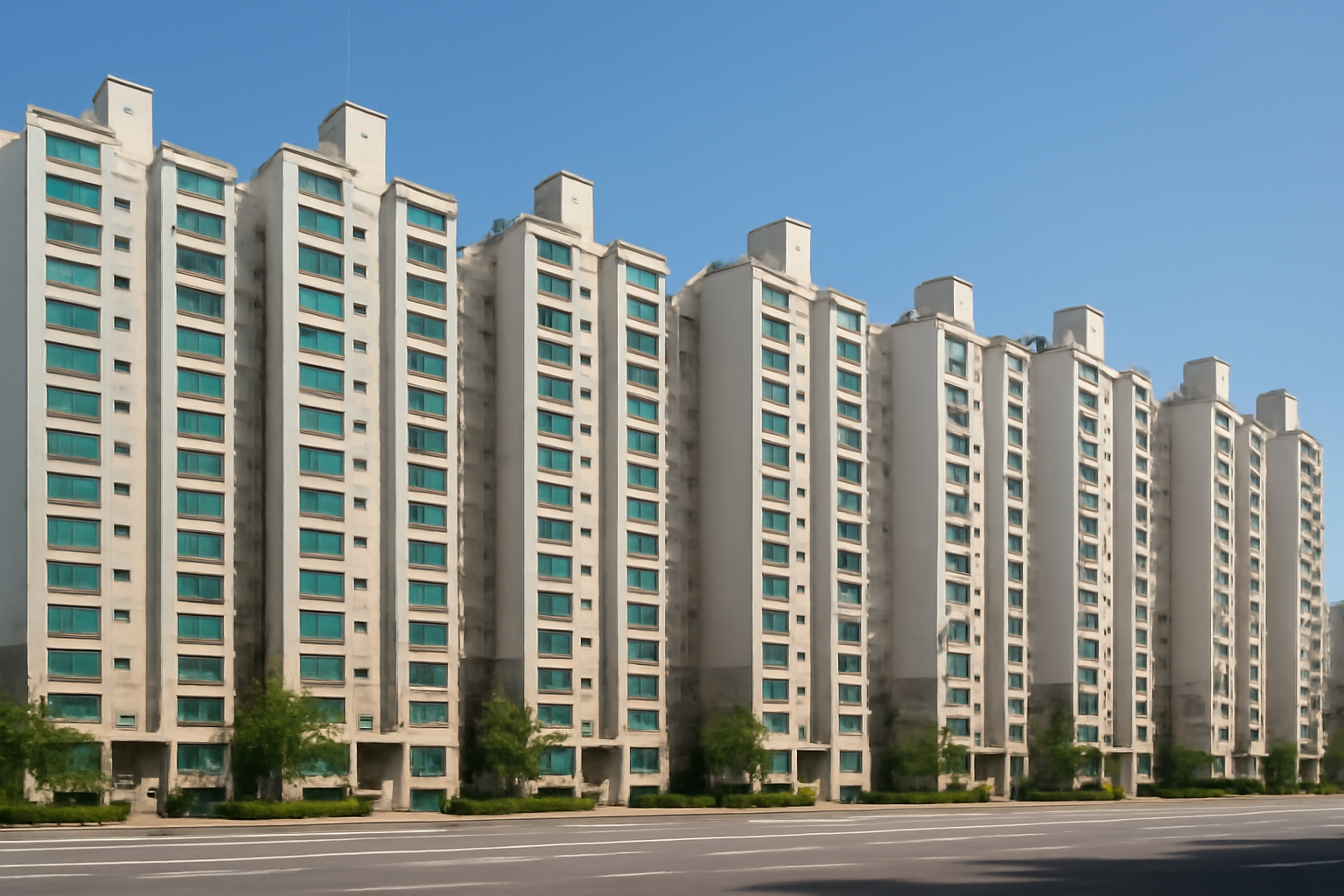
The first time I tried to find my in-laws’ apartment on my own, I walked in a full circle around the same three buildings before I admitted defeat and called my wife. “It’s 102-dong,” she said, like that explained anything. I was standing between a building marked 101 and one marked 103, both identical beige towers with identical balconies, identical playgrounds out front, and not a single visual clue to tell them apart except a number painted near the entrance. I had a bag of fruit melting in the summer heat and zero idea which lobby led to her parents’ floor. That was my real introduction to what Koreans call an apart-danji — and once you notice the pattern, you start seeing it everywhere, in every city, in almost every neighborhood.
The Apart-Danji System
In most English-speaking countries, “apartment complex” might mean a single building or a small cluster of two or three. In Korea, a danji can mean ten, twenty, sometimes forty nearly identical towers built together as one planned unit, each one labeled with a number instead of a name — 101-dong, 102-dong, and so on, dong simply meaning “building.” There’s no 401 to avoid a superstitious number the way some Western buildings skip the 13th floor, but there is often no 4-dong either, because the number four sounds like the word for death in Sino-Korean. Beyond that, the buildings really are meant to look alike. They were designed and approved as a single project, built by one contractor, on one site plan, at the same time, which is a big part of why the elevation, the balcony shape, and even the paint color repeat down the block like a chorus.
The Brand Names on the Gate
What did throw me for a while was realizing those towers usually carry a brand name that has nothing to do with the neighborhood. You’ll see a stone sign at the entrance reading something like “The Xi,” “Prugio,” or “Raemian,” and for months I assumed these were just fancy marketing labels, like a hotel chain. They’re actually the construction companies’ apartment brands — each major builder has its own line, its own logo font, its own vaguely European-sounding name meant to suggest comfort and status rather than mean anything literal in Korean. Once I understood that, I started noticing how Koreans read these names almost like a credit report. The brand hints at which conglomerate built it, roughly what price bracket it sits in, and sometimes even which school district it feeds into. Two brand names stacked together on one sign usually means two companies co-developed the site and split the cost, not that the apartment is somehow double the apartment.
From the Parking Garage to the Elevator Without Ever Seeing the Sky
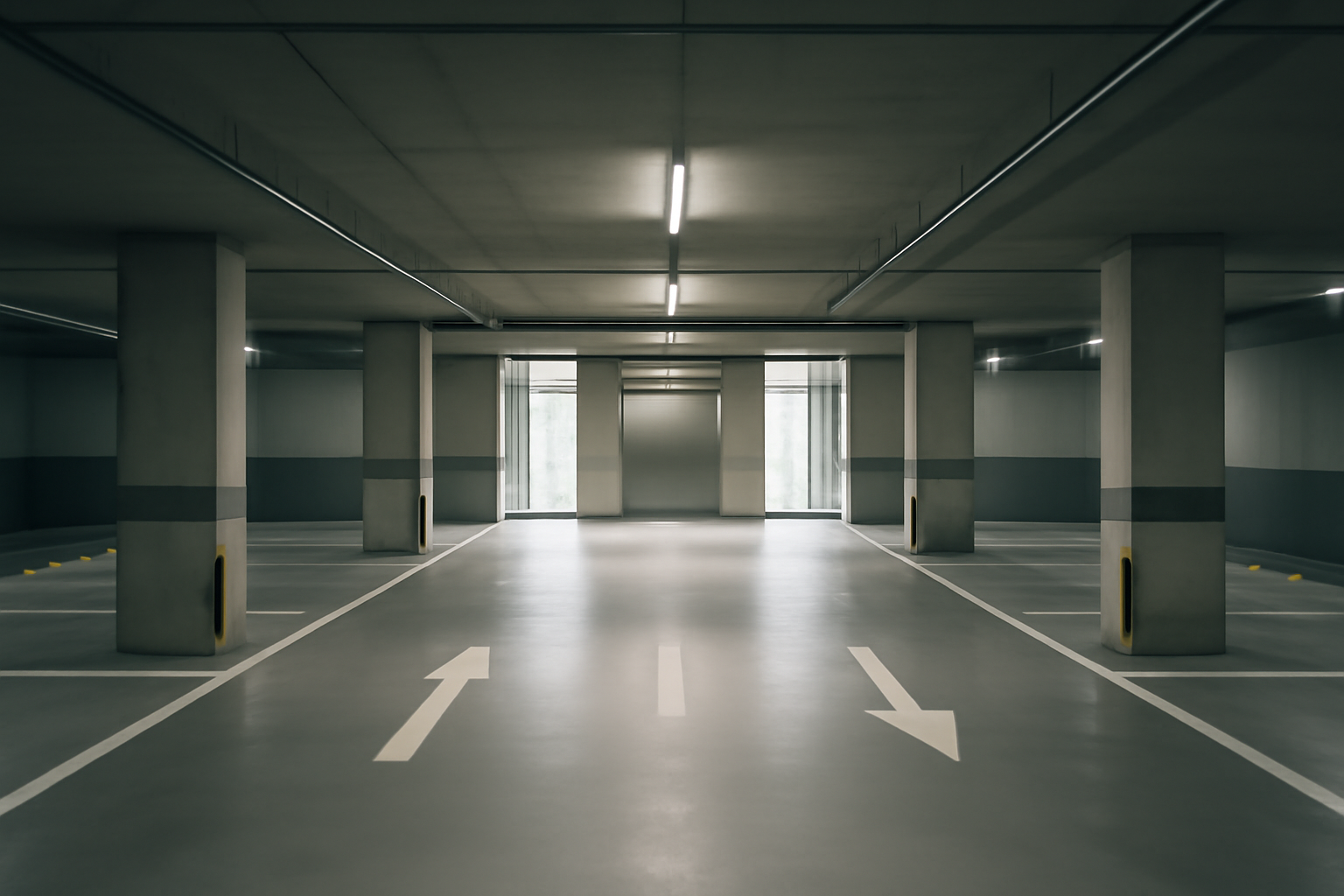
The thing that actually won me over, after the initial confusion, was the underground parking. In a lot of newer danji, you can drive straight into a basement garage that connects to every single building’s elevator lobby, so you park, walk twenty steps, and you’re inside your own tower without ever stepping outside. In winter, when the wind cuts sideways and everyone’s carrying grocery bags and a kid in one arm, that little architectural decision feels like a genuine kindness. I remember hauling a folded stroller and two bags of instant noodles through a heavy downpour once and realizing I hadn’t gotten a drop on me, because the whole trip from car to front door happened underground.
A Small City Behind the Gate
A danji isn’t just towers and a parking lot — it’s closer to a self-contained little town. Most complexes have a central playground, sometimes two or three scattered between buildings, plus outdoor exercise equipment that older residents use every morning like clockwork. Larger complexes have their own fitness room, a reading room or study space for students, a package room where deliveries pile up in labeled cubbies instead of sitting outside your door, and occasionally a small convenience store or dry cleaner tucked near the main gate. The first time I saw a security guard sorting an entire wall of parcels by building and unit number, I understood why package theft basically isn’t a conversation here the way it is back home.
Why They All Have the Same Floor Plan
Ask any Korean friend about apartment floor plans and you’ll probably get an eye roll, because the joke that “every apartment is the same three rooms and a balcony” is pretty close to true. Builders lean on a handful of standard layouts because repeating one floor plan across dozens of units in a tower is simply more efficient to construct, and because a familiar, predictable layout keeps resale value stable. Buyers here aren’t just purchasing where they’ll live; they’re purchasing an asset they expect to sell again in a few years, and a bizarre or overly personal floor plan can actually scare off future buyers. Sameness, in this context, isn’t a design failure — it’s a financial strategy everyone quietly agrees to.
What’s Actually Different Once You’re Inside
Here’s what surprised me: the sameness mostly stops at the front door. Korean apartments get renovated — called “susul” or interior remodeling — far more aggressively and far more often than I expected, especially before a new owner moves in. Walls get reconfigured, kitchens get gutted and rebuilt, flooring gets swapped from the builder’s default to imported hardwood or heated stone tile. Two units with an identical blueprint on paper can feel like completely different homes once you walk in. And then there are officetels — a separate category that looks like an apartment tower from outside but is technically zoned as a mixed residential-commercial studio, usually smaller, often rented rather than owned, and popular with singles and young professionals who want the same convenient neighborhood without the apartment price tag or the family-sized square footage.
The Voice From the Ceiling
And then there’s the management office, the 관리사무소, which somehow always finds a reason to speak to the entire building at once. A recorded announcement crackles through a speaker mounted near the ceiling of every hallway and stairwell — reminding everyone that the water will be shut off Tuesday morning for pipe maintenance, that a lost cat has been found near the playground, that recycling collection has been moved up an hour. The first time it happened I genuinely thought something was wrong, like a fire drill. Now it’s background noise, the sound of a few thousand strangers technically living as one household.
FAQ
Are all Korean apartments really identical inside?
Not anymore, once you’re past the entryway. The exterior shells and the original blueprint are often shared across a whole danji, but interior remodeling is so common that two units on the same floor plan can look nothing alike once furniture, flooring, and renovated kitchens come into play.
What does “apart” mean in Korean slang?
It’s the everyday shortened form of “apartment” (아파트, apateu), used the way English speakers might casually say “apt.” When someone asks where you live and you say “apart,” everyone instantly pictures a high-rise danji rather than a small walk-up.
Why do apartment buildings skip the number four?
Because in Sino-Korean pronunciation, four (사, sa) sounds like the word for death. Some buildings, and especially elevator floor buttons, quietly skip it or relabel it “F” instead of 4, the same instinct that makes some Western buildings skip a 13th floor.
These days I don’t get lost between towers anymore — I can spot my building number from the street before I’m even close. But I still remember standing there with melting fruit, staring at two identical beige walls, wondering how an entire country agreed to build cities this way. The more I’ve lived here, the more it makes sense: efficient, secure, quietly communal, and — once you’re inside your own front door — a lot less identical than it looks from the road.
오전 9시 20분, 목포역 광장. 여행가방을 끌고 나온 사람들 사이로 좌판 리어카 하나가 먼저 눈에 띈다. 고무통 속에서 발이 여덟 개 달린 녀석들이 꿈틀거리고, 주인아주머니는 손님과 눈도 안 마주치고 낙지 한 마리를 도마 위에 턱 올린다. 목포는 이렇게 시작한다. KTX에서 내려 10분도 안 돼 산낙지와 마주치는 도시. 하루 안에 낙지거리, 유달산, 해상케이블카를 다 돌아볼 수 있을까 싶겠지만, 동선만 제대로 짜면 저녁 7시 야경까지 넉넉하게 즐길 수 있다.
09:30 자유시장 낙지거리, 첫 끼는 낙지로
목포역에서 도보 10분, 자유로 122에 자리한 목포자유시장은 홍어와 낙지 비중이 유독 높은 전통시장이다. 가수 남진의 고향이라 남진야시장이라는 별칭도 붙었다. 좌판 골목을 지나면 미항로 일대로 이어지는데, 이 구간이 흔히 말하는 낙지거리다. 독천골, 목포연희네포차 같은 집들이 낙지호롱구이와 연포탕으로 이름나 있다. 낙지탕탕이는 1인분 3만원 안팎, 세발낙지 코스는 2~3만원대가 보통이고, 점심 장사를 오전 11시부터 시작하는 집이 많아 아침 겸 이른 점심으로 딱 맞다. 산낙지가 부담스럽다면 낙지볶음이나 낙지호롱구이로 시작해도 충분하다.
11:00 유달산, 노적봉에서 정상까지 90분
배를 채웠으면 걸어야 한다. 유달산 입구인 노적봉은 임진왜란 당시 이순신 장군이 볏짚으로 산을 덮어 군량미가 쌓인 것처럼 왜군을 속였다는 곳이다. 여기서 조각공원까지는 완만하다. 가수 이난영의 ‘목포의 눈물’ 노래비와 4·19기념탑, 조각품 100여 점이 산책로 곳곳에 놓여 있어 사진 찍으며 걷기 좋다. 정상인 일등바위(해발 228m)까지는 계단이 제법 가파른데, 노적봉에서 왕복으로 잡으면 1시간 반 정도 걸린다. 체력이 아쉽다면 조각공원까지만 돌고 케이블카로 정상 구간을 대신해도 된다. 유달산스테이션이 산 중턱에 있어 케이블카 자체가 등산로 역할을 겸한다.
13:30 점심, 그리고 목포해상케이블카
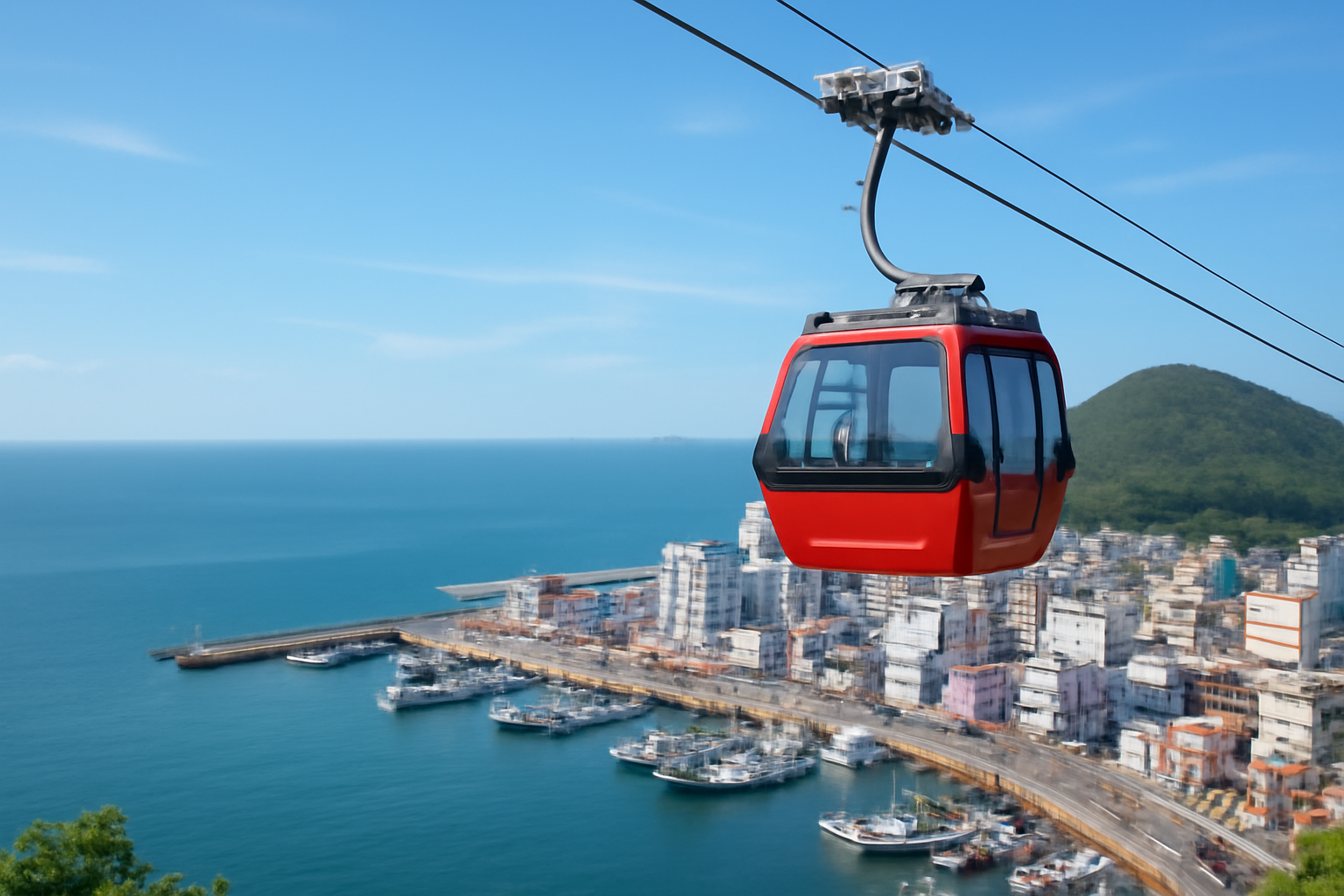
유달산 자락 식당가에서 갈치조림이나 병어회로 점심을 가볍게 해결한 뒤 북항스테이션으로 이동한다. 목포해상케이블카는 북항에서 출발해 유달산 정상부를 ‘ㄱ’자로 꺾어 지나고, 바다를 건너 고하도스테이션까지 이어진다. 국내 최장 3.23km, 최고 높이 155m로 편도 20분, 왕복은 40분이 걸린다. 일반캐빈 왕복 요금은 대인 기준 2만4천원, 바닥이 투명한 크리스탈캐빈은 2만9천원 선이다. 운영시간은 보통 오전 9시부터 오후 6시까지고, 7월 말~8월 중순 성수기에는 오후 9시까지 연장 운행하니 여름 야간 탑승을 노린다면 목포시청 공지나 공식 홈페이지에서 당일 시간표를 한 번 더 확인하는 게 안전하다. 온라인 사전예매는 현장가보다 1천원가량 싸다.
15:30 고하도, 바람 쐬고 돌아오는 길
고하도스테이션에 내리면 용오름다리라는 출렁다리와 전망대가 기다린다. 다리 위에서 보면 방금 지나온 유달산과 목포대교가 한눈에 들어온다. 카페 두어 곳이 스테이션 근처에 있어 커피 한 잔 들고 앉아 있기 좋다. 왕복 티켓이라면 다시 케이블카를 타고 북항으로 돌아오면 되고, 시간이 넉넉하면 고하도 둘레길을 30분쯤 걸어도 좋다. 이 구간까지가 딱 오후 4시 반, 저녁 일정으로 넘어가기 좋은 타이밍이다.
18:00 평화광장 야경으로 마무리
북항에서 택시로 10분이면 평화광장이다. 춤추는바다분수는 계절마다 운영 시간이 다르지만 대체로 저녁 8시 전후로 분수쇼가 시작된다. 분수 앞 목포대교와 스카이워크 조명이 함께 켜지면 하루 동선의 마지막 그림으로 손색없다. 시간이 남으면 근대역사문화거리로 넘어가 구 목포일본영사관 같은 근대 건축물을 배경으로 사진을 남기고 하루를 접는다. 저녁 식사는 이 근처 회센터에서 세발낙지나 병어회를 한 접시 더 시켜도 되고, 아침에 못 먹은 낙지탕탕이가 아쉽다면 자유시장 쪽으로 다시 돌아가는 것도 방법이다.
자주 묻는 질문
목포 여행, 당일치기로 가능한가요? 가능하다. KTX 기준 서울에서 목포까지 3시간 안팎이라 오전에 도착해 낙지거리-유달산-케이블카-평화광장 순으로 돌면 저녁 KTX로 충분히 올라갈 수 있다. 다만 케이블카와 고하도 산책까지 여유 있게 넣으려면 오전 9시 전 도착이 이상적이다.
낙지거리 맛집은 어디를 가야 하나요? 자유시장 인근 미항로 일대에 낙지 전문점이 몰려 있다. 낙지호롱구이와 연포탕은 독천골, 포차 분위기의 세발낙지는 목포연희네포차가 대표적으로 꼽힌다. 평일 점심시간대는 대기가 짧은 편이니 오전 11시 전후로 방문하면 줄을 덜 선다.
케이블카는 예약 없이 바로 탈 수 있나요? 평일이라면 현장 구매로도 대체로 무리 없다. 주말이나 성수기 오후 시간대는 대기가 길어질 수 있어 온라인 사전예매를 권한다. 크리스탈캐빈은 인기가 많아 오전 중에 서둘러야 한다.
Standing at the crosswalk near my kid’s hagwon a few months ago, I did something a little embarrassing: I counted cafes. Just turning my head left and right at one intersection, I got to eleven before the light changed. Not eleven coffee-adjacent businesses in the general neighborhood — eleven within maybe two hundred meters, stacked in buildings, tucked into basements, wrapped around corners. A Korean friend walking with me just shrugged. “Yeah, that sounds about right.” That shrug is the whole story, honestly. What looks like an anomaly to a foreigner is just Tuesday to everyone else.
The Math Doesn’t Make Sense (Until It Does)
I’ve read the comparisons that get thrown around — that Seoul alone has more coffee shops than plenty of entire countries. When I first moved here I assumed this was a bubble that would pop the way certain snack-franchise trends did back home. Years later, it hasn’t. There’s real turnover — plenty of shops don’t survive their first eighteen months — but the total keeps climbing anyway, because opening a cafe is one of the default moves for anyone leaving a corporate job with some severance and no clear next step. Enough people make that move that whole commercial streets end up wall-to-wall espresso machines.
Cafes as the Room You Don’t Have at Home
The part that actually explains the density isn’t the coffee, though — it’s the real estate. A lot of people here live in apartments that are compact by design, often shared with parents, roommates, or kids, and genuinely not built for hosting guests. Back home, if a friend wants to catch up, you invite them over. Here, you meet at a cafe. First date? Cafe. Slightly awkward chat with a landlord or your kid’s teacher? Also a cafe. It’s become the default neutral ground for basically every kind of face-to-face meeting that doesn’t happen at home or in an office, which means a city needs an enormous number of “neutral grounds” just to keep up.
Kagongjok: The Cafe as Study Hall
The first time I sat in a cafe here and watched someone unpack an actual desk setup — laptop stand, external keyboard, a stack of textbooks — I thought I was seeing something unusual. I wasn’t. There’s a term for these people: 카공족 (kagongjok), roughly “cafe-study tribe,” combining the words for cafe and studying. Students pull long study sessions over one iced Americano, office workers finish reports between meetings, exam-takers camp out for entire afternoons with headphones on. Some cafes lean into this, adding outlet-heavy seating; others push back, capping laptop hours to get table turnover back. That tension — cafe as living room versus cafe as business — is a real, ongoing debate here, not a settled one.
Nobody’s Rushing You Out
Which gets at something that still catches visitors off guard: there’s no real culture of a minimum or maximum stay. Order one drink and sit for four hours, and in most places nobody says a word. This isn’t universal — small independents running on thin margins have started posting stay-limit signs near the register — but as a broad norm, cafes here are remarkably tolerant of people just existing in them. I think that tolerance is downstream of the same real-estate logic above: if the cafe is functioning as everyone’s extra room, kicking people out defeats the purpose.
Franchise on One Corner, Independent on the Next
Walk down almost any commercial street and the pattern repeats: a big familiar chain anchoring the corner, then two or three tiny independents nearby — one doing hand-drip single-origin, another built around a pastel aesthetic and a signature dessert, another so minimalist it barely has signage. The franchises win on consistency and mobile-order convenience. The independents win by being a destination worth a subway transfer, because of how they photograph or how the espresso tastes. Both models coexist because the market is big enough, and image-driven enough, to support very different reasons for existing.
Built for the Photo, Not Just the Coffee
A lot of newer cafes are clearly designed with a phone camera in mind before they’re designed for efficiency. Floor-to-ceiling windows, one dramatic light fixture, a wall painted a shade that photographs well. I’ve walked into cafes that felt like small art installations with an espresso machine somewhere in back. It sounds gimmicky, but it works — a cafe that gets shared online becomes a destination rather than a pit stop, which is often the whole business model for a shop that can’t compete with a franchise on price or speed.
Eoljuka: Frozen Solid, Iced Coffee Anyway
And then there’s the thing that genuinely surprised me my first winter — watching people order iced Americanos in weather cold enough to make my own coffee cup feel like an insult. There’s a term for this too: 얼죽아 (eoljuka), short for “eoreo jugeodo aiseu amerikano” — roughly, “even if I freeze to death, iced Americano.” It’s said half-jokingly, but it’s a genuine, widely recognized identity here. Explanations vary — some say hot drinks feel too slow to finish before a meeting, others just say cold coffee tastes cleaner — but whatever the reason, cafes stock ice year-round in quantities that would seem absurd anywhere with an actual winter, because the demand never really drops.
Why the Boom Happened When It Did
None of this existed at this scale a generation ago. Coffee culture here really took off after the 2000s, tracking closely with the rise of the smartphone, longer work and study hours, and a generation with more disposable income for small daily luxuries than their parents had. A few-dollar coffee is an affordable treat, and ordering one buys you hours of table space, wifi, and a bathroom. Add social media rewarding photogenic spaces, and you get a perfect incentive structure for opening more cafes, not fewer.
FAQ
Is it rude to stay for hours at a Korean cafe?
Generally no — long stays are an accepted norm, especially for kagongjok studying or working. That said, during busy hours or at small independent shops, it’s worth checking for posted time limits, and ordering a second drink after a couple of hours is a nice unspoken courtesy.
What does 얼죽아 (eoljuka) mean?
It’s short for “eoreo jugeodo aiseu amerikano,” meaning “even if I freeze to death, iced Americano.” It describes the common habit of drinking iced coffee year-round, including in freezing winter weather.
Why are there so many cafes instead of more bars or bookstores?
Cafes fill a social gap that small living spaces created — they’re where people meet, study, date, and work when home isn’t an option. That combination of function keeps demand high enough to support huge numbers of shops, both franchise and independent.
The text came in at 6 a.m., which is how I knew before I even opened it that something was wrong. My wife read it once, went very quiet, and pulled a black suit out of the closet that I didn’t know we owned. A few minutes later she explained, in the clipped shorthand of someone whose mind is somewhere else entirely, that her uncle had passed and we needed to go to the hospital. Not a church, not a funeral home in the way I’d pictured one. A hospital. That was the first thing that didn’t match what was in my head.
Funerals Happen at the Hospital, Not a Separate Building
Most Korean hospitals of any real size have a 장례식장 (jangnyeshikjang), a funeral hall, built right into the complex. It struck me as strange at first — grief and treatment sharing the same parking lot — but it makes logistical sense. Many people pass away in hospital care, and keeping mortuary services, memorial rooms, and reception halls in one place spares the family a transfer during the worst days of their lives.
Inside, the building is divided into numbered 빈소 (binso) — individual memorial rooms, each rented by a different grieving family at the same time. You could be paying respects in room 3 while an unrelated funeral happens in room 5 down the hall. It felt oddly public at first, but once you’re inside the room itself, it’s its own quiet world.
Three Days, Start to Finish
Korean funerals almost always run on a fixed three-day structure called 삼일장 (samil-jang). The day someone passes is day one, spent on paperwork, notifying family, and setting up the memorial room. Day two is when most visitors come — this is the day I’ve been to, more than once now. Day three is for the burial or cremation itself, usually early in the morning.
What surprised me was how little room there is for delay. There’s no waiting a week for out-of-town relatives to arrange flights the way I grew up seeing. Everyone mobilizes fast, and the family receives visitors for most of that second day and evening, even while managing their own shock. I remember thinking, quietly, that grieving in public on a schedule like that must be its own kind of hard.
What to Wear, What to Bring
Black is the color of mourning here, and it’s not optional-casual — a dark suit or a simple black dress, subdued, nothing bright or patterned. Traditionally, close family wear hanbok in undyed white or black hemp cloth, a custom that goes back to when white was Korea’s own mourning color long before black became the norm for visitors. You’ll still see sons and daughters of the deceased in those plain ritual garments even at an otherwise modern funeral.
For a guest, the uniform is simpler: dark suit, white shirt, black tie if you own one, black shoes. Women generally wear a modest black dress with minimal jewelry. I learned the hard way that a navy suit reads as “trying” but not quite right — my father-in-law steered me toward an actual black one before my second visit.
You also bring money. Condolence money, 부의금 (buigeum), is handed over in a plain white envelope, never anything decorated or colored, with your name written on the front. You don’t hand it to the family directly — there’s a reception table near the entrance, staffed by a relative or close friend, where you sign a guest register and drop the envelope into a collection box before going further into the room.
The Bow, and the Order of Things
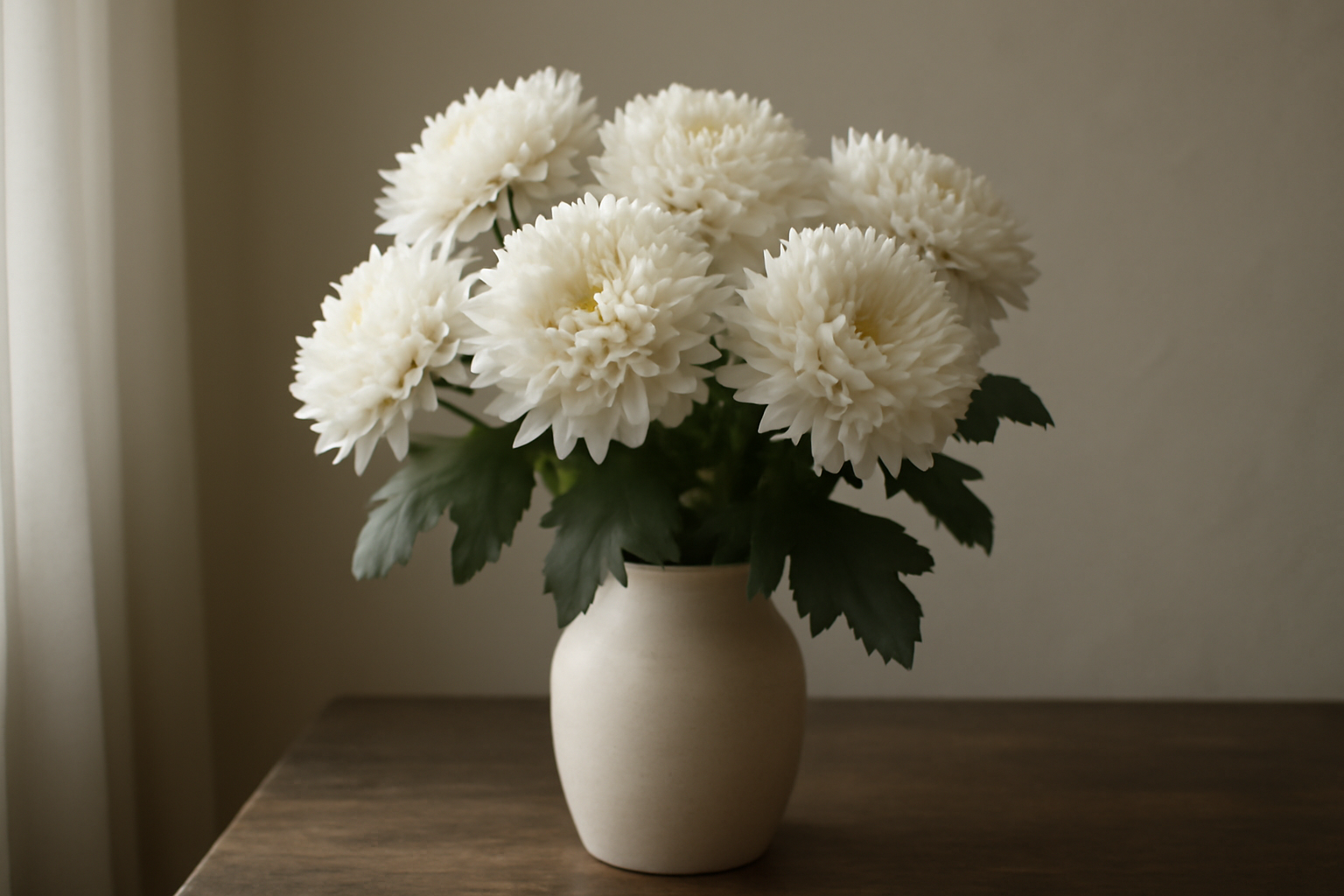
Walking into the memorial room, you’ll see a portrait of the deceased at the front, flanked by white chrysanthemums — the flower used almost exclusively for mourning in Korea, the way lilies might be used elsewhere. You approach, bow twice toward the portrait (a full, formal bow from the waist, not a nod), and then turn to bow once to the family members standing off to the side.
The 상주 (sangju) is the chief mourner, traditionally the eldest son, though this has been shifting — I’ve seen daughters and spouses take the role too as families reorganize around who’s present and able. The sangju stands closest to the portrait, receiving each guest’s bow and a quiet word of condolence. You don’t linger to chat. A short bow, a murmured word of sympathy, and you move to let the next person through.
Cremation Has Quietly Become the Norm
This is one of those slow generational shifts nobody announces but everyone notices. Burial used to be standard, and hillside family grave plots are still visible across the countryside — round mounded graves I pass every time we drive out of the city. But land is limited and plots are costly to maintain across generations, so cremation now accounts for the large majority of funerals in Korea, a near-total reversal from a few decades ago. Many families choose a columbarium, a memorial hall with wall niches for the ashes, instead of a traditional grave. My wife’s family did exactly this, and it was treated as the practical, unremarkable choice.
What I’d Tell Another Foreigner Walking In
Dress dark, bring a white envelope with cash inside, and follow whoever you came with rather than improvising. Nobody expects a foreigner to know the choreography perfectly, and a sincere, quiet effort goes a long way. What stayed with me longest wasn’t any single custom — it was how much structure surrounds Korean grief. Three days, a set sequence of bows, an envelope, a role for everyone. I used to think that sounded rigid. Now I think it’s a kind of mercy: when you don’t know what to do with unbearable news, having something to do with your hands helps.
Frequently Asked Questions
How much condolence money should I give?
For an acquaintance or coworker, 50,000 won is the common baseline in 2026. For closer friends or family, 100,000 won is typical. Traditionally, amounts in odd multiples of 10,000 won (30,000, 50,000, 70,000) were considered auspicious, since odd numbers carry good fortune in this context. Use fresh bills in a plain white envelope — never a decorated one.
What should I wear to a Korean funeral?
Dark, conservative clothing: a black or very dark suit for men, ideally with a black tie, and a modest black dress for women. Avoid bright colors, flashy accessories, and anything casual like jeans or sneakers.
Do I have to bow, and how many times?
If you’re comfortable with it, yes — two bows toward the portrait, followed by one bow to the family. If bowing isn’t part of your own background, a respectful, unhurried nod and a quiet word of condolence is also accepted from foreign guests. What matters most is moving slowly and speaking softly.
My youngest was maybe four the first time she noticed the sound. We were leaving a corner GS25 with a popsicle already half-eaten, and the cashier tapped her own lanyard against a little black reader, mid-conversation with the guy behind us. It chirped, and my daughter looked up at me like something had just happened that needed explaining. “That’s her bus money,” I told her, which wasn’t quite right but wasn’t quite wrong either. It took me embarrassingly long to realize that chirp isn’t a bus thing, or a subway thing, or a convenience-store thing — it’s all of them, off the same card.
What T-money Actually Is
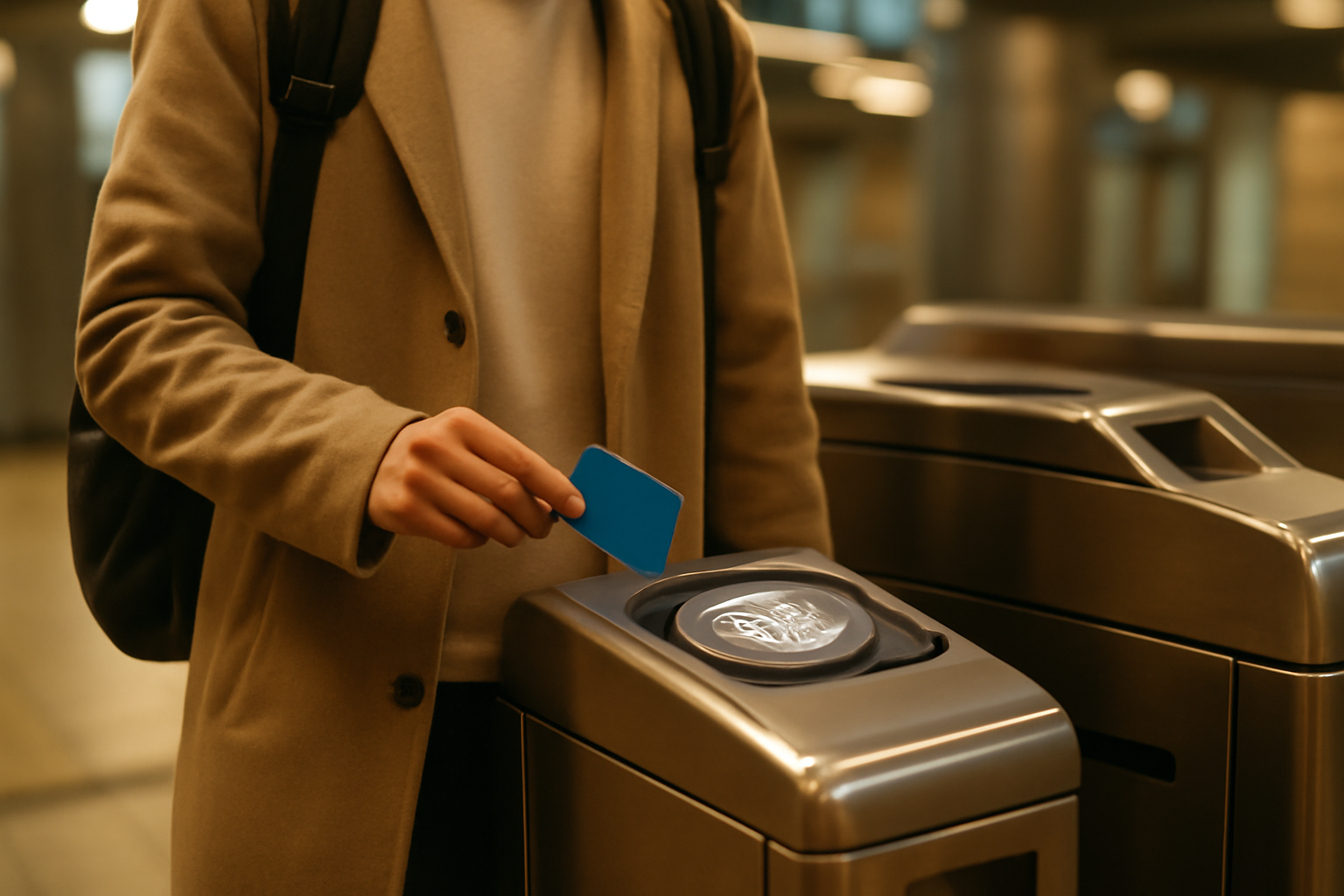
T-money is Korea’s rechargeable prepaid transit card. Usually it’s a small plastic card, though it also comes built into phone cases, keyrings, and watch bands now. Load cash onto it, and it draws down that balance every time you tap: subway, bus, a lot of taxis, and everyday purchases at convenience stores and vending machines. No monthly fee, no registration for basic adult use — buy one, load it, tap. A few habits around transfers and top-ups save real money over time.
Where to Buy and Top Up
You can buy a blank card at almost any convenience store — GS25, CU, 7-Eleven, emart24 — usually near the register, or just ask. It’s a small one-time cost, separate from the balance you load onto it. Subway service counters and ticket machines sell them too.
Topping up is just as easy: hand the cashier cash and gesture at the card, or say “T-money chungjeon” (충전, “charge”). Subway stations have top-up machines near the turnstiles with an English option, and I default to whichever store is closest, since there’s basically always one nearby. A mobile version now lives inside your phone too, though the physical card is still simpler at first.
The Transfer Discount Nobody Explains Well
This took me longest to understand, and it saves the most money once you get it. Tap off the subway or a bus and onto another bus or subway line within roughly 30 minutes, and the system treats it as one connected trip instead of two separate fares — a discounted transfer rate instead of full price twice. Late at night the window stretches a bit longer, since buses run less often.
The catch, which trips up a lot of people including me: you have to tap OFF the bus too, not just on. Subway gates handle this automatically since you must tap to exit, but buses are easy to forget — you just hop off and walk away. Skip that exit tap and the system has no way of knowing you transferred, so your next ride starts from zero. I now pause and tap even when I’m the only one getting off.
Convenience Stores, Vending Machines, and Some Taxis
What surprised me as a newcomer is that T-money isn’t limited to transit. Convenience stores let you pay for snacks or a quick lunch by tapping your balance instead of cash, and vending machines on subway platforms often take it too — not universal, but common enough that I’ve gone whole days without opening my wallet. Taxis are a mixed bag: many, especially in bigger cities, have a reader and take T-money like a card, while others expect cash. There’s no way to tell from outside, so I just ask before the ride starts.
The Phone Case and Keyring Culture
Once you’ve lived here a while, you notice how many people don’t carry a T-money card in the traditional sense — it’s built into something else. Phone cases with a chip pocket on the back, so you tap your whole phone at the gate. Keyrings shaped like characters with a chip embedded inside. It’s less about the technology and more about not wanting one more object rattling around in your bag. My own case has a cartoon rabbit my kids picked out, and I now associate that rabbit with the sound of the gates opening.
T-money vs. a Tourist Transit Pass
Worth being clear: T-money itself isn’t a tourist pass — it’s just the card residents use every day, and tourists use it the same way. The confusion usually comes from products like the Discover Seoul Pass, a separate, time-limited sightseeing pass covering entry to attractions around Seoul, whose physical version also bundles in T-money functionality. Just getting around? Plain T-money is cheaper and more flexible. Packing in paid sightseeing on a short trip? The bundled pass might make more sense — just know you’re paying for two different things.
Kids’ Cards and the Discount Registration Step
If you’re raising kids here, one detail is worth knowing: children and teens pay reduced fares, but only if their card is registered to reflect their age. An unregistered card just charges the adult rate — it has no idea how old the person tapping it is. Registration is usually done online through the T-money service or in person, linking the card to the child’s info so the discount applies automatically. It’s an extra errand, but skipping it means quietly overpaying every ride.
What Happens When Your Balance Runs Low
If your balance can’t cover the fare, the gate or bus reader usually flashes a warning or just rejects the tap. On the subway that just means topping up at the nearby machine — mildly annoying, never a real crisis. On a bus it’s more awkward, since you’re holding up the line, so I’ve learned to glance at my balance before heading out if I’ve got a few trips ahead. Small habit, but it saves you the error beep and the whole bus glancing over.
FAQ
Can tourists use T-money?
Yes, completely. No residency or ID needed — pick one up at a convenience store or subway station, load cash onto it, and start tapping, same as anyone who lives here.
What’s the difference between T-money and a Discover Seoul Pass?
T-money is a general-purpose transit and payment card with no time limit and no attraction discounts. The Discover Seoul Pass is a separate, time-limited sightseeing product bundling discounted entry to attractions, whose physical version also includes T-money functionality. Use plain T-money to just get around; consider the pass if you’re packing in sightseeing.
Do I need to register my card?
Not for standard adult use — buy, top up, and tap completely anonymously. Registration only matters for a child’s discounted fare, or for recovering a lost card’s balance.
Prices and top-up options shift over time, so treat the specifics here as a general map rather than the final word — but the core habit has stuck with me for years: buy the card, load it up, tap on, tap off, and let the chirp do the math for you.
2014년 3월 8일 자정 무렵, 쿠알라룸푸르 국제공항 활주로를 박차고 오른 보잉 777-200ER 한 대가 있었다. 목적지는 베이징. 탑승객과 승무원을 합쳐 239명이 타고 있었다. 이륙 후 38분, 관제탑과의 교신에서 기장이 남긴 마지막 말은 “Good night Malaysian three seven zero”였다. 그리고 통신은 끊겼다. 트랜스폰더도, 레이더 신호도, 그 어떤 흔적도 남기지 않은 채 항공기는 하늘에서 사라졌다.
실종 당일, 무슨 일이 있었나
말레이시아항공 MH370편은 쿠알라룸푸르에서 베이징으로 향하는 정기 노선이었다. 항로를 벗어나기 전까지는 특별할 게 없는 야간 비행이었다. 그런데 이륙 40분도 채 지나지 않은 시점, 남중국해 상공에서 조종실 통신 시스템(ACARS)이 꺼졌다. 이어 트랜스폰더 신호도 사라졌다. 군용 레이더 기록을 뒤늦게 분석한 결과, 항공기는 예정된 항로를 벗어나 말레이 반도를 가로질러 서쪽으로 방향을 틀었고, 이후 말라카 해협을 지나 인도양 쪽으로 향한 것으로 추정됐다.
이 항적은 우연히 잡힌 게 아니다. 위성통신업체 인마샛(Inmarsat)이 항공기와 지상국 사이에 오간 자동 “핸드셰이크” 신호를 역추적해 대략적인 비행 경로를 재구성했다. 문제는 이 데이터만으로는 정확한 추락 지점을 특정할 수 없었다는 점이다. 신호가 그리는 궤적은 두 개의 호(arc)로 나뉘었고, 그중 남쪽 경로를 따라 호주 퍼스 서쪽 인도양 어딘가로 향했을 것이라는 계산이 나왔다.
왜 12년째 못 찾았나
수색 범위 자체가 상상을 초월했다. 초기에는 남중국해와 말라카 해협 일대를 훑었지만 아무것도 나오지 않았다. 이후 위성 데이터 분석을 토대로 수색 중심축이 남인도양으로 옮겨졌고, 호주·중국·말레이시아가 공동으로 참여한 해저 수색이 2014년부터 2017년까지 이어졌다. 약 12만 제곱킬로미터에 달하는 해저를 소나로 훑는 데 들어간 비용만 1억 6천만 호주달러(약 1,300억 원)를 넘었다. 그런데도 동체는커녕 이렇다 할 잔해조차 나오지 않았다.
2017년 공식 수색이 중단된 뒤에도 민간 업체 오션 인피니티(Ocean Infinity)가 “찾으면 받고 못 찾으면 안 받는” 조건으로 수색을 이어받았다. 2018년 첫 시도가 성과 없이 끝났고, 2025년 3월과 2025년 12월 말~2026년 1월에도 각각 재수색이 진행됐다. 이번에는 약 7,571제곱킬로미터의 새로운 구역을 훑었지만, 말레이시아 항공사고조사국(AAIB)은 2026년 3월 8일 유가족들에게 “확인 가능한 잔해를 찾지 못했다”고 통보했다. 말레이시아 정부는 2026년 7월부터 2027년 6월까지 수색을 1년 더 연장하기로 했지만, 인도양 밑바닥은 여전히 침묵하고 있다.
바다 자체가 문제다. 남인도양 수색 구역은 수심이 수천 미터에 달하고 해저 지형이 화산과 협곡으로 뒤덮여 있다. 여기에 위성 데이터만으로 추정한 항로는 오차 범위가 넓어서, 실제 추락 지점이 수색 범위 바깥에 있을 가능성도 배제할 수 없다.
그나마 확인된 물증, 잔해들
완전히 빈손은 아니었다. 2015년 7월, 아프리카 동쪽 인도양의 프랑스령 레위니옹섬 해변에서 날개 뒷부분 조각인 플래퍼론(flaperon)이 발견됐다. 정밀 분석 결과 MH370의 것으로 공식 확인됐다. 이후 모잠비크, 남아프리카공화국, 탄자니아 등 아프리카 동부 해안을 따라 20여 점의 잔해가 추가로 수거됐고, 그중 상당수가 MH370 소속으로 인정되거나 그럴 가능성이 높은 것으로 분류됐다. 이 잔해들의 표류 경로를 역산한 해양학 모델은 남인도양 추락설에 무게를 실었지만, 정확한 좌표를 짚어주지는 못했다.
제기된 가설들 — 어느 것도 확정되지 않았다
기계 결함설부터 살펴보자. 급격한 화재나 감압 사고가 발생해 승무원과 승객 모두가 의식을 잃은 채 항공기가 자동조종으로 비행을 계속하다 연료가 떨어져 추락했다는 시나리오다. 다만 이 경우 항로가 왜 그렇게 정교하게 방향을 틀었는지 설명이 궁색해진다는 지적이 있다.
조종사 개입설도 꾸준히 거론된다. 기장의 개인용 비행 시뮬레이터에서 남인도양 방향 항로가 저장돼 있었다는 조사 결과가 알려지면서 이 가설에 힘이 실리기도 했다. 그러나 이는 정황 증거일 뿐, 고의로 항공기를 추락시켰다는 직접적인 증거는 아니다. 말레이시아 당국도 이를 공식적으로 확정하지 않았다.
납치설이나 제3자 개입설 역시 완전히 배제되지는 않았지만 뒷받침할 물증이 거의 없다. 화물칸에 실린 리튬이온 배터리로 인한 화재설도 제기됐으나, 이 역시 가설 수준에 머물러 있다.
정리하면 이렇다. 통신 두절과 항로 이탈이 의도적이었다는 정황은 있지만, 누가 왜 그렇게 했는지는 여전히 공식적으로 확인되지 않았다.
기록으로 남은 숫자들
탑승 인원 239명 (승객 227명, 승무원 12명)
실종 시각 2014년 3월 8일 오전 1시 21분경 (현지시간), 이륙 약 38분 후
공식 해저 수색 기간 2014~2017년, 이후 2018년과 2025~2026년 민간 재수색
공식 수색 비용 1억 6천만 호주달러 이상
확인된 잔해 레위니옹섬 플래퍼론 포함 20여 점
자주 묻는 질문
MH370은 지금까지 발견됐나?
아니다. 2026년 3월 기준 동체는 발견되지 않았다. 잔해 일부만 아프리카 동부 해안에서 수거됐을 뿐, 정확한 추락 지점은 여전히 미확인 상태다.
수색은 완전히 끝난 건가?
아니다. 말레이시아 정부는 오션 인피니티와 함께 2026년 7월부터 2027년 6월까지 수색을 연장하기로 했다. “찾으면 대가를 받는” 조건부 계약이라 언제든 재개와 중단이 반복될 수 있다.
블랙박스 신호는 못 잡았나?
초기 수색 당시 수중청음기가 몇 차례 신호를 포착했다는 보고가 있었지만, 블랙박스 배터리 수명(약 30일)이 이미 지난 뒤였고 이후 확인되지 않았다. 신호원을 특정하지 못한 채 수색 방향만 바꾸는 데 그쳤다.
2026년 2월, 연말정산 간소화 서비스가 열리자마자 환급액부터 조회했다는 사람이 적지 않다. 화면에 뜬 숫자는 148만 5천원. IRP 계좌에 900만원을 채워 넣은 직장인과 한 푼도 넣지 않은 직장인의 차이가 딱 그만큼이었다. 세금을 더 내는 것도 아닌데, 계좌 하나 만들고 안 만들고에 따라 백만원 넘는 돈이 오간다. 이 글에서는 IRP가 뭔지, 세액공제는 얼마나 받을 수 있는지, 연금저축과는 어떻게 다른지를 숫자 위주로 정리한다.
IRP, 정확히 뭘 말하는 걸까
IRP는 개인형퇴직연금(Individual Retirement Pension)의 줄임말이다. 원래는 퇴직금을 회사가 아닌 개인 계좌에서 운용하도록 만든 제도인데, 지금은 퇴직금과 상관없이 누구나 만들어서 노후자금을 쌓고 세액공제도 받을 수 있는 계좌로 자리잡았다. 은행, 증권사, 보험사 어디서든 개설할 수 있고, 계좌 안에서 예금·펀드·ETF 등을 골라 운용한다. 55세 이후 연금으로 수령하는 게 기본 설계다.
연금저축펀드와 어디가 다른가
둘 다 노후 대비 절세 계좌라는 점은 같다. 세액공제 한도를 계산할 때는 두 계좌를 합쳐서 본다. 차이는 유연성이다.
연금저축은 가입과 중도 인출이 비교적 자유롭다. 급하면 일부만 빼서 쓸 수 있다.
IRP는 법에서 정한 사유(무주택자 주택 구입, 6개월 이상 요양, 개인회생 등) 외에는 일부 인출이 안 된다. 돈이 필요하면 계좌 전체를 해지해야 한다.
IRP는 위험자산(주식형 펀드 등) 투자 비중이 계좌 적립금의 70%로 제한된다. 연금저축펀드는 이런 제한이 없다.
연금저축 단독 세액공제 한도는 연 600만원, IRP를 더하면 두 계좌 합산 900만원까지다.
퇴직금을 받아본 적이 없고 목돈이 묶이는 게 부담스럽다면 연금저축부터 채우고 남는 한도를 IRP로 채우는 방식이 흔하게 쓰인다.
2026년 기준 세액공제 한도와 공제율
일반적으로 알려진 기준으로 정리하면 이렇다. 연금저축과 IRP를 합쳐 연 900만원까지 세액공제 대상이 된다. 이 중 연금저축만으로는 최대 600만원까지 인정된다. 공제율은 총급여 구간에 따라 갈린다.
총급여 5,500만원 이하(종합소득금액 4,500만원 이하) — 지방소득세 포함 16.5%
총급여 5,500만원 초과 — 지방소득세 포함 13.2%
세부 기준이나 시행령은 매년 조금씩 바뀔 수 있으니, 실제 신고 전에는 국세청 홈택스나 회사 원천징수 담당 부서를 통해 그 해 기준을 다시 확인하는 편이 안전하다.
한도를 다 채우지 못해도 넣은 만큼 비례해서 공제받는다. 300만원만 넣었다면 그 300만원에 공제율을 곱한 금액이 환급 대상이다. 무리해서 한도를 채우기보다 매달 감당 가능한 금액을 자동이체로 넣는 방식이 현실적이라는 의견이 많다.
중도해지하면 어떻게 되나
IRP는 급할 때 깨기 좋은 계좌가 아니다. 세액공제를 받았던 납입금과 그동안 발생한 운용수익 전체에 기타소득세 16.5%가 부과된다. 공제받은 세금을 그대로 토해내는 셈인데, 운용수익까지 과세 대상에 들어가다 보니 실제로는 돌려받았던 세액공제분보다 더 많이 내야 하는 경우도 생긴다. 게다가 일부 인출이 막혀 있어서 급전이 필요해도 계좌 전체를 해지하는 수밖에 없다. 가입 전에 이 돈을 정말 55세까지 묶어둘 수 있는지 스스로 따져보는 게 먼저다.
자주 묻는 질문
올해 소득이 없었는데, 작년에 넣어둔 IRP도 공제가 될까?
세액공제는 근로소득이나 종합소득이 있는 해에 신청하는 구조다. 예를 들어 육아휴직으로 2026년 소득이 아예 없었다면, 그해 납입분은 공제받을 소득 자체가 없어 실익이 크지 않다. 이런 경우 납입은 하되 공제 신청 시기를 조정하거나, 다음 해 소득이 생겼을 때를 대비해 납입 이력만 쌓아두는 방법을 고려하는 사람들도 있다.
연금저축 500만원, IRP 400만원을 각각 넣었다면 공제는 어떻게 계산되나?
합산액이 900만원이므로 전액이 공제 대상 한도 안에 들어온다. 총급여 5,500만원 이하라면 900만원 × 16.5% = 148만 5천원이 환급 대상 세액이 된다. 계좌를 두 개로 나눠도 한도 계산 방식은 동일하다.
이직하면서 받은 퇴직금을 IRP로 옮겼는데, 이것도 세액공제 한도에 들어가나?
회사가 지급한 퇴직금을 IRP로 이전받은 금액은 본인이 추가로 낸 돈이 아니라서 세액공제 대상 납입금에 포함되지 않는다. 세액공제는 본인이 별도로 추가 납입한 금액에 대해서만 적용된다는 점을 헷갈리지 않아야 한다.
세액공제는 매력적이지만 IRP는 55세 이후를 보고 넣는 돈이라는 점은 변하지 않는다. 당장의 환급액만 보고 무리하게 한도를 채우기보다, 몇 년 뒤에도 이 계좌를 건드리지 않을 수 있는지부터 점검해보는 편이 낫다. 이 글은 일반적으로 알려진 세법 기준을 바탕으로 작성한 정보 제공용 글이며, 구체적인 세액공제 신청은 국세청 홈택스나 세무 전문가를 통해 본인 상황에 맞게 확인하길 권한다.
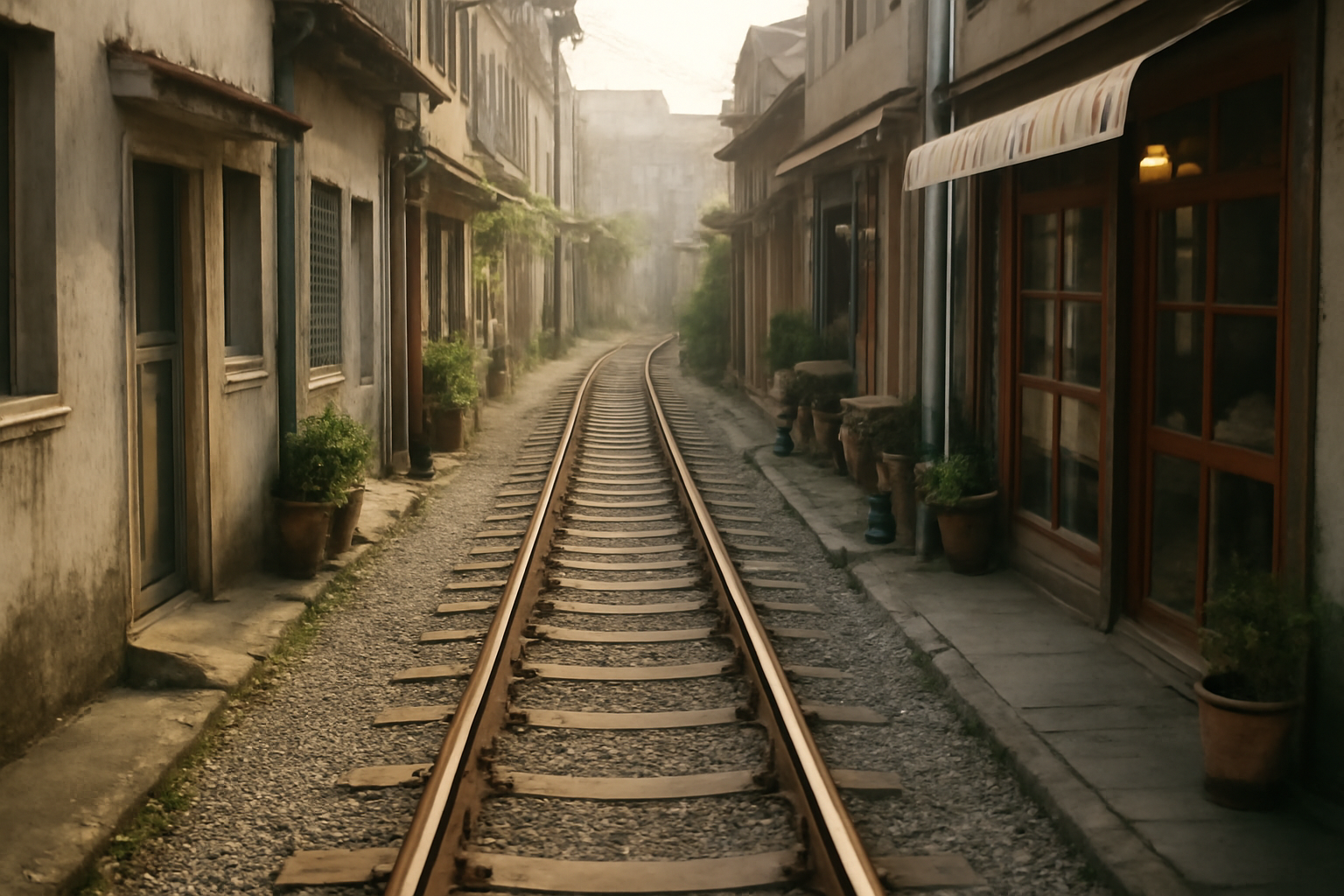
오전 9시 40분, 경암동 철길마을 초입. 자판기에서 종이컵 커피를 뽑아 든 사람들이 레일 위에 나란히 앉아 사진을 찍는다. 기차는 2008년에 멈췄지만 철길 양옆으로 다닥다닥 붙은 옛날 가게 간판들은 그대로다. 군산은 크게 보면 걸어서 다 돌 수 있는 원도심이라, 하루를 알차게 쓰면 경암동 철길마을부터 근대역사박물관, 이성당까지 무리 없이 끝낼 수 있다. 차 없이 대중교통으로 다녀도 되고, 승용차라면 공영주차장 몇 곳만 알아두면 충분하다.
전체 동선 먼저 그려보기
이 코스는 경암동 철길마을(오전) → 이성당·짬뽕거리(점심) → 근대역사박물관·신흥동 일본식가옥·동국사(오후) → 째보선창·내항(저녁) 순으로 짰다. 경암동에서 원도심 근대역사거리까지는 차로 10분, 걸으면 25분쯤 걸린다. 하루 이동 거리는 총 5킬로미터 안팎이라 편한 신발만 챙기면 도보로도 충분하다.
오전 9시 30분, 경암동 철길마을
철길을 따라 늘어선 목조 주택과 슈퍼, 문방구가 그대로 남아 있어 1970~80년대 골목 느낌이 난다. 레일 위를 걷는 사람, 옆 가게에서 파는 옛날 과자를 들고 사진 찍는 사람들로 오전 시간대는 한산한 편이다. 30분에서 40분이면 충분히 둘러볼 수 있고, 입장료는 없다. 주차는 마을 초입 공영주차장(1시간 500원 안팎)을 이용하면 된다.
낮 11시 30분, 이성당에서 줄서기
차로 10분 거리, 원도심 중앙로에 이성당이 있다. 1920년대에 문을 연 국내에서 손꼽히는 오래된 빵집인데 낮 시간대는 줄이 길다. 야채빵과 단팥빵이 대표 메뉴이고 2인 기준 빵값은 1만 5천 원 안팎이다. 빵집 바로 근처 골목에는 짬뽕과 중화요리 식당이 몰려 있어, 빵 대신 얼큰한 짬뽕(1만 원 안팎)으로 점심을 채우는 여행자도 많다.
오후 1시, 근대역사거리 도보 투어
점심 이후 시간대가 이번 코스의 핵심이다. 군산근대역사박물관을 시작으로 옛 군산세관, 동국사, 초원사진관, 신흥동 일본식가옥(히로쓰 가옥)까지 걸어서 다 연결된다.
군산근대역사박물관: 일제강점기 수탈과 근대 문물의 흔적을 함께 전시한다. 관람에 1시간에서 1시간 반 정도 걸린다.
신흥동 일본식가옥: 목조 2층 가옥으로 정원과 다다미방이 그대로 보존돼 있다. 15분이면 둘러본다.
동국사: 국내에 남은 일본식 사찰 건축을 볼 수 있는 곳으로, 지붕 곡선이 눈에 띈다.
초원사진관: 영화 촬영지로 알려진 작은 사진관으로 걸음을 잠깐 멈추기 좋다.
근대역사박물관, 근대건축관, 근대미술관, 진포해양테마공원을 함께 볼 수 있는 통합관람권이 3천 원이다. 개별로 끊는 것보다 훨씬 이득이라 하나만 들를 계획이 아니라면 통합권을 추천한다.
오후 5시, 째보선창과 내항
근대역사거리에서 도보 10분 거리에 째보선창이 있다. 일제강점기 쌀 수탈의 흔적이 남은 포구인데 지금은 노을 명소로 더 유명하다. 해질 무렵 내항 쪽 방파제를 따라 걸으면 정박된 배와 하늘이 함께 붉게 물든다. 저녁 식사는 근처 횟집이나 짬뽕거리로 돌아가도 되고, 시간 여유가 있으면 은파호수공원까지 이동해 야경으로 하루를 마무리해도 좋다.
준비할 것들
편한 운동화는 필수다. 원도심 골목은 대부분 도보 이동이라 굽 있는 신발은 피하는 게 낫다. 여름에는 그늘이 적은 철길마을과 째보선창 구간에서 땀이 많이 나니 물을 챙기고, 겨울에는 바닷바람이 부는 저녁 시간대가 꽤 쌀쌀하다. 하루 전체 예상 비용은 통합관람권 3천 원, 점심 1만 원대, 빵값 별도로 잡으면 1인 3만 원 안팎이면 넉넉하다.
자주 묻는 질문
주차는 어디에 하면 되나요?
경암동 철길마을, 근대역사박물관, 이성당 각각 인근에 공영주차장이 있다. 원도심 골목 안쪽은 일방통행과 협소한 도로가 많아 큰길가 공영주차장에 대고 걸어서 도는 방식이 편하다.
하루에 다 돌 수 있나요?
가능하다. 오전 9시 반에 출발해 오후 6시쯤 째보선창에서 마무리하는 일정이면 여유 있게 소화된다. 다만 이성당 웨이팅이 길어지는 주말 낮 시간대는 30분 이상 잡아두는 게 안전하다.
언제 방문하는 게 가장 좋나요?
봄가을이 걷기에 무난하다. 여름에는 그늘 없는 구간이 많아 오전 일찍 움직이는 편이 낫고, 겨울에는 해가 짧아 저녁 코스인 째보선창 노을 시간을 미리 확인하고 동선을 짜는 게 좋다.